MareMagnum

6 639 résultats
Nice, The Seer Publishing Co., 1933, un fascicolo in-8, brossura editoriale figurata, pp. [8], 76, [12]. Raro giornale di occultismo, curato da Francis Rolt Wheeler. Segnaliamo un interessante "oroscopo di Hitler". Lievi mancanze al dorso.
19601st edition, later paper wrappers, 8vo. 808 + xx columns, illustrations throughout. In Hebrew, with an English title page and introduction. We consider it important and necessary to represent a review of our Memorial-Book to the children and friends of the Goniondz Society who do not read Yiddish or Hebrew. Let all of them get an idea about the Hometown of their parents and relatives and together with them hold dear the memory of the small Jewish community, that went to martyrdom during the black period of the bestial Nazi rule. 6, 000, 000 Jews perished during the 2nd World War in Eastern and Central Europe. Many bigger and smaller towns were immortalized in memorial books. They stand out like living symbols, spiritual monuments for the coming generations. Our beloved Goniondz has surely earned such a monument. The Jewish Goniondz was very lively and interesting. The small Jewish population was very active, established many parties and clubs and gave to the world outstanding intellectuals in many fields, both Jewish and general. Citizens of Goniondz are spread out all over the world. The majority of them live in the United States and in Israel, where they have established many societies and cooperatives in the socio-philanthropic field, giving financial and moral support to needy townspeople. The Memorial-Book portrays to a great extent the manysided life of Goniondz before its destruction. (from book) SUBJECT(S) : Jews -- Poland -- Gonia? Dz. Holocaust, Jewish (1939-1945) . Ethnic relations. OCLC: 18096280, OCLC lists 29 copies worldwide. Cover is missing, outside pages have some wear and discoloration, internally very good, Good Condition overall. (YIZ-20-2)
19751st edition, original cloth, 8vo. 795 pages, illustrations throughout. In Hebrew and Yiddish. (Wednesday, 15th of Shvat 5700, December 27, 1939.) Thirty-five years have passed since that dark day when shots were fired, and the entire Jewish population left their hometown of Zgierz. On that day, confusion and terror enveloped the big and the small, the poor and the rich. Children lost their parents and parents searched for their children. The weeping and screaming could be heard on all of the streets. Driven to the old marketplace, with their packs over their shoulders, the Jews of Zgierz fled into the forests with the fear of death, that only the eyes that saw could believe. The largest group of them fled to Lodz, a smaller group went to Glowno, and only a very few set out and arrived in Warsaw. In their despair, the unfortunate souls could not imagine that all of the roads were leading to a strange ending, to death. Thus in one day did end the flourishing Jewish community of Zgierz, that numbered 5, 000 souls and was bound up with the city throughout the 200 year history with intertwined work for its growth and development. It ended for not only were our holy shrines burnt, but the despicable people even desecrated the 150 year old cemetery and covered it over with earth, so that there would not remain even a memory of Jewish life on Zgierz soil. For us, the survivors, lies the great and holy duty to observe this memorial day and perpetuate it forever. This should be a day of memory and warning for us and for our children. Just as we light the memorial candles for our martyrs, we also must not forget the curse and the eternal hate for the disgusting criminals and murderers of the Jewish people. We who remain in sorrow should find comfort in the work for those close to us, and in the work to perpetuate the memory of our martyrs our parents, our brothers and sisters, relatives and friends and the entire community of Zgierz. May their memory be blessed! (translated from book, Jewishgen 2018) SUBJECT(S) : Jews -- Poland -- Zgierz. Holocaust, Jewish (1939-1945) Ethnic relations. OCLC: 40705049. Some edgewear and markings on cover, Good Condition Overall. (YIZ-19-2)
1965YIZKER BUKH NOKH DREY-UN-TSV?ONTSIK HORUV GEVORENE YIDISHE KEHILES` IN SVENTSYANER GEGNT?; SEFER ZIKARON LE-EZOR SHVINTSYAN. SEFER ZIKARON LE-?ES´RIM VE-SHALOSH KEHILOT SHE-NEHREVU BE-EZOR SHVINTSYAN Tel-Aviv : Irgun Yots'e Ezor Shvintsyan be-Yis´ra'el19651st Edition. Original Publishers Cloth, 4to (Large), 1954 columns. Includes endpaper maps and illustrations throughout. Chiefly in Yiddish. Title translates as, A Book of Remembrance for Twenty-Three Communities Destroyed in the Shvintsyan Area. Each chapter concerns a different community: Svencian - New Svencian - Old and New Dugelishak - Ignalina - Lingmian - Kaltinian - Duksht - Podbrads - Lintop - Kimelishak - Heidutschak - Styatshik - - Gaviken - Weeds - Kazian - Kabilnik - Niemenchin - Fastov - Yadi - Myari. SUBJECT(S): Jews -- Lithuania -- S?venc?ionys -- History. Holocaust, Jewish (1939-1945) OCLC: 23554363. Light wear, Very Good Condition (YIZ-18-9)
19521st edition, original cloth, 4to. X + 377 pages, illustrations throughout. In Hebrew. English title: Lomza- In Memory of the Jewish Community. After the end of World War I, the ethnic structure changed significantly. After Orthodox Russians and German Protestants had left Lomza, it became a city of two religions, being inhabited by Catholic Poles and Jews. After regaining independence, Lomza reached the status of a county town in Bialystok Province (from 1939 on in Warsaw Province) . It was also the local centre of trade, crafts and industry, and also the seat of garrison at the same time. A few high school operated there, and what is more, the local press in Polish and Yiddish language was published. In 1925, Pope Pius XI made Lomza the capital of Lomza Diocese. After the outbreak of World War II, on 7 September 1939, Lomza was destroyed as a result of bombing. Three days later Germans entered the city. On 28 September 1939, the city was handed over to Red Army units. Lomza was incorporated into the Byelorussian Soviet Socialist Republic. The occupiers transported to Siberia. When the war between the Germans and the Soviets began, on 22 June 1941, Lomza was bombarded by German Luftwaffe, while on 24 June occupied by Wehrmacht. In July, the city and the whole land of Bialystok were subordinated to the Gauleiter of East Prussia. A ghetto was formed in August. Jewish inhabitants and refugees from other areas were relocated there. In September 1941 about 31, 000 Jews from the ghetto were sent before a firing squad; most of those who remained were killed in Treblinka and Auschwitz-Birkenau. During the war (fights on the line of the River Narew) , in winter 1944/1945, about 70 per cent of Lomza's buildings were destroyed. The reconstructed city was the centre of county in Bialystok Province to 1975, and next it was the capital of Lomza Province, existing to 1998, as a result of an administrative reform in 1975. In 2013, the city had a status of the centre of Lomza County and a city with county rights (so-called municipal county) . (sztelt.org 2018) SUBJECT(S) : Jews -- Poland -- Lomz? A -- History. Holocaust, Jewish (1939-1945) -- Poland -- Lomz? A. Ethnic relations. OCLC: 19162885. Ex library with usual marks, wear on cover and spine, pages are separating from binding slightly in some parts, Good Condition Overall. (YIZ-18-2)
19771st edition, original cloth, 8vo. 518 + 96 pages. In Hebrew and Yiddish with an English section. Eight years have gone by since we first began preparations for this book on the Jewish community of Rozhan, until at long last it can be published now. It was a great effort made by a number of people devoted to the weighty and difficult task to erect a fitting memorial to our community. It is what other communities of Israel have done and no doubt it is the right thing to do for the people of the book. Rozhan was no different from other Jewish townships in Poland that are no more, but to us, who were born and grew up there, she has something unique. It is not only the landscape, the topographic situation on the high bank of the River Narew. It was also the Jews, who had been living at the place for generations, rebuilding it stubbornly and assiduously many times. In fact after each of the many wars that swept over the region, that lies on the road from Russia to Warsaw. Those were homely Jews of all social strata, orthodox and freethinkers, Zionists and anti-Zionists. Above all we have at heart the Jewish youth of Rozhan that took upon itself the task to redeem the world and the nation - and only few of them have reached the final haven of rest here in Israel, while others, of the few who did survive, have found shelter in the West and built their homes there. It is the intention of this book to keep our past alive and to preserve the shining memory of those who lived and were active there, to show that they were not anonymous and to describe their striving and struggling to maintain a definitely Jewish, religious, social and political existence. This book wants to tell future generations how the Jews of Rozhan created Jewish life in the midst of a hostile environment, how they built for themselves the framework of a society and filled it with deep-rooted national values, how they created their own institutions, that were able impose their authority - after democratically arrived at decisions with no governmental powers behind them. The book also wants to keep alive the old Jewish spirit maintained by our people everywhere, the rule Jews stand by each other that found its expression in individual help as well as in organized assistance such as various mutual funds. The book is also meant as a memorial to the tragedy of our people. Jews of Rozhan had to run for their lives during the very first days of the war, and one after the other they fell as victims on the bloodstained roads of Poland. Some survived after having passed through the hell of exile in the vastness of Russia and Siberia and back; only a few were lucky enough to reach Israel and to build new homes here. The book contains about 600 pages and it reflects a collective effort. It was not easy to obtain the material, as there are next to no writers among our people. So we had to apply to as many of our townsfolk as possible in order to make them talk or write - those who did write were a minority and most contributions were given orally and had to be taken down. We endeavoured to get in touch with as many as possible and to give a rounded out picture of the town, its history, people and folklore, but we feel that in spite of all our efforts we could not note everything worth remembering. All we can say is that we have done our best to present a many-sided picture of everything that was human and Jewish and good. (from English preface) SUBJECT(S) : Jews -- Poland -- Ro´z? An -- History. Holocaust, Jewish (1939-1945) . Ethnic relations.
1948réf. 16828BBWien, Zwei Berge Verlag. Ca. 1948. 8° 389 S. Hardcover. Ecken & Kanten bestossen, Schnitt leicht fleckig, Falz geplatzt, Seiten gebräunt.
réf. 75457Paris, éd. 10/18, 25 janvier 1963, in-12; cartonnage souple, couv. photo en noir éd., 188 pp., table des matières, Emmanuel d'Astier a tout vu, tout pratiqué, toujours à un poste de commandement et tout cela durant la Seconde Guerre mondiale. Pas courant Très bon état
19968vo., First Edition, with portrait frontispiece; black cloth, backstrip lettered in red, a near fine copy in unclipped dustwrapper. SCARCE.
19411st Edition. Original CCloth. 4to. 36 Sermons (about 250 pages) ; 28 cm. In English. Holocaust-era collection of sermons, includes The Courage to Carry On. Typed and bound manuscript. Newman was a Reform rabbi and a leader of the Zioninst Revisionists in the United States (Goodman, EJ) He played a pivotal role in the creation of Brandeis University. SUBJECT(S) : American Jewish Sermons. Ex-library with Jewish Institutional Stamp and Usual Markings. Cover is worn, with some water damage. One page folded, but inside pages are largely clear and very readable. Good condition. (AMRN-9-21a)
2009Mm 160x220 Volume cartonato di pp. 333 con tavole in bianco e nero fuori testo, sovraccoperta figurata.Opera in ottime condizioni. SPEDIZIONE IN 24 ORE DALLA CONFERMA DELL'ORDINE
1935Newsletter, Legal Sized. 2 pages. The Seven Arts Feature Syndicate was a weekly, New York-based, Ango-Jewish weekly periodical in the 1930s. This article, presenting the standpoint of one individual is published because it presents a point of view which is of unusual significance at this juncture. Mr. Montors stand has the support of many leaders in this country and is as fervently opposed by other outstanding personalities. Joseph Brainin, who disagrees with many of the arguments advanced by Henry Montor, will answer this article in our next issue. Leaders [sic] are invited to express their reaction to this interesting debate. Editor. OCLC lists one copy (National Library of Israel) , although which issue is unclear. Crease through middle of sheets and some light blurring of type, but all text is legible. Very good condition. (HOLO2-37-28)
1937Newsletter, Legal Sized. 2 pages. The Seven Arts Feature Syndicate was a weekly, New York-based, Ango-Jewish weekly periodical in the 1930s. Recently there was a published novel, The Spectacle of a Man, written by a New York physician under the pseydonym [sic] of John Coignard. Mr. Coignard has definite views on how to cure the Jews so as to kill anti-Semitism. In this interview he presents his views, which in many respects have a rather humorous though not always intentionally so aspect. Read it think it over and smile, if you feel like it. Editor. OCLC lists one copy (National Library of Israel) , although which issue is unclear. Crease through middle of sheets and some wear to edges, but all text is clear. Very good condition. (HOLO2-37-29)
1938Newsletter, Legal Sized. 3 pages. The Seven Arts Feature Syndicate was a weekly, New York-based, Ango-Jewish weekly periodical in the 1930s. While the world stands aghast at the ferocity of the renewed anti-Jewish terror in Germany, decent men and women everywhere, revolted by sadism and brutality, are asking why this Medievalism, why this needless cruelty? Mr. Zukerman provides the answer in this startling analysis of the financial side of official anti-Semitism. Editor. OCLC lists one copy (National Library of Israel) , although which issue is unclear. Crease through middle of sheets, but all text is clear. Very good condition. (HOLO2-37-25)
1941pp. xviii, 269. Text illustrations. Inked ownership of B. C. Rydzewski. 8vo. Original full red cloth binding, gold lettered. Spine very slightly worn. Second printing. ** PRICE JUST REDUCED! WWII 3
1943Hardcover, 8vo, 278 pages, in Hebrew, Includes bibliographical references. 1st edition. Holocaust-era imprint from Eretz-Israel. Shaylock: The Jew from Venice. Analysis of fiction in reference to William Shakespeares SHYLOCK, THE MERCHANT OF VENICE. Antisemitism in Literature. OCLC lists 11 copies worldwide. Spine repaired with tape, some wear to cover edges, otherwise very nice copy in very good condition (HOLO2-89-87)
1939(FT) Hardcover, 98, vi pages, 8vo, 25 cm. In Hebrew. SUBJECT(S) : Judaism -- Customs and practices. Marti, Ramon, d. Ca. 1286. Pugio fidei. Includes bibliographical references and index. Other Titles: Shkiin "A few words on some Jewish legends, customs and literary sources found in Karaite and Christian works (including an index of the Jewish books cited in Pugio Fidei of Raymund Martini) ". OCLC lists 17 copies worldwide. Ex-library. Chipping to edges of jacket. Otherwise, very good condition in the scarce dust jacket. A beautiful copy (Holo2-19-53)
1956(FT) (FT) Cloth, 12mo, 71 pages. In Hebrew, vocalized. 1st edition. Inscribed by Zeitlin. Bialiks poems, translated from the Yiddish by Zeitlin. `Ivrit bi-yede Aharon Tsaitlin; be-tseruf mavo me-et ha-metargem. SUBJECT(S) : Yiddish poetry -- Translations into Hebrew. OCLC lists 24 copies worldwide. Some tanning to pages, otherwise very good + copy (HOLO2-98-18)
2013réf. R240129480DIE. 2013. In-8. Broché. Bon état, Couv. convenable, Dos satisfaisant, Intérieur frais. 227 pages.. . . . Classification Dewey : 943.086-IIIe Riech. Hitler, 1933-1845
19811st edition. Wrappers; 4to. 30 pages. Illustrated. A project of Zachor, the Holocaust Resource Center of the National Jewish Resource Center. Letter inviting members of the Association for Jewish Studies to subscribe laid in. Very good condition. (H-35-10)
1945Original Wraps. 8vo. 156 pages. 20 cm. First edition. In French. So the Gestapo had Known! , a history of French Catholic priests in the Resistance, especially those affiliated to the Action Catholique in France, with connections to Catholics in the resistance in Germany. Includes 12 page appendix list of Catholic militants and priests of the Church who were deported to camps and did not survive. OCLC lists 29 copies worldwide. Subjects: World War, 1939-1945 - War work - Jeunesse ouvrière chrétienne. World War, 1939-1945-- Personal narratives, French. World War, 1939-1945 - Religious aspects. Light wear to wraps. Clean and fresh. Very good condition. (HOLO2-104-20) xx
1944réf. 1148281944 Editions C.E.A. - 1944 - In-4, broché couverture illustrée - 31 pages - Très nombreuses illustrations et reproductions photographiques en N&B in et hors texte
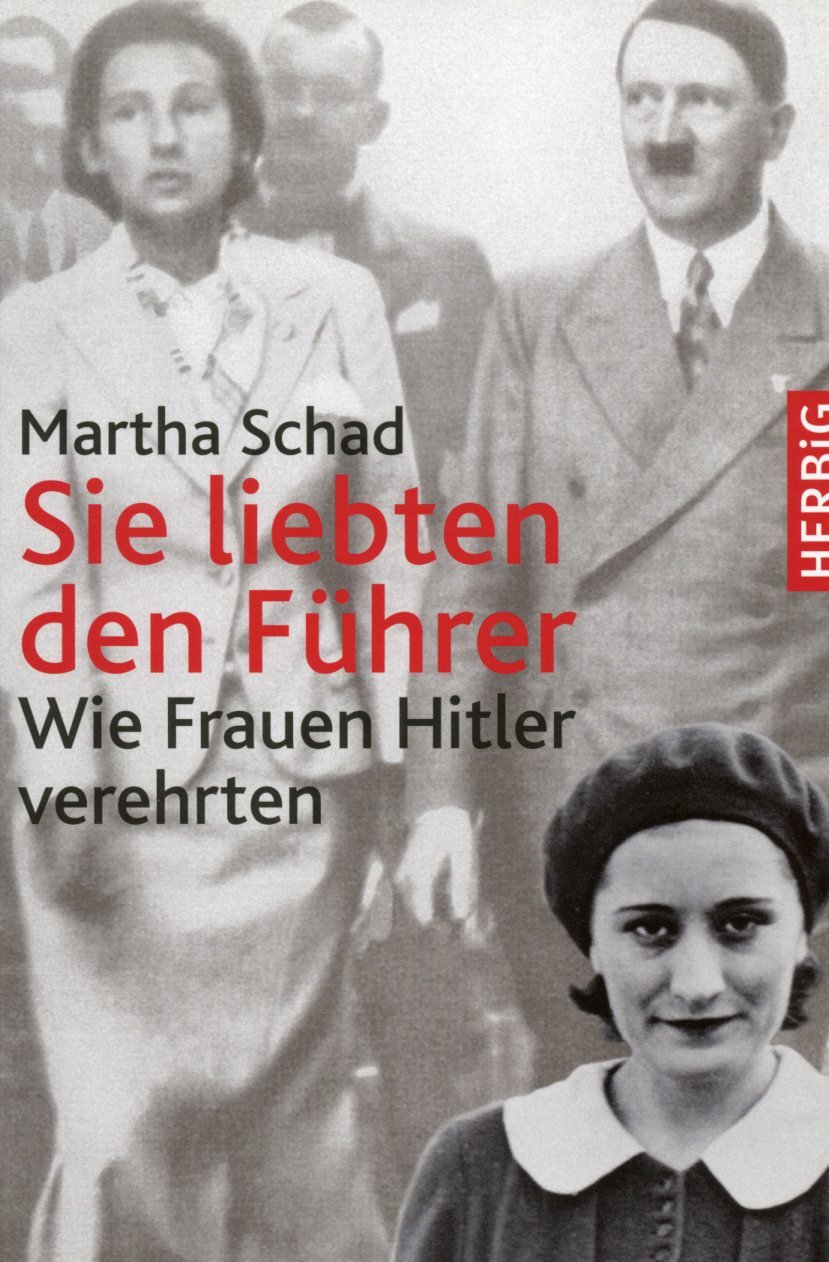
2009réf. 1231434München : Herbig, 2009. 237 S. : Ill. ; 22 cm Pp.
2009réf. 12117München : Herbig, 2009. 237 S. mit 23 sw. Abbildungen auf Kunstdrucktafeln. 8° (22x15cm), Hardcover/Pappeinband im OSchutzU.
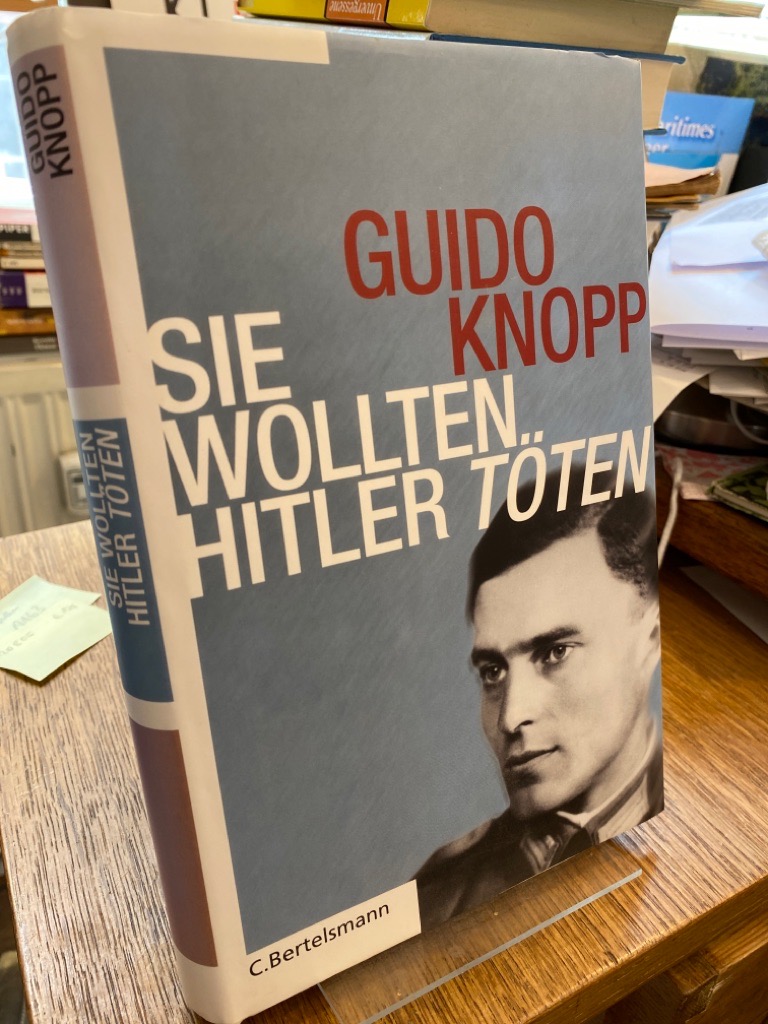
2004réf. 123178München : Bertelsmann, 2004. 1. Aufl.; 349 S. mit zahlreichen Abbildungen; 24 cm; gebunden, Orig.-Pappband mit Original-Schutzumschlag;