Fumio HiroshimaBiblio.com
Ground States of Quantum Field Models: Perturbation of Embedded Eigenvalues
réf. 37672550-nnew. unknown

GreatBookPrices · États-Unis111,77 $US≈ 99,66 €
212 résultats
1957réf. 56750Nagasaki Japan: Kawano Miwa June 1st Showa 32 1957. 8vo. 164 4 pp. Red cloth gilt lettering in Japanese on front cover & spine faint tidemark on upper front & back covers minor shelfwear still VG- copy inscribed by the author on ffep. to Mrs. Hildreth July 5 1959 w/ tipped-in typed note about the work. First edition of this exceedingly scarce personal memoir recounting the author’s experiences and survival of the dropping of the Atomic Bomb on Hiroshima in 1945 at the end of World War II. Kawano b. 1918 was originally a student at Doshisha University Theology Dept. and forced to leave school due to illness was inducted into the Japanese Army in Manchuria and after his discharge studied medicine at Nagasaki Medical University. While working as a medical student in Hiroshima at the time he received burns and severe radiation exposure from the blast. Subsequently he devoted himself to the medical treatment and relief of the injured in Hiroshima and Nagasaki and by 1958 was in the first class of neurosurgery residents at the Oregon School of Medicine now OHSU under Prof. George Austin. He later returned to Nagasaki in 1960 to found the Department of Neurosurgery in the Nagasaki University School of Medicine which had been entirely destroyed in 1945 by the Nagasaki Atomic Bomb drop. The campus had been located less than half a mile from the epicenter of the explosion with the entire facility reduced to ashes by the blast. Kawano devoted his considerable skills to studying the nuclear blast survivors including papers on Whiplash Injury and Headache 1967 study of Post-traumatic Chronic Headache 1965; 1968 changes in the capillaries in the Great Occipital Nerve as well as the increase of Cerebral Aneurysms 1963. No copies located in Worldcat or the National Diet Library; See: Hayashi Ushijima Matsuo Kitagawa Suyama & Nagata The 150th Anniversary of Nagasaki University School of Medicine: Recovery From the Atomic Disaster and Evolution of the Department of Neurosurgery Nagasaki University’s Academic Output Site Congress of Neurological Surgeons 2009. Kawano Miwa, hardcover
réf. 37672550-nnew. unknown
réf. 33622150-nnew. unknown
1956réf. 31893Paris Albin Michel 1956 Petit In-8 préface et traduction de Benoit-Méchin, d'après le texte américain rédigé en collaboration par le docteur Hachiya (auteur de cet ouvrage en qualité de victime et chirurgien) et le docteur Warner Wells, de l'Université de Caroline du Nord, et revu par les docteurs Turpin et Eyquem, de l'Institut Pasteur de Paris. XXI + 282 pp + table des illustrations (non comprises dans la pagination) et table des matières
1945réf. 221391945. Editor unknown. Atlanta Journal August 6 1945 records the first American newspaper cycle responding to the atomic bombing of Hiroshima a military and political event that introduced nuclear weapons into warfare and reshaped the final phase of World War II. The issue supports research into wartime journalism anti-Japanese racial language in the American press home-front reception of nuclear warfare and the public announcement of the atomic age; Hiroshima was bombed on August 6 1945 and President Truman's statement described the bomb as having "more power than 20000 tons of T.N.T." Atlanta Journal. Atlanta Georgia. August 6 1945. Final Home Edition. Number of pages and size not stated. Front-page headlines include "Atomic Power Bomb Loosed on Jap Cities" "Death Charge Equals 20000 Tons of TNT" and "Japs Fail to Scratch New Hornet in Terrific 14-month War Cruise." The headlines preserve the immediacy of American reporting on Hiroshima as well as the racialized wartime language used in mainstream newspapers during the Pacific War. General handling wear good overall. A same-day Southern newspaper issue documenting how the first use of atomic warfare entered American public consciousness through mass-circulation news. unknown
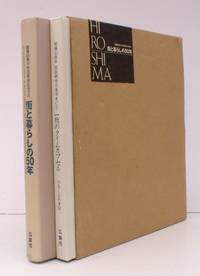
1996réf. 32567Hiroshima 1996. 2 vols. roy. 4to. First Edition text in Japanese Main Volume with many hundreds of coloured and monochrome photographs a number folding in the text CD Portfolio with coloured illustrated booklet and CD in oyster case; Main Volume in brown cloth upper board and backstrip lettered in blue CD Portfolio in white boards both volumes housed in publisher's card slip-case a near fine copy. SCARCE. Hiroshima, hardcover
réf. 11095RELIURE EDITEUR - 18x18 - 215, 213,249,251 et 263pp - 1964 - éditions de Saint Clair
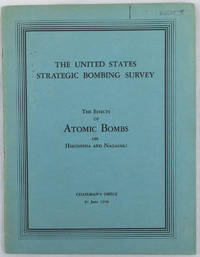
1946réf. 224461Washington.: United States Strategic Bombing Survey. 30 June1946. Two folding colour maps at rear profuse black and white photographic illustrations v 46pp. 26 x 20cm. Extremities and original blue stapled wrappers trifle shelf worn with a few leaves little chipped at edges though still overall in very good condition. A fascinating and illuminating survey of the damage wrought by the atomic bombings of Hiroshima and Nagasaki compiled by American authorities following Japan's surrender. An almost serene level of cold detachment typifies the report's language and despite being punctuated by examples of tragic and desperately human imagery and experiences their accompanying captions and highly detailed retellings of events are mechanical to the point of being sublimely inhuman. A deeply valuable resource for students of atomic warfare and the post-atomic age. . United States Strategic Bombing Survey. unknown
1955réf. 374722World Assembly for Peace Helsinki 1955. Pamphlet. Good Condition. 5 pages. Unstapled pamplet as issued. Size: 18 x 26 cms. Category: Varied Books; Atomic & Nuclear. This item may require more postage than the rates shown for delivery outside the UK. If extra postage is required we will contact you before processing your order and you will be given the details and option to decline the extra cost. World Assembly for Peace unknown
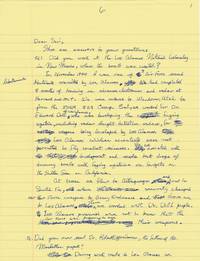
1945réf. 143891945. Jeppson Morris R. Autograph Letter Signed written after World War II a first person technical and eyewitness account by the weapons officer of the Enola Gay the B 29 aircraft that dropped the first atomic bomb on Hiroshima on 6 August 1945. As one of eight Army Air Forces second lieutenants recruited to support Los Alamos weapons development Jeppson occupied a rare operational position linking laboratory science to combat deployment. In the present two page letter written entirely in his hand in question and answer format he explains his recruitment after advanced electronics and radar training at Harvard and MIT and his assignment to the 509th Bomb Group at Wendover Utah. He describes working under Dr. Edward Doll of Los Alamos on the bomb's fuzing system including radar height detection noting that "Los Alamos civilian scientists were not permitted to fly combat missions" and recounts test drops of dummy bombs over the Salton Sea. His narrative situates him among the very small circle beyond senior scientists who understood the weapon's intended use as he was responsible for arming the fuzing system inside the bomb bay shortly before release over Hiroshima. Jeppson Morris R. Autograph Letter Signed. No place no date. Two pages on yellow lined paper written in ink signed "Sincerely Morris R. Jeppson." In response to a question about J. Robert Oppenheimer Jeppson recounts a May 1945 flight in which "The sole passenger was Dr. Oppenheimer. This very gracious man was smiling to visit with me and he answered my questions about where I should attend graduate school in nuclear physics after the war" recommending the University of California Berkeley. He emphasizes the strict compartmentalization of the Manhattan Project: "Because of very tight security restrictions neither of us ever mentioned nuclear weapons." The letter provides granular insight into the operational secrecy of the project the integration of military officers into laboratory development and the transition from experimental design to battlefield use at the close of World War II. Numerous corrections and annotations appear throughout reflecting careful retrospective clarification. Paper clean and fully legible signature strong. Overall condition: excellent. unknown
réf. 53231089like new. unknown
réf. 37672550like new. unknown
1980réf. KOS06300175TBD 1980. Soft Cover. Fine. KOS06300175 TBD paperback
réf. 4569789463.Ghardcover. Good. Access codes and supplements are not guaranteed with used items. May be an ex-library book. hardcover
réf. ria9783110403503_inpHardcover. New. New Book; Fast Shipping from UK; Not signed; Not First Edition; N/A hardcover
réf. ria9781638285045_inpHardback. New. New Book; Fast Shipping from UK; Not signed; Not First Edition; The ebook edition of this title is Open Access and freely available to read online. This book provides a comprehensive guide to compressed sensing-based techniques focusing primarily on their application to systems and control. hardcover
réf. A9783110403503Hardback. New. This is the second updated and extended edition of the successful book on Feynman-Kac theory. It offers a state-of-the-art mathematical account of functional integration methods in the context of self-adjoint operators and semigroups using the concepts and tools of modern stochastic analysis. In the second volume these ideas are applied principally to a rigorous treatment of some fundamental models of quantum field theory. hardcover
1945réf. 125481945. Van Kirk Theodore J. handwritten autograph letter signed 6 August 1945 provides a first-person account by the navigator of the B-29 Enola Gay addressing fears of blast damage and radiation exposure during the Hiroshima atomic bombing mission. As navigator on the aircraft that delivered the first deployed atomic weapon in warfare Van Kirk 1921-2014 occupied a critical operational role requiring precise calculations of speed altitude and distance to ensure both mission success and crew survival. This manuscript directly supports research into World War II strategic bombing the operational realities of the Manhattan Project and contemporary military understanding of radiation hazards at the moment nuclear weapons entered combat. His reflections reveal not only technical planning but also the limited scientific certainty conveyed to flight crews regarding the bomb's destructive and radiological effects. Van Kirk Theodore J. 6 August 1945. Two pages. Approximately 8.5 x 11 inches. In this holograph letter written in question-and-answer format Van Kirk addresses the risks anticipated by the crew: "Did you have any fears about the effects the atomic bomb would have on the Enola Gay and the crew Yes. The fact that the bombs shock waves might destroy or damage the airplane was a major concern." He recalls being advised by a scientist that "we think the airplane will be OK if you're 9 miles away when the bomb explodes" and explains that "it was to get speed and altitude - and therefore distance - that we stripped down our airplanes. We were 12 miles away when the bomb exploded." Regarding radiation he writes: "We were not greatly concerned. We were told that the mushroom shaped cloud was deadly radiation and to stay clear of it. Otherwise no equipment to protect from radiation. No crew members were affected." He signs "Sincerely / Theodore J 'Dutch' Van Kirk / Navigator - Enola Gay / 6 Aug. 1945." The manuscript preserves his phrasing underscoring the mixture of scientific briefing operational adaptation and residual uncertainty that characterized the mission. Composed retrospectively and dated to the day of the bombing the letter reflects how participants later articulated their understanding of radiation at a time when its long-term biological effects were not yet fully grasped by the broader public or as Van Kirk's statement suggests by operational crews. His emphasis on distance calculations and aircraft modification illustrates the intersection of scientific theory and practical military execution in August 1945 when strategic air power entered the nuclear age. The acknowledgment that no protective equipment was provided and that crews relied primarily on avoidance of the mushroom cloud contributes to the evidentiary record of early nuclear risk assessment within the U.S. Army Air Forces. Minor edge wear and light handling creases; ink strong and fully legible; paper clean. Overall very good to near fine condition. A substantive self-authored reflection on blast mechanics and radiation awareness at the inception of atomic warfare. unknown
1998réf. 28839Hiroshima Japan : Hiroshima Peace Cultural Foundation 1998. First Edition. Paperback. Color-printed presentation box-set fine very slight toning to the edge . Corners sharp with an overall tight bright and clean impression. ; 0 pages; Description: 1 vol. : plates ; 24 cm. Subjects: World War 1939-1945 --Hiroshima Japan --History --Photo-journalism. UNdated. Date is suggested/cannot be verified. Hiroshima (Japan) : Hiroshima Peace Cultural Foundation paperback
réf. 63-7302Hiroshima Japan: Restaurant Chambord ca. 1980. Folio. Laminated Covers With Sash Bound Pages inside 8 pp. Very Good with some wear along top edge. Illustrated. En Francais English & Japanese.Provenance: Michelin Archives. Collection Guy Legay. Clermont-Ferrand France. Hiroshima, Japan: Restaurant Chambord, [ca. 1980?]. unknown
réf. 63-3658Hiroshima Japan: Mazda Motor Co. 1972. 8vo. 64 pp. Oblong. Soft Covers Very Good with creasing & minor staining to covers. Illustrated fold-out wiring diagram. Hiroshima, Japan: Mazda Motor Co., 1972. paperback
1945réf. 193451945. Van Kirk Theodore "Dutch." Signed poster reproducing the navigator's log of the August 6 1945 Enola Gay mission documents the flight that delivered the first atomic bomb used in warfare. Van Kirk served as navigator aboard the B-29 plotting the aircraft's course from North Field on Tinian to Hiroshima and back during a mission that initiated the wartime use of nuclear weapons and transformed military strategy international relations and public understanding of technological destruction. The National Museum of the United States Air Force records that the Enola Gay departed at 2:45 a.m. and released the uranium bomb known as "Little Boy" over Hiroshima later that morning. The poster provides a signed visual chronology for the study of World War II aviation operational navigation the Manhattan Project and the beginning of the nuclear age. Hiroshima Mission Navigator's Log of the Enola Gay. Issuer place and date of printing not identified. Poster reproducing three manuscript pages entirely in Van Kirk's hand; dimensions not supplied. The successive entries trace the mission from takeoff through navigation toward Japan the bombing run and the aircraft's return to base. The log records the 0245 departure the turn onto a 345-degree heading and the climb to 30800 feet with "BOMB AWAY" entered at 0915. These operational notations reduce the mission to headings altitudes times and navigational actions preserving the procedural language by which the crew recorded an event of extraordinary human consequence. Signed at the bottom "Theodore J. 'Dutch' Van Kirk Navigator-Enola Gay Hiroshima Aug. 6 1945." Because the three manuscript pages are photographically or mechanically reproduced the poster should not be described as Van Kirk's original wartime log; only the concluding inscription and signature are represented as original autograph material. The Enola Gay's release of "Little Boy" over Hiroshima marked the first use of a nuclear weapon in war; the bomb detonated approximately 1800 feet above the city. The reproduced entries offer an operational perspective distinct from later narrative accounts showing how the navigator organized the mission through timed observations and course calculations while leaving the destruction below largely outside the log's technical vocabulary. No creasing staining fading tears or edge losses are identified; reproduced manuscript images and Van Kirk's signed inscription remain clear near fine. Signed commemorative record joining the navigator's minute-by-minute flight chronology with direct identification by the last surviving member of the Enola Gay crew. unknown
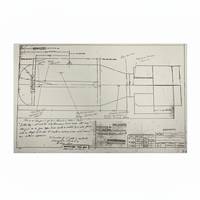
1945réf. 125961945. World War IIAtomic Bomb Van Kirk Theodore J. "Dutch". Single blueprint copy inscribed and signed dated "6 Aug 1945." Single blueprint sheet. Annotated blueprint of "Little Boy" the uranium-235 atomic bomb detonated over Hiroshima on August 6 1945 inscribed and explained by Theodore Van Kirk navigator of the B-29 Enola Gay during the first wartime use of a nuclear weapon. Developed under the direction of the Manhattan Project the bomb marked a decisive technological and geopolitical rupture at the close of World War II inaugurating the nuclear age and reshaping global military doctrine. Approximately 70000 people were killed as a direct result of the blast with comparable numbers injured rendering the event one of the most consequential military actions of the twentieth century. Black-and-white blueprint copy approximately 18 x 24 inches illustrating the internal configuration of "Little Boy" employing the gun-type assembly method in which a sub-critical uranium-235 projectile was fired into a hollow uranium-235 target to achieve supercritical mass and initiate a nuclear chain reaction. Van Kirk has added detailed manuscript notations in pencil and ink identifying principal components including the "Neutron Source" "Steel Tamper" "Gunpowder" "Explosion Device" "Highly Sensitive Radio Antennae" "Uranium 235 'Bullet' Fired into Target to Create a Critical Mass" and "Uranium 235 Hollowed out Target." Along the margin in black ink he writes: "This is a blue print of our Hiroshima Atomic bomb 'Little Boy.' It was the only uranium bomb made. The bomb was designed as a gun type bomb with a bullet of U-235 fired into a U-235 target to create a critical mass." Signed below in blue ink: "Theodore J 'Dutch' Van Kirk Navigator - Enola Gay 6 Aug 1945." The design of "Little Boy" was finalized by early 1945 and reflected a conservative engineering approach intended to ensure detonation reliability despite the unprecedented nature of atomic warfare. As a navigational officer on the mission Van Kirk occupied a critical operational role in delivering the weapon to its target and his explanatory annotations reveal how participants later articulated the bomb's mechanics and singular status as the only uranium-based device used in combat. Minor edge wear and light handling marks; blueprint lines sharp and legible; manuscript annotations and signature clear and strong. Overall very good to near fine condition. unknown
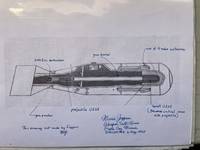
1945réf. 125771945. Jeppson Morris. Hand-annotated diagram of the "Little Boy" atomic bomb 1945 provides a direct technical interpretation of the weapon used in the bombing of Hiroshima by a participant who bridged both its development and deployment. As weapons officer aboard the Enola Gay and a scientist present at Los Alamos Laboratory Jeppson occupied a rare dual role linking the Manhattan Project's design phase with the operational execution of nuclear warfare. His annotations explain the internal structure and function of the uranium gun-type bomb offering a contemporaneous explanation of how critical mass was achieved and how the weapon was triggered. The document situates technical knowledge of nuclear fission within the lived experience of those responsible for its first use in warfare during World War II. Jeppson Morris. "Little Boy" atomic bomb diagram. United States 1945. One-page black-and-white printed diagram with extensive handwritten annotations and arrows in ink signed at lower margin "Morris Jeppson / Weapon Test Officer / Enola Gay Mission / HIROSHIMA 6 Aug. 1945." The annotations identify and explain key components including "target U235" "projectile 235" and the process by which the bomb "Becomes critical mass with projectile" along with labeled elements such as the "electric detonator" "gun barrel" and "one of 4 radar antennas." The markings function as a technical overlay to the printed schematic clarifying both structure and mechanism from the perspective of the officer responsible for in-flight arming and monitoring of the device. The atomic bombing of Hiroshima marked the first combat use of nuclear weapons and introduced a new phase of warfare defined by unprecedented destructive capacity and strategic implications. Jeppson's role in both the scientific and operational dimensions of the mission positions this document within the immediate transmission of specialized knowledge from laboratory to battlefield. His annotations provide insight into how participants understood and communicated the bomb's function contributing to the historical record of nuclear science military technology and the transformation of warfare at the end of World War II. Light handling wear; diagram remains clear with strong legible annotations and signature. Overall very good. unknown
1945réf. 117821945. Van Kirk Theodore J. "Atomic Bomb Explosion Over Hiroshima" signed statement recounting the August 6 1945 atomic bombing mission documents direct eyewitness testimony from the navigator of the Enola Gay the aircraft that delivered the first atomic bomb used in warfare. The document supports research into World War II air operations atomic warfare and firsthand participant narratives of the Hiroshima mission. As navigator Van Kirk occupied a central operational role in the execution of the flight and his account provides detailed observational evidence of the bombing sequence targeting and immediate visual aftermath. Van Kirk Theodore J. Signed statement titled "Atomic Bomb Explosion Over Hiroshima." 1 page. The typed document includes handwritten corrections and additions in blue ink by Van Kirk including the insertion "Over Hiroshima" in the title. The narrative records precise operational timing and targeting details stating: "Our plane was over Hiroshima at 0815 hours. The bomb fell away from the aircraft at 0915:17 Tinian time. It hit right on target on the Aioi Bridge in Hiroshima." Van Kirk further describes the visual effects immediately following detonation: "The first thing we saw was a big white cloud. It was probably 40000 feet already and around the base of that cloud the entire city of Hiroshima was covered with smoke and dust and you couldn't observe a thing down there." The statement also includes reflective commentary on the mission's intended strategic purpose noting pilot Paul Tibbets' assertion that the weapon could "shorten or end the war." Signed in full "Theodore J 'Dutch' Van Kirk." The document originates from one of the most consequential military actions of the twentieth century the atomic bombing of Hiroshima which marked the introduction of nuclear weapons into warfare and directly preceded Japan's surrender. As a participant-generated account it offers primary evidence of crew understanding mission execution and immediate perception of the bomb's effects complementing official military records and later historical analyses. The inclusion of precise times named targets and observational detail enhances its value for reconstructing the operational chronology of the mission. Light handling wear; otherwise well-preserved with clear text and signature. Overall very good condition. unknown