Farmelo, GrahamAntiquariat.de
232 results
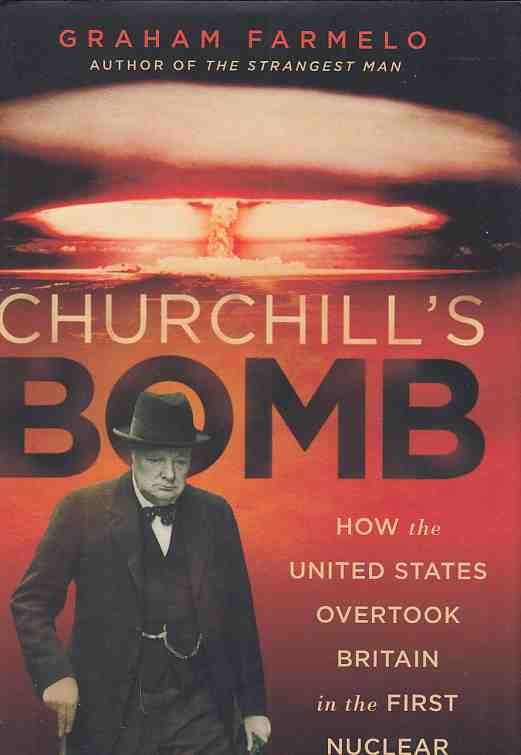
2013ref. 1158003New York: Basic Books, 2013. 554 p. Hardcover with dust jacket.
2007ref. 22213CBKöln, PapyRossa-Verlag, 2007. 8°, 374 S. mit s/w-Abbildungen, farbig illustr. original Kartonage (Paperback), Erstausgabe drei Seiten mit minimalen Eckknickspuren, sonst gutes, sauberes Exemplar
1963ref. 96669FBLondon:, Chatto & Windus for the Institute for Strategic Studies, 1963. x, 236 Seiten, (1) Bl. (vakat), tanngrüner OLnbd. mit goldgeprägtem Rückentitel, farbig illustrierter OU., 21,5 x 14 cm.
1972ref. 004712Washington, Superintendent of Documents, U.S. Government Printing Office, 1972. Broschiert 8° 0
1977ref. 004060Washington, Senate Armed Service Comitee, 1977. -- Broschiert -- Lex. 8°
1976ref. 004059Washington, Senate Armed Service Comitee, 1976. -- Broschiert -- Lex. 8°
1975ref. 004058Washington, Senate Armed Service Comitee, 1975. -- Broschiert -- Lex. 8°
ref. ANAIS-078062386XTurner Home Ent. other. Good. 1.8x09x2.1. Buy with confidence. Excellent Customer Service & Return policy. Turner Home Ent unknown
ref. DADAX1408719770Little Brown Book Group. New. 11.70x0.52x8.19. Buy with confidence. Excellent Customer Service & Return policy. Little, Brown Book Group unknown
1959ref. 223101959. United States Army Intelligence School. Intelligence training archive. 1959-1963. This archive documents the institutional training system used by the U.S. Army Intelligence School at Fort Holabird during the Cold War outlining how personnel were instructed in reconnaissance mapping foreign intelligence analysis and counterintelligence operations. The material establishes a formal curriculum designed to prepare officers for intelligence work in the context of U.S.-Soviet conflict combining doctrinal interpretation of adversary systems with technical instruction in observation terrain analysis and operational planning. It provides primary evidence of how intelligence training integrated ideological framing with practical field methods. Archive of 13 instructional documents totaling approximately 459 pages issued between 1959 and 1963 including manuals technical booklets and training schedules. Titles include 1 Soviet Intelligence Systems Nov 1962 2 Observation and Description Jan 1961 3-5 Military Map Reading booklets 1959-1961 6 Interpretation of Highways Bridges and Transportation Facilities Oct 1961 7 USAINTS Library Guide Jan 1962 8 Operational Data on South Korea I Sep 1962 9 Nuclear Warfare II Jun 1963 10 Benelux Jul 1961 11 Solution of Dispersion Problems undated and 12-13 weekly training schedules June and July 1963. The manuals include diagrams and exercises on map reading identifying "recognition distance and direction" as core elements with annotated examples of azimuth calculation and grid use. Instructional material in Observation and Description includes facial and morphological diagrams distinguishing features such as "Vertical Forehead" and "Bushy" eyebrows for identification purposes. Soviet Intelligence Systems presents ideological analysis stating that Soviet security organs are "extensions of the Party's designs" and describing intelligence as "a pervasive force which envelops every sector of society." Infrastructure manuals include photographic examples of roads and bridges for field identification while the Library Guide outlines access systems and spatial organization of intelligence resources. Weekly schedules list training components such as report writing practical exercises and seminars alongside technical instruction in photography. Produced during a period of sustained Cold War tension these materials show how the U.S. Army formalized intelligence education by combining political interpretation of adversaries with standardized technical training. The emphasis on mapping surveillance and infrastructure analysis reflects preparation for both conventional and nuclear-era operations while the inclusion of regional studies such as South Korea and Benelux indicates geographic scope within global strategic planning. Minor rust to staples light edge toning and scattered manuscript annotations; occasional corner creases and small marginal tears not affecting text; overall very good. A cohesive archive of Cold War intelligence training preserving the instructional methods and analytical frameworks used by the U.S. Army in the early 1960s. unknown
1961ref. 224311961. Lockheed Aircraft Corporation. Satellite Systems Timing Formats. Report No. LMSD 918768. Sunnyvale CA: Lockheed Missiles and Space Division 19 June 1961. First edition. Approximately 20 pages. Comb-bound in original two-tone green printed covers with graphic icons representing clocks timing pulses and telemetry. Internal pages mimeographed or offset-printed with detailed binary diagrams timing tables and correction notices. Includes an errata page stapled to title page. An internally circulated technical manual from the early years of Cold War aerospace innovation this 1961 Lockheed Missiles and Space Division report outlines the timing code formats used by various satellite systems at a critical juncture in American space and reconnaissance development. Compiled by Lockheed engineers at the company's Sunnyvale California facility-epicenter of classified space-based military systems including CORONA spy satellites-the document sought to resolve the absence of a unified standard across multiple U.S. satellite platforms. "This report is to acquaint users with the timing formats in use by Satellite Systems" the foreword explains. "The details of each time code word. are compiled from their respective Technical Manuals and Handbooks. Code word titles as shown in this report have originated from lack of an available standard." The manual includes precise descriptions of timing word construction for satellite telemetry: "The illustration below shows the BCD time code word as it is received in the timing accumulator. Each group represents a decimal digit." The document further notes that bits were encoded in a non-return-to-zero format and generated "at a 50 bit-per-second rate." Time was broken into discrete segments using "6 ms Early Frame Pulses" and binary-coded decimal groupings for hours minutes and seconds. Applications included magnetic tape recording oscillograph output and "film and real time transmissions" for both "manual and automatic data reduction." One supplemental sheet dated July 1961 signed by systems integration manager George Priff lists technical corrections such as "Figure 1 is shown inverted the code word consists of negative pulses." Issued just as Project Mercury was placing the first Americans into orbit and at the dawn of global reconnaissance satellite use this document reflects the hidden architecture of U.S. space operations-how data time and telemetry were synchronized across a rapidly expanding satellite infrastructure. Created in the same year as the launch of Transit 4A the first nuclear-powered satellite and the continued development of Lockheed's Agena spacecraft this report offers key insight into the programming data acquisition and timing challenges that defined early aerospace telemetry systems. Comb binding intact with minor creasing to plastic spine; covers show modest wear and faint markings to upper right; internally clean and complete. Overall very good condition. unknown
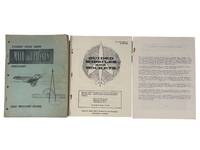
1950ref. 223721950. A rare instructional archive from the height of the Cold War arms and space races documenting the teaching strategies technical priorities and ideological frameworks used by the U.S. military to train service members in missile technology physics and emerging space policy. These materials reflect the growing importance of scientific education within the armed forces during the period of intense technological competition between the United States and the Soviet Union following the launch of Sputnik and the acceleration of missile and space programs. This archive includes three distinct publications produced by branches of the Department of Defense and the U.S. Air Force: a heavily illustrated USAF Preflight School "Math and Physics" Student Study Guide ca. late 1950s 244 pages; the DOD Fact Sheet 3-F on "Guided Missiles and Rockets" 29 April 1960 59 pages; and a striking early federal statement titled "Introduction to Outer Space" ca. late 1950s 11 pages intended to justify a national space program. Together these works reflect the militarized scientific culture of early Cold War America where soldiers were expected to master STEM fundamentals understand atomic missile classifications and absorb the ideological stakes of U.S. supremacy in space. The Preflight School Study Guide opens with a cartoon image of a smiling cadet pointing to a "Table of Contents" listing 20 core lessons including: "Velocity and Acceleration" "Vectors" "Electricity and Magnetism" and "Jet Engine Principles." Designed to bring young recruits up to speed on mathematical and physical foundations this booklet illustrates how the military systematized the transmission of civilian STEM knowledge through instructional cartooning step-by-step reviews and mechanical principles tied directly to aeronautics. The document also reflects broader efforts to professionalize enlisted men into a new technocratic class of Cold War airmen. The DOD Fact Sheet 3-F dated 29 April 1960 is a mimeographed technical manual that lists every operational missile and rocket then used by the Army Navy Air Force and Marine Corps. Each entry is meticulously typed and includes missile name type e.g. "surface-to-surface" speed launch weight prime contractor warhead type and guidance system. Key entries include the NIKE AJAX NIKE HERCULES REDSTONE PERSHING and POLARIS missiles. The NIKE AJAX is described as "the nation's first supersonic anti-aircraft guided missile. designed to intercept and destroy bomber aircraft regardless of evasive action." The HERCULES system is called "a major advance. capable of operation in an electronic countermeasures environment." These materials also serve as a record of U.S. procurement partnerships with Bell Labs Western Electric and Douglas Aircraft-illustrating the military-industrial complex in full effect. The third item titled "Introduction to Outer Space" is a pedagogical and ideological primer explaining the rationale behind federal investment in space exploration. Structured around four key justifications-scientific curiosity military defense national prestige and technological advancement-it declares: "The first of these factors is the compelling urge of man to explore. Most of the surface of the earth has now been explored and men now turn to the exploration of outer space as their next objective." This philosophical argument for militarized space policy also hints at early satellite surveillance goals: "The launching of satellites. can be done with the aid of new things: 1 it can look down at the earth and map out the terrain. 2 it can look out into space. and 3 it can look at the sun." Notably this text served as the basis for a widely distributed 1958 White House document under the Eisenhower Administration laying ideological groundwork for what would soon become NASA and the National Defense Education Act NDEA of 1958. Pages toned with some rusting to staples especially visible on "Introduction to Outer Space." Light wear to edges of math booklet. Overall very good condition. An outstanding and uncommon pedagogical archive documenting how the U.S. military trained its enlisted men to master missile and rocket technologies at the dawn of the space age while also advancing an explicitly ideological case for Cold War space supremacy. unknown
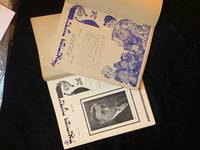
1957ref. 43419New York: Shalom-Alekhem folks shuln 1957. First edition. Original illustrated paper wrappers bound by year into later paper outer wrappers for each yearly volume 4to each issue contains 18 pages includes illustrations. 26 cm. In Yiddish. Title translates as "Children's Journal." All published copies of the famous Yiddish children's magazine Kinder Zhurnal from 1956 and 1957 during the Cold War. Six issues per year. "Kinder zhurnal a children's magazine was in existence from 1920 to 1981. Its first editor Shmuel Niger served from 1922 to 1948. The magazine published works by writers such as Mani Leib Aleph Katz Jacob Glatstein Kadia Molodowsky. Farlag Matones was established in 1925 as a publisher of children's books but became a leading publisher of Yiddish literature and of well-known authors such as Menahem Boraisha Jacob Glatstein Chaim Grade Moses Moyshe Leib Halpern Leibush Lehrer Isaac Bashevis Singer Hillel Zeitlin Aaron Zeitlin. Lippa Lehrer was the manager and leading figure of both organizations and was editor of Kinder zhurnal for a number of years." YIVO SUBJECTS: Children's literature Yiddish -- Periodicals. Children's literature Yiddish. OCLC: 10158059 Outer blank paper wrappers faded with light rusting to staples but issues themselves remain in Very Good Condition. YID-48-104-GGLEX-'cc. New York: Shalom-Alekhem folks shuln unknown
1967ref. H10051Institute of Applied Semantics; Universal Bureau of Applied Languages 1967. Very Good. 8.5 x 11 inches strapped binding with bands of stainless steel 173 pp very good light soil to covers. RARE no copies in OCLC. Not intended for publication these were background "white papers" sold to government agencies and interested parties that are an accumulation of photocopied documents communiques articles transcripts etc. A fascinating look at Cold War research. We love the grandiose and nonsensical names of the company that produced this. Right out of Thomas Pynchon. Institute of Applied Semantics; Universal Bureau of Applied Languages unknown
1960ref. 204719Los Angeles: Committee Against Anti-Semitism and Renazification of West Germany 1960. Neat pencil notation; fine. Mimeograph leaflet printed on two sides of a single leaf approx. 8-1/2 X 14 inches. Leaflet calling for peace and opposition to German reunification. The map in question which serves as a cover image was reproduced from a placard then circulating in West Germany. It shows the divided condition for Germany - including portions of Poland and Russia that had been part of Hitler's conquest - under German-language slogan calling for reunification. Committee Against Anti-Semitism and Renazification of West Germany unknown
1948ref. 204680N.P. Los Angeles: n.p. 1948. Folded three times horizontally as for mailing otherwise fine. Mimeographed broadside printed on one side of a single legal-sized leaf approx. 8-1/2 X 14 inches. Informational broadside of unspecified origin likely intended for readers of "Peoples' World" or a similar Soviet-sympathetic publication. The document centers on a Q & A sequence addressing the situation in Berlin which had been blockaded by the occupying Soviet forces in a direct challenge to the developing post-war order. The broadside offers explanations of some of the issues that led to the blockade. It appears to predate the commencement of the Berlin Airlift with which allied forces answered the blockade. An early relic of one of the first major controversies of the Cold War. n.p. unknown
1954ref. 204355NP: NP 1954. Complete intact with some separation at perforation and in fine condition. Single sheet of eight stickers separated by perforations each measuring about 2 X 3-3/4 inches. A series of protest stickers issued in the wake of the fatal H-Bomb test in the Pacific amid growing fear of nuclear war. There are four designs each printed twice in two different color combinations: "Ban the H-Bomb!" "Let Kids Grow Up!" "Talking Is Better Than Dying!" and "Truce! No Troops to Indo-China." each sticker also urges people to write President Eisenhower or your congressman. A rare survival from the Cold War. NP unknown
1966ref. 3759Fayard 1966 493 pages in8. 1966. broché. 493 pages. Cet ouvrage d'André Fontaine propose une analyse historique de la guerre froide en adoptant une perspective originale qui fait débuter le conflit dès la Révolution d'octobre de 1917 plutôt qu'après la Seconde Guerre mondiale. L'auteur ancien directeur du journal Le Monde retrace les relations entre l'URSS et le monde occidental jusqu'à la guerre de Corée (1917-1950) dans ce premier tome d'une série en deux volumes
ref. 202500556Paris, Albin Michel, 1987 ; in-8, 31 pp., br. Bon état.
ref. 201800160Paris, Fayard, 1969 ; in-8, 193 pp., br.
ref. 200713072Paris, Fayard, 1965 ; in-8, 301 pp., broché, couverture illustr.
1954ref. 011808Leiden 1954 A. W. Sijthoff's uitgeversmij N.V. Hardcover Near Fine
1975ref. vd796Fayard Dos carré collé 1975 In-8 (15,7 x 23,5 cm), dos carré collé, 383 pages, ouvrage épuisé ; volume bruni, pliure au dos et au quatrième plat, quelques traces sur les plats et rousseurs aux tranches, par ailleurs assez bon état général. Livraison a domicile (La Poste) ou en Mondial Relay sur simple demande.
1955ref. 99940152B.E.I.P.I. B.E.I.P.I., 1955. In-12 broché de 30 pages. Bon état.
1966ref. 157246Fayard Fayard, 1966. In-8 broché, couverture à rabats de 501 pages.Tome I. De la Révolution d'Octobre à la guerre de Corée. Collection Les grandes études contemporaines. Rares passages discrètement soulignés au crayon de papier, en marge sinon bon état