1177 resultados
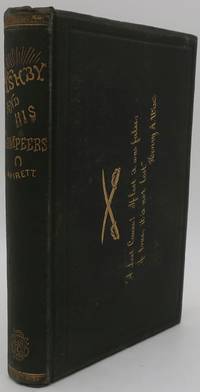
1907ref. 81587Pana Illinois: Kerr's Printing House 1907. Presumed First Edition First printing thus. Staplebound wraps. Fair. 50 pages plus seven illustrations/plates. Front cover and next page have the names and address of previous owner and a date stamped on it. Cover is worn torn chipped and soiled. The 2nd Illinois Cavalry Regiment was a cavalry regiment that served in the Union Army during the American Civil War. Companies "A" to "L of the 2nd Illinois Cavalry was mustered into service at Camp Butler Illinois on August 12 1861. Company "M"" was mustered in on December 30 1861. The regiment was mustered out on December 30 1865. The regiment suffered 8 officers and 50 enlisted men who were killed in action or who died of their wounds and 3 officers and 173 enlisted men who died of disease for a total of 234 fatalities. Commanders: Colonel Silas Noble - mustered out February 16 1863; Colonel John J. Mudd - killed in action May 3 1864; Colonel Daniel B. Bush Jr. - discharged July 24 1865; and Colonel Benjamin F. Marsh. The first photograph appears to be of the reunion attendees. The following photographs are: Sergt. Wm. M. Baldwin Company K; Colonel D. B. Bush Colonel John J. Mudd Lieut. Col. Harvey Hogg Lieut. Col. B. F. Marsh and Major F. B. Moore. This is a storehouse of information with names of survivors some addresses and vignettes about fallen comrades and others and death notices of members of the Association. There is some information on the Battle of Bolivar. This copy belonged to James P. Chase of Socorro New Mexico and an empty envelop addressed to him remains with this work. He appears to have been a founder of a Masonic lodge in Socorro. Kerr's Printing House paperback
1797ref. 183961797. Fawcett William. Instructions and Regulations for the Formations and Movements of the Cavalry 1797 establishes the standardized system of cavalry drill and maneuver adopted by the British Army at the close of the eighteenth century forming part of the institutional reforms that shaped British military readiness during the French Revolutionary and Napoleonic Wars. Issued under War Office authority the manual codifies cavalry organization battlefield movement and command structure at a moment when the British Army was professionalizing its training systems following the disruptions of prolonged continental conflict. Fawcett serving as Adjutant-General and one of the most senior officers in the army directed reforms that imposed uniformity across regiments and this work documents the formal transmission of those standards into operational practice. Fawcett William. Instructions and Regulations for the Formations and Movements of the Cavalry. London: Printed for the War Office 1797. First edition. Octavo. 342 pages with 16 folding engraved plates. Original gray boards. The engraved plates illustrate cavalry formations movement sequences and positional alignments providing visual instruction to accompany the printed regulations. Textblock uncut. Produced during a period of sustained military engagement against Revolutionary France this manual aligns with broader War Office efforts to centralize command structure and standardize training across infantry and cavalry units contributing to the operational coherence later demonstrated in campaigns such as the Peninsular War. The work provides direct evidence of how doctrine was disseminated within the British Army offering material for the study of military pedagogy battlefield coordination and the administrative consolidation of state military power in the late eighteenth century. Upper cover detached spine chipped at head and tail with general wear consistent with use; textblock remains clean and uncut. Overall good to very good condition. unknown
1797ref. 183961797. Fawcett William. Instructions and Regulations for the Formations and Movements of the Cavalry 1797 establishes the standardized system of cavalry drill and maneuver adopted by the British Army at the close of the eighteenth century forming part of the institutional reforms that shaped British military readiness during the French Revolutionary and Napoleonic Wars. Issued under War Office authority the manual codifies cavalry organization battlefield movement and command structure at a moment when the British Army was professionalizing its training systems following the disruptions of prolonged continental conflict. Fawcett serving as Adjutant-General and one of the most senior officers in the army directed reforms that imposed uniformity across regiments and this work documents the formal transmission of those standards into operational practice. Fawcett William. Instructions and Regulations for the Formations and Movements of the Cavalry. London: Printed for the War Office 1797. First edition. Octavo. 342 pages with 16 folding engraved plates. Original gray boards. The engraved plates illustrate cavalry formations movement sequences and positional alignments providing visual instruction to accompany the printed regulations. Textblock uncut. Produced during a period of sustained military engagement against Revolutionary France this manual aligns with broader War Office efforts to centralize command structure and standardize training across infantry and cavalry units contributing to the operational coherence later demonstrated in campaigns such as the Peninsular War. The work provides direct evidence of how doctrine was disseminated within the British Army offering material for the study of military pedagogy battlefield coordination and the administrative consolidation of state military power in the late eighteenth century. Upper cover detached spine chipped at head and tail with general wear consistent with use; textblock remains clean and uncut. Overall good to very good condition. unknown books
Second, best, and last edition of this comprehensive guide to military strategy. A how-to guide for all ranks of soldier, from private to general. With three folding plates, showing typographical diagrams of military formations. Cockle 588. 4to. Contemporary vellum, title in manuscript on spine. Binding lightly soiled but surprisingly unworn. A little minor, faint, old staining in margins of the first few leaves, but otherwise very fresh internally. A very good copy of a rare book.
19738 vols., roy. 8vo., First Edition, with very numerous plates, illustrations in the text and maps throughout; cloth, gilt backs, a near fine set in the dustwrapper. VOLUMES ONE TO FOUR ARE SIGNED BY THE AUTHOR ON TITLES. Vol. 1: 1816-1850 (1973); Vol. 2: 1851-1871 (1975); Vol. 3: 1872-1898 (1982); Vol. 4: 1899-1913 (1986); Vol. 5: 1914-1919 Egypt, Palestine & Syria (1994); Vol. 6: 1917-1918 Mesopotamia (1995); Vol. 7: Curragh Incident & Western Front 1914 (1996); Vol. 8: Western Front 1915-1918; Epilogue 1919-1939 (1997). Anglesey's monumental work, now unlikely ever to be surpassed, is the defiinitive history of the final phase of the British cavalry.
1820Duodecimo. Pp. 230, (1) Errata. Plus fold-out plate bound at end with 3 hand-coloured lithographed costume studies. Hardcover, bound in contemporary light green boards, old blank lettering-piece to spine, discoloured and faded; few spots on plate. In fine condition. Excellent copy, wide-margined and bright interior, preserved entirely in the original state. ~ First edition. Of utmost rarity. One institutional holding is located worldwide, that in Duke University, NC. In Germany, only two institutional copies are located, both incomplete, comprising of 220 pages only and without the coloured plate. If these are variants or faulty copies, could not be determined. OCLC 310944894. Not in Sloos.
1943ref. 3081A PARIS. PARIS (VI°). LIBRAIRIE MILITAIRE CART. 1943-1948. 6 SERIES IN-4 (25 X 32,5 X 2,5 CENTIMETRES ENVIRON) DE 55 + (1) PAGES ET 52 PLANCHES HORS TEXTE EN COULEURS, SOUS COUVERTURES CREMES ILLUSTREEES. ILLUSTRE DE 52 PLANCHES EN COULEURS HORS TEXTE PAR BEGNINI, BUCQUOY, FEIST, GIFFARD, HILPERT, LELIEPVRE, PIERRE ALBERT LEROUX, MALESPINA, LUCIEN ROUSSELOT, MAURICE TOUSSAINT, EDITION ORIGINALE ET PREMIER TIRAGE LIMITE A 450 EXEMPLAIRES NUMEROTES, CELUI-CI PORTANT LE NUMERO 72. COLLECTION COMPLETE DE CETTE RARE ET BELLE PUBLICATION. BEL EXEMPLAIRE.
1828ref. 63001München, Gedruckt mit Rösl?schen Schriften, 1828. 8°. Mit 2 gefalt. lithogr. Titeln, 93 gefalt. lithogr. Tafeln u. 7 gefalt. lithogr. Musikseiten. XV, 501 S., 1 Bl.; XIX, 360 S., 1 Bl., Ldr.-Bde. d. Zt. a. 4 Bünden m. Rückenverg. u. goldgepr. Rückentiteln (die Textbände auch mit dreiseitigem Goldschnitt).
ref. wc980Saumur, S. Milon fils, libraire-éditeur Relié 2 forts volumes in-8, (19.5x28 cm), relié demi-chagrin bleu d'époque,dos à 4 nerfs titrés, XIII-593 [1]pp et 774-[1] pp, couverture illustrée conservée pour chaque volume, 52 gravures hors-texte, épidermures au tome 2, reliures frottées. Livraison a domicile (La Poste) ou en Mondial Relay sur simple demande.
1881ref. 000073USA. Good. 1881. Original Cloth. Three curious diaries/logs/journals of Peter H. Grisham mustered out a Corporal of the 2nd Kentucky Cavalry. Peter tends to write front to back and then change back to front in these 'pocketbook' type journal. Peter meanders making observations jotting memories detailing genealogical histories; Mrs. Mary Bevins his sister some famed people he knew through his father and notes the history of the family's steel works is in the snippets to follow. "July 10th 1883. My duties have been arduous have neglected to keep up any diary regularly. I went to Arkansas - last May was a year - via Baltimore Harrisburg Pittsburg Chicago St. Louis by RRs and by Steamer too Memphis by RR to Little Rock Geary Ark. to my sister Mrs. Mary Blevins near Pangburn White Co. Ark" "July 22nd 1883 - Wrote letter to J. Lundy Brotherton Phila. in reply to his in regard to Benj Lundy and Elihu and Elijah Embree who printed published the 1st Emancipation newspaper in the US States some 50 years ago.took me to clerk at his great ironworks in 1838.I stayed at his house as a clerk near six years and was present when he died." "About six years ago Bridget an Irish girl that sews for them that G. Eaton was paymaster general under Genl Scott killed himself before this: he ran away with the granddght of his 1st wife. Col. Clark.knows of it." July 29th 1883 Alexandria Va. This ancient city is still inhabited by many of the old Virginia Aristocracy who own the best of the property. The city was mostly of the tory sort I believe in the days of Washington - who attended Church here in the same building I did today.That it sympathised with England and the King may be inferred from the names of the streets - King St. Queen St. Prince.It was also a strong rebel city during the late war sending about a thousand soldiers into the rebel army under Genl R.E. Lee who lived a few miles above opposite the city of Washington. The pocketbook has a page or two missing one hinge is loose is written in pencil blue crayon and pen. A number of pages are financial - stock holdings monies loaned and repaid. Some more legible than others especially the log parts where he has crossed out information that was no longer relelvant. 50pp. Diary for 1881 also a pocketbook style tells the long tale of the death of Catherine M. Melville and other historically relevant events for Washington City DC as he writes. 20pp.Diary for 1890 is for the most part very much like the others.; Manuscript; 32mo - over 4" - 5" tall; HANDWRITTEN MANUSCRIPT DOCUMENT LETTER AUTOGRAPH DIARY JOURNAL LOG KEEPSAKE WRITER HAND WRITTEN DOCUMENTS SIGNED LETTERS MANUSCRIPTS HISTORICAL HOLOGRAPH WRITERS DIARIES JOURNALS LOGS AUTOGRAPHS PERSONAL MEMOIR MEMORIAL PERSONAL HISTORY AMERICANA Genealogy Tennessee Washington Dc Alexandria Virginia Americana Civil War . hardcover
ref. 63616aafs.d. (18e s.), 33 x 21.5 cm, ms. sur papier, 68 ff. (136 p. d'une écriture dense ca. 65 lignes par feuille), cartonnage simple d’époque.
ref. DADAX0891416749New unknown
1885ref. 8637Paris Boussod 1885 Seize portfolios demi percaline grise à coins, plats de papier marbré et étiquettes de titre au plats supérieurs, rubans, complet des 16 livraisons en feuilles, soit au total 2 ff. de titre, 2 frontispices, 2 couvertures conservées, 2 tables, 244 pages avec de nombreuses illustrations in-texte et 60 planches en couleurs hors-texte. Légères rouseurs, mouillure à la 15e livraison, à un coin du portfolio et en marge des premiers feuillets, néanmoins bel ensemble.
ref. 218883Saumur, S. Milon fils, (1890) 2 forts vol. gr. in-8, XIII-593-[1] pp. et 774-[1] pp., 52 gravures h.-t. dont certaines à double page, demi-chagrin rouge à coins, dos à nerfs orné, couv. cons. (reliure de l'époque). Usures aux coins, infime accroc à la coiffe supérieure du tome 1.
1867ref. 001082AABaltimore Maryland: Selby & Dunlany 1867. FIRST EDITION. Hardcover. Very Good. A VERY GOOD HARDCOVER COPY. FIRST EDITION. A MUCH NICER COPY THAN USUAL. VERY TIGHT AND SQAURE. NO FADING TO SPINE AND NO BUMPED CORNERS TO BOOK. GOLD GILT LETTERING TO SPINE AND COVER ARE BRIGHT AND CLEAN. NO CRACKED HINGES OR LOOSE PAGES. FRONTIS PIECE WITH TISSUE GUARD. 408PP. Listed in Howes A-425; Nevins 1p53. Haynes 1:833 Eicher 183; Dornbush II 2584. "The best source material on the daring Chief whose death in 1862 was a severe blow to the South" Nevins. A very nice copy scarce in this nice condition. No media mail shipping. Priority Mail Only. Selby & Dunlany hardcover
2000ref. SBBIH-ST4O6AO2YNM7Editions Hatier 2000. paperback. Good. Our good condition books are generally good for reading but not for gifting or collecting. They could have imperfections such as creasing fanning inscriptions margin notes yellowing staining on edge or cover or pages bumps scuffs etc etc sometimes multiple of these. It's a wide category that encompasses anything that isn't almost-new down to anything that is slightly better than poor. We would NOT recommend gifting Good books - these should be considered reading copies. Our books are dispatched from a Yorkshire former cotton mill. We list via barcode/ISBN so please note that the images are stock images and may not be the exact copy you receive furthermore the details about edition and year might not be accurate as many publishers reuse the same ISBN for multiple editions and as we simply scan a barcode or enter an ISBN we do not check the validity of the edition data when listing. If you're looking for an exact edition please don't order at least not without checking with us first although we don't always have time to check. We aim to dispatch prompty the service used will depend on order value and book size. We can ship to most countries see our shipping policies. Payment is via Abe only. Editions Hatier paperback
1882ref. 58456Fort Laramie WT 1882. 4to. Three pages approximately 275 words in part: "There is not to my mind outside of Divine Writ so convincing an evidence of the immortality of the soul as is furnished by the growth and development of the mind and character of this greatest of American Presidents to meet the exigencies of the direction and control of a great Revolution on the successful issue of which depended the happiness of one fifth of the world . as his career differed from that of the other heroes of history in that he lived and strove for reforms that would benefit mankind though his own life should be the price in so far is Abraham Lincoln the greatest of Reformers the noblest of Patriots the ablest of men." This essay was published along with other tributes to Abraham Lincoln in The Lincoln Memorial NY 1882. Very good. Folded. #6317. Wesley Merritt graduated from West Point in 1860 serving briefly in the West before returning east for Civil War service in the Union cavalry attached to the Army of the Potomac participating in its major campaigns and battles through Appomattox ending the war commanding a division as a Major General. Following the war he commanded the 9th Cavalry in Texas for eight years; promoted to colonel in 1876 he took command of the 5th Cavalry in Wyoming participating in the Custer campaign and other actions against the Indians and serving in that capacity until 1882 when he was appointed to a five-year posting as superintendent of West Point. He commanded the 1898 expedition to the Philippines during the Spanish-American War. unknown
1882ref. 58456Fort Laramie WT 1882. 4to. Three pages approximately 275 words in part: "There is not to my mind outside of Divine Writ so convincing an evidence of the immortality of the soul as is furnished by the growth and development of the mind and character of this greatest of American Presidents to meet the exigencies of the direction and control of a great Revolution on the successful issue of which depended the happiness of one fifth of the world . as his career differed from that of the other heroes of history in that he lived and strove for reforms that would benefit mankind though his own life should be the price in so far is Abraham Lincoln the greatest of Reformers the noblest of Patriots the ablest of men." This essay was published along with other tributes to Abraham Lincoln in The Lincoln Memorial NY 1882. Very good. Folded. #6317. Wesley Merritt graduated from West Point in 1860 serving briefly in the West before returning east for Civil War service in the Union cavalry attached to the Army of the Potomac participating in its major campaigns and battles through Appomattox ending the war commanding a division as a Major General. Following the war he commanded the 9th Cavalry in Texas for eight years; promoted to colonel in 1876 he took command of the 5th Cavalry in Wyoming participating in the Custer campaign and other actions against the Indians and serving in that capacity until 1882 when he was appointed to a five-year posting as superintendent of West Point. He commanded the 1898 expedition to the Philippines during the Spanish-American War. unknown books
ref. 709454to. One-page approximately 100 words in part: "For $200 paid to one Abner Best We bind ourselves to give said negro man named George good & sufficient winter & summer clothing a pair of shoes in summer & a pair of boots & socks in winter attend him properly in sickness pay taxes and his doctor bills and we are to lose all lost time." Two associates signed the slave hire with Shelby. Some foxing but very good. Folded. Shelby a native of Kentucky was a prominent ante-bellum businessman with holdings in his native state and Missouri. He commanded a group of pro-slavery advocates in the Kansas troubles of the late 1850s and organized a cavalry company at the outbreak of war. Earning a Forrest-like reputation in the Trans-Mississippi he successfully commanded brigade and division strength units generally attached to the forces of Sterling Price. Following the war he fled to Mexico rather than surrender. Slavery related manuscript material attached to prominent Confederate military officers is most uncommon on the market. unknown
ref. 709454to. One-page approximately 100 words in part: "For $200 paid to one Abner Best We bind ourselves to give said negro man named George good & sufficient winter & summer clothing a pair of shoes in summer & a pair of boots & socks in winter attend him properly in sickness pay taxes and his doctor bills and we are to lose all lost time." Two associates signed the slave hire with Shelby. Some foxing but very good. Folded. Shelby a native of Kentucky was a prominent ante-bellum businessman with holdings in his native state and Missouri. He commanded a group of pro-slavery advocates in the Kansas troubles of the late 1850s and organized a cavalry company at the outbreak of war. Earning a Forrest-like reputation in the Trans-Mississippi he successfully commanded brigade and division strength units generally attached to the forces of Sterling Price. Following the war he fled to Mexico rather than surrender. Slavery related manuscript material attached to prominent Confederate military officers is most uncommon on the market. unknown books
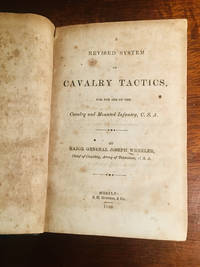
1863ref. 1214Rare Confederate Imprint: 24 mo. 5 1/2 by 3 3/4 inches 1 preliminary leaf ii Three parts in one volume: "Cavalry Tactics For Single Line Formation" 220 pages "Evolutions of a Regiment" 104 pages "Skirmish Drill for Mounted Troops" 47 pages "Bugle Signals" pages 97-108 among them: "To Arms" "The Charge" "Reveille" "Retreat" "Dinner Call" and "Tattoo" all with musical notation "Table of Contents" plus Index and "Skirmish Drill For Mounted Troops" xiv pages 38 plates some folded: diagrams tables and charts. Good condition collated perfect in green paper covered boards old blue cloth re-backing with worn black paper label mild foxing to some pages – not affecting contents. "Fighting Joe" Wheeler was a cavalry general in the Confederate States Army. He was the senior cavalry general in the Army of Tennessee and fought in most of its battles in the Western Theater. He earned his nickname on the Western frontier where he distinguished himself in skirmishes against Native Americans. S. H. Goetzel, & Co. hardcover
1767ref. 002383Genève Par la Compagnie des Libraires 1767
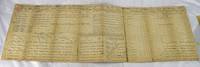
1863ref. 2604050021United States Army 1863. First Edition. Manuscripts & Paper Collectibles. Very Good. Signed. Large two sided document. Printed with manuscript names filled in. The first name listed is Colonel Eli Long. This document shows the Colonel Captains Sergeants Lieutenants and the privates. This document shows the pay from October 31st 1863 to December 31st 1863. According to NPS: "On February 23 1863 Long was appointed colonel of the 4th Ohio Cavalry a regiment which recently had surrendered to the Confederate raider Brigadier General John Hunt Morgan. Long improved the morale of the regiment and led it in the Tullahoma Campaign. He commanded the regiment's brigade the 2nd Brigade 2nd Division Cavalry Corps of the Department of the Cumberland between March 1863 and August 20 1864 including service at the Battle of Chickamauga. Long was wounded in the left side at the Battle of Farmington Tennessee October 7 1863. He was distinguished in the Atlanta Campaign where he suffered a head wound at the Battle of Jonesboro Georgia August 20 1864 and wounds in the right arm and right thigh at the Battle of Lovejoy's Station Georgia August 21 1864. Long received brevet grade appointments as major lieutenant colonel and colonel in the Regular Army of the United States for "gallant and meritorious services" at the Battle of Farmington and Battle of Fort Sanders Knoxville in Tennessee and Battle of Lovejoy's Station in Georgia respectively. Between November 16 1864 and April 2 1865 Long commanded the 2nd Division of the Cavalry Corps of the Military Division of Mississippi under Major General James H. Wilson. On April 2 1865 during Wilson’s Raid Long was severely wounded in the head at the Battle of Selma Alabama. During that battle he led the 2nd Division in a charge upon the entrenchments that resulted in the capture of that town. During the Civil War Long was wounded five times and also cited for gallantry five times. On January 13 1866 President Andrew Johnson nominated Long for appointment to the brevet grade of major general of volunteers United States Army unknown
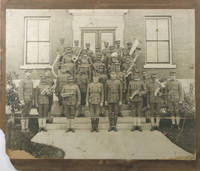
1910ref. List304Fort Ethan Allen 1910. Gelatin silver print mounted to board 16 ¼ x 14 ½ inches. Fair to Good. The 10th Cavalry was one of the original “Buffalo Soldier” regiments of the post-Civil War segregated U.S. Army first seeing action in the Indian Wars. Their band is shown here most likely during their stint at Fort Ethan Allen in Vermont. They are wearing a mix of insignia from 1902 to 1908 and some are shown in civilian clothing which suggests the picture was taken in Vermont as this was during the time the Army used a vast mix of insignia and the brick architecture of the background also matches that of the fort. They were exposed to some racism during their time in Vermont - the soldiers were punished for associating with neighboring white women with some of the offenders being confined to the guardhouse for punishment which fits with the strictly segregated Army policies of the time. The soldiers did also record positive aspects of their time at the fort including studying at the fort’s library and playing nightly games of the newly-invented sport of basketball. These amenities provided some positive contrast to the previous assignments of the regiment who had been mostly stationed on the frigid plains where the army believed racial tensions would be kept to a minimum. The picture shows the band with the normal marching band instruments of clarinets tubas and sousaphones as well as an alto clarinet oboe and what appears to be a baritone saxophone. We find no other examples of the 10th Cavalry Band and the picture shows the regiment at a relatively calm time as they would soon be sent to the Mexican-American border in 1913 to deal with rising tensions. The picture has condition issues with damage to the mount some damage to the bottom left corner and a crease along the bottom third of the image along with closed tears and chipping to the title label. It remains in fair to good condition attractive and worthy of preservation. unknown