CavalerieBiblio.com
1.165 resultados
1896ref. 152509Bruxelles : J. B. Stephens 1896. First Edition. Hardback. A fine copy in the original blind tooled pebbled cloth. Remains particularly well-preserved overall; tight bright clean and especially sharp-cornered. Ex-libris copy with minor internal marks remaining. ; 61 pages; Description: 61 p. : ill. some foldng ; 15 cm. Subjects: Explosives --Tactics --Warfare. Lieutenant Piret's copy with signature. Bruxelles : J. B. Stephens hardcover
ref. 01-1226Paris: chez la Veuve Gandouin; Giffart; David l'Aîné; Jombert; Durand 1754. 4to. 3 vols. Folding engraved and etched plates. Original calf with 5 raised bands on spine. Paris: chez la Veuve Gandouin; Giffart; David l'Aîné; Jombert; Durand, 1754. hardcover
2026ref. LRB23000107Paris: Editions Recreasoft 2026 Hardcover binding. Language: English. Approximately 900 pages. English : Print-on-demand reprint. Original edition : 1892. History of the Tenth Regiment of Cavalry New York State Volunteers August 1861 to August 1865 is a detailed regimental history of a Union cavalry unit during the American Civil War. It offers a military narrative service record and historical interest for collectors of Civil War regimental and New York State military history with an index for reference. Book images are non-contractual. Editions Recreasoft. Softcover. New. Editions Recreasoft paperback
2026ref. LRB23000536Paris: Editions Recreasoft 2026 Language: English. Approximately 736 pages. English : Print-on-demand reprint. Original edition : 1905. A detailed regimental history of the Third Pennsylvania Cavalry also known as the Sixtieth Regiment Pennsylvania Volunteers covering its service during the American Civil War from 1861 to 1865. A substantial historical account of military operations campaigns unit organization and the experiences of the regiment's officers and men of interest to collectors of Civil War history Pennsylvania military history and American regimental studies. Book images are non-contractual. Editions Recreasoft. Softcover. New. Editions Recreasoft paperback
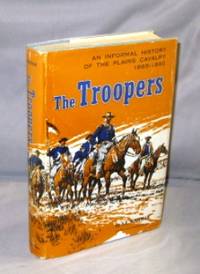
1962ref. 26676New York:: Hastings House Publishers 1962. First Printing of the First US Edition. A Fine copy in a Near Fine unclipped dust jacket with a small chip to the bottom edge of the front panel. The cavalry writes about in this book existed from 1865 to 1890 and was informally known as the Plains Cavalry. Formed at the end of the Civil War in 1865 the Plains Cavalry was charged with protecting American settlers railroaders wagon trains businesses gold seekers and others from Indian attacks. The Plains Cavalry was meant to operate primarily on the western frontiers of the expanding nation. At that time almost anything west of the Mississippi River was considered the frontier. Most Americans living east of the Mississippi had no idea of the danger deprivation or hardship encountered by those who lived on the other side of the river. This history is a clear-eyes description of the troopers as they really were. Hastings House Publishers, unknown
ref. A9781015826526Hardback. New. hardcover
ref. B9783752574593Hardback. New. hardcover
1890ref. 52035Rockland Me.: First Maine Cavalry Association 1890-1892. A significant run of nine of fourteen total issues with two additional supplements of a periodical for Civil War veterans of the First Maine Cavalry. "Published four times a year and will contain the proceedings of the yearly reunions of the First Maine Cavalry matters of historic value to the regiment and items of personal interest to all the members." The volunteer cavalry regiment served with the Army of the Potomac for the duration of the war and participated in many of the critical battles including Brandy Station the largest cavalry engagement of the entire Civil War. Original printed wrappers mostly detached and chipping heavily. A few chips to initial leaves of one issue otherwise internally very good. unknown
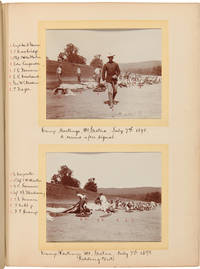
1898ref. 54683Various places including Pennsylvania Virginia at sea New Jersey and Puerto Rico. May to September 1898. Hundreds of Images Showing Philadelphia Troops Preparing for and Participating in the Spanish-American War A remarkable assemblage of photographs documenting the Spanish-American War experiences of the First Troop Philadelphia City Cavalry which was at that time the oldest volunteer military unit in continuous service to the United States. The photographs are arranged chronologically in four contemporary photo albums with the images occasionally annotated in a contemporary hand and including the identification of numerous members of the Troop. The first volume opens with images of Mt. Gretna Pennsylvania "where troops were sworn into U.S. service May 7th 1898 by Maj. Thompson U.S.A." The photographs record field exercises camp building and tent organization at Camp Hastings cavalry drills an image of "Capt. Groome reading the Articles of War to Troop June 1898" a "first arrival of government horses" several shots of men training and "throwing" their horses shooting practice "Capt. Groome assigning Government horses to Troopers" and various shots of the men at work and even some play. Over the course of the album the names of numerous soldiers are recorded below several of the photographs. The second album opens with several photographs of the Troop striking their tents in preparation for leaving Camp Hastings at Mt. Gretna headed for Camp Alger at Dunn Loring Virginia. Here the Troop was ordered to increase their enlistment numbers. At Camp Alger the Troop was also fitted out with federal supplies and assigned to the Second Army Corps commanded by Maj. Gen. William Graham who is pictured here. Other photographs capture the camp scene at Alger "the First Troop picket line" the Troop receiving their federal-issue khaki uniforms the Troop at roll call and some shots featuring African-American helpers. In late July the Troop was sent to Newport News and several photographs record their brief time there with about a dozen shots of their temporary camp. On July 28 1898 the Troop left Virginia on the transport ship Massachusetts bound for Puerto Rico. Several images here capture the frenetic loading of the troops and their horses onto the ship with the remaining half dozen or so shots recording the Troop's time on board. The third album picks up where the second left off with the First City Troop embarked on the transport ship Massachusetts headed for Guanica Puerto Rico. Shipboard activities captured here include a few shots of groups of men being showered with water hoses. Several shots record the arrival of the men in the port of Guanica where they encounter the hospital ship Nueces which reports of the news of the "surrender of Ponce." After the men disembark they pitch their camp around Cathedral Virgin del Carmen on August 5. The next day several photographs record the unloading of horses and stores in the harbor at Ponce. The remaining thirty-eight photographs in this volume record scenes in the interior of Puerto Rico and are the most heavily annotated of the four albums. The images record scenes from the "road from Port of Ponce to Ponce" several scenes capturing a market day in Ponce and recording numerous native islanders the Troop's "temporary camp about 2 miles beyond Ponce" the "Troop wagon leaving camp beyond Ponce to join wagon train for Guayama" on August 8 a shot of the Troop's wagon "on road to Guayama in a Porto Rico mudhole" images of the wagon train to Guayama with the H Troop 6th U.S. Cavalry the "Point of Advance Guard entering Guayama within the lines" the Troop itself "entering Guayama passing General Brooke's Headquarters" a "View of First Troop Phila. City Cavalry U.S.V. Camp at Arroyo August 10th to 6 A.M. Aug. 13th 1898" with the last ten images recording the camp or the streets at Arroyo. The fourth album documents the Troop's voyage home to Philadelphia. This time they take passage on the transport ship Mississippi and about half of the images record their voyage on board. On September 10 1898 they reach Jersey City in New York harbor where they camp for a short time before returning to camp in Pennsylvania where the album ends. A couple of months later all three officers and the ninety-eight enlisted men of the First City Troop were mustered out of federal service for the Spanish-American War. Originally founded in 1774 by twenty-eight Philadelphia patriots as the "Light Horse of the City of Philadelphia" the First Troop of Philadelphia Cavalry is the oldest mounted military unit operating in continuous service to the American republic being the first volunteer cavalry troop organized in defense of the colonies. Among the Troop's original founders was John Dunlap printer to Congress from 1778 to 1789 publisher of the first American daily newspaper and the first printer of the Declaration of Independence. Most of the earliest members were similarly notable professional men of Philadelphia. The Troop served with valor in the American Revolution the War of 1812 the Mexican-American War the Civil War the Spanish-American War and every major American war through the Korean War. The present albums present a unique and important visual record of the First City Troop's activities before during and on the way home from the Spanish-American War. 171pp. with 342 photographs. Four large quarto photograph albums. Matching contemporary three-quarter crimson morocco and cloth front covers gilt. Minor shelf wear and some rubbing. Images in overall very good condition. hardcover
ref. 43134501like new. unknown
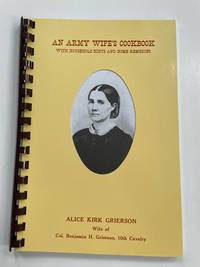
1972ref. 2847From title page: Compiled and Edited by Mary L. Williams Fort Davis National Historic Site Introduction by Alice Kirk Grierson and Sarah Joy Grierson Alice Kirk Grierson was not the typical army wife of the late 19th century for she rarely had to endure the extreme hardships associated with frontier army life. She had servants so the pages of her cookbook were in really good condition. In 1968 Mrs. Grierson's cookbook was donated to the National Park Service at Fort Davis National Historic Site. Through Park Service wives and friends recipes were tested and preparation procedures noted. In this edition Mrs. Grierson's recipes are printed in brown ink. Underneath in black ink are their modern adaptations and methods of preparation. There are all kinds of recipes what to do for a gunpowder burn and even a recipe for hair dye! New book in New condition. Yellow cover with oval opening to show photograph. Brown comb binding. I purchased this book new in 2010 but never used it - it has been stored away from light so is in pristine condition. Please use photos as part of the description. 71 pages including Index. Southwest Parks and Monuments Association paperback
ref. 1015723799.Ghardcover. Good. Access codes and supplements are not guaranteed with used items. May be an ex-library book. hardcover
ref. 1948717328.Ghardcover. Good. Access codes and supplements are not guaranteed with used items. May be an ex-library book. hardcover
1912ref. 00281656Fort Leavenworth Ks.: United States Cavalary Assoc. 1912 Blue cloth decorated endpgs. 163 pgs. First Edition. Cloth. Very Good. United States Cavalary Assoc. hardcover
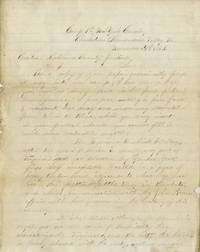
1863ref. List3846Camp 1st New York Cavalry Charlestown Shenandoah Valley Virginia 1863. Incomplete autograph letter addressed to the editors of the Rockland County Journal. Two page letter measuring 7 ¾ x 9 ¾ inches. Discoloration and chipping to margins; tears at folds repaired with archival tape; very good to excellent. An incomplete letter written by a soldier in Virginia in 1863. The writer proposes to send occasional correspondence from the army then turns to a lively local sketch of Charlestown John Brown memory disloyal but hospitable Virginians guerrilla anxiety squirrel shooting and a visit to the "renowned Masonic Cave" allegedly used as a meeting place by George Washington. He writes: "Camp 1st New York Cavalry Charlestown Shenandoah Valley Va. November 14th 1863 Editors Rockland County Journal "Sirs "As a copy of your paper occasionally finds its way into our camp & I have observed you have no correspondent in this part of the 'sham federacy' I propose writing a few facts & incidents that may come under my observation from time to time which you may insert in your Journal whenever you cannot fill it with more valuable matter. "The Regiment to which I belong after two years of service in nearly every part of Virginia's soil yet trodden by Yankee feet finds itself comfortably located in a piece of heavy timber land adjacent to what had once been the prettiest little town in the state and which in connection with the John Brown affair will live forever in the history of this country. "Its inhabitants altogether far from being loyal yet are not devoid of hospitality that characterizes the Virginians and the little they have is freely shared with the needy without regard to the color of his uniform provided he deports himself as a gentleman. "A few days ago with a few comrades I visited the renowned 'Masonic Cave' situated about 2 miles from Camp in a South East direction. "As a precaution against guerrillas who disguised as citizens hover about our pickets constantly we carried our carbines & a number of squirrels repaid the trouble. But to the Cave. "The entrance is on the top of a hill some 50 or 60 feet above the general level of the surrounding country. A hole large enough for the cellar of an ordinary sized house one side of which is composed of a large rock leaning inward first attracts the attention. At the terminus of this rock is built an ordinary door frame passing through which a few steps brings you into the main apartment of the cave & into total darkness. Lights are now requisite and after a few minutes you are enabled to see a large rock rising before you which will form a good seat. As the cave is quite dry you sit down on it until the eye gets accustomed to the darkness or as one of our party remarked 'until the light from the candles reach the sides of the cave'. Leaning forward you elbow rests on another rock the same that served as a table for the immortal Washington when sitting on the seat you now occupy he presided over the meeting of the". An incomplete but appealing wartime local sketch describing Charlestown in the shadow of John Brown and an odd excursion to the Masonic Cave along with his guarded but generous view of local Virginians. . unknown
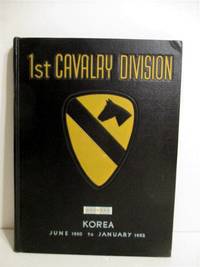
1953ref. 72-1566Albert Love 1953 1953. 1st ed. About 300p. Photos. Maps. Decorated black cloth with division insignia on front. Oversize. Fine Copy. 1st. Hardcover. Fine. Albert Love, 1953 Hardcover
ref. 45461341like new. unknown
1998ref. I-369-633Foucher 1998. Paperback. Good. Former library book. Ammareal gives back up to 15% of this item's net price to charity organizations. Foucher paperback
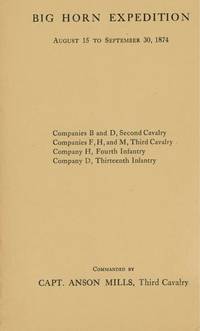
1874ref. 53597N. P.: Privately printed n. d. ca 1874. 1874. WYOMING TERRITORY. First edition. 8vo. Original printed wrappers 15 pp. large fold-out map. The map traces the route of the Big Horn Expedition. "The Big Horn Expedition of 1874 was a significant military operation involving the United States Army against the Lakota Sioux and Cheyenne Indians in the Wyoming and Montana Territories. This expedition was part of the broader conflicts between the U.S. government and Native American tribes during that period. The operation aimed to assert control over the region and respond to Native American resistance against U.S. expansion and settlement. The discovery of gold in the Black Hills by soldiers under Lieutenant Colonel George A. Custer in 1874 intensified these conflicts as the U.S. sought to acquire the land from the Sioux. The expedition solidified Lakota Sioux and Northern Cheyenne resistance against the United States attempt to force them to sell the Black Hills and live on a reservation beginning the Great Sioux War of 1876." This is an account of an expedition in which Buffalo Bill was along as a scout. They were trailing an Indian war party and comment upon seeing buffalo and other types of game. Also included is a tragic account of a private being mauled by a bear. The man died shortly thereafter from his injuries. Spine neatly repaired else a fine bright copy housed in a quarter leather and marbled paper over boards clamshell case with titles stamped in gilt on the spine. This is a rare item and seldom offered for sale. Privately printed, n. d. (ca 1874). hardcover
ref. 1120771323.Ghardcover. Good. Access codes and supplements are not guaranteed with used items. May be an ex-library book. hardcover
ref. 1112135790.Gpaperback. Good. Access codes and supplements are not guaranteed with used items. May be an ex-library book. paperback
ref. 1330566246.Gpaperback. Good. Access codes and supplements are not guaranteed with used items. May be an ex-library book. paperback
ref. 0484660187.Ghardcover. Good. Access codes and supplements are not guaranteed with used items. May be an ex-library book. hardcover