MONTANDRE (François-Edme de); ROUSSEL (Jacques de)Livre Rare Book
1,141 results
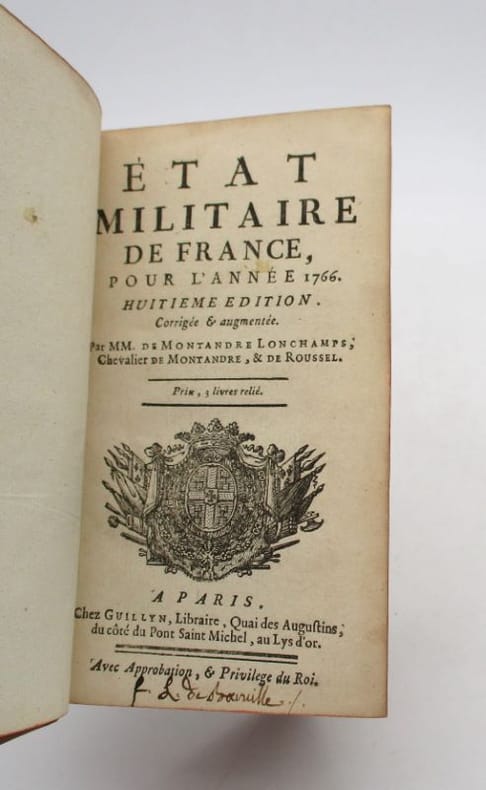
ref. 18776Paris, Guillyn, s.d. [1766]. In-12, XVI-330 pp., veau marbré havane, filet à froid en encadrement sur les plats, dos long orné de caissons et fleurons dorés, tranches rouges (coiffe supérieure cassée, épidermures, 1 coin restauré, quelques taches).
ref. QWA-19421Lavauzelle, 2001, 3 vol. in-8 rel. 1/2 chagr. havane moucheté (15 x 21,5),311 p.-394 p.-340 p., réimpression en fac-similé de l'édition Hetzel 1874, dos à 4 faux nerfs et pièces de titre, très bon état.
Crown octavo. Pp. 69. Illustrated throughout with maps, plans, formation, etc., partly printed in additional color. Original printed stiff wrappers, shelf ticket to spine, old military institutional stamps to cover and title. In a very good condition. ~ First edition. Rare.
2021ref. SONG1948717328Xenophon Press LLC 2021-06-15. hardcover. Used: Good. 7.00x0.56x10.00. Buy with confidence. Excellent Customer Service & Return policy. Xenophon Press LLC hardcover
1937ref. 82-509Ft. Riley: 1937. 1937. 329p. Yellow Wraps. With black cloth spine. Very Good Copy. Paperback. Very Good. Book. Ft. Riley: 1937. Paperback
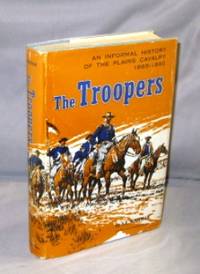
1962ref. 26676New York:: Hastings House Publishers 1962. First Printing of the First US Edition. A Fine copy in a Near Fine unclipped dust jacket with a small chip to the bottom edge of the front panel. The cavalry writes about in this book existed from 1865 to 1890 and was informally known as the Plains Cavalry. Formed at the end of the Civil War in 1865 the Plains Cavalry was charged with protecting American settlers railroaders wagon trains businesses gold seekers and others from Indian attacks. The Plains Cavalry was meant to operate primarily on the western frontiers of the expanding nation. At that time almost anything west of the Mississippi River was considered the frontier. Most Americans living east of the Mississippi had no idea of the danger deprivation or hardship encountered by those who lived on the other side of the river. This history is a clear-eyes description of the troopers as they really were. Hastings House Publishers, unknown
1902ref. 302558San Bernardino Cal. Times-Index Press 1902. 1902. First edition. 8vo. Frontispiece portrait; illustrations. Original gray wrappers stamped in gold tape repair to spine; front cover lower corner chipped; back cover detached. Good. 130 pages. Ex-library copy with the usual markings. Includes chapters on Father Serra land titles Mormons etc. Howes C-1; Rocq #7052; Cowan p. 91. 1st Edition. Soft cover. Good. San Bernardino, Cal., Times-Index Press, 1902. paperback
1902ref. 302558San Bernardino Cal. Times-Index Press 1902. 1902. First edition. 8vo. Frontispiece portrait; illustrations. Original gray wrappers stamped in gold tape repair to spine; front cover lower corner chipped; back cover detached. Good. 130 pages. Ex-library copy with the usual markings. Includes chapters on Father Serra land titles Mormons etc. Howes C-1; Rocq #7052; Cowan p. 91. 1st Edition. Soft cover. Good. San Bernardino, Cal., Times-Index Press, 1902. paperback books
1957ref. 013054Portland Oregon: Champoeg 1957. Limited Edition. Octavo. Limited to 1000 copies. 74p. Edited by Edgard I. Stewart and Jane R. Stewart with a note on the Kicking Bear Pictography by Carl S. Dentzel. index. notes. folding maps Yellowstone and Missouri River Areas and Lt. Godfrey's Map of the Battle of Little Big Horn. Photographs illustrations etc. Subtitle of book continues: ". when Brigadier General Alfred H. Terry left Fort Abraham Lincoln Bismarck Dakota Territory until the return of the battered regiment a few days after September 24 1976 to the same place. Bound in blue cloth pictorial illustration mounted to upper board spine lettering gilt. A very good copy. Champoeg unknown
petit in-4 carre, 156 pp., illustrations en couleurs, cartonnage illustre de l'editeur.- RARE Tres bon etat. [PIL-HA]
ref. 1539In 8 demi-cuir rouge,titre et fers dorés.Faux-titre,titre illustré en couleurs,636 pages,texte encadré d’un double filet noir,350 illustrations de DRANER dont 40 hors-texte en couleurs.complet des deux rares primes gratuites en couleurs, dépliantes "l’entrée au régiment" et "le retour du régiment" Librairie illustrée sans date(1877)Comment on devient soldat.Le réserviste.Le volontaire d'un an. Composition de l'armée.Physiologie des grades.De la cavalerie.Les sapeurs-pompiers L'Armée d'Afrique.L'armée territoriale.Les inventions.Les écoles militaires.Le recrutement 3 traces de scotch séchées aux deux premières pages,rousseurs éparses habituelles
ref. 52107aafBielefeld, Ernst Siedhoff, 1894, in-4to, 45 Bl. + 102 S. + 1 Bl. + 4 Bl. (ill. Verlags-Anziege der Illanen-Briefe, mit Zeitungskritiken), mit Illustrationen von O. Günther-Naumburg und H. Lüders, teils unaufgeschnitten, illustr. Original-Broschüre.
1998ref. 75FeErpe De Krijger 1998 In4 160 pages - cartonnage editeur avec jaquette - Envoi de l'auteur en page de garde - trés bon etat
1998ref. 75FeErpe De Krijger 1998 In4 160 pages - cartonnage editeur avec jaquette - Envoi de l'auteur en page de garde - trés bon etat
2019ref. Gyan-9789356987418Facsimile Publisher 2019. Hardcover. New. 25.13 x 18.78 x 3.73 cm. English Facsimile Publisher hardcover
2019ref. Gyan-9789356987418Facsimile Publisher 2019. Hardcover. New. 25.13 x 18.78 x 3.73 cm. English Facsimile Publisher hardcover
19934to. First Edition with 16 coloured plates on 12 60 monochrome plates on 32 and very numerous maps and plans (many full-page) in the text; regimental cloth with badge blocked in gilt on upper board gilt back red endpapers a very good bright clean copy.
ref. 0879802391New. paperback. New. Satisfaction Guaranteed or your money back. paperback
1976ref. 2080202102502113Shinkosho Co. Ltd. Oizumi Bookstore 1976. Soft Cover. Fine. The book is in fine condition. Shinkosho Co., Ltd. Oizumi Bookstore paperback
1927ref. 2092902137302689Kaikosha 1927. Soft Cover. Fine. The book is in fine condition. Kaikosha paperback
1915ref. 74-571DCavalry Journal. 1915 1915. 2 issues. April October Yellow wraps. Both spines torn. Good copies. Paperback. Good. Cavalry Journal., 1915 Paperback
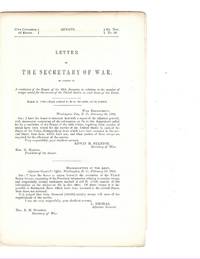
1862ref. 126661862. Stanton Edwin M. Report of the Secretary of War concerning cavalry forces of the United States 1862 documents the federal system for assessing and organizing Union mounted troops during the rapid military expansion of the Civil War. Prepared in response to a Senate resolution of January 29 the report required the War Department to determine how many troops had been raised in each state distinguish cavalry that had been mounted from units that had not and assess what portion of the force was needed for effective service. Adjutant General Lorenzo Thomas concluded that approximately 40000 cavalry troops would meet the requirements of the service illustrating how federal officials used state-level returns to evaluate military readiness and manpower needs. The document provides primary-source evidence for the study of Union cavalry organization recruitment equipment federal-state military coordination and wartime administrative planning. Stanton Edwin M. Report of the Secretary of War. Washington D.C.: Government Printing Office 1862. 37th Congress 2d Session Senate Executive Document No. 26. Eight pages measuring approximately 9.75 x 5.75 inches. Seven pages consist principally of tabular returns headed "Report of the cavalry forces of the United States" prepared in compliance with a February 14 1862 request from Assistant Adjutant General George D. Ruggles. The tables identify units and commanders by state list numerical strength and the authority under which troops were raised and record operational condition with distinctions such as mounted armed equipped partially organized or unarmed. A concluding return compiled from muster rolls records volunteer cavalry by state and distinguishes regiments companies commissioned officers enlisted men and aggregate strength; the total shown is 64133 volunteer cavalry including 62 regiments and 45 additional companies. The report demonstrates the process by which the Union converted rapidly raised cavalry formations into standardized administrative information revealing the uneven condition of mounted forces across the states and the difficulty of maintaining complete central records during wartime mobilization. The Adjutant General explicitly noted that some units could not yet be distinguished as mounted or unmounted and that information was incomplete for several states and territories making the report useful not only for numerical strength but also for understanding the limitations of Civil War military bureaucracy. Minor wear to edges; otherwise no significant defects noted. Very good. A data-rich congressional document showing how the War Department measured the strength readiness and organization of Union cavalry in early 1862. unknown
1862ref. 126661862. Stanton Edwin M. Report of the Secretary of War concerning cavalry forces of the United States 1862 documents the federal system for assessing and organizing Union mounted troops during the rapid military expansion of the Civil War. Prepared in response to a Senate resolution of January 29 the report required the War Department to determine how many troops had been raised in each state distinguish cavalry that had been mounted from units that had not and assess what portion of the force was needed for effective service. Adjutant General Lorenzo Thomas concluded that approximately 40000 cavalry troops would meet the requirements of the service illustrating how federal officials used state-level returns to evaluate military readiness and manpower needs. The document provides primary-source evidence for the study of Union cavalry organization recruitment equipment federal-state military coordination and wartime administrative planning. Stanton Edwin M. Report of the Secretary of War. Washington D.C.: Government Printing Office 1862. 37th Congress 2d Session Senate Executive Document No. 26. Eight pages measuring approximately 9.75 x 5.75 inches. Seven pages consist principally of tabular returns headed "Report of the cavalry forces of the United States" prepared in compliance with a February 14 1862 request from Assistant Adjutant General George D. Ruggles. The tables identify units and commanders by state list numerical strength and the authority under which troops were raised and record operational condition with distinctions such as mounted armed equipped partially organized or unarmed. A concluding return compiled from muster rolls records volunteer cavalry by state and distinguishes regiments companies commissioned officers enlisted men and aggregate strength; the total shown is 64133 volunteer cavalry including 62 regiments and 45 additional companies. The report demonstrates the process by which the Union converted rapidly raised cavalry formations into standardized administrative information revealing the uneven condition of mounted forces across the states and the difficulty of maintaining complete central records during wartime mobilization. The Adjutant General explicitly noted that some units could not yet be distinguished as mounted or unmounted and that information was incomplete for several states and territories making the report useful not only for numerical strength but also for understanding the limitations of Civil War military bureaucracy. Minor wear to edges; otherwise no significant defects noted. Very good. A data-rich congressional document showing how the War Department measured the strength readiness and organization of Union cavalry in early 1862. unknown books
1890ref. 60870New York: G.P. Putnam's Sons 1890. First Edition. Small octavo. Publisher's gilt-pictorial cloth; vi1-176pp. Slight external wear including some mild rubbing to cloth at spine ends. Internally tight and sound with some marginalia to Contents page and some ink graffiti to rear blanks and endpapers. Early ownership signature "Helen Madzik" to front pastedown. Easily Very Good. Huggins a Medal of Honor winner served more than 40 years in the Army retiring in 1903 as a Brigadier General. The title work is a long narrative poem heavy on Native American symbolic elements with a Great Plains setting. G.P. Putnam's Sons unknown