1861- Illinois Cavalry 9th RegimentBiblio.com
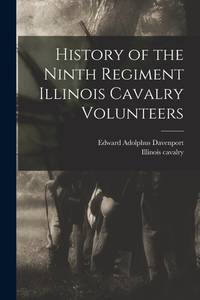
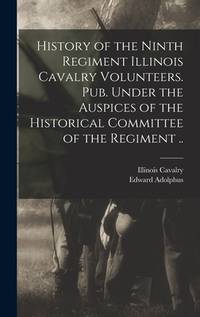
History of the Ninth Regiment Illinois Cavalry Volunteers
ref. 45387941-nnew. unknown

GreatBookPrices · United States$72.03≈ €64.35
1,210 results
ref. 1112135790.Gpaperback. Good. Access codes and supplements are not guaranteed with used items. May be an ex-library book. paperback
ref. 45387941-nnew. unknown
ref. B9781015710931Paperback / softback. New. paperback
ref. B9781018730769Hardback. New. hardcover
ref. B9781015701892Hardback. New. hardcover
ref. 45461341like new. unknown
ref. B9781015826526Hardback. New. hardcover
ref. A9781015826526Hardback. New. hardcover
ref. B9781015831209Paperback / softback. New. paperback
ref. 1313892882.Gpaperback. Good. Access codes and supplements are not guaranteed with used items. May be an ex-library book. paperback
ref. 1015723799.Ghardcover. Good. Access codes and supplements are not guaranteed with used items. May be an ex-library book. hardcover
ref. 1015728545.Gpaperback. Good. Access codes and supplements are not guaranteed with used items. May be an ex-library book. paperback
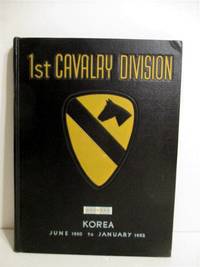
1953ref. 72-1566Albert Love 1953 1953. 1st ed. About 300p. Photos. Maps. Decorated black cloth with division insignia on front. Oversize. Fine Copy. 1st. Hardcover. Fine. Albert Love, 1953 Hardcover
1965ref. 014867Fort Benning Georgia: Headquarters - 3D Squadron 17th Cavalry 11th Air Assault Division 1965. Second Edition . Paper Back. Near Fine/No Jacket. 12mo - over 6¾" - 7¾" tall. 112pp.; SC flexible vinyl 6-ring notebook; dk.blue w/no title; some rub&crack on cover; cleantight pgs. Comments received & practical lessons learned " .during the 71 days we were deployed to the Carolinas in the fall of 1964 in connection with Exercise Air Assault II." thumb-indexed. Headquarters - 3D Squadron, 17th Cavalry, 11th Air Assault Division unknown
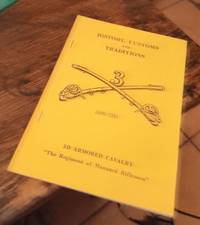
1981ref. 054918USA: 3D Armored Cavalry 1981. Paper Back. Fine/No Jacket. 8vo - over 7¾" - 9¾" tall. 27pp.; SC staple-bound; yellow w/blk.-pic.cover; fine condition w/cleantight pgs. Military history 3D Armored Cavalry unknown
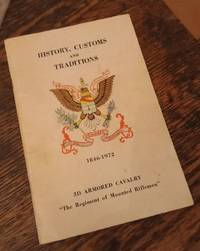
1972ref. 054917USA: 3D Armored Cavalry 1972. Paper Back. Very Good/No Jacket. 8vo - over 7¾" - 9¾" tall. 31pp.; SC staple-bound; white w/blk.-pic.cover; rubbed w/ink PONsbk.cover&inside covers; cleantight pgs. Military history 3D Armored Cavalry unknown
1981ref. 054919USA: 3D Armored Cavalry 1981. Paper Back. Fine/No Jacket. 8vo - over 7¾" - 9¾" tall. 27pp.; SC staple-bound; green w/blk.-pic.cover; fine condition w/cleantight pgs. Military history 3D Armored Cavalry unknown
19038vo., First and Sole Edition, on laid paper, with portrait frontispiece, 7 plates, 4 illustrations and maps in the text, and folding map, preliminaries lightly foxed; original khaki cloth, upper board and backstrip blocked and lattered in gilt and black, gilt top, red endpapers, uncut, joints mildly rubbed, some mild age-soiling else a very good, bright, clean copy. The Fife and Forfar Yeomanry served as 20th Company Imperial Yeomanry in South Africa from April 1900 to June 1901. They were commanded variously by Hunter, Hutton, Clements and Cunningham. In December 1900 the 20th was attacked at Nooitgedacht where the British sustained heavy casualties and the Fifes were reduced to half strength. The remnants joined Cunningham's force to the end of January 1901 and were then attached to Col. Benson's column in south western Transvaal. In April 1901 the Fifes regrouped at full strength at Bloemfontein, joining Col. Pilcher's column in Orange River Colony and returning home in May 1901.The work includes a nominal roll and campaign history. VERY SCARCE. Hackett, p.190 (see also p.ix for coloured plate of cover and lengthy assessment); White, .p.176.
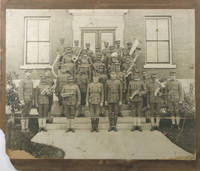
1910ref. List304Fort Ethan Allen 1910. Gelatin silver print mounted to board 16 ¼ x 14 ½ inches. Fair to Good. The 10th Cavalry was one of the original “Buffalo Soldier” regiments of the post-Civil War segregated U.S. Army first seeing action in the Indian Wars. Their band is shown here most likely during their stint at Fort Ethan Allen in Vermont. They are wearing a mix of insignia from 1902 to 1908 and some are shown in civilian clothing which suggests the picture was taken in Vermont as this was during the time the Army used a vast mix of insignia and the brick architecture of the background also matches that of the fort. They were exposed to some racism during their time in Vermont - the soldiers were punished for associating with neighboring white women with some of the offenders being confined to the guardhouse for punishment which fits with the strictly segregated Army policies of the time. The soldiers did also record positive aspects of their time at the fort including studying at the fort’s library and playing nightly games of the newly-invented sport of basketball. These amenities provided some positive contrast to the previous assignments of the regiment who had been mostly stationed on the frigid plains where the army believed racial tensions would be kept to a minimum. The picture shows the band with the normal marching band instruments of clarinets tubas and sousaphones as well as an alto clarinet oboe and what appears to be a baritone saxophone. We find no other examples of the 10th Cavalry Band and the picture shows the regiment at a relatively calm time as they would soon be sent to the Mexican-American border in 1913 to deal with rising tensions. The picture has condition issues with damage to the mount some damage to the bottom left corner and a crease along the bottom third of the image along with closed tears and chipping to the title label. It remains in fair to good condition attractive and worthy of preservation. unknown
1910ref. List304Fort Ethan Allen 1910. Gelatin silver print mounted to board 16 ¼ x 14 ½ inches. Fair to Good. The 10th Cavalry was one of the original “Buffalo Soldier” regiments of the post-Civil War segregated U.S. Army first seeing action in the Indian Wars. Their band is shown here most likely during their stint at Fort Ethan Allen in Vermont. They are wearing a mix of insignia from 1902 to 1908 and some are shown in civilian clothing which suggests the picture was taken in Vermont as this was during the time the Army used a vast mix of insignia and the brick architecture of the background also matches that of the fort. They were exposed to some racism during their time in Vermont - the soldiers were punished for associating with neighboring white women with some of the offenders being confined to the guardhouse for punishment which fits with the strictly segregated Army policies of the time. The soldiers did also record positive aspects of their time at the fort including studying at the fort’s library and playing nightly games of the newly-invented sport of basketball. These amenities provided some positive contrast to the previous assignments of the regiment who had been mostly stationed on the frigid plains where the army believed racial tensions would be kept to a minimum. The picture shows the band with the normal marching band instruments of clarinets tubas and sousaphones as well as an alto clarinet oboe and what appears to be a baritone saxophone. We find no other examples of the 10th Cavalry Band and the picture shows the regiment at a relatively calm time as they would soon be sent to the Mexican-American border in 1913 to deal with rising tensions. The picture has condition issues with damage to the mount some damage to the bottom left corner and a crease along the bottom third of the image along with closed tears and chipping to the title label. It remains in fair to good condition attractive and worthy of preservation. unknown books
1982ref. LFA-126742056Revue bimestrielle de 102 pages, format 210 x 295 mm, illustrée, brochée couverture couleurs, bon état
1802ref. 66681Paris, Magimel 1802 2 volumes petit in-8, pleine basane mouchetée, dos lisses ornés, roulette dorée sur les coupes, un de texte de [2]- 450 1 pp. et un atlas de 155 planches sur 152 feuillets. Infimes attaques de ver. Très bon exemplaire.