DUPONT MARCEL.Livre Rare Book
1,166 results
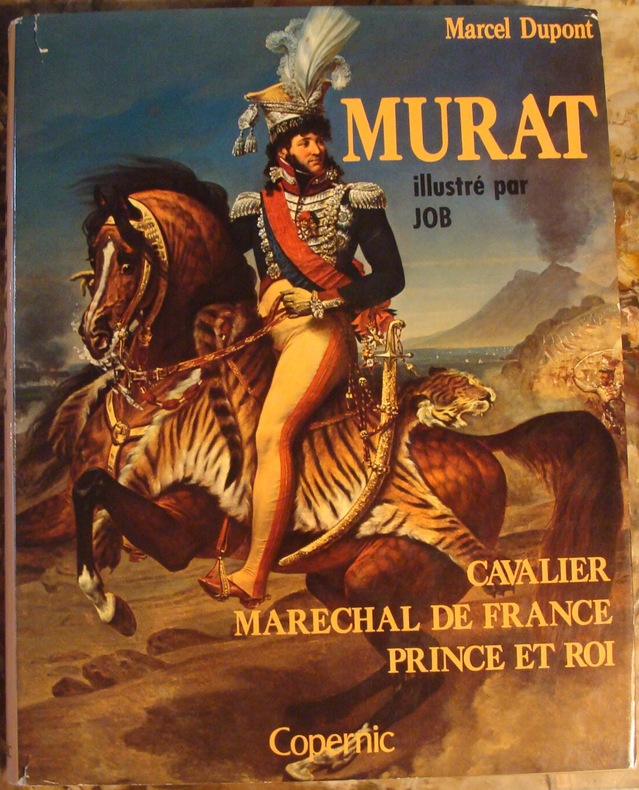
1980ref. 614PARIS. COPERNIC. 1980. IN-4 (26,5 X 21 X 3 CENTIMETRES ENVIRON) DE 334 PAGES, RELIURE DE L'EDITEUR A LA BRADEL PLEINE PERCALINE BEIGE, TITRE EN BISTRE, SOUS JAQUETTE ILLUSTREE EN COULEURS. ILLUSTRE DE 12 PLANCHES EN COULEURS HORS TEXTE. BON EXEMPLAIRE.
1865ref. List2438Camp Low 1865. Original partially printed document 26cm x 77cm. Printed on both sides of the sheet completed in manuscript. Darkening at folds from old tape repairs; partial splits to folds and extremities; complete and quite Good. Docketed verso signed in ink by Lieutenant Morgan Owen. Lists twelve enlisted soldiers most with Spanish surnames two with French surnames. Fine. The formation of the California Native Cavalry in 1863 marked a significant chapter in the state's history. Comprising primarily Mexican-American individuals colloquially referred to as "native" Californians the California Native Cavalry unit was formed 1863. Initially commanded by Maj. Andreas Pico a distinguished hero from the Mexican-American War and later under Salvador Vallejo the regiment drew its ranks from diverse backgrounds. Recruitment efforts began with vaqueros from southern California expanding to include individuals from San José and San Francisco. The unit boasted a varied composition encompassing not only Mexican-Americans but also Chilenos California and Yaqui Indians and even French legionnaires. Company "B" a contingent largely recruited from the northern part of the state is reflected in the existing muster roll. The company assembled at Camp Low near San Juan Bautista in 1865 making a striking entrance into the town. Described as "gay and gallant Spanish lancaroes" the cavalrymen presented a formidable sight with lances in hand and flags flying leaving a lasting impression on the townspeople who had never before encountered soldiers."The gay and gallant Spanish lancaroes sic came dashing through the town with the lances in their hand a flag flying from each of them. I assure you that they presented a war like appearance the people here had never seen a soldier in their lives – Yes Sir!." letter Maj. Michael O'Brien to Gov. Frederick Low January 1865; quoted in Prezelski "Lives of the Californio Lancers: the First Battalion of Native California Cavalry" in Journal of Arizona History v.40 no.1 Spring 1999. Under the command of Capt. Porfirio Jimeno Company B swiftly engaged in a critical mission: dismantling the notorious Mason-Henry Gang that had terrorized the San Juan region in the preceding months. Despite successfully wounding John Mason in early April 1865 the gang persisted for another month until Mason met his demise at the hands of a miner he sought to kidnap. However Company B faced challenges including low morale and a high rate of desertions with over 40 men leaving the company in 1865 alone. Transferred to Tubac Arizona Territory to confront the Apaches the company encountered further desertions along the way. The muster roll listing only twelve soldiers alongside Capt. Porfirio Jimeno reflects this tumultuous period. Overall the muster roll provides scarce documentation of the role of Mexican-Americans in the Civil War with few other examples in the trade or institutionally. unknown
1865ref. List2438Camp Low 1865. Original partially printed document 26cm x 77cm. Printed on both sides of the sheet completed in manuscript. Darkening at folds from old tape repairs; partial splits to folds and extremities; complete and quite Good. Docketed verso signed in ink by Lieutenant Morgan Owen. Lists twelve enlisted soldiers most with Spanish surnames two with French surnames. Fine. The formation of the California Native Cavalry in 1863 marked a significant chapter in the state's history. Comprising primarily Mexican-American individuals colloquially referred to as "native" Californians the California Native Cavalry unit was formed 1863. Initially commanded by Maj. Andreas Pico a distinguished hero from the Mexican-American War and later under Salvador Vallejo the regiment drew its ranks from diverse backgrounds. Recruitment efforts began with vaqueros from southern California expanding to include individuals from San José and San Francisco. The unit boasted a varied composition encompassing not only Mexican-Americans but also Chilenos California and Yaqui Indians and even French legionnaires. Company "B" a contingent largely recruited from the northern part of the state is reflected in the existing muster roll. The company assembled at Camp Low near San Juan Bautista in 1865 making a striking entrance into the town. Described as "gay and gallant Spanish lancaroes" the cavalrymen presented a formidable sight with lances in hand and flags flying leaving a lasting impression on the townspeople who had never before encountered soldiers."The gay and gallant Spanish lancaroes sic came dashing through the town with the lances in their hand a flag flying from each of them. I assure you that they presented a war like appearance the people here had never seen a soldier in their lives – Yes Sir!." letter Maj. Michael O'Brien to Gov. Frederick Low January 1865; quoted in Prezelski "Lives of the Californio Lancers: the First Battalion of Native California Cavalry" in Journal of Arizona History v.40 no.1 Spring 1999. Under the command of Capt. Porfirio Jimeno Company B swiftly engaged in a critical mission: dismantling the notorious Mason-Henry Gang that had terrorized the San Juan region in the preceding months. Despite successfully wounding John Mason in early April 1865 the gang persisted for another month until Mason met his demise at the hands of a miner he sought to kidnap. However Company B faced challenges including low morale and a high rate of desertions with over 40 men leaving the company in 1865 alone. Transferred to Tubac Arizona Territory to confront the Apaches the company encountered further desertions along the way. The muster roll listing only twelve soldiers alongside Capt. Porfirio Jimeno reflects this tumultuous period. Overall the muster roll provides scarce documentation of the role of Mexican-Americans in the Civil War with few other examples in the trade or institutionally. unknown books
1860ref. 14089Nancy, Vagner, 1860. Un vol. in-12 (193 x 122 mm) de 3 ff. n.fol. et 300 pp. Reliure de l'époque de demi-percaline cerise, dos lisse orné de doubles filets dorés, fleuron central doré, pièce de titre de maroquin anis, titre doré, couvertures conservées.
1996ref. 34443Paris éditions S.P.M., Kronos 1996 Préface de Jean Tulard , notes de Nicole Gotteri
1891ref. 95150Paris, E. Plon, Nourrit et Cie 1891 3 volumes. In-8 21,5 x 14 cm. Reliures demi-chagrin grenat, dos à nerfs ornés de roulettes et encadrés de petits fers dorés, XII-390-495-446 pp., 3 frontispices dont 2 portaits du général Marbot, 2 fac-similés d’autographes repliés, table des noms, table des matières. Coupes légèrement frottées, accroc à une coiffe.
1893ref. 123616Plon, s.d. (1893), 3 vol. in-8°, xiv-390, 495 et 446 pp, 2 portraits, une planche sous serpente légendée et 2 fac-similés hors texte, index, reliures demi-chagrin carmin, dos à 5 nerfs soulignés à froid, titres, tomaisons et fleurons dorés, filet doré sur les plats, têtes dorées (rel. de l'époque), qqs rares rousseurs, bon état. Bel exemplaire
ref. 217785Rennes, Oberthur, 1925 in-8, 132 pp., frontispice, broché, premier plat de couverture illustré.
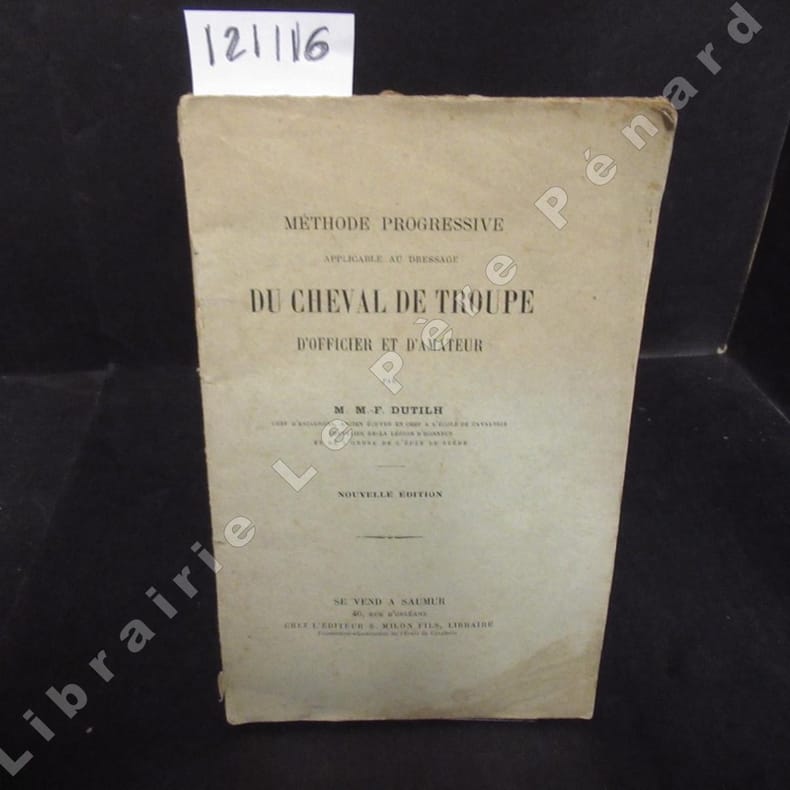
ref. 121116sd Se vend à Saumur, chez l'éditeur S. Milon Fils, libraire - Sans date (fin XIXe siècle) - In-8, broché - 78 p.
19788vo., First Edition, with 20 plates on 16, and 4 full-page charts and a double-page map in the text, fore-edges lightly browned as often; cloth, gilt back, brown endpapers, a very good, bright, clean copy in price-clipped dustwrapper, the latter lightly browned at edges. Uncommon in anything like this condition
1745ref. 18462amiens 1745 1 in-8 1 document ORIGINAL manuscrit à l'encre brune, en 8 feuillets sur vélin, grand in-octavo, et son sceau de cire tamponné sous papier (en parfait état d'époque) (24 x 17cm),fait à amiens, le 8 Avril 1745, signatures manuscrites,
1815ref. 21765Paris 1815 document manuscrit à l'encre brune et préimprimé en noir sur parchemin vélin, format : 36 x 24,5 cm, fait à Paris le 25 Décembre 1815, signature manuscrite de CLARKE Henri-Jacques-Guillaume, Ministre secrétaire Général de la Guerre, Maréchal, Duc de Feltre, cachet royal à l'encre noire "Caisse des Invalides de la Guerre" aux Armes Royales + Cachet sec gauffré du "Ministère de la Guerre" aux Armes Royales,
ref. 132639Paris, Berger-Levrault, 1934 gr. in-8, 184 pp., frontispice en couleurs, 33 pl. dt 5 en couleurs, toile bleue (reliure moderne).
ref. 198793Paris, Berger-Levrault, 1934 gr. in-8, 184 pp., frontispice en coul., 33 pl. dt 5 en coul., broché.
ref. 199645Paris, Berger-Levrault, 1933 gr. in-8, 184 pp., front. en coul., 33 pl. dt 5 en coul., broché.
1941ref. 86621941 Tarbes, Imprimerie de l'Ecole, 1941; brochure in-8, agrafée , couverture beige imprimée en noir , dos muet; 58pp. ; figures dans et hors texte.
1909ref. 40921Memphis Tennessee: E. H. Clarke & Brother. Very Good. 1909. Hardcover. Very Good condition. Small grey cloth hardcover with gold writting on the title. Corners and bottom of spine are worn some markins on the cover. Pages are slightly aged and there are a couple small feded pencilings inside the cover. Otherwise the interior is excellent condition. Book has been glassine wrapped for protection. ; 5 3/4" x 8"; 189 pages . E. H. Clarke & Brother hardcover
1914ref. LFA-126723552Un ouvrage de 72 pages, format 140 x 195 mm, broché, publié en 1914, J.-B. Robert Libraire-Editeur Militaire (Saumur), bon état, rare
1910ref. 0287Paris et Nancy, Berger-Levrault & Cie, 1910. Deuxième édition, revue et augmentée "des Écoles de brigade, de division et d'escadre". Grand in-8, 24 x 16,5 cm pour 222 pages. Relié demi-chagrin charbon, dos à faux-nerfs, nom d'auteur, titre et fleurons dorés, plats marbrés, gardes à motifs. Dédicace à la plume d'un ancien propriétaire sur la page de garde blanche et nom du même propriétaire écrit plusieurs fois aux premières pages. À mi-chemin entre prolongement du XIXe siècle et un conflit de 1914 qui chamboulera toutes les idées sur la guerre, ce livre explique l'apprentissage du métier de soldat à cheval tel que conçu à l'époque. Il montre comment intégrer les mouvements en peloton, en "fourrageurs", les charges, les changements de direction, le combat à pied, etc. à chaque soldat jusqu'à ce qu'il devienne une seconde nature. "Eh bien ! Je l'ai faite, mon école de peloton ; et j'ai suivi ma progression, non pas sans quelques difficultés, car mon chef d'escadrons a fait ce qu'il a pu pour me contrarier ; mais mon capitaine commandant m'avait donné carte blanche, et quand le commandant a voulu soulever un conflit, le colonel lui a donné tort. Pendant trois jours ma troupe a marché en silence derrière le guide ; elle le suivait partout avec tant de promptitude que je ne pouvais plus, malgré les brusques changements de direction que je lui ordonnais, mettre du désordre dans mes cavaliers." (p. 41)
ref. 24290PARIS, Lib. Militaire de J; Dumaine - 1880 - In-12 - broché - 10 figures, certaines PP HT - XI-260 pages + Errata - Exemplaire non coupé
PARIS, Lib. Militaire de J; Dumaine - 1880 - In-12 - broché - 10 figures, certaines PP HT - XI-260 pages + Errata - Exemplaire non coupé
ref. 244494Paris, Bouchard-Huzard, Ledoyen [Imprimerie de Bourgogne et Martinet], s.d. (1842) in-8, 40 pp., broché sous couverture bleue imprimée, non coupé. Rousseurs.
1898ref. 46402930Paris, Ch.-Lavauzelle, s. d. (1898) ; in-8, bradel, demi-chevrette olive, tête dorée, couverture illustrée conservée. 164 pp., 34 illustrations dans le texte.ÉDITION ORIGINALE. Le baron Foäche, né en 1857, était fils et petit fils de grands amateurs de chevaux. Son grand-père Ch.-A. Foäche était sous-préfet du Calvados où il s’occupa essentiellement de promouvoir les courses hippiques. Maurice-Adrien Foäche fit quant à lui carrière dans la Cavalerie avec le grade de sous-lieutenant. Menecier de La Lance I, p. 495.Livre essentiel donnant la description des principaux haras royaux ou privés de l’Autriche-Hongrie avec le type de chevaux, leurs provenances, etc.Exemplaire provenant de la bibliothèque du Cercle de l’Union Artistique (cachets) avec un ex-dono manuscrit du Colonel Foäche, le père de l’auteur, aux membres de ce club.
1952ref. 70931Couverture souple. Broché. 20 pages.
ref. 199959Paris, Berger-Levrault, 1873 in-12, XXVI-239 pp., demi-basane brune, dos lisse orné de filets dorés (reliure de l'époque). Dos frotté, épidermures, coupes et coins usés. Cachets (annulés).