Us ArmyBiblio.com

rif. B9781249308638Paperback / softback. New. paperback
rif. B9781479372461Paperback / softback. New. paperback
rif. B9781288772186Paperback / softback. New. paperback
rif. A9781249954484Paperback / softback. New. paperback
rif. 143691hardcover. xxiv 441pp. 8vo cloth d.w. London: Frederick Muller 1970. vg Facsimile of the London 1816 edition. Consists of the 1811 regulations with additional regulations added up to 1816. unknown
1956rif. MAIN032063IFort Dix: U S Army. Near Fine NO dj. 1956. hardcover. hardcover. 4to . unpp . No international or priority. Scarce. . U S Army hardcover
1913rif. 381586Washington: Government Printing Office 1913. Hardcover. Very Good. First edition. House Document No. 1289 62d Congress 3d Session 1912-1913. Octavo. 40pp. and numerous folding charts. Complete as issued in the original publisher's cloth. Light soiling to the boards very good. A detailed report on the necessity of establishing a system of impounding reservoirs at the headwaters of the Allegheny Monongahela and Ohio rivers prepared under the direction of the Secretary of War by the US Army Corps of Engineers. A nice copy scarce in the trade with the folding charts in fine condition. Government Printing Office hardcover
rif. C000015750Germany: U. S. Army. Paperback. Very Good. Undated. ca.1945. Softcover. 123pp. With fold-out in rear. Very Good. Light general shelfwear former owner's signature on cover moderate tanning to edges of wraps and to contents. U. S. Army paperback
1836rif. 2129glsNew York: Wiley and Long 1836. Octavo string-bound wrappers 30 pp. Top leaf loose neat former-owner signature soiling to wrappers. “Sir:-- / When one charged with the responsible duties of a legislator forgets the nature of the trust which he holds for the Commonwealth and instead of consulting the common interests alone endeavors to procure the enactment of laws of a purely local tendency which whilst they momentarily affect one portion of the country favorable bear at the same time prejudicially upon others and in the end become of permanent disadvantage to the whole -- when one vested with the authority of a statesman narrows down his views to the attainment of some object of petty ambition instead of following out an enlarged and liberal system of policy by “giving up to party what was meant for mankind” -- when one clothed in the invulnerable armor of a representative of the people’s sovereignty becomes so lost to a proper sense of the dignified attitude in which he has been placed by his constituents as under cover of the aegis of their majesty to let fly with an irresponsible and unsparing hand the shafts of personal invective against individuals or classes of his fellow citizens there is a point where neither the exercise of charity which supposes honest motives in all nor the forbearance to which even the prejudices of well meaning ignorance are entitled nor the respect of silence due to those whose power is thus abused and misdirected can longer be classed as virtues; and that point is when wrong-headedness the result at first of ignorance is perservered in through sheer obstinancy in spite of the weight of testimony of the most respectable and impartial witnesses against the errors and folly of such a course. With your career sir as a legislator and a statesman I have nothing to do. That is a subject which must rest of examination in the hands of your legitimate judges your own constituents. Wiley and Long, 1836. hardcover
1927rif. 026812Washington D. C.: U.S. Government Printing Office 1927. Book. Good. Soft cover. 36 pp. Yellow stapled wraps with black illustration and lettering on front. Soiling to the covers and a closed 3 1/2" tear at top of spine. Centerfold pp. 17 -20 detached and laid in. Interior clean and legible. Eight pages of text and 18 pages of black and white photographs of aircraft flying formations parachuting and air field and base facilities. Recruitment booklet for the Army Air Corps with the enticement that aviation is a great career in the military or civilian life. Contains the qualifications neededand benefits offered. Size: 8vo. U.S. Government Printing Office Paperback
1916rif. 44334France: Am Expeditionary Force 1916. as is. Quarto 5 3 sheets staple bound lower corner missing minor loss of text document creased soiled and somewhat stained. Blue pencil notation at top of page 1 some insect damage in margins. This memorandum established the First Provisional High Burst Ranging Section in the vicinity of Verdun. The document discusses the four methods of adjustment using high bursts direct adjustment adjustment on an auxiliary target registration of an adjusted firing and adjustment against balloons and gives direction for the use of fuse setter. This was issued by the Headquarters 30th Artillery Brigade C.A.C. as Instruction Memorandum No. 22 transmitting General Order No. 18 dated 9 November 1918. Rare. Am Expeditionary Force unknown
1965rif. 26-3016Buebos Aires: Ediciones Gartograficas Peuser 1965. Wrappers. Very Good. Stiff printed wrappers 8x11 inches Map 74X110 cm. color Ediciones Gartograficas Peuser, unknown
1856rif. 33583circa 1856- 57. 1856- 57. Very good. - Signature on a piece of vellum approximately 1-3/4 inches high by 5-1/2 inches wide clipped from the close of a document. Signed "George Anson" beside his printed title "General / Commander-in-Chief / East Indies". Together with an engraved portrait of Anson 3-3/4 inches high by 2-1/4 inches wide. There is a tiny area of soiling to the portrait's bottom edge. Very good. British army officer George Anson 1797-1857 was promoted to the rank of C in 1853. The following year he was appointed to the command of the Madras Army and in early 1856 became Commander-in-Chief in India. He caused resentment by his bias against the Indian Army and its sepoys. He was quoted as saying that he could never see a sepoy sentry "without turning away in disgust at his unsoldierlike appearance". Anson's appointment coincided with the tensions leading up to the Indian Mutiny of 1857. In May 1857 he sent troops to secure the arsenals in the Punjab. He intended to join the Meerut Brigade and to press on to retake Delhi but four days into the march he died of cholera at the age of 59. circa [1856- 57]. hardcover
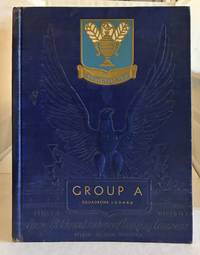
1942rif. A53736Miami Beach FL: Army Air Force. Very Good. Hardcover. This is an oversized hardback book. The book is in Very Good condition and was issued without a dust jacket. The spine ends and corners of the book covers have some light bumping rubbing and wear. There are a couple of spots of discoloration to the rear cover of the book. The text pages are mostly clean and bright. There are names and addresses of other members of the group on one of the rear free pages and the name and designation of the owner of this book O/C Mcoy F. L. - squadron 5; B&W Illustrations; Unpaginated pages; Pictured 9/4/26 . 1942. Army Air Force hardcover
rif. 86510This appears to be reproduction due to the white borders on the pages. Comb binding. Good. The format is approximately 8.5 inches by 11 inches. 100 pages. Illustration on front cover. Illustrations. Tabular Data. Cover has some wear and soiling. The Boeing B-17 Flying Fortress is a four-engined heavy bomber developed in the 1930s for the United States Army Air Corps USAAC. Relatively fast and high-flying for a bomber of its era the B-17 was used primarily in the European Theater of Operations and dropped more bombs than any other aircraft during World War II. It is the third-most produced bomber of all time behind the four-engined Consolidated B-24 Liberator and the multirole twin-engined Junkers Ju 88. It was also employed as a transport antisubmarine aircraft drone controller and search-and-rescue aircraft. In a USAAC competition Boeing's prototype Model 299/XB-17 outperformed two other entries but crashed losing the initial 200-bomber contract to the Douglas B-18 Bolo. Still the Air Corps ordered 13 more B-17s for further evaluation then introduced it into service in 1938. The B-17 evolved through numerous design advances but from its inception the USAAC later the USAAF promoted the aircraft as a strategic weapon. It was a fast high-flying long-range bomber with heavy defensive armament at the expense of bombload. It developed a reputation for toughness based upon stories and photos of badly damaged B-17s safely returning to base. The B-17 saw early action in the Pacific War where it conducted raids against Japanese shipping and airfields. But it was primarily employed by the USAAF in the daylight strategic bombing campaign over Europe. "Pilot Training Manual for the B-17 Flying Fortress" which was issued to B-17 pilots during World War II and was considered to be the "textbook of the B-17". The manual begins with a brief history of the B-17 and then goes on to explain to the pilot the duties and responsibilities of each of his crew members. Following this is a series of topics dealing with the characteristics and operation of the B-17 itself and how the crew should handle various emergency situations. From the Foreword: This manual is the text for your training as a B-17 pilot and airplane commander. The Air Forces' most experienced training and supervisory personnel have collaborated to make it a complete exposition of what your pilot duties are how each duty will be performed and why it must be performed in the manner prescribed. The techniques and procedures described in this book are standard and mandatory. In this respect the manual serves the dual purpose of a training checklist and a working handbook. Use it to make sure that you learn everything described herein. Use it to study and review the essential facts concerning everything taught. Such additional self-study and review will not only advance your training but will alleviate the burden of your already overburdened instructors. This training manual does not replace the Technical Orders for the airplane which will always be your primary source of information concerning the B-17 so long as you fly it. This is essentially the textbook of the B-17. Used properly it will enable you to utilize the pertinent Technical Orders to even greater advantage. unknown
1989rif. 86506Menasha WI: Aviation Publications 1989. Reprint edition of 1943 edition. Wraps. Good. The format is approximately 8.5 inches by 11 inches. 2109 1 pages. Illustration on front cover. Illustrations. Tabular Data. Cover has some wear and soiling. The B-17F variants were the primary versions flying for the Eighth Air Force to face the Germans in 1943 and had standardized the manned Sperry ball turret for ventral defense also replacing the earlier 10-panel framed bombardier's nose glazing from the B subtype with an enlarged nearly frameless Plexiglas bombardier's nose enclosure for improved forward vision. The final production blocks of the B-17F from Douglas' plants did adopt the YB-40's "chin turret" giving them a much-improved forward defense capability. By the time the B-17G appeared the number of guns had been increased from seven to 13 the designs of the gun stations were finalized and other adjustments were completed. The B-17G was the final version of the Flying Fortress incorporating all changes made to its predecessor the B-17F and in total 8680 were built the last on 28 July 1945. Many B-17Gs were converted for other missions such as cargo hauling engine testing and reconnaissance. Initially designated SB-17G a number of B-17Gs were also converted for search-and-rescue duties later to be redesignated B-17H. The Boeing B-17 Flying Fortress is a four-engined heavy bomber developed in the 1930s for the United States Army Air Corps USAAC. Relatively fast and high-flying for a bomber of its era the B-17 was used primarily in the European Theater of Operations and dropped more bombs than any other aircraft during World War II. It is the third-most produced bomber of all time behind the four-engined Consolidated B-24 Liberator and the multirole twin-engined Junkers Ju 88. It was also employed as a transport antisubmarine aircraft drone controller and search-and-rescue aircraft. In a USAAC competition Boeing's prototype Model 299/XB-17 outperformed two other entries but crashed losing the initial 200-bomber contract to the Douglas B-18 Bolo. Still the Air Corps ordered 13 more B-17s for further evaluation then introduced it into service in 1938. The B-17 evolved through numerous design advances but from its inception the USAAC later the USAAF promoted the aircraft as a strategic weapon. It was a relatively fast high-flying long-range bomber with heavy defensive armament at the expense of bombload. It also developed a reputation for toughness based upon stories and photos of badly damaged B-17s safely returning to base. The B-17 saw early action in the Pacific War where it conducted raids against Japanese shipping and airfields. But it was primarily employed by the USAAF in the daylight strategic bombing campaign over Europe complementing RAF Bomber Command's night-time area bombing of German industrial military and civilian targets. Of the roughly 1.5 million tons of bombs dropped on Nazi Germany and its occupied territories by U.S. aircraft over 640 000 tons 42.6% were dropped from B-17s. Aviation Publications paperback
1943rif. 01070982Scott Field: Technical School Army Air Forces Technical Training Command 1943. Gilt titles on blue leatherette. 184pp. A restricted document during WWII. Hard Cover. Near Fine/No Jacket. Large Octavo. Technical School Army Air Forces Technical Training Command Hardcover
2002rif. 122080Vinalhaven Historical Society 2002. DVD. Like New. 29 minute film about the history of granite quarrying on Vinalhaven Island Maine. Please email for photos. Vinalhaven Historical Society unknown
1949rif. 14001Ft. Benning GA: Infantry School. Very Good. 1949. Pamphlet. A Very Good original pamphlet with unmarked pages. All pages present; The Army Field Forces Subject Schedule No. 21-205 For National Gard of the United States 1 September 1948 Domestic Disturbances. Published for Use in Connection with All NGTP's; 8vo; 4 pages; FSA . Infantry School unknown
1942rif. 18926Fort Sill OK: Infantery School. Very Good. 1942. Pamphlet. Pamphlet of the Field Artillery School December 1942 ; This book is a catalog of artillery materiel published by Army Field Forces. The catalog covers a wide range of topics including weapons ammunition vehicles and support equipment.; 22 pages . Infantery School unknown
1948rif. 18917Fort Benning GA: Infantery School. Very Good. 1948. Pamphlet. A well maintained pamphlet of the Field Artillery School September 1 1948; Subject schedule and guide to the instructor in preparing lesson plans ; 30 pages . Infantery School unknown
1948rif. 18918Fort Sill OK: Infantery School. Very Good. 1948. Pamphlet. A well maintained pamphlet of the Field Artillery School September 1 1948; Subject schedule and guide to the instructor in preparing lesson plans ; 44 pages . Infantery School unknown
1948rif. 18919Fort Sill OK: Infantery School. Very Good. 1948. Pamphlet. A well maintained pamphlet of the Field Artillery School September 1 1948; Subject schedule and guide to the instructor in preparing lesson plans ; 4 pages; FSA . Infantery School unknown
1948rif. 18923Fort Benning GA: Infantery School. Very Good. 1948. Pamphlet. Pamphlet of the Field Artillery School September 1 1948; Subject schedule and guide to the instructor in preparing lesson plans ; 5 pages; FSA . Infantery School unknown
1948rif. 18921Fort Sill OK: Infantery School. Very Good-. 1948. Pamphlet. Pamphlet of the Field Artillery School September 1 1948 slightly soiled ; Subject schedule and guide to the instructor in preparing lesson plans ; 4 pages; FSA . Infantery School unknown