SAINT-FOIX. (GERMAIN-FRANCOIS POULLAIN DE. 1698-1776).Livre Rare Book

31 174 résultats
1760réf. 3210(A PARIS). DE L’IMPRIMERIE DE CHRISTOPHE-JEAN-FRANCOIS BALLARD. 1760. FORT VOLUME IN-FOLIO (29,5 X 41 X 8 CENTIMETRES ENVIRON) DE (4) + IV + (4) + 568 PAGES, RELIURE D’EPOQUE PLEIN VEAU BLOND, DOS A SIX NERFS ORNE DE CAISSONS A FLEURONS DORES A LA COLOMBE DU SAINT-ESPRIT, PLATS DECORES DE LA COLOMBE DU SAINT-ESPRIT AU CENTRE ET D’H COURONNES AUX ANGLES, TITRE DORE SUR ETIQUETTE MAROQUIN ROUGE, TRANCHES DOREES (BONNET RELIEUR). IMPORTANTE ILLUSTRATION GRAVEE SUR CUIVRE : FRONTISPICE ALLEGORIQUE PAR LAURENT CARS D’APRES FRANCOIS BOUCHER, UNE VIGNETTE DE TITRE ET 78 BANDEAUX, CULS DE LAMPE ET LETTRINES REPETES DANS LE TEXTE PAR LAURENT CARS D’APRES GRAVELOT, ET PLUS DE 800 ARMOIRIES DANS LE TEXTE. EDITION ORIGINALE D’UN GRAND LUXE TYPOGRAPHIQUE (SAFFROY. 4919 - OLIVIER, HERMAL ET ROTON FERS 2494, 2495, 2496 - COHEN. 205). TRACES D’USURE EXTERIEURE, DONT ERAFLURES, TRACE D’HUMIDITE ANCIENNE AYANT FRAGILISE LES COINS AVEC TRACE DE MOUILLURE ANCIENNE MARGINALE, SANS AUCUNE ATTEINTE AU TEXTE, SUR QUELQUES PAGES EN DEBUT ET EN FIN DE VOLUME, SINON EXEMPLAIRE RESTANT CONVENABLE TIRE SUR PAPIER VERGE FORT ET A GRANDES MARGES.
1965réf. 1854BOULOURIS. EDITIONS DU BANIYAN. 1965. GRAND IN-4 (38 X 29 X 5 CENTIMETRES ENVIRON) DE 289 PAGES, RELIURE D’EPOQUE 1/2 CHAGRIN ROUGE MAROQUINE A COINS, DOS A QUATRE NERFS RICHEMENT ORNE D’UN DECOR NAPOLEONIEN DE GRECQUES ET FLEURONS DORES AUX GRANDES ARMES IMPERIALES ET AUX SEMIS D’ABEILLES, COUVERTURE CREME ILLUSTREE D'UNE VIGNETTE AUX GRANDES ARMES IMPERIALES EN VERT ET DOS CONSERVES (AD. LAVAUX RELIEUR). ILLUSTRE DE 131 COMPOSITIONS MISES EN COULEURS AU POCHOIR PAR EDMOND VAIREL, DONT LE FRONTISPICE, 14 HORS TEXTE, UNE PLANCHE DOUBLE, 10 EN-TETES, 88 LETTRINES ET 17 CULS-DE-LAMPE. PREMIER TIRAGE LIMITE A 1100 EXEMPLAIRES NUMEROTES, DONT 20 HORS COMMERCE. UN DES 840 EXEMPLAIRES SUR VELIN CUVE DE LANA, CELUI-CI PORTANT LE NUMERO 261(MONOD. 10451). BEL EXEMPLAIRE, RARE DANS CE TYPE DE RELIURE.
réf. 176263A Paris, Chez Magimel, an IX-1801 in-4, 269 pp., 2 tableaux dépliants, grande carte dépliante, demi-basane blonde à coins, dos lisse orné, tr. marbrées (rel. de l'époque). Dos légt passé.
réf. DADAX0963869213New unknown
réf. 2083002116207134bottom margin Army Reserve Academy N.A. Soft Cover. Fine. The book is in fine condition. (bottom margin) Army Reserve Academy paperback
1987réf. 2091502135705346Army School History Compilation Committee 1987. Soft Cover. Fine. The book is in fine condition. Army School History Compilation Committee paperback
1909Very Good Turkish, Ottoman (1500-1928) Original red cloth bdg. Bilingual titles on two boards and title pages in French and Ottoman script. Slight age-related toning to pages, the Ottoman face of cloth is stained. Spine restored skillfully. 4to. (28 x 20 cm). Text entirely in Ottoman Turkish. 2 volumes set: ([4], 92 p., 19 color plts.; 52 p., 8 color plts. -of which five illustrate the symbols and flags of the different companies of janissaries and two depict the Grand Vizier and the Capudan Pacha-). All plates are complete. Hegira 1325 = Gregorian 1909. Rare first edition of the early uniform book of the Ottoman army with the most attractive color plates ever and extremely rare with its complete plates. The artist of the plates was Hüsnü Tengüz (1876-1950), one of the most famous Turkish painters. He was assigned to the Military Museum Commission by Mahmut Sevket Pasha in 1908-1909, and after 1910, he was appointed as the painter of the Naval Museum, until 1917. "Premiere Partie 1326 jusqu'a 1826 avec 247 gravures coloriees. Par Mahmoud Chevket Pacha General Divisionnaire Inspecteur general des 1er, 2me et 3me Ordous. Prix 20 Piastres". In this work by Mahmud Shevket Pasha, who was the Ottoman Grand Vizier and the Commander of the Movement Army, dealing with the Ottoman military organization together with military clothing and uniforms; the clothes of the soldiers belonging to these organizations are exhibited together on their exquisitely beautiful plates. The descriptions of the pictures cover all the military classes serving in the Ottoman army. The two parts refer to the two periods of Turkish military organization: Pt. One (figures 1-48) depicts the Ottoman court functionaries, Pt. Two (figures 1-58) the new army. Özege 16005.; Atabey 238.; Not in BLC. GL (Part One only); OCLC: 16110303, 27957549, Not in Blackmer. Bebek 134.
1889réf. 80-1454DNY: Whitlock c. 1889. 1889. Volume I. Text 71p. with Complete set of 44 color plates. Plates 15x17". List of plates available on request. Original black 3/4 leather. Very Oversize. Plates and text Fine. Both boards are off and spine mostly missing. Binding tight. Fair Copy. Hardcover. Fair. Illus. by Ogden H.A. Whitlock, c. 1889. Hardcover
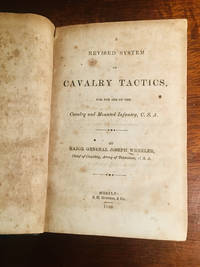
1863réf. 1214Rare Confederate Imprint: 24 mo. 5 1/2 by 3 3/4 inches 1 preliminary leaf ii Three parts in one volume: "Cavalry Tactics For Single Line Formation" 220 pages "Evolutions of a Regiment" 104 pages "Skirmish Drill for Mounted Troops" 47 pages "Bugle Signals" pages 97-108 among them: "To Arms" "The Charge" "Reveille" "Retreat" "Dinner Call" and "Tattoo" all with musical notation "Table of Contents" plus Index and "Skirmish Drill For Mounted Troops" xiv pages 38 plates some folded: diagrams tables and charts. Good condition collated perfect in green paper covered boards old blue cloth re-backing with worn black paper label mild foxing to some pages – not affecting contents. "Fighting Joe" Wheeler was a cavalry general in the Confederate States Army. He was the senior cavalry general in the Army of Tennessee and fought in most of its battles in the Western Theater. He earned his nickname on the Western frontier where he distinguished himself in skirmishes against Native Americans. S. H. Goetzel, & Co. hardcover
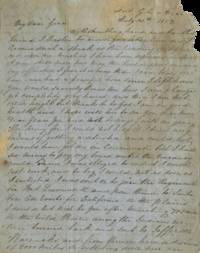
1852réf. List3713This item is currently on reserve; please contact dealer for more details. Fort Gibson Indian Territory 1852. Single two-page letter measuring 9 ¾ x 7 ¾ inches postmarked Fort Gibson. Damage to upper right corner intersecting with text; repairs with archival tape; with small portion of text continued on cover missing. Very good minus. A letter from James Johnson at Fort Gibson to his wife Grace in New York dated July 30 1852. Johnson had left home in search of work trying "every means of getting a station"; he "would have got one in Cincinnati but I had no money to pay my board until the vacancy would occur" and was therefore "obliged to enlist I could not work and to beg I could not." He had apparently stopped writing to his wife due to shame but she had discovered his enlistment anyway. He details his service: "As soon as I enlisted I was sent on to join the Regiment in Fort Leavenworth and from thence to Santa Fe en route for California. On the plains I could not write to you. After marching 700 miles on the Wild Prairie among the Indians we were turned back and sent to Jefferson Barracks and from thence here a distance of 2000 miles. On settling down here . I had every opportunity of writing to you but I could not bring myself to do it". This itinerary places Johnson's service with the "Army of the Frontier" a term for US Army activity protecting Euro-American settlers and participating in the Indian Wars which would drive Indigenous tribes off their land. Fort Gibson in particular located within Indian Territory played a significant role in the program of Indian removal with tribes there under the Army's control including the Cherokee Muscogee and Seminole. The content of Grace Johnson's objection to her husband's service and the cause of his shame over it are not entirely clear from the letters but they are felt intensely: Johnson laments that he could not save "myself from disgrace and suffering and the accusation of my own conscience" and remarks of "William John" apparently a deceased child that "I feel content he is out of this sinful world lest any of his fathers sins should fall upon him". Though he does state that he "would not feel half as I do" if he were without a family the guilt and shame seem to center as much around the military service as around the family abandonment. He closes his letter with a plea to Grace to help him leave the army: "Dear Grace you can get me out of the army any time you like if you take the proper steps by going to a lawyer and I will give you every assistance in my power for when I enlisted I enlisted as a married man and had 3 children". The letter reflects the sentiment that though above begging enlisting in the army was a shameful last resort for those who could not obtain civilian jobs. Of interest to historians of economic enlistment and public sentiment regarding the US Army in the midcentury.
1852réf. List3713This item is currently on reserve; please contact dealer for more details. Fort Gibson Indian Territory 1852. Single two-page letter measuring 9 ¾ x 7 ¾ inches postmarked Fort Gibson. Damage to upper right corner intersecting with text; repairs with archival tape; with small portion of text continued on cover missing. Very good minus. A letter from James Johnson at Fort Gibson to his wife Grace in New York dated July 30 1852. Johnson had left home in search of work trying "every means of getting a station"; he "would have got one in Cincinnati but I had no money to pay my board until the vacancy would occur" and was therefore "obliged to enlist I could not work and to beg I could not." He had apparently stopped writing to his wife due to shame but she had discovered his enlistment anyway. He details his service: "As soon as I enlisted I was sent on to join the Regiment in Fort Leavenworth and from thence to Santa Fe en route for California. On the plains I could not write to you. After marching 700 miles on the Wild Prairie among the Indians we were turned back and sent to Jefferson Barracks and from thence here a distance of 2000 miles. On settling down here . I had every opportunity of writing to you but I could not bring myself to do it". This itinerary places Johnson's service with the "Army of the Frontier" a term for US Army activity protecting Euro-American settlers and participating in the Indian Wars which would drive Indigenous tribes off their land. Fort Gibson in particular located within Indian Territory played a significant role in the program of Indian removal with tribes there under the Army's control including the Cherokee Muscogee and Seminole. The content of Grace Johnson's objection to her husband's service and the cause of his shame over it are not entirely clear from the letters but they are felt intensely: Johnson laments that he could not save "myself from disgrace and suffering and the accusation of my own conscience" and remarks of "William John" apparently a deceased child that "I feel content he is out of this sinful world lest any of his fathers sins should fall upon him". Though he does state that he "would not feel half as I do" if he were without a family the guilt and shame seem to center as much around the military service as around the family abandonment. He closes his letter with a plea to Grace to help him leave the army: "Dear Grace you can get me out of the army any time you like if you take the proper steps by going to a lawyer and I will give you every assistance in my power for when I enlisted I enlisted as a married man and had 3 children". The letter reflects the sentiment that though above begging enlisting in the army was a shameful last resort for those who could not obtain civilian jobs. Of interest to historians of economic enlistment and public sentiment regarding the US Army in the midcentury. books
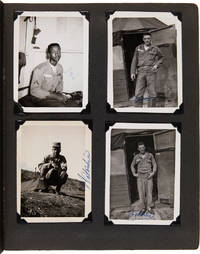
1960réf. 57626Tokyo and surroundings. ca. 1960. An African-American Soldier in Japan in the 1960s An album of charming vernacular photographs assembled by a young African-American soldier on a United States Army base near Tokyo in the period between the Korean and Vietnam wars. The majority of the photos are impromptu portraits or scenes from camp life depicting the soldier and his diverse group of White Asian-American and African-American comrades. Many of the soldiers are identified by a surname written in ink on the photograph and a number of the images show soldiers of different races associating together. In addition to pictures of himself and his friends our photographer has captured a number of Japanese tourist scenes including the Kamakura Daibutsu zen gardens around the city festivals and processions nature scenes and more. Laid into the rear of the album are a number of smaller personal or family photos with some identifying notes including an ink note on one labelled "me" the same person appears in many of the military photos in the album. There are also a few flyers for Tokyo nightclubs and a handful of names and addresses for soldiers in his unit. An interesting look at the daily life of American soldiers in Japan in the early '60s. 186 mounted photographs and postcards on 32 leaves plus eleven loose photographs and five printed flyers. Images vary from 2½ x 1¾ inches to 10 x 7½ inches. Quarto photograph album. Original green velvet with origami crane stitched in gilt on front board a.e.g. Boards lightly rubbed and stained. Album leaves almost entirely loose from binding several photographs loosely laid in. The images themselves very crisp and clean. hardcover
1960réf. 57626Tokyo and surroundings. ca. 1960. An African-American Soldier in Japan in the 1960s An album of charming vernacular photographs assembled by a young African-American soldier on a United States Army base near Tokyo in the period between the Korean and Vietnam wars. The majority of the photos are impromptu portraits or scenes from camp life depicting the soldier and his diverse group of White Asian-American and African-American comrades. Many of the soldiers are identified by a surname written in ink on the photograph and a number of the images show soldiers of different races associating together. In addition to pictures of himself and his friends our photographer has captured a number of Japanese tourist scenes including the Kamakura Daibutsu zen gardens around the city festivals and processions nature scenes and more. Laid into the rear of the album are a number of smaller personal or family photos with some identifying notes including an ink note on one labelled "me" the same person appears in many of the military photos in the album. There are also a few flyers for Tokyo nightclubs and a handful of names and addresses for soldiers in his unit. An interesting look at the daily life of American soldiers in Japan in the early '60s. 186 mounted photographs and postcards on 32 leaves plus eleven loose photographs and five printed flyers. Images vary from 2½ x 1¾ inches to 10 x 7½ inches. Quarto photograph album. Original green velvet with origami crane stitched in gilt on front board a.e.g. Boards lightly rubbed and stained. Album leaves almost entirely loose from binding several photographs loosely laid in. The images themselves very crisp and clean. hardcover books
1908réf. 819801908. U.S. ARMY. The Uniform of the Army of the United States. October 1 1908. Compiled by the Authority of the Secretary of War Under the Supervision of Brigadier General J.B. Aleshire Quartermaster General U.S.A. Washington DC: The Eichert Lith. Co. and A.B. Graham Co. Lith. 1908. 1st ed. Portfolio of 126 chromolithographic plates all issued chromolithographic title plate 1 plate of text. Orig. 3/4 red leather portfolio marbled endpapers red leather label on front board. Top left and bottom right corners from title page are chipped else very good or better. An extremely scarce collection of prints showing all uniform parts of the time from full dress uniforms to sock and underwear. Rank insignia brass collar and sleeve insignia hats cords shoes dress and field uniforms etc. Eighteen of the plates were deleted prior to issue because their subjects had become obsolete. "The decision to proceed with the present publication was dictated by two major considerations: the unquestioned position of Henry Alexander Ogden as a military artist and the inaccessibility of the original work to collectors and historians." Ogden had prepared for the office of the Quartermaster General 70 paintings depicting official army uniforms from 1776 to 1907. Forty-four of these represented the more colorful uniforms in use from 1776 to 1888. "In 1890 the Quartermaster General published these 44 paintings together with a text covering the history and regulations. At the same time the plates were privately published along with an illuminating text by Henry Loomis Nelson. It is the latter edition that forms the basis for the present publication. Ogden rendered greater service to historians of the American Army uniform than any man in history" Publisher's Note. unknown
1946réf. 12885Various locations 1946. 58 leaves illustrated with 114 photographs generally two per page tipped in on rectos. Octavo. Contemporary plain paper photograph album bound in brown textured cloth with decorative stamping on spine and front board. Minor wear. Internally quite clean. Very good plus. A tidy and informative collection of photographs memorializing the wartime stateside training of numerous women serving in Company 7 of the Women's Army Auxiliary Corps. The photographs are largely individual and group portraits of the women training at various locations throughout the country including Fort Oglethorpe in Georgia as well as Alpine Texas; Fort Devens in Massachusetts; Des Moines Iowa; and Mapleton Maine. The album is partially annotated with manuscript captions on many of the margins or on the verso many dated and identifying the women in the images or the location. The women identified in the captions include Corporal Kaiser Elaine Flaherty Lt. Tapajina Lt. Haggard Private Rosalyn Caley T-4 Ethel O'Brian Capt. Lawson Sgt. Boomer Florence McClure and Capt. Chapman providing a valuable record of the women serving in the WAAC at this time. One group shot of WAACs at Fort Devens is captioned on the verso with the last names of all ten women and a few other portraits are captioned the same way White Melin Phillips etc. A handful of the images picture the women in the midst of training including images of a retreat parade raising the American flag working in the barracks and climbing a rope ladder. The album was apparently compiled by a WAAC named Almena L. Belyea according to a laid-in note from a former owner of the album. Almena L. Belyea 1902-1963 served in the WAAC as a Technician Fifth Grade during the war. Afterwards she apparently never married and lived a quiet life in Maine where she is buried in Presque Isle. unknown
1946réf. 12885Various locations 1946. 58 leaves illustrated with 114 photographs generally two per page tipped in on rectos. Octavo. Contemporary plain paper photograph album bound in brown textured cloth with decorative stamping on spine and front board. Minor wear. Internally quite clean. Very good plus. A tidy and informative collection of photographs memorializing the wartime stateside training of numerous women serving in Company 7 of the Women's Army Auxiliary Corps. The photographs are largely individual and group portraits of the women training at various locations throughout the country including Fort Oglethorpe in Georgia as well as Alpine Texas; Fort Devens in Massachusetts; Des Moines Iowa; and Mapleton Maine. The album is partially annotated with manuscript captions on many of the margins or on the verso many dated and identifying the women in the images or the location. The women identified in the captions include Corporal Kaiser Elaine Flaherty Lt. Tapajina Lt. Haggard Private Rosalyn Caley T-4 Ethel O'Brian Capt. Lawson Sgt. Boomer Florence McClure and Capt. Chapman providing a valuable record of the women serving in the WAAC at this time. One group shot of WAACs at Fort Devens is captioned on the verso with the last names of all ten women and a few other portraits are captioned the same way White Melin Phillips etc. A handful of the images picture the women in the midst of training including images of a retreat parade raising the American flag working in the barracks and climbing a rope ladder. The album was apparently compiled by a WAAC named Almena L. Belyea according to a laid-in note from a former owner of the album. Almena L. Belyea 1902-1963 served in the WAAC as a Technician Fifth Grade during the war. Afterwards she apparently never married and lived a quiet life in Maine where she is buried in Presque Isle. unknown books
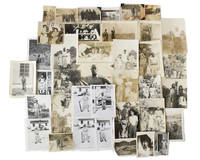
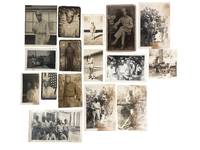
1940réf. 186881940. African American MilitarySegregation African American soldiers' photograph archive from the 1940s and 1950s documenting Black military service in the Philippines and Korea during the transition from segregated World War II units to the early implementation of desegregation under President Harry S. Truman's 1948 Executive Order 9981. 38 images showing African American servicemen stationed in Southeast Asia and East Asia at a time when U.S. global military invention was further complicated by racial segregation and gradual integration. The archive reflects the lived experience of Black soldiers deployed abroad in the immediate postwar period illustrating their service within the American imperial presence in the Philippines following its 1946 independence and during the outbreak of the Korean War in 1950. Archive of thirty-eight vernacular silver gelatin black and white photographs with sepia tone 1940s to 1950s most measuring approximately 5 x 3 inches with minor size variation. The majority of images depict African American soldiers in what appear to be predominantly all-Black units consistent with pre-1948 segregation policies while one snapshot shows a racially mixed unit encamped in snow likely Korea suggestive of early desegregation implementation. Several photographs portray soldiers stationed in the Philippines amid dense jungle foliage and village settings socializing with local residents and posing with women; one captioned image identifies three well-dressed soldiers as "Kee" of Youngstown "Haynes" of Philadelphia and "Borom" of Gary Indiana pictured with three Asian women. Additional images include formal and informal portraits soldiers standing guard on base with helmet and rifle and scenes of leisure and camaraderie that complicate narratives of isolation and discrimination. The archive spans the crucial transitional years between World War II segregation Philippine independence in 1946 and the Korean War era when approximately 600000 African Americans served in the armed forces and the implementation of Executive Order 9981 unfolded unevenly across units. The photographs track gradual emergence of integrated units mirroring broader civil rights struggles unfolding on the American home front. They also document the role of Black soldiers on U.S. military bases in the Philippines and in early Cold War Asia offering material evidence of African American participation in postwar American global intervention. Minor edge wear and occasional slight bends with light surface handling visible on several prints; images remain clear and well defined. Overall condition very good. A substantial visual record of African American military life abroad during the pivotal transition from segregation to integration in the United States Army. unknown
1940réf. 186881940. African American MilitarySegregation African American soldiers' photograph archive from the 1940s and 1950s documenting Black military service in the Philippines and Korea during the transition from segregated World War II units to the early implementation of desegregation under President Harry S. Truman's 1948 Executive Order 9981. 38 images showing African American servicemen stationed in Southeast Asia and East Asia at a time when U.S. global military invention was further complicated by racial segregation and gradual integration. The archive reflects the lived experience of Black soldiers deployed abroad in the immediate postwar period illustrating their service within the American imperial presence in the Philippines following its 1946 independence and during the outbreak of the Korean War in 1950. Archive of thirty-eight vernacular silver gelatin black and white photographs with sepia tone 1940s to 1950s most measuring approximately 5 x 3 inches with minor size variation. The majority of images depict African American soldiers in what appear to be predominantly all-Black units consistent with pre-1948 segregation policies while one snapshot shows a racially mixed unit encamped in snow likely Korea suggestive of early desegregation implementation. Several photographs portray soldiers stationed in the Philippines amid dense jungle foliage and village settings socializing with local residents and posing with women; one captioned image identifies three well-dressed soldiers as "Kee" of Youngstown "Haynes" of Philadelphia and "Borom" of Gary Indiana pictured with three Asian women. Additional images include formal and informal portraits soldiers standing guard on base with helmet and rifle and scenes of leisure and camaraderie that complicate narratives of isolation and discrimination. The archive spans the crucial transitional years between World War II segregation Philippine independence in 1946 and the Korean War era when approximately 600000 African Americans served in the armed forces and the implementation of Executive Order 9981 unfolded unevenly across units. The photographs track gradual emergence of integrated units mirroring broader civil rights struggles unfolding on the American home front. They also document the role of Black soldiers on U.S. military bases in the Philippines and in early Cold War Asia offering material evidence of African American participation in postwar American global intervention. Minor edge wear and occasional slight bends with light surface handling visible on several prints; images remain clear and well defined. Overall condition very good. A substantial visual record of African American military life abroad during the pivotal transition from segregation to integration in the United States Army. unknown books
1945réf. 8784Headquarters-U.S. Army Air Forces. Revised May 1945. Punch and clipbound in stylized titled coloured pictorial wrappers. Small 4to. Classified "Restricted" and marked as such on each page. Introduction by General Hap Arnold Commanding General of the Army Air Forces Profusely illustrated with photographs drawings schematics diagrams some fold-out cutaways etc. Arguably the most famous aircraft of the Second World War the Boeing B-17 Flying Fortress was the spearhead of the American daylight bombing offensive in Europe from beginning to end as well as serving in every other theatre of war. No single aircraft type contributed more to the defeat of the Luftwaffe which enabled tangible expression to be given to the controversial U. S. policy for the strategic assault of Germany by day in the face of formidable political argument as well as desperate enemy opposition. Few other aircraft of the war gained the universal affection of their aircrew over so long an operational periods did the B-17 Green . This manual served the dual purpose of training checklist and working handbook for B-17 pilot airplane commanders. Graphically intensive the manual covers all aspects of the Flying Fortress from operational duties and command to construction flight navigation weaponry emergencies etc. A very rare highly prized memento of aviation and military. history Owners ink signature to front cover. Ink stamp of Salem Army Airdrome HQ dated 1945 to title Page and inside rear cover. Usual rust offset from metal binding pins to front and rear inside covers.Binding pin protruding slightly onto front cover. Mild sporadic soiling to rear cover.Light wear to edges. A crisp bright Very Good copy of this original rare relic of Aviation History. Headquarters-U.S. Army Air Forces. unknown
1945réf. 8784Headquarters-U.S. Army Air Forces. Revised May 1945. Punch and clipbound in stylized titled coloured pictorial wrappers. Small 4to. Classified "Restricted" and marked as such on each page. Introduction by General Hap Arnold Commanding General of the Army Air Forces Profusely illustrated with photographs drawings schematics diagrams some fold-out cutaways etc. Arguably the most famous aircraft of the Second World War the Boeing B-17 Flying Fortress was the spearhead of the American daylight bombing offensive in Europe from beginning to end as well as serving in every other theatre of war. No single aircraft type contributed more to the defeat of the Luftwaffe which enabled tangible expression to be given to the controversial U. S. policy for the strategic assault of Germany by day in the face of formidable political argument as well as desperate enemy opposition. Few other aircraft of the war gained the universal affection of their aircrew over so long an operational periods did the B-17 Green . This manual served the dual purpose of training checklist and working handbook for B-17 pilot airplane commanders. Graphically intensive the manual covers all aspects of the Flying Fortress from operational duties and command to construction flight navigation weaponry emergencies etc. A very rare highly prized memento of aviation and military. history Owners ink signature to front cover. Ink stamp of Salem Army Airdrome HQ dated 1945 to title Page and inside rear cover. Usual rust offset from metal binding pins to front and rear inside covers.Binding pin protruding slightly onto front cover. Mild sporadic soiling to rear cover.Light wear to edges. A crisp bright Very Good copy of this original rare relic of Aviation History. Headquarters-U.S. Army Air Forces. unknown books
1942réf. 231081942. African American Military Archive of 16 original vernacular photographs depicting African American servicemen in the U.S. armed forces from World War II through the Korean War including studio portraits candid camp scenes and informal snapshots several with manuscript captions and identifications en versos. The group documents Black military life under segregation. Identified individuals include "Sgt. Darnell Givens U.S. Army / Indiaana" and "Pvt. Solomon Johnson . Co A 276 QM Bn Camp Stoneman / Pittsburg Calif / To Judy Johnson" situating part of the archive within Quartermaster Corps service-one of the primary branches in which Black soldiers were assigned. A group portrait captioned "The P.O. staff" here understood to denote "Petty Officer staff" suggests a naval or naval-adjacent administrative unit broadening the archive's scope beyond a single branch and reflecting the varied roles Black servicemen occupied across the armed forces. The images collectively support research into African American military participation and the lived experience of Black servicemen prior to and during early desegregation efforts following 1948. Arphive of 16 silver gelatin photographs various sizes ranging approximately from snapshot to larger studio formats depicting individual and group portraits and informal camp scenes. Several images show soldiers in uniform posed in studio settings with painted backdrops while others document outdoor environments including barracks areas wooded camps and roadside settings with military vehicles. A group photograph titled in manuscript "The P.O. staff" shows a cohort of Black soldiers gathered outside a building indicating a group of petty officers in a Black unit. Additional images depict a soldier operating a typewriter at a field desk dated "1940" men gathered around cooking equipment and a civilian scene with a woman posed beside a uniformed serviceman and automobile suggesting furlough or home-front interaction. One portrait captioned en recto "To Betty With Love / "Korea" 53-54" and en verso "With Lots of Love Always / Joe" and another with an extended caption reading in part "I am sending you this to let you see how they turn out" give insight in soldier's personal lives while abroad. The archive documents African American servicemen during a period when the U.S. military remained institutionally segregated with Black soldiers frequently assigned to support roles such as logistics transport and supply as reflected in the Quartermaster identification. The presence of named individuals and unit references provides a basis for further archival and genealogical research while the combination of formal portraits and candid scenes offers insight into self-representation camaraderie and everyday military life. Emphasis on leisure portraiture and technical work such as typing and communications underscores the range of responsibilities and identities within segregated service structures. Moderate edge wear creasing emulsion loss and staining visible across several photographs with some images exhibiting significant surface damage; overall condition good. A cohesive and research-relevant visual record of Black military life spanning World War II through the early Cold War period. unknown
1942réf. 231081942. African American Military Archive of 16 original vernacular photographs depicting African American servicemen in the U.S. armed forces from World War II through the Korean War including studio portraits candid camp scenes and informal snapshots several with manuscript captions and identifications en versos. The group documents Black military life under segregation. Identified individuals include "Sgt. Darnell Givens U.S. Army / Indiaana" and "Pvt. Solomon Johnson . Co A 276 QM Bn Camp Stoneman / Pittsburg Calif / To Judy Johnson" situating part of the archive within Quartermaster Corps service-one of the primary branches in which Black soldiers were assigned. A group portrait captioned "The P.O. staff" here understood to denote "Petty Officer staff" suggests a naval or naval-adjacent administrative unit broadening the archive's scope beyond a single branch and reflecting the varied roles Black servicemen occupied across the armed forces. The images collectively support research into African American military participation and the lived experience of Black servicemen prior to and during early desegregation efforts following 1948. Arphive of 16 silver gelatin photographs various sizes ranging approximately from snapshot to larger studio formats depicting individual and group portraits and informal camp scenes. Several images show soldiers in uniform posed in studio settings with painted backdrops while others document outdoor environments including barracks areas wooded camps and roadside settings with military vehicles. A group photograph titled in manuscript "The P.O. staff" shows a cohort of Black soldiers gathered outside a building indicating a group of petty officers in a Black unit. Additional images depict a soldier operating a typewriter at a field desk dated "1940" men gathered around cooking equipment and a civilian scene with a woman posed beside a uniformed serviceman and automobile suggesting furlough or home-front interaction. One portrait captioned en recto "To Betty With Love / "Korea" 53-54" and en verso "With Lots of Love Always / Joe" and another with an extended caption reading in part "I am sending you this to let you see how they turn out" give insight in soldier's personal lives while abroad. The archive documents African American servicemen during a period when the U.S. military remained institutionally segregated with Black soldiers frequently assigned to support roles such as logistics transport and supply as reflected in the Quartermaster identification. The presence of named individuals and unit references provides a basis for further archival and genealogical research while the combination of formal portraits and candid scenes offers insight into self-representation camaraderie and everyday military life. Emphasis on leisure portraiture and technical work such as typing and communications underscores the range of responsibilities and identities within segregated service structures. Moderate edge wear creasing emulsion loss and staining visible across several photographs with some images exhibiting significant surface damage; overall condition good. A cohesive and research-relevant visual record of Black military life spanning World War II through the early Cold War period. unknown books
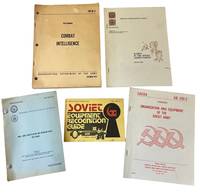
réf. 235111973. Cold War U.S. military instruction archive of government-produced manuals and intelligence studies showing how the Army trained soldiers to recognize enemy weapons report battlefield information and classify Soviet military power. The archive includes a U.S. Army field manual which explains how battlefield reports became military intelligence. The Soviet weapons guide was produced to teach soldiers how to identify AKM rifles RPG-7 launchers Sagger missiles SA-7 antiaircraft missiles mortars and antitank guns in the field. Major Mitzi D. Leibst's DIA study Women in the Soviet Armed Forces broadens the archive from weapons to manpower showing how U.S. intelligence counted Soviet women's military service as part of the enemy's total fighting capacity. Five U.S. Army and Defense Intelligence Agency manuals and studies on combat intelligence Soviet equipment recognition small arms identification Soviet force organization and women in the Soviet armed forces. Washington D.C.; Fort Monroe Virginia; Charlottesville Virginia; Fort Leavenworth Kansas; Department of the Army Defense Intelligence Agency U.S. Army Training and Doctrine Command U.S. Army Foreign Science and Technology Center and Combined Arms Combat Developments Activity 1973 to 1978. 1 United States Department of the Army. FM 30-5 Combat Intelligence. Washington D.C.: Headquarters Department of the Army 30 October 1973. Chapters cover intelligence functions collection processing dissemination order of battle counterintelligence maps and aerial imagery. Approximately 200 pages. 2 United States Army Training and Doctrine Command. TC 30-3 Soviet Equipment Recognition Guide. Fort Monroe Virginia: U.S. Army Training and Doctrine Command 11 April 1975. A soldier's pocket-style recognition guide using photographs cartoons role labels and specifications to teach Soviet weapons identification. 50 pages. 3 Johnson Harold E. Small Arms Identification and Operation Guide Free World. DST-1110H-163-76. Washington D.C.: Defense Intelligence Agency December 1976. A DIA intelligence product prepared by the U.S. Army Foreign Science and Technology Center and approved for public release with an August 1976 information cutoff. 316 pages. 4 Leibst Mitzi D. Women in the Soviet Armed Forces. DDI-1100-109-76. Washington D.C.: Defense Intelligence Agency March 1976. Prepared for the Ground Forces/MBFR Branch Soviet/Warsaw Pact Division the study identifies gaps in data on Soviet women's strength service and quality of service while compiling law history and personnel evidence. 19 Pages. 5 United States Army Combined Arms Combat Developments Activity. HB 550-2 Organization and Equipment of the Soviet Army. Fort Leavenworth Kansas: Threats Division Concepts Doctrine and Literature Directorate Combined Arms Combat Developments Activity 31 July 1978. Prepared to assist battle simulations and standardize Soviet-type organizational and equipment data. Approximately 60 pages. The archive records the practical underside of Cold War intelligence where enemy knowledge moved into manuals for soldiers analysts and training commands. Its strongest pairing is the DIA women's study and the Soviet Equipment Recognition Guide: one expands Soviet force analysis into gender law and manpower while the other teaches ordinary soldiers to identify enemy weapons in the field. Wrappers show toning handling wear staining creasing staple wear punch holes and light soil; interiors remain legible with tables captions illustrations photographs and institutional markings intact. Overall in good condition. The group preserves how U.S. military institutions taught personnel to recognize report and classify Soviet military power during the Cold War. unknown
réf. 235111973. Cold War U.S. military instruction archive of government-produced manuals and intelligence studies showing how the Army trained soldiers to recognize enemy weapons report battlefield information and classify Soviet military power. The archive includes a U.S. Army field manual which explains how battlefield reports became military intelligence. The Soviet weapons guide was produced to teach soldiers how to identify AKM rifles RPG-7 launchers Sagger missiles SA-7 antiaircraft missiles mortars and antitank guns in the field. Major Mitzi D. Leibst's DIA study Women in the Soviet Armed Forces broadens the archive from weapons to manpower showing how U.S. intelligence counted Soviet women's military service as part of the enemy's total fighting capacity. Five U.S. Army and Defense Intelligence Agency manuals and studies on combat intelligence Soviet equipment recognition small arms identification Soviet force organization and women in the Soviet armed forces. Washington D.C.; Fort Monroe Virginia; Charlottesville Virginia; Fort Leavenworth Kansas; Department of the Army Defense Intelligence Agency U.S. Army Training and Doctrine Command U.S. Army Foreign Science and Technology Center and Combined Arms Combat Developments Activity 1973 to 1978. 1 United States Department of the Army. FM 30-5 Combat Intelligence. Washington D.C.: Headquarters Department of the Army 30 October 1973. Chapters cover intelligence functions collection processing dissemination order of battle counterintelligence maps and aerial imagery. Approximately 200 pages. 2 United States Army Training and Doctrine Command. TC 30-3 Soviet Equipment Recognition Guide. Fort Monroe Virginia: U.S. Army Training and Doctrine Command 11 April 1975. A soldier's pocket-style recognition guide using photographs cartoons role labels and specifications to teach Soviet weapons identification. 50 pages. 3 Johnson Harold E. Small Arms Identification and Operation Guide Free World. DST-1110H-163-76. Washington D.C.: Defense Intelligence Agency December 1976. A DIA intelligence product prepared by the U.S. Army Foreign Science and Technology Center and approved for public release with an August 1976 information cutoff. 316 pages. 4 Leibst Mitzi D. Women in the Soviet Armed Forces. DDI-1100-109-76. Washington D.C.: Defense Intelligence Agency March 1976. Prepared for the Ground Forces/MBFR Branch Soviet/Warsaw Pact Division the study identifies gaps in data on Soviet women's strength service and quality of service while compiling law history and personnel evidence. 19 Pages. 5 United States Army Combined Arms Combat Developments Activity. HB 550-2 Organization and Equipment of the Soviet Army. Fort Leavenworth Kansas: Threats Division Concepts Doctrine and Literature Directorate Combined Arms Combat Developments Activity 31 July 1978. Prepared to assist battle simulations and standardize Soviet-type organizational and equipment data. Approximately 60 pages. The archive records the practical underside of Cold War intelligence where enemy knowledge moved into manuals for soldiers analysts and training commands. Its strongest pairing is the DIA women's study and the Soviet Equipment Recognition Guide: one expands Soviet force analysis into gender law and manpower while the other teaches ordinary soldiers to identify enemy weapons in the field. Wrappers show toning handling wear staining creasing staple wear punch holes and light soil; interiors remain legible with tables captions illustrations photographs and institutional markings intact. Overall in good condition. The group preserves how U.S. military institutions taught personnel to recognize report and classify Soviet military power during the Cold War. unknown books
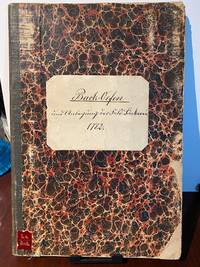
1782réf. 1054BAKING MANUSCRIPT GERMAN MILITARY. Back-oefen und Anlagung der feld=Bacherey. 1782. Original Manuscript. Folio old marbled boards edges worn cloth back pp. 53. N.p. Germany or Austria 1782. German military back-oven regulations. hardcover