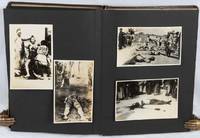
1940réf. 220264Circa1940s. Photographic album with eighty mounted black and white photographic illustrations of varying sizes a further four photographs loosely inserted. Unpaginated. Some with captions some with handwritten descriptions on the verso. 25 x 17cm. Faux leather blind stamped decorative binding a little worn on the edges the rear gutter has been neatly strengthened. Good condition. A strange and very disturbing but historically significant album of photos taken by a Japanese man before and during the Asia-Pacific War. Some photos have been removed from the album but those remaining include family images and school photos taken at the 80th anniversary of Takefumi Higashi Junior School in Echizen City Fukui Prefecture Japan in 1951. A set of five photos stamped with the mark of "E. Tsukio" and the place name Takefumi Higashi show the aftermath of an exceptionally heavy snowfall. The photographs in this album seems to be associated with a family surnamed Hiroba as a number have handwritten notations on the back bearing the names of various individuals with that surname. The album includes a set of commercially produced photographs of the aftermath of the 1923 Great Kanto Earthquake including grim images of piles of bodies of earthquake victims. These are annotated as having been a present from a man named Hiroba Shigenobu. A photo at the rear of the album shows a photo of a Japanese army officer with sword and medals and is annotated "Hiroba Shigeharu 6 October 1940 on the eve of the third expedition to Manchuria given by Takeda Fumio". Next to this is a set of commercially produced photographs of Port Arthur focusing on the monuments to the 1905 Japanese victory there in the Russo-Japanese War. These monuments were a popular tourist attraction for Japanese people visiting Manchuria before or during the Asia-Pacific War. There are also numerous original photos taken in Harbin and the surrounding area mostly in March and April 1941. These include pictures of the streetscape of Harbin and local people participating in an ice festival on the river but also of Japanese military actions in the area - setting up an observation post transporting goods by horse-cart etc. One photo shows the range of cigarette brands available for sale in wartime Harbin. Four photos show a ceremony celebrating the establishment of the "Shimizu Unit no. 24" in Northeast China. The celebrations included a sumo wrestling competition and a party where Japanese troops were entertained by Chinese "beautiful geisha" raising the disturbing spectre of the recruitment of "comfort women" by the wartime Japanese military. More shocking still are nine photos of beheadings and other acts of extreme violence being perpetrated on people during the war in China. The precise locations of these scenes are unclear. Some of the photos appear to have been commercially produced as they contain title inscriptions in within the print but others may be original. One titled photo shows "the heads of bandits being transported by train". A haunting reminder both the horrors of war and of the way in which these can be interwoven into apparently normal family lives. . hardcover
1945réf. 88250Ottawa: Department of National Defence 1945. First edition. Hardcover. Maps. 1945 Vol.I & II only of 3 8vo. Original pictorial cloth. Two volumes of rare military technical reports documenting Exercise Eskimo a significant joint winter warfare field trial conducted in northern Canada during the final stages of World War II. Involving approximately 1750 personnel from the Canadian Army and the Royal Canadian Air Force the exercise was designed to test the impact of sub-Arctic winter conditions on combat efficiency and military equipment across a wide range of operational areas — from clothing rations and the army postal service to tanks and heavy machinery. The volumes compile core observations technical data prototype equipment evaluations and formal recommendations for future winter operations and are illustrated with photographs throughout. One volume includes five large fold-out maps in rear pockets covering the Advance Withdrawal Lines of Communication Operations Air Operations and Winter Climatic Zones. Some minor occasional marking and creasing to contents; cloth slightly rubbed and marked. No jacket Department of National Defence hardcover
réf. 200816208EPINAL, C. FROEREISEN, libraire editeur, 1882 ; in-4, 121-18-20 planches, cartonnage de l'éditeur. Demi-cuir (reliure moderne).
réf. SPN-1053Paris, Etienne-Louis Crépy, 1743-1744. 6 cartes géographiques des Flandres (1743 et 1744) : - carte particulière des environs de Malines, Anvers, Lier, Herentals, Aerschot, etc. (1743) / 75 x 55 cm - carte particulière des environs de Dunkerque, Bergue, Gravelines, St Omer, Aire, Lille, Menin, Ypres, Dixmude, etc. (1743) / 74,5 x 55 cm - carte particulière des environs de Bruxelles, Louvain, Diest, Tirlemont, Leau, Vilvorden, Nivele, Halle, etc. (1743) / 74 x 55,5 cm - carte particulière des environs de Courtray, Oudelarde, Mons, Tournay, Ath, Ninove, Alost, Orchies, etc. (1743) / 74,5 x 55 cm - carte des environs de Betune, Douay, Arras, Bappaumes, Dourlens, Hedin, Lecluse, St Pol et autres. (1743) / 74 x 55 cm - carte des environs de Liège, Mastrick, Limbourg, Aix la Chapelle, Huy, Fauquemont, Dalem, etc. (1744) / 74,5 x 55 cm Échelle de deux lieues et demi Commune de France [= 12 cm] et de deux lieues de Brabant [= 9,5 cm]. Cartes dressées sur les Mémoires du libraire-imprimeur bruxellois Eugène-Henry Fricx (1644-1730, actif de 1670 à sa mort, imprimant les affiches de la ville, des livres d'histoire, des plans de villes, des cartes militaires et géographiques). [BEG, quelques taches bleues sporadiques, légères rousseurs et petits accrocs en bords]
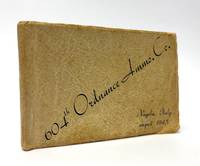
1945réf. 14242Nugola Italy: US Army 1945. Softcover. Very good . Oblong 16mo 5.5" x 3.75". Seventeen sepia-toned photographic prints each with a printed captioned tissue-guard and bound into printed covers with yapped edges. Covers with light wear to edges the prints just a tinge curled but bright clean and well-preserved though a few shots are slightly over-exposed. On the verso of the last photographs are some notes identifying this booklet as belonging to Sgt. James Jones a soldier who appears in one of the photographs herein. Overall in very good or better condition. A nice collection of labeled group shots of each platoon and subordinate unit to this ammunition company which served in North Africa and Italy during World War II. Compared to white soldiers African-American recruits and draftees were disproportionately assigned to ordnance and supply units as the Army leadership generally did not trust African-Americans to have combat leadership responsibilities. They also served under white officers. Despite these insults they often served with distinction. While we can find little hard information about the history of this unit's engagements some archival finding aids for veterans of the unit suggest that it saw engagements in North Africa Sicily and Italy during World War II. Compared with front-line combat units ordnance units were less likely to publish regimental history volumes at the close of the war. As such this souvenir book is probably the best extant document of the unit's organization and its service. While we have encountered one other copy we do not trace any others in the auction record or in OCLC. Rare. [US Army] unknown
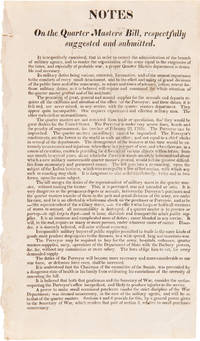
1811réf. 38950Washington 1811 or 1812. Reorganizing the Way the Army is Provisioned on the Eve of the War of 1812 An interesting unofficial handbill relating to the U.S. Army Quartermaster Department on the eve of the War of 1812 with references to the impending war with Britain Indian business and the Barbary powers. In 1811 Congress introduced "A Bill for the Establishment of a Quarter-Master's Department" which the anonymous author of the present document notes "merges the duties of the superintendent of military stores in the quarter master without naming the former." The author urges Congress to keep separate the military office of the Quartermaster from the civil positions of the Army Purveyor. Dbd. Soft vertical fold. Light offsetting from a different document near title else very good. unknown
1811réf. 38950Washington 1811 or 1812. Reorganizing the Way the Army is Provisioned on the Eve of the War of 1812 An interesting unofficial handbill relating to the U.S. Army Quartermaster Department on the eve of the War of 1812 with references to the impending war with Britain Indian business and the Barbary powers. In 1811 Congress introduced "A Bill for the Establishment of a Quarter-Master's Department" which the anonymous author of the present document notes "merges the duties of the superintendent of military stores in the quarter master without naming the former." The author urges Congress to keep separate the military office of the Quartermaster from the civil positions of the Army Purveyor. Dbd. Soft vertical fold. Light offsetting from a different document near title else very good. unknown books
1851réf. 81247Washington:: Gideon and Co. 1851. First edition. publisher's gilt-lettered ribbed cloth. A beautiful copy. 12mo. Illustrated from engravings. . Ownership inscription of Company A 10th Regt. N.Y.V Jan. 1862 on the front pastedown. Gideon and Co., hardcover
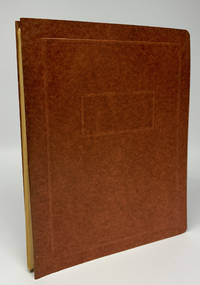
1943réf. 12163Harrisburg PA: Army Air Forces Intelligence School 1943. Very good. Quarto unpaginated about 100pp. illustrated with 83 original tipped-in photographs and an envelope containing 13 more loose and unidentified images laid-in. Housed in the original cardstock clasped folder. Many of the pages have a bottom fold which does not fully open without the potential to tear though all of the contents can be read with some effort. Some pages a touch foxed and a few prints are loosened from their pages and laid-in in the right place. Overall in very good condition. A well-organized and illustrated military textbook for a wartime class on aircraft identification which was probably taught in many places but organized at the US Army Air Force base in Harrisburg. An introductory sheet in perfect bureaucratic fashion placed near the end of this textbook states: "The course in Aircraft Identification consists of ten hours spaced over a period of six weeks." It goes on to list a series of 42 aircraft--American German Italian French and Japanese--which will be easily identified by all successful students by the end of the course. The first few dozen pages consist of detailed folding charts with data on dimensions payloads etc. Another section of about 12pp. gives a background on various best practices when trying to identify aircraft as well as some of the principles behind the course. The course utilized the "WEFT" system wings engine fuselage tail to help individuals soldiers intelligence agents etc. identify planes in the field from various angles at different heights and in certain contexts. Most of the pages dedicated to individual planes contain two photographs from different angles and with different shading trying to mimic real battlefield conditions under which someone might try to identify an aircraft. An unusually engaging wartime military textbook appealing to photography aviation and military collectors alike. Not located in OCLC thus notably absent in the holdings of the Army War College Library which retains most technical manuals and course books. Army Air Forces Intelligence School unknown
1899réf. 185571899. Wagner Arthur L.; Kelley Assistant Adjutant-General; Jerrold J.D. The United States Army and Navy: From the Era of the Revolution to the Close of the Spanish-American War 1899 presenting a comprehensive late nineteenth-century account of American military development with direct relevance to the study of warfare institutional organization and expansion of U.S. military power. The work surveys major conflicts including the Revolutionary War Mexican War Indian Wars and Spanish-American War situating the latter within a period of overseas engagement and changing strategic priorities. It also provides detailed treatment of military structure including administrative divisions pay systems and operational organization within the Army alongside parallel developments in the Navy. Naval sections address earlier conflicts such as the War of 1812 and engagements with Tripoli and France as well as contemporary actions including Manila Bay and Santiago de Cuba reflecting the emergence of the United States as a naval power at the close of the nineteenth century. Wagner Arthur L.; Kelley; Jerrold J.D. The United States Army and Navy: From the Era of the Revolution to the Close of the Spanish-American War; with Accounts of Their Organization Administration and Duties. Akron Ohio: The Werner Company 1899. First edition. Oblong folio measuring approximately 18 x 13.5 inches illustrated with 43 full-color lithographic plates on heavy stock comprising 25 army subjects and 18 navy subjects each accompanied by descriptive text on protective tissue guards. The plates depict soldiers officers and marines in uniform battlefield scenes and naval vessels including battleships and cruisers providing visual representation of personnel equipment and engagements across multiple conflicts. Single oblong folio volume in dark blue cloth with gilt title on the front board. Light wear to edges of spine and boards; text and plates clean and well-preserved; overall very good condition. A large-format illustrated survey of United States military history and organization at the close of the nineteenth century. unknown
1899réf. 185571899. Wagner Arthur L.; Kelley Assistant Adjutant-General; Jerrold J.D. The United States Army and Navy: From the Era of the Revolution to the Close of the Spanish-American War 1899 presenting a comprehensive late nineteenth-century account of American military development with direct relevance to the study of warfare institutional organization and expansion of U.S. military power. The work surveys major conflicts including the Revolutionary War Mexican War Indian Wars and Spanish-American War situating the latter within a period of overseas engagement and changing strategic priorities. It also provides detailed treatment of military structure including administrative divisions pay systems and operational organization within the Army alongside parallel developments in the Navy. Naval sections address earlier conflicts such as the War of 1812 and engagements with Tripoli and France as well as contemporary actions including Manila Bay and Santiago de Cuba reflecting the emergence of the United States as a naval power at the close of the nineteenth century. Wagner Arthur L.; Kelley; Jerrold J.D. The United States Army and Navy: From the Era of the Revolution to the Close of the Spanish-American War; with Accounts of Their Organization Administration and Duties. Akron Ohio: The Werner Company 1899. First edition. Oblong folio measuring approximately 18 x 13.5 inches illustrated with 43 full-color lithographic plates on heavy stock comprising 25 army subjects and 18 navy subjects each accompanied by descriptive text on protective tissue guards. The plates depict soldiers officers and marines in uniform battlefield scenes and naval vessels including battleships and cruisers providing visual representation of personnel equipment and engagements across multiple conflicts. Single oblong folio volume in dark blue cloth with gilt title on the front board. Light wear to edges of spine and boards; text and plates clean and well-preserved; overall very good condition. A large-format illustrated survey of United States military history and organization at the close of the nineteenth century. unknown books
1911réf. 003923Atlanta GA.: Byrd Printing Co. 1911. 1st Edition . Hardcover. Very Good. FIRST Edition in original gray cloth; gently bumped corner tips with spine crown frayed/worn. A VERY GOOD volume with some exposed webbing but tight hinges and tight text block. On verso of frontispiece is authors signature we presume it is 'publisher printed' - though no other first editions mention it -A possible SIGNED copy. A shadow of a penciled p.o. name on front end-paper - and scattered mild foxing throughout. A b/w frontispiece of author and title page are partially loose. Just a few bent page tips. Has first edition points - on page 81 line 1 with 'friends' later changed to 'French'; page 154 line 5 has "J".T. Sherman later corrected to W. T. Sherman. Five b/w illustrations plus frontispiece. Hermann served in the Cheat Mountain campaign in Fort Hood McAllister Ga; in Mississippi and in Hood's Tennessee campaign. At rear is Appendix with listings of names of Officers and Privates. 285 pages. Hard to find title. Protected in a mylar slip. Byrd Printing Co. hardcover
1948réf. 50-1090GPO 1948. 1948. As incomplete set of 13 of 17 vols.: Vol. II. Policy. 651p.; Vol III. Training. & Use with British & French. 473p. ; Vol. IV. Military Operations of the AEF. Early Operations. 806p. ; Vol. V. Military Operations of the AEF. Champaign & Aisne. 693p. ; Vol. VI. Military Operations of the AEF. Oise Ypres Vittorio. 563p.; Vol. VII. Military Operations of the AEF. Somme Offensive. 921p. Folding maps. Vol. VIII. Military Operations of the AEF. St. Mihiel. 324p. ; Vol. IX. Military Operations of the AEF. Meuse- Argonne. 598p. ; Vol. X. Armistice Agreement & Related Documents. 1240p. ; Vol. XI. American Occupation of Germany. 475p. ; Vol. XIII. Reports of the Commander-in-Chief AEF Staff Sections & Services. 388p.; Vol. XIV. Reports of the Commander-in-Chief AEF Staff Sections & Services. 449p.; Vol. XVII. Bulletins GHQ. 267p. Black cloth. ex.lib. Label removed from spine of vol XIII. Some rubber stamps otherwise Near Fine Set. 1st. Hardcover. Near Fine. GPO, 1948. Hardcover
1945réf. 4-398Paris: Pap. Du Sentier 1945. 1st ed. About 800p. Folding maps. Large wraps. Cloth spine. Heavy. Fine Copy. 1st. Paperback. Fine. Book. Pap. Du Sentier, paperback
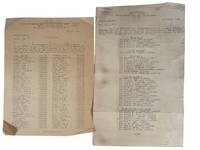
1943réf. 220421943. U.S. Army issuer Special Orders documents 1943-1944 documenting the mobilization assignment and promotion of women in the Women's Army Corps during World War II. The archive illuminates a system of military recruitment training allocation and hierarchical advancement revealing how women were enlisted processed and promoted within a gender segregated military structure.These documents show the mechanisms by which the Army expanded its personnel base to include women formalizing their roles through standardized orders logistical coordination and rank progression. U.S. Army. Special Orders. Southern New York Recruiting and Induction District and APO 501 Services of Supply 1943-1944. U.S. Army's mobilization of women for wartime service documents. This archive highlighting how gender and race intersected within a segregated military structure. Five pages of typed military orders documenting the enlistment and rank advancements of dozens of women into the Women's Army Corps WAC during World War II during a critical and unprecedented phase of American military expansion. These internal "Special Orders" were issued from U.S. Army Headquarters one from the Southern New York Recruiting and Induction District dated 28 September 1943 3 pages and the other from APO 501 Services of Supply Special Troops dated 25 August 1944 2 pages. The first document-marked "RESTRICTED"-lists 161 women who have "been enlisted this date as Privates in the WAC AUS UP without delay for New York N.Y. to Daytona Beach." These orders formalize the transfer of recruits to basic training at the Second WAAC Training Center in Florida a site where both Black and white women were trained in segregated units. Typed names include "KENNEDY DOROTHY R." "RAY RITA T." "ROBERTS ROSA" and "ROSS GRACE". The document also makes note that "the QMC will issue six 6 meal tickets to one hundred and sixty one 161 WACs" revealing both the scale and logistical efforts involved in transporting and sustaining the newly enlisted women. It is signed by R.C. Burgess 1st Lt. WAC AUS WAC adjutant and includes careful routing for distribution and duplication. The second document issued nearly a year later reflects the internal promotion structure within the WAC. It includes detailed lists of women being promoted across multiple ranks-from Private to Private First Class Technician Third through Fifth Grades and up to Master Sergeant. It begins: "Upon recommendation of the Chiefs of Section. the following temporary promotions are announced in WAC Service Unit USA SOS APO 501." Among those promoted: "Sgt HELEN P. SUTTON" "T/5 HELEN E. SHROOP" "Pvt DOROTHY R. KENNEDY" again appearing from the earlier enlistment list and "Sgt MARGARET H. STERLING" named Master Sergeant. The appearance of some of these women in both documents indicates successful progression within the ranks underscoring the opportunities for women-albeit within a racially stratified command-for advancement and formal recognition. Edges of the paper show chipping and creasing Minor staining to the lower half of the 1944 document. All text remains fully legible. Overall very good condition. A compelling and tangible record of women's military service during World War II. These documents record the expansion and institutionalization of women's military service during World War II when the WAC became a central component of U.S. Army personnel strategy. The inclusion of detailed enlistment lists and promotion orders demonstrates how women were incorporated into existing military systems while operating within segregated units shaped by prevailing racial policies. The progression of individuals across documents illustrates continuity of service and advancement opportunities within constrained structures. Edge wear chipping and creasing with minor staining to the 1944 document; text fully legible; overall very good condition. A concentrated administrative record of women's wartime service and the operational systems governing their roles. unknown
1943réf. 220421943. U.S. Army issuer Special Orders documents 1943-1944 documenting the mobilization assignment and promotion of women in the Women's Army Corps during World War II. The archive illuminates a system of military recruitment training allocation and hierarchical advancement revealing how women were enlisted processed and promoted within a gender segregated military structure.These documents show the mechanisms by which the Army expanded its personnel base to include women formalizing their roles through standardized orders logistical coordination and rank progression. U.S. Army. Special Orders. Southern New York Recruiting and Induction District and APO 501 Services of Supply 1943-1944. U.S. Army's mobilization of women for wartime service documents. This archive highlighting how gender and race intersected within a segregated military structure. Five pages of typed military orders documenting the enlistment and rank advancements of dozens of women into the Women's Army Corps WAC during World War II during a critical and unprecedented phase of American military expansion. These internal "Special Orders" were issued from U.S. Army Headquarters one from the Southern New York Recruiting and Induction District dated 28 September 1943 3 pages and the other from APO 501 Services of Supply Special Troops dated 25 August 1944 2 pages. The first document-marked "RESTRICTED"-lists 161 women who have "been enlisted this date as Privates in the WAC AUS UP without delay for New York N.Y. to Daytona Beach." These orders formalize the transfer of recruits to basic training at the Second WAAC Training Center in Florida a site where both Black and white women were trained in segregated units. Typed names include "KENNEDY DOROTHY R." "RAY RITA T." "ROBERTS ROSA" and "ROSS GRACE". The document also makes note that "the QMC will issue six 6 meal tickets to one hundred and sixty one 161 WACs" revealing both the scale and logistical efforts involved in transporting and sustaining the newly enlisted women. It is signed by R.C. Burgess 1st Lt. WAC AUS WAC adjutant and includes careful routing for distribution and duplication. The second document issued nearly a year later reflects the internal promotion structure within the WAC. It includes detailed lists of women being promoted across multiple ranks-from Private to Private First Class Technician Third through Fifth Grades and up to Master Sergeant. It begins: "Upon recommendation of the Chiefs of Section. the following temporary promotions are announced in WAC Service Unit USA SOS APO 501." Among those promoted: "Sgt HELEN P. SUTTON" "T/5 HELEN E. SHROOP" "Pvt DOROTHY R. KENNEDY" again appearing from the earlier enlistment list and "Sgt MARGARET H. STERLING" named Master Sergeant. The appearance of some of these women in both documents indicates successful progression within the ranks underscoring the opportunities for women-albeit within a racially stratified command-for advancement and formal recognition. Edges of the paper show chipping and creasing Minor staining to the lower half of the 1944 document. All text remains fully legible. Overall very good condition. A compelling and tangible record of women's military service during World War II. These documents record the expansion and institutionalization of women's military service during World War II when the WAC became a central component of U.S. Army personnel strategy. The inclusion of detailed enlistment lists and promotion orders demonstrates how women were incorporated into existing military systems while operating within segregated units shaped by prevailing racial policies. The progression of individuals across documents illustrates continuity of service and advancement opportunities within constrained structures. Edge wear chipping and creasing with minor staining to the 1944 document; text fully legible; overall very good condition. A concentrated administrative record of women's wartime service and the operational systems governing their roles. unknown books
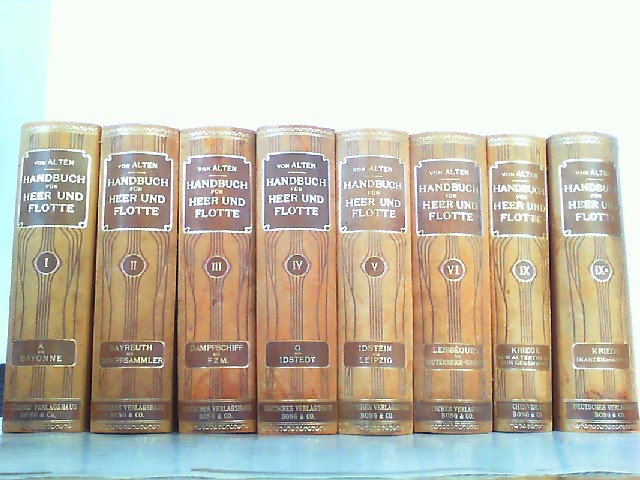
1912réf. 233398Berlin, Deutsches Verlagshaus Bong & Co., 1909 - 1912.
1867réf. 15-0-360Weimar, Bernhard Friedrich Voigt, 1867. 8° (ca. 21,5 cm x 14 cm), mit 27 lithographischen Tafeln X, 70 S., Hlbleder d. Z. mit Rückenschild
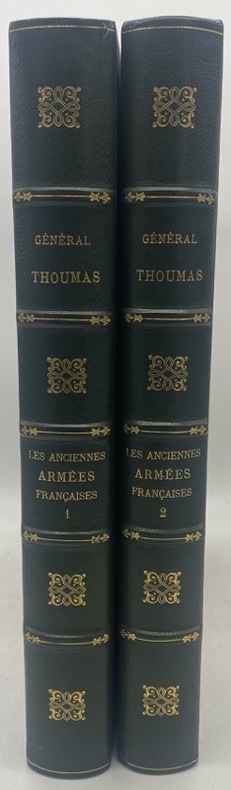
réf. 2191Paris, Laumette, 1890 2 vol. gr. in-4, XII-426 pp., 17 pl. h. t., nbs ill. in-t., demi-chagrin vert, dos à nerfs orné (rel. de l'époque). Quelques rousseurs.
1903Very Good Turkish, Ottoman (1500-1928) Original manuscript autograph document signed by Mehmed Said Pasha sent to Trabzon Vilayat, Ordu Kaza, Hasbamane Nahiya local manager, faziletlu 'Mehmed Ali Sevki Beyefendi'. 33,5x20 cm. Folded. 1 p. In Ottoman script. Mehmed Said Pasha was an Ottoman monarchist, senator, statesman and editor of the Turkish newspaper Jerid-i-Havadis. He supported the CUP, the political party which came to power after the Ottoman coup d'état of 1913. His origin comes from 'Sebazâde family' from Ankara. He became first secretary to Sultan Abdul Hamid II shortly after the Sultan's accession, and is said to have contributed to the realizations of his majesty's design of concentrating power in his own hands; later he became successively minister of the interior and then governor of Bursa, reaching the high post of grand vizier in 1879. He was grand vizier seven more times under Abdul Hamid II, and once under his successor, Mehmed V. He was known for his opposition to the extension of foreign influence in Turkey. n 1896, he took refuge at the British embassy in Constantinople, and, though then assured of his personal liberty and safety, remained practically a prisoner in his own house. He came into temporary prominence again during the revolution of 1908. On 22 July he succeeded Mehmed Ferid Pasha as grand vizier, but on the 6 August was replaced by the more liberal Kâmil Pasha, at the insistence of the Young Turks. Also during 1908, Mehmed Said Pasha bought the famed Istanbul arcade in the Beyoglu (Pera) district, today known as Çiçek Pasaji ("Flower Passage"). The modern name became common in the 1940s; during Mehmed Said Pasha's ownership in the 1900s and 1910s, the arcade was known as Sait Pasa Pasaji ("Said Pasha Passage"). During the Italian crisis in 1911-12, he was again called to the premiership. He was again removed from power by the Savior Officers (who backed the Freedom and Accord Party (Liberal Union) against the Committee of Union and Progress) and replaced by a new cabinet supported by the Officers and the Freedom and Accord Party. The CUP would return to power, however, the next year after the Ottoman coup d'état of 1913. (Source: Wikipedia). Seven lines on special paper with watermark 'Joynson Superfine'. Letter of request to provide teaching for some students in the region.
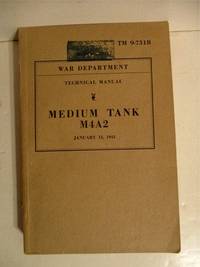
1943réf. 65-1277Raritan Arsenal 1943. 1943. 183p. Photos. Line drawings. "This manual includes the technical information required for the identification use and care of the German 88-mm antiaircraft gun as much as could be ascertained from printed matter and the materiel on hand." Green wraps. Typewritten Declassification notice laid-in. Crisp. As New Copy. Paperback. As New. Book. Raritan Arsenal, 1943. Paperback
1946réf. 5-763Heidelberg 1946. 1946. 3 vols. Many color foldout maps photos. Very heavy/Oversize. Fine set. 1st. Hardcover. Fine. Heidelberg, 1946. hardcover
1943réf. 78-1951BRaritan Arsenal 1943. 1943. 403p. Photos. Line drawings. Large Wraps. Classification blacked out on front. Fine Copy. Paperback. Fine. Book. Raritan Arsenal, 1943. Paperback
1859réf. 2003090026Washington D.C. : A.O.P. Nicholson printer 1859. First Edition. Hardcover. Very Good. Superior copy Volume X. Reptiles and fishes of the several routes ; Zoological reports on routes near 38th and 39th 41st 35th and 32d parallels ; On routes in California to connect with those near 35th and 32d parallels ; Reptiles of routes in California and Oregon. Quarto. 30 cm. Bound in contemporary marbled boards modern leather spine. Pages are remarkably clean and unmarked. A few plates have minor offsetting but besides a near fine copy. Hand-colored zoological plates and many in black and white. The reports of the Pacific railroad surveys were prepared under the direct supervision of the Engineer Department. The vols. dealing with the soil climate geology botany and zoology of the regions surveyed were edited and revised by Professors Henry and Baird of the Smithsonian institution--cf. Ingersoll History of the War Department 1879 p. 292-293. Ex. doc. United States. Congress. House 33rd Congress 2nd Session no. 91. This is an oversized or heavy book which requires additional postage for international delivery outside the US. Washington [D.C.] : A.O.P. Nicholson, printer hardcover
1818réf. 35061818 Chez Magimel, Anselin et Pochard, à Paris, 1818-1824. 13 volumes in-8 + table plein cartonnage d'éditeur, pièce de titre en maroquin rouge, nombreux tableaux dépliants. Bel ensemble malgré quelques coiffes frottées et une tâche au dos du tome Ier.