30.566 Ergebnisse
Best.-Nr. 685044to. One-page approximately 35 words in part: "In re Annie J. Laurens & W. J. Ball we prefer that the Representatives . be made parties to the proceedings"; with docketing verso. Conner began the war as a captain in the Hampton Legion then commanded the 22nd NC Infantry from Seven Pines through the Battle of the Wilderness before taking command of Kershaw's Brigade; he was seriously wounded at Cedar Creek necessitating a leg amputation. Following the war Conner resumed his law practice and served as South Carolina Attorney General 1876-1877. Published posthumously in 1933 his book Letters of General James Conner C.S.A. is rare and much sought. Light stain at central fold old fold lines. Very good. unknown books
1915Best.-Nr. 55931NP: n.p. 1915. First separate edition "taken from the Southern Bivouac" published in the September 1885 issue. 16mo. 38 pp. In an effort to impede the Union army's advance into Arkansas General T.C. Hindman met its troops in battle. Jones attached to the Army of Tennessee at the time of the battle consulted the reports available for the battle and here reconstructs the action from the confusing and contradictory writings of the leading participants; the fight lasted all day but the Confederates withdrew when night fell. Not in Nevins Nicholson or Dornbusch the latter noting the "Southern Bivouac" printing. OCLC locates one copy Arkansas-Fayetteville; we sold a third copy about 15 years ago. Very good. Original printed gray wrappers stapled. 2492. n.p. unknown books
Best.-Nr. 53654Partly printed form 8 1/2 x 14 inches completed in a clerical hand and signed by McPherson; the form was printed for the Mobile & Ohio Railroad the notation for the "Memphis & Charleston R.R." added in manuscript and was also signed by a foreman and seven laborers for completed work. An Ohio native McPherson finished first in West Point's class of 1853 and served in the Corps of Engineers until the outbreak of war. His meteoric rise took him from lieutenant of engineers in August 1861 to the command of a division in October 1862; along the way he served as Grant's chief engineer superintendent of railroads in West Tennessee and as a brigade commander. He commanded a corps at Vicksburg and Sherman's Army of the Tennessee in the Atlanta campaign where he was killed 22 July 1864. "Sherman's tears rolled through his beard and down on the floor when he viewed the body of his friend laid upon a door torn from its hinges and improvised as a bier" Generals in Blue. No Union general was more beloved by his troops. War era autograph material by McPherson is uncommon. Folded. Very good. unknown books
Best.-Nr. 344844to. 1 pp. Folded for mailing. Very good. In addition to his service in the War of 1812 the Creek War 1836 and the Sminole War Jesup served 42 years as the quartermaster general; "under his able direction the quartermaster department was organized upon a sound military and business basis. officer's in the department have always venerated him" DAB. unknown books
Best.-Nr. 47524Washington D.C. 22 December 1891 referring an enquier after biographical information to sketches about him in Appleton' Cyclopedia and The National Cyclopedia of American Biography. 1 pp. 4to. Mounted at the Left margin to a larger sheet. unknown books
1970Best.-Nr. UDEPFM201araDepartment of the Army 1970. Very Good. Department of the Army. FM 21-76 Survival. Washington D.C.: Department of the Army 1970. 285pp. Indexed. Illustrated. 8vo. Paperback. Book condition: Very good. Department of the Army paperback books
1959Best.-Nr. UGRASTO00FPBonanza Books 19596. Very Good. Graham U.S. Army Ret'd Colonel W.A. The Story of the Little Big Horn. New York NY: Bonanza Books 19596. fifth printing. xxxiii 178 44pp. Illustrated. 8vo. Hardcover. Book condition: Very good. Bumping to both ends of spine and small stain to top edge of text block. Dust Jacket Condition: Very good. Light rubbing to extremities. Bonanza Books hardcover books
2001Best.-Nr. 20900Santa Cruz: Foolscap 2001. Paperback. Fine. Paperback. An April Fools day keepsake. Green black and white patterned front wrapper. Pristine. 12 pages PRI/072408. Foolscap paperback books
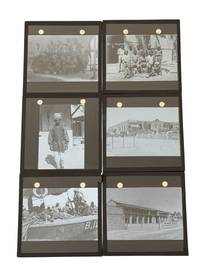
1916Best.-Nr. 235501916. British Indian Army medical and transport lantern slide archive circa 1916 documenting the hospital personnel river craft and built environment of the Mesopotamia Campaign during World War I. The sign for "No. 10 Indian General Hospital" places the group within the British Indian Army medical network operating at Basra after the disastrous siege of Kut and the rapid expansion of medical facilities for Indian Expeditionary Force D. The slides record the imperial military system through hospitals military harbor craft Indian attendants British soldiers and institutional buildings. Photo archive of 8 glass lantern slides each 3.25 x 3.25 inches likely Basra Mesopotamia present day Iraq circa 1916. The slides show a group portrait of Western military men in shirtsleeves and campaign dress; a group of Indian men posed outside a palm shaded compound; an Indian man in turban coat and light trousers standing near a building; and a large institutional structure identified by a foreground sign reading "No. 10 Indian General Hospital." Other views show soldiers and crew aboard a river vessel marked "B.12"; a river steamer or launch moving along a waterway; a long bungalow or hospital ward with verandah fencing and palms; and a cemetery or memorial setting with military graves crosses and a decorated headstone. The images emphasize hospitals transport quarters and personnel with Indian and Western subjects appearing within the same military geography. No. 10 Indian General Hospital was part of the medical expansion that followed the early failures of the Mesopotamia Campaign when heat disease inadequate evacuation routes and insufficient hospital capacity exposed the weakness of British Indian medical planning. Basra became the principal receiving and hospital base for the campaign linking river transport from the front to permanent and temporary medical facilities near the Gulf. Light surface wear minor fading and occasional abrasions visible; glass show no signs of cracking or scratching mounts appear intact. Overall very good condition. A small record of British Indian Army medical logistics and colonial military presence in Mesopotamia during the First World War. unknown books
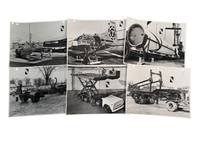
1960Best.-Nr. 236741960. Cold War airfreight engineering photo archive depicting the development of specialized ground equipment for loading a Flying Tiger Line Canadair CL 44D Swingtail circa 1961 when civilian cargo carriers supplied a growing share of the United States military's global transport capacity. Flying Tiger Line purchased sixteen CL 44s in a $55 million fleet expansion placing the first turbine powered freighters of the type into service and increasing the weight and dimensions of cargo that could be moved by air. Its first scheduled CL 44 operation departed Travis Air Force Base in July 1961 under a Military Air Transport Service contract linking the aircraft and its supporting machinery directly to the logistical expansion of American power during the Cold War. Photo archive of six silver gelatin photographs each 8½ x 11 inches attributed to Hunter Douglas Research circa 1961. The photographs record several stages in the construction and testing of mobile cargo handling equipment: a long wheeled platform fitted with angled supports and railings; a stripped chassis carrying heavy curved brackets; a compact truck with a scissor lift raising workers and a slatted platform; and a large multiwheel frame equipped with upright structural members. Two views show the opened rear fuselage of a Flying Tiger Line CL 44 including its exposed internal framework and the circular pressure bulkhead of the hinged tail section with loading machinery positioned beneath the cargo opening. Flying Tiger markings include the striped tail emblem the word "Tigers" aircraft number 44 and the circular "T" insignia. Each print bears an "HDRC" emblem in the image and a "Hunter Douglas Research" stamp with sequential file numbers on the verso identifying the photographs as an engineering record rather than airline publicity. The CL 44's swing tail permitted long and unusually shaped freight to enter the fuselage directly but the design required ground systems capable of raising supporting aligning and transferring loads at aircraft height. Flying Tiger advertised the type as capable of carrying 65000 pounds over 3000 miles while company records credit a CL 44 with transporting 61593 pounds from Travis Air Force Base to Tokyo during its first transpacific freight operation. MATS established in 1948 and renamed Military Airlift Command in 1966 used both military transports and contract carriers to sustain personnel and matériel movements across Europe Asia and the Pacific; Flying Tiger's 1961 to 1962 MATS contract alone was valued at $10.5 million. Light surface wear punch holes along the upper margins occasional handling creases and minor edge wear; one print with a small loss at an upper corner. Overall in good condition. A concentrated engineering record of the loading infrastructure that allowed commercial aircraft private research facilities and military contracts to operate as a single transportation network. unknown books
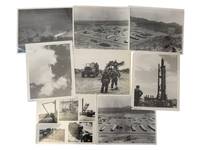
1957Best.-Nr. 237591957. U.S. Army missile testing and range operations photo archive 1957 to 1959 documenting the personnel mobile equipment fueling procedures launch preparation range infrastructure and actual firings that supported guided missile operations associated with Fort Bliss and the Army's southern New Mexico ranges. Fort Bliss had become the Army's antiaircraft training center during World War II and developed into a principal center for guided missile instruction during the Cold War with trained missile crews traveling onto New Mexico firing ranges for live exercises. Rather than concentrating exclusively on missiles in flight the photographs record the field organization required to put them there: propellant trucks cranes launch structures transport vehicles protective clothing range camps and crews working around missiles marked "U.S. Army." Archive of 12 Large silver gelatin photographs printed on eight sheets each approximately 8 x 10 inches Fort Bliss Texas and associated southern New Mexico firing ranges 1957 to 1959. Several sheets carry Firestone Tire & Rubber Co. Photographic Dept. California Division stamps negative numbers dates photographer credits and restrictions against release for publicity without prior approval. A February 18 1957 photograph credited to Oscar G. Souza identifies an "Army propellant fueling truck" pulling into a firing area with crew standing by while another image shows men in protective suits handling hoses beside heavy vehicles and missile support equipment. Launch preparation appears in photographs of a tall missile marked "U.S. Army" standing vertically in its launcher as soldiers work around its base and in a multi-image sheet showing cranes trucks handling apparatus and successive stages of field preparation. Two large photographs capture missiles climbing through clouds immediately after launch their exhaust plumes recording the transition from ground operation to flight. Range views establish the physical environment surrounding these activities: rows of barracks and service buildings spread across open desert beneath mountain ranges roads linking dispersed facilities and a cylindrical storage structure standing above one camp. A photograph dated April 13 1959 is captioned "General view of Oro Grande Range Camp N.M. taken from Elephant Mountain" directly locating part of the group within the New Mexico range system associated with Fort Bliss. Other prints retain handwritten negative numbers in their lower margins. The photographs belong to the decade in which guided missiles altered the organization of American air defense and forced the Army to train soldiers not simply as artillerymen but as operators of increasingly technical weapons systems. Fort Bliss trained Nike missile crews that traveled north into New Mexico to complete live firing exercises while its range network provided the acreage and controlled space necessary to operate weapons whose requirements extended far beyond a conventional artillery emplacement. Oro Grande formed part of the northern Fort Bliss range complex with its camp supporting units conducting testing and training in the surrounding ranges. The Firestone photographic markings add the presence of a major defense contractor to this record of Army operations and show that at least part of the photographic documentation was produced within the industrial network supporting Cold War weapons programs. Light surface wear handling marks occasional edge creasing and minor corner wear; stamps typed captions negative numbers and publication restrictions remain legible. Overall very good condition. An operational record of the personnel machinery infrastructure and procedures required for U.S. Army missiles. unknown books
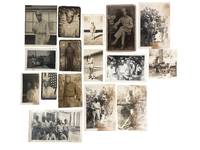
1942Best.-Nr. 231081942. African American Military Archive of 16 original vernacular photographs depicting African American servicemen in the U.S. armed forces from World War II through the Korean War including studio portraits candid camp scenes and informal snapshots several with manuscript captions and identifications en versos. The group documents Black military life under segregation. Identified individuals include "Sgt. Darnell Givens U.S. Army / Indiaana" and "Pvt. Solomon Johnson . Co A 276 QM Bn Camp Stoneman / Pittsburg Calif / To Judy Johnson" situating part of the archive within Quartermaster Corps service-one of the primary branches in which Black soldiers were assigned. A group portrait captioned "The P.O. staff" here understood to denote "Petty Officer staff" suggests a naval or naval-adjacent administrative unit broadening the archive's scope beyond a single branch and reflecting the varied roles Black servicemen occupied across the armed forces. The images collectively support research into African American military participation and the lived experience of Black servicemen prior to and during early desegregation efforts following 1948. Arphive of 16 silver gelatin photographs various sizes ranging approximately from snapshot to larger studio formats depicting individual and group portraits and informal camp scenes. Several images show soldiers in uniform posed in studio settings with painted backdrops while others document outdoor environments including barracks areas wooded camps and roadside settings with military vehicles. A group photograph titled in manuscript "The P.O. staff" shows a cohort of Black soldiers gathered outside a building indicating a group of petty officers in a Black unit. Additional images depict a soldier operating a typewriter at a field desk dated "1940" men gathered around cooking equipment and a civilian scene with a woman posed beside a uniformed serviceman and automobile suggesting furlough or home-front interaction. One portrait captioned en recto "To Betty With Love / "Korea" 53-54" and en verso "With Lots of Love Always / Joe" and another with an extended caption reading in part "I am sending you this to let you see how they turn out" give insight in soldier's personal lives while abroad. The archive documents African American servicemen during a period when the U.S. military remained institutionally segregated with Black soldiers frequently assigned to support roles such as logistics transport and supply as reflected in the Quartermaster identification. The presence of named individuals and unit references provides a basis for further archival and genealogical research while the combination of formal portraits and candid scenes offers insight into self-representation camaraderie and everyday military life. Emphasis on leisure portraiture and technical work such as typing and communications underscores the range of responsibilities and identities within segregated service structures. Moderate edge wear creasing emulsion loss and staining visible across several photographs with some images exhibiting significant surface damage; overall condition good. A cohesive and research-relevant visual record of Black military life spanning World War II through the early Cold War period. unknown books
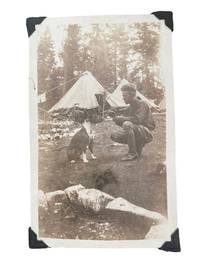
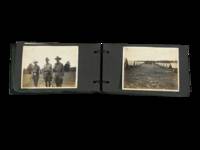
1918Best.-Nr. 232501918. World War I Fort Bliss soldier training and camp life photo album from El Paso ca. 1918 recording the rapid wartime expansion of a border post into a large World War I training environment through tent rows drill formations truck convoys gas-mask instruction and group portraits of enlisted men in uniform. The album grounds that setting in specific internal evidence including the handwritten caption "Thanksgiving Ft. Bliss Texas 1918" beneath a group portrait the tent sign "Ambulance Company No. 10 / Men Wanted" and a large camp scene captioned "Ready for Business / W.H. Horse Co / El Paso Tex." Additional photographs follow soldiers through inspection lines recreational and theatrical moments camp interiors and exteriors and transport scenes giving the album a broad documentary range centered on military routine rather than formal ceremony alone. World War I era training album at Fort Bliss El Paso Texas. Circa 1917-1918. Photograph album containing 49 original black-and-white photographs mounted on black cardstock photographs ranging approximately from 2 x 3 inches to 3.5 x 5 inches. Images include extensive camp views including long rows of tents men standing in formation a soldier posed before camp quarters and a large gathering identified in manuscript as "Ready for Business." One image shows a woman in military-style uniform saluting the camera possibly a YWCA servicewoman. A substantial section documents motor transport and field organization through ambulance and truck lines crowded vehicle scenes and the recruiting sign for Ambulance Company No. 10 but these sit within a wider record of ordinary post life that includes mess and tent arrangements wooded camp settings dogs and mascots informal portraits a gas-mask training portrait stage performance views beneath an American flag rail lines and trestles mountain roads canyon routes and several personal portraits among them a woman in military dress and another street portrait with a uniformed soldier. The sequence suggests a soldier-assembled working album built from service experience at Fort Bliss and nearby western travel rather than a commercially produced souvenir. The album places Fort Bliss within the wartime transformation of the U.S. Army on the Mexican border and in the Southwest when posts such as El Paso functioned as training transport and staging environments for newly mobilized troops. Its strongest documentary value lies in the accumulation of ordinary but specific military details: tent architecture vehicle organization gas defense drill troop formations mess arrangements rail infrastructure and the handwritten Thanksgiving 1918 notation that fixes part of the sequence to the closing months of the war. Black paper album with spiral binding; photographs corner-mounted throughout; several prints with creases abrasions or edge losses but images in overall very good condition; album itself sound and complete. Overall very good condition. A photographic record of Fort Bliss that preserves how soldiers organized camp life training movement and leisure in El Paso during the World War I years. unknown books
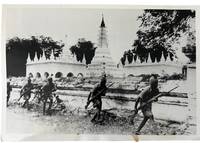
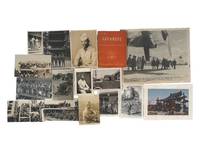
1914Best.-Nr. 234921914. British Indian Army photo archive spanning both World Wars depicting colonial recruitment military training the Indian Air Force military ceremonies and Burma-front service into the final decades of British rule in India circa 1914-1945. The British Indian Army was the largest non-conscript force in history: roughly 1.3 million men were recruited during the First World War and 2.5 million during the Second. Indian troops were deployed to the Western Front Mesopotamia East Africa and Egypt during the First World War and to North Africa Italy the Middle East and Burma during the Second. British power in India had grown from East India Company conquest in the eighteenth century passed to Crown rule after the 1857 uprising and was nearing collapse during the time which these press photographs document. The Quit India movement the 1943 Bengal famine wartime censorship and anti-colonial organizing made British authority increasingly untenable even as Indian troops mobilized in record numbers. The archive records the last colonial wartime mobilizations of India before independence in 1947 and Partition remade the subcontinent. Photo archive of 31 silver gelatin photographs and four real-photo postcards various sizes ranging from 4 x 2" to 10 x 6.5 inches India France and Burma circa 1914-1945. The four French-printed real photo postcards date to the First World War and document Indian Expeditionary Force service: "1914 - Soldats anglais et indiens / Indian and English soldiers" showing a horse-drawn carriage driven by an Indian man with three uniformed soldiers seated inside; "1914 Indian Army - Attelage de Guerre / War Team" depicting a military draught team; "Indian Army Conveyer" showing an Indian soldier with four pack donkeys; and a 1919 postcard documenting the arrival of a British detachment at a colonial camp. A formal group portrait of approximately nineteen Sikh soldiers in khaki service dress and regulation dastaars stands before a row of tents at a North-West Frontier camp. Sikh troops fought throughout both World Wars in their turbans the only major military force to refuse steel helmets on religious grounds. The remaining photographs 1940-1945 document Sikh Gurkha Punjabi and other Indian troops in khaki drill tunics shorts puttees regulation turbans dastaars kullahs slouch hats pith helmets steel helmets and web belts carrying rifles at the shoulder or raised in training exercises. The combination of regulation turbans with British-style khaki uniforms was standard British Indian Army dress formally accommodating Sikh and other religious traditions within Empire military regulation. A vernacular view captioned "Some of our boys at camp Ksli India" records ten uniformed men wading through a knee-high river with rifles held across their shoulders. Troops march past Buddhist stupas in Burma kneel in brush with bayoneted rifles fire from jungle cover operate a field telescope behind sandbags and sit beside motorcycles and jeeps on a rough military road. One photograph carries the studio stamp of Mela Ram & Son Peshawar a leading early-twentieth-century North-West Frontier military photographer. Press captions identify "Punjab's in India join army" "Gurkhas open fire during a training exercise" "British troops in India prepare for Burma campaign" "Indian troops in Burma" "Burma advance" "Viceroy presents Victoria crosses to Indian heroes" "Tunisia Day celebrated in Calcutta" "Troops on the parapet of Matta Post watching the bombardment" North-West Frontier July 1940 "Supreme Commander" and "Services Sweetheart" the last identifying Miss Joy Thompson of Bombay and Sgt. A. Pickles of Leeds. British India entered both world wars by imperial decision. The same years that produced the photographs in this archive also produced the Quit India arrests of 1942 the Bengal famine of 1943 and intensified military recruitment across a country already moving toward independence. The archive preserves official publicity press distribution and soldier-level record-making from a colonial army fighting for Britain while British authority in India was approaching its end. Creasing surface wear fading caption-label remnants press stamps and occasional abrasions; overall very good condition. unknown books
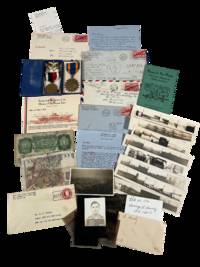
1945Best.-Nr. 229161945. WWII Lt. Colonel Henry L. Hively U.S. Army Air Forces correspondence and war archive 1945 comprising medals letters documents photographs negatives and ephemera including Panama Canal Zone tourist booklet wartime train-journey photo strips through France namely Grenoble and Valence aerial transport photographs and extensive emotional correspondence from Oakland and San Francisco at the end of World War II. Archive includes 4 letters 5 envelopes two foreign currency bills a Panama tour guide a donation certificate six medals and ribbons and over 30 very small photographs. This substantial personal archive documents the long U.S. Army career of Lt. Colonel Henry L. Hively 1915-2010 beginning with his formative early-career service tied to the U.S. Army's border militarization and expeditionary presence in Mexico during the opening decades of the twentieth century when American forces pursued Pancho Villa and asserted federal authority along the U.S.-Mexico border. That experience-rooted in mobile warfare logistics and hemispheric military infrastructure-prefigures the global operational networks that would later define American power during World War II. Hively's career thus bridges early twentieth-century expeditionary service in Mexico with his later World War II service across the European and Pacific theaters and the immediate postwar demobilization period. The archive is anchored by an extraordinary run of intimate 1945 letters from Hively's girlfriend Mrs. Dorothy "Dottie" Rishel a civilian hospital worker at Green's Eye Hospital in San Francisco and later Oakland. Her correspondence chronicles daily life wartime anxiety women's labor Bay Area domestic arrangements and-most critically-the immediate civilian reaction to the atomic bomb and the end of the war. On August 10 1945 Rishel wrote: "I'm so confused over the state of affairs regarding the war and probable termination of it I don't know what to say. Without reservation Hank what's your personal opinion of this atomic bomb Its destructive power absolutely floors me." Only one day later as news of Japan's surrender became imminent she added "Allow me to say 'Happy V-J Day to you.' The war will absolutely be over tomorrow so the radio says. Golly I'm so thrilled I can't even concentrate on anything." These letters provide rare real-time reactions from a young working woman confronting the moral and emotional consequences of nuclear warfare. Materially the archive includes Hively's medals-among them a boxed Army of Occupation Medal ribbon bars and a boxed U.S. Air Medal-alongside his wartime photographic portrait labeled "Henry L. Hively 2nd Lt. Sig C." The photographic material consists of mostly very small vernacular silver-gelatin prints about 1' x 1" in rows of about 5 with a few larger images and a few negatives. several stamped on the verso "March 1945" showing Hively with other U.S. soldiers during the final months of the war including soldiers disembarking from U.S. Army aircraft traveling by rail through Europe gathering around Army jeeps and socializing outdoors. One image records a street-level view of a building in Grenoble France situating the archive geographically within southeastern France during the Allied occupation period. Additional prints show European landscapes rivers military encampments and aircraft on runways. Also present is the USO pamphlet Panama in Your Pocket: What to Do Where to Go While on the Isthmus reflecting the Pacific transit network anchored by the Canal Zone alongside foreign currency from France and England and photographic negatives documenting off-duty military life. A later handwritten note identifying "Ret Lt. Col. Henry L. Hively 1915-2010 - 94 yrs old" aligns with his published obituary confirming his long military career and postwar administrative service. The correspondence between Hively and Rishel forms the emotional core of the archive documenting female wartime labor emotional resilience and the uncertainty of demobilization. Rishel's account-"The work here in the hospital is absolutely fascinating. this hospital has been doing an awful lot of experimental work on cornea transplantation"-captures women's medical labor during WWII while her September 21 1945 letter reflects anxiety surrounding separation and discharge: "they have decided to send all eligible officers to their separation centers sometime in the next two months." Together these materials articulate the psychological and social transition from global war to fragile peace. Letters well preserved and legible with expected toning and folds; envelopes present with postmarks and Army Postal Service stamps. Photographs and negatives crisp some very good and a few over exposed. Medals well kept in original boxes with ribbons and devices. Overall very good condition. unknown books
1916Best.-Nr. 229001916. World War I mobilization photo album group of 65 photographs dating circa 1916-1918 documenting the training and daily life of U.S. soldiers during the pre-deployment period. The material captures the organization and routines of stateside military encampments as the United States prepared for overseas engagement providing visual evidence of training exercises camp infrastructure and soldier life. These images record both formal military activity and informal moments illustrating how enlisted men adapted to regimented environments while maintaining social bonds during the transition from civilian life to military service. Sixty-five black-and-white silver gelatin photographs each approximately 3 x 4 inches mounted in a ring-bound black leather album measuring about 3.5 x 6 inches. The images depict rows of conical canvas tents arranged in orderly lines soldiers standing in formation and groups engaged in drilling and instruction. Additional scenes show men performing camp labor including driving tent stakes transporting supplies cooking and resting on cots within tent interiors. Several photographs capture a regimental band assembled with visible instruments while others present candid moments of leisure and interaction. A pair of images shows two soldiers in improvised costume dress suggesting informal humor within camp life. The latter portion of the album shifts to civilian contexts with men in suits posed outdoors social gatherings in grassy settings and group portraits including women in light-colored dresses indicating family or community connections during leave periods. Produced during the United States' mobilization for World War I these photographs document the transformation of civilian individuals into military personnel within temporary training environments. The archive shows both the structured discipline of camp organization and the persistence of personal identity and social relationships. The inclusion of both military and civilian scenes provides a continuous narrative of service and home life supporting research into military training social history and vernacular photography of the World War I era. Scattered toning minor rubbing to album leaves and occasional corner lifting; binding secure with moderate cover wear; overall very good condition. A cohesive visual record of U.S. soldier experience during wartime mobilization. unknown books
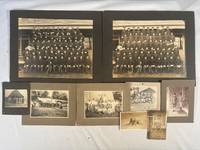
1909Best.-Nr. 224671909. Soldier Harold Howard's person documentaation of service in the 11th U.S. Cavalry during the period of American military occupation and intervention in Cuba following the Spanish American War. These photographs place an enlisted cavalryman within the broader framework of U.S. expansionist policy in the Caribbean under the Platt Amendment when American troops were repeatedly deployed to Cuba to oversee political stability infrastructure and economic interests. The archive includes identified images of Sgt. Harold Howard and captures both formal military organization and informal daily life offering a ground-level record of U.S. cavalry presence during a period of continued occupation and reintervention including the second U.S. occupation of Cuba from 1912 to 1913. Archive of nine vintage silver gelatin photographs ranging approximately from 3.5 x 5 inches to 10 x 13 inches many mounted to original photographer boards and some annotated in ink or pencil. Two large-format formal group portraits depict Troop K 11th U.S. Cavalry at Fort Oglethorpe Georgia 1913 showing soldiers in full dress uniform arranged in tiered formation with visible regimental flag marked "11" and "K" with Howard identified in one image. Smaller photographs include a group portrait of U.S. cavalrymen in Pinar del Río Cuba dated 1908 showing soldiers in campaign dress posed near a stable as well as candid camp scenes featuring cooking areas barracks life and assembled troops. Two photo postcards function as personal correspondence with handwritten messages from Howard dated April 1 and September 9 1913 addressed to Mrs. A. L. Howard in Maine referencing weather conditions and upcoming exhibition drills providing direct evidence of mobility and routine within cavalry service. Additional images include a cabinet card of two uniformed soldiers and a scene depicting Black Cuban civilians posed near a thatched structure situating U.S. military presence within local social environments. Taken together the archive documents the lived experience of a U.S. cavalryman operating within the infrastructure of American imperial policy in the Caribbean linking domestic military bases such as Fort Oglethorpe with overseas deployment in Cuba. The photographs record both the formal visual culture of the U.S. Army and the everyday conditions of enlisted service while the inclusion of Cuban subjects and locations underscores the entanglement of military occupation with local populations. General edge wear throughout with occasional pinholes adhesive remnants and minor chipping to mounts; some toning to boards. Photographs remain clear and stable with annotations legible. Overall very good condition. unknown books
1945Best.-Nr. 226061945. WWII Japan Linguistics Katakana: Japanese Syllabic Script. Chief Intelligence Officer Air Command South-East Asia November 1944. First edition. Illustrated throughout with syllabary charts and pronunciation tables. Original printed wrappers. 6 pages. 8vo. Issued for Allied intelligence personnel during World War II this scarce pamphlet provided military staff with an introduction to katakana one of the two Japanese phonetic syllabaries. Prepared under the authority of the Chief Intelligence Officer for Air Command in Southeast Asia the manual emphasizes the script's military utility noting that "on account of its clarity katakana has been adopted by the Armed Forces of Japan for use in the spelling of foreign names and words in signals in maps etc." Explanatory text outlines the history of Japanese writing systems the role of katakana in phonetic transcription and its function in military communications. Pages feature full katakana syllabary charts "additional katakana groups" for voiced and combined sounds a section on Japanese numerals and examples of transliterated foreign names such as "Singapore" "Java" and "Sumatra." The pamphlet also instructs readers that katakana can be written "in almost any direction; left to right or right to left or from top to bottom and even diagonally." Light toning bottom right cover corner clipped interior clean and well-preserved overall very good condition. A rare wartime intelligence manual bridging linguistics and military history this ephemeral publication documents Allied efforts to train personnel in Japanese language recognition and highlights the central role of katakana in wartime communication systems. Particularly significant for institutions collecting on Japanese linguistics World War II intelligence and the history of language pedagogy in military contexts. unknown books
1943Best.-Nr. 215491943. Photo archive documents the experiences of African American and white soldiers during and after World War II with a particular focus on the postwar occupation of Japan and the Philippines. African American and white United States Army soldiers in occupied Japan and the Philippines appear throughout this World War II and immediate postwar photograph archive of 16 original photographs documenting the military presence established in Asia following Japan's surrender in 1945. United States occupation forces entered Japan under the authority of the Allied command led by Douglas MacArthur overseeing demilitarization economic stabilization and reconstruction of Japanese infrastructure. The photographs document American servicemen returning from deployment in the Pacific and participating in the early occupation environment including logistical operations military transport and everyday life among U.S. troops stationed abroad. Several images specifically depict African American soldiers providing visual evidence of Black military service during a transitional moment when the U.S. armed forces remained segregated yet were increasingly dependent on specialized technical personnel and logistical units supporting large occupation forces across Asia. Archive of 16 items consisting of 15 black and white silver gelatin photographs and one language manual documenting American military personnel in Japan the Philippines and the United States during and immediately after World War II. Photographs range in size from approximately 3.5 x 2 inches to 10 x 8 inches and include formal portraits group images of soldiers disembarking from a military transport ship in San Francisco after returning from Asia scenes of military activity in Japan and documentation of damaged wartime infrastructure. One portrait shows an African American soldier in full uniform wearing a shoulder patch for the Japan Logistical Command a unit responsible for supply distribution transportation networks and infrastructure support for American occupation forces in Japan. Another photograph depicts an African American soldier with technician rank insignia on his sleeve chevron indicating a specialized technical role within the Army's wartime ranking system. Informal photographs provide glimpses of daily life including a soldier seated in a rickshaw with an inscription on the reverse reading "This is what is used for a taxi over here it's called a RICKSHAW. The guy in the seat is sometimes called a sgt. when they can think of nothing worse Ha Ha." Another image captures soldiers gathered outside a military barracks while a photograph captioned "Shadow of C-54 falls upon Sons of the Rising Sun on arrival at Ie Shima 20 August 1945 enroute to Manila" records the arrival of a U.S. transport aircraft shortly after the end of the Pacific war. Japanese: A Guide to the Spoken Language. Washington: War Department 1943. Issued to American military personnel preparing for operations in the Pacific the manual reflects the practical linguistic training provided to soldiers expected to interact with Japanese civilians and local labor forces during military operations and the occupation period. The guide includes phonetic instruction and dialogues designed for rapid language acquisition. One instructional passage advises soldiers: "To learn to imitate the sounds of Japanese you should listen to the records at least six or seven times. The English will be given first followed by the Japanese. Then repeat the Japanese out loud and say it good and loud. Remember! Repeat every Japanese phrase right after you hear it." Illustrated dialogue exercises show soldiers asking for directions in Japanese while another voice interjects "Hey! Anybody here speak any English" The photographs and language manual together illustrate everyday realities of U.S. military life in Asia during the transition from wartime operations to occupation governance following Japan's surrender. Photographs exhibit minor edge wear and light creasing consistent with period handling. The language guide shows moderate handling wear with slight staining and creased pages but remains fully legible. Overall condition very good. unknown books
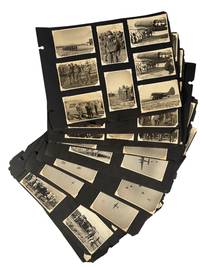
1943Best.-Nr. 214541943. United States Army airborne training operations documented in photographs created during World War II at Laurinburg Maxton Army Air Base in North Carolina. The images record the preparation and execution of paratrooper training jumps carried out as part of the rapid expansion of American airborne forces during the war. Photographs show soldiers receiving equipment checks boarding transport aircraft deploying from the air and regrouping on the ground after landing illustrating the coordinated logistical and training processes required to prepare airborne infantry units for combat operations. Airborne training facilities such as Laurinburg Maxton served as major preparation sites where paratroopers and troop carrier crews rehearsed the procedures that would later be used in large scale combat operations across multiple theaters of the war. Photograph album consisting of 45 black and white photographs mounted on eight unbound album pages. The images depict paratroopers wearing standard issue M1 steel helmets jump boots and M42 paratrooper jump uniforms equipped with web gear. Several photographs show soldiers conducting pre flight checks and assembling near transport aircraft before boarding. Aircraft visible in the photographs include a Douglas C-47 Skytrain bearing markings associated with the 317th Troop Carrier a transport unit that trained at Laurinburg Maxton before deployment overseas during the war. Multiple photographs capture the moment of airborne deployment with paratroopers descending beneath round canopy parachutes consistent with the T-5 parachute used by U.S. airborne forces during most of the war. Ground level images document soldiers gathering after landing and coordinating recovery operations providing visual evidence of the training routines that prepared airborne units for operational deployment. During World War II the United States military rapidly expanded its airborne capabilities developing specialized training programs that combined parachute infantry units with troop carrier aviation groups responsible for delivering soldiers and equipment by air. Troop carrier units such as the 317th Troop Carrier Group later played an important role in Allied airlift and airborne operations in the Pacific theater transporting troops and supplies and participating in airborne missions during campaigns in New Guinea and the Philippines. Photographs documenting airborne training exercises therefore provide important evidence of the preparatory phase that preceded combat deployment of these units. Album pages remain unbound with photographs mounted to paper leaves. Minor edge wear and light handling marks visible on several prints; overall very good condition. The album preserves detailed visual documentation of American airborne training procedures during the Second World War. unknown books
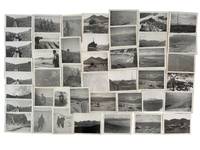
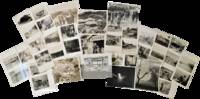
1945Best.-Nr. 215781945. AArchive of 64 original black-and-white photographs documenting American military operations and engineering activities in the Aleutian Islands during World War II. Photographs measure approximately 4.5" x 3.5" and provide an extensive visual record of one of the most remote and environmentally challenging theaters of the war. The images chronicle the daily work of U.S. Army personnel and Army Engineers stationed across the Aleutian chain where military forces confronted not only the threat of enemy action but also some of the harshest conditions faced by American troops anywhere during the conflict. Soldiers appear throughout the archive wearing cold-weather gear field jackets heavy boots and M1 steel helmets while working patrolling and constructing infrastructure amid windswept volcanic landscapes. A significant portion of the collection documents the enormous logistical effort required to sustain military operations in the islands. Engineers are shown surveying terrain operating equipment cutting and processing timber and building facilities essential to maintaining isolated military outposts. Several striking photographs depict large timber-log chutes descending steep hillsides toward the shoreline apparently designed to move heavy equipment and supplies through terrain where conventional transportation proved difficult. Other images record lumber operations construction projects and the continual adaptation of military infrastructure to the rugged environment. The archive also contains numerous panoramic views of the Aleutian landscape itself. Snow-covered mountains barren volcanic ridges isolated coastlines glacial valleys and treeless tundra dominate many photographs illustrating why the campaign became as much a battle against geography and weather as against enemy forces. The Aleutian chain stretching deep into the North Pacific and containing dozens of active and dormant volcanoes represented one of the most isolated regions under American military control during the war. Naval and maritime operations are likewise represented. Several photographs show transport and supply vessels anchored offshore or approaching remote coastal installations highlighting the dependence of Aleutian bases upon sea-borne logistics. Military camps consisting of Quonset huts and tent encampments appear throughout the collection while one particularly notable image captures an aircraft flying above a military installation underscoring the importance of aerial reconnaissance and patrol operations in protecting the northern approaches to Alaska. Although often overshadowed by campaigns in Europe and the Central Pacific the Aleutian campaign held considerable strategic importance. Following the Japanese occupation of Attu and Kiska in 1942 American forces undertook a costly effort to secure the islands and maintain control of the northern Pacific. These photographs document the infrastructure manpower and determination required to operate in a theater where extreme weather isolation and difficult terrain shaped every aspect of military life. A substantial and visually compelling archive documenting the engineering logistical and environmental realities of America's northernmost front during World War II. Photographs remain in very good condition with minor surface wear and occasional light creasing. unknown books
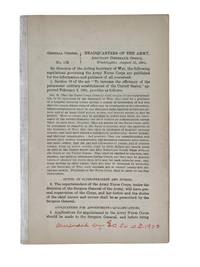
1901Best.-Nr. 219711901. MilitaryNursingWomen in Medicine Military directive establishing the Army Nurse Corps 1901. General Orders No. 113. Headquarters of the Army Adjutant General's Office. Washington August 22 1901. Washington: War Department 1901. First edition. 10 pages. Bound with cloth tape lacking wrappers as issued. A foundational federal directive outlining the regulatory framework for the newly established Army Nurse Corps as authorized by Section 19 of the Act of February 2 1901-legislation intended to increase the efficiency of the U.S. military's permanent establishment. This pamphlet marks a critical milestone in the formal integration of women into the military medical apparatus and reflects early 20th-century gendered labor structures within federal institutions. It defines duties pay appointment qualifications leave policies and uniform standards for female nurses employed by the U.S. Army. Of particular historical note is its stipulation that the superintendent must be a graduate of a hospital training school emphasizing the formal credentialing of women in a field long dominated by informal care roles. The directive further outlines pay rates for chief and reserve nurses entitlements to quarters and medical care and the procedural logistics of leave and illness rendering it an early articulation of professional military nursing policy. The text includes sixteen numbered provisions covering areas such as applications for appointment travel reimbursements illness treatment and efficiency reporting. Paragraph 15 specifies the required uniform including "a waist and skirt of suitable white material adjustable white cuffs shoulder collar white apron and cap according to patterns prescribed by the Surgeon General's Office." Such mandates reinforce both the militarization and gendered expectations placed upon early 20th-century women in uniform. A marginal annotation in red ink on the cover notes that this issue was "amended by G.O. 54 W.D. 1908" signaling its eventual revision which adds bibliographic and institutional value for those studying the evolution of military nursing. Light toning. Red pen annotation on page one noting the order's amendment in 1908. Overall very good to near fine condition. A comprehensive government document that institutionalized women's medical labor within the Army. unknown books
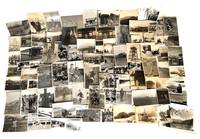
1947Best.-Nr. 196441947. 11th Airborne Division paratroopers photographed during the early American occupation of Japan document airborne training and daily military life within one of the most distinguished U.S. Army airborne units of the Second World War. More than two hundred photographs dating primarily from 1947 depict members of the 11th Airborne Division conducting parachute jump training weapons drills and daily base activities while stationed in Japan after the end of the Pacific War. The photographs appear to have been assembled by a soldier identified through accompanying material as Jeff C. Wall likely assigned to a military government team in Yamagata Prefecture. The images capture the division during the transitional period between wartime combat service in the Pacific and the emerging American military presence in East Asia that characterized the early Cold War. Archive contains 217 Silver Gelatin photographs ranging from approximately 2.25 x 2.5 inches to 4.75 x 6.5 inches depicting paratroopers of the 11th Airborne Division in Japan. The archive includes twelve photographs documenting parachute jump training sequences from aircraft exit through descent and landing as well as several images of fully equipped paratroopers lined up before boarding troop carrier aircraft. Numerous photographs show soldiers around transport planes and other aircraft on base airfields. Additional images depict artillery and machine gun training exercises paratroopers assembled outside a command building displaying the slogan "Shape Up or Ship Out" and informal scenes of soldiers gathered around barracks or posing in groups. The photographs also record elements of base life including an enlisted men's club ticket associated with the Yamagata Military Government Team women service personnel including a nurse playing cards with soldiers and views of the surrounding Japanese landscape. Approximately fifteen photographs show Mount Fuji and nearby terrain around the camp in northern Japan. The 11th Airborne Division earned distinction during World War II through its combat operations in the Pacific theater particularly during the campaign for Luzon in the Philippines in 1945 where the division conducted airborne assaults and participated in the liberation of Manila. Units of the division also carried out a well known raid that freed Allied prisoners from the Los Baños internment camp. Following Japan's surrender in 1945 the division became part of the U.S. occupation force tasked with maintaining security and administrative control across parts of Japan. The 1947 photographs document airborne training and routine service during this occupation period when American military forces remained stationed throughout the country while the geopolitical tensions of the emerging Cold War began reshaping U.S. global military deployments. In later years the division was reassigned to Alaska where its airborne operations in Arctic environments led to the nickname "Arctic Angels." Minor handling wear typical of vernacular military photographs. Overall condition very good. unknown books
1945Best.-Nr. 189141945. U.S. Army and Navy photographs of Okinawa 1945 document the immediate aftermath of the Battle of Okinawa and the establishment of American control over a strategically critical island at the close of the Pacific War. The images place American troops within the Okinawan interior and along coastal installations following the April 1945 landings including the secured Yontan airfield a primary objective of the invasion. The archive records the physical destruction resulting from one of the war's most intensive campaigns alongside scenes of civilian movement and return situating the photographs within the transition from active combat to military occupation. Archive of 37 black and white silver gelatin photographs. Okinawa Japan circa 1945. Photographs measure approximately 3.75 x 4.5 inches to 7 x 10.5 inches with brief handwritten captions on verso. Images depict American troops in villages farmland and near shrines as well as at Yontan airfield. Several photographs show destroyed aircraft including a crashed Japanese plane and associated debris along with damaged infrastructure and equipment. Naval activity is represented through images of American ships in harbor and offshore including a landing ship dock LSD transport vessel. An aerial photograph shows a harbor with multiple wrecked ships and flattened industrial areas. One image documents a column of civilians carrying belongings captioned "civilians returning to homes." The Battle of Okinawa fought from April to June 1945 resulted in extensive military and civilian casualties and widespread destruction of the island's infrastructure. The subsequent American occupation transformed Okinawa into a major U.S. military base in the western Pacific a status it retained even after reversion to Japanese administration in 1972. These photographs document both the operational objectives of the invasion and the conditions encountered in its aftermath including the displacement and return of local populations. The archive provides material for examining military strategy occupation practices and the impact of large-scale warfare on civilian landscapes in the Pacific theater. Light wear consistent with handling; overall very good condition. unknown books
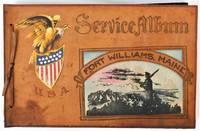
1934Best.-Nr. 189891934. Photograph album 1934-1940 documenting the service of a U.S. Army soldier stationed at Fort Benning Georgia; Fort Williams Maine; and additional locations across the northeastern United States Many photos captioned with names of fellow soldiers friends and placenames. This Album has relevance to the study of interwar military life mechanization and training practices prior to American entry into the Second World War. The images include multiple views of tanks such as the Mark VIII Renault Ford 3-ton and Christie models reflecting the transitional development of armored warfare during the interwar period. Scenes at Doughboy Stadium at Fort Benning evoke the continued presence of World War I memory within military culture while the broader sequence of photographs captures routine service camaraderie and movement across training posts. Captioned images identify fellow soldiers and locations and autograph pages at the beginning of the album preserve personal inscriptions humor and social connections within the unit. Additional photographs include landscapes from New York Vermont and Maine as well as personal images of acquaintances situating the soldier's experience within both military and civilian contexts. Photograph album containing 149 black and white silver gelatin photographs most measuring approx 2.5 x 3.5 inches with a few larger prints including examples measuring approximately 7 x 5 inches. The photographs are mounted in a suede-bound "Service Album" measuring approximately 11 x 7 inches with many images captioned in manuscript identifying individuals and locations. The content includes military equipment soldiers group portraits training environments and personal snapshots reflecting both formal and informal aspects of Army life during the late 1930s. The 149 photographs are mounted in the album with minimal losses; pages generally well preserved. Light wear consistent with handling; overall very good condition. A cohesive visual record of U.S. Army service and evolving military technology in the years immediately preceding World War II. unknown books