BRITISH ARMY.MareMagnum

31 037 résultats
19468vo., with coloured frontispiece, and numerous coloured and monochrome illustrations in the text; red cloth, upper board and backstrip lettered in gilt, a very good, bright, clean copy in mildly age-marked dustwrapper. First published in 1782.
1970Roy. 8vo., First Edition, with very numerous photographs; black cloth, gilt back, a near fine copy in price-clipped, lightly rubbed dustwrapper.
1980Folio, with illustrations in the text; black cloth, gilt back, a near fine copy in unclipped dustwrapper, the latter with one short closed etar at lower edge of front panel.
19498vo., First Edition, with plates; blue cloth, gilt back, a near fine copy in price-clipped, lightly age-soiled dustwrapper. SCARCE IN THIS CONDITION.
19498vo., First Edition, with title in red and numerous coloured badges in the text; maroon cloth, gilt back, backstrip gilt dulled (but entirely legible), a very good, bright, clean copy.
1914Sm. 8vo., with numerous plates (a number folding), illustrations and diagrams in the text; original red cloth, covers framed in blind, gilt back, radial corners, a very good, bright, clean copy. Publication code 40/2052. The standard Great War issue, with 23pp advertisements on red stock at front and rear. SCARCE IN THIS CONDITION.
19098vo., First Edition thus; red cloth, upper board framed in blind and lettered in gilt, gilt back, buff endpapers, covers mildly age-soiled and worn, backstrip amateurishly relaid (but binding entirely sound) else a good, bright, sound copy. With the stamp of 124th Battery, Royal Field Artillery on title. SCARCE.
1943réf. 12133N.p. n.d. 1943. Sm. 4to. Sole Edition 4pp leaflet folded once printed in black; some very faint age-staining else a near fine copy. The rarest of all the major Services of Thanksgiving throughout the British Army in WWII this humble document is considerably harder to find than its Second or Eighth Army counterparts. Anderson's First Army was formed in November 1942 as the spearhead of the land forces of TORCH the Allied landings is Algeria and Morocco. Taking its final shape as Eastern Task Force in January 1943 it eventually comprised American II Corps British V and IX Corps and French XIX Corps. Following the landings First Army attempted to secure the Tunisian shoreline but time was against it and the campaign became principally one of long-distance logistics. After the success of Eighth Army at Alamein First Army carried eastwards the main thrust of 18 Army Group's offensive that resulted in the final defeat of the Axis in North Africa in mid-1943 a victory often compared strategically with Stalingrad. Its job done First Army was disbanded later in the year and its units reallocated. Rare in any condition. N.p., unknown
1943Sm. 4to., Sole Edition, 4pp leaflet, folded once, printed in black; some very faint age-staining else a near fine copy. The rarest of all the major Services of Thanksgiving throughout the British Army in WWII, this humble document is considerably harder to find than its Second or Eighth Army counterparts. Anderson's First Army was formed in November 1942 as the spearhead of the land forces of TORCH, the Allied landings is Algeria and Morocco. Taking its final shape as Eastern Task Force in January 1943, it eventually comprised American II Corps, British V and IX Corps, and French XIX Corps. Following the landings First Army attempted to secure the Tunisian shoreline, but time was against it and the campaign became principally one of long-distance logistics. After the success of Eighth Army at Alamein, First Army carried eastwards the main thrust of 18 Army Group's offensive that resulted in the final defeat of the Axis in North Africa in mid-1943 (a victory often compared strategically with Stalingrad). Its job done, First Army was disbanded later in the year and its units reallocated. Rare in any condition.
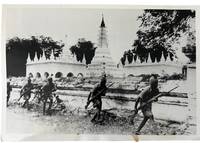
1914réf. 234921914. British Indian Army photo archive spanning both World Wars depicting colonial recruitment military training the Indian Air Force military ceremonies and Burma-front service into the final decades of British rule in India circa 1914-1945. The British Indian Army was the largest non-conscript force in history: roughly 1.3 million men were recruited during the First World War and 2.5 million during the Second. Indian troops were deployed to the Western Front Mesopotamia East Africa and Egypt during the First World War and to North Africa Italy the Middle East and Burma during the Second. British power in India had grown from East India Company conquest in the eighteenth century passed to Crown rule after the 1857 uprising and was nearing collapse during the time which these press photographs document. The Quit India movement the 1943 Bengal famine wartime censorship and anti-colonial organizing made British authority increasingly untenable even as Indian troops mobilized in record numbers. The archive records the last colonial wartime mobilizations of India before independence in 1947 and Partition remade the subcontinent. Photo archive of 31 silver gelatin photographs and four real-photo postcards various sizes ranging from 4 x 2" to 10 x 6.5 inches India France and Burma circa 1914-1945. The four French-printed real photo postcards date to the First World War and document Indian Expeditionary Force service: "1914 - Soldats anglais et indiens / Indian and English soldiers" showing a horse-drawn carriage driven by an Indian man with three uniformed soldiers seated inside; "1914 Indian Army - Attelage de Guerre / War Team" depicting a military draught team; "Indian Army Conveyer" showing an Indian soldier with four pack donkeys; and a 1919 postcard documenting the arrival of a British detachment at a colonial camp. A formal group portrait of approximately nineteen Sikh soldiers in khaki service dress and regulation dastaars stands before a row of tents at a North-West Frontier camp. Sikh troops fought throughout both World Wars in their turbans the only major military force to refuse steel helmets on religious grounds. The remaining photographs 1940-1945 document Sikh Gurkha Punjabi and other Indian troops in khaki drill tunics shorts puttees regulation turbans dastaars kullahs slouch hats pith helmets steel helmets and web belts carrying rifles at the shoulder or raised in training exercises. The combination of regulation turbans with British-style khaki uniforms was standard British Indian Army dress formally accommodating Sikh and other religious traditions within Empire military regulation. A vernacular view captioned "Some of our boys at camp Ksli India" records ten uniformed men wading through a knee-high river with rifles held across their shoulders. Troops march past Buddhist stupas in Burma kneel in brush with bayoneted rifles fire from jungle cover operate a field telescope behind sandbags and sit beside motorcycles and jeeps on a rough military road. One photograph carries the studio stamp of Mela Ram & Son Peshawar a leading early-twentieth-century North-West Frontier military photographer. Press captions identify "Punjab's in India join army" "Gurkhas open fire during a training exercise" "British troops in India prepare for Burma campaign" "Indian troops in Burma" "Burma advance" "Viceroy presents Victoria crosses to Indian heroes" "Tunisia Day celebrated in Calcutta" "Troops on the parapet of Matta Post watching the bombardment" North-West Frontier July 1940 "Supreme Commander" and "Services Sweetheart" the last identifying Miss Joy Thompson of Bombay and Sgt. A. Pickles of Leeds. British India entered both world wars by imperial decision. The same years that produced the photographs in this archive also produced the Quit India arrests of 1942 the Bengal famine of 1943 and intensified military recruitment across a country already moving toward independence. The archive preserves official publicity press distribution and soldier-level record-making from a colonial army fighting for Britain while British authority in India was approaching its end. Creasing surface wear fading caption-label remnants press stamps and occasional abrasions; overall very good condition. unknown
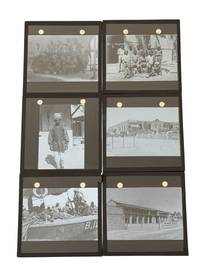
1916réf. 235501916. British Indian Army medical and transport lantern slide archive circa 1916 documenting the hospital personnel river craft and built environment of the Mesopotamia Campaign during World War I. The sign for "No. 10 Indian General Hospital" places the group within the British Indian Army medical network operating at Basra after the disastrous siege of Kut and the rapid expansion of medical facilities for Indian Expeditionary Force D. The slides record the imperial military system through hospitals military harbor craft Indian attendants British soldiers and institutional buildings. Photo archive of 8 glass lantern slides each 3.25 x 3.25 inches likely Basra Mesopotamia present day Iraq circa 1916. The slides show a group portrait of Western military men in shirtsleeves and campaign dress; a group of Indian men posed outside a palm shaded compound; an Indian man in turban coat and light trousers standing near a building; and a large institutional structure identified by a foreground sign reading "No. 10 Indian General Hospital." Other views show soldiers and crew aboard a river vessel marked "B.12"; a river steamer or launch moving along a waterway; a long bungalow or hospital ward with verandah fencing and palms; and a cemetery or memorial setting with military graves crosses and a decorated headstone. The images emphasize hospitals transport quarters and personnel with Indian and Western subjects appearing within the same military geography. No. 10 Indian General Hospital was part of the medical expansion that followed the early failures of the Mesopotamia Campaign when heat disease inadequate evacuation routes and insufficient hospital capacity exposed the weakness of British Indian medical planning. Basra became the principal receiving and hospital base for the campaign linking river transport from the front to permanent and temporary medical facilities near the Gulf. Light surface wear minor fading and occasional abrasions visible; glass show no signs of cracking or scratching mounts appear intact. Overall very good condition. A small record of British Indian Army medical logistics and colonial military presence in Mesopotamia during the First World War. unknown
1914réf. 234921914. British Indian Army photo archive spanning both World Wars depicting colonial recruitment military training the Indian Air Force military ceremonies and Burma-front service into the final decades of British rule in India circa 1914-1945. The British Indian Army was the largest non-conscript force in history: roughly 1.3 million men were recruited during the First World War and 2.5 million during the Second. Indian troops were deployed to the Western Front Mesopotamia East Africa and Egypt during the First World War and to North Africa Italy the Middle East and Burma during the Second. British power in India had grown from East India Company conquest in the eighteenth century passed to Crown rule after the 1857 uprising and was nearing collapse during the time which these press photographs document. The Quit India movement the 1943 Bengal famine wartime censorship and anti-colonial organizing made British authority increasingly untenable even as Indian troops mobilized in record numbers. The archive records the last colonial wartime mobilizations of India before independence in 1947 and Partition remade the subcontinent. Photo archive of 31 silver gelatin photographs and four real-photo postcards various sizes ranging from 4 x 2" to 10 x 6.5 inches India France and Burma circa 1914-1945. The four French-printed real photo postcards date to the First World War and document Indian Expeditionary Force service: "1914 - Soldats anglais et indiens / Indian and English soldiers" showing a horse-drawn carriage driven by an Indian man with three uniformed soldiers seated inside; "1914 Indian Army - Attelage de Guerre / War Team" depicting a military draught team; "Indian Army Conveyer" showing an Indian soldier with four pack donkeys; and a 1919 postcard documenting the arrival of a British detachment at a colonial camp. A formal group portrait of approximately nineteen Sikh soldiers in khaki service dress and regulation dastaars stands before a row of tents at a North-West Frontier camp. Sikh troops fought throughout both World Wars in their turbans the only major military force to refuse steel helmets on religious grounds. The remaining photographs 1940-1945 document Sikh Gurkha Punjabi and other Indian troops in khaki drill tunics shorts puttees regulation turbans dastaars kullahs slouch hats pith helmets steel helmets and web belts carrying rifles at the shoulder or raised in training exercises. The combination of regulation turbans with British-style khaki uniforms was standard British Indian Army dress formally accommodating Sikh and other religious traditions within Empire military regulation. A vernacular view captioned "Some of our boys at camp Ksli India" records ten uniformed men wading through a knee-high river with rifles held across their shoulders. Troops march past Buddhist stupas in Burma kneel in brush with bayoneted rifles fire from jungle cover operate a field telescope behind sandbags and sit beside motorcycles and jeeps on a rough military road. One photograph carries the studio stamp of Mela Ram & Son Peshawar a leading early-twentieth-century North-West Frontier military photographer. Press captions identify "Punjab's in India join army" "Gurkhas open fire during a training exercise" "British troops in India prepare for Burma campaign" "Indian troops in Burma" "Burma advance" "Viceroy presents Victoria crosses to Indian heroes" "Tunisia Day celebrated in Calcutta" "Troops on the parapet of Matta Post watching the bombardment" North-West Frontier July 1940 "Supreme Commander" and "Services Sweetheart" the last identifying Miss Joy Thompson of Bombay and Sgt. A. Pickles of Leeds. British India entered both world wars by imperial decision. The same years that produced the photographs in this archive also produced the Quit India arrests of 1942 the Bengal famine of 1943 and intensified military recruitment across a country already moving toward independence. The archive preserves official publicity press distribution and soldier-level record-making from a colonial army fighting for Britain while British authority in India was approaching its end. Creasing surface wear fading caption-label remnants press stamps and occasional abrasions; overall very good condition. unknown books
1916réf. 235501916. British Indian Army medical and transport lantern slide archive circa 1916 documenting the hospital personnel river craft and built environment of the Mesopotamia Campaign during World War I. The sign for "No. 10 Indian General Hospital" places the group within the British Indian Army medical network operating at Basra after the disastrous siege of Kut and the rapid expansion of medical facilities for Indian Expeditionary Force D. The slides record the imperial military system through hospitals military harbor craft Indian attendants British soldiers and institutional buildings. Photo archive of 8 glass lantern slides each 3.25 x 3.25 inches likely Basra Mesopotamia present day Iraq circa 1916. The slides show a group portrait of Western military men in shirtsleeves and campaign dress; a group of Indian men posed outside a palm shaded compound; an Indian man in turban coat and light trousers standing near a building; and a large institutional structure identified by a foreground sign reading "No. 10 Indian General Hospital." Other views show soldiers and crew aboard a river vessel marked "B.12"; a river steamer or launch moving along a waterway; a long bungalow or hospital ward with verandah fencing and palms; and a cemetery or memorial setting with military graves crosses and a decorated headstone. The images emphasize hospitals transport quarters and personnel with Indian and Western subjects appearing within the same military geography. No. 10 Indian General Hospital was part of the medical expansion that followed the early failures of the Mesopotamia Campaign when heat disease inadequate evacuation routes and insufficient hospital capacity exposed the weakness of British Indian medical planning. Basra became the principal receiving and hospital base for the campaign linking river transport from the front to permanent and temporary medical facilities near the Gulf. Light surface wear minor fading and occasional abrasions visible; glass show no signs of cracking or scratching mounts appear intact. Overall very good condition. A small record of British Indian Army medical logistics and colonial military presence in Mesopotamia during the First World War. unknown books
194460 pages. Undated. Circa 1944. Loaded with amazing black and white photos and supporting text. Above-average wear. Folded in half. Fragile to handle but still a worthy reference copy. Book
réf. 54999anticat16. London 1733/34. 4to. 8 pages. Disbound. Fraying to the lower edge resulting in slight loss of text from the final lines on pages 1 and 7; some marginal tears chips from upper corner very good otherwise. Paper is very brittle. 4 leaves; the signature mark not present on the first leaf but page 5 is signed C; thus possibly part of a larger work. This prints the Lords Protests to the Duke of Marlborough's bill regarding the commissions of military officers and then prints the bill itself. Following are section relating to the election of Peers in Scotland some wording in an act relating to plantations in America a lengthy section on West India Trade and a discussion of the discretionary powers of the Crown and Ministers. The final sections are dated 26 and 29 Martii 1734 as the year was still being reckoned using the old system and so changed on March 25. WorldCat records a book beginning with this identical title but of only 3 pages. unknown
19898vo., red cloth, gilt back, a near fine copy.
1945réf. 51131Privately Printed 1945. Sm. 4to. with coloured formation signs of twenty-six Second Army units on front wrapper; original printed wrappers wire-stitched as issued covers very lightly age-soiled staples very lightly rusting else a remarkably crisp bright clean copy. This humble Order of Service is surely the single document which for every individual soldier in Dempsey's Second Army symbolised the end of the gruelling twelve months which lasted from from the beaches of Normandy to the heath at Luneberg and brought the end of war in Europe. The front wrapper carries a striking coloured montage of badges of the major formations involved comprising Second Army 1 Corps 8 Corps 12 Corps 30 Corps Airborne Corps Guards Armoured Division 7 Armoured Division 11 Armoured Division 3 Infantry Division 5 Infantry Division 15 Scottish Infantry Division 43 Wessex Infantry Division 49 West Riding Infantry Division 50 Northumbrian Infantry Division 51 Highland Infantry Division 52 Lowland Infantry Division 53 Welsh Infantry Division 59 Staffordshire Infantry Division 6 Guards Tank Brigade 4 Armoured Brigade 8 Armoured Brigade 27 Armoured Brigade 33 Armoured Brigade 34 Armoured Brigade 115 Independent Infantry Brigade. SCARCE IN THIS CONDITION. Cole reproduces the wrapper in his standard reference 'Heraldry in War' plate facing p.120. [Privately Printed], unknown
1945Sm. 4to., with coloured formation signs of twenty-six Second Army units on front wrapper; original printed wrappers, wire-stitched as issued, covers very lightly age-soiled, staples very lightly rusting else a remarkably crisp, bright, clean copy. This humble Order of Service is surely the single document which, for every individual soldier in Dempsey's Second Army, symbolised the end of the gruelling twelve months which lasted from from the beaches of Normandy to the heath at Luneberg and brought the end of war in Europe. The front wrapper carries a striking coloured montage of badges of the major formations involved, comprising Second Army, 1 Corps, 8 Corps, 12 Corps, 30 Corps, Airborne Corps, Guards Armoured Division, 7 Armoured Division, 11 Armoured Division, 3 Infantry Division, 5 Infantry Division, 15 (Scottish) Infantry Division, 43 (Wessex) Infantry Division, 49 (West Riding) Infantry Division, 50 (Northumbrian) Infantry Division, 51 (Highland) Infantry Division, 52 (Lowland) Infantry Division, 53 (Welsh) Infantry Division, 59 (Staffordshire) Infantry Division, 6 Guards Tank Brigade, 4 Armoured Brigade, 8 Armoured Brigade, 27 Armoured Brigade, 33 Armoured Brigade, 34 Armoured Brigade, 115 Independent Infantry Brigade. SCARCE IN THIS CONDITION. Cole reproduces the wrapper in his standard reference 'Heraldry in War' (plate facing p.120).
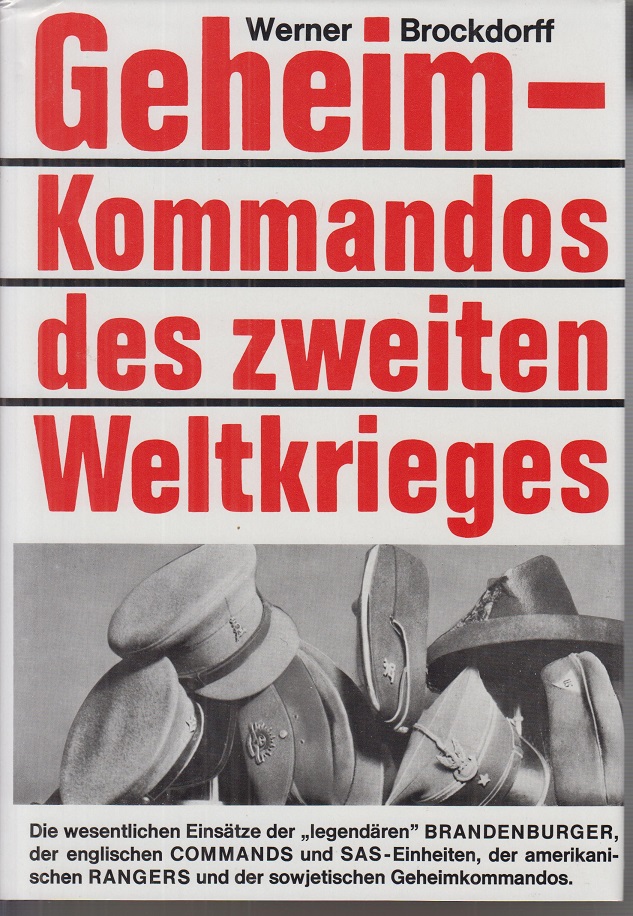
1944réf. 30742Stuttgart : Union Dt. Verl.-Ges., 1944. 236 S. : Ill. 8°. 16. - 22. Tsd. OHLwd. mit ill. Einbd.
1982réf. 3282bGraz u.a., Edition Kaleidoskop, (1982). 400 Abbildungen, davon 76 in Farbe, 384 S., Original-Leinenband mit Deckel- und Rückenvergoldung, farb. illustrierter Original-Schutzumschlag (OU/SU) ZUSTAND 1, Schutzumschlag, Zustand 2.
réf. 32636Paris, Presses de la Cité, 1979. 16 x 24, 255 pp., plusieurs illustrations, broché, bon état.
1936réf. zt1035Editions Berger-Levrault Relié 1936 In-8 (14,3 x 21,7 cm), reliure demi-toile, dos lisse, 243 pages, bien complet des 5 cartes et 3 planches hors texte ; frottements aux coupes et coiffes, ancien exemplaire de bibliothèque (fiche de retour contrecollée au 2e plat, tampons en page de titre et en fin d'ouvrage), par ailleurs assez bon état. Livraison a domicile (La Poste) ou en Mondial Relay sur simple demande.
1983réf. 79719Eltville am Rhein : Rheingauer Verlagsgesellschaft, 1983. 446 S. : Ill. 4°, Hardcover/Pappeinband mit OU.
1866512 p. + Frontis and full page engravings, some torn with loss. Very XLib. Very age stained. Some signatures loose. Several penciled ownerships including Harry C. Bubb (Montoursville, Pennsylvania?) on page 253. Large 8vo. Original quarter leather over cloth boards. Binding very worn. Hardbound. SHELF W28
réf. 101.693Paris, Librairie Plon, s.d. (ca 1934). 12 x 18, 317 pp., 8 illustrations, reliure d'édition carton, bon état (cachets du Collège jésuite Saint Stanislas à Mons).