Wagner, Famulus (Pseud.)Antiquariat.de

32 201 résultats
1891réf. 63391Berlin, Verlag des Berliner Lith. Instituts (Julius Moser), o. J. (1891). Gr.-8°. Illustrirt von O. 44 S., Illustr.-OHLwd.
1892réf. 63392Berlin, Verlag des Berliner Lith. Instituts (Julius Moser), o. J. (1892). Gr.-8°. Illustrirt von O. 44 S., Illustr.-OHLwd.
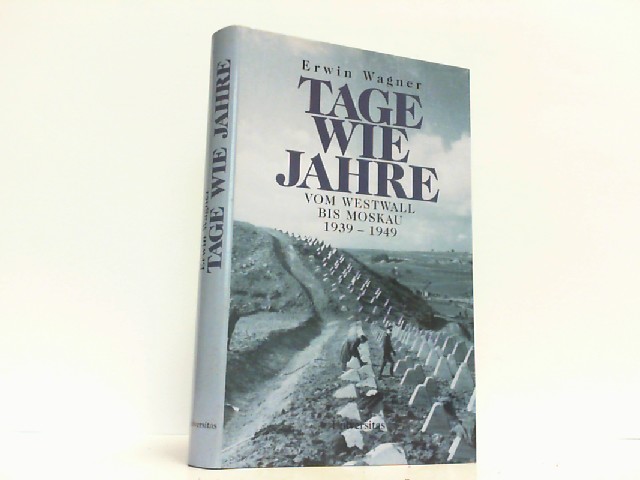
1997réf. 32458München, Universitas Verlag, 1997. gebundene Ausgabe
1997réf. 41508München, Universitas Verlag, 1997. gebundene Ausgabe
1997réf. 69100München, Universitas Verlag, 1997. gebundene Ausgabe
2007réf. 236748Berlin : Links, 2007. 294 S., 21 cm. Pp., gebundene Ausgabe.
1980réf. 72926Friedberg, Podzun-Pallas-Verlag um, 1980.
réf. 110438Paris, E.-Paul, 1902 in-12, VII-295 pp., bradel demi-percaline rouge, couverture conservée, dos orné, pièce de titre (reliure de l'époque).
réf. 74482aafZürich, Verkehrsverlag AG., 1939, in-4to, 92 S., reich ill. mit photogr. Aufnahmen v. Robert Spreng, Kriegstechn. Abt. d. eidg. Militärdept. u.a., Original-Broschüre.
1937réf. 3132641Halle, Akademie Verlag, 1937. 69 S. Kart.
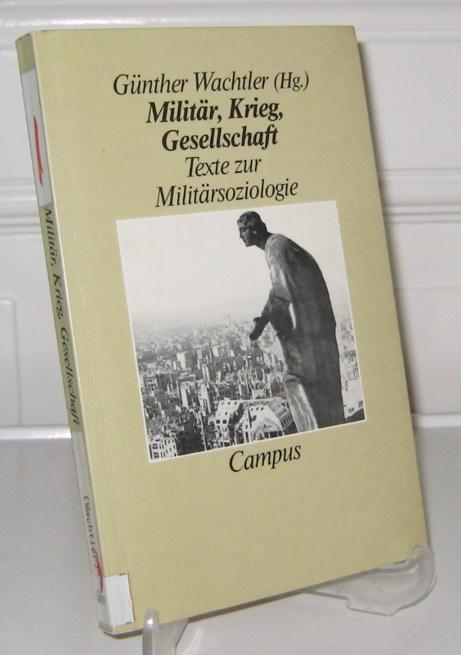
1983réf. 3040711Frankfurt am Main, New York; Campus, 1983. 165 S. 8° (=18,5-22,5cm), Broschiert (foliert).
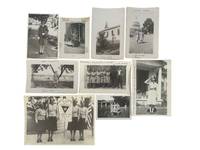
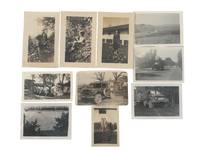
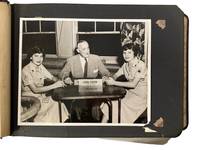
1943réf. 220591943. Women's Army Corps service photographs dated 1943 to 1944 document the participation of enlisted women in U.S. Army support operations during World War II with particular attention to transportation training environments and stateside military life. The images identify individual service members including Hilda Goble described in captions as an "ambulance driver during War II" and Abbie E. Bachelder situating named women within the broader expansion of female labor following the establishment of the Women's Army Corps in 1942. These photographs support research into women's military service wartime labor structures and the integration of women into logistical and medical support roles essential to the functioning of the U.S. Army during the war. Archive consists of 9 original silver gelatin photographs most approximately 3 x 5 inches several with scalloped or deckled edges and period ink captions identifying subjects and dates. Two portraits show Hilda Goble in full uniform standing before a porch and saluting each inscribed "Hilda Goble Ambulance driver during War II" documenting her role in transporting injured personnel within military systems. A group photograph captioned "Ambulance Driver Team War II Hilda Goble" depicts seven uniformed women indicating coordinated service within ambulance units. Additional images include a portrait labeled "Abbie E Bachelder / June - 1944" showing a uniformed WAC posed before a landscape of barracks buildings and another dated 1943 identifying Bachelder outside a wooden structure. A photograph captioned "Oct 29 - 1944 / Reims" shows two women identified as Roberta and Abbie posed on the grounds of the U.S. Capitol indicating travel or official assignment within government contexts. Other photographs depict WAC personnel standing near a military chapel and within training or hospital environments while one image titled "Marine Corps Wives of America - Hdqtrs Chap 1" shows four women beneath an organizational banner documenting affiliated civic or support networks connected to military service. These images documents the Women's Army Corps expantion to meet wartime labor demands assigning women to clerical transportation medical and logistical roles across domestic and overseas installations. The presence of ambulance drivers within the archive demonstrates the direct involvement of women in medical transport and support infrastructure while scenes at the U.S. Capitol and organized groups indicate both official recognition and the development of social and institutional networks among servicewomen. Light edge wear and minor creasing with one photograph showing tape residue; images otherwise clear with captions legible; overall very good condition. This archive provides a concentrated visual record of named WAC personnel and their roles within the operational and social framework of the U.S. Army during World War II. unknown books
1945réf. 225281945. Women History World War II WWII Women's Army Corps photo archive documenting women's military service during World War II and the expansion of women's logistical and technical roles within the United States Army. The photographs record daily activity surrounding Women's Army Corps personnel including ambulance operation vehicle maintenance military training environments and informal moments of rest and recreation. Established in 1943 Women's Army Corps enabled women to enter the Army in noncombat roles that were essential to wartime mobilization including clerical work communications mechanics and medical transport. The images document this institutional transformation through scenes of uniformed women working with military vehicles operating ambulances and participating in the broader infrastructure of wartime military camps. One photograph shows a WAC standing in full service uniform before a low administrative building while others depict women outdoors in wooded settings during moments of leisure illustrating both the disciplined and personal dimensions of wartime service. Archive of 20 gelatin photographs created during the 1940s depicting Women's Army Corps personnel military vehicles and associated Army training activities. Photographs measure approximately 3.5 x 5 inches. The photographs show WAC members in both uniform and off duty settings including outdoor portraits and camp scenes. Several images focus on military ambulances and transport vehicles bearing visible Army markings such as "U.S. ARMY 432621" and "AMB-34." Verso inscriptions provide firsthand commentary on military duties and equipment including one caption reading "This is my new AMBULANCE hope you like it sis. safe & OK" and another written beside an ambulance photograph noting "good old Baker 5 kept me from walking." Operational scenes include soldiers crouched behind sandbags with a handwritten note identifying personnel as "Eselinger Conrad Palmer Carvey Boss." Other photographs document the broader military environment surrounding WAC activity including a drill or parade ground and a large motor pool with rows of Army trucks one marked "U.S. Army 008909" positioned in front of a multi story barracks. Additional annotated images identify fellow servicemen and technical details of equipment including "Hines Gallop and myself. Gallop is a jeep driver from North Carolina" and another describing "my radio on right fender" while one photograph is labeled simply "motor pool." Women's Army Corps personnel served throughout the United States and overseas during World War II performing essential logistical and administrative work that supported Allied military operations. Ambulance drivers such as the woman referenced in the captions transported wounded soldiers during training exercises and operational deployments and were often responsible for maintaining their own vehicles in field conditions. WAC members later served across European theaters including England France and Italy after the Allied landings in 1944 contributing to the wartime medical evacuation system that moved casualties from combat zones to field hospitals and rear medical facilities. Light edge wear mild surface handling and faint silvering to some prints; overall very good condition. These photographs document both the operational infrastructure of wartime motor transport and the presence of women within that system illustrating how the mobilization of female personnel expanded the technical and logistical capacities of the U.S. Army during the global conflict. unknown books
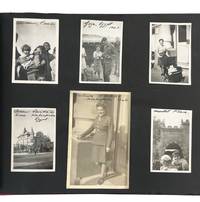
1946réf. 236311946. Large Women's Army Corps photo album depicting the overseas enlistment of an American servicewoman stationed in Egypt during the transition from wartime operations to postwar occupation 1946 to 1947. Pictured in combat training with rifles at leisure among identified companions and both wartime facilities and tourist institutions the album records the WAC servicewoman "Alma" serving abroad with uncommon continuity. The photographs document troop transport military facilities friendships archaeological excursions and encounters with Egyptian civilian life. The album also documents the conditions in Giza Egypt and abroad one photograph captioned "Prisoners working in chains. Nile Valley. Egypt. Feb. 1946" preserves a stark record of Egyptian penal labor within an album otherwise centered on 'Women's military service travel and postwar life. Photo album of approximately 130 silver gelatin photographs ranging from approximately 3 x 5 to 6 x 8 inches many in Egypt with additional views of the Atlantic crossing Persia and the United States 1946 to 1947. Most photographs have captions identifying or partially identifying 12 individuals and 17 distinct locations with dates scattered throughout. The album begins with pre-departure images in Long Beach California followed by the inscription "Myself aboard U.S.A.T. Thomas H. Barry. April '46" and "One cold day in the Atlantic. April 1946" documenting the voyage overseas. The album follows the creator through Heliopolis Cairo Payne Field Camp Huckstep the American Red Cross Club AMET N.A.A.F.I. Giza Memphis Alexandria the Nile Barrage Wadi Saloum and Abadan Persia. Informal portraits identify companions including Joyce Sheila Wollaston Johnnie Wollaston Peggy Cynthia Wendy Alma Tommy Mrs. Wollaston and "our N.I. friend with Woolly." Military life appears alongside moments of leisure rooftop gatherings athletic poses weddings camel riding and portraits of fellow American servicemen and WAC personnel. The photographs include training scenes of WAC personnel handling rifles during military instruction a reminder that women serving overseas were expected to maintain basic weapons proficiency despite their primarily noncombat assignments. The creator photographed Queen Farida's residence in Heliopolis street scenes labeled "Market Place" Sharia Ibrahim Egyptian children local families a native boy in Heliopolis village architecture at Giza archaeological remains at Memphis the Step Pyramid the supposed Tomb of Queen Nefertiti excavations captioned "Part of city excavated 6000 years old" and a striking image captioned "Prisoners working in chains. Nile Valley. Egypt. Feb. 1946." The album is distinguished by its female perspective on an overseas theater typically documented through the experiences of male soldiers. Rather than combat operations it records the work and daily lives of American servicewomen showing rifle instruction military compounds troop transport friendships organized recreation and independent travel through Egypt and Persia as experienced by a WAC member. That combination places gender at the center of the archive documenting how women occupied and navigated the American military presence abroad during the immediate postwar period. Light surface wear consistent with use; photographs well preserved and firmly mounted in the original red cord-bound album. Overall in very good condition. A sustained photographic record of an American Women's Army Corps member experiencing military service overseas travel and everyday life across the eastern Mediterranean during the closing chapter of the Second World War with most photographs retaining contemporary manuscript captions identifying locations dates and individuals throughout. unknown books
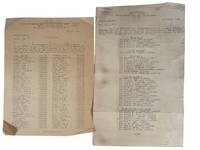
1943réf. 220421943. U.S. Army issuer Special Orders documents 1943-1944 documenting the mobilization assignment and promotion of women in the Women's Army Corps during World War II. The archive illuminates a system of military recruitment training allocation and hierarchical advancement revealing how women were enlisted processed and promoted within a gender segregated military structure.These documents show the mechanisms by which the Army expanded its personnel base to include women formalizing their roles through standardized orders logistical coordination and rank progression. U.S. Army. Special Orders. Southern New York Recruiting and Induction District and APO 501 Services of Supply 1943-1944. U.S. Army's mobilization of women for wartime service documents. This archive highlighting how gender and race intersected within a segregated military structure. Five pages of typed military orders documenting the enlistment and rank advancements of dozens of women into the Women's Army Corps WAC during World War II during a critical and unprecedented phase of American military expansion. These internal "Special Orders" were issued from U.S. Army Headquarters one from the Southern New York Recruiting and Induction District dated 28 September 1943 3 pages and the other from APO 501 Services of Supply Special Troops dated 25 August 1944 2 pages. The first document-marked "RESTRICTED"-lists 161 women who have "been enlisted this date as Privates in the WAC AUS UP without delay for New York N.Y. to Daytona Beach." These orders formalize the transfer of recruits to basic training at the Second WAAC Training Center in Florida a site where both Black and white women were trained in segregated units. Typed names include "KENNEDY DOROTHY R." "RAY RITA T." "ROBERTS ROSA" and "ROSS GRACE". The document also makes note that "the QMC will issue six 6 meal tickets to one hundred and sixty one 161 WACs" revealing both the scale and logistical efforts involved in transporting and sustaining the newly enlisted women. It is signed by R.C. Burgess 1st Lt. WAC AUS WAC adjutant and includes careful routing for distribution and duplication. The second document issued nearly a year later reflects the internal promotion structure within the WAC. It includes detailed lists of women being promoted across multiple ranks-from Private to Private First Class Technician Third through Fifth Grades and up to Master Sergeant. It begins: "Upon recommendation of the Chiefs of Section. the following temporary promotions are announced in WAC Service Unit USA SOS APO 501." Among those promoted: "Sgt HELEN P. SUTTON" "T/5 HELEN E. SHROOP" "Pvt DOROTHY R. KENNEDY" again appearing from the earlier enlistment list and "Sgt MARGARET H. STERLING" named Master Sergeant. The appearance of some of these women in both documents indicates successful progression within the ranks underscoring the opportunities for women-albeit within a racially stratified command-for advancement and formal recognition. Edges of the paper show chipping and creasing Minor staining to the lower half of the 1944 document. All text remains fully legible. Overall very good condition. A compelling and tangible record of women's military service during World War II. These documents record the expansion and institutionalization of women's military service during World War II when the WAC became a central component of U.S. Army personnel strategy. The inclusion of detailed enlistment lists and promotion orders demonstrates how women were incorporated into existing military systems while operating within segregated units shaped by prevailing racial policies. The progression of individuals across documents illustrates continuity of service and advancement opportunities within constrained structures. Edge wear chipping and creasing with minor staining to the 1944 document; text fully legible; overall very good condition. A concentrated administrative record of women's wartime service and the operational systems governing their roles. unknown books
1940réf. 238411940. American women's wartime service photo archive belonging to an unidentified WAC member depicting women in US military and hospital uniforms during World War II as mobilization opened military and medical assignments previously closed to women. Congress established the Women's Army Auxiliary Corps through Public Law 77-554 on May 15 1942; Public Law 78-110 converted it into the Women's Army Corps with full Army status on July 1 1943. Approximately 150000 women served as WAACs or WACs in administrative communications transportation mechanical medical and other assignments. Army Nurse Corps strength grew from fewer than 1000 nurses in December 1941 to more than 59000 by the end of the war. The personal snapshots place formal service dress beside caregiving public ceremony travel and off duty friendships recording how wartime mobilization entered women's daily lives. Photo archive of 18 silver gelatin photographs ranging from 2.5 x 3 to 3 x 4 inches New York City and other United States locations circa 1942 to 1945. Many of the women are seen in multiple photos with one standing out in most. The photos depict women in tailored dark uniforms wear neckties garrison or brimmed caps and collar devices; one woman in trousers and a service shirt stands beside an Army corporal while another gestures amid a crowded city street in a white crowned cap. Hospital and caregiving scenes include women in aprons and pale duty dresses three women in matching protective work garments and two attendants posed with infants and a young Black child. Additional views record a marching formation uniformed pairs and groups women seated outside Gothic institutional buildings a formal ceremony with bouquets and the flag hung facade of St. Patrick's Cathedral in New York City. The archive connects the wartime service preceding the Women's Armed Services Integration Act of June 12 1948 with the histories of military dress nursing women's labor institutional life and friendship outside official publicity settings. Occasional creasing edge wear surface scratches fading and curling; overall in good condition. Its movement between duty uniforms hospital clothing city streets ceremonial dress and relaxed group portraits preserves the range of public and private experience created by women's wartime service through the lens of one member of the Woman's Army Corps. unknown books
1950réf. 231531950. WACKorean War Women's Army Corps photo album compiled by Sgt. Elizabeth Adamek of Cairnbrook PA ca. early to mid 1950s extensively recording enlisted women in post-1948 U.S. Army administrative operations at Camp Zama Japan during the Korean War period. Elizabeth Adamek later Elizabeth Adamek Pierce 1932-2016 served approximately twenty years in the United States Army as an administrative assistant and instructor including service in Japan and the Korean Theater during the Korean War. Adamek is shown several times in uniform with her twin sister Cpl. Cristania Adamek indicating the sisters served in the WAC around the same time period. This album documents postwar U.S. Army overseas base administration showing how clerical labor recordkeeping and office management were carried out by WAC personnel during the Korean War. Images of Hill and fellow servicewomen engaged in office work reveal women's roles in the Army's daily bureaucratic and logistical functions while stationed abroad. A comprehensive primary-source documentation of the operational role of women within permanent peacetime Army structures following the formal establishment of the Women's Army Corps in 1948. Photo archive of approximately 240 silver gelatin photographs from Camp Zama Japan and the United States circa early to mid 1950s. The album is housed in a Japanese lacquer-style postbound binding with black paper leaves containing a mixture of small snapshot prints deckle-edge photographs and larger mounted images. The visual content centers on Hill frequently shown in WAC uniform posed in front of barracks administrative buildings and landscaped areas as well as inside office environments seated at desks surrounded by stacked files paperwork and card index systems. Several images explicitly depict clerical workspaces including a servicewoman operating a typewriter beside filing drawers reinforcing the administrative function of WAC personnel. A clearly legible building sign reads "Camp Zama 8030th Army Unit APO 50" situating the album within a specific military unit structure. Additional photographs include formal military reviews with officers and dignitaries group portraits of uniformed women before display walls and social scenes in dining facilities and clubs. Off-duty life is extensively documented through images of Japanese urban streets market stalls rail platforms commercial signage shrine gateways temple architecture zoo enclosures and landscaped gardens alongside recreational scenes such as swimming roadside travel and barracks exteriors collectively illustrating both the operational and social dimensions of overseas Army life. Adamek is posed throughout the album with a romantic partner one Sgt. Kidder whose service at Camp Zama is also documented extensively. The album captures the workings of U.S. Army overseas base administration demonstrating the process by which women in the Women's Army Corps sustained military infrastructure through administrative labor. Camp Zama functioned as a major logistical and support installation during the Korean War era and the photographs provide insight into the women that maintained its operations while also recording the social networks and cultural encounters experienced by American service personnel in postwar Japan. Elizabeth Adamek Pierce's obituary in The Oklahoman indicates she was honorably discharged from the US Army in 1971 after which she relocated to Oklahoma City and worked in an administrative role with the OKC Police Department. Adamek was a member of the Civil Air Patrol the VFW Post 1335 and a volunteer at Tinker Air Force Base in Oklahoma City. Light edge wear and chipping to album leaves occasional corner wear scattered fading and softness to prints and general handling wear to the binding; overall good condition. A cohesive and well-identified visual record of women's military service in the U.S. Army in East Asia. unknown books
1945réf. 214301945. WWII era Women's Army Corps photo archive documenting servicewomen including two African Americansand four partially identified individuals. Creation of the WAC in 1942 marked the first permanent institutional incorporation of women into the U.S. Army placing female personnel into administrative communications intelligence and logistical roles across both domestic bases and overseas commands. One photograph identified on the verso as "Gynnie Polly Corsica '45" provides additional documentation of Black women serving overseas in segregated Army units during the final year of the war. Archive of 18 silver gelatin photographs from W.W.II. Photographs measure approximately 3 x 2 inches to 6 x 3.5 inches. The images depict American servicewomen in a range of wartime contexts including official uniform portraits informal snapshots and scenes taken in European cities damaged by combat. Several photographs show women wearing standard WAC dress uniforms with garrison caps and enlisted insignia while others depict personnel wearing British style battledress associated with American administrative units stationed in Europe. One photograph shows three uniformed personnel two women and one man standing at attention before a formal government building likely in Britain. Another image places a uniformed American servicewoman before the gilded equestrian statue of Joan of Arc in Paris a landmark associated with Allied presence in liberated France. Additional photographs depict ruined urban landscapes with bombed churches and collapsed structures suggesting scenes from Germany or France shortly after liberation. A photograph inscribed "Chattanooga Tenn." shows a woman standing in civilian clothing at the entrance of a home indicating a stateside context connected to the servicewoman's life before or after deployment. Another photograph labeled "Ann & Lillie Mother" shows two women standing outside a residence likely relatives of one of the servicewomen. Women's military service expanded rapidly during World War II as the War Department created organizations such as the Women's Army Corps and the Navy's WAVES to address labor shortages across the armed forces. Overseas deployments placed WAC personnel in newly liberated European cities and military headquarters throughout the Allied command structure. Light toning minor edge wear and occasional handling marks. Overall very good condition. Although African American women served within segregated units their participation in overseas assignments including Mediterranean theater postings marked a significant shift from earlier military policy which had typically limited Black women's service to domestic assignments within segregated support units. unknown books
1950réf. 231531950. WACKorean War Women's Army Corps photo album compiled by Sgt. Elizabeth Adamek of Cairnbrook PA ca. early to mid 1950s extensively recording enlisted women in post-1948 U.S. Army administrative operations at Camp Zama Japan during the Korean War period. Elizabeth Adamek later Elizabeth Adamek Pierce 1932-2016 served approximately twenty years in the United States Army as an administrative assistant and instructor including service in Japan and the Korean Theater during the Korean War. Adamek is shown several times in uniform with her twin sister Cpl. Cristania Adamek indicating the sisters served in the WAC around the same time period. This album documents postwar U.S. Army overseas base administration showing how clerical labor recordkeeping and office management were carried out by WAC personnel during the Korean War. Images of Hill and fellow servicewomen engaged in office work reveal women's roles in the Army's daily bureaucratic and logistical functions while stationed abroad. A comprehensive primary-source documentation of the operational role of women within permanent peacetime Army structures following the formal establishment of the Women's Army Corps in 1948. Photo archive of approximately 240 silver gelatin photographs from Camp Zama Japan and the United States circa early to mid 1950s. The album is housed in a Japanese lacquer-style postbound binding with black paper leaves containing a mixture of small snapshot prints deckle-edge photographs and larger mounted images. The visual content centers on Hill frequently shown in WAC uniform posed in front of barracks administrative buildings and landscaped areas as well as inside office environments seated at desks surrounded by stacked files paperwork and card index systems. Several images explicitly depict clerical workspaces including a servicewoman operating a typewriter beside filing drawers reinforcing the administrative function of WAC personnel. A clearly legible building sign reads "Camp Zama 8030th Army Unit APO 50" situating the album within a specific military unit structure. Additional photographs include formal military reviews with officers and dignitaries group portraits of uniformed women before display walls and social scenes in dining facilities and clubs. Off-duty life is extensively documented through images of Japanese urban streets market stalls rail platforms commercial signage shrine gateways temple architecture zoo enclosures and landscaped gardens alongside recreational scenes such as swimming roadside travel and barracks exteriors collectively illustrating both the operational and social dimensions of overseas Army life. Adamek is posed throughout the album with a romantic partner one Sgt. Kidder whose service at Camp Zama is also documented extensively. The album captures the workings of U.S. Army overseas base administration demonstrating the process by which women in the Women's Army Corps sustained military infrastructure through administrative labor. Camp Zama functioned as a major logistical and support installation during the Korean War era and the photographs provide insight into the women that maintained its operations while also recording the social networks and cultural encounters experienced by American service personnel in postwar Japan. Elizabeth Adamek Pierce's obituary in The Oklahoman indicates she was honorably discharged from the US Army in 1971 after which she relocated to Oklahoma City and worked in an administrative role with the OKC Police Department. Adamek was a member of the Civil Air Patrol the VFW Post 1335 and a volunteer at Tinker Air Force Base in Oklahoma City. Light edge wear and chipping to album leaves occasional corner wear scattered fading and softness to prints and general handling wear to the binding; overall good condition. A cohesive and well-identified visual record of women's military service in the U.S. Army in East Asia. unknown
1946réf. 236311946. Large Women's Army Corps photo album depicting the overseas enlistment of an American servicewoman stationed in Egypt during the transition from wartime operations to postwar occupation 1946 to 1947. Pictured in combat training with rifles at leisure among identified companions and both wartime facilities and tourist institutions the album records the WAC servicewoman "Alma" serving abroad with uncommon continuity. The photographs document troop transport military facilities friendships archaeological excursions and encounters with Egyptian civilian life. The album also documents the conditions in Giza Egypt and abroad one photograph captioned "Prisoners working in chains. Nile Valley. Egypt. Feb. 1946" preserves a stark record of Egyptian penal labor within an album otherwise centered on 'Women's military service travel and postwar life. Photo album of approximately 130 silver gelatin photographs ranging from approximately 3 x 5 to 6 x 8 inches many in Egypt with additional views of the Atlantic crossing Persia and the United States 1946 to 1947. Most photographs have captions identifying or partially identifying 12 individuals and 17 distinct locations with dates scattered throughout. The album begins with pre-departure images in Long Beach California followed by the inscription "Myself aboard U.S.A.T. Thomas H. Barry. April '46" and "One cold day in the Atlantic. April 1946" documenting the voyage overseas. The album follows the creator through Heliopolis Cairo Payne Field Camp Huckstep the American Red Cross Club AMET N.A.A.F.I. Giza Memphis Alexandria the Nile Barrage Wadi Saloum and Abadan Persia. Informal portraits identify companions including Joyce Sheila Wollaston Johnnie Wollaston Peggy Cynthia Wendy Alma Tommy Mrs. Wollaston and "our N.I. friend with Woolly." Military life appears alongside moments of leisure rooftop gatherings athletic poses weddings camel riding and portraits of fellow American servicemen and WAC personnel. The photographs include training scenes of WAC personnel handling rifles during military instruction a reminder that women serving overseas were expected to maintain basic weapons proficiency despite their primarily noncombat assignments. The creator photographed Queen Farida's residence in Heliopolis street scenes labeled "Market Place" Sharia Ibrahim Egyptian children local families a native boy in Heliopolis village architecture at Giza archaeological remains at Memphis the Step Pyramid the supposed Tomb of Queen Nefertiti excavations captioned "Part of city excavated 6000 years old" and a striking image captioned "Prisoners working in chains. Nile Valley. Egypt. Feb. 1946." The album is distinguished by its female perspective on an overseas theater typically documented through the experiences of male soldiers. Rather than combat operations it records the work and daily lives of American servicewomen showing rifle instruction military compounds troop transport friendships organized recreation and independent travel through Egypt and Persia as experienced by a WAC member. That combination places gender at the center of the archive documenting how women occupied and navigated the American military presence abroad during the immediate postwar period. Light surface wear consistent with use; photographs well preserved and firmly mounted in the original red cord-bound album. Overall in very good condition. A sustained photographic record of an American Women's Army Corps member experiencing military service overseas travel and everyday life across the eastern Mediterranean during the closing chapter of the Second World War with most photographs retaining contemporary manuscript captions identifying locations dates and individuals throughout. unknown
1945réf. 225281945. Women History World War II WWII Women's Army Corps photo archive documenting women's military service during World War II and the expansion of women's logistical and technical roles within the United States Army. The photographs record daily activity surrounding Women's Army Corps personnel including ambulance operation vehicle maintenance military training environments and informal moments of rest and recreation. Established in 1943 Women's Army Corps enabled women to enter the Army in noncombat roles that were essential to wartime mobilization including clerical work communications mechanics and medical transport. The images document this institutional transformation through scenes of uniformed women working with military vehicles operating ambulances and participating in the broader infrastructure of wartime military camps. One photograph shows a WAC standing in full service uniform before a low administrative building while others depict women outdoors in wooded settings during moments of leisure illustrating both the disciplined and personal dimensions of wartime service. Archive of 20 gelatin photographs created during the 1940s depicting Women's Army Corps personnel military vehicles and associated Army training activities. Photographs measure approximately 3.5 x 5 inches. The photographs show WAC members in both uniform and off duty settings including outdoor portraits and camp scenes. Several images focus on military ambulances and transport vehicles bearing visible Army markings such as "U.S. ARMY 432621" and "AMB-34." Verso inscriptions provide firsthand commentary on military duties and equipment including one caption reading "This is my new AMBULANCE hope you like it sis. safe & OK" and another written beside an ambulance photograph noting "good old Baker 5 kept me from walking." Operational scenes include soldiers crouched behind sandbags with a handwritten note identifying personnel as "Eselinger Conrad Palmer Carvey Boss." Other photographs document the broader military environment surrounding WAC activity including a drill or parade ground and a large motor pool with rows of Army trucks one marked "U.S. Army 008909" positioned in front of a multi story barracks. Additional annotated images identify fellow servicemen and technical details of equipment including "Hines Gallop and myself. Gallop is a jeep driver from North Carolina" and another describing "my radio on right fender" while one photograph is labeled simply "motor pool." Women's Army Corps personnel served throughout the United States and overseas during World War II performing essential logistical and administrative work that supported Allied military operations. Ambulance drivers such as the woman referenced in the captions transported wounded soldiers during training exercises and operational deployments and were often responsible for maintaining their own vehicles in field conditions. WAC members later served across European theaters including England France and Italy after the Allied landings in 1944 contributing to the wartime medical evacuation system that moved casualties from combat zones to field hospitals and rear medical facilities. Light edge wear mild surface handling and faint silvering to some prints; overall very good condition. These photographs document both the operational infrastructure of wartime motor transport and the presence of women within that system illustrating how the mobilization of female personnel expanded the technical and logistical capacities of the U.S. Army during the global conflict. unknown
1943réf. 220591943. Women's Army Corps service photographs dated 1943 to 1944 document the participation of enlisted women in U.S. Army support operations during World War II with particular attention to transportation training environments and stateside military life. The images identify individual service members including Hilda Goble described in captions as an "ambulance driver during War II" and Abbie E. Bachelder situating named women within the broader expansion of female labor following the establishment of the Women's Army Corps in 1942. These photographs support research into women's military service wartime labor structures and the integration of women into logistical and medical support roles essential to the functioning of the U.S. Army during the war. Archive consists of 9 original silver gelatin photographs most approximately 3 x 5 inches several with scalloped or deckled edges and period ink captions identifying subjects and dates. Two portraits show Hilda Goble in full uniform standing before a porch and saluting each inscribed "Hilda Goble Ambulance driver during War II" documenting her role in transporting injured personnel within military systems. A group photograph captioned "Ambulance Driver Team War II Hilda Goble" depicts seven uniformed women indicating coordinated service within ambulance units. Additional images include a portrait labeled "Abbie E Bachelder / June - 1944" showing a uniformed WAC posed before a landscape of barracks buildings and another dated 1943 identifying Bachelder outside a wooden structure. A photograph captioned "Oct 29 - 1944 / Reims" shows two women identified as Roberta and Abbie posed on the grounds of the U.S. Capitol indicating travel or official assignment within government contexts. Other photographs depict WAC personnel standing near a military chapel and within training or hospital environments while one image titled "Marine Corps Wives of America - Hdqtrs Chap 1" shows four women beneath an organizational banner documenting affiliated civic or support networks connected to military service. These images documents the Women's Army Corps expantion to meet wartime labor demands assigning women to clerical transportation medical and logistical roles across domestic and overseas installations. The presence of ambulance drivers within the archive demonstrates the direct involvement of women in medical transport and support infrastructure while scenes at the U.S. Capitol and organized groups indicate both official recognition and the development of social and institutional networks among servicewomen. Light edge wear and minor creasing with one photograph showing tape residue; images otherwise clear with captions legible; overall very good condition. This archive provides a concentrated visual record of named WAC personnel and their roles within the operational and social framework of the U.S. Army during World War II. unknown
1943réf. 220421943. U.S. Army issuer Special Orders documents 1943-1944 documenting the mobilization assignment and promotion of women in the Women's Army Corps during World War II. The archive illuminates a system of military recruitment training allocation and hierarchical advancement revealing how women were enlisted processed and promoted within a gender segregated military structure.These documents show the mechanisms by which the Army expanded its personnel base to include women formalizing their roles through standardized orders logistical coordination and rank progression. U.S. Army. Special Orders. Southern New York Recruiting and Induction District and APO 501 Services of Supply 1943-1944. U.S. Army's mobilization of women for wartime service documents. This archive highlighting how gender and race intersected within a segregated military structure. Five pages of typed military orders documenting the enlistment and rank advancements of dozens of women into the Women's Army Corps WAC during World War II during a critical and unprecedented phase of American military expansion. These internal "Special Orders" were issued from U.S. Army Headquarters one from the Southern New York Recruiting and Induction District dated 28 September 1943 3 pages and the other from APO 501 Services of Supply Special Troops dated 25 August 1944 2 pages. The first document-marked "RESTRICTED"-lists 161 women who have "been enlisted this date as Privates in the WAC AUS UP without delay for New York N.Y. to Daytona Beach." These orders formalize the transfer of recruits to basic training at the Second WAAC Training Center in Florida a site where both Black and white women were trained in segregated units. Typed names include "KENNEDY DOROTHY R." "RAY RITA T." "ROBERTS ROSA" and "ROSS GRACE". The document also makes note that "the QMC will issue six 6 meal tickets to one hundred and sixty one 161 WACs" revealing both the scale and logistical efforts involved in transporting and sustaining the newly enlisted women. It is signed by R.C. Burgess 1st Lt. WAC AUS WAC adjutant and includes careful routing for distribution and duplication. The second document issued nearly a year later reflects the internal promotion structure within the WAC. It includes detailed lists of women being promoted across multiple ranks-from Private to Private First Class Technician Third through Fifth Grades and up to Master Sergeant. It begins: "Upon recommendation of the Chiefs of Section. the following temporary promotions are announced in WAC Service Unit USA SOS APO 501." Among those promoted: "Sgt HELEN P. SUTTON" "T/5 HELEN E. SHROOP" "Pvt DOROTHY R. KENNEDY" again appearing from the earlier enlistment list and "Sgt MARGARET H. STERLING" named Master Sergeant. The appearance of some of these women in both documents indicates successful progression within the ranks underscoring the opportunities for women-albeit within a racially stratified command-for advancement and formal recognition. Edges of the paper show chipping and creasing Minor staining to the lower half of the 1944 document. All text remains fully legible. Overall very good condition. A compelling and tangible record of women's military service during World War II. These documents record the expansion and institutionalization of women's military service during World War II when the WAC became a central component of U.S. Army personnel strategy. The inclusion of detailed enlistment lists and promotion orders demonstrates how women were incorporated into existing military systems while operating within segregated units shaped by prevailing racial policies. The progression of individuals across documents illustrates continuity of service and advancement opportunities within constrained structures. Edge wear chipping and creasing with minor staining to the 1944 document; text fully legible; overall very good condition. A concentrated administrative record of women's wartime service and the operational systems governing their roles. unknown
1940réf. 238411940. American women's wartime service photo archive belonging to an unidentified WAC member depicting women in US military and hospital uniforms during World War II as mobilization opened military and medical assignments previously closed to women. Congress established the Women's Army Auxiliary Corps through Public Law 77-554 on May 15 1942; Public Law 78-110 converted it into the Women's Army Corps with full Army status on July 1 1943. Approximately 150000 women served as WAACs or WACs in administrative communications transportation mechanical medical and other assignments. Army Nurse Corps strength grew from fewer than 1000 nurses in December 1941 to more than 59000 by the end of the war. The personal snapshots place formal service dress beside caregiving public ceremony travel and off duty friendships recording how wartime mobilization entered women's daily lives. Photo archive of 18 silver gelatin photographs ranging from 2.5 x 3 to 3 x 4 inches New York City and other United States locations circa 1942 to 1945. Many of the women are seen in multiple photos with one standing out in most. The photos depict women in tailored dark uniforms wear neckties garrison or brimmed caps and collar devices; one woman in trousers and a service shirt stands beside an Army corporal while another gestures amid a crowded city street in a white crowned cap. Hospital and caregiving scenes include women in aprons and pale duty dresses three women in matching protective work garments and two attendants posed with infants and a young Black child. Additional views record a marching formation uniformed pairs and groups women seated outside Gothic institutional buildings a formal ceremony with bouquets and the flag hung facade of St. Patrick's Cathedral in New York City. The archive connects the wartime service preceding the Women's Armed Services Integration Act of June 12 1948 with the histories of military dress nursing women's labor institutional life and friendship outside official publicity settings. Occasional creasing edge wear surface scratches fading and curling; overall in good condition. Its movement between duty uniforms hospital clothing city streets ceremonial dress and relaxed group portraits preserves the range of public and private experience created by women's wartime service through the lens of one member of the Woman's Army Corps. unknown
1945réf. 214301945. WWII era Women's Army Corps photo archive documenting servicewomen including two African Americansand four partially identified individuals. Creation of the WAC in 1942 marked the first permanent institutional incorporation of women into the U.S. Army placing female personnel into administrative communications intelligence and logistical roles across both domestic bases and overseas commands. One photograph identified on the verso as "Gynnie Polly Corsica '45" provides additional documentation of Black women serving overseas in segregated Army units during the final year of the war. Archive of 18 silver gelatin photographs from W.W.II. Photographs measure approximately 3 x 2 inches to 6 x 3.5 inches. The images depict American servicewomen in a range of wartime contexts including official uniform portraits informal snapshots and scenes taken in European cities damaged by combat. Several photographs show women wearing standard WAC dress uniforms with garrison caps and enlisted insignia while others depict personnel wearing British style battledress associated with American administrative units stationed in Europe. One photograph shows three uniformed personnel two women and one man standing at attention before a formal government building likely in Britain. Another image places a uniformed American servicewoman before the gilded equestrian statue of Joan of Arc in Paris a landmark associated with Allied presence in liberated France. Additional photographs depict ruined urban landscapes with bombed churches and collapsed structures suggesting scenes from Germany or France shortly after liberation. A photograph inscribed "Chattanooga Tenn." shows a woman standing in civilian clothing at the entrance of a home indicating a stateside context connected to the servicewoman's life before or after deployment. Another photograph labeled "Ann & Lillie Mother" shows two women standing outside a residence likely relatives of one of the servicewomen. Women's military service expanded rapidly during World War II as the War Department created organizations such as the Women's Army Corps and the Navy's WAVES to address labor shortages across the armed forces. Overseas deployments placed WAC personnel in newly liberated European cities and military headquarters throughout the Allied command structure. Light toning minor edge wear and occasional handling marks. Overall very good condition. Although African American women served within segregated units their participation in overseas assignments including Mediterranean theater postings marked a significant shift from earlier military policy which had typically limited Black women's service to domestic assignments within segregated support units. unknown