32 070 résultats
réf. 168595S.l., S.l.n.d. in-4 et in-folio,
réf. 215993Paris, Imprimerie Beaulé et Compagnie, s.d. (1854) placard in-folio (56 x 44 cm), texte sur 4 colonnes, en feuille.
1900réf. 22744Nantes 1900 une affiche programme, format : 30,7 x 42 cm, imprimé en partie droite en noir et illustré d'une lithographie de R. DE BREM ayant pour thème, les guerres de Vendée, sans date : (1900 environ) Nantes ,
réf. gg1173Gautier Découpages papier In-plano (51 x 33 cm.), affiche couleurs composée de sujets et/ou objets à découper afin de construire un décor, sans date ; bords un peu usés et jaunis, par ailleurs bon état général. Livraison a domicile (La Poste) ou en Mondial Relay sur simple demande.
réf. gg1172Gautier Découpages papier In-plano (51 x 33 cm.), affiche couleurs composée de sujets et/ou objets à découper afin de construire un décor, sans date ; bords un peu usés et jaunis, par ailleurs bon état général. Livraison a domicile (La Poste) ou en Mondial Relay sur simple demande.
2011réf. 1352065PN. New. 2011. Soft Cover. Date is original print. This is a reprint edition. . PN paperback
1991réf. 19290Ebenhausen : Haus Eggenberg, 1991. 105 S. : Kt. Gr. 8°. OBroschur. (Stiftung Wissenschaft und Politik : Forschungsinstitut für internationale Politik und Sicherheit : SWP ; S 362)
1991réf. 100138937Tranchida 1991 85 pages in8. 1991. Broché. 85 pages.
réf. 0260803316.Ghardcover. Good. Access codes and supplements are not guaranteed with used items. May be an ex-library book. hardcover
réf. 1782665749.Gpaperback. Good. Access codes and supplements are not guaranteed with used items. May be an ex-library book. paperback
réf. 10878Histoire et collectio . Très bon état d’occasion.
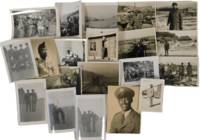
1951réf. 191891951. African American U.S. Army soldiers photographed during the early Korean War era document Black military service during the first years following the formal desegregation of the United States armed forces. Twenty photographs dating from approximately 1950 to 1952 depict African American soldiers in uniform at military bases and in field conditions associated with Korean War deployment. Several images also show Black and white soldiers posing together providing visual documentation of the Army during the first phase of racial integration ordered by President Harry S. Truman through Executive Order 9981 in 1948. Inscriptions on several photographs including one signed portrait reading "Joe Moddin 1951" identify individual servicemen and record personal messages written during active service. Twenty black and white photographs depicting African American soldiers in U.S. Army uniforms during the early 1950s. Photographs include scenes of soldiers standing with military trucks traveling along roads in Korea and posing with fellow servicemen at military installations where barracks structures are visible in the background. Several images show troops operating or stationed in rough winter terrain consistent with Korean War conditions. Three photographs contain extended inscriptions on the verso dated December 1951 and January 1952. Another photograph is a portrait image signed and dated "Joe Moddin 1951." The images collectively portray daily military life including group portraits transportation scenes and base environments during wartime deployment. The Korean War fought between 1950 and 1953 became the first major conflict in which the United States attempted to implement racially integrated military units following Truman's desegregation order. African American soldiers had served in segregated formations throughout World War II and their wartime service contributed to growing national pressure to dismantle racial segregation within the armed forces. By the early years of the Korean War the Army began integrating many units in training and field operations bringing together soldiers of different racial backgrounds in combat and support roles. Historians estimate that roughly 600000 African Americans served in the armed forces during the Korean War and Black servicemen accounted for a significant portion of U.S. casualties during the conflict. These photographs provide ground-level visual documentation of soldiers serving during the transitional period when formal military segregation was being dismantled but integration remained uneven in practice. Twenty photographs. Minor handling wear typical of mid twentieth century vernacular photographs. Overall condition very good. unknown
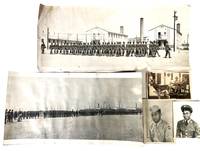
1941réf. 193561941. Partially identified Black Airmen photographs and Tuskegee Airmen signatures. African American airmen associated with the United States Army Air Forces during the World War II era document the struggle the struggle of entry into military aviation during a period when the armed forces remained racially segregated. This archive contains sixteen items including photographs of Black airmen in uniform and autographs of Tuskegee Airmen the pioneering African American pilots and support personnel trained beginning in 1941 after federal pressure forced the Army Air Corps to open limited aviation training opportunities to Black candidates. Five original photographs of African American airmen in Army Air Forces or early U.S. Air Force uniforms and nine signed note cards bearing the signatures of Tuskegee Airmen veterans. The archive also includes a contemporary pamphlet and photograph of a monument commemorating the Tuskegee Airmen. Signatures appear on white unlined cards measuring approximately 5 x 3 inches and include Claude Platt of the 301st Fighter Squadron and an Army primary flight instructor Charles A. Lane Jr. of the 99th Fighter Squadron Charles McGee of the 302nd Fighter Squadron Luther E. McIlwain Eldridge Williams of the 332nd Fighter Wing Leroy Bowman of the 301st Fighter Squadron Edward E. Tillman of the 477th Bombardment Group Utota Knox of the 302nd Fighter Squadron and Curtis C. Robinson of the 99th Fighter Squadron. The five photographs include two panoramic images measuring approximately 8 x 15 inches and 8 x 17.5 inches and three smaller photographs measuring roughly 3 x 5 inches. One panorama shows a large formation of troops assembled in ranks with a band and flag bearers present with African American personnel grouped separately from white soldiers and women within the formation. A second panorama shows approximately four dozen Black airmen marching in formation near a military installation. The smaller photographs depict African American airmen wearing service uniforms with airman caps and winged shoulder insignia; one image bears the inscription "To Mother - From Son in the service" while another real photo postcard shows a Black airman posing with a Black woman seated in a prop carriage behind a decorative mule annotated with "me" above the woman and the initials "T.B." above the man. The Tuskegee Airmen program began in 1941 when the U.S. Army Air Corps initiated training for African American pilots at Tuskegee Army Air Field in Alabama following federal directives requiring the military to allow limited Black participation in aviation roles. Units such as the 99th Fighter Squadron and the 332nd Fighter Group became the most visible African American flying units during World War II flying escort and combat missions in the European theater while operating within a segregated military structure. Their service challenged long standing claims that African Americans were unsuited for combat aviation and became a major milestone in the broader campaign for racial equality in the armed forces. The experience of these aviators and the public recognition of their accomplishments contributed to growing pressure for the desegregation of the military culminating in President Harry S. Truman's 1948 order ending official racial segregation in the armed forces. Five photographs ranging from approximately 3 x 5 inches to panoramic formats up to about 8 x 17.5 inches accompany nine signed note cards. One panoramic photograph shows slight water staining and a fold at the left corner; the remaining photographs and signatures remain well preserved. Overall condition very good. The material preserves visual documentation of African American participation in military aviation alongside signatures of several Tuskegee Airmen who served in fighter and bomber units during the war. unknown
1951réf. 191891951. African American U.S. Army soldiers photographed during the early Korean War era document Black military service during the first years following the formal desegregation of the United States armed forces. Twenty photographs dating from approximately 1950 to 1952 depict African American soldiers in uniform at military bases and in field conditions associated with Korean War deployment. Several images also show Black and white soldiers posing together providing visual documentation of the Army during the first phase of racial integration ordered by President Harry S. Truman through Executive Order 9981 in 1948. Inscriptions on several photographs including one signed portrait reading "Joe Moddin 1951" identify individual servicemen and record personal messages written during active service. Twenty black and white photographs depicting African American soldiers in U.S. Army uniforms during the early 1950s. Photographs include scenes of soldiers standing with military trucks traveling along roads in Korea and posing with fellow servicemen at military installations where barracks structures are visible in the background. Several images show troops operating or stationed in rough winter terrain consistent with Korean War conditions. Three photographs contain extended inscriptions on the verso dated December 1951 and January 1952. Another photograph is a portrait image signed and dated "Joe Moddin 1951." The images collectively portray daily military life including group portraits transportation scenes and base environments during wartime deployment. The Korean War fought between 1950 and 1953 became the first major conflict in which the United States attempted to implement racially integrated military units following Truman's desegregation order. African American soldiers had served in segregated formations throughout World War II and their wartime service contributed to growing national pressure to dismantle racial segregation within the armed forces. By the early years of the Korean War the Army began integrating many units in training and field operations bringing together soldiers of different racial backgrounds in combat and support roles. Historians estimate that roughly 600000 African Americans served in the armed forces during the Korean War and Black servicemen accounted for a significant portion of U.S. casualties during the conflict. These photographs provide ground-level visual documentation of soldiers serving during the transitional period when formal military segregation was being dismantled but integration remained uneven in practice. Twenty photographs. Minor handling wear typical of mid twentieth century vernacular photographs. Overall condition very good. unknown books
1941réf. 193561941. Partially identified Black Airmen photographs and Tuskegee Airmen signatures. African American airmen associated with the United States Army Air Forces during the World War II era document the struggle the struggle of entry into military aviation during a period when the armed forces remained racially segregated. This archive contains sixteen items including photographs of Black airmen in uniform and autographs of Tuskegee Airmen the pioneering African American pilots and support personnel trained beginning in 1941 after federal pressure forced the Army Air Corps to open limited aviation training opportunities to Black candidates. Five original photographs of African American airmen in Army Air Forces or early U.S. Air Force uniforms and nine signed note cards bearing the signatures of Tuskegee Airmen veterans. The archive also includes a contemporary pamphlet and photograph of a monument commemorating the Tuskegee Airmen. Signatures appear on white unlined cards measuring approximately 5 x 3 inches and include Claude Platt of the 301st Fighter Squadron and an Army primary flight instructor Charles A. Lane Jr. of the 99th Fighter Squadron Charles McGee of the 302nd Fighter Squadron Luther E. McIlwain Eldridge Williams of the 332nd Fighter Wing Leroy Bowman of the 301st Fighter Squadron Edward E. Tillman of the 477th Bombardment Group Utota Knox of the 302nd Fighter Squadron and Curtis C. Robinson of the 99th Fighter Squadron. The five photographs include two panoramic images measuring approximately 8 x 15 inches and 8 x 17.5 inches and three smaller photographs measuring roughly 3 x 5 inches. One panorama shows a large formation of troops assembled in ranks with a band and flag bearers present with African American personnel grouped separately from white soldiers and women within the formation. A second panorama shows approximately four dozen Black airmen marching in formation near a military installation. The smaller photographs depict African American airmen wearing service uniforms with airman caps and winged shoulder insignia; one image bears the inscription "To Mother - From Son in the service" while another real photo postcard shows a Black airman posing with a Black woman seated in a prop carriage behind a decorative mule annotated with "me" above the woman and the initials "T.B." above the man. The Tuskegee Airmen program began in 1941 when the U.S. Army Air Corps initiated training for African American pilots at Tuskegee Army Air Field in Alabama following federal directives requiring the military to allow limited Black participation in aviation roles. Units such as the 99th Fighter Squadron and the 332nd Fighter Group became the most visible African American flying units during World War II flying escort and combat missions in the European theater while operating within a segregated military structure. Their service challenged long standing claims that African Americans were unsuited for combat aviation and became a major milestone in the broader campaign for racial equality in the armed forces. The experience of these aviators and the public recognition of their accomplishments contributed to growing pressure for the desegregation of the military culminating in President Harry S. Truman's 1948 order ending official racial segregation in the armed forces. Five photographs ranging from approximately 3 x 5 inches to panoramic formats up to about 8 x 17.5 inches accompany nine signed note cards. One panoramic photograph shows slight water staining and a fold at the left corner; the remaining photographs and signatures remain well preserved. Overall condition very good. The material preserves visual documentation of African American participation in military aviation alongside signatures of several Tuskegee Airmen who served in fighter and bomber units during the war. unknown books
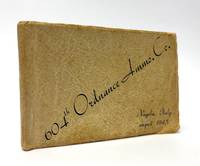
1945réf. 14242Nugola Italy: US Army 1945. Softcover. Very good . Oblong 16mo 5.5" x 3.75". Seventeen sepia-toned photographic prints each with a printed captioned tissue-guard and bound into printed covers with yapped edges. Covers with light wear to edges the prints just a tinge curled but bright clean and well-preserved though a few shots are slightly over-exposed. On the verso of the last photographs are some notes identifying this booklet as belonging to Sgt. James Jones a soldier who appears in one of the photographs herein. Overall in very good or better condition. A nice collection of labeled group shots of each platoon and subordinate unit to this ammunition company which served in North Africa and Italy during World War II. Compared to white soldiers African-American recruits and draftees were disproportionately assigned to ordnance and supply units as the Army leadership generally did not trust African-Americans to have combat leadership responsibilities. They also served under white officers. Despite these insults they often served with distinction. While we can find little hard information about the history of this unit's engagements some archival finding aids for veterans of the unit suggest that it saw engagements in North Africa Sicily and Italy during World War II. Compared with front-line combat units ordnance units were less likely to publish regimental history volumes at the close of the war. As such this souvenir book is probably the best extant document of the unit's organization and its service. While we have encountered one other copy we do not trace any others in the auction record or in OCLC. Rare. [US Army] unknown
1992réf. 470436Kendal: World Ship Society. 1992. 152 Seiten. 24,5cm. Zustand: Sehr Gut, eher ungelesen; Minischildchen (2x1cm) auf dem Vorsatzblatt, läßt sich wohl entfernen, mir gelang das einmal; Broschiert
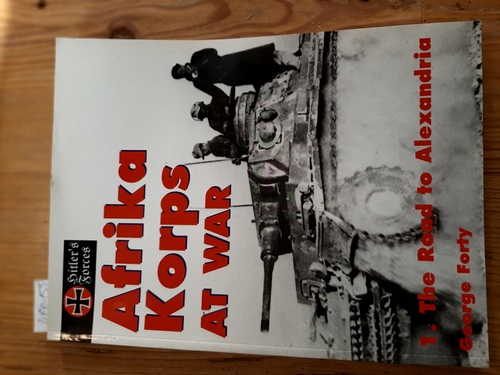
19713 parts, 8vo., First Edition, with numerous coloured and monochrome photographs and illustrations throughout; pictorial wrappers, wire-stitched as issued, all near fine copies. The series comprises No. I. Afrika Korps. German Military Operations in the Western Desert 1941-42 (1971); No. 2. Panzer-Jager. German Self-Propelled Anti-Tank Guns 1939-1945; Panzer-Grenadiers. Germany Infantry 1939-1945.
1998réf. 490155Surrey: Ian Allan Pub. 1998. 160 Seiten. 29x21,5cm. Zustand: Gut bis Sehr Gut min. gebräunt (Innen); Einband (Außen) hat geringe bis leichte Gebrauchsspuren; Unterer Schnitt etwas fleckig-verfärbt; Broschiert
19688vo., First Edition, with illustrated title-spread and numerous photographs and maps throughout; original pictorial wrappers, backstrip lightly sunned else a very good, bright, clean copy. Purnell's History of the Second World War. Campaign Book No.1.
1993réf. 701929Herford: Koehler. 1993. 240 Seiten. 24cm. Zustand: Sehr Gut, eher ungelesen; Ppbd.
1994réf. 17133Wuppertal : Hammer 1994. 171 S. : zahlr. Fotos , graph. Darst., Kt. ; 31 cm Originalverschweißt, Top Zustand, Pp., gebundene Ausgabe, Hardcover/Pappeinband
réf. 213850Paris, Charles-Lavauzelle, s.d. in-8, III-209 pp., 1 portr., 5 cartes dépl., toile rouge (rel. moderne).
1967réf. 731603PN. New. 1967. Soft Cover. Date is original print. This is a reprint edition. . PN paperback
1945réf. 76270Washington D. C.: U. S. Army. Very Good. 1945. First Edition. Paperback. Softcover mounted on black wooden board with screw posts. Oblong elephant folio 18" x 12 3/4" with backing board a slight bit larger . One of 182 copies of the formally classified history of the Third Army produced by the Third U. S. Army Headquarters and the XIX Tactical Command. Classified as Secret when first published but later declassified. Volume 1 The Operations contains a monthly accounting of overall army operations in the European theater commanded by Lt. Gen. George S. Patton. Volume 2 "Staff Section Reports " not available at present is a compilation of general and special staff sections operations reports. The volume offered here "The Operations " combines narratives of specific operations with data on movements casualties and loss of materiel supplemented with maps and supporting documents. Condition is very good or better. There are some creases on the front wrap along with a signature of the former owner Maj. L. V. Frisch. Interior pages are clean and unblemished. Each section in the book is introduced by a clear acetate page. Scarce in its original edition though available in various electronic forms. 421 pp. Plus annexes 22 pp 36 pp. 66 pp and 146 pp. Large bulky and heavy--may require special shipping arrangements. . U. S. Army paperback