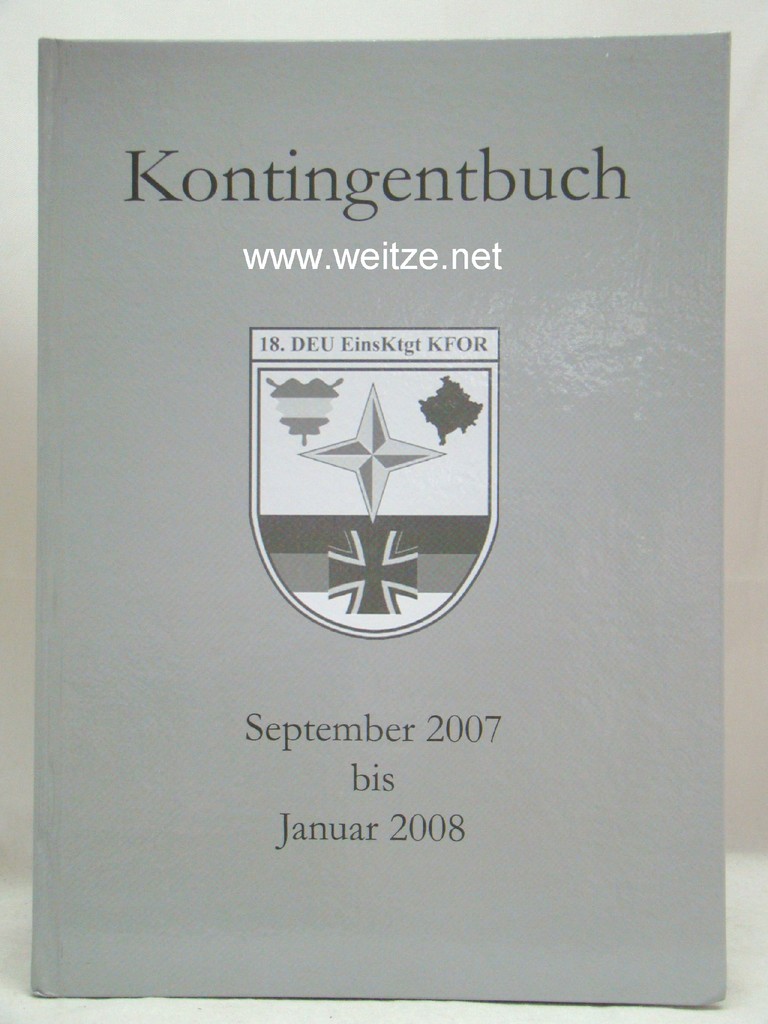
KontingentbuchAntiquariat.de
30 566 résultats
2008réf. 140456DEU Einsktgt KFOR um, 2008.
1906réf. 6063Bln: Mittler 1906. VI, 387 S. Gr 8° Br. *Umschlagrücken überklebt*.
1906réf. 47137Berlin, Mittler und Sohn, 1906. VI, 387 Seiten, 8°, grünes O Ln mit prächtiger Deckel- und Rückenvergoldung
réf. 54192, Paris, Armand Le Chevalier 1866, ptt in-8, demi-rel. cartonnée, tit. doré sur pc. de maroquin bordeaux, dos lisse orné de filets dorés, tr. mouchetées, bon état, VII-252p.
réf. 106.461Paris, Librairie Garnier Frères, s.d. (ca 1870). 18 x 28, 111 pp., demi-reliure larges dos/coins carton vert, plats marbrés, couverture conservée (avant-arrière), bon état (rousseurs).
1915réf. 907069Berlin: Juncker. 1915. 574; 613. 28x20cm. Zustand: Gut min. bis gering gebräunt (Innen); Innenband vorne gering angerissen - Vorderdeckel min. bis gering angelockert, ehr unkritisch; Einband (Außen) hat geringe bis leichte Gebrauchsspuren; Ist stellenweise etwas berieben-wirkt im Hinterdeckel an einigen Stellen, nur im Gegenlicht, etwas fingerfleckig; Schutzumschlag fehlt, oder es gibt keinen; Gewebe (Schwarzer Leinen)
1913réf. 22992Stgt: Union um 1913. (6),415 S., überaus zahlr. Textabb., Karten + Faks. 4° Ln. *schönes Expl.* jedoch 3 Bll. aus Bindung gelöst*
1913réf. 9126CBerlin:, Gräfe und Unzer., (1913). (ca. 29 x 5,5 cm). 1 Vivatband. Original-Vivatband mit Illustration und Text. Geringe Gebrauchsspuren. Altersentsprechend guter Zustand.
2013réf. 247391Epee Edition, 2013.
1993réf. 40328Basel: Perseus Vlg. 1993. 504/366 S. + einige Taf. Reg. Ln.mS. *Bleistiftnotizen auf Vorsatz*.
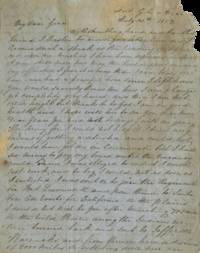
1852réf. List3713This item is currently on reserve; please contact dealer for more details. Fort Gibson Indian Territory 1852. Single two-page letter measuring 9 ¾ x 7 ¾ inches postmarked Fort Gibson. Damage to upper right corner intersecting with text; repairs with archival tape; with small portion of text continued on cover missing. Very good minus. A letter from James Johnson at Fort Gibson to his wife Grace in New York dated July 30 1852. Johnson had left home in search of work trying "every means of getting a station"; he "would have got one in Cincinnati but I had no money to pay my board until the vacancy would occur" and was therefore "obliged to enlist I could not work and to beg I could not." He had apparently stopped writing to his wife due to shame but she had discovered his enlistment anyway. He details his service: "As soon as I enlisted I was sent on to join the Regiment in Fort Leavenworth and from thence to Santa Fe en route for California. On the plains I could not write to you. After marching 700 miles on the Wild Prairie among the Indians we were turned back and sent to Jefferson Barracks and from thence here a distance of 2000 miles. On settling down here . I had every opportunity of writing to you but I could not bring myself to do it". This itinerary places Johnson's service with the "Army of the Frontier" a term for US Army activity protecting Euro-American settlers and participating in the Indian Wars which would drive Indigenous tribes off their land. Fort Gibson in particular located within Indian Territory played a significant role in the program of Indian removal with tribes there under the Army's control including the Cherokee Muscogee and Seminole. The content of Grace Johnson's objection to her husband's service and the cause of his shame over it are not entirely clear from the letters but they are felt intensely: Johnson laments that he could not save "myself from disgrace and suffering and the accusation of my own conscience" and remarks of "William John" apparently a deceased child that "I feel content he is out of this sinful world lest any of his fathers sins should fall upon him". Though he does state that he "would not feel half as I do" if he were without a family the guilt and shame seem to center as much around the military service as around the family abandonment. He closes his letter with a plea to Grace to help him leave the army: "Dear Grace you can get me out of the army any time you like if you take the proper steps by going to a lawyer and I will give you every assistance in my power for when I enlisted I enlisted as a married man and had 3 children". The letter reflects the sentiment that though above begging enlisting in the army was a shameful last resort for those who could not obtain civilian jobs. Of interest to historians of economic enlistment and public sentiment regarding the US Army in the midcentury.
1852réf. List3713This item is currently on reserve; please contact dealer for more details. Fort Gibson Indian Territory 1852. Single two-page letter measuring 9 ¾ x 7 ¾ inches postmarked Fort Gibson. Damage to upper right corner intersecting with text; repairs with archival tape; with small portion of text continued on cover missing. Very good minus. A letter from James Johnson at Fort Gibson to his wife Grace in New York dated July 30 1852. Johnson had left home in search of work trying "every means of getting a station"; he "would have got one in Cincinnati but I had no money to pay my board until the vacancy would occur" and was therefore "obliged to enlist I could not work and to beg I could not." He had apparently stopped writing to his wife due to shame but she had discovered his enlistment anyway. He details his service: "As soon as I enlisted I was sent on to join the Regiment in Fort Leavenworth and from thence to Santa Fe en route for California. On the plains I could not write to you. After marching 700 miles on the Wild Prairie among the Indians we were turned back and sent to Jefferson Barracks and from thence here a distance of 2000 miles. On settling down here . I had every opportunity of writing to you but I could not bring myself to do it". This itinerary places Johnson's service with the "Army of the Frontier" a term for US Army activity protecting Euro-American settlers and participating in the Indian Wars which would drive Indigenous tribes off their land. Fort Gibson in particular located within Indian Territory played a significant role in the program of Indian removal with tribes there under the Army's control including the Cherokee Muscogee and Seminole. The content of Grace Johnson's objection to her husband's service and the cause of his shame over it are not entirely clear from the letters but they are felt intensely: Johnson laments that he could not save "myself from disgrace and suffering and the accusation of my own conscience" and remarks of "William John" apparently a deceased child that "I feel content he is out of this sinful world lest any of his fathers sins should fall upon him". Though he does state that he "would not feel half as I do" if he were without a family the guilt and shame seem to center as much around the military service as around the family abandonment. He closes his letter with a plea to Grace to help him leave the army: "Dear Grace you can get me out of the army any time you like if you take the proper steps by going to a lawyer and I will give you every assistance in my power for when I enlisted I enlisted as a married man and had 3 children". The letter reflects the sentiment that though above begging enlisting in the army was a shameful last resort for those who could not obtain civilian jobs. Of interest to historians of economic enlistment and public sentiment regarding the US Army in the midcentury. books
1960réf. ZB721967Washington 1960. first edition oblong folio not paginated but substantial mostly reproductions of newspaper articles some illustrated on the national and local observances; book plate and markings of a Masonic library a light overall damp pucker but very little staining and a sound entirely readable copy in later cloth with original pictorial paper sides bound in. - If you are reading this this item is actually physically in our stock and ready for shipment once ordered. We are not bookjackers. Buyer is responsible for any additional duties taxes or fees required by recipient's country. Washington hardcover
1863réf. 006939United States Army 1863. Book. Very Good. One PageFolded. 8 1/4" x 10 1/2". One sheet of paper backed with an attached second sheet two horizontal folds one vertical fold fragile yet Very Good sheets separating at folds. light age toning. Discharge papers for Thomas Fulford a private in Company B 64th Regiment Infantry Indiana Volunteers dated Sept. 30 1863 at St. Louis Mo by reason of Surgeon's Certificate of Disability. In left margin handwritten in red ink "Phthisis-hereditary-developed by exposure. He is unfit for the Invalid Corps". Signed at bottom "By Order of Maj. Gen. Schofield" and then signed "J.K. Hudson" with more writing below illegible. Stamped in red ink "paid by Robert Smith St. Louis Oct. 2 1863 Paymaster U.S.A." Also another stamp faint with just the word Ohio at right side above top fold. Verso bears handwritten "Discharge Certificate of Thomas F. Fulford Late of Co. B 64th Regt. Indiana Vols. Infantry". Private Fulford went on to live to the age of 68 fathering 8 children. At his death in 1899 his obituary referred to him as "well known old soldier of Washington Township". Major General John McAllister Schofield 1831 -1906 held major commands during the Civil War and later served as U.S. Secretary of War under Presidents Andrew Johnson and Ulysses S. Grant and Commanding General of the United States Army. United States Army unknown
1863réf. 006939United States Army 1863. Book. Very Good. One PageFolded. 8 1/4" x 10 1/2". One sheet of paper backed with an attached second sheet two horizontal folds one vertical fold fragile yet Very Good sheets separating at folds. light age toning. Discharge papers for Thomas Fulford a private in Company B 64th Regiment Infantry Indiana Volunteers dated Sept. 30 1863 at St. Louis Mo by reason of Surgeon's Certificate of Disability. In left margin handwritten in red ink "Phthisis-hereditary-developed by exposure. He is unfit for the Invalid Corps". Signed at bottom "By Order of Maj. Gen. Schofield" and then signed "J.K. Hudson" with more writing below illegible. Stamped in red ink "paid by Robert Smith St. Louis Oct. 2 1863 Paymaster U.S.A." Also another stamp faint with just the word Ohio at right side above top fold. Verso bears handwritten "Discharge Certificate of Thomas F. Fulford Late of Co. B 64th Regt. Indiana Vols. Infantry". Private Fulford went on to live to the age of 68 fathering 8 children. At his death in 1899 his obituary referred to him as "well known old soldier of Washington Township". Major General John McAllister Schofield 1831 -1906 held major commands during the Civil War and later served as U.S. Secretary of War under Presidents Andrew Johnson and Ulysses S. Grant and Commanding General of the United States Army. United States Army unknown books
1998réf. 14809Addim 1998 2x23x16cm. 1998. Broché. Cet ouvrage de Charles Garret propose une synthèse des conflits menés par la France entre 1870 et 1962 en cherchant à comprendre les raisons des défaites et des errements nationaux. L'auteur met en lumière la part de responsabilité du caractère français jugé léger et suffisant par les étrangers et dresse un tableau destiné à éviter la répétition des mêmes drames
réf. 97224Bruxelles, Librairie Universelle de J. Rozez, 1870. "15 x 23, 39 pp., broché, état moyen (couverture défraîchie; dos refait)."
Madrid, P. Abienzo, 1872, 20 x 13,5 cm., bella encuadernación en marroquín rojo, con filetes, hilos dorados y adornos gofrados, lomo cuajado, cortes, cantos y contracantos dorados y guardas en seda , dedicatoria manuscrita del autor al General, historiador y Ministro de la Guerra D. Fernando Fernández de Córdoba, 506 págs. + 1 hoja blanca + 3 láminas y un croquis plegado de la batalla de Sedan en colores.
1914réf. 3039100Bonn, Marcus & Weber, 1914. 318 S. Lwd.
1971réf. 11958[Bonn] : Bundesregierung d. Bundesrepublik Deutschland, [1971]. 203, XVI, [160] S. : zahlr. Ill. (z. T. farb.), graph. Darst. 8°. OBroschur.
1997réf. 2082702114603182Seishiosha fixed price 11000 yen 1997. Soft Cover. Fine. Number of books: 1 Seishiosha fixed price 11000 yen paperback
1897réf. 2415Berlin, Ernst Siegfried Mittler und Sohn, 1897. Format 15 x 21 cm. Geprägtes rotes Leinen mit goldener Rückenbeschriftung und Deckelabbildungen. Ecken und Kanten etwas berieben und bestoßen. Bindung und Block fest. Seiten sauber und frisch. Drei-Seiten-Pfauenschnitt. Gutes Exemplar. 1282 Seiten. 1. Auflage. Leinen.
réf. 1329043839.Gpaperback. Good. Access codes and supplements are not guaranteed with used items. May be an ex-library book. paperback
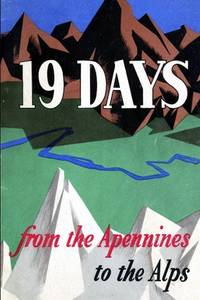
1945réf. 73287Milan Italy: United States Fifth Army 1945. Presumed First Edition First printing. Wraps. Good. 2 90 4 pages. Illustrations. Maps. Cover has some wear tears chips and soiling. Color endpaper maps. Other illustrations in color. This was printed by Pizzi and Pizio in 1945 in Milan Italy. The Allies invaded mainland Italy in early September 1943 expecting a quick drive north through the Italian peninsula into the "soft underbelly" of Europe and on to the German heartland. Nineteen months later in March 1945 after hard fighting against the Gustav Line in the rugged mountainous spine of Southern Italy the landing at Anzio their advance up the Liri valley to capture Rome and more mountain fighting in the North Apennines the Allies were still south of the Po Valley and the Alps. On 14 April 1945 Truscott's Fifth Army ground attack began. They seized the Pra del Bianco basin and Reno River valley after intense fighting and pushed northward from ridgeline to ridgeline and from valley town to valley town with steady progress. American firepower superiority and aggressive infantry attacks slowly pushed back the Germans. Intense bombing was renewed on 17 April. By nightfall only a rapidly disintegrating Axis force and about thirty miles of relatively flat terrain stood between the IV Corps and the Po River. In the face of superior forces the Germans had little chance of containing the emerging American breakthrough. By 18-19 April the American advance accelerated. As Axis defenses cracked the bulk of the Fifth Army passed west of Bologna and units were repositioned for the final push out of the Apennines. What is now called U.S. Army-North started life as the Fifth Army on 1 December 1942 in Oujda French Morocco. Originally constituted of Army units that participated in Operation TORCH the invasion of North Africa it was the first of the seven field armies the United States organized during World War II. On 12 December 1942 the new Fifth Army was assigned to the the multi-national Allied Force North Africa and Lieutenant General Mark W. Clark wad designated its commanding general. At General Clark's direction at one minute after midnight Zulu Time 5 January 1943 the Fifth Army became an active unit. The Fifth Army's primary mission was to prepare itself for the amphibious invasion of Italy. On 9 September 1943 Fifth Army landed an invasion force on a 20-mile stretch of beach south of Salerno Italy becoming the first American force to invade mainland Europe. At the time of the invasion Fifth Army included the British X Corps and the U.S. 36th 45th and 82nd Divisions. With the objective of capturing Rome Fifth Army pushed northward from Salerno through Naples to the German line anchored on the town of Cassino. The French Expeditionary Corps including Moroccan and Algerian divisions joined Fifth Army doubling its strength. After four costly assaults known as the Battles of Monte Cassino the Fifth Army continued onward toward Rome linking up on the way with other Fifth Army units that had fought their way out of the coastal town of Anzio. Fifth Army entered Rome on 4 June 1944 becoming the first allied force to liberate a European capitol from Fascist control. Germans and Fascist Italians retreated north turning and holding their ground at the Arno River. The pursuing Fifth Army reached the Arno on 18 July and finally crossed it on 2 September. Now into their second winter in Italy the Fifth army got a new commander. Lieutenant General Lucian K. Truscott Jr. became Fifth Army's commanding general on 16 December 1944 and served in that position to the end of the war. By this time Fifth Army had become a truly multi-ethnic command. Besides the Brazilians there were British and French units whose members including New Zealanders Canadians Indians Gurkhas Jews and Arabs from the British Mandate in Palestine South Africans Rhodesians Moroccans Algerians and Sub-Saharan Africans. In smaller units were exiled forces from Poland Greece Czechoslovakia and anti-fascist Italians. From the United States itself came the segregated 92d "Buffalo" Division and the Japanese-American 442d Regimental Combat Team. General Truscott led this multi-national Fifth Army out's of its winter deadlock across the Italian Apennines and across the Po River valley. By the end of April Fifth Army had reached the foothills of the Alps and had captured the cities of Bologna Vicenza and Verona. On 29 April American and British units entered Venice and German representatives started negotiations for surrender. The battle for Italy came to an end on 2 May 1945 with the unconditional surrender of the German forces in Italy and the linkup between the Fifth Army and Seventh Army in the Brenner Pass. From 9 September 1943 to 2 May 1945 Fifth Army endured 602 days of steady battlefield combat. This fighting resulted in 188546 casualties among the 27 divisions and 7 corps that composed the Fifth Army. Fifth Army tied down at least 16 of Hitler's divisions and took 212112 of his men prisoner. The Fifth Army's units were assigned away and the Headquarters became non-operational on 9 September - two years to the day after the landing at Salerno. United States Fifth Army paperback
1945réf. 56-387BMilan: Pizza 1945. 1945. 90p. Photos. Color Map on front end paper. Maps in text. Wraps. Fine Copy. Paperback. Fine. Milan: Pizza, 1945. Paperback