[COURSE MARITIME] COUZARD (Denis)Livre Rare Book
MINISTERIO DE LA GUERRA.MareMagnum

Libreria Fernandez Javier · Espagne250,00 €
31 174 résultats
réf. 140215Paris, Imprimerie Nationale, An 7 in-8, 14 pp., dérelié.
réf. 148235Paris, Baudouin, s.d. (1790) in-8, 24 pp., dérelié.
réf. 140216Paris, Imprimerie Nationale, An 8 in-8, 35 pp., dérelié.
réf. 91764Paris, Imprimerie nationale, 1791 , 26 pp., en cahier, non coupé.
réf. 89857Paris, Baudouin, 1789 in-8, 24 pp., dérelié.
réf. 139735Paris, Imprimerie nationale, Ventose an (1798) in-8, 8 pp., broché. Mouillure et petite découpure sur la dernière page.
réf. 139795Paris, Imprimerie Nationale, Pluviose an 7 (février 1799) in-8, 16 pp., dérelié.
réf. 139738Paris, Imprimerie Nationale, An 7 (1798) in-8, 50 pp., dérelié.
réf. 98506Paris, Imprimerie Nationale, s.d. (1790) in-8, 24 pp., broché.
réf. 105221A Paris, Imprimerie Nationale, s. d. (1789) in-8, 11 pp., dérelié.
réf. 202291Paris, Imprimerie nationale, (1791) in-8, 16 pp., dérelié.
réf. 139798Paris, Imprimerie Nationale, Thermidor an 6 (août 1798) in-8, 6 pp., dérelié.
2003réf. 54379Fort Leavenworth KS: U.S. Army Command 2003. Revised Edition. very good. Quarto 336 wraps 3-hole punched illus. figures tables glossary. This student text replaces ST 100-7 dated April 2001 which was based on an old Opposing Force OPFOR paradigm that with the end of the Cold War is no longer valid. Prepared by TRADOC ADCSINT-Threats for Center for Tactics. U.S. Army Command paperback
réf. 1977787231.Gpaperback. Good. Access codes and supplements are not guaranteed with used items. May be an ex-library book. paperback
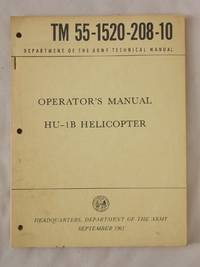
1961réf. 014153Washington DC: Department of the Army 1961. Book is loose pages bound with one staple at the upper left and is in very good some wear and soiling to covers condition. An Attractive Copy! Please feel free to ask me for pictures or more information Thanks. . Stapled Binding. Very Good. Department of the Army Paperback
réf. U00A-03359United States Department of the Army. Used - Good. Good condition. Military Vehicles Self-Propelled Artillery Ordnance United States, Department of the Army unknown
1979réf. 122681Headquarters Dept of Army Washington D.C 1979. loose_leaf. Good. 0x0x0. In three ring binder which we suspect is not the original one as it seems over full. Shows light fox speckling to edges. Front board of binder is warped. A76 Please email for photos. Headquarters, Dept of Army, Washington, D.C unknown
1985réf. 73401Washington DC: U. S. Government Printing Office 1985. Presumed First Edition First printing thus. Wraps. Very good. Various Paginations approximately 80 pages. Illustrations. References. Index. Two hole punched. Staple-bound. Cover has some wear and soiling. The Beretta M9 officially the Pistol Semiautomatic 9mm M9 is a 9×19mm Parabellum pistol adopted by the United States Armed Forces in 1985. It is essentially a military specification Beretta 92FS. The M9 won a competition in the 1980s to replace the M1911A1 as the primary sidearm of the U.S. military beating many other contenders and only narrowly defeating the SIG P226 for cost reasons. It officially entered service in 1990. Some other models have been adopted to a lesser extent namely the M11 pistol and other models remain in use in certain niches. The M9 was scheduled to be replaced under a United States Army program the Future Handgun System FHS which was merged with the SOF Combat Pistol program to create the Joint Combat Pistol JCP. The JCP was renamed Combat Pistol CP and the number of pistols to be bought was drastically cut back. The U.S. Army and Air Force are seeking to replace their M9s through the Modular Handgun System program. In the 1970s every branch of the U.S. Armed Forces except the U.S. Air Force carried the .45 ACP M1911 pistol. USAF opted to use .38 special revolvers which were also carried by some criminal investigation/military police organizations USAF strategic missile ICBM officer crews and by military flight crewmembers across all the services when serving in combat zones or when engaged in nuclear weapons duties. The Department of Defense then decided to synchronize the weapons of all five branches of U.S. forces. The ground combat branches of the services found this decision highly contentious but was meant to eliminate the need to buy replacements for worn out M1911 frames and to establish a common NATO pistol round to simplify logistics in case of war with the Soviet Union in Europe. In 1979 the Joint Service Small Arms Program began searching for a replacement for the venerable M1911 and the 9×19mm Parabellum round was selected for compliance with the NATO Standardization Agreement STANAG. In 1980 the Beretta 92S-1 design was chosen over entries from Colt Smith & Wesson Walther the Star M28 and various Fabrique Nationale and Heckler & Koch models. The result however was challenged by the US Army and new tests were done by the Army. In 1984 the trials started again with updated entries from Smith & Wesson Beretta SIG Sauer Heckler & Koch Walther Steyr and Fabrique Nationale. Beretta won this competition but there was a new trial the XM10 competition in 1988. This resulted in two different trials that were more limited but resulted in the Beretta being chosen albeit with an updated design. Concurrent to the pistol selection process beginning in 1979 the Bianchi International holster company began its development of a multi-function military holster to be ready for the issuance of a new pistol. This holster - designed by John Bianchi and Richard Nichols - has served the U.S. Armed Forces well for decades designated the M12 was adopted simultaneously with the adoption of the Beretta 92F in 1985. The Beretta 92F survived exposure to temperatures from 40 to 140 °F 40 to 60 °C being soaked in salt water being dropped repeatedly on concrete and being buried in sand mud and snow. Additionally the 92F proved a MRBF mean rounds before failure of 35000 rounds. That number is often touted as the equivalent to five or six times the pistol's service life. While this is normally true in European militaries armed forces of the United States normally subject sidearms to much more extensive use. The Iraq War which featured frequent urban and room-to-room combat has required American soldiers to rely more heavily on their pistols. The M9 is a short recoil semi-automatic single-action / double-action pistol that uses a 15-round staggered box magazine with a reversible magazine release button that can be positioned for either right- or left-handed shooters. The M9 is used with the Bianchi M12 Holster though other holsters are often used. The specific modifications made from the Beretta 92 includes: · Design of all the parts to make them 100% interchangeable to simplify maintenance for large government organizations. · Modified the front of the trigger guard so that one could use finger support for easier aiming. · Recurved the forward base of the grip to aid aiming. · Hard chromed the barrel bore to protect it from corrosion and to reduce wear. · New surface coating on the slide called Bruniton which allegedly provides better corrosion resistance than the previous plain blued finish. It also has an enlarged hammer pin that fits into a groove on the underside of the slide. The main purpose is to stop the slide from flying off the frame to the rear if it cracks. This was in response to reported defective slides during U.S. Military testing. The M9 features multiple internal safeties including a firing pin block that prevents the firing pin from moving without the trigger being pulled and a firing pin striker that rotates when the safety lever is engaged preventing the firing pin from being hit even if the hammer falls. The M9 also has an ambidextrous external safety lever allowing both left and right handed people to engage or disengage the safety mechanism. U. S. Government Printing Office paperback
1979réf. M2270Headquarters Department of the Army. Good. 1979. Reprint. Stapled wraps. Rear cover is missing shelfwear front cover has several creases and couple tiny tears little bit of scuffing/light soiling last page has small chip at spine and tiny tear to bottom edge slight toning . Headquarters, Department of the Army paperback
1962réf. MASTER147097IDEPARTMENT OF THE ARMY. G IN WRAPS. 1 RUSTY STAPLE HOLDING ALL INTACT TURNED CORNERS. 1962. TRADE PAPERBACK. HOLEPUNCHES AT SPINE WEAR SOILING. . DEPARTMENT OF THE ARMY paperback
1971réf. 057545Washington DC: Headquarters Department of the Army 1971. Reprint . Paper Back. Near Fine/No Jacket. 4to - over 9¾" - 12" tall. chapt.pag.; SC 3-hole w/'prestong' binding; off-white w/blk.; slight rub w/cleantight pgs. "This manual is for the use by the operator/crew of the Army Models YUH-1D and UH-1D/H helicopters. Its purpose is to supply you with the latest information and performance data derived from flight test programs and operational experiences." illus. Headquarters, Department of the Army unknown
1981réf. 61373Washington DC: U. S. Government Printing Office 1981. Reprint. 1993. Wraps. Very good. No dust jacket as issued. Five-hole punched. Copy removed from shrinkwrap for cataloguing. ii674 p. Includes: illustrations diagrams. VOLUME 2 ONLY. This copy is a reprint which includes current pages from Changes 1 through 8. Operation under Usual Conditions 2-139; Operation under Unusual Conditions 2-608. This manual reflects the state of knowledge and the state of practice after the end of the Vietnam War. With the inclusion of the 8 changes it was updated to reflect the state of understanding at the time of the first Persian Gulf War. U. S. Government Printing Office paperback
1961réf. 010100Headquarters Dept. of the Army Washington D.C.: U.S. Army 1961. Revised . Paper Back. Near Fine/No Jacket. 4to - over 9¾" - 12" tall. 343pp.; SC lt.tan w/blk.; some rub w/some lt.wear on corners. "The purpose of this manual is to supply you with the latest information and performance data derived from flight test programs and operational experiences." Dept.of Army Technical Manual TM 55-1520-203-10. illus. U.S. Army unknown
1989réf. 66131Washington DC: Headquarters Department of the Army 1989. Wraps. Good. No dust jacket as issued. Front cover scuffed part of the word 'feet' is scuffed. Includes illustrations. Five-hole punched NOT in binder. Various pagination approximately 400 pages. List of Abbreviations. The manual was printed in four volumes with the bulk of the information in this first volume Chapters 1-4. The second volume with the same TM number except the last digit is 2 was Chapter 5 on Intermediate Direct Support Maintenance not present the Third volume was part of Chapter 6 Intermediate General Support Maintenance with the same TM number except the last digit is 3 not present the final volume completed Chapter 6 and included appendixes. This manual pertained to Hull numbers 8500 through 8519 Marinette Marine Corp NSN 1905-01-169-0938 This manual provides information on the operation lubrication and maintenance of the equipment. Also included are descriptions of main units and their functions in relationship to other components. Equipment data is includes with the equipment description. Headquarters, Department of the Army paperback