Federal Aviation AdministrationBiblio.com

8 943 résultats
réf. ria9781638233817_inpHardcover. New. New Book; Fast Shipping from UK; Not signed; Not First Edition; ¿¿ THE DEFINITIVE HANDBOOK FOR PILOTS - UPDATED FOR 2026 AND BEYOND The Pilot's Handbook of Aeronautical Knowledge issued by the Federal Aviation Administration FAA in 2023 is the essential guide for anyone pursuing a career or hobb hardcover
1972réf. 330812Scholarly Press 1972-06-16. Hardcover. Very Good/No Dust Jacket. 7x1x10. 1972 hardcover reprint Somerset Publishers a division of Scholarly Press Inc. Brown buckram with gilt lettering on spine. xxxii 549pp. No dust jacket don't know if one was ever issued for this edition. Binding is tight sturdy and square; boards also very good. Text has one named added to index on page 545 otherwise interior appears unmarked and clean. Shelfwear is minimal exterior looks quite nice. From a private home collection. Ships same or next business day from Dinkytown in Minneapolis Minnesota. Due to the size/weight of this book extra charges may apply for international shipping. Scholarly Press hardcover
2004réf. 017557Beijing China: Encyclopedia of China Publishing House 2004. Book. Very Good. Hardcover. Minor wear; otherwise a solid clean copy with no marking or underlining; collectible condition; illustrated with color photographs and maps. Encyclopedia of China Publishing House Hardcover
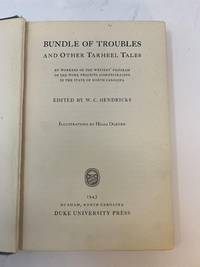
1943réf. 30553Durham North Carolina Press: Duke University Press 1943. 1st edition. Cloth. Fair. 1st edition. A Fair copy. Ex-Library. 8vo. ix 206 pp. illustrated with b&w plates of drawings. Bound in grey cloth with title on a red field on spine. Heavy edge wear tips rubbed through with Library markings of call numbers stampings blind stamp to title page pocket at rear and crossed off markings. A very suitable place holder for a more desirable copy. Duke University Press unknown
2013réf. AME_9780857936196Edward Elgar 2013. 1ST. Unknown Binding. New/New. _ Edward Elgar unknown
2006réf. 55162Washington DC: Nat Academy of Public Admin 2006. very good. 92 wraps illus. some in color mailing information and stamp on rear cover covers slightly worn and soiled. Nat Academy of Public Admin paperback
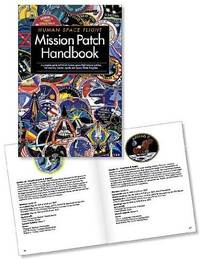
2012réf. 87989Bradenton Fla: AeroGraphics Inc 2012. First printing stated. Paperback. Extremely subtle wear to spine head and foot faint soiling to top fore-edge very bright pages in tight binding else Near fine. Small blue octavo 173 pages color illustrations; 21 cm. Space Missions. A comprehensive guide to NASA's human space flight mission patches for Mercury Gemini Apollo and the Space Shuttle programs. The book features a collection of 168 mission patches printed in full-color. Details are included about each mission patch design as well as about the mission itself - including launch and landing dates and times crew members and payload. This handbook provides a complete reference for the colorful emblems of NASA's manned missions. Scarce. AeroGraphics, Inc paperback
2007réf. 86128Washington DC: National Aeronautics and Space Administration 2007. Presumed First Edition First printing. Comb binding. Very good. 50 pages including covers. Decorative front cover. Phoenix was an uncrewed space probe that landed on the surface of Mars on May 25 2008 and operated until November 2 2008. Phoenix was operational on Mars for 157 sols 161 days. Its instruments were used to assess the local habitability and to research the history of water on Mars. The mission was part of the Mars Scout Program; its total cost was $420 million including the cost of launch. The multi-agency program was led by the Lunar and Planetary Laboratory at the University of Arizona with project management by NASA's Jet Propulsion Laboratory. Academic and industrial partners included universities in the United States Canada Switzerland Denmark Germany the United Kingdom NASA the Canadian Space Agency the Finnish Meteorological Institute Lockheed Martin Space Systems MacDonald Dettwiler & Associates MDA in partnership with Optech Incorporated Optech and other aerospace companies. It was the first NASA mission to Mars led by a public university. Phoenix was NASA's sixth successful landing on Mars from seven attempts and the first in Mars' polar region. The lander completed its mission in August 2008 and made a last brief communication with Earth on November 2 as available solar power dropped with the Martian winter. The mission was declared concluded on November 10 2008 after engineers were unable to re-contact the craft. JPL declared the lander to be dead. The program was considered a success because it completed all planned science experiments and observations. The mission had two goals. One was to study the geological history of water the key to unlocking the story of past climate change. The second was to evaluate past or potential planetary habitability in the ice-soil boundary. Phoenix's instruments were suitable for uncovering information on the geological and possibly biological history of the Martian Arctic. Phoenix was the first mission to return data from either of the poles and contributed to NASA's main strategy for Mars exploration "Follow the water." A press kit often referred to as a media kit is a pre-packaged set of promotional materials that provide information about a person company organization or cause and which is distributed to members of the media for use. Press kits are often distributed to announce a release or for a news conference. Traditionally the term "press kit" referred to a set of documents photographs such as publicity stills and other relevant materials packaged together and such a kit was designed to be sent to a newspaper or magazine as part of an organization's public relations or promotional program. There is no universal guide to the elements that should be included in a press kit or media kit but the following are common components: Backgrounder with historical information on the company or individual; Fact sheet listing specific features statistics or benefits; Biographies of key executives individuals artists etc.; Past press coverage; Photos or other images; a press release; and media contact information. National Aeronautics and Space Administration unknown
2011réf. 80419Washington DC: National Nuclear Security Administration 2011. Presumed First thus. Three Ring Binder. Good. Includes sections on LANL ICF LLNL ICF SNL ICF LANL ICF LLNL SC NNSS SC and SNL SC. Includes information on ICF Ignition Diagnostics Facility Operations Pulsed Power Science Campaign Primary Assessment Technologies Dynamic Materials Properties Advanced Radiography Secondary Assessment Technologies and Advanced Certification. Some of the cost breakdown is by: Chargebacks Purchases Travel Labor Equipment Training Subcontracts Other Direct Costs Material Institutional costs Service Center and Overheads. This is a rare snapshot into the range of expenditures and the monthly progression of expenditures. Cost analysis is a comparison of costs. Costs used to prepare financial statements are not the same as those used to control operations. Costs may be controllable or non-controllable and are subject to time periods and constraints. For example controllable costs are those the manager may authorize. However costs that may be able to be controlled over the long-term may not be controllable in the short-term. Total cost is the relationship between production quantity and costs expressed as: Total cost = Fixed Cost Variable Cost Output Costs are classified according to their behavior. A cost's behavior is how the cost responds to changes in the level of the business activity. Costs are broadly divided into variable costs and fixed costs. For example the total variable cost increases and decreases in relation to the changes in business activity levels. Conversely fixed costs are not affected by business activity level changes remaining the same throughout. National Nuclear Security Administration unknown
2002réf. 77513Washington DC: National Nuclear Security Administration c2002. Presumed First Edition First printing. Spiral bound. Very good. Format is approximately 11 inches by 8.5 inches. 30 pages plus covers. Maps. Footnotes. Illustrations many in color. Cover has slight wear and soiling. This document is a high-level synopsis of the full National Nuclear Security Administration's Applied Technology Roadmap. The larger document is the product of a collaborative effort by the NNSA and contractor representatives to the Applied Technology team. Representatives from all of the eight sites comprising the NWC as well as other NNSA staff from headquarters and several field offices participated in several workshops. The authors acknowledged a debt to the group that compiled the NNSA Applied Engineering Testing & Manufacturing Capabilities book. There were four pillars in the roadmap: Flexible Agile Manufacturing; Model-Based Design and Development; Responsive Integrated Enterprise; and Adaptable Knowledge-Enabled Workforce. The Nuclear Weapons Complex relies on the unique synergy created among the design laboratories and the production plants. The laboratories provide a strong science base while the production plants are capable of unmatched precision in producing a wide variety of materials components and assemblies. Together the laboratories and plants can transform a concept into specialized hardware to meet very demanding requirements. The complex thus created in a security environment for synthesizing and processing a wide variety of materials including hazardous and radioactive components. The Applied Technology Roadmap shows how the synergy of the NWC science and technologies base will be used to provide national defense for tomorrow. The most efficient way to support the nation is to build the 'pillars' formed from enabling technologies that rest upon the foundation of NWC capabilities capitalizing on existing and future investment in the NWC. National Nuclear Security Administration unknown
1987réf. biblio7259Sewn binding. Paper over boards. 192 p. Classical Pastoral Care Series 1. Audience: General/trade. Crossroad Pub Co hardcover
1943réf. 89881Washington DC: U.S. Government Printing Office 1943. Presumed First Edition Presumed original issuance to this recipient. Single sheet printed on both sides. Good. The format is approximately 5 inches by 4 inches. This application was sent to OPA Mailing Center in Chicago IL and has a cancelled 3 cent stamp and a cancelation date of in June 1943. This apparently was returned to the applicant who was Arthur S. Galvin of Assumption IL. We believe that this belonged to Arthur Steven Galvin who was born 8 June 1915 - Assumption Christian County Illinois USA and who died 30 August 1989 - Assumption Christian County Illinois USA This RARE surviving ephemera would be appropriate for a museum exhibit or as an important artifact in a prized collection. Rationing is the controlled distribution of scarce resources goods or services or an artificial restriction of demand. Rationing controls the size of the ration which is one person's allotted portion of the resources being distributed on a particular day or at a particular time. Rationing in the United States was introduced in stages during World War II with the last of the restrictions ending in June 1947. The Office of Price Administration OPA was established within the Office for Emergency Management of the United States government by Executive Order 8875 on August 28 1941. The OPA had the power to place ceilings on all prices except agricultural commodities and to ration supplies of other items including tires automobiles shoes nylon sugar gasoline fuel oil coffee meats and processed foods. In the summer of 1941 rationing in the United Kingdom increased because of military needs and German attacks on shipping in the Battle of the Atlantic. The British government appealed to Americans to conserve food to help the UK. The Office of Price Administration OPA warned Americans of potential gasoline steel aluminum and electricity shortages. It believed that with factories converting to military production and consuming many critical supplies rationing would become necessary if the country entered the war. The OPA established a rationing system after the attack on Pearl Harbor on 7 December. The work of issuing ration books and exchanging used stamps for certificates was handled by some 5500 local ration boards of mostly volunteer workers selected by local officials. Many levels of rationing went into effect. Some items such as sugar were distributed evenly based on the number of people in a household. Other items like gasoline or fuel oil were rationed only to those who could justify a need. Restaurant owners and other merchants were accorded more availability but had to collect ration stamps to restock their supplies. In exchange for used ration stamps ration boards delivered certificates to restaurants and merchants to authorize procurement of more products. The work of issuing ration books and exchanging used stamps for certificates was handled by some 5500 local ration boards of mostly volunteer workers selected by local officials. Many levels of rationing went into effect. Some items such as sugar were distributed evenly based on the number of people in a household. Other items like gasoline or fuel oil were rationed only to those who could justify a need. Restaurant owners and other merchants were accorded more availability but had to collect ration stamps to restock their supplies. In exchange for used ration stamps ration boards delivered certificates to restaurants and merchants to authorize procurement of more products. Each ration stamp had a generic drawing of an airplane gun tank aircraft carrier ear of wheat fruit etc. and a serial number. Some stamps also had alphabetic lettering. The kind and amount of rationed commodities were not specified on most of the stamps and were not defined until later when local newspapers published for example that beginning on a specified date one airplane stamp was required in addition to cash to buy one pair of shoes and one stamp number 30 from ration book four was required to buy five pounds of sugar. The commodity amounts changed from time to time depending on availability. Red stamps were used to ration meat and butter and blue stamps were used to ration processed foods. To enable making change for ration stamps the government issued "red point" tokens to be given in change for red stamps and "blue point" tokens in change for blue stamps. The red and blue tokens were about the size of dimes 0.63 inches and were made of thin compressed wood fiber material because metals were in short supply. There was a black market in stamps. To prevent this the OPA ordered vendors not to accept stamps that they themselves did not tear out of books. Buyers however circumvented this by saying sometimes accurately as the books were not well-made that the stamps had "fallen out". In actuality they may have acquired stamps from other family members or friends or the black market. U.S. Government Printing Office unknown
1942réf. 89878Washington DC: U.S. Government Printing Office 1942. Presumed First Edition Presumed original issuance to this recipient. Single sheet printed on one side. Good. The format is approximately 7 inches by 3.75 inches. Folded in half and folded again. This RARE surviving ephemera would be appropriate for a museum exhibit or as an important artifact in a prized collection. This appears to have been issued to Cathryn Graham Assumption City in Christian County in the State of Illinois. This Sugar Purchase Certificate was for 52 pounds of sugar pursuant to Rationing Order No. R. It was issued by Local Rationing Board No. 11-1. It is dated May 27 - 42 and was signed by Harold R. Horton Registrar. This copy of a triplicate document was to be retained by the original holder. Rationing is the controlled distribution of scarce resources goods or services or an artificial restriction of demand. Rationing controls the size of the ration which is one person's allotted portion of the resources being distributed on a particular day or at a particular time. Rationing in the United States was introduced in stages during World War II with the last of the restrictions ending in June 1947. The Office of Price Administration OPA was established within the Office for Emergency Management of the United States government by Executive Order 8875 on August 28 1941. The OPA had the power to place ceilings on all prices except agricultural commodities and to ration supplies of other items including tires automobiles shoes nylon sugar gasoline fuel oil coffee meats and processed foods. In the summer of 1941 rationing in the United Kingdom increased because of military needs and German attacks on shipping in the Battle of the Atlantic. The British government appealed to Americans to conserve food to help the UK. The Office of Price Administration OPA warned Americans of potential gasoline steel aluminum and electricity shortages. It believed that with factories converting to military production and consuming many critical supplies rationing would become necessary if the country entered the war. The OPA established a rationing system after the attack on Pearl Harbor on 7 December. The work of issuing ration books and exchanging used stamps for certificates was handled by some 5500 local ration boards of mostly volunteer workers selected by local officials. Many levels of rationing went into effect. Some items such as sugar were distributed evenly based on the number of people in a household. Other items like gasoline or fuel oil were rationed only to those who could justify a need. Restaurant owners and other merchants were accorded more availability but had to collect ration stamps to restock their supplies. In exchange for used ration stamps ration boards delivered certificates to restaurants and merchants to authorize procurement of more products. The work of issuing ration books and exchanging used stamps for certificates was handled by some 5500 local ration boards of mostly volunteer workers selected by local officials. Many levels of rationing went into effect. Some items such as sugar were distributed evenly based on the number of people in a household. Other items like gasoline or fuel oil were rationed only to those who could justify a need. Restaurant owners and other merchants were accorded more availability but had to collect ration stamps to restock their supplies. In exchange for used ration stamps ration boards delivered certificates to restaurants and merchants to authorize procurement of more products. Each ration stamp had a generic drawing of an airplane gun tank aircraft carrier ear of wheat fruit etc. and a serial number. Some stamps also had alphabetic lettering. The kind and amount of rationed commodities were not specified on most of the stamps and were not defined until later when local newspapers published for example that beginning on a specified date one airplane stamp was required in addition to cash to buy one pair of shoes and one stamp number 30 from ration book four was required to buy five pounds of sugar. The commodity amounts changed from time to time depending on availability. Red stamps were used to ration meat and butter and blue stamps were used to ration processed foods. To enable making change for ration stamps the government issued "red point" tokens to be given in change for red stamps and "blue point" tokens in change for blue stamps. The red and blue tokens were about the size of dimes 0.63 inches and were made of thin compressed wood fiber material because metals were in short supply. There was a black market in stamps. To prevent this the OPA ordered vendors not to accept stamps that they themselves did not tear out of books. Buyers however circumvented this by saying sometimes accurately as the books were not well-made that the stamps had "fallen out". In actuality they may have acquired stamps from other family members or friends or the black market. U.S. Government Printing Office unknown
1943réf. 89874Washington DC: U.S. Government Printing Office 1943. Presumed First Edition First printing. Single sheet printed on both sides. Good. The format is approximately 8 inches by 10.5 inches. Folded in half and again in half. Illustrations. Page 1 is titled Why Canned Fruits Vegetables and Soups Are Rationed and Page 2 it title How to Use Your New Ration Book To Buy Canned or Bottled Fruits Vegetables Souls and Juices; Frozen Fruits and Vegetables; Dried Fruits. Use Your OLD Ration Book for Sugar and Coffee. This discusses how items are rationed. This is specific to War Ration Book Two. It discusses BLUE stamps POINT stamps. NUMBER on the POINT stamps. Letters show when to use the stamps. It was noted that citizens "may use ALL the books of the household to buy processed foods for the household. Anyone you wish can take the ration books to the store to do the buying for you or ours household. Rationing is the controlled distribution of scarce resources goods or services or an artificial restriction of demand. Rationing controls the size of the ration which is one person's allotted portion of the resources being distributed on a particular day or at a particular time. Rationing in the United States was introduced in stages during World War II with the last of the restrictions ending in June 1947. The Office of Price Administration OPA was established within the Office for Emergency Management of the United States government by Executive Order 8875 on August 28 1941. The OPA had the power to place ceilings on all prices except agricultural commodities and to ration supplies of other items including tires automobiles shoes nylon sugar gasoline fuel oil coffee meats and processed foods. In the summer of 1941 rationing in the United Kingdom increased because of military needs and German attacks on shipping in the Battle of the Atlantic. The British government appealed to Americans to conserve food to help the UK. The Office of Price Administration OPA warned Americans of potential gasoline steel aluminum and electricity shortages. It believed that with factories converting to military production and consuming many critical supplies rationing would become necessary if the country entered the war. The OPA established a rationing system after the attack on Pearl Harbor on 7 December. The work of issuing ration books and exchanging used stamps for certificates was handled by some 5500 local ration boards of mostly volunteer workers selected by local officials. Many levels of rationing went into effect. Some items such as sugar were distributed evenly based on the number of people in a household. Other items like gasoline or fuel oil were rationed only to those who could justify a need. Restaurant owners and other merchants were accorded more availability but had to collect ration stamps to restock their supplies. In exchange for used ration stamps ration boards delivered certificates to restaurants and merchants to authorize procurement of more products. The work of issuing ration books and exchanging used stamps for certificates was handled by some 5500 local ration boards of mostly volunteer workers selected by local officials. Many levels of rationing went into effect. Some items such as sugar were distributed evenly based on the number of people in a household. Other items like gasoline or fuel oil were rationed only to those who could justify a need. Restaurant owners and other merchants were accorded more availability but had to collect ration stamps to restock their supplies. In exchange for used ration stamps ration boards delivered certificates to restaurants and merchants to authorize procurement of more products. Each ration stamp had a generic drawing of an airplane gun tank aircraft carrier ear of wheat fruit etc. and a serial number. Some stamps also had alphabetic lettering. The kind and amount of rationed commodities were not specified on most of the stamps and were not defined until later when local newspapers published for example that beginning on a specified date one airplane stamp was required in addition to cash to buy one pair of shoes and one stamp number 30 from ration book four was required to buy five pounds of sugar. The commodity amounts changed from time to time depending on availability. Red stamps were used to ration meat and butter and blue stamps were used to ration processed foods. To enable making change for ration stamps the government issued "red point" tokens to be given in change for red stamps and "blue point" tokens in change for blue stamps. The red and blue tokens were about the size of dimes 0.63 inches and were made of thin compressed wood fiber material because metals were in short supply. There was a black market in stamps. To prevent this the OPA ordered vendors not to accept stamps that they themselves did not tear out of books. Buyers however circumvented this by saying sometimes accurately as the books were not well-made that the stamps had "fallen out". In actuality they may have acquired stamps from other family members or friends or the black market. U.S. Government Printing Office unknown
1959réf. 164981Washington: U. S. Govt. Print. Off. 1959. First Edition. Hardback. Near fine copy in the original gilt-blocked cloth. Slightest suggestion only of dust-dulling to the spine bands and panel edges. Remains particularly well-preserved overall; tight bright clean and strong; 8vo 8"" - 9"" tall; 199 pages; Description: vii 199 p. Illus. diagrs. 24 cm. Bibliography: p. 186-199. Subjects: Aeronautics --Dictionaries Washington: U. S. Govt. Print. Off. hardcover
1915réf. 006867Unknown 1915. First Edition. Hardcover. Very Good. Nice Copy. No writing other than the owners name. Full refund if not satisfied. Unknown hardcover
1976réf. 057718Washington D.C.: US Energy Research & Development Administration Div.of Physical Research 1976. Paper Back. Very Good/No Jacket. 4to - over 9¾" - 12" tall. 76pp.; SC staple-bound; paleorange w/blk.; slight rub w/lt.stain; 'bureau of mines' stamp&staple holesft.cover; cleantight pgs. Summaries from different divisions. ERDA-76-114 UC11 US Energy Research & Development Administration, Div.of Physical Research unknown
1972réf. 186504Caracas : Republica de Venezuela Comision de Administracion Public 1972. First Edition. Hardback. Very good copy in the original colour-printed boards. Spine bands and panel edges slightly dust-toned and rubbed as with age. Remains particularly well-preserved overall; tight bright clean and strong. ; 8vo 8"" - 9"" tall; 0 pages; Physical desc. : 2 v. xxix 645p. xix 621p. : illus. fold-out diagrams ; 24 cm. Subjects: Civil service - Venezuela. Venezuela - Politics and government - 1935- . Appendices following each section of the report contain documents and legislation. Includes bibliographical references. Language: Spanish. Caracas : Republica de Venezuela, Comision de Administracion Public hardcover
1941réf. 11586Northport NY: Bacon Percy & Daggett 1941 Book. Good. Hardcover. Good hardback in blue cloth w/gilt lettering. P.O. inscription to ffep minor wear to extremities foxing to epps mild toning to edges--otherwise clean and tight. Bacon, Percy & Daggett hardcover
1940réf. 58732Columbus: The Ohio State Achaeological and Historical Society. Very Good. 1940. First Edition. Heavy pictorial wrapper covers. Original Printed Wrappers 115 pages fold out map at rear Very Good condition. . The Ohio State Achaeological and Historical Society unknown
1941réf. 7435New York: Oxford University Press 1941. First Edition. Hardcover 490 pages. Very Good/Poor. First Edition. Light wear to boards with bumped lower and upper outer spine. Light foxing to outer text block and front and back paste-downs. Envelope affixed to back board paste-down housing large map of Wyoming. Map in good condition with light wear and foxing. Inscription cut and pasted to flyleaf page. Dust jacket shows heavy signs of reading wear scuffing and chipping to multiple areas with large tear along back flap. Oxford University Press hardcover
1940réf. 58732Columbus: The Ohio State Achaeological and Historical Society. Very Good. 1940. First Edition. Heavy pictorial wrapper covers. Original Printed Wrappers 115 pages fold out map at rear Very Good condition. . The Ohio State Achaeological and Historical Society unknown books
1938réf. MAIN033169INY: Viking. VG- NO dj. 1938. 1st. hardcover. 12mo . 549pp . Signed by an ed. Some foxing to edges some discoloration in gutters spine lettering hard to read. Has the map rear pocket. Inscribed and signed to a friend by Anthony Higgins one of the editors. . Viking hardcover
1938réf. MAIN033168INY: Viking. VG- NO dj. 1938. 1st. hardcover. 12mo . 583pp . Some foxing to foreedge some discoloration in gutters of end papers. Has the map rear pocket. . Viking hardcover
1937réf. MAIN033131IBoston: Houghton Mifflin. VG/VG- see notes. 1937. later printing. hardcover. 8vo . 392pp . Map end papers NO separate map. DJ has a couple of 1/4" tears and some edgewear. In mylar. . Houghton Mifflin hardcover