8.580 Ergebnisse
Best.-Nr. 36614aafLondon, George Allen & Unwin, 1946, in-8°, 240 p. + 16 plates, o.-cloth.
Best.-Nr. 13734,Paris, André Sagnier, éditeur 1879, pp., 1 vol. in 12 br. couverture défraîchie (roussseurs, petite tâche et petit manque de papier, salissures), rousseurs et traces anciennes d'humidité à l'intérieur du livre.
1942Best.-Nr. RO30067187SOCIETE D'EDITIONS - 2° EDITION. 1942. In-12. Broché. A relier, Livré sans Couverture, Dos abîmé, Intérieur frais. 921 pages. Exemplaire de travail. Tranches noires. Dos cassé, ouvrage en plusieurs parties.. . . . Classification Dewey : 350-Administration publique
Best.-Nr. 0365034703.Gpaperback. Good. Access codes and supplements are not guaranteed with used items. May be an ex-library book. paperback
1966Best.-Nr. 2082402113510665Not Available 1966. Soft Cover. Fine. Volume: 1 Not Available paperback
2018Best.-Nr. 2080202102705512Kokushikan University Business Administration 2018. Soft Cover. Fine. Page size: 178 pages Size: A5 size Kokushikan University Business Administration paperback
2010Best.-Nr. 80986Washington DC: National Nuclear Security Administration Defense Programs 2010. Presumed First Edition First printing --number of copies assembled is unknown. Three Ring Binder. Very good. The Table of Contents is: MTP 32 vugraphs 4 per page PS 59 vugraphs 4 per page KCP 20 vugraphs 1 per page PX 55 vugraphs--various paginations--1 per page SRS 41 vugraphs--various paginations--1 per page Y12 41 vugraphs--various paginations--1 per page LANL 38 vugraphs--various paginations--1 per page LLNL 48 vugraphs--various paginations--1 per page SNL 158 vugraphs--various paginations--1 per page Agenda 3 pages and Participant list 1 page. In the back pocket is a November 2010 Updated to the NDAA of FY 2010 Section 1251 Report and a stapled seven sheet compilation of Budget Requirements. Some material was marked Official Use Only but this limitation is understood to not longer apply due to the passage of time and public dissemination of comparable information. Approximately 2 inches of material in the binder. The Production Support Program is a DSW Program that funds multi-system manufacturing-based activities that provide individual site production capabilities and capacity for the LEPs LLC production weapon surveillance and weapon assembly and disassembly operations. The Production Support Program also enables the modernization of production capabilities to improve efficiency and ensure that manufacturing operations meet future requirements. This includes maintenance/calibration services for manufacturing operations to meet DoD War Reserve requirements. Collectively these activities directly support execution of systems engineering concepts and production integration. The Production Support Program provides DSW with the capability to conduct life extension work stockpile surveillance dismantlement work neutron generator production and detonator cable assembly production. The Management Technology and Production MTP Program's work scope is a multi-system production-based program that promotes nuclear security enterprise integration and enhances efficiency. MTP activities provide the products components and/or services for multi-weapon system surveillance laboratory/flight test data collection and analysis; weapons reliability reporting to DoD; DSW requirements tracking and execution; management and operation; and stockpile planning. The MTP Program funds plant and laboratory personnel to sustain the stockpile through activities related to surveillance; weapons response process improvements; engineering authorizations; safety assessments; use control technologies; containers; base spares; studies and assessments for nuclear operation safety; production of weapon components for use in multiple weapons systems; and transportation/handling gear for use in multiple weapons systems. The MTP Program also includes activities that benefit the nuclear security enterprise mission as differentiated from Production Support activities which support internal site-specific production missions. National Nuclear Security Administration, Defense Programs unknown
Best.-Nr. 0365034770.Ghardcover. Good. Access codes and supplements are not guaranteed with used items. May be an ex-library book. hardcover
1975Best.-Nr. 67447Washington DC: United States Energy Research and Development Administration 1975. DRAFT-not to be reproduced with permission of the study director. Spiralbound. Good. Number 48 written in ink on front cover. Number stamped on front cover. Numerous paperclip marks. vi 92 vii p. Includes illustrations. This is copy #48. Offical Use Only marking lined out on front cover. This type of controlled copy draft report is typically destroyed as the report is finalized. Thus copies such as this are increasingly scarce and offer potentially significant insights as to policy issues and their resolution through comparison with the text of the officially approved and released report. This report describes and descussed alternatives for discharging the responsibility for managing and funding military application and Restricted Data functions now in ERDA It was prepared in response to Section 307 b of the Energy Reorganization Act of 1974. Chapter I describes the requirement for the study. Chapter II discussed the nuclear weapons complex and weapon program including facilities management and costs and the non-weapon activities conducted by the complex. These are the major elements of the weapon-related functions then under consideration for transfer. Chapter III identified major concers suggesting a need for change or restraint against change. Chapter IV descrived the nonweapon defense=related function of ERDA including naval reactors production of special nuclear materials space reactors and other military reactors and considerations concerning their potential transfer. The study described in this report was conducted by and ERDAS task force consisting of representatives from ERDA headquarters and field operations offices the weapon laboratories the production facilities and others not directly associated with ERDA. Collaboratoion was maintained with the Department of Defense throught the office of the Assistant to the Secretary of Defense for Atomic Energy. From an official history of the ERDA by Alice Buck: "The Reorganization Act of 1974 required the Administrator of ERDA and the Secretary of Defense to review the feasibility of transferring the military functions formerly vested in the Atomic Energy Commission to the Department of Defense or to other federal agencies. The possible transfer of these functions which included not only weapon development and the control of Restricted Data but also certain nondefense related programs such as naval reactors space nuclear systems military power reactors and the production of special nuclear materials reflected continuing congressional concern over the issue of civilian control of the military atom. In January 1976 following a year of study Seamans concluded that a split in the management and funding responsibilities between different agencies would be detrimental to a strong nuclear weapons program. He recommended instead that the nuclear weapon program and complex be retained within ERDA but have a budget of its own separate from the budget for energy programs. The Assistant Administrator for National Security would be responsible for seeing that the weapon program received priority in the use of laboratories and production facilities while nonweapon defense-related programs would be under the direction of the Assistant Administrator for Nuclear Energy. The unique capability of the weapon research laboratories to perform significant nonnuclear research in the energy development field was another factor in the final decision to leave the division of military application and the associated nuclear activities within the Energy Research and Development Administration." United States, Energy Research and Development Administration unknown
1982ex library. taped sticker to spine. sticker inside front cover, and 2 inside rear cover. book is in very good clean condition with very few signs of use or other wear. Ex - Library
1982Best.-Nr. 3279288Berlin, Duncker & Humblot, 1982. 193 S. OKart.
1973Best.-Nr. 3101453Berlin, Duncker & Humblot, 1973. 207 S. OLwd (Stempel auf Titel, Spuren von Bibliotheks-Rückenschild)
2005Best.-Nr. 46866Frankfurt/Main / New York, Campus-Verlag, 2005. 416 S. Gr.-8°, Pp. Gut erhalten.
2005The book captures the first five decades of constitutional democracy in India with particular reference to democracy, development, governance. This publication presents an original assessment of the constitution in action. The various issues discussed here revolve round the management of institutions of governance and process of development. It is a beautiful comprehensive analysis on the subject. About The Author:- Dr. G.R.S. Rao, a Policy Analyst and Management Consultant, is presently Chairman of the Center for Public Policy and Social Development. Contents:- Foreword • Preface • Acknowledgements • Movement for Freedom • Vision of India • Mission Mode-The Challenge • Progression-Regression-The Quality of Change • Constitutional Deficit-An Appraisal • Tryst with Destiny - Managing the Vision • Annexures • Index The Title 'Managing a Vision: Democracy, Development Governance written/authored/edited by G.R.S. Rao', published in the year 2005. The ISBN 9788178353548 is assigned to the Hardcover version of this title. This book has total of pp. 258 (Pages). The publisher of this title is Kalpaz Publications. This Book is in English. The subject of this book is Management / Public Administration. Size of the book is 14.34 x 22.59 cms Vol:-
1998Ex-library with usual markings. Contents otherwise clean, sound, bright throughout. Light wear to cover; faded on spine. Used
20018vo, 864 pages, illustrated. eng
2002pages are clean, bright and tight
2002Cover looks a very little worn at the corners. Pages are clean and bright. Clean Copy
Best.-Nr. 0428198953.Ghardcover. Good. Access codes and supplements are not guaranteed with used items. May be an ex-library book. hardcover
Best.-Nr. 0282241663.Gpaperback. Good. Access codes and supplements are not guaranteed with used items. May be an ex-library book. paperback
2012Best.-Nr. DADAX178266128Xwww.Militarybookshop.Co.UK 2012-04-30. hardcover. New. 8.50x0.69x11.00. Buy with confidence. Excellent Customer Service & Return policy. www.Militarybookshop.Co.UK hardcover
Best.-Nr. B9781782661283Hardback. New. hardcover
Best.-Nr. 178266128X.Ghardcover. Good. Access codes and supplements are not guaranteed with used items. May be an ex-library book. hardcover
1956Best.-Nr. 704912PN. New. 1956. Soft Cover. Date is original print. This is a reprint edition. . PN paperback
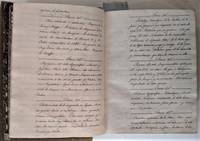
1850Best.-Nr. #4258vo. 215 x 160 mm. 8 ½ x 6 ¼ inches. 306 leaves chapters separated by blanks. 19th century leather backed marbled paper boards; inner hinge cracked edges bumped some abrasion to the head of the spine; sound. Beautifully written manuscript volume containing an extensive discussion of library management and practices written by an anonymous Spanish author in the middle of the 19th century. This dissertation organized in 70 chapters begins with a discussion of the library profession and its importance to civil society. His first chapters describe the "Archive" with reference to Spanish monastic governmental and diplomatic collections that have been preserved. He focuses his attention on Aragon Mallorca Navarra and Santiago. He turns to France to furnish some interested information on the archives in Paris before getting into the chapters on classification of materials and the creation of inventories. After nearly 200 leaves of text on the subject of archives the authors turns his attention to libraries. From the beginning he takes a historical approach focusing his attention on both books and manuscripts mentioning the collections at Cambridge University. Paleography is a subject he spends some time describing and then he moves into the history of printing typography Gutenberg and the spread of printing to Spain. The final dozen chapters are devoted to the rules for managing a library lessons in classification and inventory control. He quotes from both DeBure and Brunet in his lessons on cataloguing. A rather remarkable piece of work thought to be unpublished. An examination of both United States and Spanish national collections turned up no reference to this anonymous piece of library scholarship.