Editor Unknown) Federal Writer's Project, Works Progress Administration, State of New York,Biblio.com
8.319 Ergebnisse
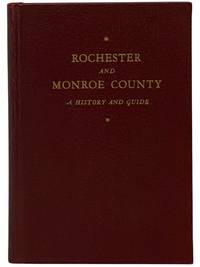
1937Best.-Nr. 1253508Rochester NY: Scrantom's 1937. 1st Edition 1st Printing. Hardcover. Near Fine/Near Fine. 3 fold-out maps in wonderful condition b/w photos; maps on end papers; . dj in mylar; red faux-leather w/gilt titles; 460 clean unmarked pages Scrantom's hardcover
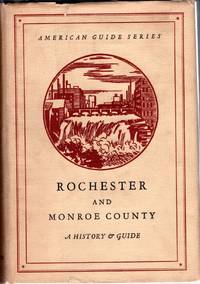
1937Best.-Nr. 66304Rochester N.Y.:: Scrantom's 1937. First edition. publisher's pebbled cloth in dust jacket. Near fine in a jacket with a coin-sized chip to the front panel and some other shallow chipping and light soiling. . 8vo. Illustrated; the three folding maps are present. American Guide Series. Scrantom's, hardcover
1937Best.-Nr. 180464Rochester: Scrantom's sponsored by the City of Rochester & the Genesee Book Club 1937. Hardcover. 460p. endpaper maps frontispiece foreword preface general information chronology bibliography index photos maps including 3 folding bound-in very good first edition in wine fabricoid and gilt unclipped lightly worn dj. American Guide Series. Dykes 225 Powell 1196. Scrantom's, sponsored by the City of Rochester & the Genesee Book Club hardcover
1937Best.-Nr. 180464Rochester: Scrantom's sponsored by the City of Rochester & the Genesee Book Club 1937. Hardcover. 460p. endpaper maps frontispiece foreword preface general information chronology bibliography index photos maps including 3 folding bound-in very good first edition in wine fabricoid and gilt unclipped lightly worn dj. American Guide Series. Dykes 225 Powell 1196. Scrantom's, sponsored by the City of Rochester & the Genesee Book Club hardcover books
1937Best.-Nr. 59756Rochester: Scrantom's 1937. Hardcover. Very good. Hardcover. First Edition. 447pp index; all three maps present but one is loose. Bookplate on verso of front free endpaper ink name on title page extremities lightly worn else very good in publisher's red pebbled cloth; lacking the jacket. Scrantom's hardcover books
1937Best.-Nr. 2351791Rochester New York: Scrantom's 1937. First Edition. Hard Cover. Very Good/No Jacket. 0x0x0. First edition. Lacks jacket. Includes all three fold-out maps. Address label on front endpaper. 1937 Hard Cover. 460 pp. 8vo. Maps on endpapers. Black-and-white photographs and maps throughout text. Part of the important American Guide Series released by the WPA during the first half of the twentieth century. Includes excerpt from Their Wedding Journey by William Dean Howells 1871 which mentions Rochester. Scrantom's hardcover books
1937Best.-Nr. 2344152Rochester New York: Scrantom's 1937. Hard Cover. Near Fine/No Jacket. 0x0x0. Lacks jacket. Includes all three fold-out maps. An excellent copy. 1937 Hard Cover. 460 pp. 8vo. Maps on endpapers. Black-and-white photographs and maps throughout text. Part of the important American Guide Series released by the WPA during the first half of the twentieth century. Unlike the volumes of the series dealing with entire states this volume incorporates three fold-out maps in the text rather than a map in a rear pocket. Includes excerpt from Their Wedding Journey by William Dean Howells 1871 which mentions Rochester. Scrantom's hardcover books
1937Best.-Nr. 2344795Rochester New York: Scrantom's 1937. First Edition. Hard Cover. Near Fine/No Jacket. 0x0x0. First edition. Lacks jacket. Includes all three fold-out maps. Address label on front endpaper. 1937 Hard Cover. 460 pp. 8vo. Maps on endpapers. Black-and-white photographs and maps throughout text. Part of the important American Guide Series released by the WPA during the first half of the twentieth century. Unlike the volumes of the series dealing with entire states this volume incorporates three fold-out maps in the text rather than a map in a rear pocket. Includes excerpt from Their Wedding Journey by William Dean Howells 1871 which mentions Rochester. Scrantom's hardcover books
1937Best.-Nr. 2315459Rochester New York: Scrantom's 1937. Hard Cover. Very Good/Fair. 0x0x0. Very good in fair jacket. Includes all three fold-out maps. Multiple chips and tears to jacket pencil name inside. 1937 Hard Cover. 460 pp. 8vo. Maps on endpapers. Black-and-white photographs and maps throughout text. Part of the important American Guide Series released by the WPA during the first half of the twentieth century. Unlike the volumes of the series dealing with entire states this volume incorporates three fold-out maps in the text rather than a map in a rear pocket. Includes excerpt from Their Wedding Journey by William Dean Howells 1871 which mentions Rochester. Scrantom's hardcover books
Best.-Nr. B9781249140177Paperback / softback. New. paperback
1959Best.-Nr. 80611Washington DC: National Aeronautics and Space Administration 1959. Contemporary print. Photograph. Good. Sheet is approximately 8 inches by 10.5 inches. Black and white photographic image is approximately 9 inches by 6.5 inches. This is printed on photographic paper stock. The image is of a rocket in front of a gantry taken at night. There is a group of people gathered at the base of the rocket. This may be a photograph of the Mercury Redstone or the Mercury Atlas rocket. Mercury-Atlas was a subprogram of Project Mercury that included most of the flights and tests using the Atlas LV-3B launch vehicle. The Atlas was also used for one Mercury flight under the Big Joe subprogram. The photo is contemporary with Project Mercury. Project Mercury was the first human spaceflight program of the United States running from 1958 through 1963. An early highlight of the Space Race its goal was to put a man into Earth orbit and return him safely ideally before the Soviet Union. Taken over from the US Air Force by the newly created civilian space agency NASA it conducted twenty uncrewed developmental flights some using animals and six successful flights by astronauts. The program took its name from Roman mythology. The astronauts were collectively known as the "Mercury Seven" and each spacecraft was given a name ending with a "7" by its pilot. The Mercury-Redstone launch vehicle was the first crewed launch vehicle in the United States space program. The Mercury-Redstone provided NASA with an opportunity understand performance aspects of the Mercury spacecraft the effect of a weightless environment on astronauts and launch and recovery operations at Kennedy Space Center. Development of the Redstone missile began directly after the transfer of the Fort Bliss rocket team to Huntsville Alabama in 1950. The fuselage of the Redstone was developed in-house at the Army's Guided Missile Development Division with Chrysler serving as prime contractor. Peenemunde veteran William A. Mrazek was placed in charge of developing the structure that consisted of pressurized aluminum propellant tanks. The tail unit consisted of a riveted aluminum structure with four stabilizing fins and air rudders with carbon jet vanes extending into the exhaust stream. The initial flight test of the Redstone occurred on August 20 1953 at Cape Canaveral. Between August 1953 and November 1958 37 Redstone missiles were fired altogether with only 13 experiencing any sort of malfunction. On October 7 1958 NASA formally organized Project Mercury to place a manned space capsule in orbital flight around the Earth investigate man's reaction to this new environment and recover the capsule and the pilot safely. The Army agreed to provide ten Redstone and three Jupiter vehicles for NASA's manned space program. Funding for the eight Redstone boosters was provided to the Army Ordnance Missile Command at the Arsenal in January 1959. "Man-rating" for human spaceflight what was previously a ballistic missile was not an easy project. Requirements for the project included launching a two-ton payload to an apogee of 100 nautical miles. The vehicle also had to meet important criteria of safety during launch adequate human factors consideration and necessary performance margins. A key development decision involved using the Jupiter C variation of the Redstone for the project. The Jupiter C design included a propellant tank six feet longer than the Redstone a lighter overall structure and improved performance capable of 78000 pounds of thrust. The elongated tanks of the Jupiter C provided the vehicle with an engine burn time of 143.5 seconds a twenty seconds increase over the Redstone. On July 1 1960 a core group from the Army Ballistic Missile Agency ABMA transferred from the Army to NASA formally creating the Marshall Space Flight Center. With this transfer came overall responsibility for the Mercury-Redstone launch vehicles. By October of that year a status report on Marshall's involvement in Mercury noted that the first two Mercury-Redstones had been assembled by the Marshall Center with many of the components fabricated at Marshall. The Chrysler Corporation had assembled an additional six launch vehicles. The first four of the eight Mercury-Redstone vehicles had been static fired and the first Mercury-Redstone was on the launch pad at Cape Canaveral after a capsule-booster compatibility checkout in Huntsville. National Aeronautics and Space Administration unknown
1960Best.-Nr. 80610Washington DC: National Aeronautics and Space Administration 1960. Contemporary print. Photograph. Good. Sheet is approximately 8 inches by 10.5 inches. Black and white photographic image is approximately 9 inches by 6.5 inches. This is printed on photographic paper stock. The image is of a rocket between a gantry and another structure/tower. This may be a photograph of the Mercury Redstone or the Mercury Atlas rocket. Mercury-Atlas was a subprogram of Project Mercury that included most of the flights and tests using the Atlas LV-3B launch vehicle. The Atlas was also used for one Mercury flight under the Big Joe subprogram. The photo is contemporary with Project Mercury. Project Mercury was the first human spaceflight program of the United States running from 1958 through 1963. An early highlight of the Space Race its goal was to put a man into Earth orbit and return him safely ideally before the Soviet Union. Taken over from the US Air Force by the newly created civilian space agency NASA it conducted twenty uncrewed developmental flights some using animals and six successful flights by astronauts. The program took its name from Roman mythology. The astronauts were collectively known as the "Mercury Seven" and each spacecraft was given a name ending with a "7" by its pilot. The Mercury-Redstone launch vehicle was the first crewed launch vehicle in the United States space program. The Mercury-Redstone provided NASA with an opportunity understand performance aspects of the Mercury spacecraft the effect of a weightless environment on astronauts and launch and recovery operations at Kennedy Space Center. Development of the Redstone missile began directly after the transfer of the Fort Bliss rocket team to Huntsville Alabama in 1950. The fuselage of the Redstone was developed in-house at the Army's Guided Missile Development Division with Chrysler serving as prime contractor. Peenemunde veteran William A. Mrazek was placed in charge of developing the structure that consisted of pressurized aluminum propellant tanks. The tail unit consisted of a riveted aluminum structure with four stabilizing fins and air rudders with carbon jet vanes extending into the exhaust stream. The initial flight test of the Redstone occurred on August 20 1953 at Cape Canaveral. Between August 1953 and November 1958 37 Redstone missiles were fired altogether with only 13 experiencing any sort of malfunction. On October 7 1958 NASA formally organized Project Mercury to place a manned space capsule in orbital flight around the Earth investigate man's reaction to this new environment and recover the capsule and the pilot safely. The Army agreed to provide ten Redstone and three Jupiter vehicles for NASA's manned space program. Funding for the eight Redstone boosters was provided to the Army Ordnance Missile Command at the Arsenal in January 1959. "Man-rating" for human spaceflight what was previously a ballistic missile was not an easy project. Requirements for the project included launching a two-ton payload to an apogee of 100 nautical miles. The vehicle also had to meet important criteria of safety during launch adequate human factors consideration and necessary performance margins. A key development decision involved using the Jupiter C variation of the Redstone for the project. The Jupiter C design included a propellant tank six feet longer than the Redstone a lighter overall structure and improved performance capable of 78000 pounds of thrust. The elongated tanks of the Jupiter C provided the vehicle with an engine burn time of 143.5 seconds a twenty seconds increase over the Redstone. On July 1 1960 a core group from the Army Ballistic Missile Agency ABMA transferred from the Army to NASA formally creating the Marshall Space Flight Center. With this transfer came overall responsibility for the Mercury-Redstone launch vehicles. By October of that year a status report on Marshall's involvement in Mercury noted that the first two Mercury-Redstones had been assembled by the Marshall Center with many of the components fabricated at Marshall. The Chrysler Corporation had assembled an additional six launch vehicles. The first four of the eight Mercury-Redstone vehicles had been static fired and the first Mercury-Redstone was on the launch pad at Cape Canaveral after a capsule-booster compatibility checkout in Huntsville. National Aeronautics and Space Administration unknown
1959Best.-Nr. 80608Washington DC: National Aeronautics and Space Administration 1959. Contemporary print. Photograph. Good. Sheet is approximately 8 inches by 10.5 inches. Black and white photographic image is approximately 9 inches by 6.5 inches. This is printed on photographic paper stock. The image is of a rocket next to a gantry taken at night. There are many people visible at ground level. This may be a photgraph of the Mercury Redstone rocket. It is contemporary with Project Mercury. Project Mercury was the first human spaceflight program of the United States running from 1958 through 1963. An early highlight of the Space Race its goal was to put a man into Earth orbit and return him safely ideally before the Soviet Union. Taken over from the US Air Force by the newly created civilian space agency NASA it conducted twenty uncrewed developmental flights some using animals and six successful flights by astronauts. The program took its name from Roman mythology. The astronauts were collectively known as the "Mercury Seven" and each spacecraft was given a name ending with a "7" by its pilot. The Mercury-Redstone launch vehicle was the first crewed launch vehicle in the United States space program. The Mercury-Redstone provided NASA with an opportunity understand performance aspects of the Mercury spacecraft the effect of a weightless environment on astronauts and launch and recovery operations at Kennedy Space Center. Development of the Redstone missile began directly after the transfer of the Fort Bliss rocket team to Huntsville Alabama in 1950. The fuselage of the Redstone was developed in-house at the Army's Guided Missile Development Division with Chrysler serving as prime contractor. Peenemunde veteran William A. Mrazek was placed in charge of developing the structure that consisted of pressurized aluminum propellant tanks. The tail unit consisted of a riveted aluminum structure with four stabilizing fins and air rudders with carbon jet vanes extending into the exhaust stream. The initial flight test of the Redstone occurred on August 20 1953 at Cape Canaveral. Between August 1953 and November 1958 37 Redstone missiles were fired altogether with only 13 experiencing any sort of malfunction. On October 7 1958 NASA formally organized Project Mercury to place a manned space capsule in orbital flight around the Earth investigate man's reaction to this new environment and recover the capsule and the pilot safely. The Army agreed to provide ten Redstone and three Jupiter vehicles for NASA's manned space program. Funding for the eight Redstone boosters was provided to the Army Ordnance Missile Command at the Arsenal in January 1959. "Man-rating" for human spaceflight what was previously a ballistic missile was not an easy project. Requirements for the project included launching a two-ton payload to an apogee of 100 nautical miles. The vehicle also had to meet important criteria of safety during launch adequate human factors consideration and necessary performance margins. A key development decision involved using the Jupiter C variation of the Redstone for the project. The Jupiter C design included a propellant tank six feet longer than the Redstone a lighter overall structure and improved performance capable of 78000 pounds of thrust. The elongated tanks of the Jupiter C provided the vehicle with an engine burn time of 143.5 seconds a twenty seconds increase over the Redstone. On July 1 1960 a core group from the Army Ballistic Missile Agency ABMA transferred from the Army to NASA formally creating the Marshall Space Flight Center. With this transfer came overall responsibility for the Mercury-Redstone launch vehicles. By October of that year a status report on Marshall's involvement in Mercury noted that the first two Mercury-Redstones had been assembled by the Marshall Center with many of the components fabricated at Marshall. The Chrysler Corporation had assembled an additional six launch vehicles. The first four of the eight Mercury-Redstone vehicles had been static fired and the first Mercury-Redstone was on the launch pad at Cape Canaveral after a capsule-booster compatibility checkout in Huntsville. National Aeronautics and Space Administration unknown
1959Best.-Nr. 80609Washington DC: National Aeronautics and Space Administration 1959. Contemporary print. Photograph. Good. Sheet is approximately 8 inches by 10.5 inches. Black and white photographic image is approximately 9 inches by 6.5 inches. This is printed on photographic paper stock. The image is of a rocket lifting off next to a gantry taken at night. This may be a photograph of the Mercury Redstone rocket. It is contemporary with Project Mercury. Project Mercury was the first human spaceflight program of the United States running from 1958 through 1963. An early highlight of the Space Race its goal was to put a man into Earth orbit and return him safely ideally before the Soviet Union. Taken over from the US Air Force by the newly created civilian space agency NASA it conducted twenty uncrewed developmental flights some using animals and six successful flights by astronauts. The program took its name from Roman mythology. The astronauts were collectively known as the "Mercury Seven" and each spacecraft was given a name ending with a "7" by its pilot. The Mercury-Redstone launch vehicle was the first crewed launch vehicle in the United States space program. The Mercury-Redstone provided NASA with an opportunity understand performance aspects of the Mercury spacecraft the effect of a weightless environment on astronauts and launch and recovery operations at Kennedy Space Center. Development of the Redstone missile began directly after the transfer of the Fort Bliss rocket team to Huntsville Alabama in 1950. The fuselage of the Redstone was developed in-house at the Army's Guided Missile Development Division with Chrysler serving as prime contractor. Peenemunde veteran William A. Mrazek was placed in charge of developing the structure that consisted of pressurized aluminum propellant tanks. The tail unit consisted of a riveted aluminum structure with four stabilizing fins and air rudders with carbon jet vanes extending into the exhaust stream. The initial flight test of the Redstone occurred on August 20 1953 at Cape Canaveral. Between August 1953 and November 1958 37 Redstone missiles were fired altogether with only 13 experiencing any sort of malfunction. On October 7 1958 NASA formally organized Project Mercury to place a manned space capsule in orbital flight around the Earth investigate man's reaction to this new environment and recover the capsule and the pilot safely. The Army agreed to provide ten Redstone and three Jupiter vehicles for NASA's manned space program. Funding for the eight Redstone boosters was provided to the Army Ordnance Missile Command at the Arsenal in January 1959. "Man-rating" for human spaceflight what was previously a ballistic missile was not an easy project. Requirements for the project included launching a two-ton payload to an apogee of 100 nautical miles. The vehicle also had to meet important criteria of safety during launch adequate human factors consideration and necessary performance margins. A key development decision involved using the Jupiter C variation of the Redstone for the project. The Jupiter C design included a propellant tank six feet longer than the Redstone a lighter overall structure and improved performance capable of 78000 pounds of thrust. The elongated tanks of the Jupiter C provided the vehicle with an engine burn time of 143.5 seconds a twenty seconds increase over the Redstone. On July 1 1960 a core group from the Army Ballistic Missile Agency ABMA transferred from the Army to NASA formally creating the Marshall Space Flight Center. With this transfer came overall responsibility for the Mercury-Redstone launch vehicles. By October of that year a status report on Marshall's involvement in Mercury noted that the first two Mercury-Redstones had been assembled by the Marshall Center with many of the components fabricated at Marshall. The Chrysler Corporation had assembled an additional six launch vehicles. The first four of the eight Mercury-Redstone vehicles had been static fired and the first Mercury-Redstone was on the launch pad at Cape Canaveral after a capsule-booster compatibility checkout in Huntsville. National Aeronautics and Space Administration unknown
1960Best.-Nr. 80612Washington DC: National Aeronautics and Space Administration 1960. Contemporary print. Photograph. Good. Sheet is approximately 8 inches by 10.5 inches. Black and white photographic image is approximately 9 inches by 6.5 inches. This is printed on photographic paper stock. The image is of a rocket taking off at night. This may be a photograph of a sounding rocket. Rocket has two visible fins near that base of the rocket. The photo is contemporary with Project Mercury. Project Mercury was the first human spaceflight program of the United States running from 1958 through 1963. An early highlight of the Space Race its goal was to put a man into Earth orbit and return him safely ideally before the Soviet Union. Taken over from the US Air Force by the newly created civilian space agency NASA it conducted twenty uncrewed developmental flights some using animals and six successful flights by astronauts. The program took its name from Roman mythology. The astronauts were collectively known as the "Mercury Seven" and each spacecraft was given a name ending with a "7" by its pilot. The Mercury-Redstone launch vehicle was the first crewed launch vehicle in the United States space program. The Mercury-Redstone provided NASA with an opportunity understand performance aspects of the Mercury spacecraft the effect of a weightless environment on astronauts and launch and recovery operations at Kennedy Space Center. Development of the Redstone missile began directly after the transfer of the Fort Bliss rocket team to Huntsville Alabama in 1950. The fuselage of the Redstone was developed in-house at the Army's Guided Missile Development Division with Chrysler serving as prime contractor. Peenemunde veteran William A. Mrazek was placed in charge of developing the structure that consisted of pressurized aluminum propellant tanks. The tail unit consisted of a riveted aluminum structure with four stabilizing fins and air rudders with carbon jet vanes extending into the exhaust stream. The initial flight test of the Redstone occurred on August 20 1953 at Cape Canaveral. Between August 1953 and November 1958 37 Redstone missiles were fired altogether with only 13 experiencing any sort of malfunction. On October 7 1958 NASA formally organized Project Mercury to place a manned space capsule in orbital flight around the Earth investigate man's reaction to this new environment and recover the capsule and the pilot safely. The Army agreed to provide ten Redstone and three Jupiter vehicles for NASA's manned space program. Funding for the eight Redstone boosters was provided to the Army Ordnance Missile Command at the Arsenal in January 1959. "Man-rating" for human spaceflight what was previously a ballistic missile was not an easy project. Requirements for the project included launching a two-ton payload to an apogee of 100 nautical miles. The vehicle also had to meet important criteria of safety during launch adequate human factors consideration and necessary performance margins. A key development decision involved using the Jupiter C variation of the Redstone for the project. The Jupiter C design included a propellant tank six feet longer than the Redstone a lighter overall structure and improved performance capable of 78000 pounds of thrust. The elongated tanks of the Jupiter C provided the vehicle with an engine burn time of 143.5 seconds a twenty seconds increase over the Redstone. On July 1 1960 a core group from the Army Ballistic Missile Agency ABMA transferred from the Army to NASA formally creating the Marshall Space Flight Center. With this transfer came overall responsibility for the Mercury-Redstone launch vehicles. By October of that year a status report on Marshall's involvement in Mercury noted that the first two Mercury-Redstones had been assembled by the Marshall Center with many of the components fabricated at Marshall. The Chrysler Corporation had assembled an additional six launch vehicles. The first four of the eight Mercury-Redstone vehicles had been static fired and the first Mercury-Redstone was on the launch pad at Cape Canaveral after a capsule-booster compatibility checkout in Huntsville. National Aeronautics and Space Administration unknown
2012Best.-Nr. 1-0160895596Natl Aeronautics & Space Admin 2012. Hardcover. New. 10.00x1.00x6.75 inches. Natl Aeronautics & Space Admin hardcover
Best.-Nr. 0331248271.Gpaperback. Good. Access codes and supplements are not guaranteed with used items. May be an ex-library book. paperback
Best.-Nr. 0331499665.Ghardcover. Good. Access codes and supplements are not guaranteed with used items. May be an ex-library book. hardcover
1941Best.-Nr. ZB1282445Rockford: Graphic Arts Corporation 1941. 144 pp. original illustrated paper wrappers endpapers pulling away from the internal staples else very good. - If you are reading this this item is actually physically in our stock and ready for shipment once ordered. We are not bookjackers. Buyer is responsible for any additional duties taxes or fees required by recipient's country. Rockford: Graphic Arts Corporation unknown
Best.-Nr. 0656169133.Ghardcover. Good. Access codes and supplements are not guaranteed with used items. May be an ex-library book. hardcover
2000The superpowers and the acts they commit.
1999Best.-Nr. 2092902141206244science publisher 1999. Soft Cover. Fine. Volume: 1 science publisher paperback
2005The book is a useful study which contains principles for the growing need of literature in development administration. Various dimension of Panchayati Raj, Implementation and evaluations of welfare and development programmes for weaker sections in rural areas have been analysed with the help of micro study. It also exhaustively deals with centrally sponsored schemes and programmes for poverty alleviation. About The Author:- Dr. Abraham Mathew, is Selection Grade Lecturer, Post-graduate Department of Political Science and Public Administration, St. John's College, Anchal, affiliated to the University of Kerala. Contents:- CONTENTS:- # Acknowledgements 7: 1. Introduction 9: • Concept of Welfare • Evolution of the Welfare State • Welfare: Administration • India - A Welfare State • Welfare: Administration in India • Role of Panchayats in Welfare: Administration • The Panchayati Raj System • Village System: after Independence • The New Panchayati Raj System in: India • The Panchayati Raj System in Kerala - Developments: After the 73rd Constitution Amendment • People’s Planning: • The Sen Committee • Panchayats and Welfare: Administration in Kerala • Statement of the Problem: • Objectives • Hypotheses • Methodology • The Scope and: Relevance of the Study • Limitations of the Study • Scheme: of the Study: 2. The Conceptual Framework of the Study 37: • Welfare • Public Administration • Sustainable Development: • Decentralisation and Panchayati Raj System • Planning: and Poverty Alleviation: 3. Poverty Alleviation Programmes Under the 8th Five: Year Plan 81: • Planning Commission • Five Year Plans • Manpower: Planning and Poverty Alleviation • Human Development in: Kerala • Schemes for Poverty Alleviation: An Analysis •: Jawahar Rozgar Yojana (JRY) • JRY and Employment: Generation: 4. JRY in Action—the Kerala Experience 125: • Purpose and Features • Evaluation Studies of JRY in Kerala: • Need for an Investigative Study • Methodology • Profile of: the Sample Districts • Empirical Data: Profile of the Individual: Benefeciaries • Awareness of the Programme • Employment: Generated • Duration of Employment Generated • JRY and: 6 Role of Panchayats in Welfare Administration: Individual Assets Created • The People who Qualified for: Benefits • Distribution of Assistance • Financial Assistance: • Leakages of Assistance • Technical Assistance • Quality of: Assets Created • Maintenance of Assets • Community Assets: • Implementation of the Project • Transparency • Financing: the Project • Types of Works undertaken • Assets and its: Quality • Maintenance of Assets • Usefulness of the JRY: Scheme: 5. Panchayats and Welfare Administration 165: • Panchayats and their Functions • Centrally Sponsored: Schemes and the Role Assigned to the Panchayats • Role: of Bureaucracy • Profile of the Officials • Implementation of: the Programme • Panchayati Raj and Implementation of: Welfare Projects • Public Participation and Implementation: of JRY Projects • Assets Created • Representatives of the: People and Welfare Administration • Awareness of the: Programme • Implementation of the Programme: • Panchayati Raj and Implementation of Welfare: Programmes • Public Awareness and Participation • Assets: Creation and its Maintenance: 6. Conclusion and Suggestions 205: Appendices 213: Bibliography 251 The Title 'Role of Panchayats in Welfare Administration written/authored/edited by Abraham Mathew', published in the year 2005. The ISBN 9788178354507 is assigned to the Hardcover version of this title. This book has total of pp. 273 (Pages). The publisher of this title is Kalpaz Publications. This Book is in English. The subject of this book is Public Administration. Size of the book is 14.34 x 22.59 cms Vol:-
Best.-Nr. 0266505147.Ghardcover. Good. Access codes and supplements are not guaranteed with used items. May be an ex-library book. hardcover
2016Best.-Nr. 032369Seattle Pacific University 2016. VERY SCARCE. Appear never read. Fine condition in a Near Fine dust jacket. The jacket has only a little shelfwear. NO chips tears creases or fading. Square and tight. Sharp corners. NO owner's name or bookplate. Pages are fresh crisp clean and unmarked. NO underlining. NO highlighting. NO margin notes. Bound in the original gilt-stamped brown cloth. Complete with dust jacket. From an AI overview: "Rooted in Mission: The Founding of Seattle Pacific University 1891 -- 1916 is a 2016 historical book written by theologian and author Howard A. Snyder. It details the origins and early development of Seattle Pacific University from its initial establishment as Seattle Seminary through its transition into a college. Core Themes of the Book. Historical Context: Traces the institution's path within the Free Methodist denomination and the fast-growing city of Seattle. Foundational Vision: Highlights the founders' goals to create a liberal arts institution anchored in Christian faith rather than just a narrow Bible school. Key Characteristics: Emphasizes seven core elements of the early school including a missionary taproot focus on character development long faculty tenure and deep community.". First Edition. Oversize Hardcover. Fine condition/Near Fine dust jacket. Illus. by NOT a library discard. viii 135pp. Great Packaging Fast Shipping. Seattle Pacific University Hardcover