8.892 Ergebnisse
1991Best.-Nr. 35569Washington DC:: U. S. Department of Energy 1991. Paperback. NEAR FINE. Large white paperback 184 pages includes a small envelope with 3 michrofiche. Like new except small sticker and "received" stamp on front cover. We provide professional service and individual attention to your order daily shipments and sturdy packaging. FREE TRACKING ON ALL SHIPMENTS WITHIN USA. U. S. Department of Energy, paperback
Best.-Nr. 1396712690.Ghardcover. Good. Access codes and supplements are not guaranteed with used items. May be an ex-library book. hardcover
1978Best.-Nr. 2111902152800871Agricultural and Forestry Statistics Association Hokuriku Council 1978. Soft Cover. Fine. Volume: 1 Agricultural and Forestry Statistics Association Hokuriku Council paperback
1975Best.-Nr. R320003115PUBLICITE SACHA. 1975. In-12. Broché. Bon état, Coins frottés, Dos satisfaisant, Intérieur acceptable. XXXII + 98 pages illustrées de quelques photos bicolores.. . . . Classification Dewey : 350-Administration publique
1998Best.-Nr. 1311156PN. New. 1998. Soft Cover. Date is original print. This is a reprint edition . PN paperback
Best.-Nr. 1639140042.Gpaperback. Good. Access codes and supplements are not guaranteed with used items. May be an ex-library book. paperback
Best.-Nr. 163914000X.Gpaperback. Good. Access codes and supplements are not guaranteed with used items. May be an ex-library book. paperback
Best.-Nr. 1639140018.Gpaperback. Good. Access codes and supplements are not guaranteed with used items. May be an ex-library book. paperback
Best.-Nr. 1639140026.Gpaperback. Good. Access codes and supplements are not guaranteed with used items. May be an ex-library book. paperback
Best.-Nr. 1639140034.Gpaperback. Good. Access codes and supplements are not guaranteed with used items. May be an ex-library book. paperback
Best.-Nr. A9781639140015Paperback / softback. New. paperback
Best.-Nr. A9781639140022Paperback / softback. New. paperback
Best.-Nr. A9781639140008Paperback / softback. New. paperback
Best.-Nr. A9781639140046Paperback / softback. New. paperback
Best.-Nr. B9781639140046Paperback / softback. New. paperback
Best.-Nr. 59139Paperback. Fine. Spacesuit guidebook HOW TO BUILD A SPACESUIT paperback
1989Best.-Nr. 74608Lyndon B. Johnson Space Center Houston TX: National Aeronautics and Space Administration 1989. Presumed First Edition First printing. Wraps. Good. vii 1 44 pages plus covers. Illustrations most in color. Cover has some wear and soiling with edge tear at back. Format is approximately 8.5 inches by 11 inches. The Spacelab Life Sciences 1 SLS-1 mission originated with a call to the scientific community for experiments in 1978. Accepted experiments involved humans primates rodents amphibians and plants. The original payload configuration was reduced to include human passive rodent and basic biology experiments and engineering evaluations. Human experiments will address effects of micro-gravity on various physiological parameters during and postflight. Investigations with nonhuman subjects will study microgravity effects on the cardiopulmonary cardiovascular and musculoskeletal systems on the regulation of blood volume and erythropoiesis and on calcium metabolism and gravity receptors. SLS-1 was to serve as a stepping stone in establishing capabilities for flying nonhuman subjects and performing in-flight manipulations on these subjects without jeopardizing the crew environment. Fundamental technology incorporated in the animal holding facilities and laboratory work bench will be used in subsequent missions and in the future Space Station. Space Life Science-1 SLS-1 launched aboard Space Shuttle Orbiter Columbia STS-40 on June 5 1991 was the first Spacelab mission dedicated solely to life sciences research. The laboratory for the research took place in a module shown here carried in the cargo bay of the Columbia. The purpose of the mission was to study the mechanisms magnitudes and time courses of certain physiological changes that occur during space flight to investigate the consequences of the body's adaptation to microgravity and readjustment to Earth's gravity and to bring the benefits back home to Earth. The mission was designed to explore the responses of the heart lungs blood vessels kidneys and hormone-secreting glands to examine the causes of space motion sickness and study changes in the muscles bones and cells. Many studies started during SLS-1 provided data that served as the foundation for investigations on the International Space Station. National Aeronautics and Space Administration paperback
1967Best.-Nr. 27505Washington DC: National Aeronautics and Space Administration NASA 1967. Wraps. Near Fine. 4 pages. Self wrappers. 8 x 10 1/4 inches. A touch of browning otherwise nice and clean. Illustrated. Wraps. Part of the NASA Facts series - an educational publication of the National Aeronautics and Space Administration NASA Office of Public Affairs Programs Division. Illustrated showing several launch vehicles on the pad with descriptions. This item is part of NASA's science series for Jr. High school General Science programs. Fairly basic but with a diagram of NASA's tracking facilities and an overview of how the entire system works. National Aeronautics and Space Administration (NASA) unknown books
1959Best.-Nr. 88472Washington DC: U. S. Government Printing Office 1959. Presumed First Edition First printing. Wraps. Good. The format is approximately 10.5 inches by 8.5 inches. 32 pages plus covers. Wraps. Illustrations photographs and drawings. Diagrams. Tabular Data. Some wear and soiling to covers. On July 29 1958 President Eisenhower signed an act of Congress creating the National Aeronautics and Space Administration. The act declared "that is is the policy of the United States that activities in space should be devoted to peaceful purposes for the benefit of mankind." On October 1 1958 this new agency was established. This 1959 initial publication there were later editions/versions is thus one of the earliest official NASA publications. This work briefly presents a historical perspective then discusses Sounding Rockets Satellites and Space Probes Manned Space Flight Human Factors and Future Explorations. NASA traces its roots to the National Advisory Committee for Aeronautics NACA. Despite being the birthplace of aviation by 1914 the United States recognized that it was far behind Europe in aviation capability. Determined to regain American leadership in aviation the United States Congress created the Aviation Section of the U.S. Army Signal Corps in 1914 and established NACA in 1915 to foster aeronautical research and development. Over the next forty years NACA would conduct aeronautical research in support of the U.S. Air Force U.S. Army U.S. Navy and the civil aviation sector. After the end of World War II NACA became interested in the possibilities of guided missiles and supersonic aircraft developing and testing the Bell X-1 in a joint program with the U.S. Air Force. NACA's interest in space grew out of its rocketry program at the Pilotless Aircraft Research Division. The Soviet Union's launch of Sputnik 1 ushered in the Space Age and kicked off the Space Race. Despite NACA's early rocketry program the responsibility for launching the first American satellite fell to the Naval Research Laboratory's Project Vanguard whose operational issues ensured the Army Ballistic Missile Agency would launch Explorer 1 America's first satellite on February 1 1958. The Eisenhower Administration decided to split the United States' military and civil spaceflight programs which were organized together under the Defense Department's Advanced Research Projects Agency. As the United States' premier aeronautics agency NACA formed the core of NASA's new structure by reassigning it its 8000 employees and three major research laboratories. NASA also proceeded to absorb the Naval Research Laboratory's Project Vanguard the Army's Jet Propulsion Laboratory JPL and the Army Ballistic Missile Agency under Wernher von Braun. This left NASA firmly as the United States' civil space lead and the Air Force as the military space lead. U. S. Government Printing Office paperback
1959Best.-Nr. 80605Washington DC: National Aeronautics and Space Administration c1959. Presumed First Edition First printing. Booklet. Good. Format is approximately 10.5 inches by 8 inches. 32 pages plus covers. Illustrations. Reference was found on page 21 to selection of candidates having begun in early 1959. Other references to early 1959 and 1958 noted. This work starts out with a brief history of the scientific inquiry into space and space travel. It the discusses sounding rockets Satellites Spacecraft Space Probes Jupiter C Vanguard I Juno II Tracking Station Manned Space Flight Human Factors Project Mercury and space exploration. This is an early NASA general audience publication. The National Aeronautics and Space Administration NASA is an independent agency of the U.S. Federal Government responsible for the civilian space program as well as aeronautics and space research. NASA was established in 1958 succeeding the National Advisory Committee for Aeronautics NACA. The new agency was to have a distinctly civilian orientation encouraging peaceful applications in space science. Since its establishment most US space exploration efforts have been led by NASA including the Apollo Moon landing missions the Skylab space station and later the Space Shuttle. NASA is supporting the International Space Station and is overseeing the development of the Orion spacecraft the Space Launch System and Commercial Crew vehicles. The agency is also responsible for the Launch Services Program which provides oversight of launch operations and countdown management for uncrewed NASA launches. National Aeronautics and Space Administration unknown
1987Best.-Nr. 29229Washington DC: U.S. Government Printing Office 1987. Wraps. Good. xxviii 123 pages. 11 x 8 1/2 inches. Publisher's illustrated wrappers. Remnants of price sticker on front cover. Corner creasing other evidence of having been read. Still a sound working copy. Wraps. U.S. Government Printing Office unknown books
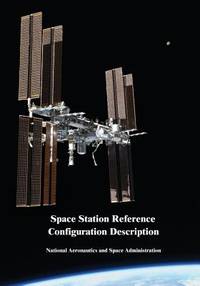
Best.-Nr. 1508722633.Gpaperback. Good. Access codes and supplements are not guaranteed with used items. May be an ex-library book. paperback
Best.-Nr. 23710525like new. unknown
Best.-Nr. 23710525-nnew. unknown
Best.-Nr. B9781508722632Paperback / softback. New. paperback