MINISTERE DE L'INSTRUCTION PUBLIQUELivre Rare Book
8,319 results
1871ref. RO80103618IMPRIMERIE IMPERIALE. 2e série. 1864 - 1871. In-8. Relié demi-cuir. Etat d'usage, Couv. défraîchie, Dos frotté, Quelques rousseurs. 518 + 533 + 456 + 578 + 616 + 515 pages. Quelques planches illustrées de dessins en couleurs. Nombreuses planches, planches dépliantes et doubles-planches illustrées de cartes, croquis et gravures en noir et blanc. Quelques gravures et figures dans le texte. Coins et coupes des plats de couverture, frottés. Mors fendus sur certains ouvrages. Epidermures sur le cuir. Etiquette de code sur la coiffe en-tête et tampons de bibliothèque sur la page de titre et dans quelques marges. Dos abîmé sur le 6e volume.. . . . Classification Dewey : 350-Administration publique
1927ref. RO80154050IMPRIMERIE ADMINIS. RAGOT. 1927. In-12. Broché. Etat d'usage, 1er plat abîmé, Dos satisfaisant, Intérieur acceptable. Livret de 13 pages. Manque important sur le 1er plat de couverture. 2nd plat absent.. . . . Classification Dewey : 350-Administration publique
1973ref. RO20066144SEVPEN. 1973. In-8. Broché. Etat d'usage, Couv. défraîchie, Dos frotté, Intérieur bon état. 426 pages.. . . . Classification Dewey : 350-Administration publique
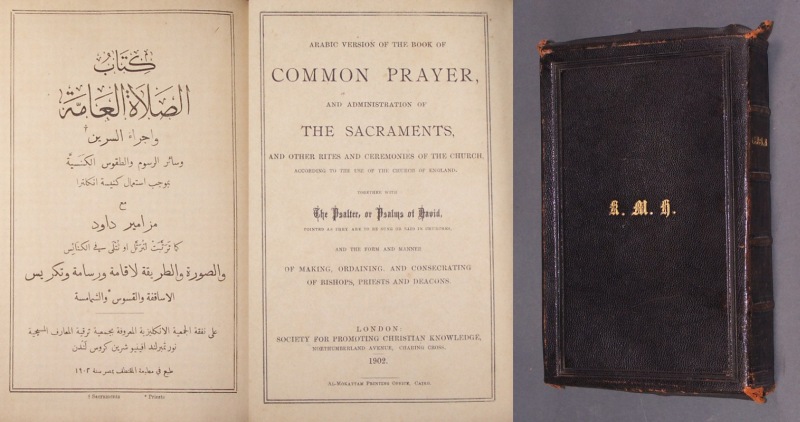
1902ref. 53356London, Society for promoting Christian Knowledge 1902. ca. 500 arabisch paginierte Seiten. 8° (19 x 12,5 cm), flexibler Lederband der Zeit auf 4 Bünden, Titelprägung in Gold auf Deckel und Rücken, Schutzklappen sowie dreiseitigem Goldschnitt.l
1965ref. RO80012601JOURNAUX OFFICIELS. 1965. In-12. Broché. Bon état, Couv. légèrement passée, Dos satisfaisant, Intérieur frais. 485 pages. Carte dépliante en noir et blanc hors-texte, en fin d'ouvrage.. . . . Classification Dewey : 350-Administration publique
ref. R160113310M ET M CONSEILS. NON DATE. In-12. Broché. Bon état, Couv. convenable, Dos satisfaisant, Intérieur frais. 180 pages.. . . . Classification Dewey : 350-Administration publique
1968ref. R160070823SEUIL. 1968. In-12. Broché. Etat d'usage, Couv. légèrement passée, Dos satisfaisant, Intérieur frais. 284 pages; couverture passée/légèrement frottée.. . . . Classification Dewey : 350-Administration publique
1998ref. 1307054PN. New. 1998. Soft Cover. Date is original print. This is a reprint edition . PN paperback
2021About the book:-All Graphologists aim to use definite terms to express the shade of meaning intended, fitting generic or denotative expressions to the particular requirement of the case. This book has been written with especial consideration for the student and the business executive. The manner of expression is left optional with those who prefer a modification of terms without detracting from its effective purpose. This volume is little more than a handbook or a textbook with simple rules and data that define and explain the science of graphology its relation to the mental processes and the existing phenomena of handwriting by which one who has become adept may form a fairly correct estimate of the character propensities and proclivities of individuals, whose aptitudes, tastes and talents are revealed. About the Author:- Albert J. Smith very beautifully analyses handwriting for the practical use of the expert. The student and the layman use it for ready references. The Appendix containing a complete compilation of the qualification, Traits, Habits and Propensities of the individual, will definitions and geographical interpretation. The Title 'APPLIED GRAPHOLOGY: A Textbook on Character Analysis From Handwriting written/authored/edited by ALBERT J. SMITH', published in the year 2021. The ISBN 9788121260039 is assigned to the Hardcover version of this title. This book has total of pp. 209 (Pages). The publisher of this title is Gyan Publishing House. This Book is in English. The subject of this book is Business Administration. Size of the book is 14.34 x 22.59 cms Vol:-
2021About the book:-All Graphologists aim to use definite terms to express the shade of meaning intended, fitting generic or denotative expressions to the particular requirement of the case. This book has been written with especial consideration for the student and the business executive. The manner of expression is left optional with those who prefer a modification of terms without detracting from its effective purpose. This volume is little more than a handbook or a textbook with simple rules and data that define and explain the science of graphology its relation to the mental processes and the existing phenomena of handwriting by which one who has become adept may form a fairly correct estimate of the character propensities and proclivities of individuals, whose aptitudes, tastes and talents are revealed. About the Author:- Albert J. Smith very beautifully analyses handwriting for the practical use of the expert. The student and the layman use it for ready references. The Appendix containing a complete compilation of the qualification, Traits, Habits and Propensities of the individual, will definitions and geographical interpretation. The Title 'APPLIED GRAPHOLOGY: A Textbook on Character Analysis From Handwriting written/authored/edited by ALBERT J. SMITH', published in the year 2021. The ISBN 9788121260022 is assigned to the Paperback version of this title. This book has total of pp. 209 (Pages). The publisher of this title is Gyan Publishing House. This Book is in English. The subject of this book is Business Administration. Size of the book is 13.34 x 21.59 cms Vol:-
2002ref. 75970Washington DC: National Nuclear Security Administration 2002. Presumed First Edition First printing thus. DVD. Very good. The National Nuclear Security Administration's NNSA nuclear weapons complex NWC has identified developed and deployed successful high-value technologies in support of national security. The production plants testing facilities and national laboratories are a reservoir of technological capabilities unmatched in depth or breadth by any other institution. Cooperation between facilities involves interdisciplinary cross-facility knowledge exchanges at all levels of design and development to build perfectibility into the product. For example the Interplant Technology Team IPTT facilitates technical integration between NWC sites. This team promotes inter-site cooperation by helping to coordinate and focus resources that provide technology solutions. Reporting directly to the IPTT the Network of Senior Scientists and Engineers NSSE comprised of five scientists and engineers from each site meet quarterly to acknowledge and reward scientific excellence and to promote technical cooperation. The NWC is the steward of the Nation's defense nuclear mission-the military application of nuclear energy and the reducing of global danger from terrorism and weapons of mass destruction. The ability to address the threat of nuclear biological and chemical attacks and to protect high-value assets has assumed a higher priority. To that end the NNSA focus is on products and technologies that are immediately deployable. We can provide the crucial advantage needed to meet the terrorist threat in all conceivable forms and advance our national knowledge base to maintain the technological edge. This catalog of capabilities highlights those proven field-tested applications for deterrence and for rapid-response. National Nuclear Security Administration unknown
1998ref. 030918Mahwah New Jersey & London: Lawrence Erlbaum Associates Publishers 1998. NOT a library discard. The cover is in Very Good condition. HARDCOVER. Cover lightly rubbed. Square and tight. Sharp corners. FINE inside. NO owner's name or bookplate. NOT a library discard. NOT a remainder. Pages are fresh crisp clean and unmarked -- apparently seldom if ever read. NO underlining. NO highlighting. NO margin notes. 1998. First printing of the Third Edition Revised and Updated. Bound in the original green and purple laminated boards. From the publisher: "Child study is a very complex field. Human beings and children specifically are very complex beings. Consequently simple answers and solutions to problems are very often just that: too simple. This text presents principles and methods for studying children in the varied contexts in which they live and function. These theories and methods can be used as a kind of 'tool kit' for application in a variety of situations by the people who work with children such as researchers parents educators pediatricians nurses social workers and child psychologists to name but a few. In short the book is written for people interested in how to examine and describe children as well as those interested in creating educational environments for children.". Third Edition Revised and Updated. Hardcover. Very Good - Fine condition/No dust jacket as issued. Illus. by NOT a library discard. 8vo. ix 243pp. Great Packaging Fast Shipping. Lawrence Erlbaum Associates, Publishers Hardcover
1942ref. 86337Washington DC: Office of Price Administration 1942. Presumed First Edition First printing no Rev. notification. Single sheet printed on both sides. Good. Format is approximately 16 inches by 10.5 inches folded in half creating a four page document. This form has been folded in half and also be creased/folded perhaps to fit into a pocket. The front page as sections for the Name of Registered Owner and applicant information from the Board and details of the application and of the vehicle. The second page asked for additional details about the applicant and associated vehicles. The third page has certification and agreement of applicant and certification by inspector. The back/last page documents the action by the Rationing Board. Tires were the first item to be rationed by the OPA which ordered the temporary end of sales on 11 December 1941 while it created 7500 unpaid volunteer three-person tire ration boards around the country. By 5 January 1942 the boards were ready. Each received a monthly allotment of tires based on the number of local vehicle registrations and allocated them to applicants based on OPA rules. There was a shortage of natural rubber for tires since the Japanese quickly conquered the rubber-producing regions of Southeast Asia. Although synthetic rubber had been invented before the war it had been unable to compete with natural rubber commercially so the US did not have enough manufacturing capacity at the start of the war to make synthetic rubber. Throughout the war rationing of gasoline was motivated by a desire to conserve rubber as much as by a desire to conserve gasoline. To get a classification and rationing stamps one had to appear before a local War Price and Rationing Board which reported to the OPA. The Office of Price Administration OPA was established within the Office for Emergency Management of the United States government by Executive Order 8875 on August 28 1941. The functions of the OPA were originally to control money price controls and rents after the outbreak of World War II. President Franklin D. Roosevelt inaugurated the Council of National Defense Advisory Commission on May 29 1940 to include Price Stabilization and Consumer Protection Divisions. Both divisions merged to become the Office of Price Administration and Civilian Supply OPACS within the Office for Emergency Management by Executive Order 8734 on April 11 1941. Civil supply functions were transferred to the Office of Production Management. It became an independent agency under the Emergency Price Control Act January 30 1942. The OPA had the power to place ceilings on all prices except agricultural commodities and to ration scarce supplies of other items including tires automobiles shoes nylon sugar gasoline fuel oil coffee meats and processed foods. At the peak almost 90% of retail food prices were frozen. It could also authorize subsidies for production of some of those commodities. The War Production Board WPB ordered the temporary end of all civilian automobile sales on 1 January 1942 leaving dealers with one half million unsold cars. Ration boards grew in size as they began evaluating automobile sales in February only certain professions such as doctors and clergymen qualified to purchase the remaining inventory of new automobiles typewriters in March and bicycles in May. Automobile factories stopped manufacturing civilian models by early February 1942 and converted to producing tanks aircraft weapons and other military products with the United States government as the only customer. Office of Price Administration unknown
1943ref. 89881Washington DC: U.S. Government Printing Office 1943. Presumed First Edition Presumed original issuance to this recipient. Single sheet printed on both sides. Good. The format is approximately 5 inches by 4 inches. This application was sent to OPA Mailing Center in Chicago IL and has a cancelled 3 cent stamp and a cancelation date of in June 1943. This apparently was returned to the applicant who was Arthur S. Galvin of Assumption IL. We believe that this belonged to Arthur Steven Galvin who was born 8 June 1915 - Assumption Christian County Illinois USA and who died 30 August 1989 - Assumption Christian County Illinois USA This RARE surviving ephemera would be appropriate for a museum exhibit or as an important artifact in a prized collection. Rationing is the controlled distribution of scarce resources goods or services or an artificial restriction of demand. Rationing controls the size of the ration which is one person's allotted portion of the resources being distributed on a particular day or at a particular time. Rationing in the United States was introduced in stages during World War II with the last of the restrictions ending in June 1947. The Office of Price Administration OPA was established within the Office for Emergency Management of the United States government by Executive Order 8875 on August 28 1941. The OPA had the power to place ceilings on all prices except agricultural commodities and to ration supplies of other items including tires automobiles shoes nylon sugar gasoline fuel oil coffee meats and processed foods. In the summer of 1941 rationing in the United Kingdom increased because of military needs and German attacks on shipping in the Battle of the Atlantic. The British government appealed to Americans to conserve food to help the UK. The Office of Price Administration OPA warned Americans of potential gasoline steel aluminum and electricity shortages. It believed that with factories converting to military production and consuming many critical supplies rationing would become necessary if the country entered the war. The OPA established a rationing system after the attack on Pearl Harbor on 7 December. The work of issuing ration books and exchanging used stamps for certificates was handled by some 5500 local ration boards of mostly volunteer workers selected by local officials. Many levels of rationing went into effect. Some items such as sugar were distributed evenly based on the number of people in a household. Other items like gasoline or fuel oil were rationed only to those who could justify a need. Restaurant owners and other merchants were accorded more availability but had to collect ration stamps to restock their supplies. In exchange for used ration stamps ration boards delivered certificates to restaurants and merchants to authorize procurement of more products. The work of issuing ration books and exchanging used stamps for certificates was handled by some 5500 local ration boards of mostly volunteer workers selected by local officials. Many levels of rationing went into effect. Some items such as sugar were distributed evenly based on the number of people in a household. Other items like gasoline or fuel oil were rationed only to those who could justify a need. Restaurant owners and other merchants were accorded more availability but had to collect ration stamps to restock their supplies. In exchange for used ration stamps ration boards delivered certificates to restaurants and merchants to authorize procurement of more products. Each ration stamp had a generic drawing of an airplane gun tank aircraft carrier ear of wheat fruit etc. and a serial number. Some stamps also had alphabetic lettering. The kind and amount of rationed commodities were not specified on most of the stamps and were not defined until later when local newspapers published for example that beginning on a specified date one airplane stamp was required in addition to cash to buy one pair of shoes and one stamp number 30 from ration book four was required to buy five pounds of sugar. The commodity amounts changed from time to time depending on availability. Red stamps were used to ration meat and butter and blue stamps were used to ration processed foods. To enable making change for ration stamps the government issued "red point" tokens to be given in change for red stamps and "blue point" tokens in change for blue stamps. The red and blue tokens were about the size of dimes 0.63 inches and were made of thin compressed wood fiber material because metals were in short supply. There was a black market in stamps. To prevent this the OPA ordered vendors not to accept stamps that they themselves did not tear out of books. Buyers however circumvented this by saying sometimes accurately as the books were not well-made that the stamps had "fallen out". In actuality they may have acquired stamps from other family members or friends or the black market. U.S. Government Printing Office unknown
ref. R160114194CHEZ L'AUTEUR. NON DATE. In-4. Broché. Bon état, Couv. convenable, Dos satisfaisant, Intérieur frais. Environ 20 pages recto.. . . . Classification Dewey : 350-Administration publique
ref. I7-SBAJ-B0EGPaperback. Good. Two volume set large and heavy paperbacks. Externally worn internally clean light yellowing some minor creases bindings firm. paperback
ref. 1502728877.Gpaperback. Good. Access codes and supplements are not guaranteed with used items. May be an ex-library book. paperback
ref. 22141517like new. unknown
ref. 150272667X.Gpaperback. Good. Access codes and supplements are not guaranteed with used items. May be an ex-library book. paperback
ref. B9781502726674Paperback / softback. New. paperback
ref. BOOKS313766Houston TX: NASA. VG/NO DUSTJACKET. 1972. Flexibound. Apollo 16 was the tenth crewed mission in the United States Apollo space program the fifth and second-to-last to land on the Moon and the second to land in the lunar highlands.2 The second of Apollo's "J missions" it was crewed by Commander John Young Lunar Module Pilot Charles Duke and Command Module Pilot Ken Mattingly. Launched from the Kennedy Space Center in Florida at 12:54 PM EST on April 16 1972 the mission lasted 11 days 1 hour and 51 minutes and concluded at 2:45 p.m. EST on April 27. . Sm 4to. Bound with clasps. Massive 5" thick printed on both sides. . NASA unknown
ref. 22141513like new. unknown
ref. 1502726599.Gpaperback. Good. Access codes and supplements are not guaranteed with used items. May be an ex-library book. paperback
ref. B9781502726599Paperback / softback. New. paperback
ref. 1502726483.Gpaperback. Good. Access codes and supplements are not guaranteed with used items. May be an ex-library book. paperback