14 312 résultats
193856 pages. Features: Brief news items - The Dominion's 71st Birthday, No Province Can Live to Itself, Unwholesome Periodicals, Women Under Fascism and Communism, Dominion Day, The South African Election, and Franco-Italian Conversations; Land of Wish-It-Were (verse); Air Linger (short story); Just Beginning (short story); Man the Lifeboat - interesting photo-illustrated article on lifeboats and their need; Smooth Joe (short story); The Autobiography of Sir Herbert Barker (part II); Salvage (conclusion); Golf's Grand Old Man - photo-illustrated article on George S. Lyon; Palmolive ad features the Dionne Quints; Hollywood news, with photos of Edna May Oliver, Spencer Tracy, Alice Brady, Cora Witherspoon, John Barrymore, and others; The Dead Letter (short story); Dr. Robert H. Coats, Keeper of the Domesday Book, Custodian of the Censuses of Canada; Sweet Caporal cigarette ad features photo of dog "Bob", an Alsatian owned by Miss Elizabeth Brice of Westmount, Quebec; Business News/Personal Finance article; Summer cookery article; Glammour Girl in the Making - illustrated fashion article; and more. Average wear. Unmarked. A sound vintage copy. Book
193672 pages. Features: Wonderful colour-photo ad for Westinghouse blue ribbon air-pilot radio inside front cover; One-page ad for Waterman's Pens asks 'What goes on inside?'; Editorial discusses the abuse heaped upon Communism and Social Credit in Canada; Lady and the Blink Lkippe (short story); The Dragon (short story); On Holiday with Hitler in his Summer Chalet - photo-illustrated article; The Guy (short story); No Compromise (short story); The Little Corporall (short story); Mapping the World's Last Secrets - photo-illustrated article on the work of the Air Survey company; Comes the Revolution - There is nothing left in the world of sport that may be enjoyed exclusively by the idle rich; Ghe Clue of the Twisted Letter; One-page Cream of Wheat ad features photo of cute little boy in leather football helmet; One-page Parker Pen ad features photo of marathon runner; Business News; Movie news with photos of Paul Muni, Luise Rainer, Jean Arthur, Joel McCrea, Eric Blore, Robert Montgomery, and more; Beauty article; Furniture article; Ad for Red Seal cedar chests; Fish cooking article; Nice one-page colour-illustrated Windsor Salt ad; One-page ad for Heinz canned Spaghetti and Macaroni; Recipes; Should Parents on Relief (Welfare) Have More Children?; World Sayings; Nice colour-comic illustrated back cover Oxydol ad includes inset photos of Mrs. Katharine Case and Mrs. C.R. Bair; and more. Spine partly rolled. Average wear and soiling. A worthy copy of this nice vintage issue. Book
193721X14 cm. 205 pages. Cover slightly rubbed and stained. Cover corners slightly bumped. Spine edges slightly worn. Pages slightly yellowing. Else in good condition.
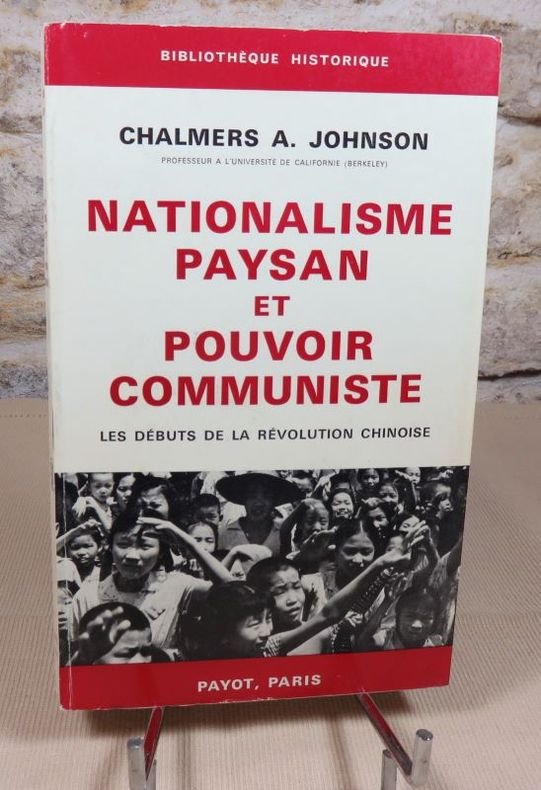
réf. 6807Broché, 23X14 cm, 1969, 249 pages, bibliothèque historique Payot. Très bon état.
1969Paris, Payot, 1969. In-8 broché de 249 pages non coupées. Collection Bibliothèque historique. Très bon état
In-16, punto metallico, pp. 47(1). Normali tracce d’uso alla copertina. Buon esemplare.
196721x15. 97p. Ed. Alemán, francés e inglés.
191612mo. 379 pages. In Finnish. SUBJECT (S) : Finnish language; Jesus Christ. OCLC lists eight copies worldwide. Covers in facsimile, fly leaves chipped, text spotless. Fair condition. (FIN-1-8)
191612mo. 379 pages. In Finnish. SUBJECT (S) : Finnish language; Jesus Christ. OCLC lists eight copies worldwide. Good condition, with some wear various marks on the covers. (FIN-1-58) xx
191612mo. 379 pages. In Finnish. SUBJECT (S) : Finnish language; Jesus Christ. OCLC lists eight copies worldwide. Very good condition, with slight wear on the edges of the covers and previous owner's name on fly leaf. (FIN-1-59)
1965Milano, Le Edizioni Mondiali, 1965, 8vo br. pp. 427
1988DISPONIBILITÀ GARANTITA AL 99%; SPEDIZIONE ENTRO 12 ORE DALL'ORDINE. OTTIME CONDIZIONI, COME NUOVO, MAI SFOGLIATO, LIEVISSIMI SEGNI DEL TEMPO; SENZA SOVRACCOPERTA. "Nazionalismo e bolscevismo" è il libro, apparso in Germania nel 1987, nel quale Ernst Nolte ha proposto una tesi dirompente: i 'gulag' bolscevichi sono il precedente dei 'lager' nazisti. Anticipata in un articolo del 1986 ("Un passato che non passa"), la tesi si fonda sull'analisi della storia europea tra le due guerre come una corsa alla violenza di tue totalitarismi nei quali l'uno (il bolscevico) ha in qualche modo anticipato e favorito l'altro (il nazista). Non giustificazione storica del fenomeno Hitler per Nolte, ma in quanto tale combattuta in Germania da intellettuali come Habermas, la nuova interpretazione storica incide in profondità sulla coscienza contemporanea. Il nazismo come fenomeno non isolato della nazione tedesca, ma come prodotto di uno sviluppo più generale della storia europea verso la repressione brutale attuata dai regimi totalitari, costringe ad un ripensamento radicale. Non è un caso che gli interventi appassionatamente polemici sulla questione siano stati raccolti in volume. Terreno di scontro per gli storici, l'analisi condotta in questo libro interessa tutti, poiché il mondo contemporaneo non può ancora fare a meno di riflettere sulla tragedia che ha rischiato di annientarlo. Descrizione bibliografica Titolo: Nazionalsocialismo e bolscevismo. La guerra civile europea (1917-1945) Titolo originale: Der europäische Bürgerkrieg 1917-1945. Nationalsozialismus und Bolschewismus Autore: Ernst Nolte Con un saggio di: Enrico Rusconi Traduzione di: Francesco Coppellotti, Vera Bertolino, Giovanni Russo Editore: Milano: Sansoni, 1988 Edizione: 1, prima Lunghezza: 506 pagine; 23 cm ISBN: 8838309124, 9788838309120 Collana: Sansoni Saggi In sovraccoperta: George Grosz, Explosion Soggetti: Storiografia tedesca, Storia contemporanea, Tesi storiografiche, Novecento, Totalitarismo, Fascismo, Nazismo, Guerre mondiali europee, Revisionismo, Classici, Germania, Russia, Unione Sovietica, Comunismo, Historikertreit, Memoria, Interpretazioni, Filosofia, Tetralogia, Rivoluzione bolscevica, Antisemitismo, Confitti sociali, Sterminio di razze, Razzismo, Shoah, Ebrei, Classe, Ideologie politiche, Marxismo, Anti-bolscevismo, Stalin, Lenin, Kirov, Guerra civile spagnola, Franco, Hitler, Mussolini, Patto Molotov-Ribbentrop, Stato, Sicurezza, Diritto, Mobilitazione totale, Partiti, Genocidio, Questione ebraica, Schreckbild, CEKA e SS, Gulag, Repressione, Nazionalismo, Conservatorismo, Destra, Faschismus, Totalitarismus, Liberalismus, Russische Revolution, Arno J. Mayer, Carl Schmitt, Rosa Luxemburg, Marxismus, Deutschland, Kommunismus, Juden, Politik, Sowjetunion, Komintern, Führer, Trotzki, Volk, Wehrmacht, Sozialismus, Martin Heidegger, Marxism, fascism, Cold War, Nietzsche, Fascism and Communism, interpretation of modern European history, Furet, Auschwitz, Bolshevik, Bolshevism, twentieth century, Tzvetan Todorov, Jewish, Jews, Italian fascism, Holocaust, ideology, revisionism, theory of totalitarianism, thesis, anti-Judaism, anti-Semitism, anticommunism, antifascism, democracy, German historians, National Socialism, Nazi crimes, Nazism, Stalinism, Civil War, First World War, Controversia degli storici, Gli stati ideologici nemici in tempo di pace (1933-1941), stati monopartitici, guerra tedesco-sovietica (1941-1945), libri rari, fuori catalogo
1988In-8° (22 x 13,8 cm) pp. XXIX, (1), 503, (3), legatura editoriale con sovraccoperta. Normali, lievi tracce del tempo alla sovraccoperta, in particolare, colore della parte che copre il dorso del volume leggermente sbiadito. Piccoli segni d'umido al taglio di testa e a quello davanti: alcuni di questi ultimi si estendono, per un millimetro circa, nel margine bianco esterno di qualche pagina. Per il resto, ben conservato. Nella collana «Sansoni Saggi». Prima edizione italiana. Indice: Introduzione di Gian Enrico Rusconi. Prefazione all'ediziome italiana. Introduzione. Prospettive per l'epoca delle guerre mondiali. Capitolo I. Conclusione e preludio 1933: la presa del potere antimarxista in Germania. Capitolo II. Sguardo retrospettivo agli anni 1917-1932: comunisti, nazionalsocialisti, Russia sovietica. 1. Il crollo della Russia e la volontà della rivoluzione mondiale: la rivoluzione di febbraio e la presa del potere dei bolscevichi nel 1917. 2. La nascita del partito comunista di Germania in seguito alla guerra mondiale e alla rivoluzione russa. 3. La vittoria dei bolscevichi e le sconfitte della KPD (1919-1921). 4. La nascita dell'antibolscevismo e l'inizio della carriera di Hitler. 5. «Rivoluzione mondiale» o «governo nazionale» in Germania? 1923: l'anno della crisi. 6. L'Unione Sovietica dalla morte di Lenin all'affermazione del potere assoluto di Stalin. 7. Il periodo della stabilizzazione della Repubblica di Weimar (1924-1929). 8. Le relazioni statali fra Germania e Unione Sovietica. 9. La guerra civile limitata in Germania. 10. La vigilia della presa del potere nazionalsocialista. Capitolo III. Gli stati ideologici nemici in tempo di pace (1933-1941). 1. La Germania nazionalsocialista e l'Unione Sovietica comunista nel 1933-34. 2. Il «putsch di Röhm» e l'assassinio di Kirov (1934). 3. Politica internazionale 1935-1936. 4. Germania e Unione Sovietica nella guerra civile spagnola. 5. La «grande purga» e il pathos della costruzione nell'Unione Sovietica. 6. I trionfi di Hitler e il consenso della comunità popolare. 7. Il fallimento del progetto anticomunista e antifascista nella grande politica europea. 8. Il patto Hitler-Stalin come inizio del preludio europeo alla seconda guerra mondiale. 9. La fragile alleanza: trionfi, successi, tensioni. Capitolo IV. Le strutture di due stati monopartitici. 1. I partiti di Stato e i loro capi. 2. Gli organi della sicurezza dello Stato e del terrore. 3. Le associazioni giovanili. 4. La comprensione di sé e la comprensione dell'altro nella letteratura e nella propaganda. 5. La cultura politicizzata. 6. Diritto e privazione dei diritti. 7. Emigrazione e resistenza. 8. La mobilitazione totale. Capitolo V. La guerra tedesco-sovietica 1941-1945. 1. L'attacco contro l'Unione Sovietica. Lotta decisiva? Campagna di liberazione? Guerra di annientamento? 2. Necessità, casi e alternative nella guerra tedesco-sovietica. 3. Guerra mondiale delle ideologie? 4. Genocidio e «soluzione finale della questione ebraica». 5. Lo scambio delle caratteristiche e la vittoria paradossale dell'Unione Sovietica. Osservazioni conclusive. Bolscevismo e nazionalsocialismo nella guerra civile europea dell'epoca del fascismo. Note. Indice dei nomi.
2005br.
2005Napoli, Controcorrente, 2005, 8vo brossura editoriale con copertina illustrata a colori, pp. 150.
2020br. La risoluzione del parlamento europeo del 19 settembre 2019 può cambiare i verdetti della storia? La responsabilità del nazismo germanico e dei suoi alleati in Europa può essere attenuata da improponibili confronti con la responsabilità altrui? Questo libro è una critica argomentata al documento dell'Unione Europea.
8vo, hardcover in dj, the first ever substantiated and complete history of Soviet intelligence. Based on a mass of newly declassified Russian secret intelligence documentation, it reveals the true story of Soviet intelligence from its very beginnings in 1917 right through to the end of the Cold War. Covering both main branches of Soviet espionage - civilian and military - Jonathan Haslam charts the full range of the Soviet intelligence effort and the story of its development: in cryptography, disinformation, special forces, and counter-intelligence. In a tragic irony, an organization that so casually disposed of others critically depended upon the human factor. Due to their lack of expertise and technological know-how, from early on the Soviets were forced to rely heavily on secret agents instead of the more sophisticated code-breaking techniques of other intelligence agencies. But in this they were highly successful, recruiting spy rings such as the infamous Cambridge Five in the 1930s. Had it not been for Soviet espionage against Britain s code-breaking effort during the Second World War, Stalin might never have won the victory that later enabled him to dominate half of Europe. Similarly, espionage directed at his allies enabled the Soviets to build an atomic bomb earlier than expected and to take calculated risks in post-war diplomacy, such as his audacious blockade of Berlin which led to the Berlin Airlift. Khrushchev s denunciation of Stalin in 1956 alienated many of the foreign friends so valued by the Soviet intelligence services. It also made new recruitment of foreign agents much more difficult, as the USSR rapidly lost its glamour and ideological appeal to potential supporters in the West during the 1950s. However, the gap was finally bridged through exploiting greedy and disloyal Western intelligence officers, using blackmail and bribery - and with great success. In fact, it was the ultimate irony that the KGB and GRU had never been more effective than when the Soviet Union began to collapse from within
19198vo. 127 pages. In Czech. SUBJECT (S) : Nationalism Soviet Union; Gorky, Maksim, 1868-1936 political and social views; Soviet Union history Revolution, 1917-1921. OCLC lists 4 copies worldwide (Southern Illinois Univ, Univ of Illinois, Univ of Nebraska, Cornell) . Gorky was born in Russia in 1869. His first story was published in 1893. He was arrested in 1905 after Bloody Sunday, but only spent a short time in jail. He supported the Russian revolution, including traveling to the US to do so, was an early friend of Lenin, though later had a falling out over politics, and a founder of the socialist realism literary method. He died in 1936. A little tanned, back cover partially missing, good condition. (MX-33-39)
1920In 8, pp. 36. Gora ai piatti. Br. ed. Fa parte della collana 'Problemi della rivoluzione'.
Milano, Società Editrice Avanti, 1920, in-8, br. edit., pp. 36. "Problemi della Rivoluzione", 3.
1976Fine Turkish Paperback. Cr. 8vo (20 x 14 cm). In Turkish. 2 volumes set: (240 p.; 255 p.; 479 p.), b/w plates. Neden iki sosyalist partisi 1946: T.K.P. kurulusu ve mücadelesinin tarihi, 1914-1960. 3 volumes set. A very comprehensive history of Turkish Communist Party.
1976Por la liberación de la mujer: "CONTRA EL PODER PATRIARCAL (COLECTIVO FEMINISTA)". "LA OPRESIÓN DE LAS MUJERES". "LA NEGACIÓN DE JUANA DE ARCO O POR QUÉ NO HAY QUE PONERSE LOS PANTOLONES". "¿FEMINISMO EXISTENCIALISTA VERSUS FEMINISMO ESTRUCTURALISTA?". "LA MUJER O EL FUTURO DE UNA ILUSIÓN". Sobre la construcción del socialismo: "AUTONOMÍA DEL PROLETARIADO Y CRISIS DEL MARXISMO". "SIGNIFICACIÓN HISTÓRICA DEL FENÓMENO ESTALINISTA". "ACERCA DE LA CONSTRUCIÓN DEL SOCIALISMO". "CUESTIONES DE ORGANIZACIÓN". "CONSEJOS OBREROS, SINDICATOS REVOLUCIONARIOS Y PARTIDOS EN LA REVOLUCIÓN ALEMANA". "LA IZQUIERDA COMUNISTA ALEMANA CONTRA LENIN". "DICTADURA DEL PROLETARIADO O ESTALINISMO". "PSICOANALISIS Y CONTROL SOCIAL". "MÁS ALLÁ DE LA SOCIOLOGÍA COMO CIENCIA SOCIAL BURGUESA". "CRISIS, DECISIÓN Y EXCEPCIÓN: CARL SCHMITT COMO PRETEXTO". "SOBRE LA FINANCIACIÓN PATRONAL DEL SINDICALISMO CATÓLICO EN ESPAÑA". "TEATRO EN LA REFORMA".
1965pp. xliii, 444. 8vo. Original printed wraps, soiled. American Heritage Series. Selections on Negro protest thought from 1895 to 1965. BLKAM 2
8vo, br. ed. Cm. 13x20, pp. 595, legato in cartoncino edit.le illustrato