3 604 résultats
2009réf. mon0003035741National Academies Press 2009-01-08. Paperback. Very Good. 0.6000 8.9000 6.0000. National Academies Press paperback
réf. ARTE1731Dresden Kühtmann 1895. quer-8°. 35 S. mit 47 Abb. im Text 22 Tafeln OHLn. Bibl.-Expl. mit den entsprechenden Kennzeichnungen etwas fingerfleckig Dresden, Kühtmann 1895 unknown
réf. 94010Lausanne La Guilde du Livre 1962. 4° 147 S. zahlr. Kupfertiefdruck-Abb. Kart. Deckel berieben u. min fleckig innen sauber 010 Lausanne, La Guilde du Livre, 1962 unknown
réf. 93748New York Aperture Foundation 2002. 4° 125 S. zahlr. Abb. OLwd. mit OU. Kleiner Fleck a. einer S. tadell. Second edition. Schweiz- Tir a'Mhurain is a collection of photographs that reflects the impressions gathered by Paul Strand and his wife during their 3-month visit to the Hebrides in 1945. Juxtaposing people and landscape Strand's beautifully sequenced photographs depict the perfect complicity he saw between nature and habitation in their wild terrain. Whether it is a view of the rocks and the sea or a grinning shepherd boy; scuddling clouds hanging over seaside house or the wrinkled face of an old lady framed by a knitted shawl Strand's images transcend the ephemeral. This extended portrait captures the essence and complexity of a singular place. As title included in Parr - Badger The Photobook Vol. I 010 New York, Aperture Foundation, 2002 unknown
réf. NOCT17-9781118674369-467Wiley 2014-12-08. Paperback. New. 0x0x0. NEW TEXTBOOK SHIPS WITH EMAILED TRACKING FROM USA Wiley paperback
1911réf. 011936: GEORGES NEWNES LTD. 1911. Hardcover. Good. Brock Rene Bull Joseph Simpson. 1911 B00K: /GOOD/ . B00K: /GOOD/ $2400.17 Reduced From. the STRAND MAGAZINE: an ILLUSTRATED M0NTHLY V0L. XLII July to December. Arthur Conan Doyle; P. G. Wodehouse; E. Phillips Oppenheim; Mrs. Baillie Reynolds; NEWNES George Brock Rene Bull Joseph Simpson. GE0RGES NEWNES LTD. 1911 Blue Colored Cloth Spine With Title In Polished Gold Rectangle Hard Cover B00K: /Good/ Shelf Edge And Corner Wear 800 Numbered Pages Printed On Off White Paper Browning On Edges In Very Good/ Condition That Were Lightly Viewed And Are Clean And Tight To The Spine Slight Wear. Spine Is Weak. Image On Page 609 Is Included. Arthur Conan Doyle on one side and featuring a portrait of Sherlock Holmes THE DISAPPEARANCE OF LADY FRANCES CARFAX by Arthur Conan Doyle. Arthur Conan Doyle titled ONE CROWDED HOUR plus P. G. Wodehouse E. Phillips Oppenheim and Mrs. Baillie Reynolds. Also illustrations by Brock Rene Bull Joseph Simpson. D/j: None. Description Applies To This Book ONLY. This Book Is Hard To Find Will Be Packaged And Shipped Carefully To Avoid Shipping Damage And Will Make It An Excellent Addition To Your Own Personal Library Collection Or As A Gift. World Wide Shipping AVAILABLE. GEORGES NEWNES, LTD. hardcover
réf. 39518Lausanne La Guilde du Livre 1952. 4° 121 S. zahlr. meist ganzseit. Abb. tlw. a. Falttaf. Brosch. m. OU u. Transparent-OU Etw. gebrauchsspurig. Erste Auflage. 010 Lausanne, La Guilde du Livre, 1952 unknown
1892réf. 30779George Newnes 1892. Roy. 8vo. First Edition with numerous photographs and illustrations throughout free endpapers lightly spotted a little mild spotting throughout; attractively bound in contemporary niger half roan sides ruled in blind back with raised bands tooled in gilt second compartment with red leather label ruled and lettered in gilt all other compartments tooled with blind lozenge marbled edges a very good bright clean copy. Contains the first appearance of 'Silver Blaze' complete with Paget's inconic illustrations as 'The Adventures of Sherlock Holmes. No. XIII. 'The Adventure of Silver Blaze'. 'Silver Blaze' is of course the classic early tale containing Holmes' famous epigram of the dog in the nightime. It was subsequently collected as the first of the eleven 'Memoirs' published in book form in 1894. This issue also includes Harry How's well-illustrated article 'A Day with Dr. Conan Doyle' pp.182-188. An added Holmesian bonus is the presence of Clarke Russell's 'A Nightmare of the Doldrums' pp.189-198; his tales were a favourite of Dr. Watson: 'I was deep in one of Clark Russell's fine sea stories' 'The Five Orange Pips'. UNCOMMON IN THIS CONDITION. DeWaal 357. George Newnes, hardcover
1898réf. 24625George Newnes 1898. Roy. 8vo. First Edition thus with numerous photographs and illustrations throughout endpapers lightly browned some light spotting as usual; original pictorial blue cloth blocked and lettered in black gilt back bevelled boards red sprinkled edges lower hinge cracked but binding entirely sound a very good bright clean copy. Contains the first appearance of Doyle's 'Round the Fire' stories II-VII. No. II is 'The Story of the Man with the Watches' illustrated by Frank Craig; No. III is 'The Story of the Lost Special' illustrated by Max Cowper. These two stories are widely recognised by Holmesians as the two most important 'lost' Holmes adventures. Both stories feature an unnamed amateur reasoner clearly intended by Doyle to be identified by his readers as Holmes himself. These two tales and their fellows were collected and published as 'Round the Fire Stories' in 1908. UNCOMMON IN THIS CONDITION. See Green & Gibson p.409. George Newnes, hardcover
réf. 52665Vancouver: William Hoffer 1984. First edition in English. . Beige silk decorative paper labels on spine and front cover. Brown end papers. Printed in brown & black. Of an edition of 106 copies this is one of 90 bound in Coromandel silk. A fine copy. Issued as Publications of the F.P. Greve Seminar Number One. Originally published in German in 1903. A handsome book nicely produced. Woodsworth A32a. Vancouver: William Hoffer, 1984. First edition in English. unknown
réf. SONG0942548442Used: Good unknown
1982réf. 602800New York: Clarkson N. Potter 1982. First Edition; First Printing. Hardcover. Very Good in a Good dust jacket. Foxing along text block edges. Remainder mark on bottom text block edge. Aged adhesive on front panel. 1-inch open tear at top of front gutter. 2-inch open tear at top of rear panel. Shelfwear throughout dust jacket.; 30 pages. Clarkson N. Potter hardcover
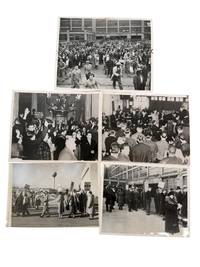
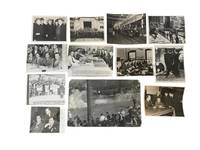
1937réf. 238341937. Chrysler worker strike photo archive depicting automobile labor actions across Detroit Chicago and Cleveland in 1937 during the decisive year in which the United Automobile Workers forced its way into the major automobile corporations and established industrial unionism as a durable power in American manufacturing. The photographs record the Chrysler conflict in the immediate aftermath of the General Motors sit down strike whose settlement on February 11 gave the UAW its breakthrough recognition within the automobile industry. Chrysler workers followed in March occupying plants in metropolitan Detroit and confronting the corporation over union recognition while related actions by automobile workers spread through other Midwestern production centers. Contemporary UAW records preserve demands press releases legal proceedings strike publicity and organizing material from the Chrysler strike through April 1937 placing these press photographs within one of the union's formative campaigns. Photo archive of 5 silver gelatin photographs each 8 x 10 inches Detroit Chicago and Cleveland 1937. The photographs show a mass of workers leaving an automobile plant; UAW members and a Women's Auxiliary Local 182 gathered beneath chandeliers with hands raised; office workers carrying placards reading "Local 889 UAW office workers on strike"; a crowd assembled outside a fenced factory complex; and workers gathered around musicians during a strike meeting or entertainment program. The Detroit images document the Chrysler sit down at Dodge Main and the activity surrounding workers occupying the plant including the participation of women outside the factory a role independently documented in contemporary photographs of the Dodge Main Women's Auxiliary. The versos retain their original press context through pasted wire service captions editorial markings publication instructions date stamps and agency credits including Acme NEA United Press International and Chicago and Cleveland bureau markings. One caption describes Chrysler workers numbering sections of the Dodge plant fence so relatives and friends outside could locate particular workers inside; another records a church service held for sit down automobile workers at a Chrysler plant on March 14 1937. A further caption announces the end of the Chrysler strike and reports that Governor Frank Murphy's office announced an agreement between Chrysler and the UAW while another records more than 8000 Chrysler workers forming a picket line after a walkout. The press captions and editorial stamps establish the photographs not simply as images of labor protest but as photographs produced and circulated through the contemporary news system while the strikes were unfolding. The Chrysler confrontation belonged to the extraordinary succession of sit down actions that transformed automobile labor in 1937. On March 8 UAW locals initiated sit downs that closed Chrysler's nine Detroit plants; the conflict generated court orders demanding evacuation of occupied factories demonstrations in Cadillac Square negotiations involving Michigan Governor Frank Murphy and sustained pressure on Walter P. Chrysler to recognize the union. Archival records at the Walter P. Reuther Library preserve the resulting Chrysler UAW agreement of April 1937 while contemporary photographs record Walter Chrysler signing the settlement in the presence of Murphy John L. Lewis and UAW leader Richard Frankensteen. The photographs here extend that history beyond negotiating tables to the mechanisms of the strike itself: occupied factories mass walkouts perimeter picketing communication between workers inside and supporters outside women's auxiliary activity and the public gatherings through which workers sustained collective action. Light surface wear handling marks occasional creasing toning and staining to versos with press labels and editorial stamps intact; one print with a corner crease. Overall in good condition. A concentrated contemporary press record of the 1937 Chrysler labor conflict and the workers families picket lines and sit down tactics through which the UAW secured recognition in the automobile industry. unknown
1945réf. 233441945. Women's LaborUnion Organizing Women telephone workers on strike press photo archive documenting labor organization picket lines arrests and union settlement efforts in New York Brooklyn Chicago Seattle St. Louis and Cleveland 1945-1950. The images illustrate the postwar labor conflict in the American telephone industry as women workers fought for better wages pensions union recognition and working conditions. The group records labor action through formal union voting publicity picketing mass walkouts police intervention and settlement. The archive highlights women at the center of the labor organizing process showing the workforce that staffed operator positions and other telephone company roles acting collectively during the major strike wave that followed World War II. Photo archive of 9 silver gelatin press photographs ranging from 6 x 7 to 8 x 10 inches New York Brooklyn Chicago Seattle St. Louis Cleveland and related U.S. locations 194New York5-1950. The photographs show women carrying and preparing strike placards leaving telephone company headquarters in a St. Louis walkout gathering on broad city steps with signs lining sidewalks outside company buildings sitting with placards reading "N.F.T.W. ON STRIKE" and smiling from inside a police wagon after arrest on an Ohio Federation of Telephone Workers picket line. Several images preserve highly specific labor text: placards call for "$12 per week" a "Union Shop" and a "Decent Pension" while another denounces the "union busting tactics of the Bell System." One image shows a woman tearing up a strike placard beside a noticeboard stating that the FLLTW and the company had reached an agreement and that the proposed strike had been called off. Versos retain typed caption strips credit and usage stamps editorial markings and filing notes identifying scenes such as a New York vote on whether traffic employees of the New York Telephone Company would strike on April 16 1945; Brooklyn strike cancellation at American Telephone and Telegraph on March 7 1946; Chicago women preparing picket signs on April 5 1947; Seattle workers and pickets outside a telephone building on April 7 1947; coffee served to women strike pickets at St. Alphonsus Hall that same evening; and later Cleveland newsroom handling marked November 10 1950. These photographs date to a time of broad labor upheaval of the mid 1940s and early 1950s when wartime employment rising prices and postwar contract battles pushed workers across the United States into repeated strikes. The telephone industry depended heavily on women as operators traffic workers and clerical employees and this archive shows those women as the visible organizers voters and public faces of labor activism in one of the country's largest communications networks. The images document five years of telephone strikes across several cities and through multiple stages of escalation and resolution. Moderate edge wear scattered creasing surface handling wear editorial markings stamps caption remnants and some toning or staining to versos; overall good condition. A concise multi-city record of women's labor militancy in the postwar telephone industry with strong evidence of how strike action operated inside a national communications system. unknown
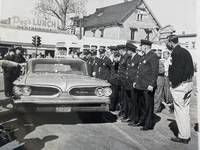
1960réf. 232971960. Labor OrganizingIndustry General Electric strike photo archive documenting the 1960 IUE Local 201 strike at the GE River Works plant in Lynn Massachusetts press photographs of workers and labor organizers resisting GE's take-it-or-leave-it bargaining practice at the factory gate. These images record the early days of the national IUE walkout. In the Fall of 1960 contract demands over wages cost of living protection and job security stalled when General Electric refused to bargain on terms acceptable to the union a move later condemned in federal litigation over the company's duty to bargain in good faith. Formal negotiations ran through 45 meetings from July into October 1960. The strike lasted three weeks and the dispute resulted in charges over unfair labor practice that became part of the major legal and labor history of "Boulwarism" GE's long campaign to dictate contract terms while exploiting division among the unions organized in its plants. Photo archive of 20 large silver gelatin press photographs measuring between 7 x 8 and 8 x 10 inches Lynn Massachusetts September-October 1960. The images show dense exterior picket scenes outside the GE plant with men and women carrying tall placards reading "LOCAL 201 IUE AFL CIO ON STRIKE" police officers linking arms and shoving crowds back from arriving automobiles and knotting lines of workers pressed against car hoods and fenders as management and police attempt to force entry through the picket. Several photographs isolate the mechanics of the strike itself: a car with rooftop loudspeaker positioned near the line an indoor union meeting beneath a huge banner attacking company leadership women pickets pointing and shouting across a fence line and a man stooping to gather tacks scattered across pavement with the caption explaining that picketers left tacks and nails at plant entrances to puncture the tires of management and scabs. One typescript caption reads "POLICE PUSH STRIKERS BACK" and states that officers acted "to clear way for cars entering or leaving the plant" while another notes that "A nationwide strike was called by the union Saturday at midnight." Additional versos carry date stamps for October 4 and 5 1960 typed caption slips and handwritten identifications such as "Mass. Lynn strikes G.E. Co." fixing the archive firmly within the first phase of the strike. Lynn held an important place in GE labor history well before 1960. Plant workers had challenged company control since the 1930s; by the postwar period the city had become one of the clearest sites where GE tested union-busting methods. This strike did not defeat GE on its own and the settlement came largely on company terms but resulting litigation condemning GE unfair bargaining practices became central to American labor organizing. The 1960 conflict thus stands as a precursor to the broader interunion coordination that emerged later in the decade and culminated in the national GE strike of 1969 to 1970 when unions finally forced a real challenge to Boulwarism. Scattered staining creasing and minor chipping at margins; most prints captioned on verso; overall good to very good condition. Primary source documentation of one of the country's most consequential corporate labor battlegrounds preserving the ground level struggle through which workers tested the limits of industrial union power in mid-century America. unknown
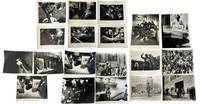
1969réf. 232051969. Steve Rose's photographic coverage of demonstrations strike activity broadcast spaces and police control in New York City and Washington D.C. circa 1969-1971 with dissent moving through street assembly underground and movement media institutional protest and municipal enforcement. Rose active in New York documentary photography during the early 1970s photographed activists such as Abbie Hoffman crowds radio workers and police at campuses transit sites and city streets where public speech met managed space. These photographs of early 1970s New York and D.C. activism span police violence organizers gathering outside major institutions broadcasters at consoles and microphones and school protest and street demonstration aligned with the same documentary practice that recorded Young Lords and Gay Liberation actions in the city. Photo archive of 19 Large silver gelatin photographs each 8 x 10 inches New York City and Washington D.C. circa 1969-1971. The most confrontational scenes place police with raised batons inside a damaged transit interior with shattered or cracked glass and turnstiles marked "NOT FOR EXIT" locating the violence inside a controlled urban access point rather than an open street. Riot helmets gas masks clubs broken barriers and confined stair and platform space place crowd control transit management and physical force together during moments of unrest. In this group the violent scenes are central evidence of municipal authority enforcing movement and restricting public assembly in New York at the turn of the 1970s. Contents include schoolchildren descending an interior stair with placards reading "A LITTLE RADIATION IS NO GOOD FOR CHILDREN AND OTHER PEOPLE" and "NO NO NO"; a street protester holding a hand-lettered sign reading "Strike! Support the Manifesto"; a crowd assembled outside the Interchurch Center one sign reading "Fight White Racism Join Us"; a woman labeled "Beulah" likely a college student impersonating activist Beulah Sanders addressing a large outdoor gathering; and a dense overhead crowd view made from an elevated vantage point. Another group centers on urban control points and police presence including subway turnstiles marked "NOT FOR EXIT" officers in helmets and gas masks advancing with batons a handwritten wall slogan reading "NO MORE FARE" above a tiled stair and a verso note identifying one image as "grand central subway control booth." Additional prints include a radio or news studio with a control console a broadcaster wearing headphones at a microphone a silhouetted operator in a booth and a saxophonist performing before an audience. Several versos bear Steve Rose photographer stamps signatures a Nancy Palmer Photo Agency stamp crediting Rose the note "view from president's terrace" and dated notations including "Steve Rose / Newsreel 6-9-69." One image is duplicated. The archive contains antiwar activism childcare and school protest strike support racial justice organizing broadcast work and police intervention inside the same metropolitan circuit. Press-marked versos agency stamps location notes and dated inscriptions record the working infrastructure through which Rose's images moved as news and movement documentation. Light handling wear minor curling scattered verso toning and staining editorial stamps and manuscript notations throughout; one duplicate image present. Police violence crowd control and organized dissent intersect inside transit interiors institutional exteriors broadcast studios and city streets in New York City and Washington D.C. unknown
réf. B9781476699943Paperback / softback. New. paperback
réf. A9781601077530Paperback / softback. New. paperback
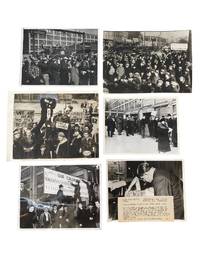
1937réf. 234461937. Labor Organization Chrysler strike press photo archive documenting the 1937 sit down strikes and picketing campaigns at Dodge Main and other Chrysler facilities in Detroit and Highland Park Michigan during the decisive phase of industrial unionization in the American automobile industry. The archive records workers occupying plants mass picket mobilizations outside factory gates anti injunction demonstrations and violence connected to the struggle between Chrysler management the United Automobile Workers and competing independent unions. These events unfolded only weeks after the February 1937 settlement of the Flint sit down strike against General Motors which established the UAW as a major industrial union and accelerated organizing efforts across Detroit's auto plants. Chrysler initially resisted recognition obtaining court injunctions ordering workers to evacuate occupied factories while thousands of laborers remained inside the plants or formed flying squadrons to block strikebreakers from entering. The scenes here capture the atmosphere of confrontation in Depression era industrial labor conflict at a time when mass production workers forced some of the largest corporations in the United States to negotiate with organized labor. Photo archive of 6 silver gelatin press photographs from 6 x 8 inches to 8 x 10 inches Detroit and Highland Park Michigan 1937. Affixed captions on versos with filing stamps dated March and August 1937. Crowds of striking workers gather outside Dodge Division and Chrysler factory gates beneath signs reading "Dodge Division of Chrysler Corporation Employment Office" and "We Are Here To Stay Dept. 82." Several men hold placards reading "82 is Sittin Too" "Spirit of 1937" and "Fence Jumper" while an effigy labeled "Injunction" hangs over the crowd in open defiance of a court order directing workers to vacate occupied plants. A large calendar board records the passing days of the sit down occupation beginning March 8 1937. Another scene shows relatives and supporters communicating with occupying workers through numbered department cards hung along the perimeter fence after union organizers established an improvised locating system for men inside the plant. One caption identifies "flying squadrons" directing picket activity outside Chrysler headquarters. The latest photograph records Frank A. Dillon identified as president of an independent Chrysler union receiving questioning from Detective Sergeant Harry Scher after an alleged beating connected to union violence that led Chrysler officials to temporarily close a plant pending investigation. The Chrysler strike formed part of the larger wave of industrial labor upheaval that reshaped American manufacturing during the New Deal. Passage of the Wagner Act in 1935 legally protected collective bargaining but enforcement depended on workers physically preventing corporations from continuing production with replacement labor. Sit down strikes became one of the most controversial tactics of the era because occupying workers halted machinery while denying employers access to their own factories. The archive preserves not only the mechanics of strike organization but also the public theater of industrial conflict in Depression era Detroit: marching pickets improvised communication systems anti injunction symbolism and massive worker assemblies outside factory gates. Moderate surface wear occasional creasing editorial markings and toning to versos with captions firmly affixed; images remain sharp and highly legible. Overall very good condition. unknown
1938réf. 234231938. Labor Organizing United Auto Workers and CIO labor photograph archive documenting strike action union leadership and collective bargaining negotiations during the expansion of organized labor in the American automobile industry 1938-1949. The archive traces the period immediately following the 1935 Wagner Act when unions gained federal legal protection for collective bargaining but still faced violent resistance from corporations police departments and municipal governments. Several scenes connect directly to the years surrounding the 1937 Battle of the Overpass in Dearborn when Ford security men beat UAW organizers attempting to distribute union literature outside the River Rouge complex and to the broader wave of sit-down strikes and factory shutdowns that forced General Motors Chrysler and eventually Ford into formal negotiations with the UAW. The captions identify senior labor figures including Walter Reuther R. J. Thomas George Addes and Richard T. Leonard establishing the archive as documentation not merely of rank-and-file unrest but of the institutional consolidation of the UAW-CIO into one of the most powerful industrial unions in the United States. The material also records how labor disputes extended beyond factory gates into courts city halls state legislatures and police jurisdictions revealing the political dimensions of industrial unionism during the New Deal and early Cold War years. Photo archive of 12 Large silver gelatin press photographs one large panorama measuring 9.5 x 16.5 inches 11 press photos ranging from 6 x 8 inches to 8 x 10 inches primarily Detroit Dearborn South Gate and Atlantic City circa 1938-1949. A large-format scene dated 1939 records tear gas and street violence during a UAW strike at the Fisher Body plant with clouds of gas spreading across trolley tracks as helmeted police advance toward crowds of fleeing workers and spectators. Another image shows hundreds of demonstrators carrying a massive American flag through downtown Detroit toward City Hall during protests following clashes between union pickets and police at Federal Screw Works; the verso caption notes approximately forty injuries and references accusations of "police brutality" raised before city council. Additional photographs show UAW-CIO officials seated at conference tables negotiating contracts and appearing in municipal hearing rooms beneath desk microphones and courthouse lighting. Captions identify figures including Walter Reuther George Addes and R. J. Thomas while a 1940 Dearborn caption records the arrest of union leaders for distributing handbills asserting workers' rights under the National Labor Relations Act. South Gate strike scenes outside a General Motors facility show workers carrying placards demanding a thirty percent wage increase while Rev. Louis R. Loe conducts prayer services along the picket line. Convention and leadership photographs from Atlantic City and Washington document labor leaders gathered under the authority of Samuel Gompers and later CIO leadership structures linking local strike activity to national labor organization. The archive illustrates the transformation of the automobile industry from one of the nation's most violently anti-union industrial sectors into the center of postwar collective bargaining power. Ford Motor Company resisted union recognition longer than General Motors or Chrysler relying on private security forces local police cooperation labor espionage and anti-handbill ordinances to suppress organizing inside and outside its plants. Several captions directly reference these legal confrontations including arrests tied to leaflet distribution and disputes over municipal authority to restrict labor organizing in public space. By the late 1940s many of the same figures shown here were negotiating contracts that established wage standards pensions grievance procedures and health benefits that reshaped industrial employment across the United States. Creasing edge wear scattered minor losses adhesive residue and newsroom markings to versos; images remain clear and intact overall. Overall good condition. unknown
réf. A9781645823773Hardback. New. hardcover
réf. A9798889892069Hardback. New. hardcover
réf. B9780367897499Hardback. New. This concise textbook provides a comprehensive framework for understanding and implementing effective public-private partnerships in an era of complex policy challenges and resource constraints. It is essential for graduate and advanced undergraduate students in public administration public policy and business management programmes. hardcover
réf. A9780367897499Hardback. New. This concise textbook provides a comprehensive framework for understanding and implementing effective public-private partnerships in an era of complex policy challenges and resource constraints. It is essential for graduate and advanced undergraduate students in public administration public policy and business management programmes. hardcover
réf. B9781009646550Paperback / softback. New. Draws on real-world lessons from Nordic nations to show how democratic capitalism can support freedom shared prosperity and SDGs. Aimed at scholars business leaders policymakers and students this book presents Nordic capitalism as a practical alternative to neoliberalism. This title is also available as open access on Cambridge Core. paperback