Vagn Greve Karin CornilsBiblio.com

3 631 résultats
réf. 654567393Djof Publishing . Papeback. Used. pp. 220 Djof Publishing unknown
réf. 033180252X.Ghardcover. Good. Access codes and supplements are not guaranteed with used items. May be an ex-library book. hardcover
réf. 048332566X.Ghardcover. Good. Access codes and supplements are not guaranteed with used items. May be an ex-library book. hardcover
1894réf. 19950Washington: G. P. O. 1894. First Edition. hard cover. Very Good/No jacket. Washington: Government Printing Office. 1895. 681pp. Hard bound. 1/4 leather. A very good tight clean copy. Report upon the controversies which arose between the Illinois Central Railroad Company and the Chicago Rock Island and Pacific Railway Company in June 1894.S336. Washington: G. P. O. hardcover
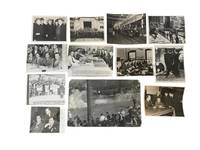
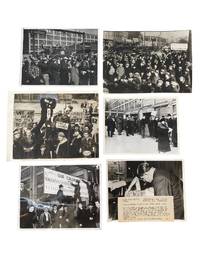
1938réf. 234231938. Labor Organizing United Auto Workers and CIO labor photograph archive documenting strike action union leadership and collective bargaining negotiations during the expansion of organized labor in the American automobile industry 1938-1949. The archive traces the period immediately following the 1935 Wagner Act when unions gained federal legal protection for collective bargaining but still faced violent resistance from corporations police departments and municipal governments. Several scenes connect directly to the years surrounding the 1937 Battle of the Overpass in Dearborn when Ford security men beat UAW organizers attempting to distribute union literature outside the River Rouge complex and to the broader wave of sit-down strikes and factory shutdowns that forced General Motors Chrysler and eventually Ford into formal negotiations with the UAW. The captions identify senior labor figures including Walter Reuther R. J. Thomas George Addes and Richard T. Leonard establishing the archive as documentation not merely of rank-and-file unrest but of the institutional consolidation of the UAW-CIO into one of the most powerful industrial unions in the United States. The material also records how labor disputes extended beyond factory gates into courts city halls state legislatures and police jurisdictions revealing the political dimensions of industrial unionism during the New Deal and early Cold War years. Photo archive of 12 Large silver gelatin press photographs one large panorama measuring 9.5 x 16.5 inches 11 press photos ranging from 6 x 8 inches to 8 x 10 inches primarily Detroit Dearborn South Gate and Atlantic City circa 1938-1949. A large-format scene dated 1939 records tear gas and street violence during a UAW strike at the Fisher Body plant with clouds of gas spreading across trolley tracks as helmeted police advance toward crowds of fleeing workers and spectators. Another image shows hundreds of demonstrators carrying a massive American flag through downtown Detroit toward City Hall during protests following clashes between union pickets and police at Federal Screw Works; the verso caption notes approximately forty injuries and references accusations of "police brutality" raised before city council. Additional photographs show UAW-CIO officials seated at conference tables negotiating contracts and appearing in municipal hearing rooms beneath desk microphones and courthouse lighting. Captions identify figures including Walter Reuther George Addes and R. J. Thomas while a 1940 Dearborn caption records the arrest of union leaders for distributing handbills asserting workers' rights under the National Labor Relations Act. South Gate strike scenes outside a General Motors facility show workers carrying placards demanding a thirty percent wage increase while Rev. Louis R. Loe conducts prayer services along the picket line. Convention and leadership photographs from Atlantic City and Washington document labor leaders gathered under the authority of Samuel Gompers and later CIO leadership structures linking local strike activity to national labor organization. The archive illustrates the transformation of the automobile industry from one of the nation's most violently anti-union industrial sectors into the center of postwar collective bargaining power. Ford Motor Company resisted union recognition longer than General Motors or Chrysler relying on private security forces local police cooperation labor espionage and anti-handbill ordinances to suppress organizing inside and outside its plants. Several captions directly reference these legal confrontations including arrests tied to leaflet distribution and disputes over municipal authority to restrict labor organizing in public space. By the late 1940s many of the same figures shown here were negotiating contracts that established wage standards pensions grievance procedures and health benefits that reshaped industrial employment across the United States. Creasing edge wear scattered minor losses adhesive residue and newsroom markings to versos; images remain clear and intact overall. Overall good condition. unknown books
1937réf. 234461937. Labor Organization Chrysler strike press photo archive documenting the 1937 sit down strikes and picketing campaigns at Dodge Main and other Chrysler facilities in Detroit and Highland Park Michigan during the decisive phase of industrial unionization in the American automobile industry. The archive records workers occupying plants mass picket mobilizations outside factory gates anti injunction demonstrations and violence connected to the struggle between Chrysler management the United Automobile Workers and competing independent unions. These events unfolded only weeks after the February 1937 settlement of the Flint sit down strike against General Motors which established the UAW as a major industrial union and accelerated organizing efforts across Detroit's auto plants. Chrysler initially resisted recognition obtaining court injunctions ordering workers to evacuate occupied factories while thousands of laborers remained inside the plants or formed flying squadrons to block strikebreakers from entering. The scenes here capture the atmosphere of confrontation in Depression era industrial labor conflict at a time when mass production workers forced some of the largest corporations in the United States to negotiate with organized labor. Photo archive of 6 silver gelatin press photographs from 6 x 8 inches to 8 x 10 inches Detroit and Highland Park Michigan 1937. Affixed captions on versos with filing stamps dated March and August 1937. Crowds of striking workers gather outside Dodge Division and Chrysler factory gates beneath signs reading "Dodge Division of Chrysler Corporation Employment Office" and "We Are Here To Stay Dept. 82." Several men hold placards reading "82 is Sittin Too" "Spirit of 1937" and "Fence Jumper" while an effigy labeled "Injunction" hangs over the crowd in open defiance of a court order directing workers to vacate occupied plants. A large calendar board records the passing days of the sit down occupation beginning March 8 1937. Another scene shows relatives and supporters communicating with occupying workers through numbered department cards hung along the perimeter fence after union organizers established an improvised locating system for men inside the plant. One caption identifies "flying squadrons" directing picket activity outside Chrysler headquarters. The latest photograph records Frank A. Dillon identified as president of an independent Chrysler union receiving questioning from Detective Sergeant Harry Scher after an alleged beating connected to union violence that led Chrysler officials to temporarily close a plant pending investigation. The Chrysler strike formed part of the larger wave of industrial labor upheaval that reshaped American manufacturing during the New Deal. Passage of the Wagner Act in 1935 legally protected collective bargaining but enforcement depended on workers physically preventing corporations from continuing production with replacement labor. Sit down strikes became one of the most controversial tactics of the era because occupying workers halted machinery while denying employers access to their own factories. The archive preserves not only the mechanics of strike organization but also the public theater of industrial conflict in Depression era Detroit: marching pickets improvised communication systems anti injunction symbolism and massive worker assemblies outside factory gates. Moderate surface wear occasional creasing editorial markings and toning to versos with captions firmly affixed; images remain sharp and highly legible. Overall very good condition. unknown books
1937réf. 234461937. Labor Organization Chrysler strike press photo archive documenting the 1937 sit down strikes and picketing campaigns at Dodge Main and other Chrysler facilities in Detroit and Highland Park Michigan during the decisive phase of industrial unionization in the American automobile industry. The archive records workers occupying plants mass picket mobilizations outside factory gates anti injunction demonstrations and violence connected to the struggle between Chrysler management the United Automobile Workers and competing independent unions. These events unfolded only weeks after the February 1937 settlement of the Flint sit down strike against General Motors which established the UAW as a major industrial union and accelerated organizing efforts across Detroit's auto plants. Chrysler initially resisted recognition obtaining court injunctions ordering workers to evacuate occupied factories while thousands of laborers remained inside the plants or formed flying squadrons to block strikebreakers from entering. The scenes here capture the atmosphere of confrontation in Depression era industrial labor conflict at a time when mass production workers forced some of the largest corporations in the United States to negotiate with organized labor. Photo archive of 6 silver gelatin press photographs from 6 x 8 inches to 8 x 10 inches Detroit and Highland Park Michigan 1937. Affixed captions on versos with filing stamps dated March and August 1937. Crowds of striking workers gather outside Dodge Division and Chrysler factory gates beneath signs reading "Dodge Division of Chrysler Corporation Employment Office" and "We Are Here To Stay Dept. 82." Several men hold placards reading "82 is Sittin Too" "Spirit of 1937" and "Fence Jumper" while an effigy labeled "Injunction" hangs over the crowd in open defiance of a court order directing workers to vacate occupied plants. A large calendar board records the passing days of the sit down occupation beginning March 8 1937. Another scene shows relatives and supporters communicating with occupying workers through numbered department cards hung along the perimeter fence after union organizers established an improvised locating system for men inside the plant. One caption identifies "flying squadrons" directing picket activity outside Chrysler headquarters. The latest photograph records Frank A. Dillon identified as president of an independent Chrysler union receiving questioning from Detective Sergeant Harry Scher after an alleged beating connected to union violence that led Chrysler officials to temporarily close a plant pending investigation. The Chrysler strike formed part of the larger wave of industrial labor upheaval that reshaped American manufacturing during the New Deal. Passage of the Wagner Act in 1935 legally protected collective bargaining but enforcement depended on workers physically preventing corporations from continuing production with replacement labor. Sit down strikes became one of the most controversial tactics of the era because occupying workers halted machinery while denying employers access to their own factories. The archive preserves not only the mechanics of strike organization but also the public theater of industrial conflict in Depression era Detroit: marching pickets improvised communication systems anti injunction symbolism and massive worker assemblies outside factory gates. Moderate surface wear occasional creasing editorial markings and toning to versos with captions firmly affixed; images remain sharp and highly legible. Overall very good condition. unknown
1938réf. 234231938. Labor Organizing United Auto Workers and CIO labor photograph archive documenting strike action union leadership and collective bargaining negotiations during the expansion of organized labor in the American automobile industry 1938-1949. The archive traces the period immediately following the 1935 Wagner Act when unions gained federal legal protection for collective bargaining but still faced violent resistance from corporations police departments and municipal governments. Several scenes connect directly to the years surrounding the 1937 Battle of the Overpass in Dearborn when Ford security men beat UAW organizers attempting to distribute union literature outside the River Rouge complex and to the broader wave of sit-down strikes and factory shutdowns that forced General Motors Chrysler and eventually Ford into formal negotiations with the UAW. The captions identify senior labor figures including Walter Reuther R. J. Thomas George Addes and Richard T. Leonard establishing the archive as documentation not merely of rank-and-file unrest but of the institutional consolidation of the UAW-CIO into one of the most powerful industrial unions in the United States. The material also records how labor disputes extended beyond factory gates into courts city halls state legislatures and police jurisdictions revealing the political dimensions of industrial unionism during the New Deal and early Cold War years. Photo archive of 12 Large silver gelatin press photographs one large panorama measuring 9.5 x 16.5 inches 11 press photos ranging from 6 x 8 inches to 8 x 10 inches primarily Detroit Dearborn South Gate and Atlantic City circa 1938-1949. A large-format scene dated 1939 records tear gas and street violence during a UAW strike at the Fisher Body plant with clouds of gas spreading across trolley tracks as helmeted police advance toward crowds of fleeing workers and spectators. Another image shows hundreds of demonstrators carrying a massive American flag through downtown Detroit toward City Hall during protests following clashes between union pickets and police at Federal Screw Works; the verso caption notes approximately forty injuries and references accusations of "police brutality" raised before city council. Additional photographs show UAW-CIO officials seated at conference tables negotiating contracts and appearing in municipal hearing rooms beneath desk microphones and courthouse lighting. Captions identify figures including Walter Reuther George Addes and R. J. Thomas while a 1940 Dearborn caption records the arrest of union leaders for distributing handbills asserting workers' rights under the National Labor Relations Act. South Gate strike scenes outside a General Motors facility show workers carrying placards demanding a thirty percent wage increase while Rev. Louis R. Loe conducts prayer services along the picket line. Convention and leadership photographs from Atlantic City and Washington document labor leaders gathered under the authority of Samuel Gompers and later CIO leadership structures linking local strike activity to national labor organization. The archive illustrates the transformation of the automobile industry from one of the nation's most violently anti-union industrial sectors into the center of postwar collective bargaining power. Ford Motor Company resisted union recognition longer than General Motors or Chrysler relying on private security forces local police cooperation labor espionage and anti-handbill ordinances to suppress organizing inside and outside its plants. Several captions directly reference these legal confrontations including arrests tied to leaflet distribution and disputes over municipal authority to restrict labor organizing in public space. By the late 1940s many of the same figures shown here were negotiating contracts that established wage standards pensions grievance procedures and health benefits that reshaped industrial employment across the United States. Creasing edge wear scattered minor losses adhesive residue and newsroom markings to versos; images remain clear and intact overall. Overall good condition. unknown
2005réf. Q-0727914464BMJ Books 2005-04-01. Hardcover. New. In shrink wrap. Looks like an interesting title! BMJ Books hardcover
réf. Bloomsbury-9780755656165I.B.Tauris. Hardback. New. 272 pages I.B.Tauris hardcover
réf. Bloomsbury-9780755656172I.B.Tauris. Paperback. New. 272 pages I.B.Tauris paperback
réf. Bloomsbury-9780755656165I.B.Tauris. Hardback. New. 272 pages I.B.Tauris hardcover
réf. Bloomsbury-9780755656172I.B.Tauris. Paperback. New. 272 pages I.B.Tauris paperback
réf. ria9780755656165_inpHardcover. New. New Book; Fast Shipping from UK; Not signed; Not First Edition; Explains Israel's evolving domination and control of Gaza following the 1967 Arab-Israeli War. hardcover
2012réf. 163522New York: Bruce Silverstein Gallery 2012. First edition. Softcover. Exhibition catalog for a show that ran September 6 through October 20 2012. Essay by Carol Troyen. Includes illustrations of works by Charles Demuth Arthur Dove Marsden Hartley John Marin Georgia O'Keeffe Alfred Stieglitz and Paul Strand. A near fine copy in French style wrappers. A nicely printed catalog. Bruce Silverstein Gallery unknown books
1983réf. 48081Praha, Verlag Artia, 1983. Neubearbeitete Auflage 341 Seiten , 30 cm , Hardcover/Pappeinband
1989réf. ECONO32320320Paris, Editions La Découverte, "Textes à l'appui", 1989, 13,8 x 22, 258 pages sous couverture illustrée.
réf. 46916513like new. unknown
1971Editions Fayard 1971, in-8 broché, 206 pages, bon état.
réf. B9780415470377Paperback / softback. New. Previous edition: Colloquial Norwegian Kari Breatveit W. Glyn Jones and Kirsten Gade 1995. paperback
réf. A9780415470377Paperback / softback. New. Previous edition: Colloquial Norwegian Kari Breatveit W. Glyn Jones and Kirsten Gade 1995. paperback
1993Mm 240x310 Volume realizzato dall'Editore per conto della Cassa di Risparmio di Firenze. Libro rilegato in tela, sopracoperta originale, 192 pagine con numerose figure in nero e a colori nel tersto. Bibliografia ed indice degli artisti in chiusura. Fioriture all'interno della sovraccoperta e ai risguardi, peraltro ottima copia. SPEDIZIONE IN 24 ORE DALLA CONFERMA DELL'ORDINE.
2020réf. __1788971213Edward Elgar Pub 2020. Hardcover. New. 228 pages. 9.25x6.25x0.75 inches. Edward Elgar Pub hardcover
2018Ein neuwertiges Exemplar. - Women by the Waterfront examines the role of the beach in modernist texts written by and about women. Combining original studies on nature writing with queer perspectives on the works of Virginia Woolf, Katherine Mansfield, Stevie Smith and others, this book does not only open fresh pathways in the fields of modernist studies and human geography, it also reveals that beaches are a productive space in women’s experimental literature. A close investigation of cultural artefacts including novels, short stories, story fragments, diary entries, paintings and poems shows that the beach serves as a ‘room of their own’: a privileged, in-between space which women use to challenge, suspend and transgress the limitations of a binary gender order. ISBN 9783826062650
réf. 1104541Würzburg : Königshausen & Neumann, 2018. 347 S., Ill. Originalbroschur.