3.604 Ergebnisse
1953Best.-Nr. 182348Rochester NY: Aperture 1953. First edition. Softcover. An early issue of this important photography magazine. Features Nancy Newhall's article "Controversy and The Creative Concepts" James Thurber's article "Has Photography Gone Too Far" and Elizabeth Bowen's article "The Search For a Story To Tell." Also includes Paul Strand's article "Letters From France and Italy" with 4 black and white images by him. A near fine copy in stapled wrappers with some minor wear and illustrated with a black and white image by Ansel Adams and Dody Warren. A nicer than usual copy of this uncommon issue. Aperture unknown books
1994Best.-Nr. 67661New York: Aperture 1994. First Edition; First Printing. Softcover. Very Good in wrappers.; 4to - over 9¾" - 12" tall. Aperture unknown
2019Best.-Nr. __1119368200John Wiley & Sons Inc 2019. Hardcover. New. 265 pages. 9.50x7.00x0.50 inches. John Wiley & Sons Inc hardcover
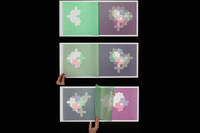
Best.-Nr. 10194Norway 2015. Limited Edition. Hardcover. Fine. Limited Edition. Hardcover. Some of the books in the series were made into a film and the film becoming an artwork unto itself. The film was awarded the Critic's Prize on the juried regional exhibition in Trondheim 2017. "The paper is translucent soft airy and completely silent. Quick movements of the papers is physically impossible. Each sheet has one visual element a shape which is mirrored as you turn the page. The fragile paper is printed with motives developed from Arabic ornamentation. This expression was originally created out of mathematics and geometry to avoid imagery that might lead to idolatry. I wanted to combine the book as a system with this geometry to see what that could bring. I find it fascinating how the images switch between flat and spatial" and that despite the strict patterns associations may vary and go towards modernism the oriental and paradoxically also towards figuration. The transparency causes overlaps between the pages that create new shapes and new colors. The sheets melt together in a way which makes it almost impossible for the reader to predict the next sheet's exact pattern and color or to remember precisely the last motif. It plays with the illusions of form color space and order. The image is transformed with each turn of a page and becomes ephemeral. A book starts to exist the moment its pages are turned. Since the book is a media of intimacy presence and touch haptic communication inevitably establishes meaning in itself a communication which invariably will be in some kind of relation to the mental content. It is an arena where perception and thinking operate together it might also bring awareness of your own perception. Books have been holy objects for many different reasons. The fragility of the paper and the actions necessary may add a ritualistic element to the act of reading. I see the reader' act as a performance a slow motion ballet. In a materialistic culture of mass consumption and noisy offensive expressions I find it appropriate to react by focussing on tranquility care and consideration. Like mandalas which often are written in sand to be washed away I have tried to create a space for a contemplative experience displaying the ever changing character and relativeness of existence where different elements always are colored and influenced by their surroundings." Artist statement Randi Annie Strand visual artist born in Norway 1962. Lives in Oslo. MA from Bergen Academy of Art and Design 92. Language signs and sensory experiences are central elements in her works. Her ideas have been realised through different media and techniques. Tight bright and unmarred. Black stiff board black cloth spine Japanese string binding relief prints hand printed using hand cut stencils on 11-12 gram Japanese paper. Oblong fo. np each iteration has 4 to 7 sheets. Illus. color plates. Numbered limited edition this being 1 of 3 copies. hardcover
Best.-Nr. 10194Norway 2015. Limited Edition. Hardcover. Fine. Limited Edition. Hardcover. Some of the books in the series were made into a film and the film becoming an artwork unto itself. The film was awarded the Critic's Prize on the juried regional exhibition in Trondheim 2017. "The paper is translucent soft airy and completely silent. Quick movements of the papers is physically impossible. Each sheet has one visual element a shape which is mirrored as you turn the page. The fragile paper is printed with motives developed from Arabic ornamentation. This expression was originally created out of mathematics and geometry to avoid imagery that might lead to idolatry. I wanted to combine the book as a system with this geometry to see what that could bring. I find it fascinating how the images switch between flat and spatial" and that despite the strict patterns associations may vary and go towards modernism the oriental and paradoxically also towards figuration. The transparency causes overlaps between the pages that create new shapes and new colors. The sheets melt together in a way which makes it almost impossible for the reader to predict the next sheet's exact pattern and color or to remember precisely the last motif. It plays with the illusions of form color space and order. The image is transformed with each turn of a page and becomes ephemeral. A book starts to exist the moment its pages are turned. Since the book is a media of intimacy presence and touch haptic communication inevitably establishes meaning in itself a communication which invariably will be in some kind of relation to the mental content. It is an arena where perception and thinking operate together it might also bring awareness of your own perception. Books have been holy objects for many different reasons. The fragility of the paper and the actions necessary may add a ritualistic element to the act of reading. I see the reader' act as a performance a slow motion ballet. In a materialistic culture of mass consumption and noisy offensive expressions I find it appropriate to react by focussing on tranquility care and consideration. Like mandalas which often are written in sand to be washed away I have tried to create a space for a contemplative experience displaying the ever changing character and relativeness of existence where different elements always are colored and influenced by their surroundings." Artist statement Randi Annie Strand visual artist born in Norway 1962. Lives in Oslo. MA from Bergen Academy of Art and Design 92. Language signs and sensory experiences are central elements in her works. Her ideas have been realised through different media and techniques. Tight bright and unmarred. Black stiff board black cloth spine Japanese string binding relief prints hand printed using hand cut stencils on 11-12 gram Japanese paper. Oblong fo. np each iteration has 4 to 7 sheets. Illus. color plates. Numbered limited edition this being 1 of 3 copies. hardcover books
2015Best.-Nr. 10195Norway 2015. Limited Edition. Hardcover. Fine. Limited Edition. Hardcover. Some of the books in the series were made into a film and the film becoming an artwork unto itself. The film was awarded the Critic's Prize on the juried regional exhibition in Trondheim 2017. "The paper is translucent soft airy and completely silent. Quick movements of the papers is physically impossible. Each sheet has one visual element a shape which is mirrored as you turn the page. The fragile paper is printed with motives developed from Arabic ornamentation. This expression was originally created out of mathematics and geometry to avoid imagery that might lead to idolatry. I wanted to combine the book as a system with this geometry to see what that could bring. I find it fascinating how the images switch between flat and spatial" and that despite the strict patterns associations may vary and go towards modernism the oriental and paradoxically also towards figuration. The transparency causes overlaps between the pages that create new shapes and new colors. The sheets melt together in a way which makes it almost impossible for the reader to predict the next sheet's exact pattern and color or to remember precisely the last motif. It plays with the illusions of form color space and order. The image is transformed with each turn of a page and becomes ephemeral. A book starts to exist the moment its pages are turned. Since the book is a media of intimacy presence and touch haptic communication inevitably establishes meaning in itself a communication which invariably will be in some kind of relation to the mental content. It is an arena where perception and thinking operate together it might also bring awareness of your own perception. Books have been holy objects for many different reasons. The fragility of the paper and the actions necessary may add a ritualistic element to the act of reading. I see the reader' act as a performance a slow motion ballet. In a materialistic culture of mass consumption and noisy offensive expressions I find it appropriate to react by focussing on tranquility care and consideration. Like mandalas which often are written in sand to be washed away I have tried to create a space for a contemplative experience displaying the ever changing character and relativeness of existence where different elements always are colored and influenced by their surroundings." Artist statement Randi Annie Strand visual artist born in Norway 1962. Lives in Oslo. MA from Bergen Academy of Art and Design 92. Language signs and sensory experiences are central elements in her works. Her ideas have been realised through different media and techniques. Tight bright and unmarred. Black stiff board black cloth spine Japanese string binding relief prints hand printed using hand cut stencils on 11-12 gram Japanese paper. Oblong fo. np each iteration has 4 to 7 sheets. Illus. color plates. Numbered limited edition this being 2 of 5 copies. hardcover
2015Best.-Nr. 10195Norway 2015. Limited Edition. Hardcover. Fine. Limited Edition. Hardcover. Some of the books in the series were made into a film and the film becoming an artwork unto itself. The film was awarded the Critic's Prize on the juried regional exhibition in Trondheim 2017. "The paper is translucent soft airy and completely silent. Quick movements of the papers is physically impossible. Each sheet has one visual element a shape which is mirrored as you turn the page. The fragile paper is printed with motives developed from Arabic ornamentation. This expression was originally created out of mathematics and geometry to avoid imagery that might lead to idolatry. I wanted to combine the book as a system with this geometry to see what that could bring. I find it fascinating how the images switch between flat and spatial" and that despite the strict patterns associations may vary and go towards modernism the oriental and paradoxically also towards figuration. The transparency causes overlaps between the pages that create new shapes and new colors. The sheets melt together in a way which makes it almost impossible for the reader to predict the next sheet's exact pattern and color or to remember precisely the last motif. It plays with the illusions of form color space and order. The image is transformed with each turn of a page and becomes ephemeral. A book starts to exist the moment its pages are turned. Since the book is a media of intimacy presence and touch haptic communication inevitably establishes meaning in itself a communication which invariably will be in some kind of relation to the mental content. It is an arena where perception and thinking operate together it might also bring awareness of your own perception. Books have been holy objects for many different reasons. The fragility of the paper and the actions necessary may add a ritualistic element to the act of reading. I see the reader' act as a performance a slow motion ballet. In a materialistic culture of mass consumption and noisy offensive expressions I find it appropriate to react by focussing on tranquility care and consideration. Like mandalas which often are written in sand to be washed away I have tried to create a space for a contemplative experience displaying the ever changing character and relativeness of existence where different elements always are colored and influenced by their surroundings." Artist statement Randi Annie Strand visual artist born in Norway 1962. Lives in Oslo. MA from Bergen Academy of Art and Design 92. Language signs and sensory experiences are central elements in her works. Her ideas have been realised through different media and techniques. Tight bright and unmarred. Black stiff board black cloth spine Japanese string binding relief prints hand printed using hand cut stencils on 11-12 gram Japanese paper. Oblong fo. np each iteration has 4 to 7 sheets. Illus. color plates. Numbered limited edition this being 2 of 5 copies. hardcover books
2016Best.-Nr. 10198Norway 2016. Limited Edition. Hardcover. Fine. Limited Edition. Hardcover. Some of the books in the series were made into a film and the film becoming an artwork unto itself. The film was awarded the Critic's Prize on the juried regional exhibition in Trondheim 2017. "The paper is translucent soft airy and completely silent. Quick movements of the papers is physically impossible. Each sheet has one visual element a shape which is mirrored as you turn the page. The fragile paper is printed with motives developed from Arabic ornamentation. This expression was originally created out of mathematics and geometry to avoid imagery that might lead to idolatry. I wanted to combine the book as a system with this geometry to see what that could bring. I find it fascinating how the images switch between flat and spatial" and that despite the strict patterns associations may vary and go towards modernism the oriental and paradoxically also towards figuration. The transparency causes overlaps between the pages that create new shapes and new colors. The sheets melt together in a way which makes it almost impossible for the reader to predict the next sheet's exact pattern and color or to remember precisely the last motif. It plays with the illusions of form color space and order. The image is transformed with each turn of a page and becomes ephemeral. A book starts to exist the moment its pages are turned. Since the book is a media of intimacy presence and touch haptic communication inevitably establishes meaning in itself a communication which invariably will be in some kind of relation to the mental content. It is an arena where perception and thinking operate together it might also bring awareness of your own perception. Books have been holy objects for many different reasons. The fragility of the paper and the actions necessary may add a ritualistic element to the act of reading. I see the reader' act as a performance a slow motion ballet. In a materialistic culture of mass consumption and noisy offensive expressions I find it appropriate to react by focussing on tranquility care and consideration. Like mandalas which often are written in sand to be washed away I have tried to create a space for a contemplative experience displaying the ever changing character and relativeness of existence where different elements always are colored and influenced by their surroundings." Artist statement Randi Annie Strand visual artist born in Norway 1962. Lives in Oslo. MA from Bergen Academy of Art and Design 92. Language signs and sensory experiences are central elements in her works. Her ideas have been realised through different media and techniques. Tight bright and unmarred. Black stiff board black cloth spine Japanese string binding relief prints hand printed using hand cut stencils on 11-12 gram Japanese paper. Oblong fo. np each iteration has 4 to 7 sheets. Illus. color plates. Numbered limited edition this being 4 of 5 copies. hardcover
2016Best.-Nr. 10198Norway 2016. Limited Edition. Hardcover. Fine. Limited Edition. Hardcover. Some of the books in the series were made into a film and the film becoming an artwork unto itself. The film was awarded the Critic's Prize on the juried regional exhibition in Trondheim 2017. "The paper is translucent soft airy and completely silent. Quick movements of the papers is physically impossible. Each sheet has one visual element a shape which is mirrored as you turn the page. The fragile paper is printed with motives developed from Arabic ornamentation. This expression was originally created out of mathematics and geometry to avoid imagery that might lead to idolatry. I wanted to combine the book as a system with this geometry to see what that could bring. I find it fascinating how the images switch between flat and spatial" and that despite the strict patterns associations may vary and go towards modernism the oriental and paradoxically also towards figuration. The transparency causes overlaps between the pages that create new shapes and new colors. The sheets melt together in a way which makes it almost impossible for the reader to predict the next sheet's exact pattern and color or to remember precisely the last motif. It plays with the illusions of form color space and order. The image is transformed with each turn of a page and becomes ephemeral. A book starts to exist the moment its pages are turned. Since the book is a media of intimacy presence and touch haptic communication inevitably establishes meaning in itself a communication which invariably will be in some kind of relation to the mental content. It is an arena where perception and thinking operate together it might also bring awareness of your own perception. Books have been holy objects for many different reasons. The fragility of the paper and the actions necessary may add a ritualistic element to the act of reading. I see the reader' act as a performance a slow motion ballet. In a materialistic culture of mass consumption and noisy offensive expressions I find it appropriate to react by focussing on tranquility care and consideration. Like mandalas which often are written in sand to be washed away I have tried to create a space for a contemplative experience displaying the ever changing character and relativeness of existence where different elements always are colored and influenced by their surroundings." Artist statement Randi Annie Strand visual artist born in Norway 1962. Lives in Oslo. MA from Bergen Academy of Art and Design 92. Language signs and sensory experiences are central elements in her works. Her ideas have been realised through different media and techniques. Tight bright and unmarred. Black stiff board black cloth spine Japanese string binding relief prints hand printed using hand cut stencils on 11-12 gram Japanese paper. Oblong fo. np each iteration has 4 to 7 sheets. Illus. color plates. Numbered limited edition this being 4 of 5 copies. hardcover books
2016Best.-Nr. 10503Norway 2016. Limited Edition. Hardcover. Fine. Limited Edition. Hardcover. Some of the books in the series were made into a film and the film becoming an artwork unto itself. The film was awarded the Critic's Prize on the juried regional exhibition in Trondheim 2017. "The paper is translucent soft airy and completely silent. Quick movements of the papers is physically impossible. Each sheet has one visual element a shape which is mirrored as you turn the page. The fragile paper is printed with motives developed from Arabic ornamentation. This expression was originally created out of mathematics and geometry to avoid imagery that might lead to idolatry. I wanted to combine the book as a system with this geometry to see what that could bring. I find it fascinating how the images switch between flat and spatial" and that despite the strict patterns associations may vary and go towards modernism the oriental and paradoxically also towards figuration. The transparency causes overlaps between the pages that create new shapes and new colors. The sheets melt together in a way which makes it almost impossible for the reader to predict the next sheet's exact pattern and color or to remember precisely the last motif. It plays with the illusions of form color space and order. The image is transformed with each turn of a page and becomes ephemeral. A book starts to exist the moment its pages are turned. Since the book is a media of intimacy presence and touch haptic communication inevitably establishes meaning in itself a communication which invariably will be in some kind of relation to the mental content. It is an arena where perception and thinking operate together it might also bring awareness of your own perception. Books have been holy objects for many different reasons. The fragility of the paper and the actions necessary may add a ritualistic element to the act of reading. I see the reader' act as a performance a slow motion ballet. In a materialistic culture of mass consumption and noisy offensive expressions I find it appropriate to react by focussing on tranquility care and consideration. Like mandalas which often are written in sand to be washed away I have tried to create a space for a contemplative experience displaying the ever changing character and relativeness of existence where different elements always are colored and influenced by their surroundings." Artist statement Randi Annie Strand visual artist born in Norway 1962. Lives in Oslo. MA from Bergen Academy of Art and Design 92. Language signs and sensory experiences are central elements in her works. Her ideas have been realised through different media and techniques. Tight bright and unmarred. Black stiff board black cloth spine Japanese string binding relief prints hand printed using hand cut stencils on 11-12 gram Japanese paper. Oblong fo. np each iteration has 4 to 7 sheets. Illus. color plates. Numbered limited edition this being 4 of 5 copies. hardcover
2016Best.-Nr. 10503Norway 2016. Limited Edition. Hardcover. Fine. Limited Edition. Hardcover. Some of the books in the series were made into a film and the film becoming an artwork unto itself. The film was awarded the Critic's Prize on the juried regional exhibition in Trondheim 2017. "The paper is translucent soft airy and completely silent. Quick movements of the papers is physically impossible. Each sheet has one visual element a shape which is mirrored as you turn the page. The fragile paper is printed with motives developed from Arabic ornamentation. This expression was originally created out of mathematics and geometry to avoid imagery that might lead to idolatry. I wanted to combine the book as a system with this geometry to see what that could bring. I find it fascinating how the images switch between flat and spatial" and that despite the strict patterns associations may vary and go towards modernism the oriental and paradoxically also towards figuration. The transparency causes overlaps between the pages that create new shapes and new colors. The sheets melt together in a way which makes it almost impossible for the reader to predict the next sheet's exact pattern and color or to remember precisely the last motif. It plays with the illusions of form color space and order. The image is transformed with each turn of a page and becomes ephemeral. A book starts to exist the moment its pages are turned. Since the book is a media of intimacy presence and touch haptic communication inevitably establishes meaning in itself a communication which invariably will be in some kind of relation to the mental content. It is an arena where perception and thinking operate together it might also bring awareness of your own perception. Books have been holy objects for many different reasons. The fragility of the paper and the actions necessary may add a ritualistic element to the act of reading. I see the reader' act as a performance a slow motion ballet. In a materialistic culture of mass consumption and noisy offensive expressions I find it appropriate to react by focussing on tranquility care and consideration. Like mandalas which often are written in sand to be washed away I have tried to create a space for a contemplative experience displaying the ever changing character and relativeness of existence where different elements always are colored and influenced by their surroundings." Artist statement Randi Annie Strand visual artist born in Norway 1962. Lives in Oslo. MA from Bergen Academy of Art and Design 92. Language signs and sensory experiences are central elements in her works. Her ideas have been realised through different media and techniques. Tight bright and unmarred. Black stiff board black cloth spine Japanese string binding relief prints hand printed using hand cut stencils on 11-12 gram Japanese paper. Oblong fo. np each iteration has 4 to 7 sheets. Illus. color plates. Numbered limited edition this being 4 of 5 copies. hardcover books
Best.-Nr. A9780415642361Paperback / softback. New. paperback
Best.-Nr. 637466519Taylor & Francis Group . Papeback. New. pp. 176 1st Edition Taylor & Francis Group unknown
Best.-Nr. 6302244Taylor & Francis Group . Papeback. New. pp. 176 Taylor & Francis Group unknown
2013Best.-Nr. 2-0415642361Routledge 2013. Paperback. New. reprint edition. 163 pages. 9.75x7.00x0.50 inches. Routledge paperback
Best.-Nr. 0415642361.Gpaperback. Good. Access codes and supplements are not guaranteed with used items. May be an ex-library book. paperback
Best.-Nr. 0415081300.Ghardcover. Good. Access codes and supplements are not guaranteed with used items. May be an ex-library book. hardcover
1994Best.-Nr. DADAX0415081300Routledge 1994-02-03. 1. hardcover. New. 7.00x0.50x10.00. Buy with confidence. Excellent Customer Service & Return policy. Routledge hardcover
1994Best.-Nr. SONG0415081300Routledge 1994-02-03. 1. hardcover. Used: Good. 7.00x0.50x10.00. Buy with confidence. Excellent Customer Service & Return policy. Routledge hardcover
Best.-Nr. 0259235490.Gpaperback. Good. Access codes and supplements are not guaranteed with used items. May be an ex-library book. paperback
Best.-Nr. 0332778681.Ghardcover. Good. Access codes and supplements are not guaranteed with used items. May be an ex-library book. hardcover
Best.-Nr. 1396087710.Ghardcover. Good. Access codes and supplements are not guaranteed with used items. May be an ex-library book. hardcover
Best.-Nr. 1396185917.Ghardcover. Good. Access codes and supplements are not guaranteed with used items. May be an ex-library book. hardcover
Best.-Nr. 1390956245.Gpaperback. Good. Access codes and supplements are not guaranteed with used items. May be an ex-library book. paperback
Best.-Nr. 1396061746.Ghardcover. Good. Access codes and supplements are not guaranteed with used items. May be an ex-library book. hardcover