Partito Comunista InternazionaleMareMagnum

10 976 résultats
1969In 16, br. ed. a punta di spillo, pp. 31, supplemento al n. 1, gennaio 1969 de Il Programma Comunista;piatti staccati, interni leggermente bruniti e qualche piega agli angoli, ma in buono stato.(foto)
1928178p. Ruled title page. Small 8vo. Original full yellow cloth binding, decorated and embossed in blue. Original dust jacket. Spine faded. Fourth Vanguard printing. Nice copy. Scarce in dust jacket. Coldwar/Economics 10
19648vo., First Edition, with plates and endpaper maps; grey cloth, gilt back, a very good, bright copy in dustwrapper. One of the first detailed accounts in English. Dustwrapper artwork by Arnold Schwartzman.
2001ALFREDO GUIDA 2001 529 PP. FONDO DI MAGAZZINO: LIEVI SEGNI DEL TEMPO, VOLUME INTONSO, MAI SFOGLIATO. Parole e frasi comuni Agostino Depretis antifascista autonomia avrebbe base Bologna borghesia Carboneria Cavour centro-sinistra classe comitato comune congresso conservatori corrente costituzionale costituzione crisi Crispi definito democratico Democrazia cristiana Depretis deputatidestra storica diretta ebbe economico elettorale elezioni erano esponenti fasci fascismo Firenze forze furono giacobini Giolitti giornale Giovine Italia Giuseppe Giustizia e libertà governo gruppo guerra ideologica iniziative internazionale intransigenteItalia l'azione l'Italia lavoro liberale libertà lotta maggioranza masse Massoneria Mazzini mazziniani mente Milano ministeriale moderati monarchia movimento cattolico Murri Mussolini nazionale nazione nuovo operaio organizzazione organo ormai paeseparlamentare Patto Gentiloni periodo Piemonte piemontese polemica politica italiana popolare posizione potere principi problema programma proletariato proprio pubblica radicali rappresentanza Rattazzi regime repubblicani repubblicano Rerum novarum riformistarisorgimentale rivoluzionaria rivoluzione Rivoluzione francese scaturito settore sindacale sinistra situazione socialista socialista italiano società storia struttura successo sviluppo tendenze tentativo Torino trasformismo Turati ufficiale unitario voti
1942DESCRIZIONE: Istituto per gli studi di politica internazionale Milano, 1942 , pp. 141 in 8°. Tratta: Il Trattato di Rapallo, La crisi politica di Rapallo e il Trattato di Berlino, La crisi economica di Rapallo, La partecipazione germanica al Piano quinquennale, La Russia sovietica contro il Terzo Reich, L'ultima battaglia. Indice completo in foto. CONDIZIONI: Buone/Ottime tracce di fox in copertina MA VOLUME INTONSO. PESO / WEIGHT: 211 gr. without package
1988DESCRIZIONE: Armando Editore Roma , 1988 I^ Ed. , br. ed. ill. a col. pp. 312 in 8°. UN TEMPO, per affacciarsi sugli umori del popolo comunista esistevano svariati balconi, specole, feritoie: da Vie Nuove a Noi donne, dal Calendario del Popolo al Pioniere. Attraverso questi veicoli la linea del partito arrivava ai militanti triturata, omogeneizzata, predigerita. Le raccomandazioni rivolte agli uomini di cultura che collaboravano a questi periodici erano poche e chiare: dimenticarsi degli altri intellettuali e ricordarsi di noi lavoratori senza istruzione (è un lettore di Vie Nuove che parla, nel 1946); adoperare esempi concreti e cordiali, abolire le parole difficili. Insomma, la massa bisogna prenderla per mano. Le mani che si offrivano per la bisogna appartenevano all' intellighenzia del partito. Indice completo in foto. CONDIZIONI: Buone, vol. con piccole pieghette alla sovracc. come da foto. PESO / WEIGHT: 375 gr. without package
Roma, PCI - FGCI, 1971. Il Canzoniere viene stampato e diffuso con l’intento di fornire uno strumento d’uso a disposizione di tutti quei gruppi che attraverso lo spettacolo realizzano una attività politica. N. 2 - Marzo 1971. Supplemento al N. 6 di Propaganda del PCI - Direttore Responsabile: Sandro Curzi. In 8vo (cm. 22); brossura originale illustrata in entrambi i piatti, con titolo al piatto anteriore; pp. 52 non numerate. Con numerose illustrazioni in bianco e nero nel testo. Buono stato di conservazione. Ax
Milano, Edizioni del Gallo, 1966. Fascicolo a cura delle Edizioni del Gallo. Contiene: Gianni Bosio: Estensione dei risultati del N.C.I.; Sergio Lodi e Giuseppe Morandi: Autobiografia e repertorio di Adelaide Bona; Tullio Pericoli: L’incontro con la realtà urbana; Paolo Ciarchi: Rudy Assuntino; Rudy Assuntino: Le basi americane, Canzone del mondo, Nostro Messico; Herbert Kleye: Canti proletari italiani in Germania: La guardia rossa, Bandiera rossa, Giovinezza, Bella ciao; Le musiche delle canzoni di Adelaide Bona e Rudy Assuntino; ATTIVITA’ DEI GRUPPI. Gualtiero Bertelli: Il canzoniere popolare veneto; Paolo Castagnino Saetta: Eredità della Resistenza a Genova; Silvio De Stefanis e Carlo Repetto: Note sul Folk Festival di Torino; Leoncarlo Settimelli: Una prima verifica a Roma; Antonio Cagnola: Vimercate anno primo; Mario Lodi, Sergio Lodi, Giuseppe Morandi: Come incominciammo, come andiamo avanti a Piadena; INTERVENTI E DISCUSSIONI. Adelio Ferrero: Un discorso politico; Elio Vittorini: Due sì e uno no; Mario De Luigi Jr.: Produzione significativa. Una lettera di Elena Morandi. In 8vo (cm. 21); brossura originale illustrata con titoli al piatto; pp. 107, (1). Con varie illustrazioni in bianco e nero nel testo. Ottima copia. Ax
1932réf. 143973Paris, “Demain” 1932 In-16 broché 16,5 cm sur 12. 160 pages. Très bon état d’occasion.
8vo, br. ed. pp.288. Science fiction and socialism have always had a close relationship. Many sf novelists and filmmakers are leftists. Others examine explicit or implicit Marxist concerns. As a genre, sf is ideally suited to critiquing the present through its explorations of the social and political possibilities of the future. This is the first collection to combine analyses of sf literature and films within a broader overview of Marxist theory and critical perspectives on the genre. Covering a rich variety of examples from Weimar cinema to mainstream Hollywood films, and novelists from Jules Verne and H.G. Wells to Kim Stanley Robinson, Ken MacLeod and Charles Stross, this is an indespensible insight into how Marxism and science fiction go hand-in-hand.This collection shows what science fiction criticism can do when Marxist critical practice is joined by science studies and the rest of theory. The results are tremendously exciting and powerful, explaining not just a genre but our world, from the financial crash of 2008 to the utopian impulses that remain always in us. --Kim Stanley Robinson. This collection marks a red shift in thinking about the history, form, and impact of science fiction literature and film. In robust dialectical manoeuvres, the essays, by a dynamic mix of scholars, simultaneously revive, critique, and transform the vibrant tradition of Marxist sf criticism. The book is a timely, readable, and incisive intervention in contemporary cultural critique. --Tom Moylan is Glucksman Professor of Contemporary Writing in English and Director of the Ralahine Centre for Utopian Studies at the University of Limerick. Red Planets is a highly readable and interesting collection of essays. Many of the pieces have completely new things to tell us, and will be of interest even to those who are antagonistic toward politically inspired criticism. --Neil Easterbrook, Associate Professor of Critical Theory, Texas Christian University. L'autore Mark Bould is Reader in Film and Literature at the University of the West of England, co-editor of Science Fiction Film and Television and an advisory editor for Extrapolation, Historical Materialism, Paradoxa and Science Fiction Studies. His books include Film Noir: From Berlin to Sin City (2005), The Cinema of John Sayles (2009) and he is co-editor of The Routledge Companion to Science Fiction (2009). China Mieville is an independent researcher and novelist. He won the Arthur C. Clarke Award for Perdido Street Station (2000) and Iron Council (2004), the British Fantasy Award for The Scar (2002) and the Locus Award for Best Young Adult Book for Un Lun Dun (2007). He is an editor of Historical Materialism.
1923réf. 3269084Paris, Doin, 1923. XVI, 417 S. OKart.
1946Mm 150x185 Brossura editoriale in due volumi, 564 pagine complessive, timbro d'appartenenza ai primi fogli d'apertura e al frontespizio. Lievissimi segni del tempo alla copertina, dorso leggermente brunito, peraltro buono stato. Spedizione entro 24 ore dalla conferma dell'ordine.
1974réf. za1858Geuthner Dos carré collé 1974 In-8 (16 x 24,5 cm), dos carré collé, 123 pages ; papier légèrement bruni, très bon état. Livraison a domicile (La Poste) ou en Mondial Relay sur simple demande.
Casa Editrice il Saggiatore, Milano, prima edizione, febbraio 1964. In 8vo grande, pp. 841; 480 + editoriali, bross. edit. Imperfezioni alle brossure, tagli un po' sporchi e fogli un po' ingialliti ma buoni gli interni.
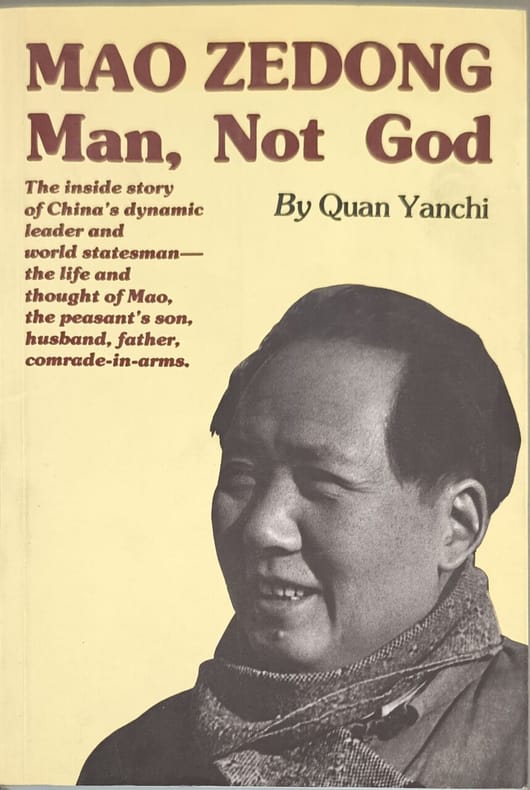
2008réf. 9033Foreign Languages Press 2008 213 pages 13 716x1 27x20 066cm. 2008. broché. 213 pages. Ce livre est une compilation de cinq essais philosophiques de Mao Zedong publiée par les Foreign Languages Press. Les textes abordent des thèmes centraux de sa pensée notamment le matérialisme dialectique l'importance de la pratique et la distinction entre contradictions antagonistes et non antagonistes ainsi que leurs résolutions
2003Mm 200x270 Volume in copertina rigida, sovraccoperta originale figurata a colori, 523 pagine con numerosi disegni a colori ad intercalare il testo. Copia eccellente. SPEDIZIONE IN 24 ORE DALLA CONFERMA DELL'ORDINE.
8vo, br. ed. 234pp. Cinque ritratti di rivoluzionarie socialiste che hanno cambiato la storia politica, sociale e culturale delle donne in Europa e nel mondo. L'aristocratica Aleksandra Kollontaj, protagonista della Rivoluzione bolscevica; la pedagogista radicale Nadezda Krupskaja, che fu moglie di Lenin; la passionale Inessa Armand, che fu stretta collaboratrice di Lenin e forse sua amante; l'infallibile cecchina antinazista Ljudmila Pavlicenko; la partigiana bulgara Elena Lagadinova, scienziata e leader del movimento globale delle donne: attraverso le vite di queste attiviste vissute a cavallo tra Otto e Novecento, Kristen R. Ghodsee traccia un'affascinante storia alternativa del movimento femminista. Le Valchirie rosse furono promotrici di un femminismo originale, e in parte inesplorato, che si sviluppò nell'Europa dell'Est, distinguendosi, per modalità e fini, da quello occidentale. Convinte, come scrive Noemi Ghetti nella prefazione al volume, che «l'auspicato avvento dell'uomo nuovo non ci sarebbe mai stato senza la formazione di una nuova donna», queste rivoluzionarie ripensarono radicalmente il ruolo della donna nella famiglia e nella società, spesso scontrandosi con le resistenze dei compagni maschi, che consideravano la questione femminile un obiettivo secondario rispetto alla rivoluzione e all'edificazione dello Stato socialista.
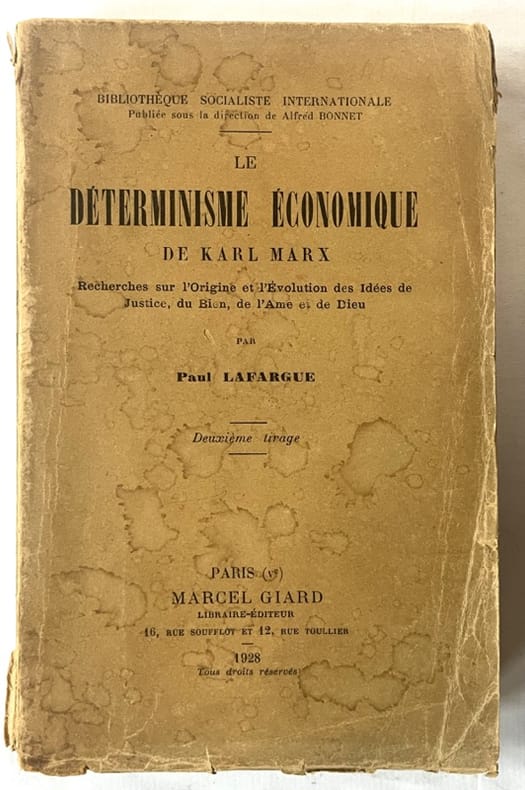
1928réf. 141318Paris, Marcel Giard 1928 In-12 broché 18,5 cm sur 12. 384 pages. Bon état d’occasion.
8vo, hardcover in dj. 352pp. The Second World War was the defining moment in the history of the Soviet Union. With Stalin at the helm, it emerged victorious at a huge economic and human cost. But even before the fighting had ended, Stalin began to turn against the architects of success. In this original and comprehensive study, Alfred J. Rieber examines Stalin as a wartime leader, arguing that his policies were profoundly paradoxical. In preparation for the war, Stalin mobilized the whole of Soviet society in pursuit of his military goals and intensified the centralization of his power. Yet at the same time, his use of terror weakened the forces vital to the defense of the country. In his efforts to rebuild the country after the devastating losses and destruction, he suppressed groups that had contributed immeasurably to victory. His steady, ruthless leadership cultivated a legacy that was to burden the Soviet Union and Russia to the present day.
1974in 8 (21,5x14,5) Brossura; pp.660; Ottimo
Roma, Editori Riuniti - Rinascita, 1974. Introduzione di Gerardo Chiaromonte. Edizione fuori commercio riservata agli abbonati della rivista Rinascita. I testi delle trasmissioni di Togliatti da Radio Milano-Libertà sono stati reperiti da Edoardo D’Onofrio presso l’Istituto del marxismo-leninismo di Mosca e annotati da Gianpasquale Santomassimo. In 8vo (cm. 21,8); cop. originale di colore arancione, illustrata con titoli al piatto e al dorso; pp. XXVII, (1), 435, (1). Ottima copia. Axg
1978Roma, Editori Riuniti, 1978, 16mo brossura editoriale, pp. 121 (qualche sottolineatura)
8vo, hardcover in dj, 304pp. In Stalinist Perpetrators on Trial, Lynne Viola, a professor of history at the University of Toronto, recounts statistics that still defy belief ... Viola writes [in] words with renewed significance in today's politically volatile, polarized climate. (LA Review of Books) Fascinating and compact ... Viola's pioneering study helps us understand Soviet perpetrators in the particular. But it also provides crucial lessons about authoritarianism in general and the violence of the security forces that protect it. (Norman M. Naimark, The Soviet and Post-Soviet Review) A research tour de force from one of the leading historians of Stalinism, shedding remarkable new light on what happened at the end of the Great Purges. A 'must read' for scholars and students of the Soviet period. (Sheila Fitzpatrick, author of Everyday Stalinism) This book is exceptional among the voluminous scholarship on Stalin's terror. Lynne Viola has written a fascinating and valuable work. The voices of those hangmen who ultimately became victims of the terror, as well as those they arrested, provide a stark picture of the Great Terror. The author explores the banality of evil in the Stalinist context: from the daily routine of torture and murder emerges the familiar figure of the self-righteous criminal. (Oleg V. Khlevniuk, author of Stalin: New Biography of a Dictator) Stalinist Perpetrators draws back the curtain on how the Stalinist Terror actually operated?not just how the state ordered it, but how it happened in provincial offices and prison cells. Her subject is the 'purge of the purgers,' the trial and often execution of the men responsible for the Terror. The nature of her source material?voluminous case files on these accused individuals?allows her to reconstruct the process and practices of the Stalinist Terror, including the beatings and torture, at the level of individuals, both in Kyiv and in more mundane provincial cities. (Peter Holquist, author of Making War, Forging Revolution: Russia's Continuum of Crisis, 1914-1921) The Stalinist purges of the late 1930s stand as one of the most horrific episodes of state terror in the twentieth century. Yet the perpetrators of those crimes have remained anonymous for many decades, protected mainly by the rules of historical access in Russia. Now, Lynne Viola, working in Ukrainian archives, provides the first remarkable study of the perpetrators. In this groundbreaking book, we see for the first time who these individuals were, their backgrounds, what brought them to their position of life and death decisions, what life was like for them and their families during such a time. Most important, Viola examines with keen and dispassionate acumen how Stalin's murderers justified the torture and killing of hundreds of thousands of their fellow citizens. This is a disturbing book, and one that needs to be read. (David Shearer, author of Stalin and the Lubianka: A Documentary History of the Political Police and Security Organs in the Soviet Union, 1922-1953)
2021brossura Qual è il significato nascosto del "Grande Terrore"? Chi c'era veramente dietro l'uccisione di Kirov? Esisteva realmente un complotto contro Stalin? Perché lui scatenò "la guerra contro i partocrati e divenne il "becchino della rivoluzione"? Ci sono fondati motivi per ritenere la sua morte il "delitto del secolo"? Cosa tacque Kruscev nella sua relazione "segreta"? E perché il crollo dell'Unione Sovietica era storicamente inevitabile? Questo libro risponde alle domande più calde e dibattute del passato sovietico.
1955265x195 mm. 33 pages. Hardcover. Cover stained. Cover corners slightly worn. Cover edges slightly rubbed. Spine yellowing and loose. Spine edges slightly bumped. Inner cover slightly stained. Pages coming loose from binding. Pages slightly yellowing. Else in good condition.