MAVELOT, Charles.Livre Rare Book
5 012 résultats
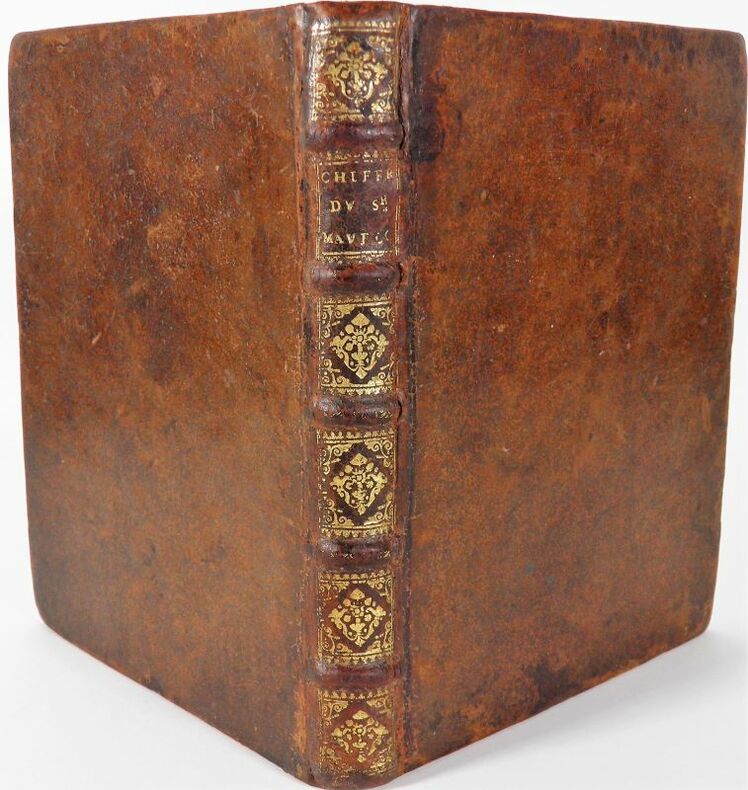
1680réf. 2171Paris, chez l'auteur, 1680. Petit in-4, 17 x 21,5 cm. Reliure de l’époque en plein veau brun, dos à nerfs orné, tranches mouchetées rouges. 3 ff., 21 pl., 58 pl., 2 ff. Edition originale de ce rare et remarquable ouvrage, l’un des plus utiles et connus de son époque, dont se servaient les artistes et les artisans. Il s’agit d’un recueil de deux séries de 79 planches gravées au total. La première série comprend, à pleine page, 21 « chiffres fleuronnez » des plus importantes personnalités de la fin du XVIIe siècle. La seconde série comprend 58 planches représentant 348 combinaisons de chiffres de 2 à 5 lettres, classées par ordre alphabétique, à raison de 6 chiffres par planche. Comme souvent, il manque la page aux armes de la Dauphine, avec l’adresse de l’auteur, qui faisait office de frontispice pour la deuxième série. Saffroy signale une planche dépliante à la fin, elle n’est cependant pas décrite par Brunet et n’est présente dans aucun des exemplaires que nous avons pu consulter. Saffroy, I, 2682 ; Brunet, III, 1547-1548 et Supplément II, 1060. Planche XVIII de la 1ère série reliée entre les planches XV et XVI.
1667réf. 16335A La Haye; A Brusselles, Chez Jean Rammazeyn; chez l'auteur & aussi chez François Foppens, 1667. In-folio de [34]-484 (chiffrée 496)-[12] pages, plein en veau marron du temps, dos orné de filets et fleurons dorés, supra-libros "G. Gomer van Berckmans 1667" au premier plat, et au second la devise "Desir · Romp · Repos".
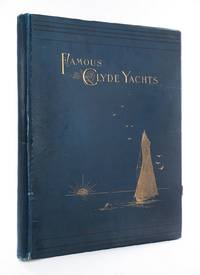
réf. 54897Glasgow & London: Oatts & Runciman. 1888. FIRST EDITION. Large folio. 50 x 38 cm. Title preface index "frontispiece" mounted on verso of index and 31 lithographed plates mounted one per page as published each with accompanying leaf of descriptive text. Original publisher's navy blue pictorial cloth with gilt title and decorations to upper cover all edges gilt. Slight rubbing at extremities of binding a few finger smudges to margins of some pages. Generally a very nice clean copy. The Royal Clyde Yacht Club was the biggest in Britain at the end of the nineteenth century larger even than the Solent Yacht Club and Clyde yachts were world-famous as pioneers of the relatively new sport of yacht racing. This book reproduces in chromolithography a series of watercolours by Henry Shields RBA 1859-1935 showing famous yachts or "white wings" mostly built 1880-87 with four boats built prior to 1880 included as notable precursors of the Clyde yacht boatbuilding style. Three of them the "Genesta" "Galatea" and "Thistle" had made attempts to win the America's Cup. Glasgow & London: Oatts & Runciman. 1888 hardcover
réf. 7751Arms John Taylor. Arms John Taylor. LE PENSEUR DE NOTRE DAME. F.136. Etching 1923. 1st State edition of 150. 12 5/8 x 10 1/8 inches; 322 x 252 mm. Signed in pencil. In excellent condition. Framed. unknown
1739In -4°, pp. (8), 220; con 17 tavv. di cui quattro ripiegate e una doppia, tagli dorati. L’impaginazione delle tavole è apparentemente disordinata, ma corrisponde a quella riscontrata in altre copie: libro completo e in ottime condizioni. Legatura alle armi del vescovo John Ernest Emmanuel von Harrach. Binding with arms of Harrach Bishop.
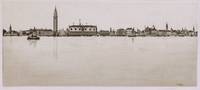
1930réf. 482New York: John Taylor Arms 1930. Superb. Etching on antique cream laid paper with a fancy "G" watermark 7 1/8 x 16 1/2 inches 182 x 442 mm full margins. Signed dated and inscribed "Ed. 70" in pencil lower margin. From a total edirion of 81 plus 5 trial proofs. Printed by Henry E. Carling. Number 18 from the Italian Series. A superb impression of this scarce print with all of the subtleties and details of the reflections in the water printing clearly. Fletcher 232 Illustrated: Page 192 Arms Dorothy Noyes "Hilltowns and Cities of Northern Italy". Along with his constant companion and wife Dorothy Noyes Arms spent decades exploring and documenting gothic structures throughout Europe. Noyes an accomplished travel writer had gifted Arms an etching set for Christmas in 1913 during the time that the couple called New York home. Arms having been trained in architecture was sparked and fascinated by the potential for exceptional precision that etching provided as a media. His immediate projects focused on the architectural wonderland that Manhattan presented but he quickly realized that it was no love affair for him. Jane Glaubinger PhD. Curator of Prints Cleveland Museum of Art quotes a manuscript owned by the Museum in which Arms confides "I can admire the skyscrapers of New York that unbelievable city which is a very gold mine for the architectural etcher but I do not love them and I cannot etch what I do not love." Glaubinger explains in her 2012 essay Images of Inspiration that Arms opined that the creation of art furthered the spiritual and moral improvement of mankind and he believed that Gothic cathedrals represented "the most significant expression of man's aspirations." Arms a dedicated and industrious devotee to detail saw printmaking as a vehicle for inspiring joy and uplift in contemporary society. Glaubinger continues "Over several decades Arms traveled throughout France Italy England and Spain drawing Gothic structures. These studies were the basis for the etchings he produced back in his Connecticut studio. Arms admired the craftsmanship of medieval art and aided by magnifying glasses used fine-gauge sewing needles set into wooden handles to draw the elaborate churches on copper plates. Extremely dedicated and industrious Arms rendered each building with exceptional precision spending 1000 hours or more on a single plate. He was a gifted draftsman and technical virtuoso who created compositions full of keenly observed details and nuanced light." Glaubinger Jane "Modern Gothic: The Etchings of John Taylor Arms" Cleveland Museum of Art 2012. John Taylor Arms unknown
1525In -4°, 56 cc. Cartonato. Frontespizio inciso con bordura ai quattro lati; secondo frontespizio compreso entro bordura di quattro legni. La prima parte del libro è in latino, la seconda in spagnolo. Esemplare particolarmente fresco e marginoso, cartonato d’aspetto (cm. 20 x 15,4). Engraved title page with border on sides; the second title page is included in wooden border: the first part of book is in latin, the second in spanish. A very fresh and wide margined copy, boards.
réf. 13880Arms John Taylor American 1887-1953. DOWNTOWN NEW YORK. F.108. Etching and Aquatint 1921. Edition of 75. Numbered 19/75 and signed and dated 1921 all in pencil. 8 3/8 x 4 7/8 inches 214 x 125 mm plate plus margins. Framed to 16 1/4 x 12 1/2 inches with the label of The Old Print Shop.In excellent condition. unknown
1745réf. 003350Frères Bruyset, 1745. 12 volumes in-12 (169 x 104 mm), maroquin vert olive, dos lisse, armes frappées à froid au centre des plats, filet à froid en encadrement avec fleurs de lys aux angles, filet de coupes, dentelle intérieure, contre-plats et gardes de tabis rose, tranches dorées (dos passé, quelques défauts d'usage, quelques traces, coins émoussés, quelques rousseurs). Exemplaire aux armes de Louis de France, Dauphin (Versailles 1729-Fontainebleau 1765), troisième enfant et aîné des fils de Louis XV et Marie Leczinska. Chevalier de la Toison d'Or en 1739 et chevalier des ordres du Roi en 1742, il épousa en premières noces, le 23 février 1745, Marie-Thérèse-Antoinette, Infante d'Espagne, dont il eut une fille, morte à deux ans, et en secondes noces, le 9 février 1747, Marie-Josèphe de Saxe qui lui donna huit enfants. Ex-libris de La Rochefoucauld Duc de Bisaccia. // 12 twelvemo volumes (169 x 104 mm), green-olive morocco, smooth spine, central arms stamped in blind on covers, blind-fillet border with fleurs-de-lys on corners, fillet on turns-in, inner dentelle, gilt edges (spine faded, some defects of use and stains, corners used, some spots). Precious copy bearing the arms of Louis de France, Dauphin (Versailles 1729 - Fontainebleau 1765), third child and elder son of Louis XV and Marie Leczinska. " Chevalier de la Toison d'Or " in 1739 and " Chevalier des Ordres du Roi " in 1742, he first married on february 23rd 1745 Marie-Thérèse-Antoinette, Infante d'Espagne, with whom he had a daughter, dead at two-years-old, and secondly, on february 9th 1747, Marie-Josèphe de Saxe with whom he had eight children, including five sons, three of them being Louis XVI, Louis XVIII and Charles X. Bookplate La Rochefoucauld Duc de Bisaccia.
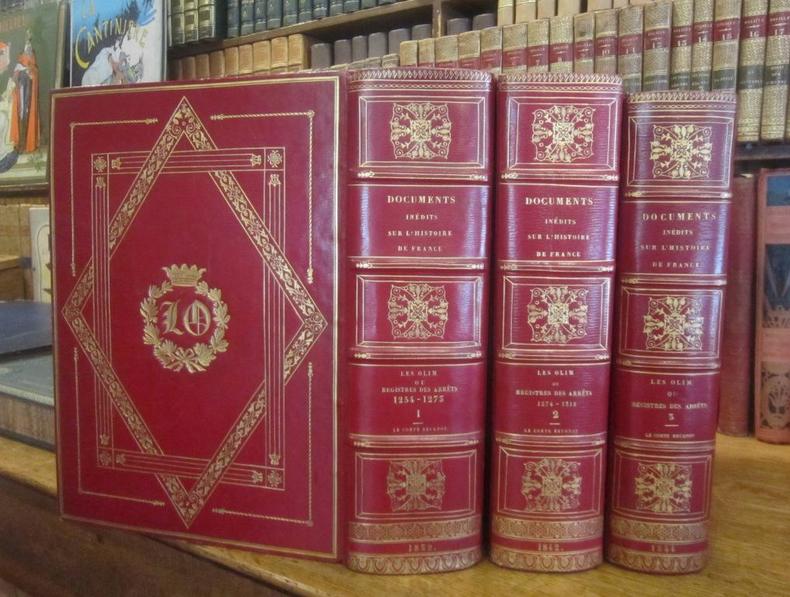
1839réf. 001064Paris Imprimerie Royale 1839
réf. 067-Ao.J. Kupferstich, um 1503, auf Bütten mit Wasserzeichen: Kleines Stadtwappen mit einem Spitzturm und zwei Zinnentürmen (vgl. Meder 275, um 1560/80). 18,5:12,1 cm. Literatur: Bartsch 100; Meder 97, f (von g). - Mit dem Monogramm in der Platte. Mit ca. 1 cm breitem Rändchen um die Plattenkante. - Guter, tiefschwarzer Abdruck mit feinen Kratzern, schwach fleckig und mit winziger Nadelspur. Dieser Kupferstich entstand in einer Zeit, in der sich Dürer ganz besonders in die Arbeit mit dem Grabstichel vertiefte und die unterschiedlichen Materialoberflächen zu gestalten suchte. Provenienz: Verso Sammlervermerk von 1861.
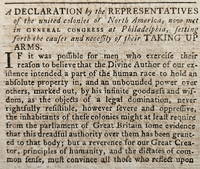
1775réf. 3823The complete text of the Causes and Necessity of their Taking Up Arms appears on pages 2 and 3 of the newspaper. The Second Continental Congress convened in Philadelphia on May 10 1775 only about seven months after the First Continental Congress had adjourned. But with the battles at Lexington and Concord occurring in April 1775 hostilities had begun and the Congress needed to act. The action was the issuance on July 6 of the "Causes and Necessity of Taking Up Arms" a pivotal founding document that laid out the colonies' justification for war while making it clear that it was a defensive action and not a declaration of independence. An initial draft of the Causes was rejected by the Congress as being too harsh. Thomas Jefferson and John Dickinson produced the new draft which the Congress approved. In the end the Causes was a masterful blend of airing grievances and reaching out for reconciliation while also clearly stating that independence was on the table if necessary. While the British Parliament was the primary intended audience of the Causes it was also critical that the document satisfy the strongly divided Congress itself. At the time there was extreme tension between those advocating for independence and those in favor of a peaceful reconciliation. The final document provided enough justification to satisfy both sides - and allowed the journey to nationhood to continue to the next watershed moment the Declaration of Independence just a year later. In addition to the important publication of the Causes this issue of the Virginia Gazette includes a brief mention debunking a report of an engagement in the days following that at Bunker Hill. It also prints "General Gage's false and audacious account of the late battle near Boston Bunker Hill." As an aside it should be noted that during 1775 there were three newspapers all named the Virginia Gazette and all published concurrently in Williamsburg. They are easily distinguished by their respective publishers Pinkney in the case of the offered newspaper. A rare and important paper very nicely preserved. Reference: Brigham History and Bibliography of American Newspapers 1690 1820 noting holdings only at Library of Congress and New York Historical Society. Condition: Disbound; untrimmed. Expected age toning. Small ink blot in masthead and a spot of foxing to the first leaf. Overall a very good example. ICN 7811. John Pinkney