MALTHUS (Thomas Robert).Livre Rare Book

596 Ergebnisse
1963Best.-Nr. 125826Seghers, 1963, in-8°, 373 pp, préface, introduction et traduction par le docteur Pierre Theil, broché, couv. illustrée, bon état
Best.-Nr. 41917 x 23,5 The Journal of European Economic History, volume 27, number 1 (Spring 1998), 137-202. Extract. Couverture cartonnée de la revue, agrafes au dos. Exemplaire en parfait état.(C11) Livre
Best.-Nr. 41917 x 23,5 The Journal of European Economic History, volume 27, number 1 (Spring 1998), 137-202. Extract. Couverture cartonnée de la revue, agrafes au dos. Exemplaire en parfait état.(C11) Livre
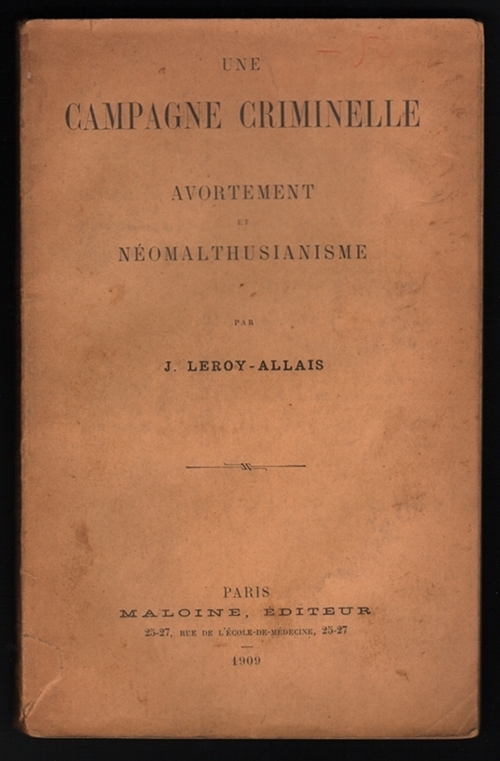
Best.-Nr. 621MALOINE, éditeurs, Paris 1909
1963Best.-Nr. 029609Editions Gonthier broché Bristol illustré Paris 1963 236 pages en format 11 - 18 cm
1963Best.-Nr. 045144Editions Gonthier broché Bristol illustré Paris 1963 bibliothèque médiations - 234 pages en format 11 - 18 cm
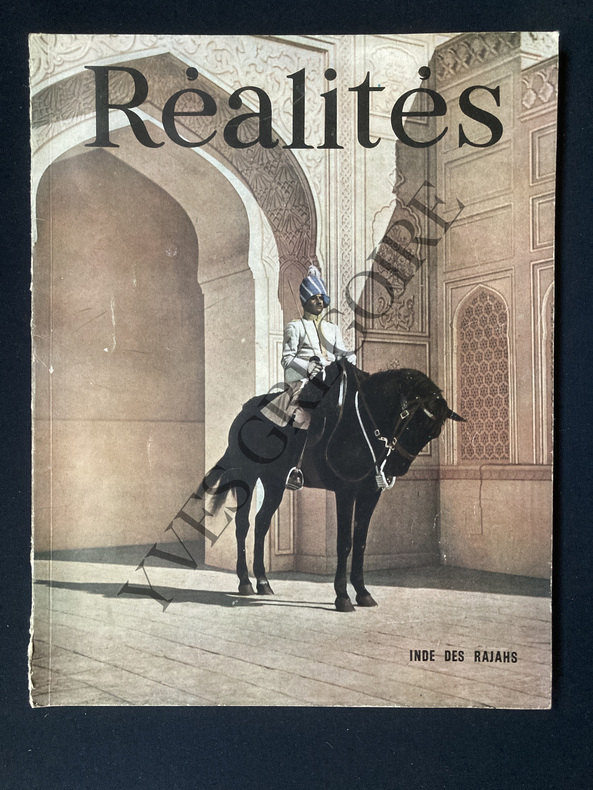
1949Best.-Nr. ABE-1172568004390 PAGES FORMAT 24,5 CM X 31,5 CM-EN COUVERTURE "INDE DES RAJAHS"-SIR STAFFORD CRIPPS, 10P PAR J.R.PECHERAL-INDE DES RAJAHS, 5P-L'ACADEMIE FRANCAISE, 8P PAR HENRI PERRUCHOT, PHOTOS ACADEMICIENS-TRANSFUGES SOVIETIQUES, PHOTO TROTSKI, 8P-LA PASSION SELON REMBRANDT, 4P-REVOLUTION AGRICOLE AUX USA, 9P-LA MODE, 7P, DIOR-FORMULES DE COOPERATION ENTRE CAPITAL ET TRAVAIL, 8P-MARIVAUX TRIOMPHE AU MARIGNY ET AU FRANCAIS, 2P, 4 PHOTOS, MADELEINE RENAUD, MICHELINE BOUDET, ROBERT HIRSCH-PUBLICITES PLEINE PAGE
1969Best.-Nr. RO20267501CALMANN LEVY. 1969. In-8. Broché. Etat d'usage, Couv. convenable, Dos plié, Quelques rousseurs. 366 pages - couverture rempliée. . . . Classification Dewey : 330-Economie
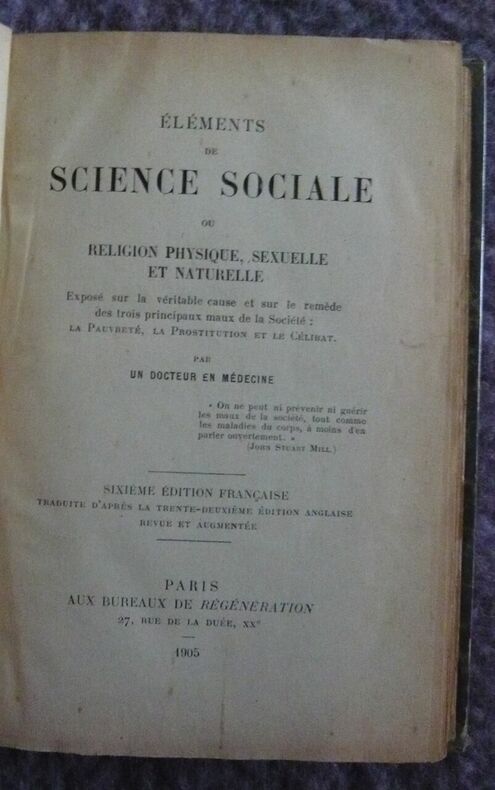
1905Best.-Nr. 19261905. Eléments de science sociale ou religion physique sexuelle et naturelle - exposé sur la véritable cause et sur le remède des trois principaux maux de la Société : la Pauvreté la prostitution et le Célibat par un docteur en médecine
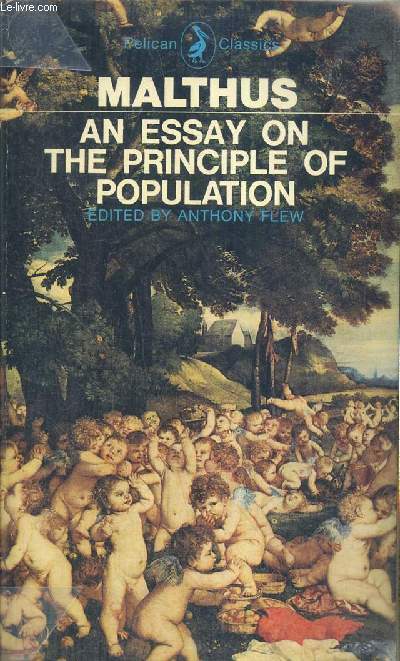
1979Best.-Nr. RO80260974Penguin Books. 1979. In-12. Broché. Bon état, Couv. convenable, Dos satisfaisant, Papier jauni. 291 pages. Annotation au stylo en page de titre. Texte en anglais.. . . . Classification Dewey : 420-Langue anglaise. Anglo-saxon
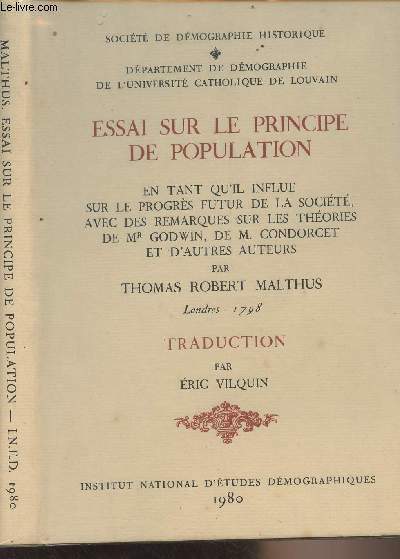
1980Best.-Nr. R300278306Institut national d'études démographiques. 1980. In-8. Relié. Bon état, Couv. convenable, Dos satisfaisant, Intérieur acceptable. 166 pages. Jaquette convenable.. Avec Jaquette. . . Classification Dewey : 304.6-Démographie
Best.-Nr. R150030669GONTHIER.. 1964.. In-12. Broché. Bon état, Couv. convenable, Dos satisfaisant, Intérieur frais. 236 pages. 1ère de couverture illustrée en couleurs.. . . . Classification Dewey : 300-SCIENCES SOCIALES
1964Best.-Nr. RO40084321Mediations. 1964. In-12. Broché. Etat d'usage, Couv. légèrement passée, Dos satisfaisant, Intérieur bon état. 236 pages. Page de titre manquante. Petite tache d'encre sur la tranche.. . . . Classification Dewey : 304.6-Démographie
1820Best.-Nr. RO30109165J. P. AILLAU. 1820. In-8. Broché. Etat passable, Couv. défraîchie, Dos abîmé, Quelques rousseurs. 501+452 pages. Tome premier : Charnières fendues, Manques coiffes. Tome second : Charnières fendues, coiffes abîmées, couverture défraichie.. . . . Classification Dewey : 330-Economie
1969Best.-Nr. R240009490CALMANN LEVY EDITEUR. 1969. In-12. Broché. Bon état, Couv. convenable, Dos satisfaisant, Intérieur frais. 306 pages. Couverture rempliée.. . . . Classification Dewey : 330-Economie
2010Best.-Nr. RO30314370Flammarion. 2010. In-8. Broché. Bon état, Couv. convenable, Dos satisfaisant, Intérieur frais. 284 pages.. . . . Classification Dewey : 301-Sociologie
Best.-Nr. 1769Extrait de la revue "ancienne revue des revue" du 1er décembre 1904. Paris, 1904, Aux bureau de la revue. cousu, 26p, 17x26cm, couv bleue, titre typo noir, non massicoté, e.a.s.
1984Best.-Nr. LFA-126711207Revue trimestrielle fondée en 1926 par Gaston Berger, publiée avec le concours du C.N.R.S. et des Universités de Provence, Bordeaux, Dijon, Grenoble, Montpellier, Nice, Reims et Tours. N° 3 - Juillet-Septembre 1984 : 144 pages, format 155 x 240 mm, brochée, Presses Universitaires de France, bon état
1934Best.-Nr. P-14581London: Royal Statistical Society 1934. Hardcover. Fine/First Edition. Octavo. Presentation copy from the President Lord Meston with slip laid in. With an account of Malthus' role in founding the Society. A superb copy. Royal Statistical Society hardcover
1817Best.-Nr. 172742London: 1817. Second edition of Malthus's defence of the East-India Company's College at Haileybury his home from 1805-1834 offprinted from The Pamphleteer Vol. IX number XVIII and published the same year as the first. Malthus taught as professor of history and political economy at the East India Company College at Haileybury from its inception to his own death training generations of EIC management. By 1816 the College was attracting criticism both for its virtual monopoly on Indian Civil Service training and for the actual quality of its teaching. A series of student disturbances throughout 1816 provided the immediate occasion for Malthus's defence which outlines a thorough analysis of the College's work as the best solution to the immediate demands of the Indian subcontinent. Octavo. Pp. 469-523 1. Disbound. Light browning and foxing to contents: a very good copy. unknown
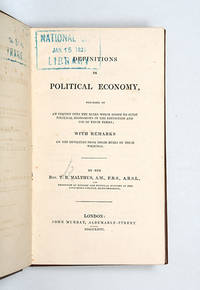
1827Best.-Nr. 195032London: John Murray 1827. One of the earliest works on the methodology of economics First edition of "a valiant attempt to resolve differences of opinion in political economy by codifying its terminology and establishing rules for the definition of terms. It could be regarded as one of the earliest works on the methodology of economics" ODNB. Malthus devotes separate chapters to among others the French economists Adam Smith Say Ricardo James Mill McCulloch and Samuel Bailey although the latter's name was not known to him. The work is bound with an offprint of J. R. McCulloch's hostile review of the work from the Scotsman 10 March 1827 in which McCulloch questions Malthus's qualifications for the office of "Dictator in the Economical Republic". Octavo 193 x 114 mm. Complete with half-title without terminal colophon. Recent brown calf spine lettered gilt marbled endpapers cloth hinge supports marbled edges. Library stamp "National City Library Jan 15 1921" to title page offsetting to half-title. Slight chip to corner of front free endpaper p. 3 with faint offset where the original title label was inserted some light foxing. A good copy. Goldsmiths' 25180; Kress C.1924. hardcover
1836Best.-Nr. 1857London: William Pickering. 1836. Second edition "with considerable additions from the author's own manuscript and an original memoir". Richard Cobden's copy with engraved bookplate to the front pastedown for "Dunford Library" Cobden's home incorporating the initials "R. C.". Octavo. Contemporary half diced plum roan over marbled boards the spine ruled in gilt and with titles in gilt. pp. liv 2 446. A very good copy the binding firm albeit with a little cracking to the front hinge heavy rubbing to the boards rubbing to the joints and spine ends and wear to the corners. The contents with some light spotting to the preliminary pages and a minor crease to the bottom corner of a handful of pages are otherwise in very good order throughout. The second expanded edition of this key work of economic theory by Thomas Malthus originally published as a rebuttal to David Ricardo's 'On the Principles of Political Economy and Taxation' in 1820. This subsequent edition was substantially revised by Malthus himself and published posthumously two years after his death in 1834; it also includes the first appearance of William Otter's notable essay regarding his friend's life a "Memoir of Robert Malthus". Malthus had set about editing his Principles almost immediately after it appeared in print incorporating changes both minor and major particularly with regards to the important chapter on value theory building on the work of Adam Smith. Hollander 'The Economics of Thomas Robert Malthus' p. 4. An interesting association copy coming from the library of the contemporary radical politician campaigner for free trade and co-founder of the Anti-Corn Law League Richard Cobden 1804-1865. Provenance: From the library of Richard Cobden at his home Dunford House. London: William Pickering. hardcover
1807Best.-Nr. 185282London: Printed for Longman Hurst Rees and Orme 1807. Though his theories were so cruel his heart and manners were most kindly and courteous Second edition presented and inscribed by Thomas Malthus: "East India College Awarded to Mr John Trotter at the Public Examination of December 1817 as the first of his Class in Political Economy T. Rob. Malthus". Malthus taught as professor of history and political economy at the East India Company College at Haileybury from 1805 to his death in 1834 training generations of EIC management. Writing many years later a former student recalled "We called him Pop; not in derision for we had a great but rather distant respect for him. Though his theories were so cruel his heart and manners were most kindly and courteous" quoted in Maureen Alexander Turner p. 54. John Trotter 1800-1825 entered the college in 1816 and subsequently joined the EIC; he died seven years later aboard the Royal George just off Penang in Malaya which was then an EIC port. Trotter was the son of Alexander Trotter d. 1842 the financially imaginative paymaster of the Royal Navy. His engraved armorial bookplate is in both volumes; Malthus's ink inscription is on the front free endpaper verso. The History of the Anglo-Saxons by Sharon Turner 1768-1847 was originally published from 1799 to 1805. It quickly became "a powerful influence on historical thought for the succeeding half-century" ODNB and remains acknowledged as a turning point in Anglo-Saxon studies and a benchmark in historiography. Writing with a clear eye on the British Empire of his own day - in which Trotter's East India Company played so prominent a role - Turner presents the Anglo-Saxons as central to the historical development that set England on its imperial course. 2 vols quarto 271 x 213 mm pp. x 499 1; viii 472 8. Large hand-coloured engraved folding map by Neele showing "Territory inhabited by the Ancient Saxons north of the Elbe" as frontispiece of vol. I. Contemporary calf rebacked spines ruled and lettered in gilt covers with double-rule panel in gilt crest of the East India Company College blocked in gilt to centre turn-ins in blind marbled endpapers edges sprinkled in brown and red. Light rubbing extremities neatly restored infrequent damp staining to otherwise clean contents short closed tear to inner margin of folding map: just about a very good copy. Maureen Alexander Turner The Educational Ideas and Influence of Thomas Robert Malthus 1766-1834 University of Glasgow Department of Education PhD thesis 1991. unknown
Best.-Nr. 123522London John Murray 1820. . First edition; 8vo 21 x 13.5 cm; moderate spotting front free endpaper just starting to become loose at head of gutter margin remains of a library label to front pastedown; contemporary half calf marbled paper boards spine lettered in gilt dulled; vi 601 1pp. The first edition of Malthus' treatise on political economy. The book was conceived as a series of tracts rather than a comprehensive and systematic treatise though Malthus published it to establish his own position against that of Ricardo with whom he had been having an ongoing debate about the nature of labour demand and profit. 'In his 'Principles of Political Economy' Malthus was proposing investment in public work and private luxury as a means of increasing effective demand and hence as a palliative to economic distress. The nation he thought must balance the power to produce and the will to consume' DSB. 'The Principles had only a limited impact at the time and was severely criticized by J. R. McCulloch and Ricardo; the latter prepared extensive critical notes. More recently it has received greater recognition largely as a result of the comments by J. M. Keynes in the 1930s. Keynes argued that Malthus's theory of effective demand provided a scientific explanation of unemployment and that the hundred-year domination of Ricardo over Malthus had been a disaster for the progress of economics. Keynes believed that if economics had followed Malthus instead of being constrained by Ricardo in an artificial groove the world would be a much wiser and richer place.' ODNB. Goldsmiths' 22767; Kress C.577. London, John Murray, 1820. hardcover
1803Best.-Nr. 62792London Printed for J. Johnson by T. Bensley 1803. Large 4to. Later brown hcalf with four raised bands single gilt lines and red leather title-label to spine. First three and last 14 leaves a bit brownspotted title-page and last two leaves marginally repaired at hinge otherwise a very nice clean and solid copy. VIII 4 610 pp. The Great Quarto-edition of Malthus' milestone work the first and most influential book on population. Although being the second edition after the anonymously printed first of 1798 it is so significantly altered revised and expanded that it is considered a new work rather than a new edition. Malthus himself also thought of it as such. It is nearly four times the length of the 1798 essay the title has been changed the title of the first: "An Essay on the Principle of Population as it Affects the Future Improvement of Society with Remarks on the Speculation of Mr. Godwin M. Condorcet and Other Writers" and it is published with Mathus' name as the author not anonymously. All later editions were minor revisions of this heavily expanded and altered second one. "In the course of this inquiry I found that much more had been done than I had been aware of when I first published the essay. The poverty and misery arising from a too rapid increase of population had been distinctly seen and the most violent remedies proposed so long ago as the times of Plato and Aristotle. And of late years the subject had been treated in such a manner by some of the French economists occasionally by Montesquieu and among our own writers by Dr. Franklin Sir James Steuart Mr. Arthur Young and Mr. Townsend as to create a natural surprise that it had not excited more of the publick attention" Preface to the second edition p. IV. The controversial views because of which the work became so influential are most provocative and eyeopening in the second edition in which Malthus for instance for the first time advocates moral restraint meaning sexual abstinence and late marriage and elaborately explains his comparison between the increase of population and food. "The "Essay" was highly influential in the progress of thought in the early nineteenth-century Europe. "Parson" Malthus as Cobbett dubbed him was for many a monster and his views were often grossly misinterpreted. But his influence on social policy whether for good or evil was considerable. The Malthusian theory of population came at the right time to harden the existing feeling against the Poor Laws and Malthus was a leading spirit behind the Poor Law Amendment Act of 1834." PMM 251. Thomas Robert Malthus 1766-1834 called the "enfant terrible" of the economists was an English demographer statistician and political economist who is best known for his groundbreaking views on population growth presented in his "Essays on the Principle of Population" which is based on his own prediction that population would outrun food supply causing poverty and starvation. Among other things this caused the legislation which lowered the population of the poor in England. Malthus actually turned political economic and social thought upside down with this work which has caused him to be considered one of the 100 most influential persons in history Hart The 100: A Ranking of the most Influential Persons in History 1978. Malthus was naturally condemned by Marx and Engels and opposed by the socialists universally but the work had an enormous impact on not only politics economics and social sciences but also on natural sciences. For instance both Darwin and Wallace considered Malthus a main source in their development of the theory of natural selection considering him a great philosopher and his Essay on Population one of the most important books ever. "Malthus’s idea of man’s "Struggle for existence" had decisive influence on Charles Darwin and the theory of evolution. Other scientists related this idea to plants and animals which helped to define a piece of the evolutionary puzzle. This struggle for existence of all creatures is the catalyst by which natural selection produces the "survival of the fittest". Thanks to Malthus Darwin recognised the significance of intraspecies competition between populations of the same species e.g. the lamb and the lamb not just interspecies competition between species e.g. the lion and the lamb. Malthusian population thinking also explained how an incipient species could become a full-blown species in a very short timeframe." The second edition must be considered the most important of all the editions. This is far more a work on the problems of over-population than it is a response to Godwin and Condorcet on their works whic is the main concern of the first edition. "Not so much shocked by his own conclusions in his "Essay on Population" first ed. 1798 as driven by a naturally inquiring mind he travelled for three years through Europe gleaning statistics and then published a second edition 1803." Catlin A History of the Political Philosophers 1939 p. 377. PMM 251 first edition. hardcover