MALTHUS -Livre Rare Book
MALTHUSLivre Rare Book
Principes d'économie politique
1969rif. 46734Calmann Levy Paris, Calmann Levy 1969. In-8 broché de 366 pages. Très bon état

Librairie Gil - Artgil SARL · Rodez, Francia14,00 €
596 risultati
rif. 988in-8° broché à rabats, 367 pages, bon état, collection Perspectives Economiques Préface de J.-F. Faure-Soulet -
1969rif. 46734Calmann Levy Paris, Calmann Levy 1969. In-8 broché de 366 pages. Très bon état
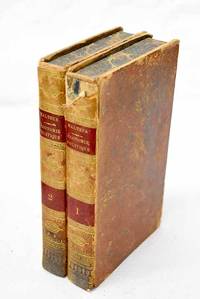
rif. PJH55320J. P. Aillaud Paris 1820. VG bright set in contemporary slightly worn and scuffed calf bindings with red and black title labels to each spine. 501 452pp. 1st French Edition published same year as the English Edition. Two Volumes. From the collection of Professor Malcolm Deas 1941-2023 an Emeritus Fellow of St Antony's College Oxford and University Lecturer in the Government and Politics of Latin America 1966-2008 J. P. Aillaud (Paris) 1820 unknown
1820rif. 76151Paris: Aillaud 1820. Due volumi di cm. 20 pp. 4 xxxii 501 1; 4 452. Solida ed elegante legatura coeva in mezza pelle dorsi a nervi con titoli ed impressioni a secco ed in oro. Poche arrossature ma esemplare genuino ed in ottimo stato di conservazione. Prima edizione francese apparsa l'anno dell'originale inglese. Cfr. Kress C 576; non in Einaudi. Aillaud unknown
1820rif. 3748860Paris.: Aillaud. 1820. Hardcover. Cubierta deslucida. Good. 21 cm. 2 v. Encuadernación en tapa dura artesanal en plena piel con doble tejuelo. Idioma francés. Malthus Thomas Robert 1766-1834 . Cubierta deslucida. Aillaud. hardcover
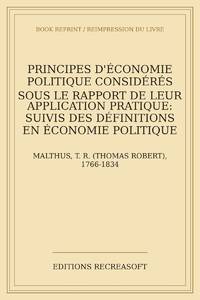
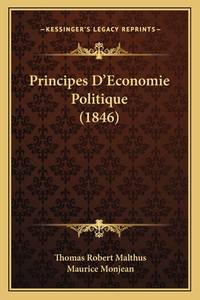
2026rif. LRB16001969Paris: Editions Recreasoft 2026 Langue : Français. Environ 604 pages. Français : Réimpression à la demande. Édition originale : 1846. Ouvrage de référence en économie politique consacré aux principes de l'économie appliquée à la richesse à la production à la distribution et à la consommation. Cette édition réunit également des définitions utiles pour l'étude du vocabulaire économique et présente un intérêt particulier en tant que présentation en langue française d'un texte classique de Malthus dans la pensée économique du XIXe siècle. Images du livre non contractuelles English : Print-on-demand reprint. Original edition : 1846. Reference work in political economy devoted to the principles of applied economics wealth production distribution and consumption. This edition also brings together useful definitions for the study of economic vocabulary and is of particular interest as a French-language presentation of a classic Malthus text in nineteenth-century economic thought. Book images are non-contractual. Editions Recreasoft. Softcover. New. Editions Recreasoft paperback
rif. DADAX0270329129Wentworth Press 2018-07-26. hardcover. New. 6.14x1.19x9.21. Buy with confidence. Excellent Customer Service & Return policy. Wentworth Press hardcover
rif. 0270329129.Ghardcover. Good. Access codes and supplements are not guaranteed with used items. May be an ex-library book. hardcover
rif. 1160230277.Gpaperback. Good. Access codes and supplements are not guaranteed with used items. May be an ex-library book. paperback
rif. 116771735X.Gpaperback. Good. Access codes and supplements are not guaranteed with used items. May be an ex-library book. paperback
rif. 2329476787.Gpaperback. Good. Access codes and supplements are not guaranteed with used items. May be an ex-library book. paperback
1846rif. 11941Paris: Guillaumin et Cie. 1846. 233x145mm. 9¼x5¾". Paris Guillaumin & Cie. 1846. En 4º 233 x 145mm. xxxvi-550 pp. Encuadernación de la época en holandesa piel. Segunda edición francesa de esta importante obra de economía política publicada por vez primera en inglés en 1820. Aunque Malthus es más conocido por los puntos de vista sobre la población contenidos en su Ensayo sobre población no cabe duda de que su importancia para los economistas de hoy se basa principalmente en sus Principios de economía política. Fue debido a este trabajo que J.M. Keynes reinstaló a Malthus como una figura importante en el pensamiento económico moderno en un momento en que la redundancia autoinducida del Ensayo sobre la población estaba a punto de reducir a Malthus a la categoría de monumento histórico. Los Principios de Economía Política de Malthus fueron influenciados por los Principios de Economía Política y Tributación de David Ricardo. Muy buen ejemplar. Guillaumin et Cie. hardcover
rif. 0243035306.Gpaperback. Good. Access codes and supplements are not guaranteed with used items. May be an ex-library book. paperback
rif. 0259108820.Gpaperback. Good. Access codes and supplements are not guaranteed with used items. May be an ex-library book. paperback
rif. 026663379X.Ghardcover. Good. Access codes and supplements are not guaranteed with used items. May be an ex-library book. hardcover
rif. 0656196130.Ghardcover. Good. Access codes and supplements are not guaranteed with used items. May be an ex-library book. hardcover
2026rif. LRB53000624Paris: Editions Recreasoft 2026 Language: English. Approximately 558 pages. English: Print-on-demand reprint. Original edition : 1826. Text in English. This sixth edition of Thomas Robert Malthus's seminal work on population dynamics examines the relationship between population growth and resources with a focus on its historical and contemporary impacts on human welfare. The text remains a foundational work in sociology and economics offering insights into demographic trends and their implications for societal development. Book images are non-contractual. Editions Recreasoft. Softcover. New. Editions Recreasoft paperback
1836rif. 1857London: William Pickering. 1836. Second edition "with considerable additions from the author's own manuscript and an original memoir". Richard Cobden's copy with engraved bookplate to the front pastedown for "Dunford Library" Cobden's home incorporating the initials "R. C.". Octavo. Contemporary half diced plum roan over marbled boards the spine ruled in gilt and with titles in gilt. pp. liv 2 446. A very good copy the binding firm albeit with a little cracking to the front hinge heavy rubbing to the boards rubbing to the joints and spine ends and wear to the corners. The contents with some light spotting to the preliminary pages and a minor crease to the bottom corner of a handful of pages are otherwise in very good order throughout. The second expanded edition of this key work of economic theory by Thomas Malthus originally published as a rebuttal to David Ricardo's 'On the Principles of Political Economy and Taxation' in 1820. This subsequent edition was substantially revised by Malthus himself and published posthumously two years after his death in 1834; it also includes the first appearance of William Otter's notable essay regarding his friend's life a "Memoir of Robert Malthus". Malthus had set about editing his Principles almost immediately after it appeared in print incorporating changes both minor and major particularly with regards to the important chapter on value theory building on the work of Adam Smith. Hollander 'The Economics of Thomas Robert Malthus' p. 4. An interesting association copy coming from the library of the contemporary radical politician campaigner for free trade and co-founder of the Anti-Corn Law League Richard Cobden 1804-1865. Provenance: From the library of Richard Cobden at his home Dunford House. London: William Pickering. hardcover
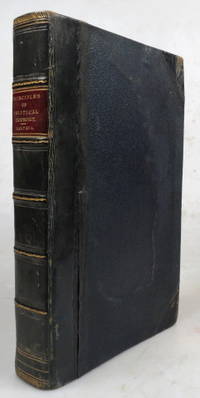
1820rif. 46619London: John Murray 1820. First edition 8vo vi 601 1 pp. Contemporary black half calf a little rubbed covers very slightly damp stained and bowed gilt spine and red label. "The Principles had only a limited impact at the time. more recently it has received greater recognition largely as a result of the comments by J. M. Keynes in the 1930s. Keynes argued that Malthus's theory of effective demand provided a scientific explanation of unemployment and that the hundred-year domination of Ricardo over Malthus had been a disaster for the progress of economics. Keynes believed that if economics had followed Malthus instead of being constrained by Ricardo in an artificial groove the world would be a much wiser and richer place." ODNB. Goldsmiths 22767. Kress C577. London: John Murray unknown
1820rif. 8125London: John Murray 1820. 1820 vi 601 1 p. First edition. It has a good quality mid-twentieth century binding with a polished morocco spine marbled boards and vellum corners. The spine with gold lines and a contrasting label. Minor rubs to the spine ends otherwise in very good condition. There is an undated pencil note on the title page '£45 Repair'. The text with a few signs of use and some pale paper toning. IMPORTANT COOPERATIVE MOVEMENT PROVENANCE: The title page is inscribed at the head 'Society for promoting Working Men's Assocns / 34 Castle Place -- Oxford Street with a shelfmark R31'. The Society was founded in 1849 by the Christian Socialists in an attempt to found self governing workshops. Lower down the title page is the oval stamp of Ormond Street Working Mens College which still exists in Camden. Founded in 1854 by Frederick Denison Maurice Wiki describes it as 'The Working Men's College is among the earliest adult education institutions established in the United Kingdom and Europe's oldest extant centre for adult education. Founded by Christian socialists at its inception it was at the forefront of liberal education philosophy.' At different times its teachers included Thomas Hughes whose latin lectures were apparently not so popular as his boxing club F.J. Furnival and E.M. Forster. London: John Murray, hardcover
1821rif. 040304Boston MA: Wells and Lilly 1821. Book. Very Good. Full-Leather. First American Edition. 8vo - over 7¾" - 9¾" tall. Original full tree calf gilt on burgundy title label mounted on upper spine. Rubbed along edges some surface cracking/crazing rubbed joints and spine extremities. Foxed endpapers some toning and scattered foxing to interior but otherwise intact with firm binding. Former owner's signature on front flyleaf. viii472 pp. Exceptionally scarce first American edition issued a year after the first British edition of 1820. Wells and Lilly Hardcover
1836rif. 3620869William Pickering 1836. Spine in poor conidition. Browning of pages.This book has hardback covers. Ex-library With usual stamps and markings In poor condition suitable as a reading copy. No dust jacket. Please note the Image in this listing is a stock photo and may not match the covers of the actual item750grams ISBN: William Pickering hardcover
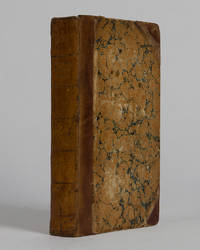
1820rif. 884511London: 1820. Some light foxing to the title page otherwise a superior copy in the original papercovered boards with paper spine label. Malthus' Principles of Political Economy did not have its full impact on economic theory until it was revived by J.M. Keynes and P. Sraffa in the twentieth century. Math and technology aside Malthus argues not that society tends toward cannibalistic starvation but that either society will "preventatively" control its population or nature will "correctively" reduce population"Several philosophers and speculatists had supposed that a certain state of society very different from any that has hitherto existed was in itself practicable; and that if it were realised it would be productive of a far greater degree of human happiness than is compatible with the present institutions of society."21 Malthus' argument as stated by Hazlitt is that if man were to give up his existing social institutions then there would be as much bad as good come of it. "For says Mr Malthus though this improved state of society were actually realized it could not possibly continue but must soon terminate in a state of things pregnant with evils for more insupportable than any we at present endure.". First Edition. Contemporary Blue Cloth. Excellent. 8vo. Hardcover
rif. 123522London John Murray 1820. . First edition; 8vo 21 x 13.5 cm; moderate spotting front free endpaper just starting to become loose at head of gutter margin remains of a library label to front pastedown; contemporary half calf marbled paper boards spine lettered in gilt dulled; vi 601 1pp. The first edition of Malthus' treatise on political economy. The book was conceived as a series of tracts rather than a comprehensive and systematic treatise though Malthus published it to establish his own position against that of Ricardo with whom he had been having an ongoing debate about the nature of labour demand and profit. 'In his 'Principles of Political Economy' Malthus was proposing investment in public work and private luxury as a means of increasing effective demand and hence as a palliative to economic distress. The nation he thought must balance the power to produce and the will to consume' DSB. 'The Principles had only a limited impact at the time and was severely criticized by J. R. McCulloch and Ricardo; the latter prepared extensive critical notes. More recently it has received greater recognition largely as a result of the comments by J. M. Keynes in the 1930s. Keynes argued that Malthus's theory of effective demand provided a scientific explanation of unemployment and that the hundred-year domination of Ricardo over Malthus had been a disaster for the progress of economics. Keynes believed that if economics had followed Malthus instead of being constrained by Ricardo in an artificial groove the world would be a much wiser and richer place.' ODNB. Goldsmiths' 22767; Kress C.577. London, John Murray, 1820. hardcover
rif. 5070583-nnew. unknown