MALTHUS, Thomas RobertBiblio.com
604 risultati
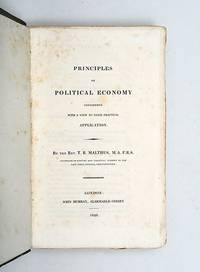
1820rif. 151433London: John Murray 1820. First edition. The book was conceived as a series of tracts rather than a comprehensive and systematic treatise though Malthus published it to establish his own position against that of Ricardo with whom he had been having an ongoing debate about the nature of labour demand and profit. "In his 'Principles of Political Economy' Malthus was proposing investment in public work and private luxury as a means of increasing effective demand and hence as a palliative to economic distress. The nation he thought must balance the power to produce and the will to consume" DSB. "The Principles had only a limited impact at the time and was severely criticized by J. R. McCulloch and Ricardo; the latter prepared extensive critical notes. But more recently it has received greater recognition largely as a result of the comments by J. M. Keynes in the 1930s. Keynes argued that Malthus's theory of effective demand provided a scientific explanation of unemployment and that the hundred-year domination of Ricardo over Malthus had been a disaster for the progress of economics. Keynes believed that if economics had followed Malthus instead of being constrained by Ricardo in an artificial groove the world would be a much wiser and richer place" ODNB. Octavo. Uncut and unopened in the original drab paper-backed blue boards printed paper spine label. Housed in a dark blue quarter morocco solander box by the Chelsea Bindery. Engraved book plate "Bibliothèque de Mr de Barante" to front pastedown paper library shelf label to foot of spine. Head of spine chipped front joint cracked rear joint cracked at head spine label a little chipped all still very strong; a very good copy. Goldsmiths' 22767; Kress C.577. hardcover
rif. 1331305829.Gpaperback. Good. Access codes and supplements are not guaranteed with used items. May be an ex-library book. paperback
1820rif. 119668London: John Murray 1820. First edition of this classic work regarding nature of labor demand and profit. Octavo original boards retaining the original paper spine label. In very good condition. Ownership inscription from the African Society and stamp to the title page. Rare in the original boards. There can be no doubt that Malthus’ importance for economists today rests mainly on his Principles of Political Economy. It was because of this latter work that J. M. Keynes 1933 reinstated Malthus as a major figure in modern economic thought" New Palgrave. "In his 'Principles of Political Economy' Malthus was proposing investment in public work and private luxury as a means of increasing effective demand and hence as a palliative to economic distress. The nation he thought must balance the power to produce and the will to consume" DSB. "The Principles had only a limited impact at the time and was severely criticized by J. R. McCulloch and Ricardo; the latter prepared extensive critical notes. But more recently it has received greater recognition largely as a result of the comments by J. M. Keynes in the 1930s. Keynes argued that Malthus's theory of effective demand provided a scientific explanation of unemployment and that the hundred-year domination of Ricardo over Malthus had been a disaster for the progress of economics. Keynes believed that if economics had followed Malthus instead of being constrained by Ricardo in an artificial groove the world would be a much wiser and richer place" ODNB. John Murray hardcover
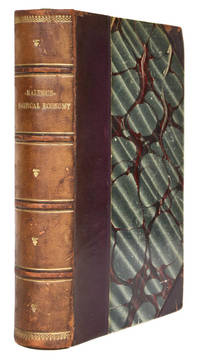
rif. 95378London John Murray 1820. . First edition; 8vo; small ownership stamp to lower outside corner of title-page small early 20th century bookseller's label to lower outside corner of verso of upper free endpaper a little age-toning and small ink smudge to title nineteenth century half calf over marbled boards rubbed at extremities spine faded a very good copy; vi 601 pp. The book was conceived as a series of tracts rather than a comprehensive and systematic treatise though Malthus published it to establish his own position against that of Ricardo with whom he had been having an ongoing debate about the nature of labour demand and profit. 'In his 'Principles of Political Economy' Malthus was proposing investment in public work and private luxury as a means of increasing effective demand and hence as a palliative to economic distress. The nation he thought must balance the power to produce and the will to consume' DSB. 'The Principles had only a limited impact at the time and was severely criticized by J. R. McCulloch and Ricardo; the latter prepared extensive critical notes. More recently it has received greater recognition largely as a result of the comments by J. M. Keynes in the 1930s. Keynes argued that Malthus's theory of effective demand provided a scientific explanation of unemployment and that the hundred-year domination of Ricardo over Malthus had been a disaster for the progress of economics. Keynes believed that if economics had followed Malthus instead of being constrained by Ricardo in an artificial groove the world would be a much wiser and richer place.' ODNB. Goldsmiths' 22767; Kress C.577. London, John Murray, 1820. hardcover
1820rif. 56733London: John Murray Albemarle-Street. Printed by C. Roworth Bell-yard Temple-bar 1820. First Edition. Hardcover. Very Good. 601 pp. Octavo 22 cm; rebound in later brown calf over hand-painted brown cloth with gilt-stamped black morocco spine label raised spine bands new endpapers. Surface of cloth treated with a transparent shellac of some kind giving it a striated shine when viewed at an angle; some bubbling-up of front board cloth light dampstaining to rear board; a handful of light pencil underlines and one contemporary ink blot very light foxing else interior is remarkably clean. A nicely rebound first edition of this classic work. John Murray, Albemarle-Street. Printed by C. Roworth, Bell-yard, Temple-bar hardcover
1821rif. 23029Boston: Wells and Lilly 1821. First American edition of this landmark work in political economy. Octavo bound in three quarters leather over marbled boards black leather morocco spine label. In near fine condition. In his Principle of Political Economy Malthus was proposing investment in public works and private luxury as a means of increasing effective demand and hence as a palliative to economic distress. The nation he thought must balance the power to produce and the will to consume" DSB. Wells and Lilly hardcover
1820rif. 66825London: John Murray 1820. If Only Malthus Instead of Ricardo Had Been the Parent Stem From Which Nineteenth-Century Economics Proceeded What a Much Wiser and Richer Place the World Would be Today" MALTHUS Thomas Robert. Principles of Political Economy. Considered with a View to Their Practical Application. London: John Murray 1820. First edition. Octavo. vi 12-601602. Original boards uncut. With original paper label on spine. Hinges expertly and almost invisibly repaired. Old bookplate from "The Library of Victoria" with no other library markings. A very clean copy internally fine. Very scarce in original boards. Housed in a custom quarter black morocco clamshell gilt-stamped. First edition of Malthus' principal contribution to economic theory. Schumpeter describes Malthus' work in relation to that of his predecessors Adam Smith and Ricardo as follows: "Ricardo's work.started with the Wealth of Nations and recoined the latter's theoretical contents by a method that centered in the concept of value. Exactly the same thing is evidently true of the work of Malthus.except for his theory of saving and investment which on the face of it seems to be Malthus's own all the elements that enter into the analytic apparatus of that work and even its terminological arrangements point to the First book of the Wealth of Nations. Only whereas Ricardo recoined the doctrine of Wealth by means of the labor-quantity theory of value Malthus recoined it by the means of the theory of value that A. Smith actually used namely the theory of supply and demand.whereas Ricardo's analytic apparatus is geared to the problem of distribution.Malthus. geared his apparatus to the analysis of the whole economic process.Therefore Malthus should.stand in the history of analysis not only as the author of a valid alternative to Ricardo's theory but as the sponsor or rather as one of the sponsors of the victorious one." "Although Malthus is best known for the views on population contained in his Essay on Population.there can be no doubt that his importance for economists today rests mainly on his Principles of Political Economy 1820. It was because of the latter work that J. M. Keynes reinstated Malthus as a major figure in modern economic thought". New Palgrave. Cress C577. HBS 66825. $6500. John Murray unknown
1820rif. BB0781London: John Murray Albermarle-Street 1820. First Edition. Paper-covered Boards. First Edition with the rare 4-page publisher's catalog dated April 1820 of this classic of economic theory. 8vo: vi601 1pp. "London: Printed by C. Roworth Bell-yard Temple-bar." on colophon and title-page verso as called for. Uncut in the original publisher's drab blue paper-covered boards largely unopened with brown paper spine and remnants of original printed label. Internally fresh and bright with only occasionally spotting original spine largely perished but restored sensitively by an expert conservationist the boards somewhat stained and bumped but thoroughly original hinges reinforced. Small owner's book label probably contemporary partly effaced reading T Cobb. Clamshell case with leather spine label gilt. An unsophisticated copy of a truly scarce in publisher's binding important and desirable book a cornerstone of economic thought and a major influence on other scientific endeavors including the principles of evolution developed by Charles Darwin and Alfred Russell Wallace. Goldsmiths'-Kress 22767. Kress C577. Lowndes 1459. The title of Malthus's final major work is "something of a misnomer as the book was conceived as a series of tracts rather than a comprehensive and systematic treatise. . . . The Principles had only a limited impact at the time and was severely criticized by J. R. McCulloch and David Ricardo; the latter prepared extensive critical notes. But more recently it has received greater recognition largely as a result of the comments by John Maynard Keynes in the 1930s. Keynes argued that Malthus's theory of effective demand provided a scientific explanation of unemployment and that the hundred-year domination of Ricardo over Malthus had been a disaster for the progress of economics. Keynes believed that if economics had followed Malthus instead of being constrained by Ricardo in an artificial groove the world would be a much wiser and richer place." ODNB N. B. With few exceptions always identified we only stock books in exceptional condition carefully preserved in archival removable mylar sleeves. All orders are packaged with care and posted promptly. Satisfaction guaranteed. Fine Editions Ltd is a member of the Independent Online Booksellers Association and we subscribe to its codes of ethics. John Murray, Albermarle-Street unknown
1836rif. ELTinMAL26London: William Pickering 1836. 1836. 8vo. pp. liv 1 leaf 446. untrimmed & partly unopened in original cloth spine dull & frayed at ends label chipped. Second Enlarged Edition of Malthus's chief contribution to general economic theory in which he explains in particular his differences with Ricardo. ".Ricardo's work.started with the Wealth of Nations and recoined the latter's theoretical contents by a method that centered in the concept of value. Exactly the same thing is evidently true of the work of Malthus.Except for his theory of saving and investment which on the face of it seems to be Malthus's own all the elements that enter into the analytic apparatus of that work and even its terminological arrangements point to the First Book of the Wealth of Nations. Only whereas Richardo recoined the doctrine of the Wealth by means of the labor-quantity theory of value Malthus recoined it by the means of the theory of value that A.Smith actually used namely the theory of supply and demand.whereas Ricardo's analytic apparatus is geared to the problem of distribution.Malthus.geared his apparatus to the analysis of the whole economic process.Therefore Malthus should.stand in the history of analysis not only as the author of a valid alternative to Ricardo's theory but as the sponsor or rather as one of the sponsors of the victorious one." Schumpeter This edition enlarged with additions from Malthus's own manuscript was published two years after the author's death and includes William Otter's important Memoir pp. xiii-liv one of the chief original authorities for James Bonar's Malthus and His Work 1886. Einaudi 3681. Goldsmiths' 29340. Kress C.4188. McCulloch p. 18. NCBEL III 1294. Palgrave II p. 677. Schumpeter p. 482-83. Hardcover. London: William Pickering, 1836. Hardcover
1951rif. 1247116Augustus M. Kelley INC. Collectible - Acceptable/No Dust Wrapper. 1951. Ex-Library Clean Content. Hard Cover. Ex-Library G456 . Augustus M. Kelley INC. hardcover
2017rif. Gyan-9789353209841Facsimile Publisher 2017. Hardcover. New. 22.59 x 14.34 x 4.84 cm. English Facsimile Publisher hardcover
2017rif. Gyan-9789353209841Facsimile Publisher 2017. Hardcover. New. 22.59 x 14.34 x 4.84 cm. English Facsimile Publisher hardcover
1820rif. 948P11London: John Murray 1820. First edition. Cloth. Very Good. 9" by 6". None. The first edition of this important economic work by the influential writer Thomas Robert Malthus. The first edition.'Principles of Political Economy' is now regarded as a very influential study on economics in which the author explains the historical economic depression in Europe and why they occur. The work rejects the idea of Say's law and Ricardo's 1817 Principles of Political Economy and Taxation generally. Malthus argued that any rise in wages above the subsistence level would encourage population growth which in turn would drive wages back down to subsistencea dynamic often referred to as the "Malthusian trap." By the economist scholar and cleric Thomas Robert Malthus. He published this work to rival David Ricardo's 1817 work 'Principles of Political Economy and Taxation'."The Principles had only a limited impact at the time and was severely criticized by J. R. McCulloch and Ricardo; the latter prepared extensive critical notes. But more recently it has received greater recognition largely as a result of the comments by J. M. Keynes in the 1930s. Keynes argued that Malthus's theory of effective demand provided a scientific explanation of unemployment and that the hundred-year domination of Ricardo over Malthus had been a disaster for the progress of economics. Keynes believed that if economics had followed Malthus instead of being constrained by Ricardo in an artificial groove the world would be a much wiser and richer place" DNBVery rarely seen eight pages of adverts to the rear dated April 1820. In a rebacked cloth binding. Externally generally smart. Spine label is rubbed with light marks and a small amount of loss. Minor bumping to the extremities. Light marks and a small amount of rubbing to the cloth. Internally firmly bound. Pages are lightly age-toned and generally clean with scattered spots. Tidemark to pages 159 to 194. Very Good John Murray hardcover
rif. 0331218054.Ghardcover. Good. Access codes and supplements are not guaranteed with used items. May be an ex-library book. hardcover
2013rif. Gyan-9789333157780Isha Books 2013. Hardcover. New. 22.59 x 14.34 x 4.82 cm. English Isha Books hardcover
2013rif. Gyan-9789333157780Isha Books 2013. Hardcover. New. 22.59 x 14.34 x 4.82 cm. English Isha Books hardcover
rif. B9783865507549Paperback / softback. New. paperback
rif. B9781015455818Hardback. New. hardcover
rif. B9781015461161Paperback / softback. New. paperback
1821rif. 1512140034Boston: Wells and Lilly 1821-01-01. First Edition. Hardcover. Very Good. First American edition. Bound in marbled boards spine rebacked in modern leather. Burgundy Moroccan leather spine label. Clean unmarked pages. Marginal browning to pages. Internally very good. The first English edition was printed by John Murray in 1820 this is the 1st American edition printed in 1821 in Boston.J.M. Keynes "argued that Malthus's theory of effective demand provided a scientific explanation of unemployment and that the hundred-year domination of Ricardo over Malthus had been a disaster for the progress of economics. Keynes believed that if economics had followed Malthus . the world would be a much wiser and richer place" ODNB. The last chapter of the book was devoted to rebutting Say's law and argued that the economy could stagnate with a lack of "effectual demand". In other words wages if less than the total costs of production cannot purchase the total output of industry causing prices to fall; price falls decrease incentives to invest creating a downward spiral. Refs for 1st English ed: Goldsmiths 22767; Kress C577. Early signature of E.W. Paige Schenectady NY and his book plate on front paste down. Eugene W. Paige 1852-1919 served in the New York legislature in the 19th century. Boston: Wells and Lilly hardcover
rif. 2091202133304441Shunju-sha N.A. Soft Cover. Fine. Number of pages: 298p Size: 19cm Shunju-sha paperback
1974rif. 2080202105301450Iwanamishoten 1974. Soft Cover. Fine. Number of pages: 431p Size: 15cm Number of books: 1 Iwanamishoten paperback
1820rif. 66825London: John Murray 1820. If Only Malthus Instead of Ricardo Had Been the Parent Stem From Which Nineteenth-Century Economics Proceeded What a Much Wiser and Richer Place the World Would be Today" MALTHUS Thomas Robert. Principles of Political Economy. Considered with a View to Their Practical Application. London: John Murray 1820. First edition. Octavo. vi 12-601602. Original boards uncut. With original paper label on spine. Hinges expertly and almost invisibly repaired. Old bookplate from "The Library of Victoria" with no other library markings. A very clean copy internally fine. Very scarce in original boards. Housed in a custom quarter black morocco clamshell gilt-stamped. First edition of Malthus' principal contribution to economic theory. Schumpeter describes Malthus' work in relation to that of his predecessors Adam Smith and Ricardo as follows: "Ricardo's work.started with the Wealth of Nations and recoined the latter's theoretical contents by a method that centered in the concept of value. Exactly the same thing is evidently true of the work of Malthus.except for his theory of saving and investment which on the face of it seems to be Malthus's own all the elements that enter into the analytic apparatus of that work and even its terminological arrangements point to the First book of the Wealth of Nations. Only whereas Ricardo recoined the doctrine of Wealth by means of the labor-quantity theory of value Malthus recoined it by the means of the theory of value that A. Smith actually used namely the theory of supply and demand.whereas Ricardo's analytic apparatus is geared to the problem of distribution.Malthus. geared his apparatus to the analysis of the whole economic process.Therefore Malthus should.stand in the history of analysis not only as the author of a valid alternative to Ricardo's theory but as the sponsor or rather as one of the sponsors of the victorious one." "Although Malthus is best known for the views on population contained in his Essay on Population.there can be no doubt that his importance for economists today rests mainly on his Principles of Political Economy 1820. It was because of the latter work that J. M. Keynes reinstated Malthus as a major figure in modern economic thought". New Palgrave. Cress C577. HBS 66825. $6500. John Murray unknown books
1820rif. 56733London: John Murray Albemarle-Street. Printed by C. Roworth Bell-yard Temple-bar 1820. First Edition. Hardcover. Very Good. 601 pp. Octavo 22 cm; rebound in later brown calf over hand-painted brown cloth with gilt-stamped black morocco spine label raised spine bands new endpapers. Surface of cloth treated with a transparent shellac of some kind giving it a striated shine when viewed at an angle; some bubbling-up of front board cloth light dampstaining to rear board; a handful of light pencil underlines and one contemporary ink blot very light foxing else interior is remarkably clean. A nicely rebound first edition of this classic work. John Murray, Albemarle-Street. Printed by C. Roworth, Bell-yard, Temple-bar hardcover books
1820rif. 1015London: John Murray 1820. First Edition. Recent full calf in a contemporary style. Very good with some minor spotting at points. 8vo vi 1 - 601 1 - blank pp. Malthus published this book at a time when Ricardo's ideas were established orthodoxy. The Principles is the first complete statement of his economic theories. In it the theory of rent is clearly stated and the three main points of debate with Ricardo addressed. The principle of the value theory based on labor costs demand affects value in a limited way finally that profits are determined by the cultivation and fertility of the least arable land were central to Ricardo. Malthus challenges each of these ideas and what he termed Ricardo's ' new school of political economy ' . This is Malthus' intellectual manifesto with important sections on the theory of rent employment wages and the question of value. A key book in the development of modern economic theory. Kress C-577; Einaudi #3680; See Palgrave for a lengthy entry. John Murray unknown books