3 869 résultats
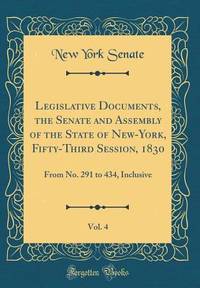
réf. 1332263216.Gpaperback. Good. Access codes and supplements are not guaranteed with used items. May be an ex-library book. paperback
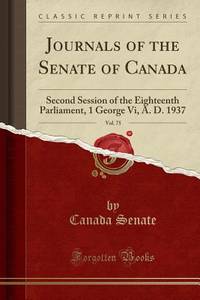
réf. 1332259022.Gpaperback. Good. Access codes and supplements are not guaranteed with used items. May be an ex-library book. paperback
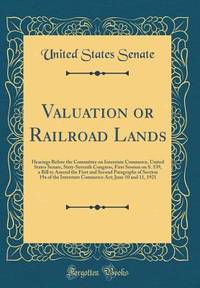
réf. 1332258816.Gpaperback. Good. Access codes and supplements are not guaranteed with used items. May be an ex-library book. paperback
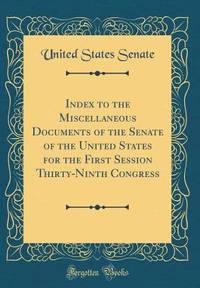
réf. 1332259650.Gpaperback. Good. Access codes and supplements are not guaranteed with used items. May be an ex-library book. paperback
1982réf. 91196Washington DC: U.S. Government Printing Office 1982. Presumed First Edition First Printing. Wraps. Good. iii 1 404 pages. Footnotes. Tabular data. Cover has some wear and soiling. Mailing label residue on the back page. This includes statements from Wilbur Campbell Ken Cory Charles DiBona Ed Gabriel Saul Goodman David Linowes Charles Mankin William Pendley Pete Smith Laurence Steenberg and Malcolm Wallop. The Federal Energy and Mineral Resources Act of 1982 S. 2305 hearings were held before the Senate Committee on Energy and Natural Resources during the 97th Congress. They addressed severe revenue shortfalls and accounting problems in the collection of mineral royalties from federal and Indian lands.The legislation responded to findings by the Commission on Fiscal Accountability of the Nation's Energy Resources which highlighted lax site security and ineffective royalty collection. The Government Accountability Office GAO testified in support of the bill noting that historical site security on federal and Indian lands was "extremely lax". The GAO urged the Department of Interior to take the lead in developing strict site security and inspection strategies. The hearings centered on modernizing the accounting and control of royalties establishing minimum standards for site security plans and mandating record-keeping for mineral transport. Proposals included provisions allowing the Secretary of the Interior to delegate audit and inspection responsibilities to states provided a uniform and effective accounting system was used. The bill also required strict protections for Indian lands requiring permission from affected tribes for such delegation. U.S. Government Printing Office paperback
1980réf. 91195Washington DC: U.S. Government Printing Office 1980. Presumed First Edition First Printing. Wraps. Good. vi 372 6 pages Illustrations. Tabular data. Cover has some wear and soiling. Among the witnesses were Herbert Gardner J. D. Minutilli Ted Taubeneck Lloyd Bentsen Anthony Newton James Summers Erland Higinbotham Jerry Hester Lawrence Fox John Liebman Charles Levy Thomas Rees Ruth Scheuler Philip Klutznick Robert Hormats Fred Bergsten and Deane Hinton. The Export Trading Company Act ETCA of 1980 was initially proposed as a legislative effort to encourage and promote the formation of U.S. export trading companies ETC. By allowing banking institutions to invest in these trading companies the Act sought to help small and medium-sized American businesses expand globally. The original bills introduced in the 96th Congress eventually evolved into the finalized Export Trading Company Act of 1982 Pub. L. 97-290. This landmark legislation is designed to boost American exports by tackling three major hurdles: access to financing antitrust restrictions and promotion. The finalized legislation accomplished these goals across several core Titles:Banking and Financing Title II: It breached the historical separation of banking and commerce by permitting eligible banking entities-such as bank holding companies and Edge Act corporations-to acquire equity in export trading companies. It also improved exporters' access to working capital by establishing a loan guarantee program through the Export-Import Bank. Antitrust Exemption / Certification Title III: It established a certification procedure overseen by the Department of Commerce and the Department of Justice. If granted a Certificate of Review exporters receive immunity from federal and state antitrust suits for specified export conduct drastically reducing the risk of private treble-damage antitrust lawsuits. Antitrust Clarification Title IV: It amended the Sherman Act and the Federal Trade Commission Act to clarify that the antitrust laws generally do not apply to conduct involving foreign commerce unless it has a "direct substantial and reasonably foreseeable effect" on U.S. domestic commerce. Trade Promotion Title I: It directed the Secretary of Commerce to promote ETCs and facilitate connections between producers of exportable goods and companies providing export services. Today the program is administered by the International Trade Administration. It allows U.S. companies to form export joint ventures to share resources such as negotiating volume freight rate discounts or participating in large-volume sales without the fear of violating antitrust laws. U.S. Government Printing Office paperback
1995réf. BOILER68KMM000019M & M Quality Printing 1995. paperback. very good. Prompt shipment with tracking. we ship in CLEAN SECURE NEW boxes Very good trade paperback book 70 pages 8vo. M & M Quality Printing paperback
1981réf. 91184Washington DC: U.S. Government Printing Office 1981. Presumed First Edition First Printing. Wraps. Very good. iv 205 3 pages. Tabular data. Among the witnesses were James Watt Russell Barton Robert Haderlein Wayne Anderson Tom Shannon and Georgiana Smith. The U.S. Advisory Commission on Intergovernmental Relations ACIR was an independent bipartisan agency in the United States federal government formed to study and consider the federal government's intergovernmental relationships. It was established in 1959 by under Public Law 86-380 and operated until 1996. ACIR was a successor to the Commission on Intergovernmental Relations popularly known as the Kestenbaum Commission a temporary commission that operated from 1953 to 1955. ACIR was directed by a 26-member commission that consisted of six members of the U.S. Congress appointed by the leadership of the House and Senate four state governors three members of state legislatures four mayors three county officials three private citizens and three representatives of the executive branch of the federal government. The citizen and executive branch representatives were appointed directly by the President. The state county and municipal officials were appointed by the President from nominations submitted by national organizations of state and local governments. ACIR had a professional staff of between 15 and 30 people who conducted research for the organization. It was terminated by the 1996 budget by a Republican-dominated Congress and with support of president Bill Clinton who became displeased with ACIR's handling of unfunded federal mandates. There is currently no active federal commission for it to exercise oversight over as the original 1959 statutory authority was left unfunded and allowed to expire. While the federal ACIR is defunct the topic of oversight and reestablishing an intergovernmental relations commission has occasionally surfaced in Congress though no federal commission has been fully revived. Historically and currently intergovernmental oversight is managed through the following:Congressional Committees: Legislative and executive oversight of federalism and intergovernmental partnerships such as block grants and state mandates is primarily handled by the House Committee on Oversight and Accountability and the Senate Homeland Security and Governmental Affairs Committee. State-Level Commissions: Because the federal body dissolved many states created their own advisory commissions on intergovernmental relations to monitor and evaluate state-local partnerships. For example entities like the Tennessee Advisory Commission on Intergovernmental Relations operate independently to study state local and federal relationships within their own jurisdictions. U.S. Government Printing Office paperback
2007réf. 1-0979009952The Mary Ferrell Foundation 2007. Paperback. New. 118 pages. 9.50x6.00x0.28 inches. The Mary Ferrell Foundation paperback
réf. 1396434690.Ghardcover. Good. Access codes and supplements are not guaranteed with used items. May be an ex-library book. hardcover
réf. 1396468412.Gpaperback. Good. Access codes and supplements are not guaranteed with used items. May be an ex-library book. paperback
réf. 1396431268.Ghardcover. Good. Access codes and supplements are not guaranteed with used items. May be an ex-library book. hardcover
réf. 1396406166.Ghardcover. Good. Access codes and supplements are not guaranteed with used items. May be an ex-library book. hardcover
1981réf. 91187Washington DC: U.S. Government Printing Office 1981. Presumed First Edition First Printing. Wraps. Very good. iii 1 230 2 pages. Illustrations. Tabular data. The "Hydroelectric Development in New England" hearing was a pivotal August 1981 session held by the U.S. Senate Committee on Energy and Natural Resources. The hearing addressed the booming "mini-hydro" rush driven by the Public Utility Regulatory Policies Act PURPA and regional disputes over cheap renewable energy The PURPA Boom: Driven by the 1970s oil crises Congress passed PURPA in 1978 to reduce foreign oil dependence. By 1981 this led to a "gold rush" of developers seeking to retrofit finance and construct small-scale hydroelectric plants. The legislation guaranteed a market for the electricity and offered sizable tax credits. The 1981 hearing touched on a major regional crisis. New Hampshire attempted to stop "exporting" relatively inexpensive hydroelectricity generated on the Connecticut River to Massachusetts and Rhode Island in order to lower its own citizens' utility bills. This sparked a legal war that culminated in the 1982 Supreme Court case New England Power Co. v. New Hampshire where the Court ruled that states could not constitutionally restrict the interstate trade of hydro-power. Despite federal tax incentives developers faced severe bottlenecks in trying to build or revive small hydro plants. The hearing focused heavily on accelerating the Federal Energy Regulatory Commission FERC licensing process to encourage development. U.S. Government Printing Office paperback
réf. 1396356800.Ghardcover. Good. Access codes and supplements are not guaranteed with used items. May be an ex-library book. hardcover
réf. 1396353852.Ghardcover. Good. Access codes and supplements are not guaranteed with used items. May be an ex-library book. hardcover
2006réf. Q-0160763312Senate Historical Office 2006-10-03. hardcover. New. In shrink wrap. Looks like an interesting title! Senate Historical Office hardcover
2009réf. Q-1439107173Gallery Books 2009-11-17. Paperback. New. New. In shrink wrap. Looks like an interesting title! Gallery Books paperback
2001réf. Q-0373250118Red Dress Ink 2001-11-01. Paperback. New. In shrink wrap. Looks like an interesting title! Red Dress Ink paperback
2003réf. Q-037325041XRed Dress Ink 2003-12-01. Paperback. New. In shrink wrap. Looks like an interesting title! Red Dress Ink paperback
2008réf. Q-0373895607Red Dress Ink 2008-05-27. Paperback. New. In shrink wrap. Looks like an interesting title! Red Dress Ink paperback
2005réf. Q-0373895585Red Dress Ink 2005-12-27. Paperback. New. In shrink wrap. Looks like an interesting title! Red Dress Ink paperback
2002réf. Q-0742522458Rowman & Littlefield Publishers 2002-02-21. Paperback. New. New. In shrink wrap. Looks like an interesting title! Rowman & Littlefield Publishers paperback
1986réf. Q-0934793042Pathfinder Publishing 1986-05-01. Paperback. New. In shrink wrap. Looks like an interesting title! Pathfinder Publishing paperback
2010réf. Q-1439107238Gallery Books 2010-10-26. Paperback. New. In shrink wrap. Looks like an interesting title! Gallery Books paperback