3921 risultati
1953rif. 90542Washington DC: United States Government Printing Office 1953. Presumed First Edition First printing. Wraps. Fair. PART 12 ONLY. iii 1 725-840 pages. Illustrations. Tabular Data. Cover is worn torn chipped and soiled. In this part 12 testimony was heard from Alice Prentice Barrows Saul Carson Irving Fajans Carl Aldo Marzani Margaret B. Porter Helen R. Tenney Craig S. Vincent and Milton Wolff. One of the purposes of these hearings was "to determine the extent of Communist infiltration of Government." The United States Senate's Special Subcommittee to Investigate the Administration of the Internal Security Act and Other Internal Security Laws 1951–77 known more commonly as the Senate Internal Security Subcommittee SISS and sometimes the McCarran Committee was authorized by S. 366 approved December 21 1950 to study and investigate 1 the administration operation and enforcement of the Internal Security Act of 1950 Pub. L. 81–831 also known as the McCarran Act and other laws relating to espionage sabotage and the protection of the internal security of the United States and 2 the extent nature and effects of subversive activities in the United States "including but not limited to espionage sabotage and infiltration of persons who are or may be under the domination of the foreign government or organization controlling the world Communist movement or any movement seeking to overthrow the Government of the United States by force and violence". The resolution also authorized the subcommittee to subpoena witnesses and require the production of documents. Because of the nature of its investigations the subcommittee is considered by some to be the Senate equivalent to the older House Un-American Activities Committee HUAC. The chairman of the subcommittee for the 82nd United States Congress was Patrick McCarran of Nevada. William Jenner of Indiana took over during the 83rd United States Congress after the Republicans gained control of the Senate in the 1952 election. When the Democrats regained control in the 84th Congress 1955–1957 James O. Eastland of Mississippi became chairman a position he had until the subcommittee was abolished during 1977. The subjects of its investigations during the 1950s include the formulation of U.S. foreign policy in Asia; the scope of Soviet activity in the United States; subversion in the Federal Government particularly in the Department of State and Department of Defense; immigration; the United Nations; youth organizations; the television radio and entertainment industry; the telegraph industry; the defense industry; labor unions; and educational organizations. The subcommittee published over 400 volumes of hearings and numerous reports documents and committee prints. During March 1951 FBI officials began a formal liaison program with the SISS in contract to the informal HUAC-FBI relationship whereby SISS agreed to focus its hearings on "matters of current internal security significance.and also to help the Bureau in every possible manner". This program reflected the FBI director's unqualified confidence in McCarran's ability to serve the cause of anticommunism and to protect the confidentiality of FBI sources. United States Government Printing Office paperback
rif. 6205700557.Gpaperback. Good. Access codes and supplements are not guaranteed with used items. May be an ex-library book. paperback
1956rif. 041528Washington D.C.: U.S. Senate 1956. Hardcover. Very Good/No Jacket. 8vo - over 7¾" - 9¾" tall. 849pp.; SC green w/blk.; rubbed & sunned on spine&edges; PONinscript.inside cover; cleantight pgs. "A survey of the extent to which the rights guaranteed by the First Amendment are being respected and enforced in the various government loyalty-security programs. U.S. Senate hardcover
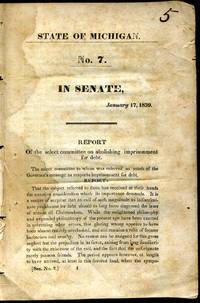
1839rif. 7738baLansing MI: State of Michigan 1839. Book. Very good- condition. Paperback. Michigania; 11 pages; dis-bound; not American imprints or in Michigan imprints. State of Michigan Paperback
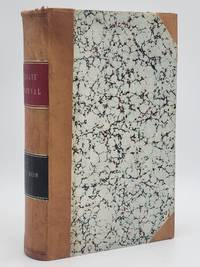
1869rif. 299870Carson City.: Henry R. Mighels State Printer. 1869. Contemporary half sheep over marbled boards red and black spine labels with gilt title. Very good light wear to spine head and corners. 8vo. 23x14.5 cm. Appendix includes: Second Biennial message of H.G. Blasdell Governor of Nevada Biennial report of the Controller of the State of Nevada Report of the State Treasurer of Nevada Biennial Report of the Warden of the Nevada State Prison Report of the State Mineralogist of Nevada Biennial Report of the Surveyor General and State Register of the State of Nevada and First biennial report of the Secretary of State in relation to the indigent insane. weight: 2.7 lb. Several folding charts. Henry R. Mighels, State Printer. hardcover
rif. 117991581X.Gpaperback. Good. Access codes and supplements are not guaranteed with used items. May be an ex-library book. paperback
rif. 1984532669.Gpaperback. Good. Access codes and supplements are not guaranteed with used items. May be an ex-library book. paperback
rif. 1796078786.Ghardcover. Good. Access codes and supplements are not guaranteed with used items. May be an ex-library book. hardcover
rif. 1616405465.Gpaperback. Good. Access codes and supplements are not guaranteed with used items. May be an ex-library book. paperback
rif. 38536949like new. unknown
rif. A9781343940345Hardback. New. hardcover
rif. 1796073520.Ghardcover. Good. Access codes and supplements are not guaranteed with used items. May be an ex-library book. hardcover
rif. A9781345139778Hardback. New. hardcover
1969rif. 89990Washington DC: U. S. Government Printing Office 1969. Presumed First Edition First printing. Stiff Wraps. Very good. V 1 92 1 pages. Compiled by the Subcommitee on National Security and International Operations. From Foreword written by Chairman Henry M. Jackson- In our continuing study of the effectiveness of this country's national security methods staffing and processes we thought it would be useful to understand more fully the negotiating methods of the Soviet Union. In this connection the subcommittee staff was asked to prepare a short selection of analytic materials on the Soviet approach to international negotiation drawing on both Western and Russian sources. The National Security Subcommittee is an oversight committee that holds the federal government accountable to taxpayers with a focus on national security homeland security foreign operations immigration and emergency management. U. S. Government Printing Office paperback
1969rif. 87530Washington DC: U. S. Government Printing Office 1969. Presumed First Edition First printing. Wraps. Good. v 1 363 3 pages. Maps. Tabular data. Some page discoloration noted. The key witnesses were: Lt. Gen. Francis C. Gideon; Rear Adm. Draper L. Kauffman; Col. Ernest W. Pate; Lt. Gen. Robert H. Warren; and James M. Wilson. The hearings of the Subcomittee were designed to detail on a country-by-country basis United States programs personnel and facility in the troubled Far East excluding Vietnam. Their aim with the help of Administration witnesses was to gather for the Senate the best and most complete information available; and to this end Messrs. Pincus and Paul of the Subcommittee staff had already spent seven months gathering inforamtion.Becasue of the national security implications of some of the information to be dwelt on and in order to permit frank discussion of all pertinent matters the initial fact finding hearings were to be held in executive session. Let it be noted however that as complete a record as security consideration permit will be released to the public as rapidly as possible. U. S. Government Printing Office paperback
2006rif. 84998Washington DC: U. S. Government Printing Office 2006. Presumed First Edition First printing. Wraps. Very good/No dust jacket issued. iii 1 118 4 pages. Robert Jones Portman born December 19 1955 is an American attorney and politician serving as the junior United States senator from Ohio since 2011. A member of the Republican Party Portman was the 35th director of the Office of Management and Budget OMB from 2006 to 2007 the 14th United States trade representative from 2005 to 2006 and a U.S. representative from 1993 to 2005 representing Ohio's 2nd district. In 1993 Portman won a special election to represent Ohio's 2nd congressional district in the United States House of Representatives. He was reelected six times before resigning upon his appointment by President George W. Bush as the U.S. trade representative in May 2005. As trade representative Portman initiated trade agreements with other countries and pursued claims at the World Trade Organization. In May 2006 Bush appointed Portman the director of the Office of Management and Budget. In 2010 Portman announced his candidacy for the United States Senate seat being vacated by George Voinovich. He easily defeated then-Lieutenant Governor Lee Fisher and was reelected in 2016. On January 25 2021 he announced that he would not seek a third term in 2022. On April 18 2006 Bush nominated Portman for Director of the Office of Management and Budget replacing Joshua Bolten who was appointed White House Chief of Staff. Portman said that he looked forward to the responsibility adding "It's a big job. The Office of Management and Budget touches every spending and policy decision in the federal government". Bush expressed his confidence in Portman saying "The job of OMB director is a really important post and Rob Portman is the right man to take it on. Rob's talent expertise and record of success are well known within my administration and on Capitol Hill." The U.S. Senate confirmed him unanimously by voice vote on May 26 2006. As OMB director from May 2006 to August 2007 Portman helped craft a $2.9 trillion budget for fiscal year 2008. The Cincinnati Enquirer wrote "The plan called for making the 2001 and 2003 tax cuts permanent at a cost of more than $500 billion over the five-year life of the proposal. It requested a hefty increase in military spending along with reductions in low-income housing assistance environmental initiatives and health care safety-net programs." Portman is said to have been "frustrated" with the post calling the budget that Bush's office sent to Congress "not my budget his budget" and saying "it was a fight internally." Edward Lazear of Bush's Council of Economic Advisers said that Portman was the leading advocate for a balanced budget while other former Bush administration officials said that Portman was the leading advocate for fiscal discipline within the administration. On June 19 2007 Portman resigned as OMB director citing a desire to spend more time with his family and three children. Democratic Chairman of the Senate Budget Committee Kent Conrad expressed regret at Portman's resignation saying "He is a person of credibility and decency that commanded respect on both sides of the aisle." U. S. Government Printing Office paperback
1999rif. 84302Washington DC: U. S. Government Printing Office 1999. Presumed First Edition First printing. Wraps. New. 3121 total 4-volume set wraps footnotes. This is an unopened set shrink-wrapped with stiff cardboard at top and bottom sealed with tight plastic bands north/south and east/west. Some indentation of the cardboard brom the banding noted. This four-volume set contains the full record of the U.S. Senate proceedings in the impeachment trial of President Clinton the only Presidential impeachment trial of the 20th century. Volume I contains preliminary proceedings; Volume II contains floor trial proceedings; Volume III contains depositions and affidavits; Volume IV contains statements of Senators regarding the impeachment trial of President Clinton. The impeachment of Bill Clinton occurred when Bill Clinton the 42nd president of the United States was impeached by the United States House of Representatives of the 105th United States Congress on December 19 1998 for "high crimes and misdemeanors". The House adopted two articles of impeachment against Clinton with the specific charges against Clinton being lying under oath and obstruction of justice. Two other articles had been considered but were rejected by House vote. Clinton's impeachment came after a formal House inquiry which had been launched on October 8 1998. The charges for which Clinton was impeached stemmed from a sexual harassment lawsuit filed against Clinton by Paula Jones. During pre-trial discovery in the lawsuit Clinton gave testimony denying that he had engaged in a sexual relationship with White House intern Monica Lewinsky. The catalyst for the president's impeachment was the Starr Report a September 1998 report prepared by Ken Starr Independent Counsel for the House Judiciary Committee. Clinton was the second American president to be impeached the first being Andrew Johnson who was impeached in 1868. The approved articles of impeachment would be submitted to the United States Senate on January 7 1999. A trial in the Senate then began with Chief Justice William Rehnquist presiding. On February 12 Clinton was acquitted on both counts as neither received the necessary two-thirds majority vote of the senators present for conviction and removal from office—in this instance 67. On Article One 45 senators voted to convict while 55 voted for acquittal. On Article Two 50 senators voted to convict while 50 voted for acquittal. Clinton remained in office for the remainder of his second term. In April 1999 about two months after being acquitted by the Senate Clinton was cited by federal District Judge Susan Webber Wright for civil contempt of court for his "willful failure" to obey her orders to testify truthfully in the Paula Jones sexual harassment lawsuit. For this Clinton was assessed a $90000 fine and the matter was referred to the Arkansas Supreme Court to see if disciplinary action would be appropriate. U. S. Government Printing Office paperback
1993rif. 82711Washington DC: U. S. Government Printing Office 1993. Presumed First Edition First printing. Wraps. Very good. xii 1223 5 pages. Footnotes. Some cover wear. The POW/MIA issue has proven almost as emotional and controversial as the Vietnam War itself. The Committee has sought to transform this troubled atmosphere by encouraging all participants in the debate to join forces in an objective search for the truth. Because the overriding hope and objective of the Committee was to identify information that would lead to the rescue or release of one or more live U.S. POWs the Committee gave first priority to investigation of issues related to our most recent war the conflict in Vietnam. Nevertheless substantial resources were devoted to seeking and reviewing information concerning Americans missing from World War II the Korean War and the Cold War. The Committee has operated on a nonpartisan basis with a nonpartisan staff directed by Members equally divided between the two parties. The Committee sought the guidance of family members activists veterans' organizations and many others about how to conduct the investigation where to focus whom to consult and what issues to address. Former POWs were contacted and asked to share their knowledge and all previous inquiries and investigations on the subject were reviewed. The Committee requested and received access to the records of a wide range of U.S. Government agencies including intelligence agencies and the White House. Unlike previous investigators we refused to accept "national security" as grounds for denying information and obtained assurances from the highest levels of government that no relevant information would be withheld. The Select Committee was created because of the need to reestablish trust between our government and our people on this most painful and emotional of issues. It was created to investigate and tell publicly the complete story about what our government knows and has known and what it is doing and has done on behalf of our POW/MIAs. It was created to examine the possibility that unaccounted for Americans might have survived in captivity after POW repatriations at Odessa in World War II after Operation Big Switch in Korea in 1953 after Cold War incidents and particularly after Operation Homecoming in Vietnam in 1973. It was created to ensure that accounting for missing Americans will be a matter of highest national priority not only in word but in practice. It was created to encourage real cooperation from foreign governments. It was created in short to pursue the truth at home and overseas. Whether the Committee has succeeded in its assigned tasks will be a matter for the public and for history to judge. Clearly we cannot claim nor could we have hoped to have learned everything. We had neither the authority nor the resources to make case by case determinations with respect to the status of the missing. The job of negotiating conducting interviews visiting prisons excavating crash sites investigating live-sighting reports and evaluating archival materials can only be completed by the Executive branch. This job long frustrated by the intransigence of foreign governments will take time to complete notwithstanding the recent improvements in cooperation especially from Vietnam. The Committee takes considerable pride however in its contribution through oversight to improvements in the accountability process and in the record of information and accomplishment it leaves behind. That record includes the most rapid and extensive declassification of public files and documents on a single issue in American history. It includes a set of hearings and Committee files in which virtually every part of the POW/MIA controversy has been examined. It includes disclosure after disclosure about aspects of U.S. policy and actions that have never before been made public. It includes a rigorous public examination of relevant U.S. intelligence information. It includes an exposure of the activities of some private groups who have sought inexcusably to exploit the anguish of POW/MIA families for their own gain. It includes a contribution to changed policies that is reflected on the ground in Vietnam in the form of unprecedented access to prisons military bases government buildings documents photographs archives and material objects that bear on the fate of our missing servicemen. And it includes encouraging the Executive branch to establish a process of live-sighting response investigation and evaluation that is more extensive and professional than ever before. U. S. Government Printing Office paperback
1992rif. 83074Washington DC: U. S. Government Printing Office 1992. Presumed First Edition First printing. Wraps. Good. iii 1 52 pages. Ink notations on back cover. Ink some marginal marks noted. Tear at top of front cover page at spine. Another small tear at top edge of cover page. Cover has some wear and soiling. Opening statements: Senator Lieberman Senator Cohen; Witnesses: Tuesday February 4 1992: Awad Adnan Terrorist Defector; Neil J. Gallagher Chief Counter-Terrorism Section Federal Bureau of Investigation; Victoria Toensing Former Deputy Assistant Attorney General; Howard Safir Former Associate Director for operations United States Marshals Service. Alphabetical List of Witnesses: Awad Adnan: Testimony; Gallagher Neil J; Test; Toensing Victoria: Testimony Prepared Statement. Also contains Appendix with prepared statements of witnesses in order of appearance; and The Counter-Terrorism Rewards Program. Victoria Ann Toensing née Long; born October 16 1941 is an American attorney. She joined the U.S. attorney's office in Detroit where she prosecuted narcotics cases. In 1981 Toensing became chief counsel to Arizona Senator Barry Goldwater on the Senate Select Committee on Intelligence where she helped draft the Intelligence Identities Protection Act of 1982. Adnan Awad born 1942 in Palestine was a captain in the Palestinian Liberation Army who joined the 15 May Organization and prepared to bomb the Noga Hilton hotel in Geneva Switzerland on August 31 1982 but instead fled the scene and later turned himself into the American embassy and claimed he wanted to renounce any terrorist connections. With his aid American intelligence agencies determined that it was the 15 May Organization that had constructed the bomb aboard Pan Am Flight 830. In 1991 he co-operated with author Steven Emerson who wrote about Awad's life in the book "Terrorist". Howard Safir began his law enforcement career in 1965 as a special agent assigned to the New York office of the Federal Bureau of Narcotics a forerunner of the Bureau of Narcotics and Dangerous Drugs BNDD and eventually the Drug Enforcement Administration DEA. Safir advanced through the ranks of the DEA and in 1977 was appointed Assistant Director of the DEA. He moved to the U.S. Marshals Service USMS in 1978 where he served as Chief of the Witness Security Division. In 1984 he was named Associate Director for Operations of the USMS a position he held until his retirement from the federal government in 1990. As head of the national security division Neil J. Gallagher was in charge of foreign counterintelligence investigations and domestic security programs. U. S. Government Printing Office paperback
1980rif. 79765Washington DC: U.S. Government Printing Office 1980. Presumed First Edition First printing. Wraps. Very good. iii 1 41 3 pages. Includes Opening Statement by Senator Gary Hart Presiding. Also includes Statement of the Hon. Harold Brown Secretary of Defense Accompanied by Lt. Gen. Eugene T. Tight Jr. JCS. Air Force Director Defense Intelligence Agency; Statement of Lt. Gen. Eugene T. Tight Jr. Director Defense Intelligence Agency; Questions Submitted by Senator John Tower Answers Supplied by Hon. Harold Brown Secretary of Defense; Questions Submitted by Senator Strom Thurmond Answers Supplied by Hon. Harold Brown Secretary of Defense; Questions Submitted by Senator Carl Levin Answers Supplied by Hon. Harold Brown Secretary of Defense. General Tighe stated at this hearing that the Soviet Union had the research and development facilities and the major capital investments in production of chemical weapons and the major capital investments in the storage of chemical weapons. Harold Brown September 19 1927 - January 4 2019 was an American nuclear physicist who served as United States Secretary of Defense from 1977 to 1981. Previously he held the posts of Director of Defense Research and Engineering 1961-1965 and Secretary of the Air Force 1965-1969. Brown graduated from the Bronx High School of Science at age 15 and earned a Ph.D. in physics from Columbia University at age 21. As Secretary of Defense he set the groundwork for the Camp David Accords and took part in strategic arms negotiations with the Soviet Union. Lt. Gen. Eugene Tighe Jr. 1921 - 1994 was director of the United States Defense Intelligence Agency 1977 - 1981. Chemical warfare CW involves using the toxic properties of chemical substances as weapons. This type of warfare is distinct from nuclear warfare biological warfare and radiological warfare which together make up CBRN the military acronym for nuclear biological and chemical warfare or weapons all of which are considered "weapons of mass destruction" WMDs. None of these fall under the term conventional weapons which are primarily effective due to their destructive potential. In theory with proper protective equipment training and decontamination measures the primary effects of chemical weapons can be overcome. In practice they continue to cause much suffering as most victims are defenseless. Many nations possess vast stockpiles of weaponized agents in preparation for wartime use. The threat and the perceived threat have become strategic tools in planning both measures and counter-measures. The use of chemical weapons is prohibited under customary international humanitarian law. U.S. Government Printing Office paperback
1971rif. 80201Washington DC: U. S. Government Printing Office 1971. Presumed First Edition First printing. Wraps. Good. Part 2 ONLY. iv 521-1804 pages. Illustrations. Maps. Figures. Tables. Footnotes. References. Cover has some wear and soiling. A major focus of this hearing was on radiation exposure and hazards. Among the witnesses were: Roger Egeberg Joseph Hennessey Clarence Larson James Ramey representatives of the Federal Radiation Council and John Totter then Director of the Biomedical Division of the Atomic Energy Commission. Radiation protection also known as radiological protection is defined by the International Atomic Energy Agency IAEA as "The protection of people from harmful effects of exposure to ionizing radiation and the means for achieving this". Exposure can be from a source of radiation external to the human body or due to internal irradiation caused by the ingestion of radioactive contamination. Ionizing radiation is widely used in industry and medicine and can present a significant health hazard by causing microscopic damage to living tissue. There are two main categories of ionizing radiation health effects. At high exposures it can cause "tissue" effects also called "deterministic" effects due the certainty of them happening conventionally indicated by the unit gray and resulting in acute radiation syndrome. For low level exposures there can be statistically elevated risks of radiation-induced cancer called "stochastic effects" due to the uncertainty of them happening conventionally indicated by the unit sievert. Fundamental to radiation protection is the avoidance or reduction of dose using the simple protective measures of time distance and shielding. The duration of exposure should be limited to that necessary the distance from the source of radiation should be maximized and the source shielded wherever possible. To measure personal dose uptake in occupational or emergency exposure for external radiation personal dosimeters are used and for internal dose to due to ingestion of radioactive contamination bioassay techniques are applied. For radiation protection and dosimetry assessment the International Commission on Radiation Protection ICRP and International Commission on Radiation Units and Measurements ICRU publish recommendations and data which is used to calculate the biological effects on the human body of certain levels of radiation and thereby advise acceptable dose uptake limits. U. S. Government Printing Office paperback
1973rif. 80200Washington DC: U. S. Government Printing Office 1973. Presumed First Edition First printing. Wraps. Fair. v 1 890 pages. Statements. Communications. Maps. Illustrations. References. Additional Information. Appendix Some damp stains noted. Project Rio Blanco was an underground nuclear test that took place on May 17 1973 in Rio Blanco County Colorado approximately 36 miles 58 km northwest of Rifle. Three 33-kiloton nuclear devices were detonated nearly simultaneously in a single emplacement well at depths of 5838 6230 and 6689 feet 1779 1899 and 2039 m below ground level. The tests were conducted in fine-grain low-permeability sandstone lenses at the base of the Fort Union Formation and the upper portion of the Mesaverde Formation. This was the third and final natural-gas-reservoir stimulation test in the Plowshare program which was designed to develop peaceful uses for nuclear energy. The two previous tests were Project Gasbuggy in New Mexico and Project Rulison in Colorado. The United States Atomic Energy Commission conducted the test in partnership with CER Geonuclear Corporation and Continental Oil Company. A placard erected in 1976 now marks the site where the test was conducted. The site is accessible via a dirt road Rio Blanco County Route 29. Peaceful nuclear explosions PNEs are nuclear explosions conducted for non-military purposes. Proposed uses include excavation for the building of canals and harbors electrical generation the use of nuclear explosions to drive spacecraft and as a form of wide-area fraking. PNEs were an area of some research from the late 1950s into the 1980s primarily in the United States and Soviet Union. In the U.S. a series of tests were carried out under Project Plowshare. Some of the ideas considered included blasting a new Panama Canal the use of underground explosions to create electricity and a variety of geological studies. The largest of the excavation tests was carried out in the Sedan nuclear test in 1962 which released large amounts of radioactive gas into the air. By the late 1960s public opposition to Plowshare was increasing and a 1970s study of the economics of the concepts suggested they had no practical use. Plowshare saw decreasing interest from the 1960s and was officially canceled in 1977. The Soviet program started a few years after the U.S. efforts and explored many of the same concepts under their Nuclear Explosions for the National Economy program. The program was more extensive eventually conducting 239 nuclear explosions. Some of these tests also released radioactivity including a significant release of plutonium into the groundwater and the polluting of an area near the Volga River. A major part of the program in the 1970s and 80s was the use of very small bombs to produce shock waves as a seismic measuring tool and as part of these experiments two bombs were successfully used to seal blown-out oil wells. The program officially ended in 1988. As part of ongoing arms control efforts both programs came to be controlled by a variety of agreements. Most notable among these is the 1976 Treaty on Underground Nuclear Explosions for Peaceful Purposes PNE Treaty. The Comprehensive Nuclear-Test-Ban Treaty of 1996 prohibits all nuclear explosions regardless of whether they are for peaceful purposes or not. Since that time the topic has been raised several times often as a method of asteroid impact avoidance. U. S. Government Printing Office paperback
1961rif. 80525Washington DC: U. S. Government Printing Office 1961. Presumed First Edition First printing. Wraps. Good. xiv 699 3 pages. Wraps. Cover has some wear and soiling. 51 entries listed in the Table of Contents. Index. Laid in is a handwritten note by Senator Warren Magnuson then Chairman of the Committee on Commerce on a United States Senate Memorandum sheet that says "I thought you would be interested in this. Warren Magnuson USS". From the Preface "Parts I II and III of the Final Report constitute a unique record in American Political History. For the first time we have the complete press conferences speeches remarks and statement of the two major candidates for the Presidency throughout the presidential campaign period. Here then is the presidential campaign of 1960. I Chairman Magnuson am confident the Senate and the public will find these volumes of continuing interest and use as a general reference work." NOTE: This final version has additional material which was not available to the subcommittee at the time of the original subcommittee print of July 27 1961 as well as a comprehensive index. The 1960 United States presidential election was the 44th quadrennial presidential election. It was held on Tuesday November 8 1960. In a closely contested election Democrat United States Senator John F. Kennedy defeated incumbent Vice President Richard Nixon the Republican Party nominee. This was the first election in which fifty states participated and the last in which the District of Columbia did not. It was also the first election in which an incumbent president was ineligible to run for a third term because of the term limits established by the 22nd Amendment. It is also the last election where the losing candidate won Ohio. Nixon faced little opposition in the Republican race to succeed popular incumbent Dwight D. Eisenhower. Kennedy a junior U.S. Senator from Massachusetts established himself as the Democratic front-runner with his strong performance in the 1960 Democratic primaries including a key victory in West Virginia over United States Senator Hubert Humphrey. He defeated Senate Majority Leader Lyndon B. Johnson on the first presidential ballot of the 1960 Democratic National Convention and asked Johnson to serve as his running mate. The issue of the Cold War dominated the election as tensions were high between the United States and the Soviet Union. Kennedy won a 303 to 219 Electoral College victory and is generally considered to have won the national popular vote by 112827 a margin of 0.17 percent though some argue that Nixon should be credited with the popular vote victory as the issue of the popular vote was complicated by the presence of several unpledged electors in the Deep South. Fourteen unpledged electors from Mississippi and Alabama cast their vote for Senator Harry F. Byrd as did a faithless elector from Oklahoma. The 1960 presidential election was the closest election since 1916 and this closeness can be explained by a number of factors. Kennedy benefited from the economic recession of 1957-58 which hurt the standing of the incumbent Republican Party and he had the advantage of 17 million more registered Democrats than Republicans. Furthermore the new votes that Kennedy the first Roman Catholic president gained among Catholics almost neutralized the new votes Nixon gained among Protestants. Kennedy's campaigning skills decisively outmatched Nixon's who wasted time and resources campaigning in all fifty states while Kennedy focused on campaigning in populous swing states. Nixon's emphasis on his experience carried little weight for most voters. Kennedy used his large well-funded campaign organization to win the nomination secure endorsements and with the aid of the big-city bosses get out the vote in the big cities. Kennedy relied on Johnson to hold the South and used television effectively. U. S. Government Printing Office paperback