3 851 résultats
1838réf. 20444Boston: Commonwealth of Massachusetts. 1838. First Edition. soft cover. Very Good/No jacket. Boston: Commonwealth of Massachusetts. 1838. 64pp. Self-wrapper. Soft cover. Signed presentation by Josiah Quincy Jr. 1802-1882.S002. Boston: Commonwealth of Massachusetts. paperback
1942réf. LFA-126720208Un ouvrage de 254 pages, format 120 x 185 mm, broché, publié en 1942, Editions Baudinière, bon état
réf. 11304Two nineteenth-century stereoview photographs of Congress Hall Saratoga Springs and the United States Senate Chamber circa 1860s-1870s preserve paired photographic views of two very different public environments: one associated with the federal government in Washington and the other with the expanding resort culture of Saratoga Springs New York. The Senate Chamber image records an interior of the U.S. Capitol during the period in which stereoscopic photography became a widely circulated means of visually experiencing important national sites; the U.S. House notes that Capitol stereoviews were popular souvenirs and common fixtures in middle-class parlors during the second half of the nineteenth century. The Saratoga view belongs to the visual culture of a resort community nationally known for its mineral springs hotels and leisure economy and a related Stereoscopic Gems of Saratoga Congress Hall image is preserved in the Library of Congress record. Together the photographs support research into nineteenth-century tourism architectural photography political space visual culture and the commercial circulation of stereoscopic imagery. Two stereoview cards. Circa 1860s-1870s. One sepia-toned stereoview identified as No. 530 depicts Congress Hall Saratoga Springs New York from the Stereoscopic Gems of Saratoga series; the card bears paired photographic images approximately 6 x 3 inches overall. The second sepia-toned stereoview depicts the United States Senate Chamber and is credited to J. F. Jarvis Stereoscopic Views. A comparable Senate Chamber view in the U.S. Senate Collection is attributed to John F. Jarvis and dated circa 1855-1875 while another Jarvis stereograph of a Senate interior held by the Library of Congress is dated circa 1875. Congress Hall was part of Saratoga Springs' nineteenth-century resort landscape and stereoscopic series devoted to Saratoga circulated views of its hotels springs and associated architecture to visitors and collectors. The pairing is particularly useful for examining how stereography made geographically distant civic and leisure spaces visually accessible to domestic audiences. The Capitol image situates viewers within the architectural environment of federal political power while the Saratoga image records a major resort setting from a period when Saratoga Springs was developing a national reputation as a destination for health recreation and elite social life. Because the precise publication dates of these specific cards are not supplied they should not be described definitively as Civil War-era without further evidence from the mounts or publisher imprints. Some surface soiling; otherwise no significant defects are noted. Very good. A complementary pair of nineteenth-century stereoviews documenting the visual culture of American government and resort tourism. unknown
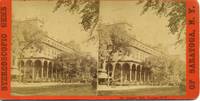
réf. 11304Two nineteenth-century stereoview photographs of Congress Hall Saratoga Springs and the United States Senate Chamber circa 1860s-1870s preserve paired photographic views of two very different public environments: one associated with the federal government in Washington and the other with the expanding resort culture of Saratoga Springs New York. The Senate Chamber image records an interior of the U.S. Capitol during the period in which stereoscopic photography became a widely circulated means of visually experiencing important national sites; the U.S. House notes that Capitol stereoviews were popular souvenirs and common fixtures in middle-class parlors during the second half of the nineteenth century. The Saratoga view belongs to the visual culture of a resort community nationally known for its mineral springs hotels and leisure economy and a related Stereoscopic Gems of Saratoga Congress Hall image is preserved in the Library of Congress record. Together the photographs support research into nineteenth-century tourism architectural photography political space visual culture and the commercial circulation of stereoscopic imagery. Two stereoview cards. Circa 1860s-1870s. One sepia-toned stereoview identified as No. 530 depicts Congress Hall Saratoga Springs New York from the Stereoscopic Gems of Saratoga series; the card bears paired photographic images approximately 6 x 3 inches overall. The second sepia-toned stereoview depicts the United States Senate Chamber and is credited to J. F. Jarvis Stereoscopic Views. A comparable Senate Chamber view in the U.S. Senate Collection is attributed to John F. Jarvis and dated circa 1855-1875 while another Jarvis stereograph of a Senate interior held by the Library of Congress is dated circa 1875. Congress Hall was part of Saratoga Springs' nineteenth-century resort landscape and stereoscopic series devoted to Saratoga circulated views of its hotels springs and associated architecture to visitors and collectors. The pairing is particularly useful for examining how stereography made geographically distant civic and leisure spaces visually accessible to domestic audiences. The Capitol image situates viewers within the architectural environment of federal political power while the Saratoga image records a major resort setting from a period when Saratoga Springs was developing a national reputation as a destination for health recreation and elite social life. Because the precise publication dates of these specific cards are not supplied they should not be described definitively as Civil War-era without further evidence from the mounts or publisher imprints. Some surface soiling; otherwise no significant defects are noted. Very good. A complementary pair of nineteenth-century stereoviews documenting the visual culture of American government and resort tourism. unknown books
2006réf. 85185Washington DC: United States Senate 2006. Presumed First Edition First printing. Wraps. Very good/No dust jacket issued. Format is approximately 8.25 inches by 11 inches. 148 4 pages. Footnotes. Blacked out portions/redactions. A study conducted by the Senate Select Committee on Intelligence that reviewed U.S. intelligence on the existence of Iraq's weapons of mass destruction programs Iraq's ties to terrorist groups Saddam Hussein's threat to stability and security in the region and his violations of human rights. The Senate Report on Iraqi WMD Intelligence formally the Report of the Select Committee on Intelligence on the U.S. Intelligence Community's Prewar Intelligence Assessments on Iraq was the report by the United States Senate Select Committee on Intelligence concerning the U.S. intelligence community's assessments of Iraq during the time leading up to the 2003 invasion of Iraq. The report which was released on July 9 2004 identified numerous failures in the intelligence-gathering and -analysis process. The report found that these failures led to the creation of inaccurate materials that misled both government policy makers and the American public. The Committee's nine Republicans and eight Democrats agreed on the report's major conclusions and unanimously endorsed its findings. They disagreed though on the impact that statements on Iraq by senior members of the Bush administration had on the intelligence process. The second phase of the investigation addressing the way senior policymakers used the intelligence was published on May 25 2007. Portions of the phase II report not released at that time include the review of public statements by U.S. government leaders prior to the war and the assessment of the activities of Douglas Feith and the Pentagon's Office of Special Plans. The report's "additional views" The Republican and Democratic members of the Senate Select Committee on Intelligence voted unanimously to approve the finished report. There were however significant areas of disagreement with those disagreements being expressed in the form of "additional views" attached at the end of the report proper. In the first "additional view" attached to the report Chairman Pat Roberts R-KS joined by Senators Orrin Hatch R-UT and Christopher Bond R-MO presents two conclusions that Democratic members of the Committee were unwilling to include in the report even though according to Roberts "there was no dispute with the underlying facts." Those two conclusions related to the actions of Joseph Wilson the former ambassador who was sent to Niger in 2002 to investigate allegations that the Iraqi government was attempting to purchase "yellowcake" uranium presumably as part of an attempt to revive Iraq's nuclear weapons program. The two conclusions were that the plan to send Wilson to investigate the Niger allegation was suggested by Wilson's wife a CIA employee and that in his later public statements criticizing the Bush administration Wilson included information he had learned from press accounts misrepresenting it as firsthand knowledge. This additional view also discusses the question of pressure on analysts and recommends caution in implementing reforms in the intelligence community. Senators John D. Rockefeller D-WV the Committee's vice-chairman Carl Levin D-MI and Richard Durbin D-IL used their additional view to say that the report painted an incomplete picture because the Committee had put off until phase two of the investigation the key question of "how intelligence on Iraq was used or misused by Administration officials in public statements and reports." Because of this they said "the Committee's phase one report fails to fully explain the environment of intense pressure in which Intelligence Community officials were asked to render judgments on matters relating to Iraq when policy officials had already forcefully stated their own conclusions in public." The third additional view in the report is by Senator Saxby Chambliss R-GA with Senators Orrin Hatch R-UT Trent Lott R-MS Chuck Hagel R-NE and Christopher Bond R-MO. It focuses on the issues of information sharing and Human Intelligence HUMINT and rebuts the allegation of "pressure" contained in the additional view by Senators Rockefeller Levin and Durbin. Senator Olympia Snow R-ME wrote in her additional view that the Committee's report revealed poor management and a lack of accountability in the intelligence community and she called for strong reforms. United States Senate paperback
réf. SONG158733299XUsed: Good unknown
réf. 0364965371.Ghardcover. Good. Access codes and supplements are not guaranteed with used items. May be an ex-library book. hardcover
réf. A9781345785630Hardback. New. hardcover
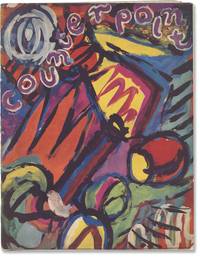
1945réf. 168423Oxford: Alden Press 1945. Softcover. Complete set comprising two volumes of the short-lived literary and arts periodical. Vol. 1 Very Good plus in saddle-stapled wrappers with both front and rear wrapper detached from the binding. Vol. 2 Near Fine in saddle-stapled wrappers. Alden Press unknown
1945réf. 168423Oxford: Alden Press 1945. Softcover. Complete set comprising two volumes of the short-lived literary and arts periodical. Vol. 1 Very Good plus in saddle-stapled wrappers with both front and rear wrapper detached from the binding. Vol. 2 Near Fine in saddle-stapled wrappers. Alden Press unknown books
réf. 38536949like new. unknown
réf. 1332852009.Gpaperback. Good. Access codes and supplements are not guaranteed with used items. May be an ex-library book. paperback
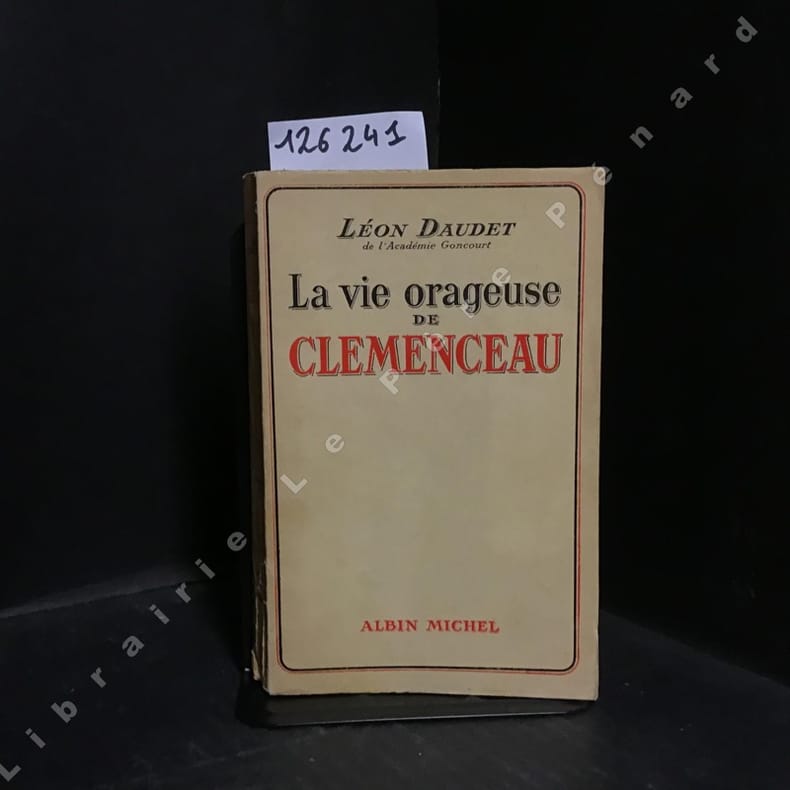
1938réf. 1262411938 Editions Albin Michel - 1938 - In-12 broché - 315 pages - L'un des 200 exemplaires sur Alfa Mousse des Papeteries Navarre, numéroté 38 (5ème et dernier papier)
réf. 1333018681.Gpaperback. Good. Access codes and supplements are not guaranteed with used items. May be an ex-library book. paperback
réf. 1332983375.Gpaperback. Good. Access codes and supplements are not guaranteed with used items. May be an ex-library book. paperback
réf. 1528239261.Gpaperback. Good. Access codes and supplements are not guaranteed with used items. May be an ex-library book. paperback
réf. 0366771434.Gpaperback. Good. Access codes and supplements are not guaranteed with used items. May be an ex-library book. paperback
réf. 1331390613.Gpaperback. Good. Access codes and supplements are not guaranteed with used items. May be an ex-library book. paperback
réf. 1332885969.Gpaperback. Good. Access codes and supplements are not guaranteed with used items. May be an ex-library book. paperback
réf. 1332929338.Gpaperback. Good. Access codes and supplements are not guaranteed with used items. May be an ex-library book. paperback
réf. 1334308853.Gpaperback. Good. Access codes and supplements are not guaranteed with used items. May be an ex-library book. paperback
réf. 1334437203.Gpaperback. Good. Access codes and supplements are not guaranteed with used items. May be an ex-library book. paperback
1986225 pages. Index. Reference notes. Black and white illustrations. "James Gladstone, a treaty Blood Indian, devoted his long and active life to the betterment of Canada's native people... This fascinating biography not only examines the career of a pivotal leader, but also explores the development of the native movement in Canada." - from back cover. Average wear. Unmarked. Contents yellowed at edges. Binding intact. A sound working copy. Book
1832réf. 30467Washington DC: United States Government 1832. First Edition. Pamphet. Very good. 36p. and 24p respectively. The "Tariff of Abominations' infuriated Southern States whose reactions led to South Carolina's Ordinance of Nullification. Spotted trimmed removed with initials of J.S. Brown in ink. One physical copy of either in holdings at Brown; none in trade. Spotting otherwise intact United States Government unknown
1832réf. 30467Washington DC: United States Government 1832. First Edition. Pamphet. Very good. 36p. and 24p respectively. The "Tariff of Abominations' infuriated Southern States whose reactions led to South Carolina's Ordinance of Nullification. Spotted trimmed removed with initials of J.S. Brown in ink. One physical copy of either in holdings at Brown; none in trade. Spotting otherwise intact United States Government unknown books