Anne de VriesLivre Rare Book
1 067 résultats
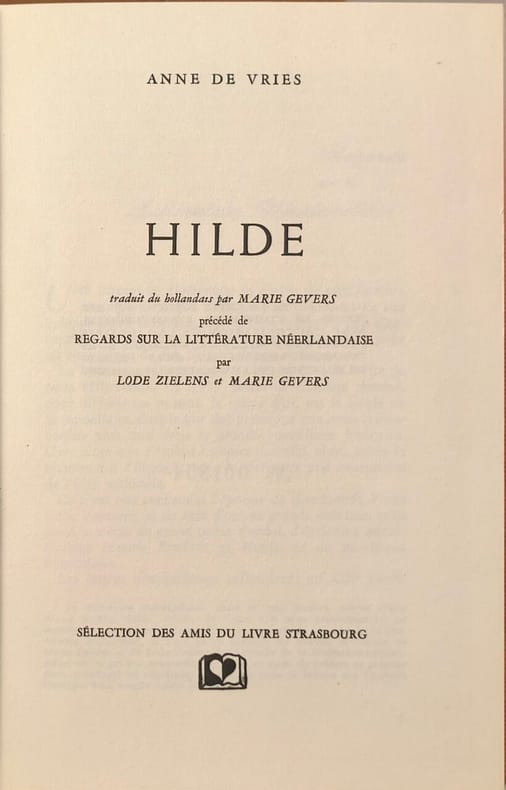
1962réf. 4190Sélection des Amis du Livre Strasbourg 1962 257 pages in8. 1962. Reliure éditeur pleine toile sous rodhoid. 257 pages.
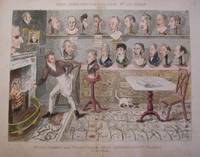
réf. elala2053Alnwick: 1826-32. An album containing 36 engraved and etched caricatures including at least 25 dealing with the Alnwick Northumberland election of 1826 some additional dealing with the Northumberland election of 1832 and 3 broadsides 2 illustrated. various sized sheets 25 hand-coloured most mounted on larger uniform sheets. bound as an oblong folio in later half morocco extremities worn short splits in lower joints scattered soiling & foxing several sheets folded & some torn but with no loss of image. ownership entry of William Graham Richardson North Shields. The 1826 Alnwick election for two parliamentary representatives for Northumberland was a hotly contested one marked by much rancour and animosity among the candidates and the voters. Some voters engaged in the practice of plumping or voting for only a single candidate rather than two. Of the four contestants Henry Thomas Liddell Liddle Tory Matthew Bell Tory Thomas Wentworth Beaumont at the time an Independent Reformer and Henry George Grey Viscount Howick Whig Liddell and Bell emerged victorious. Another figure appearing in some of the caricatures is John George Lambton later first Earl of Durham Governor General of Canada 1837 and author of the celebrated Durham Report 1839. While supporting the candidature of his brother-in-law Lord Howick Lambton fought a bloodless duel with T.W.Beaumont. A full listing of the broadsides and caricatures some of which carry the imprint of W.Stephenson or W.Davison is available upon request. [Alnwick]: 1826-32. unknown
2007réf. 4027Albin Michel 2007 400 pages 14 6x3 2x22 4cm. 2007. broché. 400 pages. Le roman 'Le Pacte secret' d'Albert Algoud publié chez Albin Michel est une fiction politique qui met en scène une élection présidentielle où le prochain président serait annoncé comme le dernier suggérant un complot ou une manipulation de grande ampleur. L'ouvrage mêle intrigue thriller et satire des milieux politiques
ST-BRIEUC, Guyon-Le Pouliquen, imp.-Lit. - Sans date (vers 1870) - -8 - Broché - 12 pages - bon exemplaire
réf. 19521ST-BRIEUC, Guyon-Le Pouliquen, imp.-Lit. - Sans date (vers 1870) - -8 - Broché - 12 pages - bon exemplaire
In-8 - Reliure cassée - 1871 - Table chronologique X & 328 pages + (4) de Table alphabétique - trous de vers aux 10 dernières pages sans incidence sur le texte
In-8 - Reliure cassée - 1823 - Table alphabétique des Matières VIII & 256 pages
réf. 23688In-8 - Reliure cassée - 1871 - Table chronologique X & 328 pages + (4) de Table alphabétique - trous de vers aux 10 dernières pages sans incidence sur le texte
réf. 23687In-8 - Reliure cassée - 1823 - Table alphabétique des Matières VIII & 256 pages
réf. 0897071433.Gpaperback. Good. Access codes and supplements are not guaranteed with used items. May be an ex-library book. paperback
1772réf. AQ12982Salisbury: Printed for and Sold by E. Easton 1772. 2 110pp. With a half-title. Bound with; An alphabetical list of the names of the persons Who polled for knights of the shire for the county of Wilts on the 18th 19th 20th and 21st of August 1772. Salisbury Printed and Sold by E. Easton 1772. 52pp 2 ads. Quarto. Handsomely bound by C. W. Rose in recent half morocco marbled boards gilt T.E.G. decorated endpapers. Very minor wear to extremities. Sporadic browning occasional ink annotations to margins and text sympathetic repair of tear to title of second work. Tables of eligible electors and their respective votes for the Wiltshire county poll of 1772 between candidates Ambrose Goddard and Henry Herbert. The latter polled well on the August 18th opening only to rapidly lose the majority over the next four days as Goddard's supporters rolled in to secure superiority of over two votes to one. When the poll closed it was said that Goddard had a substantial number of voters left. Given that half of Herbert's supporters polled on day one when no oath had been taken the likelihood is that Goddard's victory was even more decisive than the final count suggests. ESTC T180382 T122038. First edition. Printed for, and Sold by E. Easton hardcover
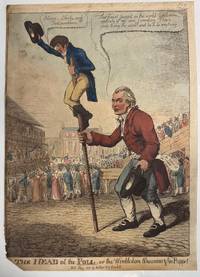
1807réf. 42326London: Pubd May 1807 by Walker No. 7 Cornhill 1807. Broadside 9-5/8" x 13-1/2". Hand-colored satirical etching. Minimal edgewear with the bottom left blank corner chipped minor toning and dustsoiling. Very Good. The scene is Covent Garden a satire of the 1807 Westminster election. A rowdy political gathering with crowds of spectators and in the foreground the "Wimbledon Showman" stands to the right holding a stilt with his right hand representing John Horne Tooke a radical British politician and philologist who lived in Wimbledon. The "Puppet" to the left balancing on the stilt inscribed "Divisions of Purley" is Sir Francis Burdett a wealthy radical politician running for Parliament. Burdett shouts "Huzza - Liberty and Independence!!!" Tooke acts as the puppet master steering the election and looks sideways towards the spectator saying "The finest puppet in the world Gentlemen - entirely of my own formation I have only to say the word and he'll do anything." He holds his hat in his left hand and a letter sticking out of his coat pocket reads "To the Editor of the Times" a reference to his actual letter to the Times in 1807 which went on to be printed in London by Wood and Innes highlighting the heavy media manipulation surrounding the early 19th-century British elections. Burdett balancing atop the stilt symbolizes that his political platform is precarious and supported entirely by Tooke's orchestration. The print satirizes the 1807 Westminster election. George M. Dorothy: CATALOGUE OF PRINTS AND DRAWINGS IN THE BRITISH MUSEUM: DIVISION I. POLITICAL AND PERSONAL SATIRES VOLUME VIII British Museum: 1947 No. 10733; Grego Joseph: A HISTORY OF PARLIAMENTARY ELECTIONS AND ELECTIONEERING IN THE OLD DAYS. . . 1886 pp. 322-323. Sir Francis Burdett 5th Baronet 1770-1844 was an English politician and Member of Parliament who gained notoriety as a proponent of universal male suffrage equal electoral districts vote by ballot and annual parliaments. His commitment to reform resulted in legal proceedings and brief confinement to the Tower of London. John Horne Tooke 1736-1812 known as John Horne until 1782 when he added the surname of his friend William Tooke to his own was an English clergyman politician and philologist. Associated with radical proponents of parliamentary reform he stood trial for treason in 1794. Wikipedia website accessed July 2026. "The general election ran from 4 May until 9 June 1807. Of the 380 constituencies 102 27 per cent were contested. The slogan of 'No Popery' was widely used by supporters of the Portland ministry against the friends of the late government who failed to find an effective riposte. The most eye-catching election occurred in Westminster where the patrician radical Sir Francis Burdett backed by local tradesmen activists under the direction of the Charing Cross tailor Francis Place was returned at the head of the poll on a 'purity of election' platform." "The 4th Parliament of the United Kingdom" The History of Parliament Online website accessed July 2026. Two days before the general election on 2 May 1807 a bitter duel took place between Burdett and James Paull his opponent who was up for reelection. Paull won the duel but neither man was fatally injured and Burdett went on to win with 5134 votes to Paull's 269. Tooke's letter to the Times had set out the events before the duel and condemned the men's public behavior. British Museum retains two copies. Pubd May, 1807 by Walker No. 7 Cornhill unknown books
1807réf. 42326London: Pubd May 1807 by Walker No. 7 Cornhill 1807. Broadside 9-5/8" x 13-1/2". Hand-colored satirical etching. Minimal edgewear with the bottom left blank corner chipped minor toning and dustsoiling. Very Good. The scene is Covent Garden a satire of the 1807 Westminster election. A rowdy political gathering with crowds of spectators and in the foreground the "Wimbledon Showman" stands to the right holding a stilt with his right hand representing John Horne Tooke a radical British politician and philologist who lived in Wimbledon. The "Puppet" to the left balancing on the stilt inscribed "Divisions of Purley" is Sir Francis Burdett a wealthy radical politician running for Parliament. Burdett shouts "Huzza - Liberty and Independence!!!" Tooke acts as the puppet master steering the election and looks sideways towards the spectator saying "The finest puppet in the world Gentlemen - entirely of my own formation I have only to say the word and he'll do anything." He holds his hat in his left hand and a letter sticking out of his coat pocket reads "To the Editor of the Times" a reference to his actual letter to the Times in 1807 which went on to be printed in London by Wood and Innes highlighting the heavy media manipulation surrounding the early 19th-century British elections. Burdett balancing atop the stilt symbolizes that his political platform is precarious and supported entirely by Tooke's orchestration. The print satirizes the 1807 Westminster election. George M. Dorothy: CATALOGUE OF PRINTS AND DRAWINGS IN THE BRITISH MUSEUM: DIVISION I. POLITICAL AND PERSONAL SATIRES VOLUME VIII British Museum: 1947 No. 10733; Grego Joseph: A HISTORY OF PARLIAMENTARY ELECTIONS AND ELECTIONEERING IN THE OLD DAYS. . . 1886 pp. 322-323. Sir Francis Burdett 5th Baronet 1770-1844 was an English politician and Member of Parliament who gained notoriety as a proponent of universal male suffrage equal electoral districts vote by ballot and annual parliaments. His commitment to reform resulted in legal proceedings and brief confinement to the Tower of London. John Horne Tooke 1736-1812 known as John Horne until 1782 when he added the surname of his friend William Tooke to his own was an English clergyman politician and philologist. Associated with radical proponents of parliamentary reform he stood trial for treason in 1794. Wikipedia website accessed July 2026. "The general election ran from 4 May until 9 June 1807. Of the 380 constituencies 102 27 per cent were contested. The slogan of 'No Popery' was widely used by supporters of the Portland ministry against the friends of the late government who failed to find an effective riposte. The most eye-catching election occurred in Westminster where the patrician radical Sir Francis Burdett backed by local tradesmen activists under the direction of the Charing Cross tailor Francis Place was returned at the head of the poll on a 'purity of election' platform." "The 4th Parliament of the United Kingdom" The History of Parliament Online website accessed July 2026. Two days before the general election on 2 May 1807 a bitter duel took place between Burdett and James Paull his opponent who was up for reelection. Paull won the duel but neither man was fatally injured and Burdett went on to win with 5134 votes to Paull's 269. Tooke's letter to the Times had set out the events before the duel and condemned the men's public behavior. British Museum retains two copies. Pubd May, 1807 by Walker No. 7 Cornhill unknown
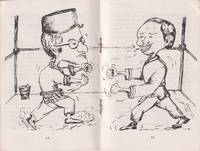
1986réf. 222683Johor Bahru.: Partai Sosialis Rakyat Malaysia. Circa1986. Three black and white political cartoons 28pp. 15 x 10pp. Original stapled wrappers little browned a prior owner's name lightly pencilled in red upper wrapper overall in good condition. A short publication issued by the Malaysian People's Party at the time still operating as the Malaysian Socialist People's Party in the lead up to the 1986 election. Within are a few short commentaries on the dysfunction within UMNO with particular interest in the so-called AIDS faction in the party. Scarce; we have only been able to find one institution holding this publication. . Partai Sosialis Rakyat Malaysia. unknown
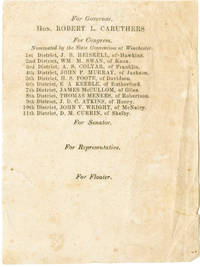
1863réf. 53688Winchester 1863. Running for State Office in Confederate Tennessee An exceedingly rare Confederate Tennessee state election ticket from 1863 nominating Robert L. Caruthers for governor and eleven others as state senators. In 1863 state elections were due in Tennessee. The state was fractured by war and secession and both Unionists and Confederates expressed the desire to hold elections for state government. Confederate supporters held a convention in Winchester and nominated a governor the State Legislature and members for the Confederate Congress. It was a bit of a fool's errand. Isham G. Harris who still considered himself the governor of Tennessee issued a proclamation calling for the election to be held on the first Thursday in August. Just who voted and how many or how few will probably never be known. According to historians the State Archives in Nashville are scant and inconclusive; returns from only thirty-two counties are found some of which reported the vote of only one civil district. Not a single report was from West Tennessee counties and only eight Middle Tennessee counties made returns. Robert L. Caruthers was elected governor on the face of returns but he was never inaugurated and thus never served a day as governor of Tennessee. No Confederate State Legislature ever convened either. The Confederate Congressmen were the only lucky ones. Those who were elected in 1863 took their seats in Richmond however briefly. George Webb notes this copy in his NOT IN ALLEN bibliography in 2013. Not in Parrish & Willingham. The only other copy or shall we say copies resides at the Library of Virginia in an uncut sheet of six tickets. This will likely be the only copy ever available in the marketplace. Toned minor soiling and wrinkling. Very good. WEBB NOT IN ALLEN 199 this copy. unknown books
1863réf. 53688Winchester 1863. Running for State Office in Confederate Tennessee An exceedingly rare Confederate Tennessee state election ticket from 1863 nominating Robert L. Caruthers for governor and eleven others as state senators. In 1863 state elections were due in Tennessee. The state was fractured by war and secession and both Unionists and Confederates expressed the desire to hold elections for state government. Confederate supporters held a convention in Winchester and nominated a governor the State Legislature and members for the Confederate Congress. It was a bit of a fool's errand. Isham G. Harris who still considered himself the governor of Tennessee issued a proclamation calling for the election to be held on the first Thursday in August. Just who voted and how many or how few will probably never be known. According to historians the State Archives in Nashville are scant and inconclusive; returns from only thirty-two counties are found some of which reported the vote of only one civil district. Not a single report was from West Tennessee counties and only eight Middle Tennessee counties made returns. Robert L. Caruthers was elected governor on the face of returns but he was never inaugurated and thus never served a day as governor of Tennessee. No Confederate State Legislature ever convened either. The Confederate Congressmen were the only lucky ones. Those who were elected in 1863 took their seats in Richmond however briefly. George Webb notes this copy in his NOT IN ALLEN bibliography in 2013. Not in Parrish & Willingham. The only other copy or shall we say copies resides at the Library of Virginia in an uncut sheet of six tickets. This will likely be the only copy ever available in the marketplace. Toned minor soiling and wrinkling. Very good. WEBB NOT IN ALLEN 199 this copy. unknown
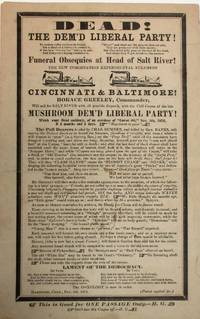
1872réf. 38915Hartford 1872. Broadside 6" x 9-1/2" text surrounded by mourning border. A few spots Very Good. Illustrations of two steamers. At the bottom: "This is Good for ONE PASSAGE Only. - H.G." Dated at Hartford November 5 1872. "Salt River" is 19th century American slang: a losing candidate for office was taking a trip "up Salt River." Tickets for passage "up Salt River" were frequently printed to mock supporters of losing candidates. This humorous scarce broadside taunts Horace Greeley and other defectors from the Republican Party for their support of Greeley in 1872. "On the overwhelming defeat of the Liberal Republican Party and its candidate Horace Greeley in the presidential election of 1872. Greeley had been nominated at a Liberal Republican convention at Cincinnati in May and at the Democratic National Convention at Baltimore in July 1872" AAS description. Pall bearers include Charles Sumner and General Banks prominent Republican supporters of Greeley. OCLC 191231113 2- AAS Middlebury 47090036 1- CT Hist. Soc. as of August 2025. unknown books
1750réf. 28617mortagne 1750 1 document original de 12 pages brochées, pré- imprimées en noir et manuscrites à l'encre brune sur papier vergé crème, ligné et filigrané "GRAPPE DE RAISIN", format : 37 x 25 cm, orné des armes royales gravées en noir en tête de 1ère page, in-fine : Noms des Taillables Sortans de la paroisse qui seront tirés du Rolle de l'Année 1750 et Noms des taillables Entrans dans la paroisse qui seront compris dans le Rolle de 1750 manuscrits avec le montant de la taille reçue ainsi que la signature manuscrite de : LOUIS FRANCOIS LALLEMANT, CHEVALIER, COMTE DE LEVIGNEN, mortagne, le 3 novembre 1750,
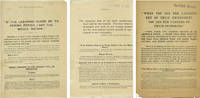
1894réf. 43553n.p.: Hartman & Cadick 1894. First editions. Self wrappers. Good to very good. 8 pp. 8 pp. 8 pp. 8vo. The mid-term elections of 1884 were a disaster for the Democrats led by Grover Cleveland. Republicans and Populists in large part due to the efforts of Joseph Weeks Babcock 1850-1909 a Republican Congressman from Wisconsin who helped organize the Republican Congressional Campaign Committee in 1893 and was a major force in routing the Democrats in the 1894 House elections which cost the Democrats 113 of their 218 seats. They are most likely printed by Hartman & Cadick Republican printers. All follow the same format of quoting leading figures and using bold face type. 1: Caption title "If the Laboring Class be to Perish I Say the Whole Nation." A the head of the title: No. 1 - From the Congressional Record. The caption title is from the English Reformer William Cobbett followed by "You cannot reduce the laborer to a state of starvation and degradation without also destroying national prosperity" a quote from Joseph Norton Dolph 1835-1897 Senator from Oregon from one of his many speeches quoted here. OCLC locates only a single copy at the Rutherford B. Hayes Presidential Center. A very good copy docketed on front wrapper mail fold. 2: Caption title "The industrial side of the tariff controversy must not be overlooked. The four millions of people who work in our factory system are the most potent factors outside of agriculture in our civilization." - Hon. J. W. Babcock Wisconsin. A the head of the title: Record No. 3. Apparently unrecorded. We could find no copies in OCLC NUC or other reference sources. Chip to front wrapper else very good with docketing stamp. 3: Caption title "When you Rob the Laboring Men of their Employment you Rob the Farmers of their Customers." The quote from the caption title belongs to Charles Curtis 1860-1936 Republican from Kansas who would go on to become Hoover's Vice President. OCLC locates one copy at the Western Reserve Historical Society Library. A good copy browned some minor chipping docketing stamp on front wrapper. [Hartman & Cadick?] unknown books
1894réf. 43553n.p.: Hartman & Cadick 1894. First editions. Self wrappers. Good to very good. 8 pp. 8 pp. 8 pp. 8vo. The mid-term elections of 1884 were a disaster for the Democrats led by Grover Cleveland. Republicans and Populists in large part due to the efforts of Joseph Weeks Babcock 1850-1909 a Republican Congressman from Wisconsin who helped organize the Republican Congressional Campaign Committee in 1893 and was a major force in routing the Democrats in the 1894 House elections which cost the Democrats 113 of their 218 seats. They are most likely printed by Hartman & Cadick Republican printers. All follow the same format of quoting leading figures and using bold face type. 1: Caption title "If the Laboring Class be to Perish I Say the Whole Nation." A the head of the title: No. 1 - From the Congressional Record. The caption title is from the English Reformer William Cobbett followed by "You cannot reduce the laborer to a state of starvation and degradation without also destroying national prosperity" a quote from Joseph Norton Dolph 1835-1897 Senator from Oregon from one of his many speeches quoted here. OCLC locates only a single copy at the Rutherford B. Hayes Presidential Center. A very good copy docketed on front wrapper mail fold. 2: Caption title "The industrial side of the tariff controversy must not be overlooked. The four millions of people who work in our factory system are the most potent factors outside of agriculture in our civilization." - Hon. J. W. Babcock Wisconsin. A the head of the title: Record No. 3. Apparently unrecorded. We could find no copies in OCLC NUC or other reference sources. Chip to front wrapper else very good with docketing stamp. 3: Caption title "When you Rob the Laboring Men of their Employment you Rob the Farmers of their Customers." The quote from the caption title belongs to Charles Curtis 1860-1936 Republican from Kansas who would go on to become Hoover's Vice President. OCLC locates one copy at the Western Reserve Historical Society Library. A good copy browned some minor chipping docketing stamp on front wrapper. [Hartman & Cadick?] unknown
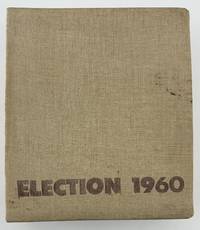
1960réf. 4337Various locations in and around Chicago Il: likely early November 1960. Very good plus. Title leaf plus 25 leaves illustrated with forty-seven silver gelatin photographs pasted one per leaf or page all about 5.5 x 7.5 inches plus five loose images two duplicates and three other images not pasted in. Square quarto. Contemporary tan cloth custom photograph album metal-hinged spine front cover printed with title reading "ELECTION 1960." Minor wear and soiling to album. Light occasional thumb-soiling to album leaves ownership signature reading "G. Robert Hillman" on title leaf. Photographs in excellent condition. An utterly charming vernacular photograph album assembled during the seminal Presidential Election of 1960 one of the closest presidential elections in United States history which pitted Vice President Richard Nixon against the junior Senator from Massachusetts John F. Kennedy. The album features about fifty original photographs on the campaign trail in Illinois beginning with about a dozen-and-a-half images of Richard Nixon and his local supporters. The photographs capture various angles of Nixon during his stump speech a young boy waving an "I'm for Nixon" handmade sign another young boy with a Nixon button on his coat crowd scenes a large campaign sign for Nixon-Lodge outside a local store and more. One image featuring a mixed crowd of Nixon and Kennedy supporters transitions into the next section of photographs which concentrates on JFK's campaign. The first image in this section is a closeup of a "Kennedy for President" hat followed by four images of JFK's campaign manager Robert Kennedy making a speech three images of Eleanor Roosevelt stumping for Kennedy five images of Lyndon Johnson and his airplane numerous shots of Kennedy supporters and crowd shots outside Chicago Blackhawks stadium. The photographs then feature the inside of Chicago Auditorium where the first three images depict John F. Kennedy - the first shaking hands with Chicago's longtime Mayor Richard Daley and two during his speech likely his speech of November 4 1960 - just four days before Election Day. The final three images show supporters of both candidates. The 1960 United States Presidential Election was a watershed moment for the campaign politics of the country. Senator Kennedy won the election with a clear Electoral College margin of 303 to 219. However Vice President Nixon won three more states than Kennedy and lost the popular vote only by about 110000 votes out of more than 68 million votes cast. The election set the course for most of the remainder of the 1960s but left Nixon soured and suspicious that the election had been stolen from him - a feeling he never let go and one with ominous echoes today. As indicated in the present album the 1960 presidential election was passionate on both sides with each candidate drawing large enthusiastic crowds for their appearances. The signature on the title leaf of the present album likely identifies the compiler. G. Robert Hillman is a Senior Editor for Politico. Hillman was born in Peoria and grew up on a farm near Flanagan Illinois about a hundred miles from Chicago. He went to college at the University of Illinois at Urbana-Champaign and began his career at Chicago Today and the Chicago Sun-Times. Hillman would have been in middle school during the 1960 election campaign not too precocious for a young man obsessed with politics especially during one of the most heated and media-intensive campaigns of the 20th century. likely early November unknown books
1936réf. 24942This sheet contains five rough sketches of graphics calling on the workers and voters of America to support Franklin D. Roosevelt's reelection in 1936. They did in record numbers. PRESIDENTIAL ELECTION OF 1936. Typed Document Signed. Artwork by Franz Felix and Ideas and Copy by Richard Barron "Set of Rough Sketches Containing Some Suggested Promotion Ideas to be Used in the 1936 Democratic Presidential Campaign" July 2 1936. 1 p. 12 x 10½ in. Excerpts: "1. Sounding the call against 'economic royalists' in the spirit of 1776." "2. Appropriating the well-known symbol of violence upraised fist diverting it to peaceful democratic use. To include the farmer phrase the appeal: TOILERS OF AMERICA – UNITE FOR ROOSEVELT." "3. The statue of 'The Thinker' as a symbol of the man today who thinks the toiler with brawn and brain.everyman." "4. Direct appeal to radical labor and leftists in general." "5. Another way of appealing to the working class men and women." "This collaborative effort respectfully submitted for consideration to the Chairman of the Democratic National Committee Mr. James A. Farley." Historical Background After unseating incumbent Republican President Herbert Hoover in 1932 President Franklin D. Roosevelt ran for reelection in 1936. His Republican opponent was Governor Alf Landon of Kansas. Although the Great Depression had entered its eighth year Roosevelt's New Deal policies were broadly popular. He won the highest share of the popular and electoral vote since the uncontested 1820 election. Roosevelt attracted more than 60 percent of the popular vote and won the electoral votes of 46 states; Landon won the electoral votes of only Maine and Vermont. Democratic Party chairman James Farley had predicted that Roosevelt would lose only Maine and Vermont. After the results of the 1936 election Farley quipped that the nation needed to revise the conventional political wisdom of "As Maine goes so goes the nation" to "As Maine goes so goes Vermont." These ideas for campaign imagery employed or modified common images to support Roosevelt's campaign. One drew on the imagery of artist Archibald Willard's 1875 painting The Spirit of '76 and employed three figures of workers to match the subjects of Willard's image. Another appropriated the upraised fist as a symbol of violence and repurposed it as a symbol of defiant unity against "economic royalists." A third used an image of The Thinker by French sculptor Auguste Rodin 1840-1917 to appeal to thinking voters. Another image appeals to the fears of radicals that the alternative to Roosevelt is "Reaction." Richard Barron and artist Franz Felix submitted these ideas to Democratic National Committee chairman James A. Farley on July 2 1936 three weeks before the Democratic Party held its convention in Philadelphia. There is no evidence that these images were used in the campaign and it is possible that Farley rejected them. At the end of the campaign the Democratic National Committee had a campaign deficit of approximately $850000. To help offset those expenses the treasurer convinced President Roosevelt to sign 2500 brief Forewords which were bound into The Democratic Book 1936 and sent to donors of $250. Purchases brought in more than $400000 for the party and led Republicans to charge corrupt practices for allowing corporations to contribute to the campaign by buying copies. Franz Felix 1892-1967 was born in Vienna Austria and developed an ability as a child to draw portraits in charcoal. He studied portraiture in Vienna and immigrated to the United States shortly after World War I. He settled in San Francisco where he established himself as a portrait artist and commercial illustrator. In the late 1920s he moved to New York and established a studio in the suburb of Spring Valley where he produced book and magazine illustrations. During World War II he painted a series of murals of wartime activities of Spring Valley residents. James A. Farley 1888-1976 was born in New York into an Irish Catholic family. After his father died he helped his mother with a small business to support the family. After graduating from Packard Business College in New York City where he studied bookkeeping and other business skills Farley got a job with the U.S. Gypsum Corporation. He served as a Democratic town clerk in Stony Point New York and became chairman of the county's Democratic Party in 1918. He organized upstate Democrats and helped elect Alfred E. Smith as Governor that year. He served in the New York State Assembly in 1923 but was defeated at the next election for supporting the repeal of Prohibition. As chair of the state Athletic Commission Farley fought for the civil rights of African American athletes. Farley founded he General Builders Corporation from smaller firms to become New York City's largest building supply company. Farley directed Franklin D. Roosevelt's narrowly successful New York gubernatorial campaign in 1928 and his reelection in 1930. Farley served as chairman of the New York State Democratic Committee from 1930 to 1944 and helped build the national New Deal coalition that elected Roosevelt to the Presidency four times. In 1932 Farley became the chairman of the Democratic National Committee and in 1933 U.S. Postmaster General. He held both positions until 1940. Farley and Roosevelt broke on the two-term tradition of the Presidency in 1940 and he later helped propose the 22nd Amendment to the U.S. Constitution limiting a person to two elections as president approved by Congress in 1947 and ratified in 1951. Farley became chairman of the board of the Coca-Cola Export Corporation in 1940 and held that position for more than thirty years. books
1936réf. 24942This sheet contains five rough sketches of graphics calling on the workers and voters of America to support Franklin D. Roosevelt's reelection in 1936. They did in record numbers. PRESIDENTIAL ELECTION OF 1936. Typed Document Signed. Artwork by Franz Felix and Ideas and Copy by Richard Barron "Set of Rough Sketches Containing Some Suggested Promotion Ideas to be Used in the 1936 Democratic Presidential Campaign" July 2 1936. 1 p. 12 x 10½ in. Excerpts: "1. Sounding the call against 'economic royalists' in the spirit of 1776." "2. Appropriating the well-known symbol of violence upraised fist diverting it to peaceful democratic use. To include the farmer phrase the appeal: TOILERS OF AMERICA – UNITE FOR ROOSEVELT." "3. The statue of 'The Thinker' as a symbol of the man today who thinks the toiler with brawn and brain.everyman." "4. Direct appeal to radical labor and leftists in general." "5. Another way of appealing to the working class men and women." "This collaborative effort respectfully submitted for consideration to the Chairman of the Democratic National Committee Mr. James A. Farley." Historical Background After unseating incumbent Republican President Herbert Hoover in 1932 President Franklin D. Roosevelt ran for reelection in 1936. His Republican opponent was Governor Alf Landon of Kansas. Although the Great Depression had entered its eighth year Roosevelt's New Deal policies were broadly popular. He won the highest share of the popular and electoral vote since the uncontested 1820 election. Roosevelt attracted more than 60 percent of the popular vote and won the electoral votes of 46 states; Landon won the electoral votes of only Maine and Vermont. Democratic Party chairman James Farley had predicted that Roosevelt would lose only Maine and Vermont. After the results of the 1936 election Farley quipped that the nation needed to revise the conventional political wisdom of "As Maine goes so goes the nation" to "As Maine goes so goes Vermont." These ideas for campaign imagery employed or modified common images to support Roosevelt's campaign. One drew on the imagery of artist Archibald Willard's 1875 painting The Spirit of '76 and employed three figures of workers to match the subjects of Willard's image. Another appropriated the upraised fist as a symbol of violence and repurposed it as a symbol of defiant unity against "economic royalists." A third used an image of The Thinker by French sculptor Auguste Rodin 1840-1917 to appeal to thinking voters. Another image appeals to the fears of radicals that the alternative to Roosevelt is "Reaction." Richard Barron and artist Franz Felix submitted these ideas to Democratic National Committee chairman James A. Farley on July 2 1936 three weeks before the Democratic Party held its convention in Philadelphia. There is no evidence that these images were used in the campaign and it is possible that Farley rejected them. At the end of the campaign the Democratic National Committee had a campaign deficit of approximately $850000. To help offset those expenses the treasurer convinced President Roosevelt to sign 2500 brief Forewords which were bound into The Democratic Book 1936 and sent to donors of $250. Purchases brought in more than $400000 for the party and led Republicans to charge corrupt practices for allowing corporations to contribute to the campaign by buying copies. Franz Felix 1892-1967 was born in Vienna Austria and developed an ability as a child to draw portraits in charcoal. He studied portraiture in Vienna and immigrated to the United States shortly after World War I. He settled in San Francisco where he established himself as a portrait artist and commercial illustrator. In the late 1920s he moved to New York and established a studio in the suburb of Spring Valley where he produced book and magazine illustrations. During World War II he painted a series of murals of wartime activities of Spring Valley residents. James A. Farley 1888-1976 was born in New York into an Irish Catholic family. After his father died he helped his mother with a small business to support the family. After graduating from Packard Business College in New York City where he studied bookkeeping and other business skills Farley got a job with the U.S. Gypsum Corporation. He served as a Democratic town clerk in Stony Point New York and became chairman of the county's Democratic Party in 1918. He organized upstate Democrats and helped elect Alfred E. Smith as Governor that year. He served in the New York State Assembly in 1923 but was defeated at the next election for supporting the repeal of Prohibition. As chair of the state Athletic Commission Farley fought for the civil rights of African American athletes. Farley founded he General Builders Corporation from smaller firms to become New York City's largest building supply company. Farley directed Franklin D. Roosevelt's narrowly successful New York gubernatorial campaign in 1928 and his reelection in 1930. Farley served as chairman of the New York State Democratic Committee from 1930 to 1944 and helped build the national New Deal coalition that elected Roosevelt to the Presidency four times. In 1932 Farley became the chairman of the Democratic National Committee and in 1933 U.S. Postmaster General. He held both positions until 1940. Farley and Roosevelt broke on the two-term tradition of the Presidency in 1940 and he later helped propose the 22nd Amendment to the U.S. Constitution limiting a person to two elections as president approved by Congress in 1947 and ratified in 1951. Farley became chairman of the board of the Coca-Cola Export Corporation in 1940 and held that position for more than thirty years.
1960réf. 4337Various locations in and around Chicago Il: likely early November 1960. Very good plus. Title leaf plus 25 leaves illustrated with forty-seven silver gelatin photographs pasted one per leaf or page all about 5.5 x 7.5 inches plus five loose images two duplicates and three other images not pasted in. Square quarto. Contemporary tan cloth custom photograph album metal-hinged spine front cover printed with title reading "ELECTION 1960." Minor wear and soiling to album. Light occasional thumb-soiling to album leaves ownership signature reading "G. Robert Hillman" on title leaf. Photographs in excellent condition. An utterly charming vernacular photograph album assembled during the seminal Presidential Election of 1960 one of the closest presidential elections in United States history which pitted Vice President Richard Nixon against the junior Senator from Massachusetts John F. Kennedy. The album features about fifty original photographs on the campaign trail in Illinois beginning with about a dozen-and-a-half images of Richard Nixon and his local supporters. The photographs capture various angles of Nixon during his stump speech a young boy waving an "I'm for Nixon" handmade sign another young boy with a Nixon button on his coat crowd scenes a large campaign sign for Nixon-Lodge outside a local store and more. One image featuring a mixed crowd of Nixon and Kennedy supporters transitions into the next section of photographs which concentrates on JFK's campaign. The first image in this section is a closeup of a "Kennedy for President" hat followed by four images of JFK's campaign manager Robert Kennedy making a speech three images of Eleanor Roosevelt stumping for Kennedy five images of Lyndon Johnson and his airplane numerous shots of Kennedy supporters and crowd shots outside Chicago Blackhawks stadium. The photographs then feature the inside of Chicago Auditorium where the first three images depict John F. Kennedy - the first shaking hands with Chicago's longtime Mayor Richard Daley and two during his speech likely his speech of November 4 1960 - just four days before Election Day. The final three images show supporters of both candidates. The 1960 United States Presidential Election was a watershed moment for the campaign politics of the country. Senator Kennedy won the election with a clear Electoral College margin of 303 to 219. However Vice President Nixon won three more states than Kennedy and lost the popular vote only by about 110000 votes out of more than 68 million votes cast. The election set the course for most of the remainder of the 1960s but left Nixon soured and suspicious that the election had been stolen from him - a feeling he never let go and one with ominous echoes today. As indicated in the present album the 1960 presidential election was passionate on both sides with each candidate drawing large enthusiastic crowds for their appearances. The signature on the title leaf of the present album likely identifies the compiler. G. Robert Hillman is a Senior Editor for Politico. Hillman was born in Peoria and grew up on a farm near Flanagan Illinois about a hundred miles from Chicago. He went to college at the University of Illinois at Urbana-Champaign and began his career at Chicago Today and the Chicago Sun-Times. Hillman would have been in middle school during the 1960 election campaign not too precocious for a young man obsessed with politics especially during one of the most heated and media-intensive campaigns of the 20th century. likely early November unknown
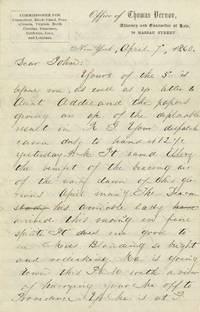
1860réf. List38104New York City 1860. Autograph letter signed "W." to "Dear John" written on the printed letterhead of Thomas Vernon attorney Nassau Street New York. 4 pp. on a single 8 x 10 inch sheet folded to make four pages of approximately 8 x 5 inches. Fine condition. An April 1860 political letter written in the months before the presidential election with the writer discussing the recent Rhode Island election and the way it was being read in New York. The letter refers to the April 4 1860 Rhode Island gubernatorial election in which William Sprague IV running as a Democratic/Conservative fusion candidate defeated Republican Seth Padelford. Outside Rhode Island the result was read by many as a meaningful Republican setback in the tense months before the presidential election. The author describes the result as producing "a profound sensation" among Democrats and Republicans and worries that outside Rhode Island it appeared as though "New England sentiment was faltering" on the "non-extension of Slavery." The letter also includes family news travel to Providence and Perth Amboy and legal/business matters relating to Ohio notes and accounts. Full text follows. "New York April 7th 1860 Dear John: "Yours of the 5th is before me as well as your letter to Aunt Addie and the papers giving an a/c of the deplorable result in R.I. Your despatch came duly to hand at 12-1/2 yesterday P.M. It saved Ellery the benefit of the bracing air of the early dawn of this glorious April morning. The Deacon & his amiable lady arrived this morning in fine spirits. It does me good to see Miss. Blanding so bright and rollicking. Ma is going down this P. M. with a view of hurrying your Ma off to Providence. Your Ma is at P. Amboy and I do hope she will go on to Prov. She has been subjected to too much wear and tear and anxiety & looks very much worn and depressed. She needs some cheerful faces and absence from constant and present trouble. I wish I could see some opening in the clouds. When I reflect upon the sorrows and exalted natures of Uncle Thomas and Aunt Addie it confers upon me the truth of another state where worth and purity will find reward. I do not think that Aunt Addie carries out however her favorite idea of the claims of parents as paramount to those of children. I think that she practically ignores her own claims or regards them as altogether subordinate. She has never given herself a chance and acts with a single view to the views of her children. "The news of the R.I. Election created a profound sensation here on Thursday morn'g. The joy of the Democrats was unbounded while the Republicans regarded it as the severest blow that their party has rec'd more disastrous than the national defeat of /56; for it looks to the County at large who do not understand the local issues upon which the contest went off as the New England sentiment was faltering in its devotion to the cause of non-extension of Slavery. "It is everywhere out of R.I. heralded as a Democratic triumph & hence inspires the Democrats while it depresses the Republicans. I hope that those deluded Republicans who voted for Sprague under the apprehension that they were not voting practically for the Democracy may be at some time able to forgive themselves and also receive the forgiveness of their country after due penance and probation. I am much obliged to you for the papers. "We are about foreclosing some of those Ohio notes and the delay is now caused by my inability to discover whether James Gregory's Thos. Bowen's & Anthony R. Jenkins' notes to your Father are paid or how much is paid on a/c of said notes. Do write me at once all you know. Uncle T. knows nothing about it. I have just rec'd the expected remittance from Brown on ac of the new sale of the 80 acre lot but have not yet Ex'd B's a/c. He says it took him all day to make it out and he hopes it is satisfactory. An a/c from Brown is a wonder indeed worth remarking. Do keep Aunt Addie a month. My love to Addie whom I hope to see soon. G.T.O. has gone to Newport 'via' Boston today. I saw Slater at the 5th Ave. Hotel on Thursday. Ma has just gone to P. Amboy. Aff'y W." A useful prewar political letter strongest for the writer's immediate reaction to the Rhode Island election of 1860 as understood from New York. Its interest lies less in the local election itself than in the way the result was taken as a national sign encouraging Democrats and discouraging Republicans over the issue of slavery's extension. . unknown books