1 365 résultats
1792réf. 76952Paris 1792. First French edition of the 1787 Federal Constitution in addition to the thirteen state constitutions the Declaration d'Independance Articles de Confederation; and several treaties. . old marbled wrappers with ms. paper labels on spines preserved in a utilitarian portfolio. . This was Kenneth Nebenzahl's copy with his book label inside the portfolio. An uncut copy in very attractive original condition. 8vo. Howes C-716. Translated and published at the suggestion of Benjamin Franklin who likely contributed footnotes. He wrote in late 1783: "The extravagant Misrepresentations of our Political State in foreign Countries made it appear necessary to give them better information which I though could not be more efectually and authentically done than by publishing a Translation into French." unknown
1791réf. 38025Paris Imprimerie de Migneret [septembre] 1791 in-8 demi-basane fauve marbrée, dos lisse orné de fleurons, roulettes et pointillés dorés, pièce de titre, coins en vélin vert [Rel. de l'époque], rest
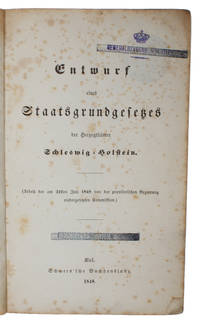
1848réf. 59828Kiel, Schmers'sche Buchhandlung, 1848. 8vo. In the original blank blue wrappers. Provisional repair with tape to spine. Front-wrapper missing upper inner corner. Two stamps to half-title, title-page and verso of title-page. Upper outer corner of half-title missing, far from affecting text. Occassional brownspotting throughout. 34 pp. with a blank leaf inserted between every printed leaf (giving a total of 33 ff., including the blanks).
1848réf. 59828Kiel Schmers'sche Buchhandlung 1848. 8vo. In the original blank blue wrappers. Provisional repair with tape to spine. Front-wrapper missing upper inner corner. Two stamps to half-title title-page and verso of title-page. Upper outer corner of half-title missing far from affecting text. Occassional brownspotting throughout. 34 pp. with a blank leaf inserted between every printed leaf giving a total of 33 ff. including the blanks. The rare first printing of the drafting of the constitution by the provisional government for the Duchies of Schleswig-Holstein. In 1848 the Schleswig-Holsteiners decided to establish a provisional government and oust the Danish king. The subsequent war 1848-1851 achieved a status quo until a permanent solution between Denmark and Germany was reached in 1920. The 1848-1852 events in Schleswig-Holstein were a Danish-German confrontation. The underlying issues were complex: The kingdom of Denmark and the duchies of Schleswig and Holstein were component parts of the Danish Monarchy and were united in the person of the king/duke. Schleswig was a Danish fief Holstein a member of the German Confederation. A 1665 law introduced succession through the female line in Denmark with the survival of Salic law in the duchies held in abeyance. Schleswig had a strong Danish element in the north Holstein was German. "With the extinction of the male royal line in the offing Christian VIII declared in 1846 that the 1665 law applied to Schleswig and with some reservation to Holstein. Protests in the duchies had not been resolved when in the wake of the February revolution the liberals in Copenhagen took over and moved toward the annexation of Schleswig. In defiance the estates of Schleswig and Holstein set up a provisional government on March 24. Being composed of liberals and conservatives it obtained popular and official support in Germany and with Prussian military support gained control of most of the duchies by midsummer. But then Britain and Prussia intervened pressuring Prussia to make a truce with Denmark at Malmö August 26 1848 a truce which caused a parliamentary crisis in Frankfurt. In a short time Schleswig-Holstein had become the national issue and by acceding to the Malmö truce the Frankfurt Assembly severely damaged its political credit.Fighting resumed in 1849 and was ended by a July truce. After losing German military support the duchies were defeated in the 1850 campaign. The government abdicated on February 1 1851 and the Danish authorities took over a year later. In the final settlement the powers restored the Danish monarchy with the succession in the duchies to follow that of the kingdom Second London Protocol of May 8 1852. In separate notes the Danish government agreed to preserve the status of Schleswig and to abstain from steps leading to its incorporation. While the agreements restored the balance of power the relations between Danes and Germans suffered eroding popular sentiment for the Danish monarchy. Also Schleswig became a matter of outside concern permitting Prussian intervention in the case of Danish non-compliance." Ohio Univerty; Lawrence D. Steefel Sleswig-Holstein Question. unknown
2006réf. 76537Washington DC: U. S. Government Printing Office 2006. Presumed First Edition First printing. Wraps. Good. Serial No. 109-103. 4 volume set. Volume I v 1 1453 5 pages. Volume II v 1. 1455-2388 2. Volume III v 1 2389-4296. Volume IV v 1 4297-5711 3 pages. Footnotes. Illustrations. The Subcommittee will be holding its tenth hearing examining the Voting Rights Act of 1965 and the temporary provisions that are to expire. They're set to expire in 2007 unless we reauthorize by Congress which I think most of us anticipate will occur. The Subcommittee examined each of the expiring provisions in great detail. This afternoon we examine the evidence of continued discrimination against racial and language minority citizens since 1982 that have been compiled by a number of non-governmental organizations who will be testifying. I'd thank these organizations for the time and effort that they have put into completing these reports and in making sure that this Committee and Congress has before it a complete and accurate record of discrimination over the last 25 years. In continuing to reauthorize the temporary provisions Congress on four separate occasions examined the extent to which discrimination continued to exist by analyzing information such as enforcement statistics minority voter registration rates minority voter turnout and litigation pursued to protect minority voting rights. Federal agencies such as the United States Commission on Civil Rights were instrumental in investigating analyzing and reporting back to Congress on the state of minority voting during each consideration. Each time Congress concluded based upon the evidence presented that the exceptional conditions which existed in 1966 continued to exist in 1970 1975 1982 and in 1992 when it was last reauthorized. This afternoon the Committee continues to examine whether the exceptional conditions warranting the extension of the temporary provisions continue to exist in 2006. U. S. Government Printing Office paperback
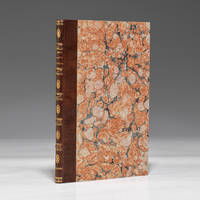
1834réf. 1215671834. First Edition. DORR Thomas Wilson. An Address to the People of Rhode-Island From the Convention Assembled at Providence on the 22nd Day of February and Again on the 12th Day of March 1834 to Promote the Establishment of a State Constitution. Providence: Cranston & Hammond 1834. Octavo period-style half diced calf gilt marbled boards pp. i-v 6-60. $2400.First edition of Dorr's foundational Address prompting his role as instigator and leader of the Dorr Rebellion placing him ""in the front rank of the political reformers of Jacksonian America.ÓBorn into privilege Rhode Island's Thomas Dorr became ""a political insurrectionaryÉ who hastened the demise of the royal charter of 1663 and the adoption of a written constitution"" Wiecek Peculiar Conservatism 242. Following the American Revolution by the 1820s Rhode Island remained the only state that clung to its colonial charter which ""restricted suffrage to white men who possessed real estate valued at a minimum of $134"" Chaput Proslavery and Antislavey Politics 662-63. It had ""evolved from the most to the least democratic state"" Lemons Rhode Island's Ten Turning Points 62. ""Dorr's political goalsÑ'free suffrage' with no discrimination against the foreign-born 'one-man one-vote' an independent judiciary a more powerful and dynamic executive the secret ballotÑthough not permanently achieved in Rhode Island during his lifetime placed him in the front rank of the political reformers of Jacksonian America"" ANB.In 1834 Dorr ""asked the General Assembly to call a convention to revise the state constitution in favor of taxpayer-militia suffrage and to adoptÉ 'equal representation'"" Wiecek 242. In this major Address delivered at that convention and ""composed primarily by Dorr"" Conley Democracy in Decline 255 he states: ""No form of a Constitution can be worth much ifÉ in this State the Legislative power isÉ in the hands of less than one third part of the qualified voters. A few political managersÉ rule the whole State as they please against the will of two thirds of the freeman and three fourths of the people"" emphasis in original."" To Dorr the state's ""strange adherence to the charter"" left Rhode Island with an ""inequality of representationÉ too unjust to be much longer tolerated."" In 1841 after Dorr was elected ""the People's governor"" under the state's ""People's Constitution"" he became the leader of the 1842 Dorr rebellion which historian Sean Wilentz calls ""'a striking and exceptional case in the history of American democratization before the Civil War' calling it no less than 'a deadly serious test of democracy's meaning and democracy's future.'"" The Dorr Rebellion increasingly viewed as the ""most significant political and constitutional event between the Age of Jackson and the election of LincolnÉDorr's constitutional understanding had roots not only in the Revolution and the post-Revolutionary era; it remained a vibrant part of American constitutionalism"" Chaput Rhode Island Question 55-56. Sabin 70537. American Imprints 26527. Text generally fresh with light scattered foxing. hardcover
1834réf. 1215671834. First Edition. DORR Thomas Wilson. An Address to the People of Rhode-Island From the Convention Assembled at Providence on the 22nd Day of February and Again on the 12th Day of March 1834 to Promote the Establishment of a State Constitution. Providence: Cranston & Hammond 1834. Octavo period-style half diced calf gilt marbled boards pp. i-v 6-60. $2400.First edition of Dorr's foundational Address prompting his role as instigator and leader of the Dorr Rebellion placing him ""in the front rank of the political reformers of Jacksonian America.ÓBorn into privilege Rhode Island's Thomas Dorr became ""a political insurrectionaryÉ who hastened the demise of the royal charter of 1663 and the adoption of a written constitution"" Wiecek Peculiar Conservatism 242. Following the American Revolution by the 1820s Rhode Island remained the only state that clung to its colonial charter which ""restricted suffrage to white men who possessed real estate valued at a minimum of $134"" Chaput Proslavery and Antislavey Politics 662-63. It had ""evolved from the most to the least democratic state"" Lemons Rhode Island's Ten Turning Points 62. ""Dorr's political goalsÑ'free suffrage' with no discrimination against the foreign-born 'one-man one-vote' an independent judiciary a more powerful and dynamic executive the secret ballotÑthough not permanently achieved in Rhode Island during his lifetime placed him in the front rank of the political reformers of Jacksonian America"" ANB.In 1834 Dorr ""asked the General Assembly to call a convention to revise the state constitution in favor of taxpayer-militia suffrage and to adoptÉ 'equal representation'"" Wiecek 242. In this major Address delivered at that convention and ""composed primarily by Dorr"" Conley Democracy in Decline 255 he states: ""No form of a Constitution can be worth much ifÉ in this State the Legislative power isÉ in the hands of less than one third part of the qualified voters. A few political managersÉ rule the whole State as they please against the will of two thirds of the freeman and three fourths of the people"" emphasis in original."" To Dorr the state's ""strange adherence to the charter"" left Rhode Island with an ""inequality of representationÉ too unjust to be much longer tolerated."" In 1841 after Dorr was elected ""the People's governor"" under the state's ""People's Constitution"" he became the leader of the 1842 Dorr rebellion which historian Sean Wilentz calls ""'a striking and exceptional case in the history of American democratization before the Civil War' calling it no less than 'a deadly serious test of democracy's meaning and democracy's future.'"" The Dorr Rebellion increasingly viewed as the ""most significant political and constitutional event between the Age of Jackson and the election of LincolnÉDorr's constitutional understanding had roots not only in the Revolution and the post-Revolutionary era; it remained a vibrant part of American constitutionalism"" Chaput Rhode Island Question 55-56. Sabin 70537. American Imprints 26527. Text generally fresh with light scattered foxing. hardcover books
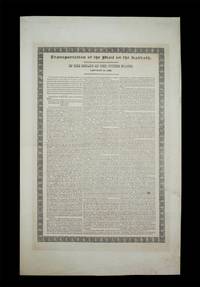
1829réf. 69246Kentucky 1829. UNITED STATES CONSTITUTION; BROADSIDE. BROADSIDE. Transportation of the Mail on the Sabbath. In the Senate of the United States. Kentucky: 1829. Full Description: UNITED STATES CONSTITUTION. BROADSIDE. Transportation of the Mail on the Sabbath. In the Senate of the United States. Kentucky: January 19 1829. An important and interesting broadside supporting the separate of church in state in so as it applies to the delivery of mail on Sunday the Sabbath. Broadside folio 16 3/4 x 10 1/2 inches; 428 x 266 mm. With a caption title printed above three columns separated by rules. All within a decorative woodcut border. Mounted at the top edge within a portfolio mat. Some minor toning and a few small spots of dampstaining. A One and one half-inch closed tear at right-hand margin just touching the border. Overall very good. This is a significant document in the history of the United States Constitution in relation to the concept of the separation of church and state. Christian leaders demanded that the Government institution of the Postal Office not work on Sunday as their God had deemed this the Sabbath. The following document discusses that while many Christians observe the Sabbath on Sunday others including their Jewish neighbors observe the Sabbath on Saturday. Demanding that the government institution not work on Sunday for religious reasons goes directly against the Constitution. The report states "With these different religious views the committee are of opinion that congress cannot interfere.-It is not the legitimate province of the legislature to determine what religion is true or what false. Our government is a civil and not a religious institution. Our constitution recognizes in every person the right to choose his own religion and to enjoy it freely without molestation. Whatever may be the religious sentiments of citizens and however variant they are alike entitled to protection from the government so long as they do not invade the rights of others." It goes on to powerfully state "Extensive religious combinations to effect a political object are in the opinion of the committee always dangerous. This first effort of the kind calls for the establishment of a principle which in the opinion of the committee would lay the foundation for dangerous innovations upon the spirit of the Constitution and upon the religious rights of the citizens. If admitted it may be justly apprehended that the future measures of government will be strongly marked if not eventually controlled by the same influence. All religious despotism commences by combination and influence; and when that influence begins to operate upon the political institutions of a country the civil power soon bends under it and the catastrophe of other nations furnishes an awful warning of the consequence." The five-person committee for this report consisted of Richard Johnson of Kentucky who later went on to serve as the country's 9th vice president under Martin Van Buren as well as future President John Tyler of Virgina Ellis of Mississippi Silsbee of Massachusetts and Johnson of Louisiana. "The opening of post offices on Sunday led to a national debate about the relationship of the federal government to the Sabbath day. The argument which raged from 1810 to 1830 involved whether the national government would exist as a secular commercial republic committed to a separation of church and state or as a Christian commonwealth. The U.S. postmaster general Gideon Granger responded by persuading Congress in 1810 to pass legislation to open all 2300 post offices seven days a week and transport mail every day. Congress immediately began to receive petitions from numerous religious denominations urging repeal of the law. Under strong public pressure House and Senate committees formed to study the postal law. While the chair of the House committee waffled on the subject the head of the Senate committee swayed Congress to keep the law. Gen. Richard M. Johnson of Kentucky a devout Baptist wrote in the committee's 1829 report that congressional action to stop Sunday mail would be unconstitutional. Johnson reminded Americans that they had religious freedom and that government had no right to coerce the religious homage of anyone. The invention of the telegraph in 1844 ultimately spelled the end of Sunday mail. It was now possible to get market information without the mail system. By the 1850s postmaster generals were eliminating the movement of most mail on Sunday." Free Speech Center Caryn E. Neumann. HBS 69246. $1750. Kentucky unknown
1829réf. 69246Kentucky 1829. UNITED STATES CONSTITUTION; BROADSIDE. BROADSIDE. Transportation of the Mail on the Sabbath. In the Senate of the United States. Kentucky: 1829. Full Description: UNITED STATES CONSTITUTION. BROADSIDE. Transportation of the Mail on the Sabbath. In the Senate of the United States. Kentucky: January 19 1829. An important and interesting broadside supporting the separate of church in state in so as it applies to the delivery of mail on Sunday the Sabbath. Broadside folio 16 3/4 x 10 1/2 inches; 428 x 266 mm. With a caption title printed above three columns separated by rules. All within a decorative woodcut border. Mounted at the top edge within a portfolio mat. Some minor toning and a few small spots of dampstaining. A One and one half-inch closed tear at right-hand margin just touching the border. Overall very good. This is a significant document in the history of the United States Constitution in relation to the concept of the separation of church and state. Christian leaders demanded that the Government institution of the Postal Office not work on Sunday as their God had deemed this the Sabbath. The following document discusses that while many Christians observe the Sabbath on Sunday others including their Jewish neighbors observe the Sabbath on Saturday. Demanding that the government institution not work on Sunday for religious reasons goes directly against the Constitution. The report states "With these different religious views the committee are of opinion that congress cannot interfere.-It is not the legitimate province of the legislature to determine what religion is true or what false. Our government is a civil and not a religious institution. Our constitution recognizes in every person the right to choose his own religion and to enjoy it freely without molestation. Whatever may be the religious sentiments of citizens and however variant they are alike entitled to protection from the government so long as they do not invade the rights of others." It goes on to powerfully state "Extensive religious combinations to effect a political object are in the opinion of the committee always dangerous. This first effort of the kind calls for the establishment of a principle which in the opinion of the committee would lay the foundation for dangerous innovations upon the spirit of the Constitution and upon the religious rights of the citizens. If admitted it may be justly apprehended that the future measures of government will be strongly marked if not eventually controlled by the same influence. All religious despotism commences by combination and influence; and when that influence begins to operate upon the political institutions of a country the civil power soon bends under it and the catastrophe of other nations furnishes an awful warning of the consequence." The five-person committee for this report consisted of Richard Johnson of Kentucky who later went on to serve as the country's 9th vice president under Martin Van Buren as well as future President John Tyler of Virgina Ellis of Mississippi Silsbee of Massachusetts and Johnson of Louisiana. "The opening of post offices on Sunday led to a national debate about the relationship of the federal government to the Sabbath day. The argument which raged from 1810 to 1830 involved whether the national government would exist as a secular commercial republic committed to a separation of church and state or as a Christian commonwealth. The U.S. postmaster general Gideon Granger responded by persuading Congress in 1810 to pass legislation to open all 2300 post offices seven days a week and transport mail every day. Congress immediately began to receive petitions from numerous religious denominations urging repeal of the law. Under strong public pressure House and Senate committees formed to study the postal law. While the chair of the House committee waffled on the subject the head of the Senate committee swayed Congress to keep the law. Gen. Richard M. Johnson of Kentucky a devout Baptist wrote in the committee's 1829 report that congressional action to stop Sunday mail would be unconstitutional. Johnson reminded Americans that they had religious freedom and that government had no right to coerce the religious homage of anyone. The invention of the telegraph in 1844 ultimately spelled the end of Sunday mail. It was now possible to get market information without the mail system. By the 1850s postmaster generals were eliminating the movement of most mail on Sunday." Free Speech Center Caryn E. Neumann. HBS 69246. $1750. Kentucky unknown books
1825réf. 6784Paris: Dondey-Dupre Pere et Fils 1825. Hardcover Tapa dura. 133x80mm. 5¼x3¼". Paris Dondey-Dupre Pere et Fils 1825. En 12º 133 x 80mm. 110 pp. 1 h. Encuadernación de la época en piel. Primera edición francesa. La Constitución Federal de los Estados Unidos Mexicanos de 1824 entró en vigor el 4 de octubre de ese año después del Imperio Mexicano de Agustín de Iturbide. En la nueva Constitución la República tomaba el nombre de Estados Unidos Mexicanos y era definida como una República Federal Representativa. Esta traducción francesa es rara en comercio. Dondey-Dupre Pere et Fils hardcover
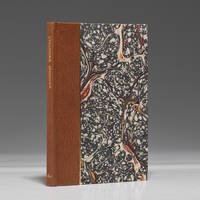
1847réf. 1239761847. First Edition. CONSTITUTION PHILLIPS Wendell. Review of Lysander Spooner's Essay on the Unconstitutionality of Slavery. Reprinted from the ""Anti-Slavery Standard"" With Additions. Boston: Andrews & Prentiss 1847. Octavo modern half calf gilt marbled boards; pp. 1-3 4-95 1. $1600.First edition in book form of Phillips' bold and influential antebellum work on the U.S. Constitution and the question of slavery revised and ""with additions"" to its serialization in the Anti-Slavery Standard.Controversy over slavery ""was the most important single influence on American constitutional development before the Civil War"" Wiecek Sources 15. Leaders in that controversy were William Lloyd Garrison Wendell Phillips and Lysander Spooner. As an anti-constitutionalist Phillips deemed ""Prophet of Liberty Champion of the Slave"" made his ""first public pronouncement that the Constitution should be abandoned"" when in 1842 he asserted the ""'spirit of liberty' is 'chained down in the iron links of the United States Constitution'"" and subsequently argued the Constitution was a ""'compromise'É between freedom and slavery"" Knowles Securing the 'Blessings'"" 41. Phillips' 1844 work Constitution: A Pro-Slavery Compact prompted Spooner to author Unconstitutionality of Slavery First Part: 1845 Second Part: 1847 arguing it was instead slavery that was unconstitutional not the founding document. Phillips quickly countered with this Review.""Phillips insisted the only path to justice 'is over the Constitution trampling it under foot'. and raised pertinent questions about the processes of constitutionalism. Must a just person reject an imperfect constitution or even one that sanctioned and protected an evil like slavery to work effectively for constitutional reform and to abolish injustice Or was it possible to regard the constitution as an imperfect but amendable instrumentÉ the only thing available in the here and now of a heterogeneous secular society that can serve as a means of changing a society's goals and structuring"" Wiecek 246. To Phillips Spooner's approach essentially ""leaves every one to do 'what is right in his own eyes.'"" Spooner and Phillips also disagreed on remedies to immoral laws. ""Spooner did not consider an immoral contract binding"" and argued for example that judges rely instead on natural law for their decisions. Phillips felt that in such circumstances a judge should resign. In this Review Phillips also offers ""a new area in which antislavery and anarchy"" could be connected when he describes Spooner's ""antislavery constitutionalismÉ as 'the first step toward anarchy'"" Perry Radical Abolitionism 165-66. First edition first printing. Serialized earlier the same year in the Anti-Slavery Standard the official weekly newspaper of the American Anti-Slavery Society which was co-founded by William Lloyd Garrison and Arthur Tappen. Sabin 62524. Dumond 93. Not in Blockson. Text fresh and about-fine. hardcover
1847réf. 1239761847. First Edition. CONSTITUTION PHILLIPS Wendell. Review of Lysander Spooner's Essay on the Unconstitutionality of Slavery. Reprinted from the ""Anti-Slavery Standard"" With Additions. Boston: Andrews & Prentiss 1847. Octavo modern half calf gilt marbled boards; pp. 1-3 4-95 1. $1600.First edition in book form of Phillips' bold and influential antebellum work on the U.S. Constitution and the question of slavery revised and ""with additions"" to its serialization in the Anti-Slavery Standard.Controversy over slavery ""was the most important single influence on American constitutional development before the Civil War"" Wiecek Sources 15. Leaders in that controversy were William Lloyd Garrison Wendell Phillips and Lysander Spooner. As an anti-constitutionalist Phillips deemed ""Prophet of Liberty Champion of the Slave"" made his ""first public pronouncement that the Constitution should be abandoned"" when in 1842 he asserted the ""'spirit of liberty' is 'chained down in the iron links of the United States Constitution'"" and subsequently argued the Constitution was a ""'compromise'É between freedom and slavery"" Knowles Securing the 'Blessings'"" 41. Phillips' 1844 work Constitution: A Pro-Slavery Compact prompted Spooner to author Unconstitutionality of Slavery First Part: 1845 Second Part: 1847 arguing it was instead slavery that was unconstitutional not the founding document. Phillips quickly countered with this Review.""Phillips insisted the only path to justice 'is over the Constitution trampling it under foot'. and raised pertinent questions about the processes of constitutionalism. Must a just person reject an imperfect constitution or even one that sanctioned and protected an evil like slavery to work effectively for constitutional reform and to abolish injustice Or was it possible to regard the constitution as an imperfect but amendable instrumentÉ the only thing available in the here and now of a heterogeneous secular society that can serve as a means of changing a society's goals and structuring"" Wiecek 246. To Phillips Spooner's approach essentially ""leaves every one to do 'what is right in his own eyes.'"" Spooner and Phillips also disagreed on remedies to immoral laws. ""Spooner did not consider an immoral contract binding"" and argued for example that judges rely instead on natural law for their decisions. Phillips felt that in such circumstances a judge should resign. In this Review Phillips also offers ""a new area in which antislavery and anarchy"" could be connected when he describes Spooner's ""antislavery constitutionalismÉ as 'the first step toward anarchy'"" Perry Radical Abolitionism 165-66. First edition first printing. Serialized earlier the same year in the Anti-Slavery Standard the official weekly newspaper of the American Anti-Slavery Society which was co-founded by William Lloyd Garrison and Arthur Tappen. Sabin 62524. Dumond 93. Not in Blockson. Text fresh and about-fine. hardcover books
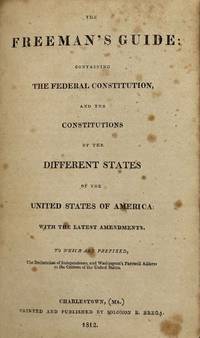
1812réf. 68721Charlestown Ms: Solomon B. Brega 1812. 18.5 cm. 294pp. Full leather rubbed gilt stamped leather spine label. Front joint cracked scattered foxing. Contains what is probably the earliest anthologized printing of the first Louisiana state constitution drafted in 1812. Very good. American Imprints 25460. Previous ownership signature of Moses Williams on front endpaper. Solomon B. Brega unknown
1812réf. 68721Charlestown Ms: Solomon B. Brega 1812. 18.5 cm. 294pp. Full leather rubbed gilt stamped leather spine label. Front joint cracked scattered foxing. Contains what is probably the earliest anthologized printing of the first Louisiana state constitution drafted in 1812. Very good. American Imprints 25460. Previous ownership signature of Moses Williams on front endpaper. Solomon B. Brega unknown books
1787réf. 67677London: Printed for D. Henry 1787. UNITED STATES CONSTITUTION; URBAN Sylvanus. One of The First Means by Which The British People Learned of The Enactment of The Constitution of The United States of America UNITED STATES CONSTITUTION subject. URBAN Sylvanus editor. The Gentleman's Magazine "New Constitution of the United States of America". Printed by John Nichols for D. Henry November December 1787. First edition of these November and December 1787 issues. Two small octavo volumes 8 1/2 x 5 1/8 inches; 215 x 130 mm. 941-1035 1; 1037-1131 1 pp. With woodcut text illustration on front wrapper of each volume. November issue with one fold-out plate and lacking plate I entitled "S.W. View of Aconbury Chapel 5 Miles from Here." The December issue with two plates plate II and Supp. but lacking plate I Illustrations of the Royal Charter School Near Dublin Clontarfe Castle Dublin and others. Text of American Constitution on pp. 1008-1011; 1110-1112. Self-wrappered. Newer stitching. Some very minor toning and light occasional spotting. Overall very good. This is the first English magazine printing of the U.S. Constitution. The November issue on pages 1008-1011 prints George Washington's Letter and the first Article. The December issue on pages 1110-1112 contains articles two through seven and the delegates names. "The following is the new Plan of the Constitution of the United States of America upon which the Convention of all the most distinguished men in the States have been deliberating for several months and by which if finally adopted the Constitution of the Union is totally changed." From the introduction Einaudi. Goldsmiths'. Howes. Howes. Kress. Streeter. Streeter. HBS 67677. $1500. Printed for D. Henry unknown
2006réf. 76619Washington DC: U. S. Government Printing Office 2006. Presumed First Edition First printing. Wraps. Good. Serial No. 109-103. 3 of 4 volume set. Volume I v 1 1453 5 pages. Volume II v 1. 1455-2388 2. Volume III v 1 2389-4296. Volume IV NOT PRESENT. Footnotes. Illustrations. The Subcommittee will be holding its tenth hearing examining the Voting Rights Act of 1965 and the temporary provisions that are to expire. They're set to expire in 2007 unless we reauthorize by Congress which I think most of us anticipate will occur. The Subcommittee examined each of the expiring provisions in great detail. This afternoon we examine the evidence of continued discrimination against racial and language minority citizens since 1982 that have been compiled by a number of non-governmental organizations who will be testifying. I'd thank these organizations for the time and effort that they have put into completing these reports and in making sure that this Committee and Congress has before it a complete and accurate record of discrimination over the last 25 years. In continuing to reauthorize the temporary provisions Congress on four separate occasions examined the extent to which discrimination continued to exist by analyzing information such as enforcement statistics minority voter registration rates minority voter turnout and litigation pursued to protect minority voting rights. Federal agencies such as the United States Commission on Civil Rights were instrumental in investigating analyzing and reporting back to Congress on the state of minority voting during each consideration. Each time Congress concluded based upon the evidence presented that the exceptional conditions which existed in 1966 continued to exist in 1970 1975 1982 and in 1992 when it was last reauthorized. This afternoon the Committee continues to examine whether the exceptional conditions warranting the extension of the temporary provisions continue to exist in 2006. U. S. Government Printing Office paperback
1787réf. 67677London: Printed for D. Henry 1787. UNITED STATES CONSTITUTION; URBAN Sylvanus. One of The First Means by Which The British People Learned of The Enactment of The Constitution of The United States of America UNITED STATES CONSTITUTION subject. URBAN Sylvanus editor. The Gentleman's Magazine "New Constitution of the United States of America". Printed by John Nichols for D. Henry November December 1787. First edition of these November and December 1787 issues. Two small octavo volumes 8 1/2 x 5 1/8 inches; 215 x 130 mm. 941-1035 1; 1037-1131 1 pp. With woodcut text illustration on front wrapper of each volume. November issue with one fold-out plate and lacking plate I entitled "S.W. View of Aconbury Chapel 5 Miles from Here." The December issue with two plates plate II and Supp. but lacking plate I Illustrations of the Royal Charter School Near Dublin Clontarfe Castle Dublin and others. Text of American Constitution on pp. 1008-1011; 1110-1112. Self-wrappered. Newer stitching. Some very minor toning and light occasional spotting. Overall very good. This is the first English magazine printing of the U.S. Constitution. The November issue on pages 1008-1011 prints George Washington's Letter and the first Article. The December issue on pages 1110-1112 contains articles two through seven and the delegates names. "The following is the new Plan of the Constitution of the United States of America upon which the Convention of all the most distinguished men in the States have been deliberating for several months and by which if finally adopted the Constitution of the Union is totally changed." From the introduction Einaudi. Goldsmiths'. Howes. Howes. Kress. Streeter. Streeter. HBS 67677. $1500. Printed for D. Henry unknown books
1814réf. FANarFRA8Paris: M.Ponce & P.Didot L'Aîné 1814. 1814. 4to. large-paper copy. pp. 48. 9 plates engraved by Helman & N.Ponce after C.Monnet incl. 3 before letters. A fine copy bound in modern half morocco by Rivière & Son t.e.g. others uncut original wrs. bound in at end 2 leaves with small marginal stains. armorial bookplate of Sir David Lionel Goldsmid-Stern-Salomons Baronet. FINELY PRINTED AND ILLUSTRATED EDITION OF THE 'RESTORATION' CHARTER OF 1814 PROMULGATED UNDER LOUIS XVIII. INSERTED IN THIS COPY ARE THREE ADDITIONAL PLATES WITH FIGURES BEFORE LETTERS. COHEN-DE RICCI 228. Paris: M.Ponce & P.Didot L'Aîné, 1814.
1791réf. 117509Didot jeune 1791 A Paris, De l'Imprimerie de Didot jeune, 1791, 1 volume in-quarto de 170x265 mm environ, VII, 118 pages. Reliure postérieure, demi chagrin vert bouteille, dos à cinq nerfs portant titres et tomaisons dorés, fers dorés, gardes marbrées. Menus frottements sur le dos, mors interne fendillé, coins frottés, des rousseurs, bon état général malgré les défauts signalés.
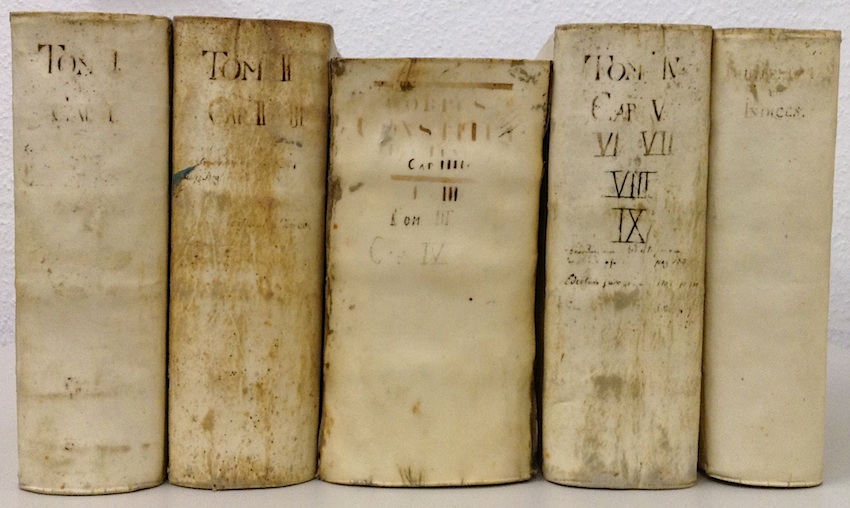
1741réf. 629710Lüneburg, Stern, 1741-45. 4to. Mit gestochenem Porträt (Georg II.) u. 1 gefalteten Tabelle. Zusammen über 7300 Seiten. Pergament d. Zeit (fleckig u. etwas berieben, Bd. 3/4 im Format etwas kleiner, Innengelenke verstärkt). [3 Warenabbildungen]
1767réf. 309408Göttingen, Vandenhoeck, 1767. 8nn. Bl. 254 S. Neuer Pappband.
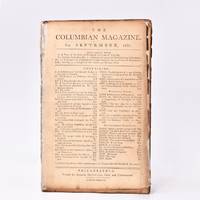
1787réf. 365066Philadelphia: Seddon Spotswood Cist and Trenchard 1787. 3 618-674. Without 2 plates. 8vo. Disbound fire damage at edges leaves detached. 3 618-674. Without 2 plates. 8vo. Along with a printing in the American Magazine among the earliest printings of the Constitution in a periodical. "One of the best of the eighteenth century magazines was the Columbian of Philadelphia. Considered from beginning to end the Columbian Magazine with its sequel the Universal Asylum affords an extremely valuable treasury of materials which reflect its own times and the war years immediately preceding. it was the handsomest American magazine of its century" Mott. Seddon, Spotswood, Cist and Trenchard unknown
1787réf. 365066Philadelphia: Seddon Spotswood Cist and Trenchard 1787. 3 618-674. Without 2 plates. 8vo. Disbound fire damage at edges leaves detached. 3 618-674. Without 2 plates. 8vo. Along with a printing in the American Magazine among the earliest printings of the Constitution in a periodical. "One of the best of the eighteenth century magazines was the Columbian of Philadelphia. Considered from beginning to end the Columbian Magazine with its sequel the Universal Asylum affords an extremely valuable treasury of materials which reflect its own times and the war years immediately preceding. it was the handsomest American magazine of its century" Mott. Seddon, Spotswood, Cist and Trenchard unknown books
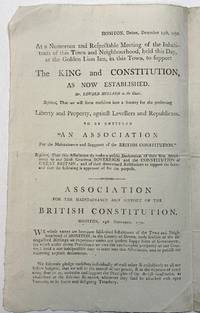
1792réf. 41771Honiton England 1792. Folio leaf 16" x 13." Folded to 4 pp. Printed on verso of first leaf and recto of second leaf only. Light old folds spine with early reinforcement tape. Text clean and bright. Very Good. Public enthusiasm for the tenets of the French Revolution and Thomas Paine worried those who supported the established monarchy and British parliamentary government. In response Loyalists created local Societies like this one pledging "that we will to the utmost of our power & at the expence of every thing dear to us maintain and support the Principles of the British Constitution as established at the Glorious Revolution whenever they shall be attacked with open Violence or be secret and designing Treachery." The Association expresses its "deepest Abhorrence of the Authors and Publishers of those seditious Pamphlets which under the specious disguise of Liberty are calculated only to promote Licentiousness and Disorder to encourage Rebellion against the State and Treason against Society." More than thirty supporters sign in type. E. Holland and C. Gidley sign in type as Chairman and Secretary respectively. ESTC records this rare document only at the British Library. OCLC does not list it. ESTC T22340 1- British Library. Not on OCLC as of March 2026. unknown
1792réf. 41771Honiton England 1792. Folio leaf 16" x 13." Folded to 4 pp. Printed on verso of first leaf and recto of second leaf only. Light old folds spine with early reinforcement tape. Text clean and bright. Very Good. Public enthusiasm for the tenets of the French Revolution and Thomas Paine worried those who supported the established monarchy and British parliamentary government. In response Loyalists created local Societies like this one pledging "that we will to the utmost of our power & at the expence of every thing dear to us maintain and support the Principles of the British Constitution as established at the Glorious Revolution whenever they shall be attacked with open Violence or be secret and designing Treachery." The Association expresses its "deepest Abhorrence of the Authors and Publishers of those seditious Pamphlets which under the specious disguise of Liberty are calculated only to promote Licentiousness and Disorder to encourage Rebellion against the State and Treason against Society." More than thirty supporters sign in type. E. Holland and C. Gidley sign in type as Chairman and Secretary respectively. ESTC records this rare document only at the British Library. OCLC does not list it. ESTC T22340 1- British Library. Not on OCLC as of March 2026. unknown books