1.726 Ergebnisse
Best.-Nr. DADAX0190699485New unknown
1852pp. viii, 531. XLib bookplate of Lancaster Mechanics' Library Association on front paste down. XLib stamp on title page and elsewhere. 8vo. 225 mm. Original full leather binding, worn. Boards fragile. Hardbound. Good. SCARCE. PAIMP 20
Best.-Nr. DADAX035902873XNew unknown
Best.-Nr. DADAX0367180901New unknown
Best.-Nr. DADAX3030223817New unknown
Best.-Nr. DADAX0415609585New unknown
Best.-Nr. DADAX0199930317New unknown
Best.-Nr. DADAX019873218XNew unknown
Best.-Nr. DADAX0548645213New unknown
1936Best.-Nr. 15002Paris, Hermann, "Actualités scientifiques et industrielles" n°371, 1936 ; in-8, broché ; 38, (4) pp., couverture grise marbrée à décor rouge.
Best.-Nr. 15201Paris, Félix Alcan, 1896 ; in-8 ; bradel pleine toile vert-lierre, titre doré au dos, premier plat conservé (reliure mi-XXe) ; 362 pp.
Best.-Nr. DADAX0700628371New unknown
Best.-Nr. 1390628493.Gpaperback. Good. Access codes and supplements are not guaranteed with used items. May be an ex-library book. paperback
Best.-Nr. DADAX0195377117New unknown
Best.-Nr. DADAX0199491445New unknown
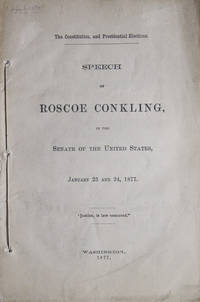
1877Best.-Nr. 4062Washington 1877. 48 pp. 1 vols. 8vo. Original stitched wrappers. Minor soiling. Very Good. 48 pp. 1 vols. 8vo. Conkling was the senator from New York and in 1877 was the "favorite son" of New York for the Republican nomination in rivalry with James G. Blaine. As it turned out the nomination and the Presidency went to Rutherford B. Hayes. Conkling was bitterly opposed to Hayes and in this document questions the manner of vote counting by the House and Senate in regard to the election of the President. unknown
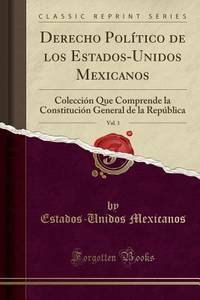
1875Best.-Nr. 41190Puebla Imprenta del Hospicio 1875. Paperback. Good. 176p. wrps lacks wrps. Puebla, Imprenta del Hospicio paperback
2006Best.-Nr. 76448Washington DC: U. S. Government Printing Office 2006. Presumed First Edition First printing. Wraps. Good. iii 1 302. 6 pages. Illustrations. Occasional footnotes. Some bottom corners curved at front and back. The chairman stated: Today we will examine the impact that Federal examiners and observers have had on increasing minority participation in the political process and the continued need for these provisions in the future. The Voting Rights Act of 1965 is a landmark piece of federal legislation in the United States that prohibits racial discrimination in voting.78 It was signed into law by President Lyndon B. Johnson during the height of the Civil Rights Movement on August 6 1965 and Congress later amended the Act five times to expand its protections.7 Designed to enforce the voting rights guaranteed by the Fourteenth and Fifteenth Amendments to the United States Constitution the Act secured the right to vote for racial minorities throughout the country especially in the South. According to the U.S. Department of Justice the Act is considered to be the most effective piece of federal civil rights legislation ever enacted in the country. U. S. Government Printing Office paperback
Best.-Nr. DADAX1436985862New unknown
Best.-Nr. DADAX0548964912New unknown
Best.-Nr. DADAX0521024889New unknown
Best.-Nr. DADAX0521318742New unknown
Best.-Nr. DADAX0802084745New unknown
Best.-Nr. DADAX0226131157New unknown
Best.-Nr. DADAX0190887443New unknown