Acte constitutionnel Republique 1793Livre Rare Book

1 769 résultats
1793réf. 167251793 A PARIS BARBOU, (1793.) .in 32mo.reliure pleine basane epoque,dos lisse titre,manque de cuir bas dos et charnieres,texte frais,pagination: 64+64+30 p.,tres rare- le 24 juin 1793, la Convention adopte et promulgue la Constitution de l’An I, la première Constitution républicaine et sociale française. Dans le préambule est énoncée la Déclaration des droits complétant celle du 26 août 1789. Assurément, la Constitution montagnarde de 1793 se singularise par l’élargissement des droits. En effet, aux simples droits formels individuels bourgeois proclamés en 1789, la Constitution de 1793 inclut les droits économiques et sociaux réels, tels que le droit au travail, le droit à la protection sociale, le droit à l’instruction.
1971réf. 601921München, Beck, 1971. 87 S. OKart.
1970réf. 179337München, Beck, 1970. XXIII, 242 S. OKart.
1781réf. 629730Göttingen, Vandenhoeck & Ruprecht, 1781-85. 8 Bl., 366 S.; 1 Bl., S. 367-682, 1 Bl. Marmorierter Pappband d. Zeit mit Rückenschild (etwas berieben, 1 Ecke bestoßen). [2 Warenabbildungen]
réf. DADAX0199670021New unknown
1814Mm 145x220 Brossura originale priva del dorso, 164 pagine. Segni del tempo ai margini esterni e tenui fioriture in apertura e chiusura del tomo, peraltro le condizioni sono buone. Spedizione in 24 ore dalla conferma dell'ordine.
réf. DADAX1436985862New unknown
réf. DADAX0226846709New unknown
réf. DADAX0195148703New unknown
réf. DADAX0195374169New unknown
réf. DADAX0520212800New unknown
réf. DADAX0195394488New unknown
réf. DADAX1240118929New unknown
1733réf. 11867London: J. Peele. Very Good with no dust jacket. 1733. First Edition; First Printing. Softcover. Stapled inside heavy card covers. No lib marks on the pamplet itself. ; Ex-Library; 12mo 7" - 7½" tall; 61 pages . J. Peele paperback
réf. DADAX0742522385New unknown
réf. DADAX1436722888New unknown
réf. DADAX1440833273New unknown
réf. DADAX0226677230New unknown
réf. 1332708102.Gpaperback. Good. Access codes and supplements are not guaranteed with used items. May be an ex-library book. paperback
réf. DADAX0415843790New unknown
réf. 003265London: Printed for Charles Harper William Crooke and Richard Tonson at the Flower-de-Luce in Fleetstreet at the Green Dragon without Temple Barr and at Grays-Inn Gate next Grays-Inn Lane 1688. Hardcover. Very Good. Folio. xvipp. 215ff. xxviiipp. Modern half calf over marbled boards. With the bookplate of William S. Johnson one of the signers of the American Constitution. ESTC R4204; Wing 2nd ed. K134. 0 London: Printed for Charles Harper, William Crooke and Richard Tonson, at the Flower-de-Luce in Fleetstreet, at the Green Dragon hardcover
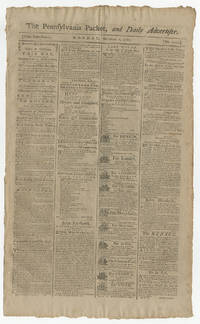
1787réf. 24135U.S. CONSTITUTION.Newspaper. The Pennsylvania Packet and Daily Advertiser. October 1 1787 No. 2700 Philadelphia: John Dunlap and David C. Claypoole including the September 28 resolution of the Confederation Congress to send to the states for ratification the recently completed U. S. Constitution. 4 pp. 12 x 18¾ in. "The United States in Congress Assembled. Friday September 28 1787. CONGRESS having received the Report of the CONVENTION lately assembled in Philadelphia Resolved unanimously THAT the said report with the resolutions and letter accompanying the same be transmitted to the several legislatures in order to be submitted to a convention of delegates chose in each state by the people thereof in conformity to the resolves of the convention made and provided in that case. CHARLES THOMSON Secretary." p2/c3 The convention called to revise the Articles of Confederation met in the Pennsylvania's State House in Philadelphia starting on May 25 1787. After many delegates agreed that the Articles could not be sufficiently improved they started to draft an entirely new structure. Maintaining their pledge of secrecy after months of private deliberations over trade defense taxation representation separation of powers the election of a president the slave trade international relations and many other issues the proposed United States Constitution was signed by thirty-nine of the fifty-five delegates on September 17. Two days later the Constitution was first published by the Pennsylvania Packetand four other Philadelphia newspapers. The cover letter sent by George Washington president of what came to be called the Constitutional Convention submitting the plan to Arthur St. Clair the President of the Congress of the Confederation in New York was also printed then. Congress received and read the proposed Constitution on September 20th. As a sampling of their deliberations William Grayson of Virginia thought it was too weak while Richard Henry Lee of Virginia and Nathan Dane of Massachusetts thought it was too strong. On September 27 Virginia's Richard Henry Lee proposed that the Constitution be sent to the executives of each of the states. A Delaware representative quickly added "in order to be by them submitted to conventions of delegates to be chosen agreeably to the said resolutions of the convention." Ten of the twelve states then represented in Congress voted in favor. Before Congress adjourned for the day the majority of Virginia's representatives and a minority of New York's representatives also indicated their support. On September 28 Federalists holding out for a unanimous vote found a way to compromise with anti-Federalists: Congress unanimously resolved to send the Constitution to the states but without any recommendation or approval. Arider from New York City arrived in Philadelphia with the resolution that same day. George Clymer presented his own resolution to the Pennsylvania Assembly noting that "the late Federal Convention has digested a plan of government for the United States and recommended that it should be referred to the consideration of State Conventions…" After a "very long and animated debate" Clymer's resolution passed by a vote of 43 to 19 and adjourned until 4:00 p.m. But only 44 members returned falling two shy of the necessary quorum. The Assembly's sergeant-at-arms was sent to show the resolution to absent members. Two who still refused to attend were seized by the public dragged through the streets and thrust into the assembly room. The involuntarily completed quorum voted that "it is the sense of great numbers of the grand people of this state already signified in petitions & declarations to this house that the earliest steps should be taken to assemble a convention within the state for the purpose of deliberating and determining on the said constitution." They called for the election of deputies who would assemble for that purpose "on the third Tuesday of November at the State-house in the city of Philadelphia…" p2/c3-4 Other articles of interest in this issue include news from Europe and a brief piece against Indians "from the western country who still continue their depredations on the whites…" p2/c3 The Pennsylvania Packet or the General Advertiser1771-1839 was founded by John Dunlap in late 1771 as a weekly newspaper in Philadelphia though it relocated to Lancaster during the British occupation of Philadelphia in 1777-1778. On May 30 1783 Benjamin Towne turned the Pennsylvania Evening Post into the first daily newspaper in the United States. However with Towne branded a traitor and forced to hawk his own papers on the street the newspaper collapsed the following year. John Dunlap and David Claypoole then made their Pennsylvania Packet the first successful daily on September 21 1784. It underwent numerous name changes in the 1790s until sold in 1800 and renamed Poulson's American Daily Advertiser. John Dunlap and David C. Claypoole books
1787réf. 24135U.S. CONSTITUTION.Newspaper. The Pennsylvania Packet and Daily Advertiser. October 1 1787 No. 2700 Philadelphia: John Dunlap and David C. Claypoole including the September 28 resolution of the Confederation Congress to send to the states for ratification the recently completed U. S. Constitution. 4 pp. 12 x 18¾ in. "The United States in Congress Assembled. Friday September 28 1787. CONGRESS having received the Report of the CONVENTION lately assembled in Philadelphia Resolved unanimously THAT the said report with the resolutions and letter accompanying the same be transmitted to the several legislatures in order to be submitted to a convention of delegates chose in each state by the people thereof in conformity to the resolves of the convention made and provided in that case. CHARLES THOMSON Secretary." p2/c3 The convention called to revise the Articles of Confederation met in the Pennsylvania's State House in Philadelphia starting on May 25 1787. After many delegates agreed that the Articles could not be sufficiently improved they started to draft an entirely new structure. Maintaining their pledge of secrecy after months of private deliberations over trade defense taxation representation separation of powers the election of a president the slave trade international relations and many other issues the proposed United States Constitution was signed by thirty-nine of the fifty-five delegates on September 17. Two days later the Constitution was first published by the Pennsylvania Packetand four other Philadelphia newspapers. The cover letter sent by George Washington president of what came to be called the Constitutional Convention submitting the plan to Arthur St. Clair the President of the Congress of the Confederation in New York was also printed then. Congress received and read the proposed Constitution on September 20th. As a sampling of their deliberations William Grayson of Virginia thought it was too weak while Richard Henry Lee of Virginia and Nathan Dane of Massachusetts thought it was too strong. On September 27 Virginia's Richard Henry Lee proposed that the Constitution be sent to the executives of each of the states. A Delaware representative quickly added "in order to be by them submitted to conventions of delegates to be chosen agreeably to the said resolutions of the convention." Ten of the twelve states then represented in Congress voted in favor. Before Congress adjourned for the day the majority of Virginia's representatives and a minority of New York's representatives also indicated their support. On September 28 Federalists holding out for a unanimous vote found a way to compromise with anti-Federalists: Congress unanimously resolved to send the Constitution to the states but without any recommendation or approval. Arider from New York City arrived in Philadelphia with the resolution that same day. George Clymer presented his own resolution to the Pennsylvania Assembly noting that "the late Federal Convention has digested a plan of government for the United States and recommended that it should be referred to the consideration of State Conventions…" After a "very long and animated debate" Clymer's resolution passed by a vote of 43 to 19 and adjourned until 4:00 p.m. But only 44 members returned falling two shy of the necessary quorum. The Assembly's sergeant-at-arms was sent to show the resolution to absent members. Two who still refused to attend were seized by the public dragged through the streets and thrust into the assembly room. The involuntarily completed quorum voted that "it is the sense of great numbers of the grand people of this state already signified in petitions & declarations to this house that the earliest steps should be taken to assemble a convention within the state for the purpose of deliberating and determining on the said constitution." They called for the election of deputies who would assemble for that purpose "on the third Tuesday of November at the State-house in the city of Philadelphia…" p2/c3-4 Other articles of interest in this issue include news from Europe and a brief piece against Indians "from the western country who still continue their depredations on the whites…" p2/c3 The Pennsylvania Packet or the General Advertiser1771-1839 was founded by John Dunlap in late 1771 as a weekly newspaper in Philadelphia though it relocated to Lancaster during the British occupation of Philadelphia in 1777-1778. On May 30 1783 Benjamin Towne turned the Pennsylvania Evening Post into the first daily newspaper in the United States. However with Towne branded a traitor and forced to hawk his own papers on the street the newspaper collapsed the following year. John Dunlap and David Claypoole then made their Pennsylvania Packet the first successful daily on September 21 1784. It underwent numerous name changes in the 1790s until sold in 1800 and renamed Poulson's American Daily Advertiser. John Dunlap and David C. Claypoole
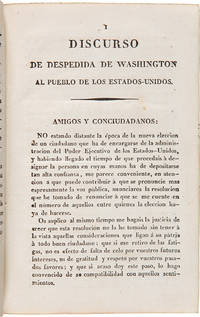
réf. 55421Mexico: Imprenta a cargo de Martin Rivera 1823. First Mexican Printing of the U.S. Constitution This is the first Mexican printing of the United States Constitution accompanied by two important addresses by George Washington. This work was produced in anticipation of Mexican independence from Spain and the U.S. Constitution in particular provided inspiration to the drafters of the constitution of newly-independent Mexico. Written in 1824 it was the first constitution of Mexico as a sovereign state and the constitution under which the colonization of Texas by Americans would take place. It is ample evidence of the transnational influence on the United States Constitution on emerging democracies in this case America's neighbor to the south. All seven articles of the United States Constitution are printed in full in Spanish in a section that is headed by a Federal garland ornament. The names of all the signers are given at the conclusion of the main text. This is followed by a section printing the first twelve amendments titled here as "Correcciones" an interesting interpretation of the role of constitutional amendments. The final page contains the text of an amendment passed by the House and Senate and signed in print by Senate President pro tem John Gaillard and House Speaker J.B. Varnum prohibiting any American citizen from accepting a title of nobility or honor from a foreign government under threat of losing one's American citizenship and holding any further elective office. This "Titles of Nobility" amendment was passed by Congress in 1810 and came close to ratification by two-thirds of the states in the 1810s but has to this day never been ratified. The inclusion of this amendment is an interesting commentary on the priorities and concerns of Mexican lawmakers. The U.S. Constitution is preceded by two chapters printing addresses by George Washington whose actions following the American Revolution and his two terms as President were influential well beyond the borders of the United States. The first chapter prints Washington's 1796 Farewell Address to the United States "Discurso de Despedida de Washington al Pueblo de los Estados-Unidos". Designed by Washington and his principal advisors in drafting it—James Madison and Alexander Hamilton—as both a valedictory and advice to succeeding generations the address served as a guidepost to Americans from the point of its publication. The Farewell Address would have been of particular interest to the Mexican Constitutional framers. The second section prints Washington's Address to the Continental Army in 1783 "Carta Circular del General Washington a los Gobernadores de los Estados fecha en el Cuartel General de Newburgh 18 de Junio de 1783". In this circular letter General Washington announces his intention to resign his command of the Continental Army and retire into private life. He also expounds in detail on the serious issues facing the nascent United States government. Both of Washington's addresses are printed fully in Spanish as is the Constitution. OCLC records just ten holding institutions over three records. This is the first copy that we can find in the market in over a century and the first copy we have handled of this first Mexican printing of the United States Constitution. Small octavo. Contemporary mottled Mexican sheep spine gilt. Minor edge wear light scuffing to boards short worm track on front board. Small ownership mark reading "JNB" branded on front and rear pastedowns ink ownership signature of "De Francisco Gonzalez de Cossio" on front flyleaf. Internally clean. Very good. OCLC 24072481 503926127 1097838706. SABIN 16060. PALAU 59641 374086. hardcover books
1805réf. 57952Richmond. 1805. Second edition of the Virginia convention to ratify the federal constitution. An important document in the passing and implementation of the U.S. Constitution. Scarce. viii477pp. 20th-century tan buckram gilt leather labels. Institutional ink stamp and contemporary ink inscription on titlepage ink signature on first page of main text some toning and foxing. Good. SHAW & SHOEMAKER 9665 3 copies. hardcover books