MAZURE F.A.JLivre Rare Book

1 365 résultats
réf. 5938suivie de Considérations sur la constitution décrétée le 19 mars 1812,par les Cortès,réunis à Cadix.In 8 broché,faux-titre,titre,II,72 pages, de l’imprimerie de Mme Veuve Agasse 1821,très bon état
1883réf. 26571883 br. in-8 coquille, goutt. à témoin, rouss., 584 p., 1883 Aux Bureaux de la Gazette de France,
1749réf. P1-4A-7Genève, Barrillot et fils, 1749. 2 parties en 1 volume in-4 (270x210 mm) de XXIII-(1)-1 grande carte dépliante, 326 pp. ; (2)-XIV-398 pp. relié d’époque plein veau brun granité, dos à nerfs orné de fers dorés, pièce de titre charnières faibles. Édition parue un an après l’originale. « ..Nouvelle édition. Corrigée par l’auteur. Et augmentée d’une table des matières, et d’une carte géographique, pour servir à l’intelligence des articles qui concernent le commerce. ».
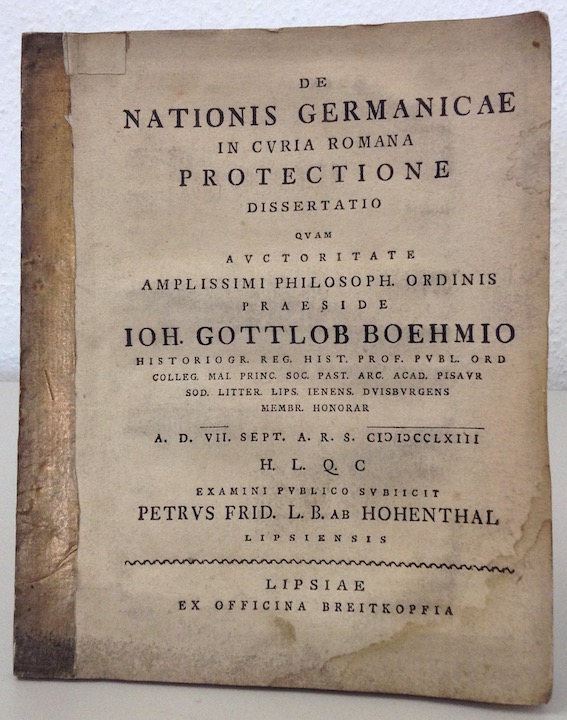
1763réf. 460146Leipzig, Breitkopf, 1763. 4to. 3 Bl., 58 S. Rückenfalz aus Goldpapier.
1805réf. 57952Richmond. 1805. Second edition of the Virginia convention to ratify the federal constitution. An important document in the passing and implementation of the U.S. Constitution. Scarce. viii477pp. 20th-century tan buckram gilt leather labels. Institutional ink stamp and contemporary ink inscription on titlepage ink signature on first page of main text some toning and foxing. Good. SHAW & SHOEMAKER 9665 3 copies. hardcover
réf. 1378073223.Gpaperback. Good. Access codes and supplements are not guaranteed with used items. May be an ex-library book. paperback
réf. 1334444986.Gpaperback. Good. Access codes and supplements are not guaranteed with used items. May be an ex-library book. paperback
1805réf. 57952Richmond. 1805. Second edition of the Virginia convention to ratify the federal constitution. An important document in the passing and implementation of the U.S. Constitution. Scarce. viii477pp. 20th-century tan buckram gilt leather labels. Institutional ink stamp and contemporary ink inscription on titlepage ink signature on first page of main text some toning and foxing. Good. SHAW & SHOEMAKER 9665 3 copies. hardcover books
1987Reprint of the 1888 ed. (published as Volume V, Supplementary to Elliot's Debates).; 641 pages
1788réf. 69689Boston: Adams and Nourse 1788. UNITED STATES CONSTITUTION. First edition of the proceedings leading to the Massachusetts Compromise being the ratification of the U.S. Constitution by the sixth of the needed nine States. Octavo in fours 7 1/8 x 4 1/2 inches; 180 x 115 mm. 219 1 blank pp. An early printing of the proposed Constitution appears on pages 3-19. Contemporary full speckled sheep. Boards scuffed and worn. Front outer hinge is cracked but holding firm. Without front free endpaper. Leaf U2 with one-inch closed tear no loss. Leaves are foxed and toned as usual for American paper of this time. Still overall a very good copy. Housed in a custom brown quarter calf clamshell. "Getting approval for the new Constitution was no small feat. Anti-federalists feared that the Constitution would over-centralize government and restrict individual liberties. They demanded changes and a Bill of Rights to guarantee personal freedoms. Federalists on the other hand argued that states should accept the proposed Constitution without further changes. When these opposing views clashed in Massachusetts an agreement- known as the Massachusetts Compromise- was brokered by two famous local statesmen John Hancock and Samuel Adams. Under it Massachusetts ratified the Constitution becoming the sixth U.S. state while also proposing future amendments including a Bill of Rights. The Massachusetts Compromise was used as a model by other states to reach similar agreements. Without it the U.S. Constitution may never have been ratified at all." from Bridgewater State University "Although the delegates to the Constitutional Convention in Philadelphia finished their work in September 1787 a ratification process of many months remained ahead before the Constitution could become the system of government for the new country. For this to happen at least 9 of the 13 states had to approve the document and Massachusetts was at the crux of that lineup. In January 1788 the Massachusetts convention met in the Old State House to address the matter; at that time Delaware Pennsylvania New Jersey Georgia and Connecticut had already ratified the Constitution. The remaining states watched the proceedings in Boston closely anticipating a close vote that could fall either way. Massachusetts had the largest convention of any state and a fundamental disagreement divided the 364 delegates: Federalists supported a strong central government and the Constitution as written; Anti-Federalists held that a centralized government would concentrate power in the hands of the elite and lead to the dissolution of the democratic ideals espoused during the Revolution. The turning point in the debate in Boston came when Gov. John Hancock proposed that Massachusetts recommend several amendments to the Constitution including a Bill of Rights. This proposal effectively gave voice to many of the Anti-Federalist concerns and after Revolutionary leader Samuel Adams spoke in favor of Hancock's "conciliatory proposition" a sufficient number of delegates shifted their positions to approve ratification. Massachusetts ratified the United States Constitution on February 6 1788 by a vote of 187 to 168. In June when New Hampshire came on board as the ninth state to ratify adoption of the Constitution was guaranteed. Its formal enactment on April 30 1789 coincided with George Washington's inauguration as the first president of the United States." Massachusetts Historical Society "In Massachusetts anti-federalist opposition to the Constitution was significant. In order to mollify their concerns convention delegate Theophilus Parsons added nine amendments which were presented by John Hancock. The Constitution was ratified by Massachusetts with the amendments added as a recommendation to "remove the fears and quiet the apprehensions of many of the good people of this Commonwealth and more effectually guard against an undue administration of the federal government." Three of these recommendations would become the Fifth Seventh and Tenth Amendments of the Constitution. The sixth state to ratify the Constitution Massachusetts was the first to suggest amendments which in turn led directly to the passage of the Bill of Rights." Freemans Evans 21242. Sabin 45702. HBS 69689. $5000. Adams and Nourse unknown
1788réf. 69689Boston: Adams and Nourse 1788. UNITED STATES CONSTITUTION. First edition of the proceedings leading to the Massachusetts Compromise being the ratification of the U.S. Constitution by the sixth of the needed nine States. Octavo in fours 7 1/8 x 4 1/2 inches; 180 x 115 mm. 219 1 blank pp. An early printing of the proposed Constitution appears on pages 3-19. Contemporary full speckled sheep. Boards scuffed and worn. Front outer hinge is cracked but holding firm. Without front free endpaper. Leaf U2 with one-inch closed tear no loss. Leaves are foxed and toned as usual for American paper of this time. Still overall a very good copy. Housed in a custom brown quarter calf clamshell. "Getting approval for the new Constitution was no small feat. Anti-federalists feared that the Constitution would over-centralize government and restrict individual liberties. They demanded changes and a Bill of Rights to guarantee personal freedoms. Federalists on the other hand argued that states should accept the proposed Constitution without further changes. When these opposing views clashed in Massachusetts an agreement- known as the Massachusetts Compromise- was brokered by two famous local statesmen John Hancock and Samuel Adams. Under it Massachusetts ratified the Constitution becoming the sixth U.S. state while also proposing future amendments including a Bill of Rights. The Massachusetts Compromise was used as a model by other states to reach similar agreements. Without it the U.S. Constitution may never have been ratified at all." from Bridgewater State University "Although the delegates to the Constitutional Convention in Philadelphia finished their work in September 1787 a ratification process of many months remained ahead before the Constitution could become the system of government for the new country. For this to happen at least 9 of the 13 states had to approve the document and Massachusetts was at the crux of that lineup. In January 1788 the Massachusetts convention met in the Old State House to address the matter; at that time Delaware Pennsylvania New Jersey Georgia and Connecticut had already ratified the Constitution. The remaining states watched the proceedings in Boston closely anticipating a close vote that could fall either way. Massachusetts had the largest convention of any state and a fundamental disagreement divided the 364 delegates: Federalists supported a strong central government and the Constitution as written; Anti-Federalists held that a centralized government would concentrate power in the hands of the elite and lead to the dissolution of the democratic ideals espoused during the Revolution. The turning point in the debate in Boston came when Gov. John Hancock proposed that Massachusetts recommend several amendments to the Constitution including a Bill of Rights. This proposal effectively gave voice to many of the Anti-Federalist concerns and after Revolutionary leader Samuel Adams spoke in favor of Hancock's "conciliatory proposition" a sufficient number of delegates shifted their positions to approve ratification. Massachusetts ratified the United States Constitution on February 6 1788 by a vote of 187 to 168. In June when New Hampshire came on board as the ninth state to ratify adoption of the Constitution was guaranteed. Its formal enactment on April 30 1789 coincided with George Washington's inauguration as the first president of the United States." Massachusetts Historical Society "In Massachusetts anti-federalist opposition to the Constitution was significant. In order to mollify their concerns convention delegate Theophilus Parsons added nine amendments which were presented by John Hancock. The Constitution was ratified by Massachusetts with the amendments added as a recommendation to "remove the fears and quiet the apprehensions of many of the good people of this Commonwealth and more effectually guard against an undue administration of the federal government." Three of these recommendations would become the Fifth Seventh and Tenth Amendments of the Constitution. The sixth state to ratify the Constitution Massachusetts was the first to suggest amendments which in turn led directly to the passage of the Bill of Rights." Freemans Evans 21242. Sabin 45702. HBS 69689. $5000. Adams and Nourse unknown books
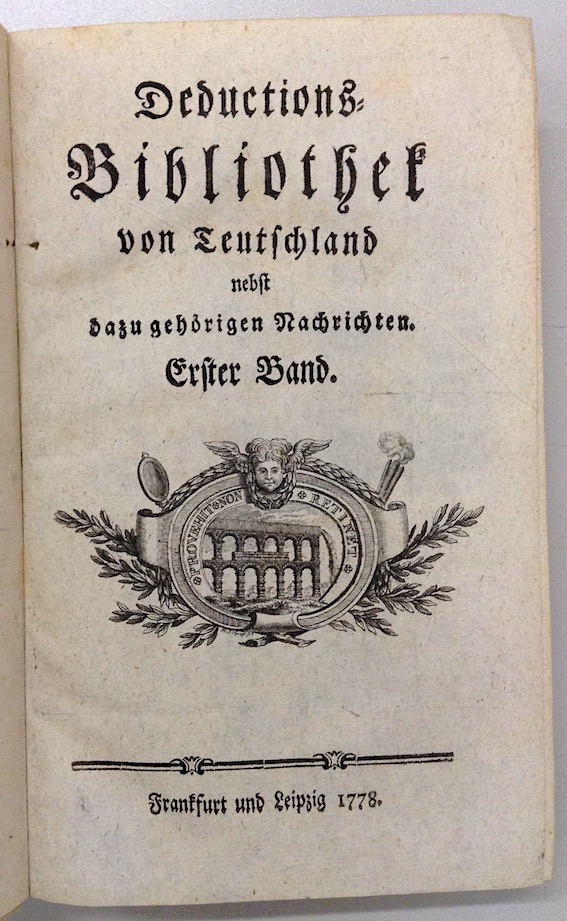
1778réf. 466061Frankfurt u. Leipzig, 1778-79. XIX, 540 S., 15 Bl.; 1 Bl., S. XXI-XXXVIII, 1 Bl., S. 544-1142, 18 Bl. Mit wiederholter gestochener Titelvignette u. 1 gestochenen Kopfvignette. Einfache Pappbände d. Zeit (fleckig u. bestoßen, Rückenbezüge mit Fehlstellen). [3 Warenabbildungen]
1850réf. 1229871850. First Edition. CONSTITUTION SPOONER Lysander. A Defence for Fugitive Slaves Against the Acts of Congress of February 12 1793 and September 18 1850. Boston: Bela Marsh 1850. Octavo original wrappers; pp. 1-2 3-4. i-iv 5 6-72. $3200.First edition of the rogue abolitionist's provocative call for ""vigorous"" public resistance to a pattern in the 1793 and 1850 Acts and court decisions such as Prigg v. Pennsylvania that demonstrated the government's refusal ""to champion liberty or justice"" especially elusive in original wrappers.The 1850 Fugitive Slave Act ""exposed the futility of antislavery constitutionalism grounded in a commitment to the 'proper rules of interpretation'"" Knowles Seeing the Light 544. It ""evinced a clear congressional policy favoring harsh and summary enforcement of the rendition policy over any solicitude for procedural or substantive rights of alleged fugitives"" Cover Justice Accused 121. Spooner crafted his answer to this in a ""devastating critique"" of both the 1793 and 1850 laws Smith Lysander Spooner. Defence one of his most elusive and provocative works offers ""significant evidence of the ways in which the passage of the 1850 Fugitive Slave Act shook his faith in the ability of the nation's courts to interpret the constitution in a manner consistent with the dictates of natural justice"" Knowles 546. Closely analyzing ""reasons why the 1793 and 1850 laws were unconstitutionalÉ he made it very clear why the passage of the 1850 law pushed him away from the 'quiet argument' of the courtroom to 'more vigorous'"" public action. In Defence while he continued to argue the importance of ""procedural objections to the lawsÉ Spooner spent far greater time 1 explaining why the courts would not actually strike down either of the laws and 2 outlining 'The Right of Resistance': ways in which 'The People' could respond to what he now recognized as the 'ugly reality' of proslavery constitutionalism."" He notably pointed to ""the 1842 decision in Prigg v. Pennsylvania in which the Supreme Court held that under the Constitution's Supremacy Clause the 1793 Fugitive Slave Act trumped Pennsylvania's personal liberty law which had made it far more difficultÉ for slaveholders to recover individuals they alleged were fugitive slavesÉ In the face of this judicial reality and to ensure the 'maintenance' of the Constitution Spooner encouraged popular resistance"" arguing the Second Amendment ""gave 'The People' an absolute and unqualified' Constitutional 'right' to do so."" By 1860 he would utterly lose ""faith in the ability or willingness of the government especially the courts to champion either liberty or justice"" Knowles 545 552. First edition: as issued with printing of 1793 Act of Congress and 1850 Fugitive Slave Act preceding title page; front and rear wrapper interior with publisher's advertisements. Sabin 89607. Work 335. Text very fresh a few minor stains to front wrapper expert repairs to wraps on the spine. Near-fine. paperback
1850réf. 1229871850. First Edition. CONSTITUTION SPOONER Lysander. A Defence for Fugitive Slaves Against the Acts of Congress of February 12 1793 and September 18 1850. Boston: Bela Marsh 1850. Octavo original wrappers; pp. 1-2 3-4. i-iv 5 6-72. $3200.First edition of the rogue abolitionist's provocative call for ""vigorous"" public resistance to a pattern in the 1793 and 1850 Acts and court decisions such as Prigg v. Pennsylvania that demonstrated the government's refusal ""to champion liberty or justice"" especially elusive in original wrappers.The 1850 Fugitive Slave Act ""exposed the futility of antislavery constitutionalism grounded in a commitment to the 'proper rules of interpretation'"" Knowles Seeing the Light 544. It ""evinced a clear congressional policy favoring harsh and summary enforcement of the rendition policy over any solicitude for procedural or substantive rights of alleged fugitives"" Cover Justice Accused 121. Spooner crafted his answer to this in a ""devastating critique"" of both the 1793 and 1850 laws Smith Lysander Spooner. Defence one of his most elusive and provocative works offers ""significant evidence of the ways in which the passage of the 1850 Fugitive Slave Act shook his faith in the ability of the nation's courts to interpret the constitution in a manner consistent with the dictates of natural justice"" Knowles 546. Closely analyzing ""reasons why the 1793 and 1850 laws were unconstitutionalÉ he made it very clear why the passage of the 1850 law pushed him away from the 'quiet argument' of the courtroom to 'more vigorous'"" public action. In Defence while he continued to argue the importance of ""procedural objections to the lawsÉ Spooner spent far greater time 1 explaining why the courts would not actually strike down either of the laws and 2 outlining 'The Right of Resistance': ways in which 'The People' could respond to what he now recognized as the 'ugly reality' of proslavery constitutionalism."" He notably pointed to ""the 1842 decision in Prigg v. Pennsylvania in which the Supreme Court held that under the Constitution's Supremacy Clause the 1793 Fugitive Slave Act trumped Pennsylvania's personal liberty law which had made it far more difficultÉ for slaveholders to recover individuals they alleged were fugitive slavesÉ In the face of this judicial reality and to ensure the 'maintenance' of the Constitution Spooner encouraged popular resistance"" arguing the Second Amendment ""gave 'The People' an absolute and unqualified' Constitutional 'right' to do so."" By 1860 he would utterly lose ""faith in the ability or willingness of the government especially the courts to champion either liberty or justice"" Knowles 545 552. First edition: as issued with printing of 1793 Act of Congress and 1850 Fugitive Slave Act preceding title page; front and rear wrapper interior with publisher's advertisements. Sabin 89607. Work 335. Text very fresh a few minor stains to front wrapper expert repairs to wraps on the spine. Near-fine. paperback books
1905réf. 462458Berlin, Häring, 1905. VIII, 168 S. Lwd der Zeit (mit eingebundenem OKart., Stempel auf Titel, Bibliotheks-Rückenschild).
1905réf. 3462458Berlin, Häring, 1905. VIII, 168 S. Lwd der Zeit (mit eingebundenem OKart., Stempel auf Titel, Bibliotheks-Rückenschild).
1930réf. 634877Breslau, Hirt, 1930. 136 S. Mit 28 Abbildungen. Original-Halbleinwand.
1977réf. 160439Kronberg/Ts.: Scriptor-Verlag 1977. 254 Seiten. 8° (17,5-22,5 cm). Orig.-Pappband. [Hardcover / fest gebunden].
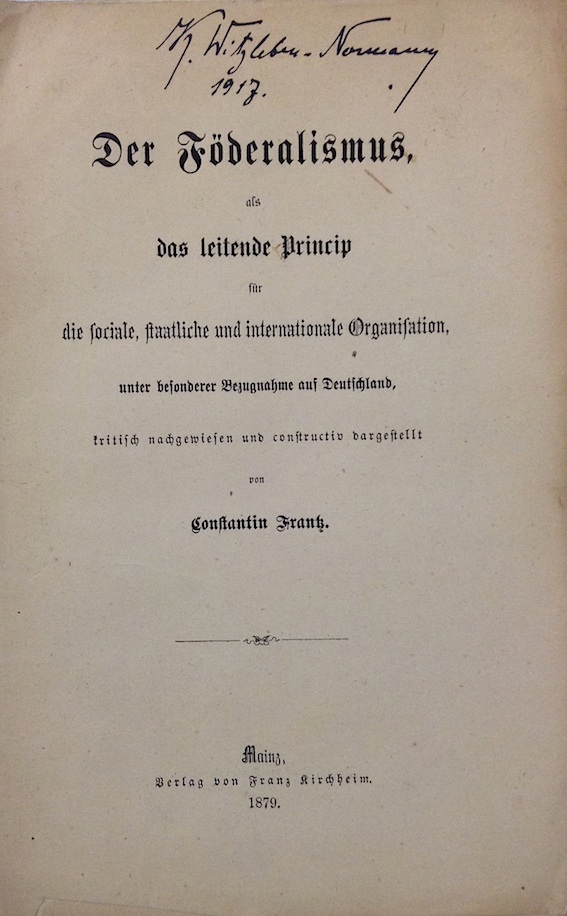
1879réf. 321017Mainz, Kirchheim, 1879. VIII, 443 S. Defekter Originalumschlag, Rückdeckel fehlt, Bindung lose.
1970réf. 121957Baden-Baden, Nomos, 1970. 329 S. OKunstleder.
1979réf. 3411907Düsseldorf, Droste, 1979. 305 S. OKart.
1968réf. 312670München, Oldenburg, 1968. 505 S. OLwd. Bibl.Schild auf Rücken.
1852réf. 634169Berlin, Decker, 1852. XII, 667 S. Bibliothekshalbleinen.
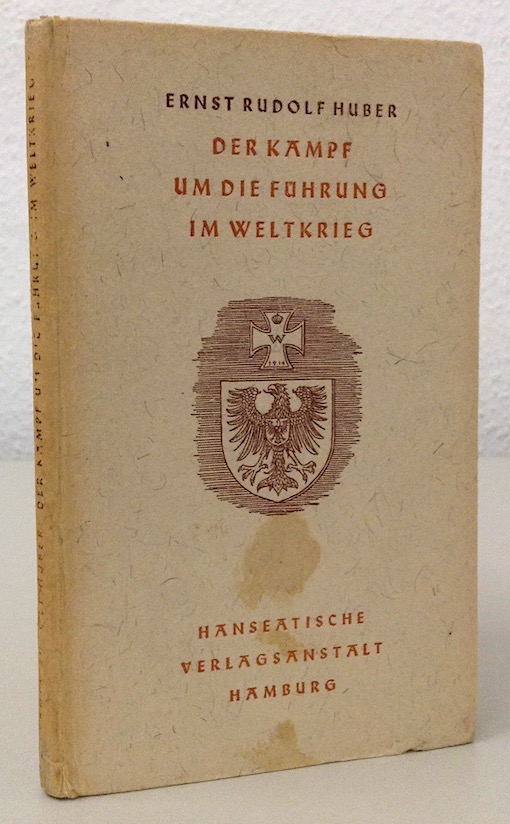
1941réf. 223395Hamburg, Hanseatische Verlagsanstalt, 1941. 87 S., 1 Bl. u. 1 Bl. Anzeigen. Originalpappband (Rücken berieben u. gebräunt, Vorderdeckel etwas fleckig).
1971réf. 3031393Frankfurt/M. Athenäum, 1971. 213 S. OKart.