7164 resultados
ref. Z1-H-006-00390Stationery Office Books. Used - Good. Used - Good. Ships from UK in 48 hours or less usually same day.Your purchase helps support Sri Lankan Children's Charity 'The Rainbow Centre.' Ex-library but has been well cared for. 100% money back guarantee. We are a world class secondhand bookstore based in Hertfordshire United Kingdom and specialize in high quality textbooks across an enormous variety of subjects. We aim to provide a vast range of textbooks rare and collectible books at a great price. Our donations to The Rainbow Centre have helped provide an education and a safe haven to hundreds of children who live in appalling conditions. We provide a 100% money back guarantee and are dedicated to providing our customers with the highest standards of service in the bookselling industry. Stationery Office Books unknown
ref. Z1-H-006-00391Stationery Office Books. Used - Good. Used - Good. Ships from UK in 48 hours or less usually same day.Your purchase helps support Sri Lankan Children's Charity 'The Rainbow Centre.' Ex-library but has been well cared for. 100% money back guarantee. We are a world class secondhand bookstore based in Hertfordshire United Kingdom and specialize in high quality textbooks across an enormous variety of subjects. We aim to provide a vast range of textbooks rare and collectible books at a great price. Our donations to The Rainbow Centre have helped provide an education and a safe haven to hundreds of children who live in appalling conditions. We provide a 100% money back guarantee and are dedicated to providing our customers with the highest standards of service in the bookselling industry. Stationery Office Books unknown
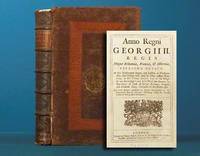
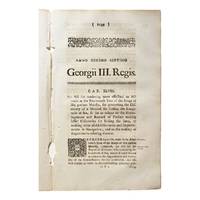
1777ref. 599Anno Regni GEORGII III REGIS Magnae Britaniiae Franciae & Hiberniae DECIMO SEPTIMO. At the Parliament Begun and holden at Westminster the Twenty-ninth Day of November Anno Domini 1774 in the Fifteenth Year of our Sovereign Lord GEORGE the Third by the Grace of God of Great Britain France and Ireland King Defender of the Faith. FIRST EDITION 4 1039-1042 woodcut coat of arms on title woodcut floriated initial text in black letter unbound folio 320 x 200mm London Charles Eyre and William Strahan 1777 This important act emphasised the Government's dedication to improving general science and navigation by offering rewards to those who could find an accurate method for determining longitude at sea. The first Longitude Act of 1714 was Parliament's response to the loss of 2000 lives in 1707 when four British navy ships ran aground after miscalculating the longitude. The Act offered prize money of £10000 reduced from £20000 for a reliable and accurate method of determining longitude at sea. Research and related experimentation were also encouraged and award money was made available for lesser discoveries and specific improvements. The competitions attracted the skill and imagination of the greatest scientific minds and mariners of the time. The most prominent and successful competitor was John Harrison 1693-1776 who received disbursements of £22000 over a period of 35 years for his brilliant discoveries and invention of the marine chronometer. This was however not without a struggle for recognition. The marine chronometer was quicker but the preferred avenue of institutionalisation was the Lunar Distance Method. The Lunar Distance method was a method to determine longitude using certain astrological measurements and specific corrections marked in yearly almanacks. The Act of 1765 put caveats and conditions on the original act of 1714 and included stipulations that applied specifically to Harrison. It even named him in the opening language and described the current status of his contrariety with the board. Only with the relentless championing from his son and the personal intervention of King George III Harrison was awarded the monetary prize he was due. The Longitude Act 1777 reiterated specific goals of the program as revised by the 1774 Longitude Act and approved an additional £5000 for continued research work and experimentation and for awards to recognize lesser contributory discoveries as approved by the Commissioners of the Board of Longitude. The Longitude at Sea program was successful in multiple ways and facilitated important advances in mathematics astronomy horology navigation and Arctic exploration. Over the life of the program a total of £53000 in prize money was awarded to more than sixty participants. Charles Eyre and William Strahan
1745ref. 583Anno Regni GEORGII II REGIS Magnae Britaniiae Franciae & Hiberniae DECIMO OCTAVO. At the Parliament Begun and holden at Westminster the First Day of December Anno Domini 1741 in the Fifteenth Year of our Sovereign Lord GEORGE the Second by the Grace of God of Great Britain France and Ireland King Defender of the Faith. FIRST EDITION 2 483-486 woodcut coat of arms on title woodcut floriated initial text in black letter folio 320 x 200mm London Thomas Baskett 1745 The third Act to be published on the Northwest Passage the act of 1745 offered the enormous sum of £20000 for the discovery of a north-west passage providing that they were a British subject. The preamble to the Act stated the expected economic benefits of the discovery of the passage and that it would be "a great encouragement to adventurers" to offer a prize. The allocated sum was £20000 to be paid to the owners of the first ships to successfully make such a passage. The Board of Longitude existed from 1714 until 1828 after the original Act of Parliament was passed in 1714. First added to in 1741 the act was subsequently amended or repealed and replaced on numerous occasions until the Board was dissolved by Act of Parliament in 1828. This Act established a group of commissioners to determine the validity of any claims and restricted the scope of the Act to only apply to British subjects. It further required all British subjects to provide help and assistance to the explorers when necessary. In setting a hefty monetary reward and promoting the potential benefits to society this act of Parliament likely intensified the Northwest Passage fervour and motivated explorers to venture deep into the Arctic. When the Act was extended in 1775 and the reward reiterated Cook took up the mantle leading to his third voyage. Thomas Baskett
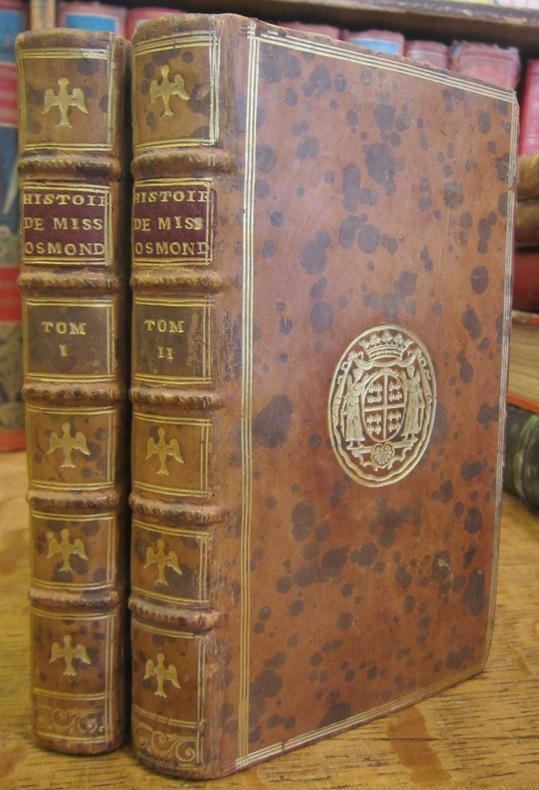
1767ref. 002781Amsterdam, et se trouve à Paris Prault le Jeune, 1767
1766ref. 35634London: Mark Baskett 1766. Folio. 2 823-826pp. 6 George II cap. LI. Disbound Wiping the slate on the Stamp Act. An official British Act passed after the repeal of the Stamp Act in which those persons who had incurred penalties from non-compliance with the Stamp Act are cleared of charges against them. Because of the attacks on Stamp Act collectors many persons had been unable to obtain the official stamped paper for various legal transactions. The Stamp Act which caused such public outcry in the colonies was repealed the year after it was passed. This nullified any remaining Stamp Act issues. Only three copies in ESTC at the Lincoln's Inn Library the Newberry and the University of North Carolina. ESTC N56936. Mark Baskett unknown books
1882ref. K3MA5M6XLK31London: Harrison and sons 1882. Modern blue paper wrappers. Folio. Official document presented to the British Houses of Parliament regarding Assab Eritrea and its politics. It includes a wide variety of letters and reports written by British naval officers generals the India Office tradesmen etc. concerning the politics of the Sultan of Raheita the Italian government in Eritrea territorial shifts the relations with Egypt and Ethiopia and more. Slightly browned around the margins with manuscript page numbers on the upper outer corner 627-831 otherwise in very good condition.l Lockot Bibliographia Aethiopica 8127. Harrison and sons, unknown
1826ref. 33099London: printed by John Baskett and others 1826. Folio various paginations; approximately 38 Acts of Parliament relating almost entirely to the finances of the Royal Navy 3 folding tables; contemporary red straight-grain morocco yellow binder's ticket of Smith 49 Long Acre; rubbed and worn but sound. Includes several acts on the wages of seamen seamen's' hospitals harbor moorings the Royal Navy treasury prize money benefits for seamen's' families bounty money pensions etc. printed by John Baskett [and others] unknown books
ref. elala2079London: c1780. Later issue of one of the most important reports on the Hudson's Bay Company. The parliamentary investigation into the activities of the Hudson's Bay Company was undertaken as a result of a petition made to the Lords in Council in 1749 aimed at depriving the Company of its charter. The petitioners argued that the charter of 1670 granting sole rights of trade and commerce in the entire area beyond the entrance of the Hudson Straits was either invalid or forfeited and requested an incorporation giving them similar rights over the adjacent region. Arthur Dobbs had provided the initial stimulus and basic grounding for the petition; his was the most sustained and vociferous attack on the meanness rapacity secrecy and jealousy of the Hudson's Bay Company alleging that their policies and attitudes had thrown the fur trade into the hands of the French in Canada and were stifling the exploration of the Canadian North-West. Among the travelers traders and merchants summoned as witnesses to give testimony before the committee were Joseph Robson Matthew Serjeant Arthur Dobbs and William Moore. Appended is the Hudson's Bay Company Charter as well as the valuable narrative of French Canadian fur trader Joseph La France describing the state of the French fortresses in Montreal and Quebec and their lucrative trade with the Indians. The Papers Presented to the Committee contain information regarding voyages undertaken in search of the north-west passage sales made by the Hudson's Bay Company Henry Kelsey's journals of his attempt to open commerce with the Naywatamee Indians in 1691-92 &c. Although the impeachment failed and the monopoly was to continue for another hundred years it did alarm the Company into initiating serious and concerted exploration of the unknown western reaches of the Charter. TPL 213. Lande 1203. Vlach 353. Gagnon I 1712. Dionne II 470. Peel 10 not seen. cfJCB I 906. cfSabin 33548. cfStreeter VI 3644. Winsor VIII Chapt. 1. folio. pp. 1 p.l. 215-286. text in double columns. A fine copy in modern quarter calf [London: c1780] unknown
1646ref. 17558London: Printed by T.W. Thomas Warren for Ed. Edward Husband 1646. FIRST EDITION. Engraved frontispiece woodcut headpieces. Contemporary calf worn especially at spine joints somewhat tender; first blank appears to be torn out leaf with frontispiece repaired some browning and soiling mostly on edges. Overall a good copy from the library of the Earls of Macclesfield with their dated 1860 bookplate motto “Sapere aude” on the paste-down and blind embossed stamp of armorial on first three leaves. First edition. In 1640 King Charles I established the Long Parliament in order to acquire funds for the Bishop’s War against the Scots. However as soon as the Long Parliament took control they began dismantling the monarchy’s authority by removing the king’s advisors and sympathizers. The orders and ordinances collected in this copy begin at this crucial moment and cover the duration of the English Civil War from 1642 to 1646. It is therefore an excellent reference source for laws and statutes during the English Civil War. It also contains several matters of Colonial interest including An Order for advancement of the Plantations in New England; An Order to make the Earl of Warwick Governor of the Plantations in America; An Ordinance against Importation of Whale-oyl; and An additional Committee for ordering Foreign Plantations among others. Wing provides the name of the printer for this copy and lists several other volumes containing records of orders over a range of years. Printed by T.W. [Thomas Warren] for Ed. [Edward] Husband unknown
1650ref. 1053401650. PARLIAMENT. BroadsideEnglish Civil War. Westminster: Edward Husband and John Field 27 September 1650. Broadside trimmed 10-1/4 by 9 inches mounted on a larger sheet of paper. $2500.Dramatic printed broadside from the English Civil War ordering the burning of an ""impious and blasphemous book.""This broadside calls for the arrest imprisonment and then exile of author Laurence Clarkson and the seizure of his book The Single Eye which earned the censure of the government. The document reads in part: ""Upon report from the Committee for suppressing licentious and impious practices under pretence of Religion Liberty &c. The Confession of Laurence Clarkson touching the making and publishing of the impious and blasphemous book called The Single Eye the said Laurence Clarkson is to be forthwith sent to the House of Correction there to be kept to labor for one Moneth and from that time to be Banished out of this Commonwealth and the Territories thereof and not to return upon pain of Death the book called The Single Eye and all printed copies thereof are to be forthwith seized and burnt by the hand of the Common Hangman in the New-Palace at Westminster and upon the Exchange; and that the Lord Major and Sheriffs of London and Middlesex be required to cause the same to be done accordingly."" Those in possession of the book are also ""required and enjoined forthwith to deliver the same to the next Justice of the Peace who are hereby required to cause the same to be publiquely burned."" Another man named in this broadside Mr. Rainborow is stripped of his duties as a Justice of the Peace in Middlesex County and forbidden from returning to that position anywhere in England or Wales. Wing E2432. Goldsmiths 1188. Upper margin trimmed a little closely affecting the printed seal at the head of the document. Near-fine condition. unknown
1826ref. 33099London: printed by John Baskett and others 1826. Folio various paginations; approximately 38 Acts of Parliament relating almost entirely to the finances of the Royal Navy 3 folding tables; contemporary red straight-grain morocco yellow binder's ticket of Smith 49 Long Acre; rubbed and worn but sound. Includes several acts on the wages of seamen seamen's' hospitals harbor moorings the Royal Navy treasury prize money benefits for seamen's' families bounty money pensions etc. printed by John Baskett [and others] unknown
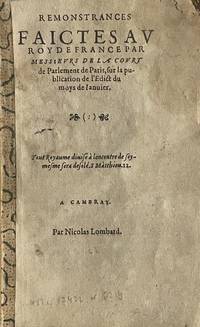
1562ref. 2557Cambray: Nicolas Lombard 1562. First edition. Papered spine. With contemporary underlines throughout and occasional marginal notes in ink. Upper outer corners stained and chipped throughout first leaves with small loss. Closed tear on the title page not affecting the text. Overall in very good condition. First edition. Papered spine. ff. 14 2 blank. Sign.: A–D4 D3–4 blank. First edition of this scarce and important document of the French Wars of Religion. A protest against the Edict of Toleration also known as the Edict of January or Saint-Germain which was issued by the French Crown on January 17 1562 after a long series of repressive measures against the Protestant Huguenots in order to restore peace in the kingdom torn by civil and religious dissensions. The registration process of the edict led to the bitterest legislative struggles of the century between the Parlement and the Crown. After a vote on 7 February the Parlement very Catholic refused to verify or publish the edict and on 12 February a remonstrance the present publication was drawn up and sent to the Court. Eventually the Parlement had to capitulate and the edict was registered on March 6 five days after the Massacre of Vassy which triggered the first of the series of eight civil wars lasting some thirsty-six years in France the Wars of Religion. The Edict of Tolerance remained a reference for the Huguenots in the later negotiations between them and the royal power and became the foundation of the subsequent toleration edicts such as the Edict of Ambroise the resolution of the first war in 1563 and the Edict of Nantes which marked the end of the period of the French Wars of Religion in 1598. Seemingly two different editions 16- and 24-leaves were published by Lombard in 1562. Due to their substantial similarities the presence or lack of the last blank leaves and the peculiar dating “mil cinq cens soixante & un” the bibliographies list these editions under at least six different entries dated 1561 or 1562 later editions also by Lombard appeared in 1565 and 1566. USTC 6319 2 copies: Nîmes - Bibliothèque Carré d’art; Paris - Bibliothèque Mazarine or 17432 1 copy: La Rochelle- Bibliothèque municipale Literature: Keller A.-C. 1952. Michel de l’Hospital and the Edict of Toleration of 1562. Bibliothèque d’Humanisme et Renaissance 142 301–310. Nicolas Lombard unknown
ref. 50373Two volumes iv 315 appendix of 2 174 pp.; and viii 427-524 4 395-728 2 pp. comprising three of the five reports issued in 1835 by the House of Lords to investigate the state of prisons in England and Wales with the goal of researching the prospect of instituting a system which separated prisoners and establishing uniformity of discipline and diet across the prison system to be supervised by a group of Inspectors with interviews conducted with a range of gentlemen including some prison workers as well as questions posed to prisoners at institutions including Wakefield the Millbank Penitentiary the House of Corrections at Lewes and Cold Bath Field Prison and instructions for how to deal with convicts in various situations. Each volume is illustrated with dozens of tables and three lithographic plates which include: "Ergometer - Tread Wheel - Labour. Lewes Prison"; "Tread Wheels at Petworth"; "Crank-House at Petworth"; and "Design for a Prison Chapel by Jas. Savage upon a plan propsed by the Rev. Whitworth Russell Chaplain to the General Penitentiary Millbank in which all the prisoners can see the Clergyman and be seen by him and yet not see or communicate with each other." 4to. Modern three-quarter leather with papered boards and gilt lettering to spine Norwich binder's label to rear pastedown of each volume. London House of Commons 1835. By 1835 the threat of "prisoner culture" whereby prisoners spent time with other prisoners sharing stories learning from each other and plotting was recognized by the State. A Select Committee in the House of Lords was tasked to research a system to separate the prisoners. Six resolutions were laid out in the introduction to the first report including a uniform system of discipline a group of Inspectors to be appointed to visit the prisons and report to the Secretary of State and a new rule that persons who have been acquitted or had their trials postponed should not be imprisoned. The resolutions also include the proposal for the new system of separation: "That entire Separation except during the Hours of Labour and of Religious Worship and Instruction is absolutely necessary for preventing Contamination and for securing a proper System of Prison Discipline. That Silence be enforced so as to prevent all Communication between Prisoners both before and after Trial." One of the witnesses in the first report was Lieutenant John Siblly Governor of the Brixton House of Corrections who had a plan for a "solitary confinement prison" with 284 cells. Another was John Mance Keeper of the House of Corrections at Petworth who is credited as the inventor of the ergometer a labor scale a device which could quantify how much labor could be doled out to various types of prisoners rated both on physical and mental qualifications. The ergometer was "made to show the superintending officer the quantum of labour to be executed hourly daily and weekly.and notifies the officer and prisoners by an alarm bell when the day's work is executed." The final report includes new evidence from Mance the tread wheels and crank-house that he supervised and regulated with his ergometer. Very scarce institutionally. hardcover books
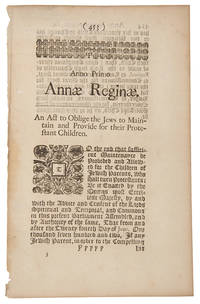
ref. 107594London Charles Bill 1702. . Folio 27.5 x 17.5 cm; woodcut headpiece and initial black letter; single leaf from 'Anno Regni Annæ Reginæ Angliæ Scotiæ Franciæ & Hiberniæ primo. At the Parliament begun at Westminster the thirtieth day of December. 1701' acts of Parliament for the last year of the reign of William III and the first year of Anne; unbound; 453-454pp. An act of Parliament 'To the end that sufficient maintenance be provided and allowed for the children of Jewish parents who shall turn Protestants' p.453. The law arose from the curious case of Mary de Mendez Berta an eighteen-year-old who was disowned and expelled from the family home following her conversion to Protestantism. A petition was brought before Parliament in an attempt to make Mary's father Jacob de Mendez Berta pay for his daughter's upkeep after which it was resolved that a bill be produced to address her case. The resultant act had some effect in the eighteenth century and was considered by the Lord Chancellor Thomas Parker in the 1718 case of Vincent vs. Fernandez. Here it was found that the law could apply equally to the adult child of a Jewish parent in this instance a 44-year-old married woman who had been cut-out of her father's will. The law remained in effect until 1846 when it was repealed by the Religious Disabilities Act. ESTC N53589; Roth Magna Bibliotheca Anglo-Judaica p.246 no.1; Henriques The Jews and the English Law Oxford 1908. [London], [Charles Bill], [1702]. unknown
1755ref. 375741755. First Edition. PARLIAMENT. Anno Regni Georgii II. Regis Magnae Britanniae Franciae & Hiberniae Vicesimo Octavo London: Thomas Baskett 1755. Folio contemporary full paneled calf gilt elaborately gilt-decorated spine raised bands gilt-stamped arms of George II to front and rear covers. $2800.First edition of the laws passed by Parliament in 1755 handsomely bound in contemporary paneled calf-gilt stamped with the gilt arms of King George II.Includes an act for regulating places of public entertainment an act for making more effectual the laws prohibiting the importation of spirituous liquors and of tea found on any British ship not belonging to the East India Company acts for the better supply of mariners and seamen to serve in His Majesty's Ships of War and to better enforce discipline of His Majesty's marine forces while on shore and a continuance of an act for encouraging the making of indigo in the American colonies. This collection prints the full text of the 25 most important acts of the year each with an abstract at rear and a table of other acts passed during the year but not printed in this collection. Contemporary calf with expected age wear and restoration to joints spine ends and corners. A very good attractively bound copy with the gilt arms of King George II. hardcover
ref. 18558Aix en Provence, Vas Cavallis, [Lyon, Pierre de Sainte Lucie], 1542.
ref. 148103hardcover. 357 1pp. 8vo handsomely rebound in new 1/2 calf and marbled boards red morocco label; some scattered foxing otherwise internally very good. London: J. Almon 1775. This volume contains important opinions and debates on the Boston Tea Party and Parliament's legislative response: The Coercive Acts. Pages 77-116 are on the reaction to the Boston Tea Party and the first Coercive Act which was the Boston Port Bill. This act closed the port of Boston to all imports and exports. Bostonians had less essential imported goods This increased anti-Parliament sentiment and furthered the idea of American Independence from Great Britain. Pages 116-251 are the debates on the second Coercive Act which was the Massachusetts Government Act. This act concentrated more executive authority with the Crown and the Royal Governor of Massachusetts. Members of the provincial council and many legal officials including the attorney general were no longer chosen by Massachusetts officials. unknown books
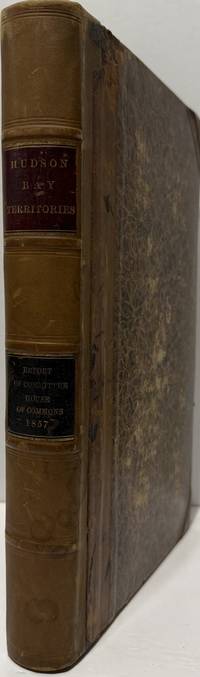
1857ref. 67368Printed in the UK: Great Britain. Parliament. House of Commons. Select Committee on the Hudson's Bay Company 1857. First edition. Leather and paper over boards. As described. Hardcover 1/4 leather brown over paper marbled over boards. 4to. xviii 547 pp. Illustrated with 3 large colour folded maps in a pocket on the inside of the back board 2 of the maps have 4'' enclosed tears without loss of substance. Maps by John Arrowsmith. Sympathetically rebound with a new spine. Six compartment spine with five raised ribs. Red label in compartment two and black label in compartment four have the the title and subtitle in gilt. Head darkened. Six small ink stains on the fore edge. Bookplate on front pastedown. Previous own was Mr. John White 1863-1928 appointed Chief Geographer of the Canadian Department of the Interior in 1899. Pages 212-225 329 and 374-379 have pen markings and some marginalia by Mr. White. Mild age toning mostly to the edges. The text block is clean unmarked except where noted and square with a strong binding. Boards are rubbed with some of the marbling worn off. Edges are worn through in places. The spine is rubbed and has some small water stains near the tail. Corners bumped. An extremely rare volume this copy is supple and easy to handle despite its rough exterior. Condition as described. References: TPL 3729/30 Sabin 33549 Lowther 52 Peel 188. Laid in this copy is a bibliographical description from Acadia Book Store. Great Britain. Parliament. House of Commons. Select Committee on the Hudson's Bay Company unknown
1760ref. 339119London: John Baskett; Thomas Baskett; and others 1760. Together approx. 35 Acts each with separate title with Royal arms. Small folio. Disbound. Some with foxing some trimmed a few leaves detached. Overall very good. A couple in duplicate. Together approx. 35 Acts each with separate title with Royal arms. Small folio. Includes the following: An Act for the Continuing the Liberty of Exporting Irish Linen Cloth to the British Plantations in Amerca Duty-free 1717 An Act for Importing Salt from Europe into the Province of Pensilvania in America 1727 An Act for the better Preservation of His Majesty's Woods in America 1729 An Act for Importing Salt from Europe into the Colony of New York in America 1730 An Act for importing from his Majesty's Plantations in America directly into Ireland Goods not enumerated in any Act of Parliament 1731 An Act to explain and Act . intituled An Act for importing from his Majesty's Plantations in America 1732 An Act for the more easy Recovery of Debts in His Majesty's Plantations and Colonies in America 1732 An Act for granting a Liberty to carry Sugars of the Growth Produce or Manufacture of any of His Majesty's Sugar Colonies in America 1739 An Act for the more effectual securing and encouraging the Trade of His Majesty's British Subjects to America 1739 An Act for the more easy and effectual Conviction of Offenders found at large within the Kingdom of Great Britain after they have been ordered for Transportartion to America 1742 An Act for further regulating the Plantation Trade 1742 An Act to revive several Acts . relating to Rice to Frauds in Customs to the clandestine running of Goods and to Copper Ore of the British Plantations 1742 An Act for continuing several LAws relating to the Allowance upon the Exportation of British made Gunpowder; to the Importation of Naval Stores from the British Colonies in America 1743 An Act to continue Two Acts of Parliament . for encouraging the Growth of Coffee . for the better securing and encouraging the Trade of His Majesty's Sugar Colonies in America 1746 An Act for the better encouragement of the Trade of His Majesty's Sugar Colonies in America 1746 An Act to extend the Provisions of an Act . for Naturalizing Foreign Protestants . in America 1747 two copies An Act for encouraging the making of Indico in the British Plantations in America 1748 An Act for encouraging the People known by the name of Unitas Fratrum or United Brethren to settle in . America 1749 three copies An Act to encourage the Importation of Pig and Bar Iron from His Majesty's Colonies in America 1750 An Act for encouraging the Growth and Culture of Raw Silk in . America. 1750 An Act for encouraging the making of Pott Ashes and Pearl Ashes in . America 1750 An Act for continuing several Laws . upon the importation of Masts 1751 An Act for avoiding and putting and end to certain doubts and questions . concerning Real Estates . in America. 1752 An Act for reducing the number of Directors of the Corportatioin of the Governor and Company of Merchants of Great Britain trading to the South Seas and other parts of America 1753 An Act for continuing several Laws . and for the encourging the trade of the Sugar Colonies in America 1753 An Act for continuing an Act . for encouraging the making of Indico in the British Plantations in America 1755 An Act for extending the Act . as shall serve on Board His Majesty's Ships or Vessels employed upon the Lakes Great Waters or Rivers in North America 1756 An Act to enable His Majesty to grant Commissions to a certain number of Foreign Protestants . in America 1756 An Act to extend the Liberty . of importing Bar Iron from His Majesty's Colonies in America 1757 An Act to prohibit for a limited time the exportation of corn grain meal malt flour bread biscuit starch beef pork bacon . from His Majesty's Colonies and Plantations in America 1757 An Act to continue . a Liberty to carry sugars of the growth produce or manufacture of any of His Majesty's Sugar Colonies in America 1758 An Act for continuing certain laws . and to the Encouragement of the Trade of the Sugar Colonies in America 1758 An Act to continue several laws . to the encouraging the growth of Coffee in His Majesty's Plantations in America 1759 An Act to continue several laws . to the granting Liberty to carry Rice from his Majesty's Province of Carolina in America 1760. John Baskett; Thomas Baskett; [and others] unknown
1767ref. 1098111767. First Edition. CUSTOMS COMMISSIONERS ACT. Act to enable His Majesty to put the Customs and other Duties in the British Dominions in America and the Execution of the Laws relating to Trade there under the Management of Commissioners. London: Mark Baskett 1767. Folio 20th-century marbled stiff paper boards. $3200.Rare first printing of the 1767 Customs Commissioners Act one of the controversial Townshend Acts that united patriot opposition to British rule and provoked the Boston Massacre.Following the Stamp Act which had united colonial opinion against British authority ""as no issue beforeÉ a new period of agitation began in 1767 with the passage of the Townshend Acts"" Morison Sources xv. Engineered by Charles Townshend Chancellor of the Exchequer these were intended to raise revenue from the American colonies by imposing duties on goods Americans were already forced to import only from England punish New York's opposition to the Quartering Act and establish a board of customs commissioners in America. This is the first printing of that Customs Commissioners Act. ""To guarantee that colonial duties raised as much money as he had promised to Parliament Townshend was tightening control over America's slack customs procedures"" by appointing commissioners in England and sending them to Boston ""with broad powers. Since colonial jurors rarely convicted a local merchant of smuggling Townshend's acts set up new admiralty courts that could try smugglers without a jury. And the acts made it easier for customs officials to obtain writs of assistance"" Langguth 93. In addition ""the moneys thus raised in the coloniesÉ were to be usedÉ to render the royal governors and judges independent of colonial assemblies"" Morison xv. To Samuel Adams ""these new commissioners of customs were 'the greatest political curses that could be sent amongst usÉ From the time the acts took effect November 20 1767 many Bostonians had been boycotting luxury goods from Britain by signing a 'nonimportation agreementÉ Stricter enforcement at the customs offices was drawing off hard currency from America and bad times were spreading across the colonies"" Langguth 94 102-103. With increased colonial opposition to the Customs Commissioners Act and other Townshend laws ""the customs administration to enforce them became especially in ports like BostonÉ increasingly militarized"" provoking merchants such as John Hancock into ""calling one of his sloops Liberty and flaunting his intention of 'running Madeira ashore"" Schama History of Britain II:463. The day after the Liberty was seized by customs officials Sam Adams was overheard challenging the crowd ""If you are men behave like men. Let us take up arms immediately and be free and seize all the king's officers"" Langguth 98. With the Board of Commissioners of the Customs headquartered in Boston the city became the ""rowdiest of all the centers of protest"" and those who broke the boycott were often tarred and feathered. As tempers grew shorter and customs officers were accused of bribery and extortion matters often ""got completely out of control. On 23 February 1770 an eleven-year-old boy Christopher Seider joined by a noisy protest of schoolboys and apprentices outside the shop of an importerÉ was shot dead by a customs officer"" and his funeral turned into a mass protest led by Sam Adams. Only one month later on March 5th amidst these already heightened tensions ""a wigmaker's apprentice ragged a soldier all the way to the Custom House for an allegedly unpaid bill. When a guard struck the pursuing youth a tocsin normally used as a fire alarm was sounded and mobilized a large and angry crowd"" Schama History of Britain II 463. In the melee that followed the redcoats opened fire killing fiveÑamong them Crispus AttucksÑand the day would be memorialized in history as the Boston Massacre. Printed in gothic type indicative of the first edition. This first printing excised from the Sessional Volumes of Parliament pages 563-66 precedes all American printings. Minor rubbing spine. Very nearly fine condition. hardcover
1852ref. 127366London: George Edward Eyre and William Spottiswoode 1852. Hardcover. very good. 1st printing. 216pp. Folio 32.5 X 21.5 cm. Original 19th century marbled boards which have been rebacked with a new leather spine and new leather corners. Original endpapers have been salvaged. Edged sprinkled in red. 3 maps 1 folding. Minor wear to binding but overall a clean attractive copy. Old rubber stamp on the title page. Arctic Biblio. 45229 There are two rubber stamps on the title page. The first is from the Royal College of surgeons and the second is a presentation stamp Inscribed by R.McCormick R.N. who was on the North Star one of the search for Franklin ships. - "Major document. Contains reports covering 1850-52 of expeditions in Bering Strait under Collinson's command reports of expeditions in the eastern Canadian arctic by DeHaven John Ross Austin & Penny; and reports by Rae of his expedition to southwest Victoria Island. Numerous letters are included speculations on the activities of the Franklin Expedition various proposals for further search etc.". An interesting association copy by a Search for Franklin officer. 1852 George Edward Eyre and William Spottiswoode hardcover
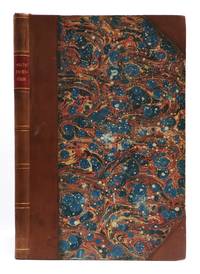
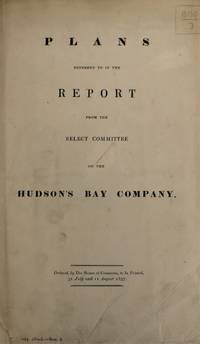
1857ref. 143185London 1857 31 July and 11 August. xviii547 pp. Two parts. Folio. Original printed blue wrappers. Wrappers and spine are a bit rough with some professional restoration. Portfolio of plans including three large folding hand-coloured maps original printed wraps with cover title and document title on right-half of back wrapper. Maps printed by Henry Hansard entitled: Map of North America Drawn by J. Arrowsmith; Map of the North-West Part of Canada Hudson's Bay & Indian Territories Drawn by Tho. Devine and Aboriginal Map of North America denoting the Boundaries and the Locations of various Indian. Some mild chipping to the edges of the wrapper with tears along joints. Overall very good and with a clean tight text block. Uncommon in the original blue and plain paper wraps. All housed in a custom fold over box. Peel 3 - 347 - "An important document containing the evidence of many witnesses on the suitability of Rupert's Land for agricultural settlement." TPL 3729/30; Sabin 33549; Smith 1514. "Ordered by the House of Commons to be Printed 31 July and 11 August 1857." Document 224 260-I- Sess. 2. "The Maps referred to in the accompanying Report were in progress and will be delivered as early as possible." 5 October 1857. The maps all show the high Arctic and Western Canada from Hudson's Bay to the West Coast. This report is complete with the maps and in wrappers has become very scarce in the market place. 1857 paperback
1730ref. 102277Bound volume of 89 acts folio 11 3/4" x 7" period full calf 446 pp. Various paginations actual page count is done by hand and a manuscript index at the front lists the acts and indicates the page it is on. Binding is worn backstrip is gone hinges are cracked covers almost detached and some signatures are loose some early ink notations and page numbering are on top of pages it appears there are some remnants of wax seals on the margin of the last page some soiling at endpapers normal aging and browning but internally pretty clean; despite the mentioned flaws the contents are in very good shape but the binding needs work. While this collection of Acts passed under George II and George III is not sequential a previous owner has provided a useful index as to the contents and location of various acts. The laws cover a very broad area of issues from the more mundane such as dog stealing punishments for disorderly houses and preventing abuses in making bricks and tiles to more important issues including the raising and training of the militia regulating the price of corn preservation of public highways and the punishment for selling ale and apiarist without a license. Other important acts include regulating places of entertainment regulating the trials of controverted elections establishing trade agreements in the East Indies changing some of the rules passed by Queen Elizabeth on providing relief to the poor and wildlife preservation. A fascinating glimpse at another time and issues of the day. Charles Eyre and William Strahan, Mark Baskett & Others, books
1730ref. 102277Bound volume of 89 acts folio 11 3/4" x 7" period full calf 446 pp. Various paginations actual page count is done by hand and a manuscript index at the front lists the acts and indicates the page it is on. Binding is worn backstrip is gone hinges are cracked covers almost detached and some signatures are loose some early ink notations and page numbering are on top of pages it appears there are some remnants of wax seals on the margin of the last page some soiling at endpapers normal aging and browning but internally pretty clean; despite the mentioned flaws the contents are in very good shape but the binding needs work. While this collection of Acts passed under George II and George III is not sequential a previous owner has provided a useful index as to the contents and location of various acts. The laws cover a very broad area of issues from the more mundane such as dog stealing punishments for disorderly houses and preventing abuses in making bricks and tiles to more important issues including the raising and training of the militia regulating the price of corn preservation of public highways and the punishment for selling ale and apiarist without a license. Other important acts include regulating places of entertainment regulating the trials of controverted elections establishing trade agreements in the East Indies changing some of the rules passed by Queen Elizabeth on providing relief to the poor and wildlife preservation. A fascinating glimpse at another time and issues of the day. Charles Eyre and William Strahan, Mark Baskett & Others,