6469 risultati
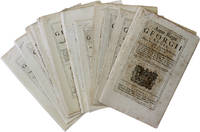
1760rif. 339119London: John Baskett; Thomas Baskett; and others 1760. Together approx. 35 Acts each with separate title with Royal arms. Small folio. Disbound. Some with foxing some trimmed a few leaves detached. Overall very good. A couple in duplicate. Together approx. 35 Acts each with separate title with Royal arms. Small folio. Includes the following: An Act for the Continuing the Liberty of Exporting Irish Linen Cloth to the British Plantations in Amerca Duty-free 1717 An Act for Importing Salt from Europe into the Province of Pensilvania in America 1727 An Act for the better Preservation of His Majesty's Woods in America 1729 An Act for Importing Salt from Europe into the Colony of New York in America 1730 An Act for importing from his Majesty's Plantations in America directly into Ireland Goods not enumerated in any Act of Parliament 1731 An Act to explain and Act . intituled An Act for importing from his Majesty's Plantations in America 1732 An Act for the more easy Recovery of Debts in His Majesty's Plantations and Colonies in America 1732 An Act for granting a Liberty to carry Sugars of the Growth Produce or Manufacture of any of His Majesty's Sugar Colonies in America 1739 An Act for the more effectual securing and encouraging the Trade of His Majesty's British Subjects to America 1739 An Act for the more easy and effectual Conviction of Offenders found at large within the Kingdom of Great Britain after they have been ordered for Transportartion to America 1742 An Act for further regulating the Plantation Trade 1742 An Act to revive several Acts . relating to Rice to Frauds in Customs to the clandestine running of Goods and to Copper Ore of the British Plantations 1742 An Act for continuing several LAws relating to the Allowance upon the Exportation of British made Gunpowder; to the Importation of Naval Stores from the British Colonies in America 1743 An Act to continue Two Acts of Parliament . for encouraging the Growth of Coffee . for the better securing and encouraging the Trade of His Majesty's Sugar Colonies in America 1746 An Act for the better encouragement of the Trade of His Majesty's Sugar Colonies in America 1746 An Act to extend the Provisions of an Act . for Naturalizing Foreign Protestants . in America 1747 two copies An Act for encouraging the making of Indico in the British Plantations in America 1748 An Act for encouraging the People known by the name of Unitas Fratrum or United Brethren to settle in . America 1749 three copies An Act to encourage the Importation of Pig and Bar Iron from His Majesty's Colonies in America 1750 An Act for encouraging the Growth and Culture of Raw Silk in . America. 1750 An Act for encouraging the making of Pott Ashes and Pearl Ashes in . America 1750 An Act for continuing several Laws . upon the importation of Masts 1751 An Act for avoiding and putting and end to certain doubts and questions . concerning Real Estates . in America. 1752 An Act for reducing the number of Directors of the Corportatioin of the Governor and Company of Merchants of Great Britain trading to the South Seas and other parts of America 1753 An Act for continuing several Laws . and for the encourging the trade of the Sugar Colonies in America 1753 An Act for continuing an Act . for encouraging the making of Indico in the British Plantations in America 1755 An Act for extending the Act . as shall serve on Board His Majesty's Ships or Vessels employed upon the Lakes Great Waters or Rivers in North America 1756 An Act to enable His Majesty to grant Commissions to a certain number of Foreign Protestants . in America 1756 An Act to extend the Liberty . of importing Bar Iron from His Majesty's Colonies in America 1757 An Act to prohibit for a limited time the exportation of corn grain meal malt flour bread biscuit starch beef pork bacon . from His Majesty's Colonies and Plantations in America 1757 An Act to continue . a Liberty to carry sugars of the growth produce or manufacture of any of His Majesty's Sugar Colonies in America 1758 An Act for continuing certain laws . and to the Encouragement of the Trade of the Sugar Colonies in America 1758 An Act to continue several laws . to the encouraging the growth of Coffee in His Majesty's Plantations in America 1759 An Act to continue several laws . to the granting Liberty to carry Rice from his Majesty's Province of Carolina in America 1760. John Baskett; Thomas Baskett; [and others] unknown books
1767rif. 1098111767. First Edition. CUSTOMS COMMISSIONERS ACT. Act to enable His Majesty to put the Customs and other Duties in the British Dominions in America and the Execution of the Laws relating to Trade there under the Management of Commissioners. London: Mark Baskett 1767. Folio 20th-century marbled stiff paper boards. $3200.Rare first printing of the 1767 Customs Commissioners Act one of the controversial Townshend Acts that united patriot opposition to British rule and provoked the Boston Massacre.Following the Stamp Act which had united colonial opinion against British authority ""as no issue beforeÉ a new period of agitation began in 1767 with the passage of the Townshend Acts"" Morison Sources xv. Engineered by Charles Townshend Chancellor of the Exchequer these were intended to raise revenue from the American colonies by imposing duties on goods Americans were already forced to import only from England punish New York's opposition to the Quartering Act and establish a board of customs commissioners in America. This is the first printing of that Customs Commissioners Act. ""To guarantee that colonial duties raised as much money as he had promised to Parliament Townshend was tightening control over America's slack customs procedures"" by appointing commissioners in England and sending them to Boston ""with broad powers. Since colonial jurors rarely convicted a local merchant of smuggling Townshend's acts set up new admiralty courts that could try smugglers without a jury. And the acts made it easier for customs officials to obtain writs of assistance"" Langguth 93. In addition ""the moneys thus raised in the coloniesÉ were to be usedÉ to render the royal governors and judges independent of colonial assemblies"" Morison xv. To Samuel Adams ""these new commissioners of customs were 'the greatest political curses that could be sent amongst usÉ From the time the acts took effect November 20 1767 many Bostonians had been boycotting luxury goods from Britain by signing a 'nonimportation agreementÉ Stricter enforcement at the customs offices was drawing off hard currency from America and bad times were spreading across the colonies"" Langguth 94 102-103. With increased colonial opposition to the Customs Commissioners Act and other Townshend laws ""the customs administration to enforce them became especially in ports like BostonÉ increasingly militarized"" provoking merchants such as John Hancock into ""calling one of his sloops Liberty and flaunting his intention of 'running Madeira ashore"" Schama History of Britain II:463. The day after the Liberty was seized by customs officials Sam Adams was overheard challenging the crowd ""If you are men behave like men. Let us take up arms immediately and be free and seize all the king's officers"" Langguth 98. With the Board of Commissioners of the Customs headquartered in Boston the city became the ""rowdiest of all the centers of protest"" and those who broke the boycott were often tarred and feathered. As tempers grew shorter and customs officers were accused of bribery and extortion matters often ""got completely out of control. On 23 February 1770 an eleven-year-old boy Christopher Seider joined by a noisy protest of schoolboys and apprentices outside the shop of an importerÉ was shot dead by a customs officer"" and his funeral turned into a mass protest led by Sam Adams. Only one month later on March 5th amidst these already heightened tensions ""a wigmaker's apprentice ragged a soldier all the way to the Custom House for an allegedly unpaid bill. When a guard struck the pursuing youth a tocsin normally used as a fire alarm was sounded and mobilized a large and angry crowd"" Schama History of Britain II 463. In the melee that followed the redcoats opened fire killing fiveÑamong them Crispus AttucksÑand the day would be memorialized in history as the Boston Massacre. Printed in gothic type indicative of the first edition. This first printing excised from the Sessional Volumes of Parliament pages 563-66 precedes all American printings. Minor rubbing spine. Very nearly fine condition. hardcover
1767rif. 1098111767. First Edition. CUSTOMS COMMISSIONERS ACT. Act to enable His Majesty to put the Customs and other Duties in the British Dominions in America and the Execution of the Laws relating to Trade there under the Management of Commissioners. London: Mark Baskett 1767. Folio 20th-century marbled stiff paper boards. $3200.Rare first printing of the 1767 Customs Commissioners Act one of the controversial Townshend Acts that united patriot opposition to British rule and provoked the Boston Massacre.Following the Stamp Act which had united colonial opinion against British authority ""as no issue beforeÉ a new period of agitation began in 1767 with the passage of the Townshend Acts"" Morison Sources xv. Engineered by Charles Townshend Chancellor of the Exchequer these were intended to raise revenue from the American colonies by imposing duties on goods Americans were already forced to import only from England punish New York's opposition to the Quartering Act and establish a board of customs commissioners in America. This is the first printing of that Customs Commissioners Act. ""To guarantee that colonial duties raised as much money as he had promised to Parliament Townshend was tightening control over America's slack customs procedures"" by appointing commissioners in England and sending them to Boston ""with broad powers. Since colonial jurors rarely convicted a local merchant of smuggling Townshend's acts set up new admiralty courts that could try smugglers without a jury. And the acts made it easier for customs officials to obtain writs of assistance"" Langguth 93. In addition ""the moneys thus raised in the coloniesÉ were to be usedÉ to render the royal governors and judges independent of colonial assemblies"" Morison xv. To Samuel Adams ""these new commissioners of customs were 'the greatest political curses that could be sent amongst usÉ From the time the acts took effect November 20 1767 many Bostonians had been boycotting luxury goods from Britain by signing a 'nonimportation agreementÉ Stricter enforcement at the customs offices was drawing off hard currency from America and bad times were spreading across the colonies"" Langguth 94 102-103. With increased colonial opposition to the Customs Commissioners Act and other Townshend laws ""the customs administration to enforce them became especially in ports like BostonÉ increasingly militarized"" provoking merchants such as John Hancock into ""calling one of his sloops Liberty and flaunting his intention of 'running Madeira ashore"" Schama History of Britain II:463. The day after the Liberty was seized by customs officials Sam Adams was overheard challenging the crowd ""If you are men behave like men. Let us take up arms immediately and be free and seize all the king's officers"" Langguth 98. With the Board of Commissioners of the Customs headquartered in Boston the city became the ""rowdiest of all the centers of protest"" and those who broke the boycott were often tarred and feathered. As tempers grew shorter and customs officers were accused of bribery and extortion matters often ""got completely out of control. On 23 February 1770 an eleven-year-old boy Christopher Seider joined by a noisy protest of schoolboys and apprentices outside the shop of an importerÉ was shot dead by a customs officer"" and his funeral turned into a mass protest led by Sam Adams. Only one month later on March 5th amidst these already heightened tensions ""a wigmaker's apprentice ragged a soldier all the way to the Custom House for an allegedly unpaid bill. When a guard struck the pursuing youth a tocsin normally used as a fire alarm was sounded and mobilized a large and angry crowd"" Schama History of Britain II 463. In the melee that followed the redcoats opened fire killing fiveÑamong them Crispus AttucksÑand the day would be memorialized in history as the Boston Massacre. Printed in gothic type indicative of the first edition. This first printing excised from the Sessional Volumes of Parliament pages 563-66 precedes all American printings. Minor rubbing spine. Very nearly fine condition. hardcover books
1852rif. 127366London: George Edward Eyre and William Spottiswoode 1852. Hardcover. very good. 1st printing. 216pp. Folio 32.5 X 21.5 cm. Original 19th century marbled boards which have been rebacked with a new leather spine and new leather corners. Original endpapers have been salvaged. Edged sprinkled in red. 3 maps 1 folding. Minor wear to binding but overall a clean attractive copy. Old rubber stamp on the title page. Arctic Biblio. 45229 There are two rubber stamps on the title page. The first is from the Royal College of surgeons and the second is a presentation stamp Inscribed by R.McCormick R.N. who was on the North Star one of the search for Franklin ships. - "Major document. Contains reports covering 1850-52 of expeditions in Bering Strait under Collinson's command reports of expeditions in the eastern Canadian arctic by DeHaven John Ross Austin & Penny; and reports by Rae of his expedition to southwest Victoria Island. Numerous letters are included speculations on the activities of the Franklin Expedition various proposals for further search etc.". An interesting association copy by a Search for Franklin officer. 1852 George Edward Eyre and William Spottiswoode hardcover
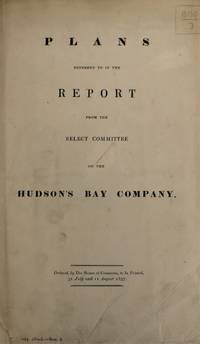
1857rif. 143185London 1857 31 July and 11 August. xviii547 pp. Two parts. Folio. Original printed blue wrappers. Wrappers and spine are a bit rough with some professional restoration. Portfolio of plans including three large folding hand-coloured maps original printed wraps with cover title and document title on right-half of back wrapper. Maps printed by Henry Hansard entitled: Map of North America Drawn by J. Arrowsmith; Map of the North-West Part of Canada Hudson's Bay & Indian Territories Drawn by Tho. Devine and Aboriginal Map of North America denoting the Boundaries and the Locations of various Indian. Some mild chipping to the edges of the wrapper with tears along joints. Overall very good and with a clean tight text block. Uncommon in the original blue and plain paper wraps. All housed in a custom fold over box. Peel 3 - 347 - "An important document containing the evidence of many witnesses on the suitability of Rupert's Land for agricultural settlement." TPL 3729/30; Sabin 33549; Smith 1514. "Ordered by the House of Commons to be Printed 31 July and 11 August 1857." Document 224 260-I- Sess. 2. "The Maps referred to in the accompanying Report were in progress and will be delivered as early as possible." 5 October 1857. The maps all show the high Arctic and Western Canada from Hudson's Bay to the West Coast. This report is complete with the maps and in wrappers has become very scarce in the market place. 1857 paperback
1730rif. 102277Bound volume of 89 acts folio 11 3/4" x 7" period full calf 446 pp. Various paginations actual page count is done by hand and a manuscript index at the front lists the acts and indicates the page it is on. Binding is worn backstrip is gone hinges are cracked covers almost detached and some signatures are loose some early ink notations and page numbering are on top of pages it appears there are some remnants of wax seals on the margin of the last page some soiling at endpapers normal aging and browning but internally pretty clean; despite the mentioned flaws the contents are in very good shape but the binding needs work. While this collection of Acts passed under George II and George III is not sequential a previous owner has provided a useful index as to the contents and location of various acts. The laws cover a very broad area of issues from the more mundane such as dog stealing punishments for disorderly houses and preventing abuses in making bricks and tiles to more important issues including the raising and training of the militia regulating the price of corn preservation of public highways and the punishment for selling ale and apiarist without a license. Other important acts include regulating places of entertainment regulating the trials of controverted elections establishing trade agreements in the East Indies changing some of the rules passed by Queen Elizabeth on providing relief to the poor and wildlife preservation. A fascinating glimpse at another time and issues of the day. Charles Eyre and William Strahan, Mark Baskett & Others,
1730rif. 102277Bound volume of 89 acts folio 11 3/4" x 7" period full calf 446 pp. Various paginations actual page count is done by hand and a manuscript index at the front lists the acts and indicates the page it is on. Binding is worn backstrip is gone hinges are cracked covers almost detached and some signatures are loose some early ink notations and page numbering are on top of pages it appears there are some remnants of wax seals on the margin of the last page some soiling at endpapers normal aging and browning but internally pretty clean; despite the mentioned flaws the contents are in very good shape but the binding needs work. While this collection of Acts passed under George II and George III is not sequential a previous owner has provided a useful index as to the contents and location of various acts. The laws cover a very broad area of issues from the more mundane such as dog stealing punishments for disorderly houses and preventing abuses in making bricks and tiles to more important issues including the raising and training of the militia regulating the price of corn preservation of public highways and the punishment for selling ale and apiarist without a license. Other important acts include regulating places of entertainment regulating the trials of controverted elections establishing trade agreements in the East Indies changing some of the rules passed by Queen Elizabeth on providing relief to the poor and wildlife preservation. A fascinating glimpse at another time and issues of the day. Charles Eyre and William Strahan, Mark Baskett & Others, books
1808rif. 2605200078W. Phillips and John Hatchard London 1808. First Edition. Hardcover. Good. An Extremely Rare Early Abolitionist Work : British Parliamentary debates on Slave Trade Abolition Bill of 1807 Bound in period marbled half calf. 12mo. 19.75 x 13.25 cm. iv 273 pp. Front joint cracked. Small chip off spine leather. Period manuscript note in shorthand on pages 66-67. A detailed account of the debates of the British Parliament on the abolition of the slave trade including full transcripts of speeches made by MPs. The speeches show the diversity of arguments opposing the slave trade. It includes rousing speeches against slavery on a religious and moral level; utilitarian speeches discussing the low profits of the slave trade and the ability of plantation owners to maintain the current slave population; testimonies on the complex social structure and craftsmanship of African societies and thus their humanity; and arguments that by abolishing slavery France will become Britain's "inferior in virtue". Includes numerous speeches by Lord Grenville the Prime Minister who shepherded the Slave Trade Abolition Bill through Parliament: "I know my Lords that on this subject strange notions of morality have been suggested as if what were just to one race of the species might be unjust to another. I know not my Lords on what principle of law divine or human such sentiments are founded. My Lords I have been always taught to consider justice to be one uniform consistent rule of conduct; to that it has been enough for me to listen to the proof that any particular acts are unjust with respect to certain individuals of classes of the species to convince me that the same acts must be unjust to all the rest of mankind." Grenville and other MPs advocate for a universal form of justice under the law that precludes the natural legal inequality of slavery. This book was printed by William Phillips the son of James Phillips a Quaker printer and abolitionist activist and founding member of the Society for Effecting the Abolition of the Slave Trade who published first hand accounts of the evils of the slave trade which were highly influential in the bills passage. Refs: Sabin 93370. A rare edition only one copy has appeared at public auction in the last 125 years. No other copies are available for sale. Cataloged by Anastasia Rittenhousesmith. W. Phillips and John Hatchard, London hardcover
1562rif. 1278941562. HENRY VIII PARLIAMENT. Acts. Anno XXXIIII et. V. Henrici VIII. London: T. Powell 1562. Slim folio 8 by 11-1/2 inches modern full brown morocco. $3800.Early edition of the Parliamentary Acts of 1542 featuring 25 acts featuring the important Act for the Advancement of True Religion and the first English act dealing with Bankruptcy finely printed in black-letter with lovely historiated woodcut initials.The first and most important act passed by the Parliament in 1542 banned the reading or owning of the Bible in EnglishÑat that point Tyndale's translationÑin England for most of the population. Exceptions were made for the clergy the gentry wealthy merchants and the wives of the gentry and nobility who were only allowed to read it in private effectively barring the Bible in English from the vast majority of the population. By the time of the act's passage Tyndale was already dead executed near Brussels in 1536 after being convicted of heresy for his promotion of theology influenced by Martin Luther. And Tyndale himself had never actually published a full Bible in English having only managed individual publications of the New Testament the Pentateuch and a few other books of the bible; the first full Bible in English was actually produced by Miles Coverdale in 1536 based heavily on Tyndale's earlier publications. The act also banned numerous other categories of books although it did provide exceptions for ""statutes and lawes of the realme cronicles Canturbury tales Chaucers bookes Gowers bookes and stories of menns lives."" The acts from this year are also notable for containing the Statute of Bankrupts the first codification of law for bankruptcy in England. First published in 1543 with several editions or issues following soon after; this is one of two editions published in 1562. Without the acts for Wales. STC 9409. Foxing to a few leaves mild dampstaining to inner margin of some early leaves but text readable and clear; handsomely bound. Rare. unknown
1562rif. 1278941562. HENRY VIII PARLIAMENT. Acts. Anno XXXIIII et. V. Henrici VIII. London: T. Powell 1562. Slim folio 8 by 11-1/2 inches modern full brown morocco. $3800.Early edition of the Parliamentary Acts of 1542 featuring 25 acts featuring the important Act for the Advancement of True Religion and the first English act dealing with Bankruptcy finely printed in black-letter with lovely historiated woodcut initials.The first and most important act passed by the Parliament in 1542 banned the reading or owning of the Bible in EnglishÑat that point Tyndale's translationÑin England for most of the population. Exceptions were made for the clergy the gentry wealthy merchants and the wives of the gentry and nobility who were only allowed to read it in private effectively barring the Bible in English from the vast majority of the population. By the time of the act's passage Tyndale was already dead executed near Brussels in 1536 after being convicted of heresy for his promotion of theology influenced by Martin Luther. And Tyndale himself had never actually published a full Bible in English having only managed individual publications of the New Testament the Pentateuch and a few other books of the bible; the first full Bible in English was actually produced by Miles Coverdale in 1536 based heavily on Tyndale's earlier publications. The act also banned numerous other categories of books although it did provide exceptions for ""statutes and lawes of the realme cronicles Canturbury tales Chaucers bookes Gowers bookes and stories of menns lives."" The acts from this year are also notable for containing the Statute of Bankrupts the first codification of law for bankruptcy in England. First published in 1543 with several editions or issues following soon after; this is one of two editions published in 1562. Without the acts for Wales. STC 9409. Foxing to a few leaves mild dampstaining to inner margin of some early leaves but text readable and clear; handsomely bound. Rare. unknown books
1852rif. 144684London: George Edward Eyre and William Spottiswoode 1852. iii368 pp. Folio. Bound in 19th century diced calf and Victorian cloth. Spine ruled into 6 compartments. Paste paper endpapers. Gilt maritime library stamp on front board otherwise no other stamps. Binding a bit worn. With 28 maps mostly sledge tracks including 6 folding maps. Numerous illustrations mostly in the text. A very clean crisp copy internally. Arctic Bibliography 45228. Contains extensive and detailed reports by sledgers from Austin's and Penny's expeditions. Provenance is the Marinens Bibliothek The library of the Danish Navy. Very scarce and the second largest volume produced during the Franklin Search period. 1852 George Edward Eyre and William Spottiswoode hardcover
rif. 138486A Dijon, Ressayre, Causse, 1689-(1781) 17 vol. in-4, basane brune mouchetée, dos à nerfs (reliure de l'époque). Épidermures sur les plats. Accrocs sur certains dos. Pièces de titres parfois abîmées. Qqs rousseurs et mouillures. Il manque les pages de titre des tomes I et III. Petites galeries de vers sur quelques plats, au tome V, elles sont aussi dans l'ouvrage avec atteinte au texte. Au tome XII, l'année 1751 manquait, elle a été remplacée par une copie manuscrite.
rif. elala6164London: 1804. The second Anglo-Maratha War 1803-05 saw the British gain significant territories and influence including regions around Delhi and in present-day Gujarat falling into direct Company rule. The two rulers who fought the EIC were Daulat Rao Sindhia 1779-1827 and Raghuji Bhonsle II d. 1816. General Gerard Lake and General Arthur Wellesley commanded the EIC army. Included here are the texts of government dispatches government correspondence with the secret committee of the EIC agents ministers and military officers commanding in the field and correspondence and proceedings with the Maratha Princes of States. The plates include two maps of India by A.Arrowsmith and six plans showing General Lake’s encampment at Secundra Aug. 26 1803 the battle of Assye Sept. 23 1803 the attack on Perron's Camp before Allyghur Aug. 29 1803 the entrance into the fort on Sept. 4 the Battle of Delhi Sept. 11 1803 and the Battle of Laswaree November 1 1803. “At the Battle of Assaye on 23 September 1803 General Sir Arthur Wellesley 1769-1852 the future Duke of Wellington masterminded victory for the EIC over the Maratha army of Daulat Rao Sindhia head of the Gwalior state. The cause was greatly helped by Wellesley first steadily building up supplies and then bribing British and Anglo-Indian mercenary officers in the Marathas' employ not to fight. When the Marathas heard of this subterfuge they promptly dismissed all their European officers believing them all of suspect loyalty. The unfortunate consequence for the Marathas was that their army now had no command structure and was routed but not before their artillery had caused tremendous damage to the British. The costs for the EIC victory in this bloody battle were high with around one-third of its army killed or wounded. 6000 Maratha soldiers were killed at Assaye. The experienced British officers were all in agreement that the Maratha artillery was as well organized and deadly as that of any European army they had ever faced. There was some consolation for the human losses in the capture of 98 Maratha cannons. Wellesley then won another battle at Argaum aka Argaon in November 1803 but at the end of his career and even after defeating Napoleon Bonaparte at Waterloo in June 1815 Wellesley declared that his greatest ever military challenge had been at Assaye. On 1 November 1803 the EIC won another decisive victory at the Battle of Laswari this time with a force of 10000 men under the able command of General Gerard Lake 1744-1808 a veteran of the American War of Independence. Again the costs of victory were high with around 838 EIC troops killed or wounded. The EIC then took over Delhi and its surrounding territory. There were a few minor Maratha successes such as the defence of Bhurtpore aka Bharatpur against multiple British attacks in early 1805 but with the large losses in central India to Wellesley and in northern India to Lake the Maratha Confederacy was now but a shadow of its former self. The Hindu princes were largely obliged to follow EIC policies and put up with a permanent resident backed by sepoys EIC Indian troops. However there would be one more conflict to come in a doomed effort to regain the Marathas' lost independence.” Mark Cartwright The World History Encyc. folio. pp. xix 1 587. 2 folding hand-coloured maps & 6 folding partly hand-coloured plans. modern half calf a few minor marks on spine. elala6164 [London]: 1804 unknown
1921rif. 95293London: His Majesty's Stationary Office 1921. Rare collection of original documents relating to the Palestine Question 1917-1947. Octavos 3 volumes unbound. Scarce and desirable. With the failure of the Anglo-American Committee of Inquiry in 1946 the British government requested the General Assembly of the United Nations to form a special committee to investigate the Palestine problem. The United Nations Special Committee on Palestine UNSCOP arrived in Palestine on 15 June 1947. The Arab Higher Committee believed UNSCOP to be pro-Zionist and so boycotted proceedings although some members of the AHC did meet the committee in a private capacity. While UNSCOP was in Palestine the SS Exodus arrived in Haifa with Jewish Displaced Persons seeking to illegally immigrate to Palestine and some have stated that it was this that changed the UN's outlook to support the creation of the state of Israel. UNSCOP's final recommendations delivered on 3 September 1947 at Geneva supported the termination of the Mandate with a majority of committee members recommending the partition of Palestine into two separate states and a minority favouring a federal union with Jerusalem as its capital. Having originally boycotted UNSCOP the Arab Higher Committee must have realised that there would have been only a very small window of opportunity between the Geneva meeting and the General Assembly vote to present their case and so compiled the present lot. Published on 1 October 1947 it contains 46 different documents 'Including the texts of correspondence memoranda and notes submitted to British and international authorities by Palestinian Arab organisations between 1921 and 1947' Khalidi & Khadduri. One assumes it was distributed to members of the UN General Assembly prior to the vote on Partition; this occurred on 29 November 1947 with the General Assembly adopting Resolution 181 based on the UNSCOP majority plan with only slight modifications to the proposed recommendations. We can only trace 11 copies in institutions: 2 in the UK LSE and Oxford 8 in the US and one at the American University of Beirut Khalidi & Khadduri 780. His Majesty's Stationary Office unknown
1713rif. 1394685London: Printed by John Baskett 1713-1717. First Editions. Hardcover. Folio 61-174 2179-191 6 203-206 2 211-218 2 223-270 2 275-357 3 361-362 2 367-382 2 387-422 4. In Good minus condition. Bound in full contemporary calf with banded spine and tooling to boards. Boards show moderate wear to edges moderate plus wear and bumping to corners and several gouges to the front board. Cracking to leather along joint of front board. A clear lacquer appears to have been applied to the boards. Text block has light age toning to edges. Ex-Library institutional plate appears on front paste down. Ex libris of former owner appears on front pastedown. Several ink "doodles" in an 18th-century hand appear on the front paste down and front free end page. Square-inch tear to fore-edge of front free end page. Pages tightly trimmed by binder impacting some of the printed marginal annotations. BB Consignment. Shelved in Room A Oversized. Appears to contain two collections of public statutes passed in 1713 and 1714 but printed between 1713 and 1717 each with a closing contents page. The first collection contains Acts II - XVIII of 18 acts and the second contains Acts II - XXIII of 23 acts. The acts cover a range of topics including duties tariffs and taxes; the paying and management of military personnel and militias; and the management of churches. The most significant of the acts however is Act 15 of the second set of acts entitled "An Act for Providing a Publick Reward for such Person or Persons as shall Discover the Longitude at Sea". This formally established the Commissioners of the Longitude and the reward of £20000 for "the first Author or Authors Discoverer or Discoverers of any such method ." that to the satisfaction of the committee accurately determined a ship's longitude at sea accurate to within 20 geographical miles. This reward would not be claimed until 1765 when clockmaker John Harrison developed his "time-keeper" or marine chronometer. 1394685. Special Collections - Upstairs. Printed by John Baskett hardcover
1713rif. 1394685London: Printed by John Baskett 1713-1717. First Editions. Hardcover. Folio 61-174 2179-191 6 203-206 2 211-218 2 223-270 2 275-357 3 361-362 2 367-382 2 387-422 4. In Good minus condition. Bound in full contemporary calf with banded spine and tooling to boards. Boards show moderate wear to edges moderate plus wear and bumping to corners and several gouges to the front board. Cracking to leather along joint of front board. A clear lacquer appears to have been applied to the boards. Text block has light age toning to edges. Ex-Library institutional plate appears on front paste down. Ex libris of former owner appears on front pastedown. Several ink "doodles" in an 18th-century hand appear on the front paste down and front free end page. Square-inch tear to fore-edge of front free end page. Pages tightly trimmed by binder impacting some of the printed marginal annotations. BB Consignment. Shelved in Room A Oversized. Appears to contain two collections of public statutes passed in 1713 and 1714 but printed between 1713 and 1717 each with a closing contents page. The first collection contains Acts II - XVIII of 18 acts and the second contains Acts II - XXIII of 23 acts. The acts cover a range of topics including duties tariffs and taxes; the paying and management of military personnel and militias; and the management of churches. The most significant of the acts however is Act 15 of the second set of acts entitled "An Act for Providing a Publick Reward for such Person or Persons as shall Discover the Longitude at Sea". This formally established the Commissioners of the Longitude and the reward of £20000 for "the first Author or Authors Discoverer or Discoverers of any such method ." that to the satisfaction of the committee accurately determined a ship's longitude at sea accurate to within 20 geographical miles. This reward would not be claimed until 1765 when clockmaker John Harrison developed his "time-keeper" or marine chronometer. 1394685. Special Collections - Upstairs. Printed by John Baskett hardcover books
RENNES, J. Plihon et L. Hervé / PARIS, A. Picard - 1896 - In-8 - 1/2 reliure - Dos à 5 nerfs avec titre doré - Plats et gardes marbrés - Couverture conservée - Eau-Forte de M. B. de La Pinelais - Bandeaux, lettrines, culs-de-lampe - XXIV & 340 pages - Très bel exemplaire
RENNES, J. Plihon et L. Hommay / PARIS, A. Picard - 1902 - In-8 - 1/2 reliure - Dos à 5 nerfs avec titre doré - Plats et gardes marbrés - Couverture conservée - Bandeaux, lettrines, culs-de-lampe - XXI & 468 pages - Très bel exemplaire
reliure plein veau époque. Dos à nerfs ornés de caissons, fleurons. Titre et tomaison gravés sur pièce de maroquin brique. Double filet sur les coupes. Tranches rouges. ([3-1 bl.-4]-XXXX-[40]-860 p. ; [3-1 bl.-64]-1009-[1 bl.] p. ; [3-1 bl.-58]-972 p. ; [3-1bl.-58]-1012 p.