7 165 résultats
1647réf. 1102041647 A Paris, de l'Imprimerie de Michel Blageart, au bout du Pont-Neuf, au coin de la Rue Dauphiné - M. DC. XXXXVII. 1647 - In-Folio, demi basane, 5 nerfs - 507 + 212 pages (en un volume - Une gravure sur la page de grand titre - Nombreux bandeaux et lettrines
1918réf. 165701918. Representation of the People Act 1918 1918 documents the statutory transformation of British electoral democracy at the close of the First World War granting parliamentary voting rights to women over thirty who met property qualifications while extending the franchise to men over twenty-one. The Act records the legal mechanism by which decades of women's suffrage agitation entered parliamentary law revealing how electoral reform operated through age sex residence and property qualifications and providing primary-source evidence for the study of women's political rights wartime citizenship and the expansion of representative government in Britain. Representation of the People Act 1918. 8 Geo. 5. Ch. 64. London: Printed by Percy Lund Humphries & Co. Ltd. for Norman Gibb Scorgie C.V.O. C.B.E. Controller of His Majesty's Stationery Office and King's Printer of Acts of Parliament 1918. First edition. 161 pages. Original paper wrappers. 9.5 x 6 inches. The printed Act sets out the revised parliamentary franchise registration procedures voting rules redistribution provisions and related administrative structures that governed the enlarged electorate. Its significance lies not only in the admission of approximately 8.5 million women to the electorate but also in the unequal structure of that admission: women's voting rights remained restricted by age and qualification while men received a broader franchise. Passed after a long suffrage campaign that included constitutional lobbying mass organizing civil disobedience imprisonment and militant protest the Act marked a decisive but incomplete victory for women's suffrage in the United Kingdom. Original wrappers with expected minor handling wear; internally sound very good. A major parliamentary document for the study of women's suffrage postwar citizenship and the legal architecture of modern British electoral reform. unknown
1918réf. 165701918. Representation of the People Act 1918 1918 documents the statutory transformation of British electoral democracy at the close of the First World War granting parliamentary voting rights to women over thirty who met property qualifications while extending the franchise to men over twenty-one. The Act records the legal mechanism by which decades of women's suffrage agitation entered parliamentary law revealing how electoral reform operated through age sex residence and property qualifications and providing primary-source evidence for the study of women's political rights wartime citizenship and the expansion of representative government in Britain. Representation of the People Act 1918. 8 Geo. 5. Ch. 64. London: Printed by Percy Lund Humphries & Co. Ltd. for Norman Gibb Scorgie C.V.O. C.B.E. Controller of His Majesty's Stationery Office and King's Printer of Acts of Parliament 1918. First edition. 161 pages. Original paper wrappers. 9.5 x 6 inches. The printed Act sets out the revised parliamentary franchise registration procedures voting rules redistribution provisions and related administrative structures that governed the enlarged electorate. Its significance lies not only in the admission of approximately 8.5 million women to the electorate but also in the unequal structure of that admission: women's voting rights remained restricted by age and qualification while men received a broader franchise. Passed after a long suffrage campaign that included constitutional lobbying mass organizing civil disobedience imprisonment and militant protest the Act marked a decisive but incomplete victory for women's suffrage in the United Kingdom. Original wrappers with expected minor handling wear; internally sound very good. A major parliamentary document for the study of women's suffrage postwar citizenship and the legal architecture of modern British electoral reform. unknown books
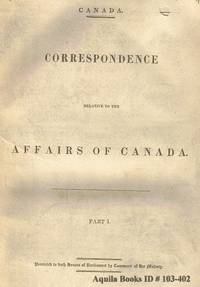
1840réf. 103402Printed for H. M. S. O. by Clowes & Sons 1840. Softcover. good to very good. v207;227;60pp. Folio. Part I sewn as issued lacking wrappers soiled with some wear to titlepage from erasure; Part II in original blue wrappers with large piece of rear corner missing; Part IV in original blue wrappers. good to very good Reference: TPL 7572-7574. Contents: Pt. 1. Lower Canada -- Pt. 2. Upper Canada political -- Pt. 4. Upper Canada. 1840 Printed for H. M. S. O. by Clowes & Sons paperback
1852Due volumi in folio imperiale legati in mezza pelle, titolo ai dorsi decorati in oro, sguardie, frontespizio al primo volume, pagine da 1 a 706 e da 1441 a 2134. Trattasi dei resoconti ufficiali della Camera dei Deputati in seduta con la trascrizione esatta dei diversi interventi. Uno spaccato assolutamente inconsueto sulla politica e sulla vita stessa dello Stato. Da segnalare le infinite notizie riguardanti l'economia, il gioco politico, la guerra, i trattati interstatali e quant'altro si vuol sottolineare, con il resoconto degli interventi di coloro che (Da Cavour a Minghetti a Boncompagni) ebbero la ventura d'assistere alla nascita della Nazione italiana. Inutile discettare sull'importanza e sulla scarsa reperibilità di tanto documento, resta da dire solo che la conservazione è ottima.
1871réf. 161381871. Great Britain. Parliament. House of Commons. Select Committee on Protection of Infant Life Report from the Select Committee on Protection of Infant Life 1871 documents the parliamentary investigation of infant welfare paid infant care mortality and state regulation in Victorian Britain. The report documents the emerging system of infant life protection through committee proceedings witness testimony appendices and an index revealing how legislators gathered medical legal and social evidence to define infant neglect as a matter requiring public oversight. Produced one year before the Infant Life Protection Act of 1872 the volume provides primary-source evidence for the study of child welfare law women's labor and caregiving economies public health regulation infant mortality and the legal history of "baby farming" a term used in nineteenth-century debates over paid care for infants. The 1872 legislation has been identified by historians as Britain's first infant life protection legislation making this parliamentary report important to the documentary record behind early state intervention in private infant care. Great Britain. Parliament. House of Commons. Select Committee on Protection of Infant Life. Report from the Select Committee on Protection of Infant Life together with the Proceedings of the Committee Minutes of Evidence Appendix and Index. London: Ordered by the House of Commons to be Printed 20 July 1871. First edition. 328 pp. Rebound in modern cloth. The report includes the committee's formal proceedings minutes of evidence appendix and index giving the volume a structured evidentiary record rather than a general policy summary. Its contents outline testimony and documentary material on infant care outside the immediate family social conditions affecting infant survival legal deficiencies and the need for enforceable protections. As a government publication it shows the mechanisms of parliamentary fact-finding in practice: evidence was collected organized indexed and converted into a legislative record that helped frame infant protection as a matter of law public health and social administration. The report belongs to the broader nineteenth-century movement toward state scrutiny of child welfare women's caregiving labor and domestic arrangements previously treated as private matters. Its timing matters because it precedes the 1872 Act and captures the evidentiary process by which infant mortality and paid infant nursing entered the legislative sphere. First few pages including title page with small loss at right page edge not affecting legibility; handwritten page numbers in upper right corners throughout; pages bright and clean; overall good. A substantial parliamentary source for research into Victorian child welfare infant mortality gendered labor public health law and the development of modern protective regulation. unknown
1871réf. 161381871. Great Britain. Parliament. House of Commons. Select Committee on Protection of Infant Life Report from the Select Committee on Protection of Infant Life 1871 documents the parliamentary investigation of infant welfare paid infant care mortality and state regulation in Victorian Britain. The report documents the emerging system of infant life protection through committee proceedings witness testimony appendices and an index revealing how legislators gathered medical legal and social evidence to define infant neglect as a matter requiring public oversight. Produced one year before the Infant Life Protection Act of 1872 the volume provides primary-source evidence for the study of child welfare law women's labor and caregiving economies public health regulation infant mortality and the legal history of "baby farming" a term used in nineteenth-century debates over paid care for infants. The 1872 legislation has been identified by historians as Britain's first infant life protection legislation making this parliamentary report important to the documentary record behind early state intervention in private infant care. Great Britain. Parliament. House of Commons. Select Committee on Protection of Infant Life. Report from the Select Committee on Protection of Infant Life together with the Proceedings of the Committee Minutes of Evidence Appendix and Index. London: Ordered by the House of Commons to be Printed 20 July 1871. First edition. 328 pp. Rebound in modern cloth. The report includes the committee's formal proceedings minutes of evidence appendix and index giving the volume a structured evidentiary record rather than a general policy summary. Its contents outline testimony and documentary material on infant care outside the immediate family social conditions affecting infant survival legal deficiencies and the need for enforceable protections. As a government publication it shows the mechanisms of parliamentary fact-finding in practice: evidence was collected organized indexed and converted into a legislative record that helped frame infant protection as a matter of law public health and social administration. The report belongs to the broader nineteenth-century movement toward state scrutiny of child welfare women's caregiving labor and domestic arrangements previously treated as private matters. Its timing matters because it precedes the 1872 Act and captures the evidentiary process by which infant mortality and paid infant nursing entered the legislative sphere. First few pages including title page with small loss at right page edge not affecting legibility; handwritten page numbers in upper right corners throughout; pages bright and clean; overall good. A substantial parliamentary source for research into Victorian child welfare infant mortality gendered labor public health law and the development of modern protective regulation. unknown books
1739réf. 1364557Dublin: n.p. 1739 - 1749. First Editions. Hardcover. Octavos Twenty-Four Volumes; G-; Quarter-bound in leather and original light blue paper boards spines banded some with handwritten volume number notation; Boards show significant soiling and age-toning moderate plus wear/bumping to corners moderate cracking to leather along joints and moderate wear to spines; Textblock/spine of Vol. XXIII is split at p. 163 but all pages sound otherwise bindings sound; Textblocks show moderate age-toning and curling to untrimmed edges minor shelfwear to bottom edges light to moderate uneven age-toning to pages throughout interiorly and a 19th-century ink ownership inscription "Marcus Gage" appears on the titlepage of each volume. RWO-LC. Shelved in law annex. Oversized books. Additional postage necessary for expedited/international orders. Economy International shipping unavailable due to size/weight restrictions. For international/expedited customers please inquire for rates. Appears to be a set of true first editions as released in Dublin beginning in 1739. John Torbuck of London began releasing a reprint in 1741 but these volumes lack the publisher information on the titlepages consistent with that edition. This set appears to be complete in twenty-four volumes. 1364557. Special Collections. [n.p.] hardcover
1739réf. 1364557Dublin: n.p. 1739 - 1749. First Editions. Hardcover. Octavos Twenty-Four Volumes; G-; Quarter-bound in leather and original light blue paper boards spines banded some with handwritten volume number notation; Boards show significant soiling and age-toning moderate plus wear/bumping to corners moderate cracking to leather along joints and moderate wear to spines; Textblock/spine of Vol. XXIII is split at p. 163 but all pages sound otherwise bindings sound; Textblocks show moderate age-toning and curling to untrimmed edges minor shelfwear to bottom edges light to moderate uneven age-toning to pages throughout interiorly and a 19th-century ink ownership inscription "Marcus Gage" appears on the titlepage of each volume. RWO-LC. Shelved in law annex. Oversized books. Additional postage necessary for expedited/international orders. Economy International shipping unavailable due to size/weight restrictions. For international/expedited customers please inquire for rates. Appears to be a set of true first editions as released in Dublin beginning in 1739. John Torbuck of London began releasing a reprint in 1741 but these volumes lack the publisher information on the titlepages consistent with that edition. This set appears to be complete in twenty-four volumes. 1364557. Special Collections. [n.p.] hardcover books
1832réf. 224111London : Hansard & Sons 1832. First Edition. Hardback. Bound in contemporary gilt-blocked aniline calf over marble boards; front hinge detached. Spine bands and panel edges somewhat dulled and toned. Scans and additional bibliographic detail on request ; 8vo 8"" - 9"" tall; Series; Reports of committees; 1831-32 ; P.B.2. Pagination not continuous. Includes the correspondence minutes of evidence on the claim Mr. Bury's evidence etc. William Alexander Mackintosh etc. London : Hansard & Sons hardcover
1890réf. 439866London : Stationery Office 1890. Hardcover. Very good copies in gilt-blocked cloth. Slight suggestion only of dust-dulling to the spine bands and panel edges. Marbled end-papers. Remain particularly well-preserved overall; tight bright clean and strong. Physical description: 5 volumes. London : Stationery Office hardcover
1838réf. elala1148Toronto: R.Stanton 1838. 1838. 8vo. pp. 63 16. original printed front wr. present disbound wrs. stained staining to upper margins through first gatherings. An investigation into "the causes which have led to the recent unnatural revolt in this portion of Her Majestys Dominions; the evils that have resulted from it; and the measures necessary to guard and protect us from the recurrence of a like calamity" p. 3 preceded by a short review of the political history of the Provinces since they became a part of the Dominions of the British Crown. The report is dated February 8 1838 and the appendix contains documents dating from December 13 1837 to January 26 1838. Fleming 1267 lacking title. TPL 2228. Casey I 1655. Gagnon I 2993. Lande 2249. [Toronto]: R.Stanton, 1838. unknown
1745réf. 100736Pamphlet format small folio disbound each act with its own title. One act with 2 pages separated some minor dampstaining; otherwise very good plus. The lengthiest act relating to the raising of money makes several specific references to colonial Georgia including the provisioning of the garrisons commissioning of troops of Highland Rangers with schooners and granting money to the trustees of Georgia for the improvement of the colony. Another act provides for a speedy trial for those who commit treason against the king. Also included is an act to indemnify those individuals who defended the king concerning the "Scottish Rebellion." Thomas Baskett unknown
1745réf. 100736Pamphlet format small folio disbound each act with its own title. One act with 2 pages separated some minor dampstaining; otherwise very good plus. The lengthiest act relating to the raising of money makes several specific references to colonial Georgia including the provisioning of the garrisons commissioning of troops of Highland Rangers with schooners and granting money to the trustees of Georgia for the improvement of the colony. Another act provides for a speedy trial for those who commit treason against the king. Also included is an act to indemnify those individuals who defended the king concerning the "Scottish Rebellion." Thomas Baskett unknown books
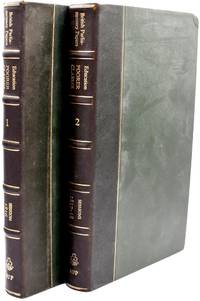
1969réf. 297423Shannon Ireland: Irish University Press 1969. Facsimile Edition. Quarter Leather. Very Good binding. Two large quarto volumes; quarter bound in green morocco with raised bands and titled in gilt over green cloth; 324 pages; 10 8 53-495 pages; the two volumes are clean and have no ownership marks of any kind in them.~~It should be noted that the second volume is tab indexed and that the labels on the indented tabs are missing. Overall an attractive set in two volumes and uncommon as such. Very Good binding. Irish University Press unknown
1969réf. 297423Shannon Ireland: Irish University Press 1969. Facsimile Edition. Quarter Leather. Very Good binding. Two large quarto volumes; quarter bound in green morocco with raised bands and titled in gilt over green cloth; 324 pages; 10 8 53-495 pages; the two volumes are clean and have no ownership marks of any kind in them.~~It should be noted that the second volume is tab indexed and that the labels on the indented tabs are missing. Overall an attractive set in two volumes and uncommon as such. Very Good binding. Irish University Press unknown books
1810réf. 140106Quebec 1810. Volume the Sixth.Statutes of the first session of the sixth Provincial Parliament of Lower Canada. Softcover. Very good. 15 p. 26 cm. Royal coat of arms on title. Disbound. Text in English and French. Title continues: "Enacted by the King's Most Excellent Majesty by and with the Advice and Consent of the Legislative Council and Assembly of the Said Province Constituted and Assembled by Virtue of and Under the Authority of an Act of the Parliament of Great Britain Passed in the Thirty-First year of the Reign of Our Sovereign Lord George the Third by the Grace of God of the United Kingdom of Great Britain and Ireland King Defender of the Faith." Hare et Wallot 224. paperback
1809réf. 140105Quebec 1809. Statutes of the first session of the fifth Provincial Parliament of Lower Canada. . Very good. 21 p. 26 cm. Royal coat of arms on title. Disbound. Light foxing. Ink notation on p. 16. Text in English and French. Title continues: "Enacted by the King's Most Excellent Majesty by and with the Advice and Consent of the Legislative Council and Assembly of the Said Province Constituted and Assembled by Virtue of and Under the Authority of an Act of the Parliament of Great Britain Passed in the Thirty-First year of the Reign of Our Sovereign Lord George the Third by the Grace of God of the United Kingdom of Great Britain and Ireland King Defender of the Faith. Volume the Fifith." Statutes of the first session of the fifth Provincial Parliament of Lower Canada. Hare et Wallot 186. unknown
1811réf. 140107Quebec 1811. Statutes of the first session of the seventh Provincial Parliament of Lower Canada. . Very good. 95 p. 26 cm. Royal coat of arms on title. Disbound. Text in English and French. Title continues: "Enacted by the King's Most Excellent Majesty by and with the Advice and Consent of the Legislative Council and Assembly of the Said Province Constituted and Assembled by Virtue of and Under the Authority of an Act of the Parliament of Great Britain Passed in the Thirty-First year of the Reign of Our Sovereign Lord George the Third by the Grace of God of the United Kingdom of Great Britain and Ireland King Defender of the Faith. Volume the Seventh." unknown
1783réf. 113275No place: no printer identified 1783. Pro bono work First and apparently only edition of this speech promoting the establishment in Toulouse of an order of lawyers offering free legal representation to the poor a "league of generous defenders of the oppressed and destitute". When Maître Gez c.1700-1792 gave this speech to his peers at the Parlement in Toulouse he had already constituted a group of thirty-two lawyers providing free counsel to the poor. The group was divided into two chambers according to seniority and met monthly. Appealing to the generosity of his peers to form a society of men dedicated to the pursuit of justice and set free from the "domination of greed" Gez cites as models to follow Montesquieu Beccaria and Servan as well as the Bareau of the city of Nancy which had already implemented a similar system. Jean Nicolas Joseph Abraham Gez had a long career at the Bar and was made a member of the Académie des Sciences Inscriptions et Belles Lettres de Toulouse in 1785. Quarto 238 x 190 mm 21 pp. Engraved vignette at head of first leaf. Disbound and stab sewn through the original stab holes. Small marginal stain to first leaf top corner with small stain; a very good copy. unknown
réf. 40524Paris.Robert Fouet.1612.In-4 de 1165 pages + Table des Matières. BE.Reliure en veau moucheté.Tranches mouchetées.Dos à 5 nerfs avec larges caissons décorés et pièce de titre.
réf. 47297Textes XVIIème dans une reliure peignée XIXème.Ex-libris.2 cachets discrets sous les pièces de titre. Rare.Bon état.
183312pp., sm. folio, with fine woodcut arms of William IV on front page; disbound, an exceptionally crisp, virtually spotless copy ideal for display or presentation. 3 Gulielmi IV. Cap. 9; granted royal assent, 6 May 1833. This is the Act of Parliament formally incorporating the Seaman's Hospital Society, establishing and naming its first governors and prescribing its powers and scope of operations. By way of context its military equivalent, the Royal Hospital at Chelsea, was founded in 1692. The world's first charitable society for the relief of distressed seamen was established in London in March 1821. Initially it aimed to cater for those in the Port of London ('who at that time were very numerous in the Metropolis') and, fittingly for the world's leading maritime nation, did not differentiate on nationality or any other grounds other than disability and hardship. The motivating principles seem to have been partly public gratitude in the aftermath of the Napoleonic wars, in which the Royal Navy in particular had played a fundamental role in achieving victory, and partly increased recognition of the helplessness of private seamen and the strength of their cause. The society was supported entirely by donations, subscriptions and legacies, and by the loan by government of a hospital ship (HMS Dreadnought) moored at Greenwich. In its first twelve years the society provided relief and support to upwards of twenty-three thousand sick and distressed seamen, 'many of whom might otherwise have perished'. With the case clearly made it was time for a more formal and robust body with increased remit and governance; accordingly the Seaman's Hospital Society was given royal assent on 6 May 1833. Its significant extra powers included the rights to possess property, receive bequests, purchase lands and canvass donations; most important of all it was granted 'perpetual succession'. The original HMS Dreadnought continued in use until 1870 when the Admiralty made available at nominal rent the infirmary at Greenwich where the 'Dreadnought' hospital continues to this day. AN ACT OF FUNDAMENTAL IMPORTANCE TO THE WELFARE AND WELL-BEING OF SEAMEN IN BRITAIN, AND A SIGNIFICANT DEVELOPMENT IN BRITISH MARITIME HISTORY. VERY SCARCE, ESPECIALLY IN THIS CONDITION.
1640pp. [2], 55. Signatures: A^(4)(-A1) B-G^(4) H2. There are two settings of this same edition known (no priority as to first issue, and many copies contain mixed formes). This setting has the title page with a small version of the royal arms; and on the verso a large, full page, engraved version; and the last line of D4v begins: as ever'. **Short contemporary Ms. note on title: 'This p'lament began Apr. 16, 1640 & was dissolved May 5 folowing.' Small 4to. 190 mm. Later blue boards binding; leather title strip lettered in gilt. Clean and attractive copy. Charles I (1600-1649), King of Great Britain and Ireland. In his early disputes, arguments, and battles with the Scots, tried a new tool. He resolved to call an English parliament, and to ask for means to enable him to make war effectually upon Scotland. The discovery of an attempt made by the Scottish leaders to open negotiations with the king of France led him to hope that the national English feeling would be touched. In the meanwhile the English privy councillors offered him a loan which would enable him at least to gather an army without parliamentary aid. The Short parliament of 1640 was opened by the King on 13 April with a few words indicative of the gravity of the situation, the task of more fully setting forth the royal wishes and intentions being devolved upon the Lord Keeper (Baron Finch). Under Pym's leadership the Parliament showed itself disposed to ask for redress of grievances as a condition of a grant of supply, and it subsequently refused to give money unless peace were made with the Scots. On 5 May Charles dissolved parliament by means of this Declaration. Getting money by irregular means, he proceeded to push on the war, and formed an Irish army to join the mutinous and un-warlike Royal army. Terrified and exasperated Englishmen, believed that this army would be used in England to crush their liberties. The Scots knew that the opinion in England was in their favour, and they had already entered into communication with the parliamentary leaders. On 20 Aug. they crossed the Tweed, defeated part of the royal army at Newburn on the 28th, and soon afterwards occupied Newcastle and Durham. Charles's money was by this time almost exhausted, and he was obliged to summon the English peers to meet him in a great council at York, as there was no time to get together a full parliament. The great council met on 24 Sept. It at once insisted on opening negotiations with the Scots, and sent some of its members to London to obtain a loan to support the army during the progress of the treaty. Charles had now agreed to summon another parliament, and the negotiations opened at Ripon were adjourned to London. Possibly written by John Finch, Baron Finch of Fordwich (1584-1660), Speaker of the House of Commons and Lord Keeper. STC (2nd ed.) 9262; Thomason, E.203[1]; Lincoln's Inn. Catalogue of Pamphlets, 1506-1700. The attractive First Edition of a scarce and important pamphlet. KING CHARLES I DISSOLVES THE "SHORT PARLIAMENT". **PRICE JUST REDUCED! STC 2
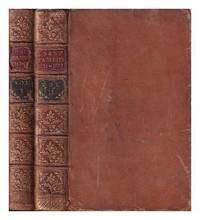
1767réf. 411280London : publisher not identified 1767. First Edition. Hardcover. Good copies finely bound in the original full aniline calf. Raised bands with red and black gilt-blocked leather label. Spine compartments uniformly tooled in gilt. Spine bands and panel edges slightly rubbed and dulled as with age. Hinges starting and some board starting to detach. Remains quite well-preserved overall; internally bright and clean. Further scans images and additional bibliographical material available on request. Physical description; 2 vol. ; 21 cm. Notes; Contains ""An historical essay on the legislative power of England . By George St. Amand"": at the at end of vol. 2. with a separate titlepage pagination cxxvii p. and register the essay was also issued separately. Has been attributed to Almon John 1737-1805. Includes index. Contents; vol. 1 1242-1724 -- vol. 2 1725-1772. Subjects; Great Britain. Parliament. House of Lords. Constitutional history Great Britain ; Sources. Great Britain Politics and government 1216-1760 ; Sources. London : publisher not identified hardcover