ANONYMELivre Rare Book
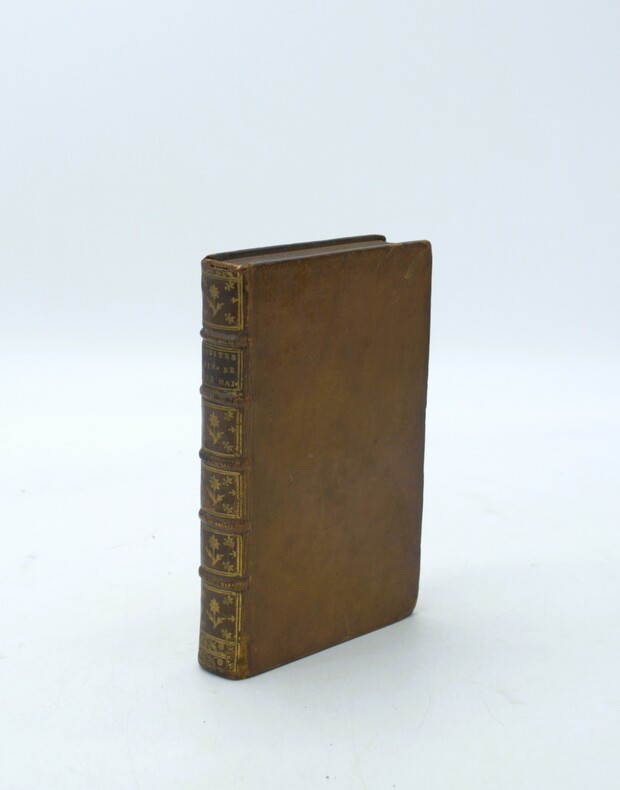
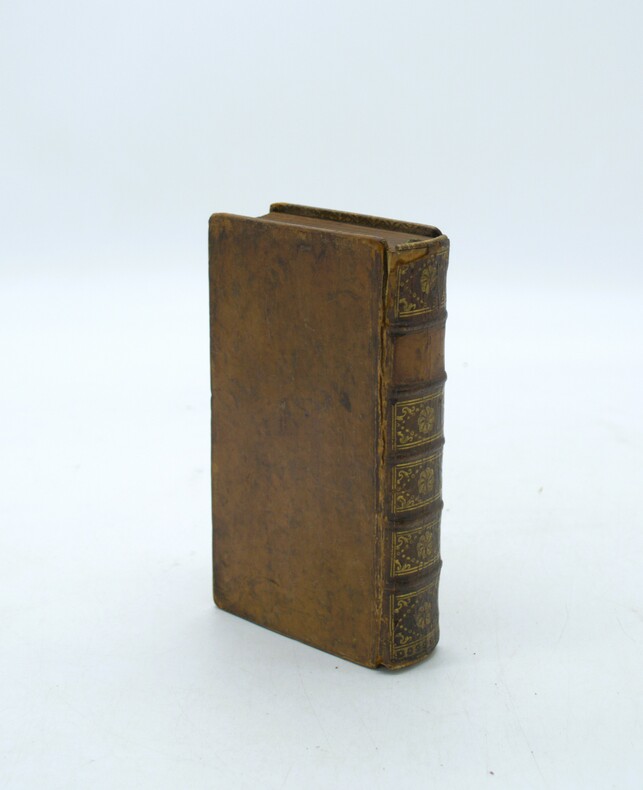
1760réf. PHO-2050La Haye, Chez les frères Vaillant, 1760, in-12 (165x103mm), XVIII-426pp.-23pp., plein veau époque, dos à nerfs orné avec pièce de titre grenat, coiffe arasée, petits frottements aux charnières et coupes.
1760réf. PHO-2051La Haye, Chez les frères Vaillant, 1759, in-12 (17x10cm), XXVI-588pp.-57pp., veau marbré époque, dos à nerfs orné, frottement aux charnières, début de fentes, coiffes arasées, manque la pièce de titre.
1625réf. 67801Parigi Dalla Stamperia di Pietro Durando all'immagine di San Sebastiano 1625. In 8° antico cartonato rifatto. Pp. 134 2 n.n. bianche. Piccolo stemma del re francese al frontespizio buon esemplare con solo un alone seppur non particolarmente pesante alla metà esterna del volume unknown
1892Parody of Oscar Wilde's Lady Windemere's Fan on page 113 with the "Quite Too-Too Puffickly Precious!!" cartoon of Wilde. iv, 324 pages. Top corner of front and back cover faded and worn. Spine bumped top/base.
1894With several references to Aubrey Beardsley with Beardsleyesque portraits by "Mortarthurio Whiskersly". iv, 312; iv, 312 pages including Index, followed by unpaginated Punch's Almanack for 1894 and Christmas Number. Previous owner's signature on front free endpaper.
ST-BRIEUC, L. Prud'homme - In-16 en feuilles à relier dans le format originel - Annuaires expurgés comprenant exclusivement les articles concernant les Monographies - Très propres à l'exception de quelques années RARES.
réf. 2232ST-BRIEUC, L. Prud'homme - In-16 en feuilles à relier dans le format originel - Annuaires expurgés comprenant exclusivement les articles concernant les Monographies - Très propres à l'exception de quelques années RARES.
1992Mm 140x220 Volume cartonato rigido di pagine 381, sovraccoperta figurata, angolo del prezzo tagliato. Prime edizione. Opera in ottime condizioni. Spedizione in 24 ore dalla conferma dell'ordine.
1987In 8°, cart. edit. con sovrac. ill., pp. 409,(7); prima ed., ottimo es., solo lievemente brunito.
1988In 8°, t.t. edit. con sovrac. ill., pp. 409,(7); ottimo es., solo lievemente brunito. (m088)
1992In 8°, cart. edit. con sovrac. ill., pp. 385,(7); parlamento italiano ed europeo: curiosità, provocazioni, insulti detti e scritti da chi abbiamo eletto; prima ed., ottimo es.. (x022/d)
1774réf. 1353592London: J. Almon 1774. First Edition. Hardcover. Octavo 2 63 pages 4. In Very Good minus condition. Pamphlet later bound in light blue boards. Boards show light plus age-toning to edges and spine with black lettering on spine. Text block shows moderate age-toning to edges light plus age-toning throughout interiorly and a 1-in. closed tear to title page along fore-edge. Four pages of publisher's ads appear at back. Lacking half-title page. RW Consignment. Shelved in Case 1. Authorship of this tract has been variously attributed to Arthur Lee William Pitt the Elder and Benjamin Franklin. While Benjamin Franklin submitted the text to J. Almon for publication it is generally accepted that Lee was the author. Arthur Lee was a pro-American Member of Parliament and writes here in defense of colonial rights and liberties. References: Sabin 39697; Adams 74-44a. 1353592. Shelved Dupont Bookstore. J. Almon hardcover books
1774réf. 1353592London: J. Almon 1774. First Edition. Hardcover. Octavo 2 63 pages 4. In Very Good minus condition. Pamphlet later bound in light blue boards. Boards show light plus age-toning to edges and spine with black lettering on spine. Text block shows moderate age-toning to edges light plus age-toning throughout interiorly and a 1-in. closed tear to title page along fore-edge. Four pages of publisher's ads appear at back. Lacking half-title page. RW Consignment. Shelved in Case 1. Authorship of this tract has been variously attributed to Arthur Lee William Pitt the Elder and Benjamin Franklin. While Benjamin Franklin submitted the text to J. Almon for publication it is generally accepted that Lee was the author. Arthur Lee was a pro-American Member of Parliament and writes here in defense of colonial rights and liberties. References: Sabin 39697; Adams 74-44a. 1353592. Shelved Dupont Bookstore. J. Almon hardcover
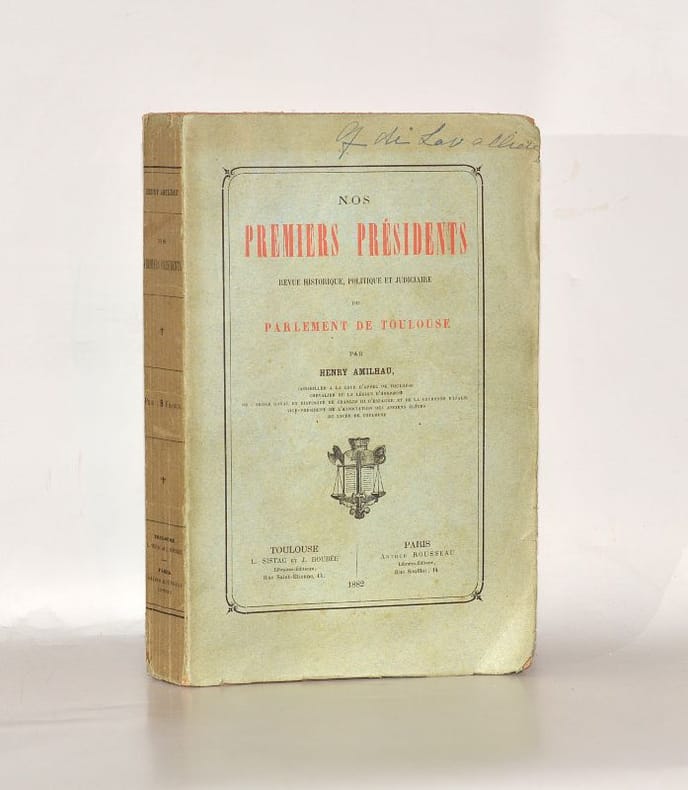
1882réf. 0010011882 Toulouse, Sistac & Paris, Rousseau, 1882. In-8 (221 X 144 mm) broché ; XIV-571 pages. Infimes manques aux plats de la couverture.
1767réf. 1098111767. First Edition. CUSTOMS COMMISSIONERS ACT. Act to enable His Majesty to put the Customs and other Duties in the British Dominions in America and the Execution of the Laws relating to Trade there under the Management of Commissioners. London: Mark Baskett 1767. Folio 20th-century marbled stiff paper boards. $3200.Rare first printing of the 1767 Customs Commissioners Act one of the controversial Townshend Acts that united patriot opposition to British rule and provoked the Boston Massacre.Following the Stamp Act which had united colonial opinion against British authority ""as no issue beforeÉ a new period of agitation began in 1767 with the passage of the Townshend Acts"" Morison Sources xv. Engineered by Charles Townshend Chancellor of the Exchequer these were intended to raise revenue from the American colonies by imposing duties on goods Americans were already forced to import only from England punish New York's opposition to the Quartering Act and establish a board of customs commissioners in America. This is the first printing of that Customs Commissioners Act. ""To guarantee that colonial duties raised as much money as he had promised to Parliament Townshend was tightening control over America's slack customs procedures"" by appointing commissioners in England and sending them to Boston ""with broad powers. Since colonial jurors rarely convicted a local merchant of smuggling Townshend's acts set up new admiralty courts that could try smugglers without a jury. And the acts made it easier for customs officials to obtain writs of assistance"" Langguth 93. In addition ""the moneys thus raised in the coloniesÉ were to be usedÉ to render the royal governors and judges independent of colonial assemblies"" Morison xv. To Samuel Adams ""these new commissioners of customs were 'the greatest political curses that could be sent amongst usÉ From the time the acts took effect November 20 1767 many Bostonians had been boycotting luxury goods from Britain by signing a 'nonimportation agreementÉ Stricter enforcement at the customs offices was drawing off hard currency from America and bad times were spreading across the colonies"" Langguth 94 102-103. With increased colonial opposition to the Customs Commissioners Act and other Townshend laws ""the customs administration to enforce them became especially in ports like BostonÉ increasingly militarized"" provoking merchants such as John Hancock into ""calling one of his sloops Liberty and flaunting his intention of 'running Madeira ashore"" Schama History of Britain II:463. The day after the Liberty was seized by customs officials Sam Adams was overheard challenging the crowd ""If you are men behave like men. Let us take up arms immediately and be free and seize all the king's officers"" Langguth 98. With the Board of Commissioners of the Customs headquartered in Boston the city became the ""rowdiest of all the centers of protest"" and those who broke the boycott were often tarred and feathered. As tempers grew shorter and customs officers were accused of bribery and extortion matters often ""got completely out of control. On 23 February 1770 an eleven-year-old boy Christopher Seider joined by a noisy protest of schoolboys and apprentices outside the shop of an importerÉ was shot dead by a customs officer"" and his funeral turned into a mass protest led by Sam Adams. Only one month later on March 5th amidst these already heightened tensions ""a wigmaker's apprentice ragged a soldier all the way to the Custom House for an allegedly unpaid bill. When a guard struck the pursuing youth a tocsin normally used as a fire alarm was sounded and mobilized a large and angry crowd"" Schama History of Britain II 463. In the melee that followed the redcoats opened fire killing fiveÑamong them Crispus AttucksÑand the day would be memorialized in history as the Boston Massacre. Printed in gothic type indicative of the first edition. This first printing excised from the Sessional Volumes of Parliament pages 563-66 precedes all American printings. Minor rubbing spine. Very nearly fine condition. hardcover books
1767réf. 1098111767. First Edition. CUSTOMS COMMISSIONERS ACT. Act to enable His Majesty to put the Customs and other Duties in the British Dominions in America and the Execution of the Laws relating to Trade there under the Management of Commissioners. London: Mark Baskett 1767. Folio 20th-century marbled stiff paper boards. $3200.Rare first printing of the 1767 Customs Commissioners Act one of the controversial Townshend Acts that united patriot opposition to British rule and provoked the Boston Massacre.Following the Stamp Act which had united colonial opinion against British authority ""as no issue beforeÉ a new period of agitation began in 1767 with the passage of the Townshend Acts"" Morison Sources xv. Engineered by Charles Townshend Chancellor of the Exchequer these were intended to raise revenue from the American colonies by imposing duties on goods Americans were already forced to import only from England punish New York's opposition to the Quartering Act and establish a board of customs commissioners in America. This is the first printing of that Customs Commissioners Act. ""To guarantee that colonial duties raised as much money as he had promised to Parliament Townshend was tightening control over America's slack customs procedures"" by appointing commissioners in England and sending them to Boston ""with broad powers. Since colonial jurors rarely convicted a local merchant of smuggling Townshend's acts set up new admiralty courts that could try smugglers without a jury. And the acts made it easier for customs officials to obtain writs of assistance"" Langguth 93. In addition ""the moneys thus raised in the coloniesÉ were to be usedÉ to render the royal governors and judges independent of colonial assemblies"" Morison xv. To Samuel Adams ""these new commissioners of customs were 'the greatest political curses that could be sent amongst usÉ From the time the acts took effect November 20 1767 many Bostonians had been boycotting luxury goods from Britain by signing a 'nonimportation agreementÉ Stricter enforcement at the customs offices was drawing off hard currency from America and bad times were spreading across the colonies"" Langguth 94 102-103. With increased colonial opposition to the Customs Commissioners Act and other Townshend laws ""the customs administration to enforce them became especially in ports like BostonÉ increasingly militarized"" provoking merchants such as John Hancock into ""calling one of his sloops Liberty and flaunting his intention of 'running Madeira ashore"" Schama History of Britain II:463. The day after the Liberty was seized by customs officials Sam Adams was overheard challenging the crowd ""If you are men behave like men. Let us take up arms immediately and be free and seize all the king's officers"" Langguth 98. With the Board of Commissioners of the Customs headquartered in Boston the city became the ""rowdiest of all the centers of protest"" and those who broke the boycott were often tarred and feathered. As tempers grew shorter and customs officers were accused of bribery and extortion matters often ""got completely out of control. On 23 February 1770 an eleven-year-old boy Christopher Seider joined by a noisy protest of schoolboys and apprentices outside the shop of an importerÉ was shot dead by a customs officer"" and his funeral turned into a mass protest led by Sam Adams. Only one month later on March 5th amidst these already heightened tensions ""a wigmaker's apprentice ragged a soldier all the way to the Custom House for an allegedly unpaid bill. When a guard struck the pursuing youth a tocsin normally used as a fire alarm was sounded and mobilized a large and angry crowd"" Schama History of Britain II 463. In the melee that followed the redcoats opened fire killing fiveÑamong them Crispus AttucksÑand the day would be memorialized in history as the Boston Massacre. Printed in gothic type indicative of the first edition. This first printing excised from the Sessional Volumes of Parliament pages 563-66 precedes all American printings. Minor rubbing spine. Very nearly fine condition. hardcover
1976In 8°, br. edit. con titoli anche al dorso, pp. XXII,400,(3); buona copia, intonsa (zb8) (La spedizione standard è SEMPRE tracciata con raccomandata - piego di libri, eventuale FATTURA da richiedere all'ordine) (zb8)
1986Mm 170x240 Collana "Strumenti. Diritto". Brossura editoriale con bandelle, 1045 pagine. Rare sottolineature a matita, peraltro copia molto buona. SPEDIZIONE IN 24 ORE DALLA CONFERMA DELL'ORDINE.
19722 voll. in 4°, pegamoide edit. con tracce d'uso, pp. 660,(4); 657,(7), con ill. b.n. n.t., buon es.
1969Due volumi in 4° grande, legati in piena pelle, titolo inciso ai piatti ed al tassello ai dorsi, sguardie figurate, bianca con dedica autografa dell'autore al Dr. M.G.T., frontespizi, introduzioni, 660, 743 pp., indici, colophon e bianche finali, numerose vignette ed illustrazioni fotografiche a piena pagina. Dall'introduzione: "Il primo volume di quest'opera si apre con un saggio critico sulla crisi del Parlamento italiano, la cui parte introduttiva documenta la unanimità delle critiche da parte dei gruppi politici, dopo un abbastanza largo compendio di storia parlamentare in un secolo (1848 - 1948), il volume si chiude con la esposizione critica delle vicende della Camera italiana durante le quattro legislature della Repubblica; il secondo volume offre tutta una serie di documentazioni inedite, dati per la prima volta raccolti, di curiosità utili al conseguimento di un valido quadro, intorno all'attività e al funzionamento della Camera italiana dal 1948 al 1968. ... La crisi, funzionale, strutturale, pianta purtroppo le sue radici nel costume stesso della Nazione e innalza i suoi fastigi fino ai vertici dello Stato. ..." Ben più che interessante, in ottimo stato, con un significativo corredo iconografico, impreziosita dalla dedica autografa di Giorgio Almirante.
19828vo., First Edition; original series binding of olive cloth, gilt back, a near fine copy. Camden Fourth Series Volume 26.
1949In-8° pp. 194 con dis. n.t. legatura edit. con sovracoperta ill.
1848réf. 12In 8 demi-toile postérieure muette.Faux-titre, titre, XXV,510 pages,non rogné, non coupé, couverture conservée.Veuve Louis Janet éditeur.
réf. 18179AE's five letters on letterheads of 30 Ennismore Gardens S.W. London 3; and Spring Bank Oldham 2; four of them from between 1905 and 1907 the other undated. GHE's letter on letterhead of 35 Grosvenor Road Claughton Birkenhead; 1903. The six items totalling 9pp. are in fair condition on lightly-aged paper George H. Emmott's letter having slight wear at head. The recipient was Charles J. Holdsworth of Sunnyside Wilmslow Cheshire. AE's first letter responds briefly to Holdsworth's congratulations on Emmott's appointment as Chairman of the Ways and Means Committee; the second letter sends what 'appears to be an old scrap book of Henry King's' Holdsworth's uncle with reference to 'old Friends' books of his'; the third no more than a note states his 'only objection' as 'publication in the newspaper' ; the fourth and longest at two full 4to pages gives his views 27 April 1907 on 'Haldane's Territorial & Reserve Forces Bill': 'I do not vote on account of my official post but I do not want to pass by this communication from the Society of Friends without acknowledgment'. He is not commenting as he is 'out of political strife for the time being' but is 'tempted to say privately that I am told the number of volunteers from boys who have been in Cadet Corps is far smaller proportionately than from the general male population. The reason stated is that military training even of that imperfect kind lessens rather than increases the military spirit. I wonder if it really is so. If it is we need not fear the moral effect of military training very much. For any danger but that of the military spirit is not to be feared & the physical results are good enough.' AE's fifth letter refers Holdsworth to his brother George who with his wife will probably know 'who took most of these books'. George H. Emmott's letter dated 12 July 1903 is 3pp. 8vo and discusses AE's school days at the Quaker School in Kendal: 'I remember however that on one occasion when his half yearly report came home it contained the remark from Henry Thompson that he combined the good qualities of both his elder brothers - meaning I believe my studiousness and love of books and our brother John's love of games & outdoor exercise. I do not know how it arose but his nickname at school where he was quite a general favourite wwas "Madam" .'. AE's five letters on letterheads of 30 Ennismore Gardens, S.W. [ London ] (3); and Spring Bank, Oldham (2); four of them from be unknown