7159 risultati
rif. 13238Without date or place. 6pp. 4to numbered 4-9. Carbon copies on six leaves. In fair condition on aged and creased paper. The account does not appear to have been published and indeed could not have been published during wartime. It may be that it was written for an editor at the Daily Express but the extent of revision and emendation suggests that it was written with an eye to publication after the war. The first page numbered 4 begins after an eight-line deleted passage: 'Reynold's second-in-command is Major Mc.Cormack a whimsical helpful little Northern Irishman with strong Evangelical views. He & the four Chief Press Officers handled me amiably enough; none individually seems responsible for the rows & inconveniences which occur daily. Then there are the Conducting Officers - hearty convivial cavalrymen who wouldn't profess to know much about any periodical but the Field & Country Life. One of them said to me the other night "Hickey . . . . Oh yes I've read your stuff. You do cats in the Sunday Times don't you" Research established that he was referring to Nat Gubbins in the Sunday Express. Some of the reporters find this Bullingdon manner a little overwhelming; others say that they are useful on the job since they are on Christian-name terms with the OC of every unit visited.' At the foot of the first page he begins his description of how 'The King's visit brought the rows & inconveniences to a climax. To begin with elaborate arrangements had been made to keep all news of it secret till after he had returned to England. On the day the King sailed for France it was decided in London to release the news at once after all. But the first that PR in France knew of this decision was hours after the King's arrival when someone happened to be listening in & heard the news on the BBC.' Then the censorship fell into its most jittery mood. We were allowed to say that the news had been left secret till the King's arrival which was obvious. We were not allowed to say that the release came as a surprise to us in France: any hint that deprartmental co-ordination is not 100% perfect is regarded wrongly I think as dangerous. We were not allowed to quote even such amusing details as the pseudonyms by which for secrecy the King had been spoken of beforehand: even among ourselves we had to day "When Mr Harris arrives . . ."; some of the PR staff called him "Mr Big."' He addresses the reader: 'You have heard already of the curious fool arrangement by which glimpses of the King were rationed among the reporters.' He explains that the official description of the 'conference on the day the King lunched with Lebrun & Daladier' was 'not even accurate. There had been no exchange of toasts. There had been only one toast: the King as host had drunk the President of the Republic's health. The reporter put this in his story; found later to his fury that a censor had struck it out writing in instead the smug "Cordial toasts were exchanged".' He discusses the role of the censors. The last page numbered 9 concludes: 'Our reporters are annoyed by all this nonsense & tiresomeness; but its effect on the Americans is likely to be serious. . Red tape presented at least one glowingly pro-British news-agency story of the King's visit from appearing in 1500 newspapers mostly in America. The agency man was away that day. He asked another accredited war reporter to cover the story for him.' From the Driberg papers. See Image. Without date or place. unknown
1915rif. ZB528182London: HMSO 1915. tall octavo folding map paper wrappers string tied library markings else good; published as Colonial Reports -- Annual No. 870. - If you are reading this this item is actually physically in our stock and ready for shipment once ordered. We are not bookjackers. Buyer is responsible for any additional duties taxes or fees required by recipient's country. London: HMSO unknown
1912rif. ZB528179London: HMSO 1912. tall octavo map paper wrappers string tied library markings else good; published as Colonial Reports -- Annual No. 707. - If you are reading this this item is actually physically in our stock and ready for shipment once ordered. We are not bookjackers. Buyer is responsible for any additional duties taxes or fees required by recipient's country. London: HMSO unknown
1913rif. ZB528180London: HMSO 1913. tall octavo folding map paper wrappers string tied string ties broken or weak library markings else good; published as Colonial Reports -- Annual No. 776. - If you are reading this this item is actually physically in our stock and ready for shipment once ordered. We are not bookjackers. Buyer is responsible for any additional duties taxes or fees required by recipient's country. London: HMSO unknown
1910rif. ZB528183London: HMSO 1910. tall octavo paper wrappers string tied library markings else good; published as Colonial Reports -- Annual No. 651. - If you are reading this this item is actually physically in our stock and ready for shipment once ordered. We are not bookjackers. Buyer is responsible for any additional duties taxes or fees required by recipient's country. London: HMSO unknown
1915rif. ZB528181London: HMSO 1915. tall octavo map paper wrappers string tied library markings else good; published as Colonial Reports -- Annual No. 829. - If you are reading this this item is actually physically in our stock and ready for shipment once ordered. We are not bookjackers. Buyer is responsible for any additional duties taxes or fees required by recipient's country. London: HMSO unknown
rif. Z1-S-033-03202Stationery Office Books. Used - Good. Ships from UK in 48 hours or less usually same day. Your purchase helps support Sri Lankan Children's Charity 'The Rainbow Centre'. Ex-library so some stamps and wear but in good overall condition. 100% money back guarantee. We are a world class secondhand bookstore based in Hertfordshire United Kingdom and specialize in high quality textbooks across an enormous variety of subjects. We aim to provide a vast range of textbooks rare and collectible books at a great price. Our donations to The Rainbow Centre have helped provide an education and a safe haven to hundreds of children who live in appalling conditions. We provide a 100% money back guarantee and are dedicated to providing our customers with the highest standards of service in the bookselling industry. Stationery Office Books unknown
rif. 98884 pp. in 4°, bandeau gravé.
1769rif. 127507à Paris, chez Delalain, Libraire M DCC LXIX 1769 In-4 26 x 19,5 cm. Reliure de l’époque veau havane marbré, dos à nerfs encadrés de fers dorés, XL-866 pp., table des chapitres, table des matières.
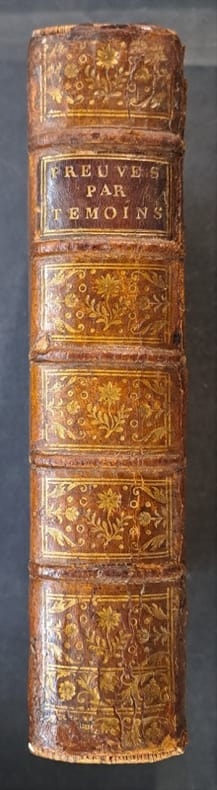
1697rif. 127894à Paris, chez Charles Osmont, M. DC. XCVII. 1697 In-4 25,5 x 18,5 cm. Reliure de l’époque veau havane, dos à nerfs encadrés de fers dorés, [29]-648 pp., table des chapitres, table des matières. Coiffe de tête arasée, mors fendillés en tête et en pied, coins frottés, page de titre avec découpe tampon ?, mouillures marginales en contreplat et page de garde, sinon intérieur en bon état.
1772rif. 151942chez Delalain A Paris, chez Delalain, 1772. In-4 relié plein veau brun, dos à nerfs très orné, pièce de titre de maroquin rouge, tranches rouges, gardes de papier marbré; xl + 866 pages. Contenant le commentaire latin et français de M. Jean Boiceau, Sieur de la Borderie, Avocat au Présidial de Poitiers, sur l'article LIV de l'ordonnance de Moulins avec plusieurs nouvelles questions tirées des plus célèbres jurisconsultes et décidées par les arréts des Cours souveraines et des observations sur l'article LV de l'ordonnance de Moulins sur le titre XX de l'ordonnance de 1667. Le tout conféré vec l'édit pérpétuel des Archiducs, les ordonnances, statuts et coutumes de Milan, de Bologne la Grasse, de Naples, de Portugal et des autres pays qui ont rapport à l'usage du droit français sur cette matière; avec le traité de la Preuve par comparaison d'écritures, de M. le Vayer. Mention de 6e édition considérablement augmentée. Bel exemplaire;
1752rif. R320025838GIRARD FRANCOIS. 1752. In-12. Relié plein cuir. Etat d'usage, Plats abîmés, Dos abîmé, Intérieur acceptable. 423 + Environ 20 pages de table des matières (fin d'ouvrage) - Coins, tranches rognés - 1er et 2em plats frottés - Coiffes en tete et pied manquantes - Epidermures sur l'enseble du cuir - TRanches rosées - Petites pliures sur 2 pages - Intérieur satisfaisant.. . . . Classification Dewey : 340-Droit
rif. 17260Relié - 26 x 20 - 76 pp - année 1760 - Imprimé chez la Veuve Dupuis Paris avec approbation et privilège du Roi .
1785rif. 492901785 ROUEN, Chez louis Oursel - 1785 - In-16 - Reliure veau brun de l'époque usagée - Dos lisse orné -manque pièce de titre - Toutes tranches ropuges - XXII-(2)-363 pages + Approbation - Envoi rapide et soigné - Réf. 49290
1752rif. 22824Paris Denis Mouchet 1752 -in-4 plein-veau 2 parties reliées en 1 volume, reliure plein veau havane moucheté (binding full calfskin) in-quarto (19,8 x 25,8 cm), RELIURE D'EPOQUE, dos à nerfs (spine with raised bands) décoré or (gilt decoration) à filets "or", filets perlés "or" et roulettes "or"(gilt line and fillets) et filets à froid (blind-stamping line decoration), titre frappé "or", pièce de titre (label of title) sur fond bordeaux avec filet "or" et filet perlé "or" en encadrement, entre nerfs à fleuron "or" dans un encadrement avec filet "or" et filet perlé "or" avec rinceaux fleuron "or" aux angles, roulette "or" en place des nerfs avec un filet à froid de part et d'autre des nerfs, manque de cuir aux coiffes, mors fendu en bas à gauche du 1er plat sur 4cm, 1er plat décoré à froid d'un double filet à froid en encadrement, plats trés légèrement épidermés (lights scratches), roulette "or" sur les coupes (fillets on the cuts)avec léger manque de dorure (blurred gilding), toutes tranches lisses rouges (all red edges), sans illustration (no illustration) excepté une petite vignette représentant Thémis (la justice)gravée sur bois en noir + bandeaux front de chapitres + lettrines gravées sur bois en noir, (XXXVI + 888 + 15 p. de Tables) pages, 1752 Paris Denis Mouchet Editeur,
1779rif. 1164Chez L. Cellot, Imprimeur-Libraire, rue Dauphine... 13 x 20 Paris 1779 In-8, reliure plein veau raciné, xiv-privilège-430 p., dos cloisonné et fleuronné à cinq nerfs, pièce de titre de maroquin, tranches rouges, filet doré sur les coupes. Titre complet: Traité des retraits, contenant les questions qui se présentent ordinairement sur le retrait lignager, sur le retrait féodal & censuel, sur le retrait conventionnel & faculté de rachat, avec les règles et les formalités qui doivent être observés pour exercer les retraits, conformément aux coutumes et usages du Royaume, tant des pays coutumiers que des pays de droit écrit, et à la jurisprudence des cours souveraines. Traité d'un jurisconsulte du Parlement de Toulouse, qui fait suite à celui de Pothier (1762), intéressant pour l'étude des différents retraits en pays de coutumes et en pays de droit écrit, et plus largement sur la question des transmissions de patrimoine à la fin de l'Ancien Régime. Mors légèrement fendillé en queue, quelques légères épidermures, coupes supérieures et coins un peu usagés, petite tache d'humidité en haut des dernières pages. Mais très bon et solide exemplaire. Peu fréquent.(B43) Livre
1756rif. 50386Paris / Chartres, Ant. Claude Briasson, Libraire / F. Le Tellier, Imprimeur 1756 2 tomes. In-16, reliure de l’époque, plein veau marbré, dos à 5 nerfs ornés d’un filet doré, caissons ornés de motifs dorés, coupes ornées d’un filet doré, tranches rouges. VI + 538 - VI + 490 pp.
1762rif. 840921762 Toulouse, Antoine Birosse, 1762, 3 volumes in 12 reliés plein veau de l'époque, dos à nerfs très ornés, tranches rouges ; infimes rousseurs ; importante table alphabétique des matières à la fin du tome 3.
1908rif. 104443London: Printed for His Majesty's Stationery Office by Eyre and Spottiswoode nd c1908. Softcover. very good. iv117pp. Disbound. Folio approximately 12.25" high. Folding map partly coloured showing transcontinental railways. very good 1908 Printed for His Majesty's Stationery Office by Eyre and Spottiswoode paperback
1957Features: Big news for coach passengers; Nice color Fairbanks-Morse ad inside front cover; Railroad News Photos; Half page article on Southern Pacific's 13-mile solid fill across Great Salt Lake; Overshadowed by the Hoosac - illustrated article on other rail tunnels; The Railroad that Parliament Forgot - the Talyllyn in Wales; Super photo section including a shot inside the Paducah, KY steam locomotive shop; Four Aerotrain Photos; Washout - the monthly treatment of a steam locomotive; What Price Sleep? - the domes and diesels, decor and dining of Burlington's latest are de luxe indeed, but the big news lies in a bed just 24 inches wide; RDC (Rail Diesel Car) Breakthrough - Baltimore & Ohio takes the Budd (car) by the horns and shows what can be done; Missourie Pacific (Mopac) - maps; Steam in Indian Summer 8 - by David P. Morgan; Very nice color ad for the Northern Pacific Railway on back cover; and more. Unmarked. A sound copy., Magazine
1697rif. V65598Paris: Cavelier 1st edition stated in privilege leaf 1697. Hardcover. Very Good. Quarto calf on 5 raised bands compartment gilt worn/hinges cracked but held firmly by the raised bands/lacks spine label/head & foot of spine badly chipped xxvi358pp 176pp24p index TP with name heavily crossed out on blank area but ink shows through to next leaf. Some pale foxing index with a few ink spatters. Treatise on French law legal text in Latin and French parallel columns commentary in French. Cavelier 1st edition (stated in privilege leaf) hardcover
rif. 0259010197.Gpaperback. Good. Access codes and supplements are not guaranteed with used items. May be an ex-library book. paperback
rif. 0332899810.Ghardcover. Good. Access codes and supplements are not guaranteed with used items. May be an ex-library book. hardcover
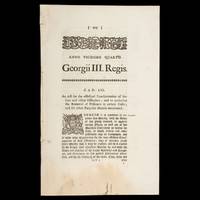
rif. 34739Drop-head title with coat of arms at head of text. London : Printed by Charles Eyre and William Strahan 1784. Foolscap folio 320 x 200 mm disbound pp 907-919 1 blank 1 colophon 1 blank; first leaf with toning to bottom margin else a fine copy. The Transportation etc. Act 1784 24 Geo. 3 c. 56 was an important piece of legislation fundamental to the establishment of a penal colony in New South Wales and subsequently Van Diemen's Land governed by New South Wales 1803-1825. 'The outbreak of the American Revolutionary War 1775-1783 halted transportation to America. Parliament claimed that ""the transportation of convicts to his Majesty's colonies and plantations in America . is found to be attended with various inconveniences particularly by depriving this kingdom of many subjects whose labour might be useful to the community and who by proper care and correction might be reclaimed from their evil course""; they then passed ""An act to authorize . the punishment by hard labour of offenders who for certain crimes are or shall become liable to be transported to any of his Majesty's colonies and plantations."" For the ensuing decade men were instead sentenced to hard labour and women were imprisoned. Finding alternative locations to send convicts was not easy and the act was extended twice by the Criminal Law Act 1778 18 Geo. 3 c. 62 and the Criminal Law Act 1779 19 Geo. 3 c. 54. This resulted in a 1779 inquiry by a Parliamentary Committee on the entire subject of transportation and punishment; initially the Penitentiary Act was passed introducing a policy of state prisons as a measure to reform the system of overcrowded prison hulks that had developed but no prisons were ever built as a result of the act. The Transportation etc. Act 1784 24 Geo. 3 c. 56 and the Transportation etc. Act 1785 25 Geo. 3 c. 46 also resulted to help alleviate overcrowding. Both acts empowered the Crown to appoint certain places within his dominions or outside them as the destination for transported criminals; the acts would move convicts around the country as needed for labour or where they could be utilized and accommodated. The overcrowding situation and the resumption of transportation would be initially resolved by Orders in Council on 6 December 1786 by the decision to establish a penal colony in New South Wales on land previously claimed for Britain in 1770 but as yet not settled by Britain or any other European power. The British policy toward Australia specifically for use as a penal colony within their overall plans to populate and colonise the continent would differentiate it from America where the use of convicts was only a minor adjunct to its overall policy.' Wikipedia unknown