4271 resultados
2016ref. NOCT17-9780134083285-199Pearson 3/5/2016. Paperback. New. 0x0x0. NEW TEXTBOOK SHIPS WITH EMAILED TRACKING FROM USA Pearson paperback
2015ref. 115168Fairchild Books. New. 2015. Paperback. 1628924705 . FREE UPGRADE to Courier/Priority Shipping Upon Request - IN STOCK AND IMMEDIATELY AVAILABLE FOR SHIPMENT - IN STOCK AND IMMEDIATELY AVAILABLE FOR SHIPMENT - Flawless copy brand new pristine never opened - -- with a bonus offer-- . Fairchild Books paperback
ref. 261218/3/88. We obtained this letter from the Kirkpatrick family and it has never before been offered for sale The Washington Summit of 1987 was meeting between President Ronald Reagan and Soviet General Secretary Mikhail Gorbachev that took place on December 8–10. Reagan and Gorbachev discussed regional conflicts in Afghanistan Central America and Southern Africa arms control issues for chemical weapons as well as conventional weapons the status of START limitation on strategy weapons negotiations and human rights. Some progress was made in these areas. The notable accomplishment of the Washington Summit was the signing of the Intermediate-Range Nuclear Forces Treaty which banned all of the two nations' land-based ballistic missiles cruise missiles and missile launchers. By 1991 almost 2700 missiles had been eliminated. Needless to say the collegial atmosphere of the talks and the feeling that Gorbachev was a man you could work with caused great excitement in the United States after half a century of Cold War. In 1988 former President Nixon wrote a book 1999: Victory Without War which offered his comprehensive strategy for the West—a vital plan of action that would help ensure peace prosperity and freedom in the next century. In it he provided commentary and suggestions in the area of his great expertise foreign policy. He began by arguing that the United States should continue to play a central international role. He contended that world peace is inseparable from world power and that real peace is not absence of conflict but living with unending conflict the natural state of world affairs. He sought to tamp down the popularity of Gorbachev whom he saw as seeking change that would permit the Soviet Union to find hegemony. Still he cogently argued for a realistic policy toward the Soviets involving a mix of deterrence competition and negotiation. His hard-line views are on display in other areas. On nuclear armaments he endorsed Reagan's plan for laser-based weapons in space ""Star Wars"" and urged ""no first-strike vulnerability."" He advocated continued support of Nicaragua's contras covert CIA actions overseas build-up of nuclear power more U.S. cruise missiles in Europe the establishment of U.S. air bases in Saudi Arabia. He blamed Africa's poverty on the terrible governments there. He strongly opposed the adoption of protectionist trade measures against Japan. Jeane Kirkpatrick was a lifelong Democrat working in both state and national campaigns including Hubert Humphrey's 1972 presidential campaign. She grew increasingly dissatisfied however with the Democratic Party's liberal faction and in 1972 cofounded the Coalition for a Democratic Majority. Her conservative writings regarding U.S. foreign policy impressed Ronald Reagan and during his 1980 presidential campaign she was selected as his foreign policy advisor. Under President Reagan she became the first woman to serve as U.S. ambassador to the United Nations serving from 1981 to 1985. She was also given cabinet rank and was also a member of Reagan’s national security team. She remained active in politics but as a Republican. Nixon sent Kirkpatrick an advance copy of his book. Typed letter signed on his letterhead New York March 8 1988 to Kirkpatrick in which he makes it clear that he does not share the excitement about Gorbachev and still distrusts the Soviets. “The enclosed proofs of 1999: Victory Without War represent my reflections after forty years of observing and participating in U.S. foreign policy. Some of our mutual friends will consider it to be too tough on the Soviets but I thought it was essential to provide an antidote for the wave of euphoria that seems to have engulfed the West since the Washington summit. I think you may find the last chapter in which I try to look into the future past the 1988 election of particular interest.” Nixon’s distrust of Gorbachev though hardly unexpected proved baseless. Under Gorbachev’s leadership the next year the Berlin Wall came down in 1990 six republics left the Soviet Union and in 1991 the Soviet Union dissolved altogether. <img class=""alignnone wp-image-25018 size-post-window"" src=""https://cdn.raabcollection.com/wp-content/uploads/20231204144051/Folder-site-11-1600x1327.jpg"" alt="""" width=""1600"" height=""1327"" /> unknown books
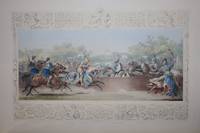
1843ref. 008069London: Colnaghi and Puckle. Printed by Cook & Co. Lithography by Day & Haghe 1843. First Edition. Half Morocco. Pebbled cloth on boards. Very Good. A magnificent souvenir of a Romantic era joust basically a re-enactment of the Medieval combat sport in keeping with the resurgent interest in the Middle Ages at the time. This tournament was sponsored by Lord Eglinton at his Scottish castle in 1839. That this massive book took four years to put together attests to its grandeur as well as the ardor of Medievalism among the aristocratic elite. Elephantine Folio 61 by 43 cm. Blank title leaf dedication leaf six paginated pages then 21 hand-colored plates each with a tissue guard and a one or two page Description of the particular plate on a single leaf until the last or 21st numbered plate which has a four page or two leaf Description after which there are two unpaginated pages of "Concluding Remarks". The lettering of text on these pages is done mostly with blue type with occasional red. The title and the plate leaves are of a card stock. The other leaves are of a more standard but not light paper weight and the tissue guards are of a similar minimally less paper weight but a glossier stock. The plates capture and probably improve upon the spirit of the event as they idealize the whole proceeding with nary a misstep all the costuming just right not a speck of dust or dirt to mar the beauty of the sport. However true these "reenactors' -- for that was what they were -- are faithful to the Medieval sport our image of jousting tournaments is probably more influenced by the prettified imitation than the original since books like this directly influenced Hollywood and the historic fiction genre more than the more esoteric surviving documents from the Middle Ages. The tournament reportedly drew an estimated 100000 spectators but it also was mocked and satirized in its day especially by members of the Whig Party. Notwithstanding that this pageant inspired others in its wake. In addition to the 21 numbered plates the title page has a large hand-colored illustrated oval centerpiece 26 cm tall surrounded by monotone decoration comprised of figures of men in armor and seraphs. All the descriptions begin with a decorated letter that is in itself an esquisite vignette. And not to be slighted each of the color plates has surrounding its primary richly colored illustration a highly decorative frame that is populated with seraphs human figures foliate ornaments escutcheons weaponry etc. etc. These frames in contrast to the central illustration are mostly black line drawings with a tinted background but there are occasional bits of fuller color -- the coat-of-arms are generally rendered so -- and in a few of the frames these full color pieces are quite numerous. Regarding the Dedication leaf the dedication is to Archibald William Montgomerie who was the Earl of Eglinton as well as the holder of other titles and was made by Edward Puckle. The gallery he headed at the time goes back to 1760 and remains to this day now known simply as Colnaghi with headquarters in Mayfair but branches in New York and other cities. Nixon 1802 - 1857 illustrated the novels of Sir Walter Scott and not coincidentally "Ivanhoe" apparently was the inspiration to stage this particular pageant. He is best known though as a designer of stained glass and his work in this medium done through a partnership of Ward and Nixon can be seen most famously in Lincoln Cathedral. As to Eglinton himself the tournament cost him dearly as he depleted his coffers of almost everything to cover the massive losses incurred by the event. All edges gilt. Gilt lettering and decoration on cover bright. Two decorative bookplates mounted onto FEP. The book besides being extra-large is also extra-heavy -- 13 lbs. 8 ou. -- and thus expect a substantial amount of extra postage will be required to ship especially internationally. Condition: Binding shows some wear with bumped edge a moderate level of spotting and other soiling most pronounced on the pebbled cloth of front board and small areas with rubbing. Hinge crack by title page. Other than occasional light stains the book is clean tight and we would say a highly attractive copy of the work. Colnaghi and Puckle. Printed by Cook & Co. Lithography by Day & Haghe unknown books
ref. 528415Louisville Kentucky: White Fields Press 1994. Unbound. Fine. Broadside. Illustrated with a portrait of Thompson by Christopher Felver. Measuring 15" x 35". Fine. Copy number 2 of 45 numbered copies Signed "HST" by Thompson. Thompson's jeremiad against Nixon first appearing in Rolling Stone upon the occasion of the latter's death here issued as #19 in the Published in Heaven Poster Series. OCLC locates only two copies. White Fields Press unknown books
1983ref. 13413JNew York: Privately Printed 1983. First Edition. Limited to 1000 copies. Signed in full by Nixon in blue ink. Actor Randolph Scott's copy with an original Typed Letter Signed from Nixon signed in blue ink “Dick” on Nixon’s personal stationery in which he presents the book to Scott. “October 10 1983. Mr. Randolph Scott. Dear Randy This is one of 1000 copies of the private limited edition of Real Peace: A Strategy for the West. Copies are being sent to a select group of government officials and opinion leaders in the United States and abroad. Little Brown and Company will publish and distribute the book in the United States and Canada in January 1984. I trust it may contribute to a better understanding of where we have been where we are and where we should go in our relations with the Soviet Union China Japan Europe and the Third World. With warm regards. Sincerely Dick.” Fine in a near fine dust jacket with slight fading to spine and one short tear. Randolph Scott was a noted Hollywood actor of the Golden Age best remembered for a series of sophisticated westerns. Randolph Scott has recently received a great deal of attention with the release and restoration of Seven Men from Now 1956 directed by Budd Boetticher and produced by John Wayne which has been unavailable for decades and the restoration and release on DVD of Ride the High Country 1962 directed by Sam Peckinpah both of which are considered among the great classics of western film. Nixon was an admirer of Scott’s films and he and Scott were long time friends. Nixon invited Scott to the White House to visit. When the Apollo Eleven astronauts first landed on the moon Scott was Nixon’s guest at the dinner Nixon held in Los Angeles to honor the astronauts return. An excellent association copy. Privately Printed unknown
1978ref. 83913New York: Grosset & Dunlap 1978. First Printing Stated. Hardcover in Slipcase. Very good. xii 1120 4 pages. Illus. index Slipcase. Signed on fep. Some spine and slipcase fading. With Letter of Authenticity. Richard Milhous Nixon January 9 1913 - April 22 1994 was the 37th president of the United States serving from 1969 until 1974. Nixon previously served as the 36th vice president from 1953 to 1961 having risen to prominence as a representative and senator. After five years in the White House that saw the conclusion to the U.S. involvement in the Vietnam War détente with the Soviet Union and China and the establishment of the Environmental Protection Agency he became the only president to resign from the office following the Watergate scandal. He graduated from Duke University School of Law in 1937 and returned to California to practice law. He and his wife Pat moved to Washington in 1942 to work for the federal government. He served on active duty in the Navy Reserve during World War II. He was elected to the House of Representatives in 1946. His pursuit of the Hiss Case established his reputation as a leading anti-Communist which elevated him to national prominence. In 1950 he was elected to the Senate. He was the running mate of Dwight D. Eisenhower subsequently serving for eight years as the vice president. In 1968 he ran for the presidency and was elected defeating Hubert Humphrey and George Wallace in a close election. Nixon ended American involvement in Vietnam in 1973 ending the military draft that same year. Nixon's visit to China in 1972 eventually led to diplomatic relations and he gained the Anti-Ballistic Missile Treaty with the Soviet Union. Four years after the Watergate scandal forced him to resign the presidency President Nixon began another comeback through the publication of this book RN: The Memoirs of Richard Nixon in 1978. The book Nixon writes is based on not only on his public papers but also on some 20000 pages of his "extensive handwritten notes" about his "ideas conversations activities and speeches" diaries that he dictated as Vice President and later as President and significantly the infamous Watergate tapes. In the book Nixon recounts his life his political successes and failures and the foreign and domestic events of his time including those leading up to his resignation as President on August 9 1974. This is a stated first printing and thus the first edition of the book published by Grosset & Dunlap. It is the publisher's deluxe cloth signed edition not the common trade edition. It is covered in dark blue buckram and embossed in gold printing on the cover and the spine. The accompanying slipcase is covered in matching dark blue buckram. In the 20 years between his presidency and his death Nixon wrote nine books and reestablished himself as a respected statesman. Nixon has signed this book in black on a page that the publisher bound between the blue front free endpaper and the half title page. Derived from a Kirkus review: "I intended to play the role of the President right to the hilt and right to the end." Thus RN whose words read less like memos here than they did in the newspaper excerpts and more like the last will and testament of a fighter who never willingly gave ground. Had he been urged to resign he avers he would have rebelled; and his review of the two occasions - the "secret fund" crisis the second v.p. nomination - when he felt himself crowded and didn't cave in back up his claim. "And tell them I know something about politics too!" he quotes himself as shouting over the phone in the first instance to a wheedling dissembling Tom Dewey. He was a mere freshman senator then built up by the Hiss case but always had ideas of his own. Not public affairs: He had nothing against communism he says until Churchill's Iron Curtain speech. So it's when he's talking politics that his celebrated caginess becomes an asset and his acumen is in evidence; and only then too is he interesting about people. Poor Rose Mary Woods for instance turns up unheralded whereas Bob Haldeman scores for spotting the potential of campaigning-by-TV not whistle-stop train. By the same token while the extensive travels are dull the final days are distinctly not: Intent on being a leader from the time when four years out of law school he was president of every organization in sight he is fully aware of what's slipping away. He records the silence - instead of the usual applause - that greeted his entrance to the last Cabinet meeting the "sober noncommittal" faces as he thanks his aides for their support; and like a prospective suicide he imagines the effect his farewell cables will have on Chou and Chairman Mao "in Cairo and Tel Aviv in Damascus and Amman" - where "eight weeks ago I had been accorded unprecedented acclaim." How the mightiest fell: the pages carry weight. Grosset & Dunlap hardcover
ref. 261218/3/88. We obtained this letter from the Kirkpatrick family and it has never before been offered for sale The Washington Summit of 1987 was meeting between President Ronald Reagan and Soviet General Secretary Mikhail Gorbachev that took place on December 8–10. Reagan and Gorbachev discussed regional conflicts in Afghanistan Central America and Southern Africa arms control issues for chemical weapons as well as conventional weapons the status of START limitation on strategy weapons negotiations and human rights. Some progress was made in these areas. The notable accomplishment of the Washington Summit was the signing of the Intermediate-Range Nuclear Forces Treaty which banned all of the two nations' land-based ballistic missiles cruise missiles and missile launchers. By 1991 almost 2700 missiles had been eliminated. Needless to say the collegial atmosphere of the talks and the feeling that Gorbachev was a man you could work with caused great excitement in the United States after half a century of Cold War. In 1988 former President Nixon wrote a book 1999: Victory Without War which offered his comprehensive strategy for the West—a vital plan of action that would help ensure peace prosperity and freedom in the next century. In it he provided commentary and suggestions in the area of his great expertise foreign policy. He began by arguing that the United States should continue to play a central international role. He contended that world peace is inseparable from world power and that real peace is not absence of conflict but living with unending conflict the natural state of world affairs. He sought to tamp down the popularity of Gorbachev whom he saw as seeking change that would permit the Soviet Union to find hegemony. Still he cogently argued for a realistic policy toward the Soviets involving a mix of deterrence competition and negotiation. His hard-line views are on display in other areas. On nuclear armaments he endorsed Reagan's plan for laser-based weapons in space ""Star Wars"" and urged ""no first-strike vulnerability."" He advocated continued support of Nicaragua's contras covert CIA actions overseas build-up of nuclear power more U.S. cruise missiles in Europe the establishment of U.S. air bases in Saudi Arabia. He blamed Africa's poverty on the terrible governments there. He strongly opposed the adoption of protectionist trade measures against Japan. Jeane Kirkpatrick was a lifelong Democrat working in both state and national campaigns including Hubert Humphrey's 1972 presidential campaign. She grew increasingly dissatisfied however with the Democratic Party's liberal faction and in 1972 cofounded the Coalition for a Democratic Majority. Her conservative writings regarding U.S. foreign policy impressed Ronald Reagan and during his 1980 presidential campaign she was selected as his foreign policy advisor. Under President Reagan she became the first woman to serve as U.S. ambassador to the United Nations serving from 1981 to 1985. She was also given cabinet rank and was also a member of Reagan’s national security team. She remained active in politics but as a Republican. Nixon sent Kirkpatrick an advance copy of his book. Typed letter signed on his letterhead New York March 8 1988 to Kirkpatrick in which he makes it clear that he does not share the excitement about Gorbachev and still distrusts the Soviets. “The enclosed proofs of 1999: Victory Without War represent my reflections after forty years of observing and participating in U.S. foreign policy. Some of our mutual friends will consider it to be too tough on the Soviets but I thought it was essential to provide an antidote for the wave of euphoria that seems to have engulfed the West since the Washington summit. I think you may find the last chapter in which I try to look into the future past the 1988 election of particular interest.” Nixon’s distrust of Gorbachev though hardly unexpected proved baseless. Under Gorbachev’s leadership the next year the Berlin Wall came down in 1990 six republics left the Soviet Union and in 1991 the Soviet Union dissolved altogether. <img class=""alignnone wp-image-25018 size-post-window"" src=""https://cdn.raabcollection.com/wp-content/uploads/20231204144051/Folder-site-11-1600x1327.jpg"" alt="""" width=""1600"" height=""1327"" /> unknown
1843ref. 008069London: Colnaghi and Puckle. Printed by Cook & Co. Lithography by Day & Haghe 1843. First Edition. Half Morocco. Pebbled cloth on boards. Very Good. A magnificent souvenir of a Romantic era joust basically a re-enactment of the Medieval combat sport in keeping with the resurgent interest in the Middle Ages at the time. This tournament was sponsored by Lord Eglinton at his Scottish castle in 1839. That this massive book took four years to put together attests to its grandeur as well as the ardor of Medievalism among the aristocratic elite. Elephantine Folio 61 by 43 cm. Blank title leaf dedication leaf six paginated pages then 21 hand-colored plates each with a tissue guard and a one or two page Description of the particular plate on a single leaf until the last or 21st numbered plate which has a four page or two leaf Description after which there are two unpaginated pages of "Concluding Remarks". The lettering of text on these pages is done mostly with blue type with occasional red. The title and the plate leaves are of a card stock. The other leaves are of a more standard but not light paper weight and the tissue guards are of a similar minimally less paper weight but a glossier stock. The plates capture and probably improve upon the spirit of the event as they idealize the whole proceeding with nary a misstep all the costuming just right not a speck of dust or dirt to mar the beauty of the sport. However true these "reenactors' -- for that was what they were -- are faithful to the Medieval sport our image of jousting tournaments is probably more influenced by the prettified imitation than the original since books like this directly influenced Hollywood and the historic fiction genre more than the more esoteric surviving documents from the Middle Ages. The tournament reportedly drew an estimated 100000 spectators but it also was mocked and satirized in its day especially by members of the Whig Party. Notwithstanding that this pageant inspired others in its wake. In addition to the 21 numbered plates the title page has a large hand-colored illustrated oval centerpiece 26 cm tall surrounded by monotone decoration comprised of figures of men in armor and seraphs. All the descriptions begin with a decorated letter that is in itself an esquisite vignette. And not to be slighted each of the color plates has surrounding its primary richly colored illustration a highly decorative frame that is populated with seraphs human figures foliate ornaments escutcheons weaponry etc. etc. These frames in contrast to the central illustration are mostly black line drawings with a tinted background but there are occasional bits of fuller color -- the coat-of-arms are generally rendered so -- and in a few of the frames these full color pieces are quite numerous. Regarding the Dedication leaf the dedication is to Archibald William Montgomerie who was the Earl of Eglinton as well as the holder of other titles and was made by Edward Puckle. The gallery he headed at the time goes back to 1760 and remains to this day now known simply as Colnaghi with headquarters in Mayfair but branches in New York and other cities. Nixon 1802 - 1857 illustrated the novels of Sir Walter Scott and not coincidentally "Ivanhoe" apparently was the inspiration to stage this particular pageant. He is best known though as a designer of stained glass and his work in this medium done through a partnership of Ward and Nixon can be seen most famously in Lincoln Cathedral. As to Eglinton himself the tournament cost him dearly as he depleted his coffers of almost everything to cover the massive losses incurred by the event. All edges gilt. Gilt lettering and decoration on cover bright. Two decorative bookplates mounted onto FEP. The book besides being extra-large is also extra-heavy -- 13 lbs. 8 ou. -- and thus expect a substantial amount of extra postage will be required to ship especially internationally. Condition: Binding shows some wear with bumped edge a moderate level of spotting and other soiling most pronounced on the pebbled cloth of front board and small areas with rubbing. Hinge crack by title page. Other than occasional light stains the book is clean tight and we would say a highly attractive copy of the work. Colnaghi and Puckle. Printed by Cook & Co. Lithography by Day & Haghe unknown
ref. 528415Louisville Kentucky: White Fields Press 1994. Unbound. Fine. Broadside. Illustrated with a portrait of Thompson by Christopher Felver. Measuring 15" x 35". Fine. Copy number 2 of 45 numbered copies Signed "HST" by Thompson. Thompson's jeremiad against Nixon first appearing in Rolling Stone upon the occasion of the latter's death here issued as #19 in the Published in Heaven Poster Series. OCLC locates only two copies. White Fields Press unknown
ref. 74715London Maggs Brothers 1956 Auflage: 1. Halbpergament gebunden; blaues Überzugspapier Kopfgoldschnitt blaues goldgeprägtes Rückenschild / Anz. Seiten: 250 / 295 x 345 cm / mit 3 montierten Farbtafeln und zahlreichen Schwarzweisstafeln / Zustand: gut leichte Gebrauchsspuren; Einband etwas berieben und leicht fleckig Goldprägung am Rückenschild im oberen Bereich etwas abgerieben Vorsatz minim fleckig London, Maggs Brothers, 1956, Auflage: 1. unknown
ref. 366707Washington D.C.: The White House 1972. 12 color prints with a 1p. TNS from Ken W. Clawson Deputy Director of Communications with 2 pp. typescript description. 11 x 14 inches. Very good in original mailing envelope photo C9253-07 is damaged with paper stuck to the upper corner. 12 color prints with a 1p. TNS from Ken W. Clawson Deputy Director of Communications with 2 pp. typescript description. 11 x 14 inches. A collection o photos taken from Nixon's Russia visit during which he and Brezhneve signed the SALT treaty and laid the groundwork for a joint space flight set to take place in 1975 both important conciliatory steps during the Cold War. The photos were sent to the Atlanta Journal newspaper during the first weeks of the Watergate scandal. The White House] unknown books
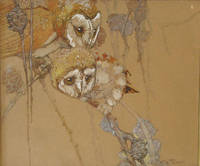
1930ref. 132091930. Watercolor and pencil heightened with white signed "K. Nixon". Matted and framed. 1 vols. Image 10-1/2 x 12-3/4 inches. Matted and framed. Watercolor and pencil heightened with white signed "K. Nixon". Matted and framed. 1 vols. Image 10-1/2 x 12-3/4 inches. Nixon was a talented British animal illustrator noted for an orientalist approach and sharp clarity to the subject reminiscent of Japanese woodblock prints. She lived in India for 25 years where she illustrated for The Time of India Press designed 30 nature posters for the Indian State Railways painted horse portraits and a mural of wild ducks for the Bombay Natural History Museum. After returning to England she wrote and illustrated numerous children's animal stories and painted animal portraits. She was the recipient of many awards and medals and made an 'academic of Italy with Gold Medal' in 1980. unknown books
ref. 528414Louisville Kentucky: White Fields Press 1994. Unbound. Fine. Broadside. Illustrated with a portrait of Thompson by Christopher Felver. Measuring 15" x 35". Fine. Copy number 1 of 45 numbered copies Signed "HST" by Thompson. Thompson's jeremiad against Nixon first appearing in Rolling Stone upon the occasion of the latter's death here issued as #19 in the Published in Heaven Poster Series. OCLC locates only two copies. White Fields Press unknown books
ref. 366707Washington D.C.: The White House 1972. 12 color prints with a 1p. TNS from Ken W. Clawson Deputy Director of Communications with 2 pp. typescript description. 11 x 14 inches. Very good in original mailing envelope photo C9253-07 is damaged with paper stuck to the upper corner. 12 color prints with a 1p. TNS from Ken W. Clawson Deputy Director of Communications with 2 pp. typescript description. 11 x 14 inches. A collection o photos taken from Nixon's Russia visit during which he and Brezhneve signed the SALT treaty and laid the groundwork for a joint space flight set to take place in 1975 both important conciliatory steps during the Cold War. The photos were sent to the Atlanta Journal newspaper during the first weeks of the Watergate scandal. The White House] unknown
1930ref. 132091930. Watercolor and pencil heightened with white signed "K. Nixon". Matted and framed. 1 vols. Image 10-1/2 x 12-3/4 inches. Matted and framed. Watercolor and pencil heightened with white signed "K. Nixon". Matted and framed. 1 vols. Image 10-1/2 x 12-3/4 inches. Nixon was a talented British animal illustrator noted for an orientalist approach and sharp clarity to the subject reminiscent of Japanese woodblock prints. She lived in India for 25 years where she illustrated for The Time of India Press designed 30 nature posters for the Indian State Railways painted horse portraits and a mural of wild ducks for the Bombay Natural History Museum. After returning to England she wrote and illustrated numerous children's animal stories and painted animal portraits. She was the recipient of many awards and medals and made an 'academic of Italy with Gold Medal' in 1980. unknown
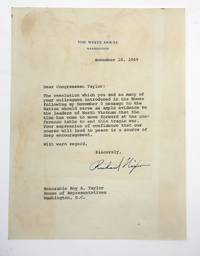
1969ref. 30511969. Very Good. Contents Summary: A call to end the Vietnam war based on a resolution Roy A. Taylor and his colleagues introduced to the House following President Richard Nixon’s November 3rd message to the Nation. Typed Letter Signed ‘Richard Nixon’ in black ink. One Page 6 ¾” x 8 7/8” Blind stamped of official seal ‘THE WHITE HOUSE WASHINGTON’. Dated: November 10 1969. Slightly toned. 1” crease top left. Back stained from glue application visible from front. Very Good Letter in full: "Dear Congressman Taylor: The resolution which you and so many of your colleagues introduced in the House following my November 3 message to the Nation should serve as ample evidence to the leaders of North Vietnam that the time has come to move forward at the conference table to end this tragic war. Your expression of confidence that our course will lead to peace is a source of deep encouragement. With warm regard Sincerely Richard Nixon Honorable Roy A. Taylor House of Representatives Washington D.C." no envelope. unknown
ref. 30521971. Very Good. Contents Summary: By a vote of 254 to 158 the House rejected the Nedzi-Whalen Amendment that would have prohibited the use of funds to be used in Southeast Asia particularly Vietnam after the end of 1971. It was created by opponents of the Vietnam War who supported the reduction of the military budget and a timetable of American forces in Vietnam. Nixon states that these proposals jeopardize the progress of American withdrawal. Typed Typed Letter Signed ‘RN’ in black ink. One Page 6 ¾” x 8 7/8”. Blind stamped of official seal ‘THE WHITE HOUSE WASHINGTON’. Dated: June 24 1971. Slightly toned. Back stained from glue application. Very Good. Dated: June 24 Letter in full: "June 24 1971 Dear Roy: During consideration of the military procurement bill for the coming fiscal year a number of amendments were proposed seeking to legislate a deadline for American involvement in Indochina. The debate centered on the Nedzi-Whalen amendment which the House rejected June 17th by a vote of 254 to 158. This action by the House of Representatives helped materially to strengthen the efforts of this Administration to achieve a cease-fire the release of American prisoners and the negotiation of a just peace. I appreciate very much your vote and those cast by 253 of your colleagues. While we continue to reduce American forces in Indochina various proposals may be advanced in Congress similar to Nedzi-Whalen. Their adoption would seriously jeopardize the progress we are making in ending American involvement in Vietnam and in achieving a just peace. I look forward to working with you in the months ahead so that together we might increase the chances not only of ending this war but also of ensuring that other Americans will not have to fight other wars in the future. Sincerely RN Honorable Roy A. Taylor House of Representatives Washington D.C. unknown
ref. 528414Louisville Kentucky: White Fields Press 1994. Unbound. Fine. Broadside. Illustrated with a portrait of Thompson by Christopher Felver. Measuring 15" x 35". Fine. Copy number 1 of 45 numbered copies Signed "HST" by Thompson. Thompson's jeremiad against Nixon first appearing in Rolling Stone upon the occasion of the latter's death here issued as #19 in the Published in Heaven Poster Series. OCLC locates only two copies. White Fields Press unknown
ref. 1378New York: Arbor House 1985. First Edition First Printing. Hardcover. Near Fine/Near Fine. 5 3/4 X 8 1/2 Inches. 240 PP. Signed and inscribed to General "Jimmy" Doolittle by President Richard Nixon directly on the half title-page. Signed "To General James Doolittle with appreciation for his years of dedicated service to the nation - far beyond the call of duty Love Richard Nixon 4-11-85." First printing copy with full and complete numberline to the "1" on the copyright page. Original price of $14.95 intact on front flap of DJ. General James "Jimmy" Doolittle was a career officer in the US Air Corps and Air Force. His service to the country began as a flight and gunnery instructor during WWI and continued through the WWII years. He is most widely recognized as the leader and namesake of the famous "Doolittle Raiders" of 1942. This raid of 16 B-25 bombers was the first air attack on the Japanese after the bombing of Pearl Harbor in late 1941. Doolittle was the recipient of the Congressional Medal of Honor and the Presidential Medal of Freedom among many other accolades. His is one of the most widely recognized names in United States military history. An association copy of this magnitude is a true rarity. Arbor House hardcover
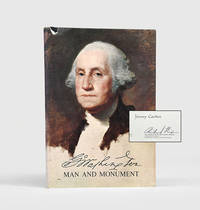
ref. 194657Washington DC: Washington National Monument Association 1973. From the 37th to the 39th President Presentation copy from President Richard Nixon to Jimmy Carter with the presentation bookplate on the recto of the front free endpaper: "This copy of G. Washington: Man and Monument is presented to Jimmy Carter The White House Washington D.C. January 1974 Richard Nixon" signature possibly autopen. Carter's posthumous stamp "from the library of Jimmy Carter" is on the verso. Freidel was a leading political historian; Aikman later worked with the Carters on the revised edition of The Living White House. Their book combines a brief biography of Washington with a history of the construction of the Washington Monument. This is the second edition following the first of 1965. The publisher was an affiliate of the Washington National Monument Society. Nixon was ex officio president of the Society and Carter as Governor of Georgia one of its ex officio vice-presidents: the Society's 1859 charter designated the President of the United States as president and the state governors as vice-presidents. Carter's ink stamp was added ahead of its inclusion in the posthumous sale of Carter's library at Christie's with proceeds benefiting the Carter Family Foundation. Octavo. Original black cloth front cover lettered in gilt. With dust jacket. Chip to unclipped jacket some wear: a fine copy in very good jacket. hardcover
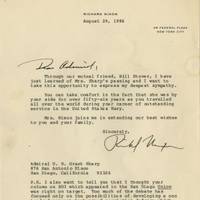
1986ref. 941029/08/1986. ""Too much of the debate has focused only on the possibilities of developing a one hundred percent leak-proof population defense which even the strongest proponents agree could not be developed until next century."" President Nixon made his mark in the area of foreign policy. Although he had made his own career as a militant opponent of Communism Nixon saw opportunities to reduce the temperature of the Cold War by improving relations with the Soviet Union. One of these was the Strategic Arms Limitation Talks negotiations which were a series of meetings beginning in Helsinki that lasted from November 17 1969 until May 1972. After a long deadlock the first results of SALT I came in May 1971 when an agreement was reached over anti-ballistic missiles systems. Further discussion brought the negotiations to an end in Moscow on May 26 1972 when Richard Nixon and Leonid Brezhnev signed both the Anti-Ballistic Missile Treaty and the Interim Agreement Between The United States of America and The Union of Soviet Socialist Republics on Certain Measures With Respect to the Limitation of Strategic Offensive Arms. These served to slow the growth in nuclear weapons and halt extensive proliferation. A premise of the Cold War mutually assured destruction meant simply that neither the US nor the USSR would attack the other because it would ensure that both would be obliterated. You could get the first shot in but unless you wiped out the entire capacity of the other side in one blow you would ensure your own demise. In 1969 Nixon announced an anti-ballistic missile defense system called Safeguard which aimed to protect the deterrent nuclear force of the United States its missile fields to maintain that deterrent capacity. This happened at the same time as the country was publicly debating the possibility of protecting entire US cities in a shield the technology of which did not exist. Safeguard never fully operated at its intended capacity and in fact was shut down soon after it launched. Ronald Reagan was not an active proponent of mutually assured destruction MAD. In 1983 he proposed the Strategic Defense Initiative SDI to use ground-based and space-based systems to protect the United States from attack by ballistic strategic nuclear weapons. The initiative focused on strategic defense rather than the prior strategic offense doctrine of MAD. It was dubbed ""Star Wars"" by critics. The goal was to neutralize the Soviets' nuclear capacity regardless of the success of ongoing negotiations. The Soviets strongly opposed the Strategic Defense Initiative as they could not afford to match the U.S. in this area and they felt that if successful the concept of mutually assured destruction would be lost and the U.S. would be in a dominant position. In November of 1985 Gorbachev and Reagan were to meet in Geneva for a major summit. Both the Soviet Union and the United States were seeking to cut the number of nuclear weapons with the Soviets seeking to halve the number of nuclear-equipped bombers and missiles and the U.S. desiring to ensure that neither side gained a first-strike advantage and to protect rights to the Strategic Defense Initiative. These ideas of arms limitations and strategic defense were the cornerstones to the Cold War negotiations between the two global powers in a bi-polar world. One of those who joined the debate was U.S. Grant Sharp a 4-star admiral who was Commander in Chief of the US Pacific Fleet and of US Pacific Command including during the Gulf of Tonkin Incident. He wrote a piece in the San Diego papers which advocated the protection of US-based counter-force assets which touched on a subject central to Nixon's presidency and close to his heart missiles that would serve as a first-strike deterrent. Typed letter signed August 29 1986 New York City to Admiral U.S. Grant Sharp. ""Through our mutual friend Bill Stover I have just learned of Mrs. Sharp's passing and I want to take this opportunity to express my deepest sympathy. You can take comfort in the fact that she was by your side for over fifty-six years as you traveled all over the world during your career of outstanding service in the United States Navy. Mrs. Nixon joins me in extending our best wishes to you and your family. Sincerely Richard Nixon. ""P.S. I also want to you that I thought your column on SDI which appeared in the San Diego Union was right on target. Too much of the debate has focused only on the possibilities of developing a one hundred percent leak-proof population defense which even the strongest proponents agree could not be developed until next century. On the other hand a defense of our counter-force missile silos which presently are vulnerable to a first strike from Soviet Union's SS-18s could be deployed in the near future. Unless the Soviet Union agrees to offensive cuts which would remove its first-strike capability we have no choice but to go forward with an SDI program which would deny them that capacity."" unknown books
1959ref. 884698Washington D.C. 1959. To columnist and television reporter of Meet the Press Lawrence E. Spivak on Vice Presidential stationery with a 5 page memo carbon unsigned describing his recent meeting with Fidel Castro. Nixon admires Castro's charisma and bravery here in this memorandum summarizing his discussion with the Cuban leader on April 19 1959. Nixon characterizes him as having" those indefinable qualities which make him a leader of men." But there was also much that disturbed him. Everything that Castro was doing from suspending elections to the executions of political opponents he justified as carrying out "the will of the people." Nixon says: "this almost slavish subservience to prevailing majority opinion - the voice of the mob - rather than his naive attitude toward Communism and his obvious lack of understanding of even the most elementary economic principles which concerned me most in evaluating what kind of a leader he might eventually turn out to be." In his conclusion Nixon says that because Castro has "the power to lead.we have no choice but at least to try to orient him in the right direction." Together 6 pages attached memo on carbons with some small glue remnant on the lower left corners fifth page of memo laid down with some glue residue showing. An historically important set of documents. 4to. unknown
1986ref. 941029/08/1986. ""Too much of the debate has focused only on the possibilities of developing a one hundred percent leak-proof population defense which even the strongest proponents agree could not be developed until next century."" President Nixon made his mark in the area of foreign policy. Although he had made his own career as a militant opponent of Communism Nixon saw opportunities to reduce the temperature of the Cold War by improving relations with the Soviet Union. One of these was the Strategic Arms Limitation Talks negotiations which were a series of meetings beginning in Helsinki that lasted from November 17 1969 until May 1972. After a long deadlock the first results of SALT I came in May 1971 when an agreement was reached over anti-ballistic missiles systems. Further discussion brought the negotiations to an end in Moscow on May 26 1972 when Richard Nixon and Leonid Brezhnev signed both the Anti-Ballistic Missile Treaty and the Interim Agreement Between The United States of America and The Union of Soviet Socialist Republics on Certain Measures With Respect to the Limitation of Strategic Offensive Arms. These served to slow the growth in nuclear weapons and halt extensive proliferation. A premise of the Cold War mutually assured destruction meant simply that neither the US nor the USSR would attack the other because it would ensure that both would be obliterated. You could get the first shot in but unless you wiped out the entire capacity of the other side in one blow you would ensure your own demise. In 1969 Nixon announced an anti-ballistic missile defense system called Safeguard which aimed to protect the deterrent nuclear force of the United States its missile fields to maintain that deterrent capacity. This happened at the same time as the country was publicly debating the possibility of protecting entire US cities in a shield the technology of which did not exist. Safeguard never fully operated at its intended capacity and in fact was shut down soon after it launched. Ronald Reagan was not an active proponent of mutually assured destruction MAD. In 1983 he proposed the Strategic Defense Initiative SDI to use ground-based and space-based systems to protect the United States from attack by ballistic strategic nuclear weapons. The initiative focused on strategic defense rather than the prior strategic offense doctrine of MAD. It was dubbed ""Star Wars"" by critics. The goal was to neutralize the Soviets' nuclear capacity regardless of the success of ongoing negotiations. The Soviets strongly opposed the Strategic Defense Initiative as they could not afford to match the U.S. in this area and they felt that if successful the concept of mutually assured destruction would be lost and the U.S. would be in a dominant position. In November of 1985 Gorbachev and Reagan were to meet in Geneva for a major summit. Both the Soviet Union and the United States were seeking to cut the number of nuclear weapons with the Soviets seeking to halve the number of nuclear-equipped bombers and missiles and the U.S. desiring to ensure that neither side gained a first-strike advantage and to protect rights to the Strategic Defense Initiative. These ideas of arms limitations and strategic defense were the cornerstones to the Cold War negotiations between the two global powers in a bi-polar world. One of those who joined the debate was U.S. Grant Sharp a 4-star admiral who was Commander in Chief of the US Pacific Fleet and of US Pacific Command including during the Gulf of Tonkin Incident. He wrote a piece in the San Diego papers which advocated the protection of US-based counter-force assets which touched on a subject central to Nixon's presidency and close to his heart missiles that would serve as a first-strike deterrent. Typed letter signed August 29 1986 New York City to Admiral U.S. Grant Sharp. ""Through our mutual friend Bill Stover I have just learned of Mrs. Sharp's passing and I want to take this opportunity to express my deepest sympathy. You can take comfort in the fact that she was by your side for over fifty-six years as you traveled all over the world during your career of outstanding service in the United States Navy. Mrs. Nixon joins me in extending our best wishes to you and your family. Sincerely Richard Nixon. ""P.S. I also want to you that I thought your column on SDI which appeared in the San Diego Union was right on target. Too much of the debate has focused only on the possibilities of developing a one hundred percent leak-proof population defense which even the strongest proponents agree could not be developed until next century. On the other hand a defense of our counter-force missile silos which presently are vulnerable to a first strike from Soviet Union's SS-18s could be deployed in the near future. Unless the Soviet Union agrees to offensive cuts which would remove its first-strike capability we have no choice but to go forward with an SDI program which would deny them that capacity."" unknown
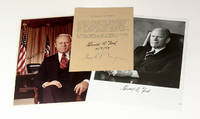
ref. 134249Typescript reproduction of the final paragraphs of Ford's 1974 Proclamation of Pardon granting a full and unconditional pardon to Richard Nixon his predecessor for any crimes that he might have committed against the United States as president. One page typescript. Signed and dated by Gerald Ford "Gerald Ford 11/5/79" and Richard Nixon. Accompanied by two glossy photographs signed by Ford. In fine condition. The signed pardon measures 7.5 by 5.5 inches. The photographs measure 8 inches by 10 inches. Exceptionally rare. Gerald Ford issued Proclamation 4311 on September 8 1974 granting a full and unconditional pardon to Richard Nixon his predecessor for any crimes that he might have committed against the United States as president. In particular the pardon covered Nixon's actions during the Watergate scandal. In a televised broadcast to the nation Ford who had succeeded to the presidency upon Nixon's resignation explained that he felt the pardon was in the best interests of the country and that the Nixon family's situation was "a tragedy in which we all have played a part. It could go on and on and on or someone must write the end to it. I have concluded that only I can do that and if I can I must." unknown