Thomas Nixon CarverBiblio.com

4236 risultati
rif. 1528064348.Ghardcover. Good. Access codes and supplements are not guaranteed with used items. May be an ex-library book. hardcover
rif. 1330229126.Gpaperback. Good. Access codes and supplements are not guaranteed with used items. May be an ex-library book. paperback
1996rif. Q-0262522179The MIT Press 1996-10-01. Paperback. New. In shrink wrap. Looks like an interesting title! The MIT Press paperback
2013rif. x-1461451906Springer Verlag 2013. Hardcover. New. 2013 edition. 200 pages. 9.25x6.25x0.50 inches. Springer Verlag hardcover
2012rif. x-1489996796Springer Verlag 2012. Paperback. New. 186 pages. 9.25x6.10x0.46 inches. Springer Verlag paperback
rif. 1334496862.Gpaperback. Good. Access codes and supplements are not guaranteed with used items. May be an ex-library book. paperback
rif. 0666178860.Ghardcover. Good. Access codes and supplements are not guaranteed with used items. May be an ex-library book. hardcover
rif. 1025514475.Ghardcover. Good. Access codes and supplements are not guaranteed with used items. May be an ex-library book. hardcover
1924rif. 70396New York: Macmillan 1924. Hard cover. Very Good. 0 Very good. No dust jacket. hb vg bk/ no dj clean and tight blue cloth cover. Macmillan hardcover
1975rif. 749455PN. New. 1975. Soft Cover. Date is original print. This is a reprint edition. . PN paperback
1989rif. 798345PN. New. 1989. Soft Cover. Date is original print. This is a reprint edition. . PN paperback
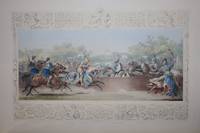
1843rif. 008069London: Colnaghi and Puckle. Printed by Cook & Co. Lithography by Day & Haghe 1843. First Edition. Half Morocco. Pebbled cloth on boards. Very Good. A magnificent souvenir of a Romantic era joust basically a re-enactment of the Medieval combat sport in keeping with the resurgent interest in the Middle Ages at the time. This tournament was sponsored by Lord Eglinton at his Scottish castle in 1839. That this massive book took four years to put together attests to its grandeur as well as the ardor of Medievalism among the aristocratic elite. Elephantine Folio 61 by 43 cm. Blank title leaf dedication leaf six paginated pages then 21 hand-colored plates each with a tissue guard and a one or two page Description of the particular plate on a single leaf until the last or 21st numbered plate which has a four page or two leaf Description after which there are two unpaginated pages of "Concluding Remarks". The lettering of text on these pages is done mostly with blue type with occasional red. The title and the plate leaves are of a card stock. The other leaves are of a more standard but not light paper weight and the tissue guards are of a similar minimally less paper weight but a glossier stock. The plates capture and probably improve upon the spirit of the event as they idealize the whole proceeding with nary a misstep all the costuming just right not a speck of dust or dirt to mar the beauty of the sport. However true these "reenactors' -- for that was what they were -- are faithful to the Medieval sport our image of jousting tournaments is probably more influenced by the prettified imitation than the original since books like this directly influenced Hollywood and the historic fiction genre more than the more esoteric surviving documents from the Middle Ages. The tournament reportedly drew an estimated 100000 spectators but it also was mocked and satirized in its day especially by members of the Whig Party. Notwithstanding that this pageant inspired others in its wake. In addition to the 21 numbered plates the title page has a large hand-colored illustrated oval centerpiece 26 cm tall surrounded by monotone decoration comprised of figures of men in armor and seraphs. All the descriptions begin with a decorated letter that is in itself an esquisite vignette. And not to be slighted each of the color plates has surrounding its primary richly colored illustration a highly decorative frame that is populated with seraphs human figures foliate ornaments escutcheons weaponry etc. etc. These frames in contrast to the central illustration are mostly black line drawings with a tinted background but there are occasional bits of fuller color -- the coat-of-arms are generally rendered so -- and in a few of the frames these full color pieces are quite numerous. Regarding the Dedication leaf the dedication is to Archibald William Montgomerie who was the Earl of Eglinton as well as the holder of other titles and was made by Edward Puckle. The gallery he headed at the time goes back to 1760 and remains to this day now known simply as Colnaghi with headquarters in Mayfair but branches in New York and other cities. Nixon 1802 - 1857 illustrated the novels of Sir Walter Scott and not coincidentally "Ivanhoe" apparently was the inspiration to stage this particular pageant. He is best known though as a designer of stained glass and his work in this medium done through a partnership of Ward and Nixon can be seen most famously in Lincoln Cathedral. As to Eglinton himself the tournament cost him dearly as he depleted his coffers of almost everything to cover the massive losses incurred by the event. All edges gilt. Gilt lettering and decoration on cover bright. Two decorative bookplates mounted onto FEP. The book besides being extra-large is also extra-heavy -- 13 lbs. 8 ou. -- and thus expect a substantial amount of extra postage will be required to ship especially internationally. Condition: Binding shows some wear with bumped edge a moderate level of spotting and other soiling most pronounced on the pebbled cloth of front board and small areas with rubbing. Hinge crack by title page. Other than occasional light stains the book is clean tight and we would say a highly attractive copy of the work. Colnaghi and Puckle. Printed by Cook & Co. Lithography by Day & Haghe unknown
1843rif. 008069London: Colnaghi and Puckle. Printed by Cook & Co. Lithography by Day & Haghe 1843. First Edition. Half Morocco. Pebbled cloth on boards. Very Good. A magnificent souvenir of a Romantic era joust basically a re-enactment of the Medieval combat sport in keeping with the resurgent interest in the Middle Ages at the time. This tournament was sponsored by Lord Eglinton at his Scottish castle in 1839. That this massive book took four years to put together attests to its grandeur as well as the ardor of Medievalism among the aristocratic elite. Elephantine Folio 61 by 43 cm. Blank title leaf dedication leaf six paginated pages then 21 hand-colored plates each with a tissue guard and a one or two page Description of the particular plate on a single leaf until the last or 21st numbered plate which has a four page or two leaf Description after which there are two unpaginated pages of "Concluding Remarks". The lettering of text on these pages is done mostly with blue type with occasional red. The title and the plate leaves are of a card stock. The other leaves are of a more standard but not light paper weight and the tissue guards are of a similar minimally less paper weight but a glossier stock. The plates capture and probably improve upon the spirit of the event as they idealize the whole proceeding with nary a misstep all the costuming just right not a speck of dust or dirt to mar the beauty of the sport. However true these "reenactors' -- for that was what they were -- are faithful to the Medieval sport our image of jousting tournaments is probably more influenced by the prettified imitation than the original since books like this directly influenced Hollywood and the historic fiction genre more than the more esoteric surviving documents from the Middle Ages. The tournament reportedly drew an estimated 100000 spectators but it also was mocked and satirized in its day especially by members of the Whig Party. Notwithstanding that this pageant inspired others in its wake. In addition to the 21 numbered plates the title page has a large hand-colored illustrated oval centerpiece 26 cm tall surrounded by monotone decoration comprised of figures of men in armor and seraphs. All the descriptions begin with a decorated letter that is in itself an esquisite vignette. And not to be slighted each of the color plates has surrounding its primary richly colored illustration a highly decorative frame that is populated with seraphs human figures foliate ornaments escutcheons weaponry etc. etc. These frames in contrast to the central illustration are mostly black line drawings with a tinted background but there are occasional bits of fuller color -- the coat-of-arms are generally rendered so -- and in a few of the frames these full color pieces are quite numerous. Regarding the Dedication leaf the dedication is to Archibald William Montgomerie who was the Earl of Eglinton as well as the holder of other titles and was made by Edward Puckle. The gallery he headed at the time goes back to 1760 and remains to this day now known simply as Colnaghi with headquarters in Mayfair but branches in New York and other cities. Nixon 1802 - 1857 illustrated the novels of Sir Walter Scott and not coincidentally "Ivanhoe" apparently was the inspiration to stage this particular pageant. He is best known though as a designer of stained glass and his work in this medium done through a partnership of Ward and Nixon can be seen most famously in Lincoln Cathedral. As to Eglinton himself the tournament cost him dearly as he depleted his coffers of almost everything to cover the massive losses incurred by the event. All edges gilt. Gilt lettering and decoration on cover bright. Two decorative bookplates mounted onto FEP. The book besides being extra-large is also extra-heavy -- 13 lbs. 8 ou. -- and thus expect a substantial amount of extra postage will be required to ship especially internationally. Condition: Binding shows some wear with bumped edge a moderate level of spotting and other soiling most pronounced on the pebbled cloth of front board and small areas with rubbing. Hinge crack by title page. Other than occasional light stains the book is clean tight and we would say a highly attractive copy of the work. Colnaghi and Puckle. Printed by Cook & Co. Lithography by Day & Haghe unknown books
2004rif. Q-1844493806Omnibus Press 2004-10-01. Hardcover. New. New. In shrink wrap. Looks like an interesting title! Omnibus Press hardcover
1970rif. 004770New York, Anchor Books, 1970. Broschiert Gr. 8° 0
rif. 3639237137.Gpaperback. Good. Access codes and supplements are not guaranteed with used items. May be an ex-library book. paperback
rif. 1498451896.Ghardcover. Good. Access codes and supplements are not guaranteed with used items. May be an ex-library book. hardcover
2012rif. eyeoftheworldgraphic2_22Rare stated 1st edition thus hardback published by Tor Books in 2012. New and unread and provided in like condition. Dust jacket is now in a removable protective covering. Tor Books hardcover
2013rif. eyeworldgraphic3_aug23Rare stated 1st edition thus hardback published by Tor in 2013. New and unread and provided in like condition. Dust jacket is now in a removable protective covering. Tor hardcover
1960rif. 96692FBNew York:, Viking, 1960. xiii (1), 306 Seiten, farbig illustrierte OKart., 19,5 x 12,5 cm.
1952rif. BOOKS005293Royal octavo 9 3/4" x 7" issued in wrappers. Volume 8 numbers 2 through 20 lacks number 1. Published bi-monthly. Betts: 42-9 First edition. Fairy Chess Review FCR was a magazine that was devoted principally to fairy chess problems but also included extensive original results on related questions in mathematical recreations such as knight's tours and polyominos under the title of "dissections" as well as much else such as chess-related word puzzles. It appeared six times per year and nine volumes were published from 1930 to 1958. Although they are often referred to under the title Fairy Chess Review the first two volumes August 1930 to June 1936 in fact bore the title The Problemist Fairy Chess Supplement. These were published by the British Chess Problem Society BCPS as an offshoot of their magazine The Problemist which began in 1926. The first two volumes were supported financially by the Falmouth businessman Charles Masson Fox who was also a problemist who died in 1936. From volume 3 onward the FCR was independent of the BCPS although most of its contributors were members. The editor from 1930 until August 1951 was Thomas Rayner Dawson who died in November that year. An "In Memoriam" issue was edited by C. E. Kemp in February 1952 and the magazine then continued under the editorship of Dennison Nixon April 1952 to April 1956 and C. E. Kemp June 1956 to April 1958. Condition: Fold in center for mailing purposes some internal markings light edge wear. A very good set of a scarce chess publication. Fairy Chess Review paperback
rif. A9781167277191New. unknown
rif. B9781167277191New. unknown
rif. 112087856X.Gpaperback. Good. Access codes and supplements are not guaranteed with used items. May be an ex-library book. paperback
rif. 1167277198.Ghardcover. Good. Access codes and supplements are not guaranteed with used items. May be an ex-library book. hardcover