Nixon, TomBiblio.com

4 221 résultats
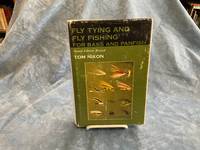
réf. 08-1045South Brunswick: A. S. Barnes & Co. 1971 336pp illus. owner's stamp to tp slight shelfwear slight foxing throughout slight soiling & wear to dj. Cloth. Very Good -/Very Good -. A. S. Barnes & Co. Hardcover
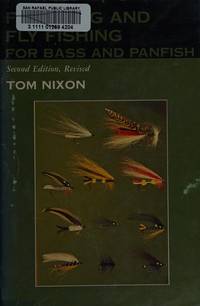
1977réf. 1722nd edition hardcover Fly Tying and Fly Fishing for Bass and Panfish. Cover in good condition with some discoloration. Dust jacket fully intact but some wear. Oak Tree Pubns hardcover
1977réf. biblio39880A.S. Barnes & Company / Thomas Yoseloff Ltd. 1977. 480 pages. Illustrated. NearFine Hardcover Good DJ. The Book has no Wear. Clean Unmarked. Perfect binding and hinges. The DJ got light to moderate edge wear and minimal soiling. 87"x5.75"x1.7". be34502. A.S. Barnes & Company / Thomas Yoseloff, Ltd. hardcover
1969réf. 225790A. S. Barnes & Co 1969-01-01. Second Printing. Hardcover. Good/Good. 8x5x1. Hardcover Second printing with dust jacket in archival protective wrapper. Light spotting to the back panel of the jacket. Not price-clipped. Internally pages are clean bright unmarked and the binding is sound. Prompt shipping. A. S. Barnes & Co hardcover books
réf. 15105Paris, Fayard, 1976 13 x 21, 393 pp., broché, bon état.
1899réf. 4447167241pp slight wear to covers name stamp and sticker residue on flyleaf otherwise unmarked. B. Herder hardcover
1913réf. 0088-08-45Boston: Davis and Bond 1913. Decorative Cloth. Very Good /Poor. 30pgs rice paper dust wrapper only partially left very nice copy Davis and Bond hardcover
1913réf. 002886Boston: Davis and Bond 1913 Book. Illus. by Uncredited Cover and Decoration. Very Good. Hardcover. First No Additional printings. 12mo - over 6¾" - 7¾" tall. Original paper boards with subtle shaded colouring in orange brown and gilt Look carefully; it's not grimy. 26 straightforward positive uncomplicated poems of inspiration. I recently discovered one of Waterman's poems on the internet and have a copy of it hanging beside my desk. Previous owner's inscription dated 1920. 30 pp. Davis and Bond hardcover
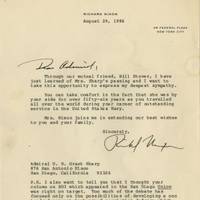
1986réf. 941029/08/1986. ""Too much of the debate has focused only on the possibilities of developing a one hundred percent leak-proof population defense which even the strongest proponents agree could not be developed until next century."" President Nixon made his mark in the area of foreign policy. Although he had made his own career as a militant opponent of Communism Nixon saw opportunities to reduce the temperature of the Cold War by improving relations with the Soviet Union. One of these was the Strategic Arms Limitation Talks negotiations which were a series of meetings beginning in Helsinki that lasted from November 17 1969 until May 1972. After a long deadlock the first results of SALT I came in May 1971 when an agreement was reached over anti-ballistic missiles systems. Further discussion brought the negotiations to an end in Moscow on May 26 1972 when Richard Nixon and Leonid Brezhnev signed both the Anti-Ballistic Missile Treaty and the Interim Agreement Between The United States of America and The Union of Soviet Socialist Republics on Certain Measures With Respect to the Limitation of Strategic Offensive Arms. These served to slow the growth in nuclear weapons and halt extensive proliferation. A premise of the Cold War mutually assured destruction meant simply that neither the US nor the USSR would attack the other because it would ensure that both would be obliterated. You could get the first shot in but unless you wiped out the entire capacity of the other side in one blow you would ensure your own demise. In 1969 Nixon announced an anti-ballistic missile defense system called Safeguard which aimed to protect the deterrent nuclear force of the United States its missile fields to maintain that deterrent capacity. This happened at the same time as the country was publicly debating the possibility of protecting entire US cities in a shield the technology of which did not exist. Safeguard never fully operated at its intended capacity and in fact was shut down soon after it launched. Ronald Reagan was not an active proponent of mutually assured destruction MAD. In 1983 he proposed the Strategic Defense Initiative SDI to use ground-based and space-based systems to protect the United States from attack by ballistic strategic nuclear weapons. The initiative focused on strategic defense rather than the prior strategic offense doctrine of MAD. It was dubbed ""Star Wars"" by critics. The goal was to neutralize the Soviets' nuclear capacity regardless of the success of ongoing negotiations. The Soviets strongly opposed the Strategic Defense Initiative as they could not afford to match the U.S. in this area and they felt that if successful the concept of mutually assured destruction would be lost and the U.S. would be in a dominant position. In November of 1985 Gorbachev and Reagan were to meet in Geneva for a major summit. Both the Soviet Union and the United States were seeking to cut the number of nuclear weapons with the Soviets seeking to halve the number of nuclear-equipped bombers and missiles and the U.S. desiring to ensure that neither side gained a first-strike advantage and to protect rights to the Strategic Defense Initiative. These ideas of arms limitations and strategic defense were the cornerstones to the Cold War negotiations between the two global powers in a bi-polar world. One of those who joined the debate was U.S. Grant Sharp a 4-star admiral who was Commander in Chief of the US Pacific Fleet and of US Pacific Command including during the Gulf of Tonkin Incident. He wrote a piece in the San Diego papers which advocated the protection of US-based counter-force assets which touched on a subject central to Nixon's presidency and close to his heart missiles that would serve as a first-strike deterrent. Typed letter signed August 29 1986 New York City to Admiral U.S. Grant Sharp. ""Through our mutual friend Bill Stover I have just learned of Mrs. Sharp's passing and I want to take this opportunity to express my deepest sympathy. You can take comfort in the fact that she was by your side for over fifty-six years as you traveled all over the world during your career of outstanding service in the United States Navy. Mrs. Nixon joins me in extending our best wishes to you and your family. Sincerely Richard Nixon. ""P.S. I also want to you that I thought your column on SDI which appeared in the San Diego Union was right on target. Too much of the debate has focused only on the possibilities of developing a one hundred percent leak-proof population defense which even the strongest proponents agree could not be developed until next century. On the other hand a defense of our counter-force missile silos which presently are vulnerable to a first strike from Soviet Union's SS-18s could be deployed in the near future. Unless the Soviet Union agrees to offensive cuts which would remove its first-strike capability we have no choice but to go forward with an SDI program which would deny them that capacity."" unknown
1986réf. 941029/08/1986. ""Too much of the debate has focused only on the possibilities of developing a one hundred percent leak-proof population defense which even the strongest proponents agree could not be developed until next century."" President Nixon made his mark in the area of foreign policy. Although he had made his own career as a militant opponent of Communism Nixon saw opportunities to reduce the temperature of the Cold War by improving relations with the Soviet Union. One of these was the Strategic Arms Limitation Talks negotiations which were a series of meetings beginning in Helsinki that lasted from November 17 1969 until May 1972. After a long deadlock the first results of SALT I came in May 1971 when an agreement was reached over anti-ballistic missiles systems. Further discussion brought the negotiations to an end in Moscow on May 26 1972 when Richard Nixon and Leonid Brezhnev signed both the Anti-Ballistic Missile Treaty and the Interim Agreement Between The United States of America and The Union of Soviet Socialist Republics on Certain Measures With Respect to the Limitation of Strategic Offensive Arms. These served to slow the growth in nuclear weapons and halt extensive proliferation. A premise of the Cold War mutually assured destruction meant simply that neither the US nor the USSR would attack the other because it would ensure that both would be obliterated. You could get the first shot in but unless you wiped out the entire capacity of the other side in one blow you would ensure your own demise. In 1969 Nixon announced an anti-ballistic missile defense system called Safeguard which aimed to protect the deterrent nuclear force of the United States its missile fields to maintain that deterrent capacity. This happened at the same time as the country was publicly debating the possibility of protecting entire US cities in a shield the technology of which did not exist. Safeguard never fully operated at its intended capacity and in fact was shut down soon after it launched. Ronald Reagan was not an active proponent of mutually assured destruction MAD. In 1983 he proposed the Strategic Defense Initiative SDI to use ground-based and space-based systems to protect the United States from attack by ballistic strategic nuclear weapons. The initiative focused on strategic defense rather than the prior strategic offense doctrine of MAD. It was dubbed ""Star Wars"" by critics. The goal was to neutralize the Soviets' nuclear capacity regardless of the success of ongoing negotiations. The Soviets strongly opposed the Strategic Defense Initiative as they could not afford to match the U.S. in this area and they felt that if successful the concept of mutually assured destruction would be lost and the U.S. would be in a dominant position. In November of 1985 Gorbachev and Reagan were to meet in Geneva for a major summit. Both the Soviet Union and the United States were seeking to cut the number of nuclear weapons with the Soviets seeking to halve the number of nuclear-equipped bombers and missiles and the U.S. desiring to ensure that neither side gained a first-strike advantage and to protect rights to the Strategic Defense Initiative. These ideas of arms limitations and strategic defense were the cornerstones to the Cold War negotiations between the two global powers in a bi-polar world. One of those who joined the debate was U.S. Grant Sharp a 4-star admiral who was Commander in Chief of the US Pacific Fleet and of US Pacific Command including during the Gulf of Tonkin Incident. He wrote a piece in the San Diego papers which advocated the protection of US-based counter-force assets which touched on a subject central to Nixon's presidency and close to his heart missiles that would serve as a first-strike deterrent. Typed letter signed August 29 1986 New York City to Admiral U.S. Grant Sharp. ""Through our mutual friend Bill Stover I have just learned of Mrs. Sharp's passing and I want to take this opportunity to express my deepest sympathy. You can take comfort in the fact that she was by your side for over fifty-six years as you traveled all over the world during your career of outstanding service in the United States Navy. Mrs. Nixon joins me in extending our best wishes to you and your family. Sincerely Richard Nixon. ""P.S. I also want to you that I thought your column on SDI which appeared in the San Diego Union was right on target. Too much of the debate has focused only on the possibilities of developing a one hundred percent leak-proof population defense which even the strongest proponents agree could not be developed until next century. On the other hand a defense of our counter-force missile silos which presently are vulnerable to a first strike from Soviet Union's SS-18s could be deployed in the near future. Unless the Soviet Union agrees to offensive cuts which would remove its first-strike capability we have no choice but to go forward with an SDI program which would deny them that capacity."" unknown books
1938réf. 50069Chapel Hill: UNC Press 1938. First edition. Evans Walker. 4to. 98 pp. illustrated from photographs. A very good copy. The photo-illustrated dust jacket has a few chips and pieces lacking and shows light soiling on the rear text panel. One of the earliest books to be illustrated by the photographers of the FSA: Evans Lange Shahn Rothstein Carter Mydans. The text is by a member of the Southern Agrarian writers group. UNC Press unknown
1938réf. 213100University of North Carolina Press 1938. Hardcover. Good Condition/No Dust Jacket. 98 pages illustrated with b/w photos. Ex-university library book. Light staining to the cloth; pages tanned; a good solid book. No jacket. Quantity Available: 1. Category: American History; Inventory No: 213100. . University of North Carolina Press hardcover
réf. A9781469612409Paperback / softback. New. Writing with the intimate knowledge of a man who has carried on research among people on an Alabama upland plantation over a period of two decades Nixon speaks with authority of the problems of the soil. He has given much attention to general and particular suggestions for change and improvement. Originally published in 1938. paperback
réf. B9781469612409Paperback / softback. New. Writing with the intimate knowledge of a man who has carried on research among people on an Alabama upland plantation over a period of two decades Nixon speaks with authority of the problems of the soil. He has given much attention to general and particular suggestions for change and improvement. Originally published in 1938. paperback
réf. 29775411-nnew. unknown
réf. 29775411like new. unknown
1938réf. 213435The University of North Carolina Press 1938. First Edition. Hardcover. Good/Missing. 9x7x1. Hardcover First Edition without the dust jacket. NOT AN EX-LIBRARY COPY. Tan cloth covered boards with brown lettering. Slight soiling and shelf wear to the exterior. Internally the binding is solid. However there is some pencil underlining throughout the text. Professional packaging and prompt shipping. RBR The University of North Carolina Press hardcover
1938réf. 626604Chapel Hill: University of North Carolina Press 1938. Hardcover. Very Good/Fair. First edition. Small quarto. 98pp. Illustrated from photos. Very faint stain on front fly else about fine in good only dust jacket with some paint splotches or residue on the front wrap. University of North Carolina Press hardcover
1938réf. 1407966Chapel Hill: The University of North Carolina Press 1938. Hardcover. Small Quarto vi vii 98 pages. In Good condition. Bound in the publisher's deep beige cloth bearing brown lettering to the spine. Boards have moderate wear including age toning and minor edge wear. Slight tilt to the spine. Text block has moderate wear including age toning to the edges and slight offsetting to the end papers. Slight foxing to the interior. Previous owner's name to the front end paper. Frontispiece. Illustrated. NOTE: Shelved in Locked Annex Quarto and Folio Case. Oversized books. Additional postage necessary for international/expedited orders. Economy international postage unavailable due to size/weight restrictions. For international/expedited customers please inquire for rates. 1407966. FP New Rockville Stock. The University of North Carolina Press hardcover
1938réf. 3850054Chapel Hill: University of North Carolina Press 1938. First Edition. Hardcover. Good with no dust jacket. First Edition. Exlibrary markings. Sound binding and hinges. Pages lightly tanned generally clean with a few pencil marks on some pages. Cloth over boards has bumped corners general shelf wear with light soiling edge rubbing. Spine is slightly darkened. Author examines different aspects of the rural South during the Great Depression in text and in many black and white photographs throughout. The author was a political scientist and a member of the Southern Agrarians a group of twelve Southerners who wrote an agrarian literary manifesto in 1930. Ex-Library; 10.5" tall; 98 pages. University of North Carolina Press hardcover
réf. 1469612402.Gpaperback. Good. Access codes and supplements are not guaranteed with used items. May be an ex-library book. paperback
2017réf. x-1469612402Univ of North Carolina Pr 2017. Paperback. New. 138 pages. 10.25x7.50x0.39 inches. Univ of North Carolina Pr paperback
1938réf. 170610-MG34Chapel Hill NC: The University of North Carolina Chapel Hill Press 1938. Good hardcover with dust jacket from 1937. Some water damage/stains to dust jacket and first few pages. worn staining photographs throughout scarce. First Edition. Hardcover. Good/Good. The University of North Carolina Chapel Hill Press hardcover
1938réf. 071321University of North Carolina 1938. Book. Very Good. Hardcover. 1st Edition. Light rubbing to cloth. Jacket torn in half along spine else three small chips to jacket. Price-clipped. University of North Carolina Hardcover
1938réf. 213435The University of North Carolina Press 1938. First Edition. Hardcover. Good/Missing. 9x7x1. Hardcover First Edition without the dust jacket. NOT AN EX-LIBRARY COPY. Tan cloth covered boards with brown lettering. Slight soiling and shelf wear to the exterior. Internally the binding is solid. However there is some pencil underlining throughout the text. Professional packaging and prompt shipping. RBR The University of North Carolina Press hardcover books