Currey, R N (Ralph Nixon) (1907-2001)Biblio.com

4280 risultati
1989rif. 442585London Portsmouth N.H. : J. Currey ; Heinemann 1989. Hardcover. Near fine cloth copy in a very good if slightly edge-nicked and dust-dulled dust-wrapper. Remains particularly well-preserved overall; tight bright clean and strong. Physical description: viii 232 pages : illustrations ; 23 cm. Contents: Partial contents Son of Natal 1854-66 -- Stepson of Transvaal 1866-70 -- The diamond drag 1870-8 -- The Anglo-Zulu war & Majuba 1879-81 -- No outspan on the goldfields 1881-7 -- Ford across the Vaal: Pretoria & Standerton 1887-9 -- Thorn-castle country: Pietersburg 189-91 -- Volksrust & Standerton: the Jameson raid 1892-9 -- The Anglo-Boer war 1899-1902 -- The Bethel kerk 1902-05 -- Tom Rhymer 1906-32. Subjects: Vinnicombe Thomas Francis 1854-1932 Family. Zulu War 1879 ; Personal narratives. South African War 1899-1902 ; Personal narratives. Pioneers South Africa ; Biography. London Portsmouth (N.H.) : J. Currey ; Heinemann hardcover
1989rif. 3113867New York: Praeger. Fine in Near Fine dust jacket. 1989. First Edition; First Printing. Hardcover. 0275932788 . First Edition. Warmly INSCRIBED in year of publication by former Congressman John LeBoutillier to actor Charlton Heston. Fine in price-clipped about fine dust jacket. B ; 5 3/4" x 8 3/4"; 115 pages . Praeger. hardcover
2019rif. x-3030267512Springer 2019. Hardcover. New. 368 pages. 9.25x6.10x1.06 inches. Springer hardcover
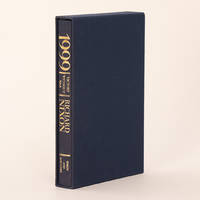
1988rif. OCB10694New York: New York: Simon and Schuster 1988. Signed Limited. Hardcover. As New. Signed by Nixon at limitation page. Lim. 254/600. Signed Limited Edition. Navy cloth covered boards gold color stamped "Richard Nixon" at front board gold color lettering at spine. Unread. A sparkling copy. 8vo 336 pp. As New. New York: Simon and Schuster hardcover
2004rif. DADAX1403965226MACMILLAN 2004-09-21. 2004. hardcover. New. 6.34x1.05x9.60. Buy with confidence. Excellent Customer Service & Return policy. MACMILLAN hardcover
2004rif. x-134952882XPalgrave Macmillan 2004. Paperback. New. 278 pages. 9.25x6.00x0.50 inches. Palgrave Macmillan paperback
2004rif. x-1403965226Palgrave Macmillan 2004. Hardcover. New. 288 pages. 9.50x6.25x1.00 inches. Palgrave Macmillan hardcover
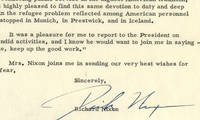
rif. 88223/1/57. On October 23 1956 a student demonstration against the Soviet-dominated regime in Hungary became the first serious challenge to Communist authority since the Soviet Union drove the Nazis out and occupied Eastern Europe at the end of World War II. The demonstrators marched to the Parliament building in Budapest where Hungarian State Security Police detained a group of them who attempted to enter the radio building to broadcast the students_ demands. The police then fired on a group of demonstrators who demanded their release and killed a student. When demonstrators wrapped the body in a flag and paraded it in central Budapest violence erupted and news of the event provoked unrest throughout the country. The pro-Soviet government collapsed and a new government disbanded the State Security Police and announced its intention to withdraw from the Soviet-run Warsaw Pact and to hold free elections. The Hungarian Revolt was one of the crucial events of the Cold War On October 31 the Moscow newspaper “Pravda” stated that the Soviet government was “prepared to enter into the appropriate negotiations with the government of the Hungarian People’s Republic and other members of the Warsaw Treaty on the question of the presence of Soviet troops on the territory of Hungary.” That same day though unwilling to appear weak to the United States Soviet leaders reversed course and decided to take military action to crush the rebellion. In the early morning hours of November 4 Soviet troops invaded Hungary. The free Hungarian government fled and by November 7 the Soviets installed János Kádár as the new Prime Minister. In six days the Soviet military completely crushed the revolution. More than 2500 Hungarians and 700 Soviet soldiers were killed. By January the new Soviet puppet government had suppressed the opposition. However meanwhile large numbers of Hungarians were fleeing the country mostly headed for Austria. This unfolding drama received hour-by-hour press coverage throughout the world with film footage appearing every evening on the news in the U.S. and elsewhere. The invasion with its graphic depiction of Soviet tanks on the city streets in Hungary clashing with demonstrators destroyed the Soviet argument that Eastern Europe was voluntarily within the Soviet sphere. It also confirmed to those in the West that there was a real Cold War at hand and that the Soviets were the aggressors as they could only hold their people by force. Strong anti-Communists like Richard M. Nixon then Vice President in the Eisenhower Administration seemed confirmed in their judgments. By the time Hungary’s borders were sealed 200000 refugees had fled the country. Of those approximately 180000 went to Austria and another 20000 went to Yugoslavia. The refugees needed care and resettlement and this required a massive effort led by the office of the United Nations High Commissioner for Refugees. 37 nations on five continents accepted refugees with the plurality - 40000 - going to the United States. Llewellyn E. Thompson was U.S. Ambassador to Austria so to him fell the main responsibility for managing the American effort to care for them and arrange their resettlement. Lewellyn Thompson was one of the most important American diplomats of the 20th Century. After two years at his post in Vienna he would become the United States Ambassador to the Soviet Union at the height of the Cold War serving two separate tours in the administrations of Presidents Dwight D. Eisenhower John F. Kennedy and Lyndon B. Johnson and then acting as advisor to Richard M. Nixon. Few Ambassadors faced as many crises as Thompson did in Moscow - the shooting down of a U.S. U-2 reconnaissance aircraft over Russia the great confrontation between the U.S. and Soviet Union over Berlin and the building of the Berlin Wall very difficult summits between Soviet Premier Khruschev and Presidents Eisenhower and Kennedy the August 1968 Soviet invasion of Czechoslovakia and tensions over the Vietnam War. But there were also steps toward better relations. At Thompson's suggestion Nikita Khrushchev became the first Soviet leader to visit the U.S. in 1959. Thompson helped arrange and was present for the 1967 summit in the U.S. between President Johnson and Premier Alexei Kosygin in Glassboro New Jersey after the Six-Day War in the Middle East exacerbated tensions. Also in 1967 the Soviet Union and U.S. agreed to begin cooperation in space with the joint Soyuz-Apollo program. The first treaty on Non-Proliferation of Nuclear Weapons was signed on July 1 1968. Thompson’s stint as Ambassador to the Soviet Union began in 1957 when President Eisenhower appointed him to the post. President Kennedy reappointed him in 1961 which was a tribute to Thompson as new presidents usually name their people to the top diplomatic posts. He ended his first tour in Moscow in 1962 when President Kennedy brought him home to Washington to become his Ambassador-at-Large as a member of the Executive Committee of the National Security Council advising the President on Soviet affairs. Shortly after returning to Washington Thompson provided President Kennedy with advice that was crucial to avoiding nuclear war during the Cuban Missile Crisis. President Johnson reappointed him to the ambassadorship to Moscow in 1967 and he served until 1969. He came out of retirement to advise President Nixon on the Strategic Arms Limitation Treaty SALT negotiations with the Soviet Union and represented the United States in the SALT talks from 1969 until his death in 1972. He thus was able to provide valuable insight into Soviet thought to four American presidents. Secretary of State William P. Rogers called him “one of the outstanding diplomats of his generation.” From December 18-24 1956 Nixon traveled to Austria to get first hand accounts from Hungarian refugees and inspect their conditions and aid requirements. Thompson aided him during that trip and Nixon was grateful. “You can be proud of the magnificent job being done under your able direction to discharge American responsibility in meeting the needs of the Hungarian refugees in Austria."" Typed Letter Signed on Office of the Vice President letthead Washington January 3 1957 to Thompson. “This is just a note to tell you how deeply I appreciated the generous hospitality which you and Mrs. Thompson extended to me and the members of my party during my recent visit to Austria. Due to your efforts and those of your staff I was able to accomplish my inspection mission in a limited period of time and I am grateful for the many courtesies which were extended to me. “You can be proud of the magnificent job being done under your able direction to discharge American responsibility in meeting the needs of the Hungarian refugees in Austria. This compliment is meant for you and your permanent staff of all nationalities and agencies as well as those who have come from other countries on short notice to meet the need for additional help the wives and families who have been working long hours as volunteers to relieve hardship and the hundreds of American and international relief agency workers. All of you have shown a wonderful spirit of dedication in rendering public service in the highest American tradition and I was highly pleased to find this same devotion to duty and deep interest in the refugee problem reflected among American personnel when we stopped in Munich in Prestwick and in Iceland. “It was a pleasure for me to report to the President on your splendid activities and I know he would want to join me in saying – “well done keep up the good work.” ""Mrs. Nixon joins me in sending our very best wishes for the New Year.” The accompanying envelope which is still present bears Nixon_s printed free frank. It was not mailed and therefore evidently was delivered by diplomatic pouch. This letter comes directly from the Thompson descendants. unknown books
rif. 88223/1/57. On October 23 1956 a student demonstration against the Soviet-dominated regime in Hungary became the first serious challenge to Communist authority since the Soviet Union drove the Nazis out and occupied Eastern Europe at the end of World War II. The demonstrators marched to the Parliament building in Budapest where Hungarian State Security Police detained a group of them who attempted to enter the radio building to broadcast the students_ demands. The police then fired on a group of demonstrators who demanded their release and killed a student. When demonstrators wrapped the body in a flag and paraded it in central Budapest violence erupted and news of the event provoked unrest throughout the country. The pro-Soviet government collapsed and a new government disbanded the State Security Police and announced its intention to withdraw from the Soviet-run Warsaw Pact and to hold free elections. The Hungarian Revolt was one of the crucial events of the Cold War On October 31 the Moscow newspaper “Pravda” stated that the Soviet government was “prepared to enter into the appropriate negotiations with the government of the Hungarian People’s Republic and other members of the Warsaw Treaty on the question of the presence of Soviet troops on the territory of Hungary.” That same day though unwilling to appear weak to the United States Soviet leaders reversed course and decided to take military action to crush the rebellion. In the early morning hours of November 4 Soviet troops invaded Hungary. The free Hungarian government fled and by November 7 the Soviets installed János Kádár as the new Prime Minister. In six days the Soviet military completely crushed the revolution. More than 2500 Hungarians and 700 Soviet soldiers were killed. By January the new Soviet puppet government had suppressed the opposition. However meanwhile large numbers of Hungarians were fleeing the country mostly headed for Austria. This unfolding drama received hour-by-hour press coverage throughout the world with film footage appearing every evening on the news in the U.S. and elsewhere. The invasion with its graphic depiction of Soviet tanks on the city streets in Hungary clashing with demonstrators destroyed the Soviet argument that Eastern Europe was voluntarily within the Soviet sphere. It also confirmed to those in the West that there was a real Cold War at hand and that the Soviets were the aggressors as they could only hold their people by force. Strong anti-Communists like Richard M. Nixon then Vice President in the Eisenhower Administration seemed confirmed in their judgments. By the time Hungary’s borders were sealed 200000 refugees had fled the country. Of those approximately 180000 went to Austria and another 20000 went to Yugoslavia. The refugees needed care and resettlement and this required a massive effort led by the office of the United Nations High Commissioner for Refugees. 37 nations on five continents accepted refugees with the plurality - 40000 - going to the United States. Llewellyn E. Thompson was U.S. Ambassador to Austria so to him fell the main responsibility for managing the American effort to care for them and arrange their resettlement. Lewellyn Thompson was one of the most important American diplomats of the 20th Century. After two years at his post in Vienna he would become the United States Ambassador to the Soviet Union at the height of the Cold War serving two separate tours in the administrations of Presidents Dwight D. Eisenhower John F. Kennedy and Lyndon B. Johnson and then acting as advisor to Richard M. Nixon. Few Ambassadors faced as many crises as Thompson did in Moscow - the shooting down of a U.S. U-2 reconnaissance aircraft over Russia the great confrontation between the U.S. and Soviet Union over Berlin and the building of the Berlin Wall very difficult summits between Soviet Premier Khruschev and Presidents Eisenhower and Kennedy the August 1968 Soviet invasion of Czechoslovakia and tensions over the Vietnam War. But there were also steps toward better relations. At Thompson's suggestion Nikita Khrushchev became the first Soviet leader to visit the U.S. in 1959. Thompson helped arrange and was present for the 1967 summit in the U.S. between President Johnson and Premier Alexei Kosygin in Glassboro New Jersey after the Six-Day War in the Middle East exacerbated tensions. Also in 1967 the Soviet Union and U.S. agreed to begin cooperation in space with the joint Soyuz-Apollo program. The first treaty on Non-Proliferation of Nuclear Weapons was signed on July 1 1968. Thompson’s stint as Ambassador to the Soviet Union began in 1957 when President Eisenhower appointed him to the post. President Kennedy reappointed him in 1961 which was a tribute to Thompson as new presidents usually name their people to the top diplomatic posts. He ended his first tour in Moscow in 1962 when President Kennedy brought him home to Washington to become his Ambassador-at-Large as a member of the Executive Committee of the National Security Council advising the President on Soviet affairs. Shortly after returning to Washington Thompson provided President Kennedy with advice that was crucial to avoiding nuclear war during the Cuban Missile Crisis. President Johnson reappointed him to the ambassadorship to Moscow in 1967 and he served until 1969. He came out of retirement to advise President Nixon on the Strategic Arms Limitation Treaty SALT negotiations with the Soviet Union and represented the United States in the SALT talks from 1969 until his death in 1972. He thus was able to provide valuable insight into Soviet thought to four American presidents. Secretary of State William P. Rogers called him “one of the outstanding diplomats of his generation.” From December 18-24 1956 Nixon traveled to Austria to get first hand accounts from Hungarian refugees and inspect their conditions and aid requirements. Thompson aided him during that trip and Nixon was grateful. “You can be proud of the magnificent job being done under your able direction to discharge American responsibility in meeting the needs of the Hungarian refugees in Austria."" Typed Letter Signed on Office of the Vice President letthead Washington January 3 1957 to Thompson. “This is just a note to tell you how deeply I appreciated the generous hospitality which you and Mrs. Thompson extended to me and the members of my party during my recent visit to Austria. Due to your efforts and those of your staff I was able to accomplish my inspection mission in a limited period of time and I am grateful for the many courtesies which were extended to me. “You can be proud of the magnificent job being done under your able direction to discharge American responsibility in meeting the needs of the Hungarian refugees in Austria. This compliment is meant for you and your permanent staff of all nationalities and agencies as well as those who have come from other countries on short notice to meet the need for additional help the wives and families who have been working long hours as volunteers to relieve hardship and the hundreds of American and international relief agency workers. All of you have shown a wonderful spirit of dedication in rendering public service in the highest American tradition and I was highly pleased to find this same devotion to duty and deep interest in the refugee problem reflected among American personnel when we stopped in Munich in Prestwick and in Iceland. “It was a pleasure for me to report to the President on your splendid activities and I know he would want to join me in saying – “well done keep up the good work.” ""Mrs. Nixon joins me in sending our very best wishes for the New Year.” The accompanying envelope which is still present bears Nixon_s printed free frank. It was not mailed and therefore evidently was delivered by diplomatic pouch. This letter comes directly from the Thompson descendants. unknown
2005rif. AZ646-007Tate Publishing & Enterprises 2005. Book. Very Good. Soft cover. 8vo - over 7¾ - 9¾" tall. Binding tight and square. Pages clean and free of writing or marks. Tate Publishing & Enterprises Paperback
1998rif. 1303430PN. New. 1998. Soft Cover. Date is original print. This is a reprint edition . PN paperback
1970rif. 739105PN. New. 1970. Soft Cover. Date is original print. This is a reprint edition. . PN paperback
1970rif. 739104PN. New. 1970. Soft Cover. Date is original print. This is a reprint edition. . PN paperback
1968rif. 735648PN. New. 1968. Soft Cover. Date is original print. This is a reprint edition. . PN paperback
1967rif. 732987PN. New. 1967. Soft Cover. Date is original print. This is a reprint edition. . PN paperback
1938rif. 9032591Boston: Little Brown 1938. 1st. Hardcover. Very Good. Bound in publisher's original oatmeal cloth with spine and cover stamped in illustrated blue. Illustrated throughout with charming black and white photographs. Book is fine except for sunning to spine and edges. 5 x 7 1/2 inches. 314 pages. Little, Brown hardcover books
rif. 154693hardcover. illus. 12mo cloth. Boston: Little Brown 1938. vg unknown books
1939rif. 106102Boston:: Little Brown and Company. Very Good in Very Good dust jacket. 1939. Hardcover. Sixth printing. SIGNED by the author on a front endpage. Very good in a very good moderate shelf wear and aging dust jacket.; Signed by Author . Little, Brown and Company, hardcover books
2016rif. 1-3659918563LAP LAMBERT Academic Publishing 2016. Paperback. New. 60 pages. 8.66x5.91x0.14 inches. LAP LAMBERT Academic Publishing paperback
rif. 746Light wear to cardboard roll else fine. YDW-746. Presidential Election Memorabilia Unused Roll of "Pat for First Lady" Ribbon 1960. Original unused roll of "Pat for First Lady" ribbon from Richard Nixon's 1960 political campaign. Purple silk ribbon lettered in silver. Approx. 4.75 inches in diameter. . unknown
1968rif. 5459Miami FL: Republican National Committee 1968. Original Document. Near Fine. Each ticket measures 7 1/2 X 2 3/4 Inches. UNUSED ORIGINAL SET OF ALL FIVE DAILY TICKETS TO THE 1968 REPUBLICAN NATIONAL CONVENTION IN MIAMI FL - WITH ORIGINAL ENVELOPE! The Nixon/Agnew Ticket. Republican National Committee unknown
rif. 40085with a printed message on the inside from "The President and Mrs Nixon" with a coloured reproduction of an antique print of 'President's House' on the front 7½" x 5½" no place no date circa unknown
1971rif. 259401New York: Harper & Row 1971. Softcover. Very Good. First edition. Paper back Very good in wrappers. With reader's flair and mild wear clean text. Harper & Row unknown books
1972rif. 76751972. Nixon Richard M. Unissued White House Award of Excellence for environmental protection services documenting the federal government's effort to recognize environmental achievement during the Nixon administration. The certificate belongs to the period in which environmental protection became a more formal component of national policy: Nixon signed the National Environmental Policy Act on January 1 1970 and submitted the reorganization plan that established the Environmental Protection Agency later that year. A presidential advisory committee for an Environmental Merit Award Program was subsequently created in 1972 within the EPA placing this award within the administration's broader use of federal recognition to encourage environmental service. The President of the United States Presents This Award of Excellence. White House Washington D.C. circa 1972. Printed award certificate featuring a large color presidential eagle seal and the text: "The President of the United States presents this Award of Excellence to blank for outstanding achievement in environmental protection services." A stamped facsimile signature of Richard Nixon appears below the presentation text. The recipient line was never completed and the document is unsigned. Its unused state preserves the certificate as an example of the standardized material prepared for a federal environmental recognition program rather than as evidence of an award to a particular person or organization. No recipient inscription handling damage or significant surface wear reported; mint condition. An intact unissued presidential certificate illustrating the ceremonial language and visual identity used to promote environmental achievement during the formative years of federal environmental administration. unknown books
1970rif. 169334New York: Harper & Row 1970. First Edition; First Printing. Hardcover. Very Good in a Near Fine dust jacket.; 8.0 X 5.5 X 1.0 inches; 193 pages. Harper & Row hardcover