(SS Titanic) S SABAA

243 résultats
1911réf. 259144N.p. London 1911. With two full page watercolor heraldic drawings in first volume: Arms Crest and Badge of Clarence Moore; Armorial Bearings of Edwin Carleton Swift; both signed Archibald G.B. Russell Lancaster Herald College of Arms London. Manuscript on paper 28 lines in a fine cursive hand in black ink with occasional red initials within red rules. 160; 253 pp. 2 vols. Folio. Full red morocco gilt upper boards titled in gilt spines with raised bands dentelles gilt marbled endsheets a.e.g. Some inoffensive traces of damp along lower portion of boards of Moore volume occasional superficial scuffs otherwise fine. Internally immaculate. With two full page watercolor heraldic drawings in first volume: Arms Crest and Badge of Clarence Moore; Armorial Bearings of Edwin Carleton Swift; both signed Archibald G.B. Russell Lancaster Herald College of Arms London. Manuscript on paper 28 lines in a fine cursive hand in black ink with occasional red initials within red rules. 160; 253 pp. 2 vols. Folio. Monumental genealogical manuscript volumes recording the descent of Clarence Moore of Washington D.C. who died aboard the S.S. Titanic in April 1912 and his second wife Mabille daughter of Edwin Carleton Swift of Prides Crossing Massachusetts. They were married in 1900 and had four sons: Edwin Swift Moore born 1901 died in childhood 1907; Jasper Moore born 1905; Clarence Moore born 1910; and Lloyd Moore born 29 November 1912. In addition to the detailed genealogical reports the volumes include extenisve extracts from historical documents and records in England Pennsylvania Massachusetts and Maryland. The Swift Genealogy William Swyft of Sandwitch and some of his descendants 1637-1887 includes 1296 entries and concludes with a family tree for Mabille Florence Swift. The researches for Moore were conducted by "Hester Dorsey Richardson and Albert Levin Richardson experts in Original Research of Baltimore Maryland". The Moore pedigree is updated through 1926 noting that Mabille married again in 1915 to Aksel de Wichfeld of Maribe Denmark. Clarence Moore 1865-1912 a banker and sportsman of Washington. D.C. and M.F.H. of the Loudoun Hunt and the Chevy Chase Hunt had travelled to England to buy a pack of hounds and sailed for home on the Titanic. Survivors reported Moore's heroic conduct. He lowered women and children into the lifeboats and refused to take a place in the boats. A beautiful and imposing genealogy. unknown books
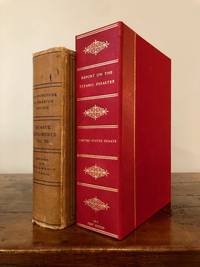
1912réf. 7159Washington DC: Government Printing Office for the U.S. Senate 1912. First Edition. Hardcover in custom clamshell case. Very Good/Clamshell case Fine. Title continues: Sixty-Second Congress Second Session. Directing the Committee on Commerce to Investigate the Causes Leading to the Wreck of the White Star Liner "Titanic". Thick large 8vo. With three folding maps. Bound in tan buckram with black rules and lettering on spine. Text clean light soiling to cloth spine slightly darkened. Rear hinge starting. Contemporary owner signature in pencil. Housed in a custom clamshell box of half-red morocco over red cloth gilt lettering on spine. "They said 'nothing serious is the matter' . I did not realize it the whole time even to the last moment . I would never believe such a thing could happen." The US Senate investigation convened over 18 days with 86 witnesses informing the record at-hand. Among them Bruce Ismay the Managing Director of the White Star Line; Second Officer Charles Lightoller who figures prominently in the Walter Lord bestseller A Night to Remember Guglielmo Marconi inventor and electrical engineer whose name was synonymous with radio wave-based wireless system telegraphy and whose company provided wireless service for both the Titanic and the Carpathia the ship that responded to the Titanic's distress signal and Captain Arthur Rostron of the Carpathia among many surviving passengers and crew. The colossal meeting of hubris poor navigation and exceptionally bad timing resulted in a disaster that reverberates ad infinitum. Books on the subject continue to pour forth running perhaps fourth behind Jesus Napoleon and the Civil War as fodder for speculation fresh insight and metaphorical discourse. This report with dramatic first-person accounts remains a foundational text. Scarce. Government Printing Office [for the] U.S. Senate hardcover books
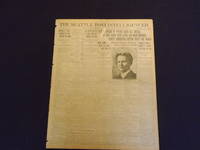
1912réf. 101999Newspaper large folded newsprint sheets some ad illustration 12 pp. Probably removed paper is browned and brittle but mostly intact some small tears and chips at extremities pages partially split at center fold small hole in page of one article with loss of a letter or two paper name label on front page covering a letter or two of the lead Titanic article rubber stamp in upper right corner not affecting text front page indicates 22 pages but there are only 12 with this paper but it appears complete and all the Titanic articles are in these pages. While published about five days after the Titanic disaster this paper is full of articles on the sinking. The lead article provides details on testimony of second officer Lightoller which he gave to the American Congressional inquiry. However there are many articles on the subject and some of which appear to be the start of various Titanic legends and myths. A widowed woman tells how the men of the Titanic were "needlessly sacrificed and how she saw some men dressed as women to get into life boats. While the captain is praised for going down with the ship another article has American Senator Raymond denouncing White Star Managing Director Bruce Ismay who was CEO of the company as a coward he survived by getting into one of the boats and the person who risked lives for speed. Another article praises Col. John Jacob Astor who helped save a boy’s life by getting him on a boat when he was refused by a member of the crew there is also a story of how wireless operator Philips was pulled from the sea but died in a lifeboat. There is also one of the first reports about how first officer William Murdock shot a passenger aand than turned the gun on himself. The rescue by the Carpathia is covered and a strange comment on how some Chinese Coolies survived by hiding under lifeboat seats. books
1988réf. 385551988. Matted and framed. Fine. Framed size: 22 x 20 inches ; image size: 15 x 12 inches. Watercolor signed but illegible birthday inscription. Wonderful watercolor drawing of passengers walking the deck. unknown books
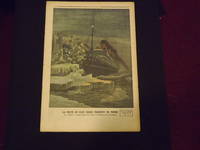
1912réf. 101977Newspaper folio 12 1/2" x 17" illustrated 8pp. Disbound pages loose some aging and browning very small hole in front page not particularly visible; otherwise about very good. The paper includes coverage of the Titanic disaster including a full back page illustration of the ship hitting the iceberg. The front page story of this newspaper which includes another full page color illustration is of a shooting at a restaurant in New York. The paper also includes a couple of cartoons and black and white jewelry advertisement. books
2018ill., br. Nella notte fra il 14 e il 15 aprile 1912, al suo viaggio inaugurale, il transatlantico Titanic colò a picco dopo la collisione contro un iceberg al largo delle coste di Terranova. Oltre 1500 persone morirono, poco più di 700 si salvarono in una delle tragiche storie del mare che più di altre continua a destare interrogativi e a coinvolgere il pubblico. Questo libro narra la storia della nave, del suo equipaggio, dei suoi passeggeri in un affresco dettagliato e fa luce su molti aspetti di una vicenda il cui interesse non è mai stato completamente sopito.
2019ill., br. "Il picasass sopravvissuto al Titanic" e la lunga storia della vita di Emilio Portaluppi, scultore e architetto, nato ad Arcisate, americano d'adozione. Una biografia che e quasi un romanzo storico, con molta attenzione ai dettagli. Una storia che va ben oltre le avventure del protagonista e comprende le ampie vicende dell'emigrazione, del lavoro e della società tra Ottocento e Novecento. Una vicenda avvincente e struggente che trasmette emozioni.
2012br. La notte tra il 14 e il 15 aprile 1912, durante il quinto giorno del viaggio inaugurale, il Titanic strisciava contro un iceberg con la fiancata destra. Meno di duecento minuti dopo si spezzava e scompariva nell'oceano immobile. In quel momento iniziava il mito del Titanic, "La Nave" che ha sfondato i confini dell'immaginario, simbolo perpetuo della fallibilità della tecnica sostenuta dal delirio di onnipotenza degli uomini. Il gioiello della White Star Line si è inabissato portando con sé circa millecinquecento persone e le loro storie. Una tragedia mondiale, quasi un prologo delle catastrofi che di lì a poco avrebbero travolto il mondo. Una matassa di reticenze e menzogne ha coperto i responsabili della catena implacabile: errori, omissioni, incuria e negligenze che hanno provocato il disastro destinato a essere il manifesto e il simbolo del Novecento. Ogni frammento della vicenda viene ricostruito con un rigore storico inappuntabile e con uno stile incalzante come un romanzo. Del Titanic si sa "quasi" tutto, ma quella che riemerge da queste pagine è "un'altra storia" dove il dio denaro e il potere commerciale sui mari si intrecciano con la miseria e la frenesia dei mass media. E il dolore con l'amore, l'indifferenza, l'eroismo, la viltà. Sulla "Nave" c'erano il passato e il futuro del secolo breve. Una metafora eterna del nostro tempo.
2012ill., ril. La fine è nota. L'impatto del Titanic con l'iceberg è però soltanto il punto geometrico in cui convergono innumerevoli traiettorie, forze, vite: non tutte altrettanto celebrate, anzi alcune decisamente poco note, quando non misteriose. Capitani di industria ed ereditiere, disperati in fuga dai loro paesi e piccoli bottegai in cerca di fortuna; ladri, truffatori e anche un rapitore di bambini; artisti e scrittori insieme a contadini analfabeti che non avevano mai visto il mare; amori e tradimenti, relazioni fugaci o passioni travolgenti: sono le particelle elementari di cui è composta la Storia, atomi che quando vengono guardati da vicino hanno la sconfinata vastità della vita. E ci sono le grandi forze collettive che plasmano il mondo. Ad esempio le migrazioni che, proprio grazie ai transatlantici, iniziavano a divenire veramente globali. O le altrettanto globali speculazioni finanziarie: lo stesso Titanic in un certo senso, era il prodotto di una bolla speculativa. Il Titanic - la storia di chi l'ha progettato e di chi vi ha viaggiato - conserva lo stesso fascino di certi romanzi storici o enciclopedie: l'ambizione di contenere al proprio interno un'intera civiltà. Un mondo lontano un secolo eppure sorprendentemente simile al nostro. È anche per questo che l'affondamento del Titanic non smette di ossessionarci e di raccontarci la sua storia di ambizione e arroganza, di lusso e ingiustizia, di viltà e coraggio.
1900Roy. 8vo., Second and Best Edition, with portrait frontispiece, title in red and black, and 21 plates (one double-page); original buckram gilt, gilt back, bevelled edges, uncut, covers lightly age-marked else a very good, internally spotless copy. King's work, first published in 1879, immediately established itself as the standard popular reference on the ancient New Forest town; local interest generated the inevitable additions and corrections, but the planned second edition, incorporating the numerous addenda, was deferred by the author's death. This best edition, compiled and published by the author's son from his father's meticulous notes, benefits from much new material and many fresh illustrations. This copy was formerly in the library of Professor [Sir] J H Biles, the eminent naval architect [of 'Titanic' Enquiry fame], and bears his elegant blind-embossed art nouveau bookplate (with press-mark in manuscript) on front paste-down. John Harvard Biles (1854-1933) was apprenticed at Portsmouth Dockyard, studied at the Royal School of Naval Architecture and joined the Admiralty in 1877. His talents were quickly recognised and in 1880 (at the age of only 26) he was appointed chief designer to the major shipbuilder J&G Thomson on Clydebank where he created the revolutionary designs for the 'City of Paris' and 'City of New York'. In 1883 he left to join the foundling consultancy established by Sir Edward Reed, where he quickly became a driving force (the consultancy continues to the present day as Sir J H Biles & Co.). In 1891 he was awarded the Chair of Naval Architecture at Glasgow University (then perhaps the most prestigious such appointment in the world) where he devoted himself to teaching and consultancy on a world-wide scale. IN VIEW OF HIS EMINENCE IN THE FIELD OF SHIP DESIGN AND CONSTRUCTION, PROFESSOR BILES WAS AN ASSESSOR IN THE ENQUIRY INTO THE LOSS OF RMS 'TITANIC' AND SUBSEQUENTLY HE SERVED ON THE BOARD OF TRADE ENQUIRY INTO LIFEBOATS AND LIFE-SAVING APPLIANCES WHICH AROSE AS A RESULT OF THE TITANIC LOSS. For his services to the 'Titanic' Enquiry and naval architecture in general, Biles was knighted in 1913
19138vo., with a frontispiece and illustrations, neat signature on front free endpaper; cloth gilt, covers mildly rubbed and age-worn else a good, sound copy. Scarce.
19938vo., First Edition, with a portrait frontispiece and 74 plates on 32; cloth, gilt back, a fine copy in the dustwrapper. Important and meticulously researched addition to the vast literature of the 'Titanic'. This work, begun by Reade in the early 1960's, was updated and revised for publication by De Groot following Reade's death in 1989. Includes numerous appendices and a select bibliography. Scarce.
19888vo., First Edition, with numerous plates; black cloth, gilt back, grey endpapers, a fine copy in price-clipped dustwrapper.
19922 vols., Best Editions; with photographs and maps in the text; black cloth, gilt backs a near fine set in unclipped dustwrapper. The set comprises A Titanic Myth. The 'Californian' Incident (Second and Best Edition, revised, 1992); A Titanic Myth. Part Two. Defending Captain Lord, (First Edition, 1996). Leslie Harrison devoted many years to an appraisal of Lord's handling of the 'SS Californian' during the Titanic sinking. After eight decades it remains an international controversy dividing Lord's supporters and critics. COMPLETE SETS ARE SCARCE IN THIS CONDITION.
19568vo., First Edition, with plates and endpaper plans, some faint offsetting from fold-ins to free endpapers; blue cloth, gilt back, blue top, a near fine copy in price-clipped dustwrapper. Still the best general account of the 'Titanic' disaster, and the basis of Roy Ward Baker's memorable feature film (1958) starring starring Kenneth More in one of his finest roles. Dustwrapper artwork by Ley Kenyon. VERY SCARCE IN THIS CONDITION.
1998Oblong 4to., First Edition thus, with coloured frontispiece and numerous coloured illustrations from builder's drawings throughout; laminated pictorial boards, a near fine copy in unclipped dustwrapper.
19562 vols., 8vo., First Edition (of first work), First UK Edition (of second work) , with plates and endpaper plans; handsomely bound in full crushed morocco (navy/burgundy respectively), sides with gilt frame border, backs with raised bands, second and fourth compartments lettered and ruled in gilt, all other compartments tooled in gilt, gilt tops, hand-made endpapers, ribbon markers, charts from original endpapers mounted on new and separate leaves at front of each work, an elegant set ideal as a gift or for presentation. The first work remains the best general account of the 'Titanic' disaster, and the basis of Roy Ward Baker's memorable feature film (1958) starring starring Kenneth More in one of his finest roles. The sequel collects new thoughts, theories and revelations on the disaster. Dustwrapper artwork by Ley Kenyon (first work) and Vittoria Semproni (second work).
19562 vols., 8vo., First Edition (of first work), First UK Edition (of second work) , with plates and endpaper plans, some faint offsetting from fold-ins to free endpapers; blue cloth, gilt back, blue top (first work); blue boards, black cloth back lettered in silver (second work), both very good, bright, clean copies in unclipped dustwrapper. The first work remains the best general account of the 'Titanic' disaster, and the basis of Roy Ward Baker's memorable feature film (1958) starring starring Kenneth More in one of his finest roles. The sequel collects new thoughts, theories and revelations on the disaster. Dustwrapper artwork by Ley Kenyon (first work) and Vittoria Semproni (second work).
19848vo., First Edition, with plates; blue cloth, gilt back, a near fine copy in price-clipped dustwrapper. SCARCE.
1987Mm 245x220 Collana "Valle d'Aosta cultura". Catalogo della mostra di Aosta, Torre del Lebbroso, 6 giugno - 2 agosto 1987. Brossura editoriale di 81 pagine, numerose illustrazioni in bianco e nero e a colori. Esemplare in ottime condizioni. Testo in italiano e francese - italian and franch text. SPEDIZIONE IN 24 ORE DALLA CONFERMA DELL'ORDINE.
1996Mm 150x225 Volume cartonato rigido di pagine 474. Opera in ottime condizioni. Spedizione in 24 ore dalla conferma dell'ordine.
19761 Vol. In-8 m. tela edit.,tit. al dorso, sovracpt. ill pag. 312 PROG 12935 CATT_ATT 22
2005Volume rilegato in cartoncino rigido ruvido, con titolo in oro al dorso, protetto da sovraccoperta illustrata con bandelle. Buonissimo lo stato di conservazione, pagine perfettamente tenute, velate da tonalità seppia, come i tagli. Traduzione di Luciana Pugliese. Numero pagine 174. USATO
1994Dunod 1994. Grand in-8 cartonnage souple de 352 pages illustrées .Très bon état
1912Milano, 1912, stralcio con copertina posticcia muta, la sola pp. 271 con ill. - !! ATTENZIONE !!: Con il termine estratto (o stralcio) intendiamo riferirci ad un fascicolo contenente un articolo di rivista, sia che esso sia stato stampato a parte utilizzando la stessa composizione sia che provenga direttamente da una rivista. Le pagine sono indicate come "da/a", ad esempio: 229/231 significa che il testo è composto da tre pagine. Quando la rivista di provenienza non viene indicata é perchè ci è sconosciuta. - !! ATTENTION !!: : NOT A BOOK : “estratto” or “stralcio” means simply a few pages, original nonetheless, printed in a magazine. Pages are indicated as in "from” “to", for example: 229/231 means the text comprises three pages (229, 230 and 231). If the magazine that contained the pages is not mentioned, it is because it is unknown to us.