334 résultats
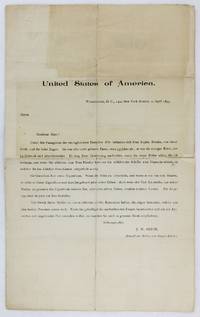
1891réf. 313258Nantucket Ma 1891. 4pp. on a single folded sheet. 1 vols. Light fold lines small tears along vertical fold line. Very good. 4pp. on a single folded sheet. 1 vols. Snow writes in detail of the sinking of the boat and the subsequent rescue effort. Included is a list of names of those saved and by whom. A charming piece of real-life Nantucket romance. Eberstadt 132:497 unknown books
réf. 5794Textile 81.5 x 70.5 cm Fabric images printed from copperplate with maroon body color printed by woodblock. Occasional very minor toning otherwise very well preserved with printing clear and color still fresh. Highly attractive and unusual mid-19th-century printed textile illustrating an archetypal story of the ideal French mariner a fisherman's son named Jacques who left home as a boy to sail to the Antilles with the merchant marines met with many adventures on the high seas shipwreck pitched battle on deck encounters with natives and years later returned home to raise his children to follow his example of maritime heroism. Such printed handkerchiefs a specialty of Rouen most notably associated with the shop of the engraver/printer Narcisse-Alexandre Buquet 1825-94 formed a category of popular imagery in which a textile was printed with an engraved plate and sometimes as here enriched with woodblock color. The ephemeral "mouchoir illustré rouennais" depicted a broad range of scenes taken from daily life contemporary domestic and foreign politics and even served as practical technical reminders for servicemen known as "mouchoirs d'instruction militaire". These highly perishable items are all today very rare with many examples known only from archival proofs printed on paper see Bassargette for an introduction to the mouchoir illustré rouennais. The present handkerchief is particularly lively illustrating the life of the seaman Jacques in 9 rather romantic scenes each of which is provided with an extensive caption. The story seems to harken back to a nostalgia for French maritime exploits during the Napoleonic Wars and while some details seem drawn from history and popular periodical literature the tale was apparently invented specifically for this piece. The scenes read from left to right can be summarized as follows: 1 Jacques the eldest son of a fisherman's widow in order to support his family signs on with the merchant ship Sainte-Adelaïde sailing for the Antilles. 2 In the Gulf of Mexico the ship is caught in a storm and springs a leak. The crew promises to make a pilgrimage to Our Lady of Mercy if they are saved. Jacques plunges into the hold and plugs the leak. 3 In port the crew fulfill their pilgrimage vow. Sailors place an ex voto of a ship on the church altar. 4 Jacques signs on with the battleship Hercules where he is bullied by the "old sea wolf" named Lartigot but he eventually wins the admiration of the crew. 5 A heavily armed enemy vessel attacks the Hercules. Grappling irons are thrown the bugle blows the enemy vessel is boarded and Jacques hatchet in hand saves the surrounded Lartigot. 6 Now in the Pacific the Hercules anchors at the Navigator Islands Samoa. A party goes ashore in search of water and encounters natives eager to trade. The lieutenant is injured in a melee but Jacques saves him. 7. The Hercules sails for France and back home Jacques is decorated for his bravery is promoted marries Lartigot's beautiful daughter and settles down in St. Malo. 8 One day a ship founders off the coast of St. Malo. Jacques hears the alarm and rope tied around his waist he swims into the sea and saves eight sailors. 9 Jacques is given the nickname "Va-de-bon-coeur" in recognition of his eager courageousness is appointed head of the coast guard and is given a seaside house where he raises his children to follow in his footsteps. E. Bassargette "Une imagerie éducative: Le mouchoir illustré rouennais" Histoire de l'education vol. 30 1986 pp. 61-66. [Rouen?], [s.n.], [c. 1850s]. books
1895réf. 2672Washington DC: April 2 1895. Good. 4pp. on a single folded sheet with two small photographs tipped in. In German. Quarto. Old folds some separation along central horizontal fold small chip to first leaf minor soiling. One photograph chipped. A sad document detailing the plight of a mother and son who perished in the sinking of the German transatlantic ocean liner Elbe on January 30 1895. The document seeks to detail exactly the times of death of the mother and son in order to determine whether the heirs of the mother or son have title to the property belonging to the family. Translated into English a portion of the opening reads: "She left some property here in Germany. If her son survived her if by a minute he inherited that property and it now belongs to his heirs; but if death overtook him before his mother the property never belonged to him or now to his heirs but to other people. The matter is now before the court." The Elbe collided with a Scottish ship called the Crathie in the North Sea on January 30 1895 while on the way from Bremen to New York City; the Elbe was a very popular ship amongst immigrants from Central and Eastern Europe looking to make their way to the United States. The two victims detailed in the present document were a German-American immigrant mother and son who had previously settled in Indianapolis and then moved to Washington D.C. Sophie and Eugene Rhodes. At the time of their deaths Eugene was a student at Heidelberg University in Germany. The present document opens with a typed notice from the counsel to the family detailing their presence on the Elbe and asking for details of their deaths. This is followed by photographs of both Sophie and Eugene tipped to the second page then two pages of questions attempting to locate the missing travelers. Brief answers to the questions were supplied in ink by Ernst Linkmeyer assistant engineer on the Elbe and one of only twenty survivors of the wreck. The survivors of the wreck of the Elbe included just four passengers and sixteen crew members who crowded onto the only rescue boat that survived the collision. The death toll of the wreck of the Elbe totaled 334 including Sophie and Eugene Rhodes. April 2 unknown books
1840réf. 101592Small juvenile booklet 4" x 3" original printed wrappers with woodcut illustration on top cover woodcut border on wrappers 16 pp. Covers a bit faded and stained a little also a little worn internally a little foxed and soiled but in very good shape for such a fragile item. Although there appear to have been several editions published between 1820 and 1840 of this juvenile work the OCLC seems to find only a few of each one. Written as a poem the story recounts the sinking of a ship and the ill treatment of those on board. Includes three woodcuts in the first couple of pages. OCLC. American Religious Tract Society, books
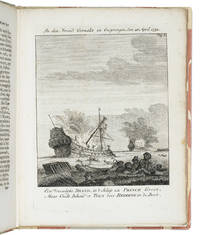
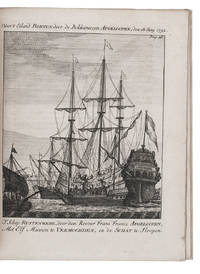
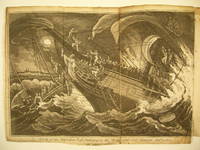
1752réf. L73F2JRXUYKAAmsterdam: Bernardus Mourik 1752. Boards covered with modern pink decorated paper which are also used as paste-downs and endpapers with a dark brown morocco spine label. 4to. With 2 etched plates the publisher's woodcut BM cypher monogram on the title page a woodcut tailpiece and 2 woodcut decorated initials. Second and rare edition of an account of two fatal voyages with two ships. The first voyage was made with the French East Indiaman Le Prince and was commanded by Captain Morin. On 19 February 1752 this ship left the port of Lorient sailing for Pondicherry. However initially the voyage went well on 26 April 1752 there was a fire in Le Prince. It spread fast and it also reached the gunpowder magazine. Therefore the ship exploded as the engraving shows and only 10 persons survived.The second account concerns the seizure of the Dutch ship Rustenwerk an East Indiaman of 650-ton. On 28 June 1752 this ship was taken by the pirate Frans Fransz after mooring of Ternate. He and his companions killed 12 people on board which is depicted in the engraving. The survivors of this violent seizure by Frans Fransz reached Batavia and they sailed to Holland. Although the VOC succeeded in retaking the ship Frans Fransz. Already escaped with the valuable cargo. A more historical addition to this report is the list it includes of 210 VOC ships lost in the period 1688-1752 through disasters mutiny and piracy. These two ships are cruel examples of how East Indiamen could be defeated by fate. After this first edition Mourik also published a second also undated edition with the same plates. Spine slightly discoloured otherwise in very good condition.l Landwehr & V.d. Krogt 437; STCN 1 copy; Tiele Bibl. 1238; Worldcat 7 or 9 copies. Bernardus Mourik, hardcover
1752réf. E51BW3BBNOWBAmsterdam 1752. 4to. Bernardus Mourik Disbound. With 2 etched plates. Further with publisher's woodcut BM cypher monogram on the title page a woodcut tailpiece and 2 woodcut decorated initials. 2 37 1 pp. The first edition of a compelling account of two fatal voyages of the French East Indiaman Le Prince and the VOC ship Rustenwerk. Le Prince commanded by Captain Morin left the port of Lorient on 19 February 1752 sailing for Pondicherry. The voyage passed quietly until fire was discovered in the ship. It spread fast and the ship exploded when the fire reached the gunpowder magazine leaving only 10 survivors. The second account relates the seizure of the ship Rustenwerk a 650-ton Dutch East Indiaman. Moored off Ternate it was taken by the pirate Frans Fransz on 28 June 1751 and some 12 passengers including the Captain were killed. The survivors reached Batavia by way of Makassar and sailed for Holland. The VOC eventually managed to retake the ship but Frans Fransz escaped with the valuable cargo. The account includes a list of 210 VOC ships lost in the period 1688-1752 through disasters mutiny piracy etc.In good condition.l Landwehr & V.d. Krogt 437; STCN 4 copies; Tiele Bibl. 1238. unknown
1891réf. 313258Nantucket Ma 1891. 4pp. on a single folded sheet. 1 vols. Light fold lines small tears along vertical fold line. Very good. 4pp. on a single folded sheet. 1 vols. Snow writes in detail of the sinking of the boat and the subsequent rescue effort. Included is a list of names of those saved and by whom. A charming piece of real-life Nantucket romance. Eberstadt 132:497 unknown
réf. #[36142]'s Gravenhage Algemeene Landsdrukkerij 1882. Large 8vo. Original printed boards. With folding plate depicting the Adder and folding plate depicting the probable location of the wreck. II181 pp. The Adder was a Dutch ram monitor who sank on the North Sea off the coast of Scheveningen on Wednesday evening 5 July 1882. All 66 people on board were killed. The wreck was never recovered. There was a lot of criticism because it was delayed until Saturday before sending a ship to locate the Adder while the monitor was expected to be in Hellevoetsluis on Wednesday afternoon. This exceptionally slow course of action on the part of the Navy Department has been heavily criticized. A monitor was a relatively small warship which was neither fast nor strongly armored but carried disproportionately large guns. They were designed for shallow waters and served as coastal ships and used by some navies from the 1860s. - It is the largest peacetime loss of the Royal Netherlands Navy. Added 11 newspaper clippings from 1882-1883 on the shipwreck including 1 of the Bataviaasch Handelsblad. Cat. NHSM I p.483. hardcover
réf. #[33227]London Thomas Tegg 1809. Sm.8vo. Modern boards. With folding aquatint plate depicting the 'wreck of the Hindostan East -Indiaman on the Wedge Sand near Margate January 11-1809' mounted. 28 pp. Extracted from the collection Mariner's marvelous Magazine or wonders of the ocean containing narratives of the most noted shipwrecks and disasters at sea. - The East Indiaman of the East India Company Hindostan sailed from Gravesend for India January 2 1803 passed the Nore and anchored in the Queen's Channel off the Wedge Sand. There a terrible storm struck her and she drove on the sandbank and broke up. A small boat of Margate rescued 129 out of 143 on the Hindostan; the dead were drowned or frozen. The ship was carrying a good deal of specie much of which was saved from the wreck Huntress p.53. - Rare popular edition. Huntress 153C. hardcover
1830réf. 480790Lincoln : Printed by J.W. Drury High-street Cornhill 1830. First Edition. Softcover. Good paperback copy; edges and cover somewhat dust-dulled and nicked. Spine torn. Corners bumped. Title page ripped out. Remains well-preserved overall. Physical description; 12 p. frontis. : map. Notes; Frontis. = lithographed map ""shewing the shipwreck stations on the Lincolnshire coast 1830"". Subjects; Shipwrecks England Lincolnshire. Lincolnshire England Lifeboats. Lincoln : Printed by J.W. Drury, High-street, Cornhill paperback
réf. AQ29404Penzance: Saundry Typ. s.d. c.1874 Single leaf quarto broadside. Printed within decorative black borders. Some spotting and marginal tears/loss. 'Some fatal news 'tis just arrived Alas it is too true: The loss of the "Cospatrick" And a number of the crew.' An apparently unrecorded broadside verse on the Cospatrick disaster by the Scillonian working-class Poet Robert Maybee 1810-1891. The Cospatrick a three-masted full-rigged Blackwall Frigate was en route for Auckland New Zealand from Gravesend when it caught fire and sank 400 nautical miles SW of the Cape of Good Hope with the loss of all but a handful of the 477 souls on board. Of the 433 passengers the vast majority were assisted emigrants. . Dimensions 220 x 285 mm. Saundry, Typ., [s.d., c.1874] unknown
réf. 1333685572.Gpaperback. Good. Access codes and supplements are not guaranteed with used items. May be an ex-library book. paperback
réf. 0259253723.Gpaperback. Good. Access codes and supplements are not guaranteed with used items. May be an ex-library book. paperback
réf. 42682London: Printed for Tegg & Castleman c. 1802. 12mo 28pp. lacking folding frontispiece title page loose and a little chipped disbound. London: Printed for Tegg & Castleman, [c. 1802] unknown
réf. 42672London: Printed for Thomas Tegg c. 1810. 12mo 2 7-28pp. lacking folding frontispiece disbound. Pages 11-28 contain an account of Berings explorations of Kamtschatka and of the North Pacific and of the loss of his vessel the St. Peter at the most westerly Island of the Aleutian Group and of his own death there from the scurvy. This Island was named Berings Island in his honour likewise the Strait dividing Asia from America. London: Printed for Thomas Tegg, [c. 1810] unknown
réf. 5794Textile 81.5 x 70.5 cm Fabric images printed from copperplate with maroon body color printed by woodblock. Occasional very minor toning otherwise very well preserved with printing clear and color still fresh. Highly attractive and unusual mid-19th-century printed textile illustrating an archetypal story of the ideal French mariner a fisherman's son named Jacques who left home as a boy to sail to the Antilles with the merchant marines met with many adventures on the high seas shipwreck pitched battle on deck encounters with natives and years later returned home to raise his children to follow his example of maritime heroism. Such printed handkerchiefs a specialty of Rouen most notably associated with the shop of the engraver/printer Narcisse-Alexandre Buquet 1825-94 formed a category of popular imagery in which a textile was printed with an engraved plate and sometimes as here enriched with woodblock color. The ephemeral "mouchoir illustré rouennais" depicted a broad range of scenes taken from daily life contemporary domestic and foreign politics and even served as practical technical reminders for servicemen known as "mouchoirs d'instruction militaire". These highly perishable items are all today very rare with many examples known only from archival proofs printed on paper see Bassargette for an introduction to the mouchoir illustré rouennais. The present handkerchief is particularly lively illustrating the life of the seaman Jacques in 9 rather romantic scenes each of which is provided with an extensive caption. The story seems to harken back to a nostalgia for French maritime exploits during the Napoleonic Wars and while some details seem drawn from history and popular periodical literature the tale was apparently invented specifically for this piece. The scenes read from left to right can be summarized as follows: 1 Jacques the eldest son of a fisherman's widow in order to support his family signs on with the merchant ship Sainte-Adelaïde sailing for the Antilles. 2 In the Gulf of Mexico the ship is caught in a storm and springs a leak. The crew promises to make a pilgrimage to Our Lady of Mercy if they are saved. Jacques plunges into the hold and plugs the leak. 3 In port the crew fulfill their pilgrimage vow. Sailors place an ex voto of a ship on the church altar. 4 Jacques signs on with the battleship Hercules where he is bullied by the "old sea wolf" named Lartigot but he eventually wins the admiration of the crew. 5 A heavily armed enemy vessel attacks the Hercules. Grappling irons are thrown the bugle blows the enemy vessel is boarded and Jacques hatchet in hand saves the surrounded Lartigot. 6 Now in the Pacific the Hercules anchors at the Navigator Islands Samoa. A party goes ashore in search of water and encounters natives eager to trade. The lieutenant is injured in a melee but Jacques saves him. 7. The Hercules sails for France and back home Jacques is decorated for his bravery is promoted marries Lartigot's beautiful daughter and settles down in St. Malo. 8 One day a ship founders off the coast of St. Malo. Jacques hears the alarm and rope tied around his waist he swims into the sea and saves eight sailors. 9 Jacques is given the nickname "Va-de-bon-coeur" in recognition of his eager courageousness is appointed head of the coast guard and is given a seaside house where he raises his children to follow in his footsteps. E. Bassargette "Une imagerie éducative: Le mouchoir illustré rouennais" Histoire de l'education vol. 30 1986 pp. 61-66. [Rouen?], [s.n.], [c. 1850s].
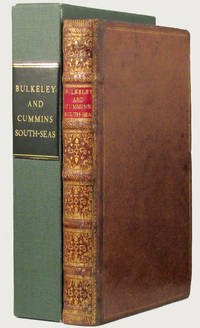
1743réf. 31681London: Printed for Jacob Robinson 1743. First edition the first of the two issues of 1743 being the issue printed by Robinson with the author's names stated. With a number of attractive woodcut headpieces and initials. 8vo 190 x 120 mm especially well bound in very handsome contemporary full polished brown calf the boards framed with double-ruled gilt edges hatched in blind the spine finely gilt decorated with elaborate detailed tooling in five compartments between wide gilt ruled and hatched raised bands a sixth compartment with red morocco label ruled and lettered in gilt additional gilt at the tips and along the joints. With the engraved bookplate of Lord de Saumarez an admiral of the British Royal Navy notable for his victory at the Second Battle of Algeciras. Saumarez is one of the true historical figures to appear in C. S. Forester's Hornblower novels being celebrated in two of the novels. Saumarez's fictional alter-ego also plays a role in two of the Aubrey-Maturin novels by Patrick O'Brian. Now housed in a handsome green cloth clamshell box with morocco label gilt. xx 220 pp. A very handsome and well preserved copy the text clean crisp and unpressed the handsome binding solid and sturdy with a some expert and accomplished restoration along the joints and a bit of touching up to the corners. In all a fine copy with excellent Naval provenance. RARE AND TRUE FIRST EDITION FIRST ISSUE WITH FINE MARITIME PROVENANCE OF ONE OF THE PRINCIPAL ACCOUNTS OF THE LOSS OF H.M.S. WAGER; ONE OF THE MOST COMPELLING NAVAL ACCOUNTS OF THE EIGHTEENTH CENTURY. This narrative is the exciting mutineers' side of the story of the loss of the Wager to inhospitable climate on one of the world's most remote and dangerous coastlines beyond the Straits of Magellan. When Commodore Anson set out for the Pacific in 1740 to attack the Spanish ships on the Chilean coast he took eight ships with him. The Wager was effectively a transport ship carrying stores and a force of marines; as the squadron rounded Cape Horn in fearsome weather she was unable to keep up with the rest of them and with her gear wrecked by the storm was driven ashore on the Patagonian coast. This tale of mutiny hardship and tenacity that ensued was told by the survivors especially John Bulkeley leader of those who repudiated the captain's authority. Bulkeley the ship's carpenter and Cummins led their small group of survivors until their landing at Rio de Janeiro and finally England concluding a voyage that had lasted almost two years. Another narrative was published by John Byron then a midshipman who remained with Captain Cheap. Of Cheap's group only three members Cheap Byron and one other eventually reached home but by a different overland route. This voyage was the basis for Patrick O'Brian's historical work 'The Unknown Shore' written before he embarked on the Jack Aubrey/Stephen Maturin novels. Printed for Jacob Robinson hardcover
1895réf. 2672Washington DC: April 2 1895. Good. 4pp. on a single folded sheet with two small photographs tipped in. In German. Quarto. Old folds some separation along central horizontal fold small chip to first leaf minor soiling. One photograph chipped. A sad document detailing the plight of a mother and son who perished in the sinking of the German transatlantic ocean liner Elbe on January 30 1895. The document seeks to detail exactly the times of death of the mother and son in order to determine whether the heirs of the mother or son have title to the property belonging to the family. Translated into English a portion of the opening reads: "She left some property here in Germany. If her son survived her if by a minute he inherited that property and it now belongs to his heirs; but if death overtook him before his mother the property never belonged to him or now to his heirs but to other people. The matter is now before the court." The Elbe collided with a Scottish ship called the Crathie in the North Sea on January 30 1895 while on the way from Bremen to New York City; the Elbe was a very popular ship amongst immigrants from Central and Eastern Europe looking to make their way to the United States. The two victims detailed in the present document were a German-American immigrant mother and son who had previously settled in Indianapolis and then moved to Washington D.C. Sophie and Eugene Rhodes. At the time of their deaths Eugene was a student at Heidelberg University in Germany. The present document opens with a typed notice from the counsel to the family detailing their presence on the Elbe and asking for details of their deaths. This is followed by photographs of both Sophie and Eugene tipped to the second page then two pages of questions attempting to locate the missing travelers. Brief answers to the questions were supplied in ink by Ernst Linkmeyer assistant engineer on the Elbe and one of only twenty survivors of the wreck. The survivors of the wreck of the Elbe included just four passengers and sixteen crew members who crowded onto the only rescue boat that survived the collision. The death toll of the wreck of the Elbe totaled 334 including Sophie and Eugene Rhodes. April 2 unknown
1840réf. 101592Small juvenile booklet 4" x 3" original printed wrappers with woodcut illustration on top cover woodcut border on wrappers 16 pp. Covers a bit faded and stained a little also a little worn internally a little foxed and soiled but in very good shape for such a fragile item. Although there appear to have been several editions published between 1820 and 1840 of this juvenile work the OCLC seems to find only a few of each one. Written as a poem the story recounts the sinking of a ship and the ill treatment of those on board. Includes three woodcuts in the first couple of pages. OCLC. American Religious Tract Society,
réf. 37868Portsmouth: Published by John Miller Jun. 1840. First edition 12mo 112 x 65 mm 80 2pp. advertisement leaf at end for relics from the wreck wood-engraved portrait frontispiece and 3 plates marbled endpapers original morocco-backed wooden boards made from timbers of the wreck of the Royal George boards split but holding firm edges gilt. The Royal George108 guns the oldest first-rate in the Navy was anchored at harbour where she was hove down for minor repair. The officer of the day refused to heed a seaman who warned him that the ship was taking in water through the ports. The ship sank as she took in water and went to the bottom with 1200 people on board including 250 women and children; nearly 900 of them drowned including Admiral Kempenfeldt. The Royal George was launched in 1751 and had served as the flagship for Anson Boscawen Hawke Rodney and Howe. Her hull was finally broken up by exploding gunpowder in 1839-41. Huntress. After the recovery of the timbers from the wreck by Colonel Pasley they were sold to E. & E. Emanuel Goldsmiths to the Queen who reworked them into 'Genuine Relics of the Royal George' i.e. Carved Chairs Tables Work Boxes Walking Sticks Ink Stands etc. Huntress pp. 51 & 145. Portsmouth: Published by John Miller, Jun. 1840 hardcover
1825réf. AQ31290Edinburgh: Published by Waugh & Innes Edinburgh 1825. 78pp. Uncut in original drab boards printed paper lettering-piece. Rubbed and marked. Upper joint split but boards remain firmly attached by the cords. Contemporary ownership inscription to head of FFEP. From the recently dispersed remains of the Stevenson family library with no indication of such. The Kent a British East Indian Company vessel bound for Bengal and China caught fire in the Bay of Biscay on her maiden voyage. On board were 641 passengers and crew including 20 officers and 344 soldiers belonging to the 31st Regiment of Foot 43 women and 66 children 20 private passengers and a crew including officers of 148 men. The quick- thinking of Captain Cook of the passing Cambria saved the lives of 547 souls. . First edition. 12mo. Published by Waugh & Innes, Edinburgh hardcover
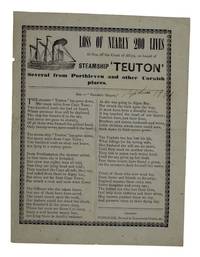
réf. AQ29403Woolcock General & Commercial Printer Single leaf quarto broadside sheet. Printed within decoratie black borders with a woodcut of a steamship at head. Dated in manuscript 'Septem. 1881' beneath drop-head title An apparently unrecorded broadside ballad consisting of six eight-line stanzas and composed to fit the Air "Sailor's Grave" lamenting the loss of the Royal Mail Steamship Teuton which grounded and sank en route to Algoa Bay from Table Bay both South Africa on August 30th 1881. Flipping on its vertical axis caused complications with the lifeboats resulting in just 27 of the 242 souls on board- which included emigrants to South Africa from Great Britain and local businessmen embarking on local journeys- surviving the tragedy. . Dimensions 190 x 250mm. Woolcock, General & Commercial Printer unknown
1864réf. 400Harper's Weekly 1864. Very Good . Antique wood-engraved Civil War print from Harper's Weekly. Splendid drama and courage displayed on this fine example of a fine woodengraving made of a shipwreck in Chicago during the Civil War. Note: we grade conservatively and endeavor to identify any defects that might affect overall quality and price. Harper's Weekly unknown
1831réf. AQ14219London: Printed for the Religious Tract Society; and sold.by J. Nisbet 1831. 8pp. Stitched as issued. A trifle dust-soiled overall a fine copy. The Rothsay Castle a paddle steamer originally constructed in 1816 for service on the River Clyde had been transferred to Liverpool soon after to serve as a pleasure cruiser for the North Wales coastline. On August 17 1831 having encountered rough weather on leaving the Mersey Estuary the vessel took on water ran aground and broke-up on the Lavan Sands with the majority of her passengers and crew losing their lives. The pumps aboard were found to be inoperable and the single lifeboat a hole in the bottom and no oars. Only 23 people were rescued. The tragedy led to the building of the lighthouse at Penmon. COPAC records copies at six locations BL Cambridge Glasgow Liverpool Manchester NLW. . First edition. 12mo. Printed for the Religious Tract Society; and sold...by J. Nisbet unknown
1994In-8° pp. 305, bross. edit. ill.